Fat Cow
Cut through Fat Cow's bread-crust-coloured rind and a smooth, waxy interior comes into view.
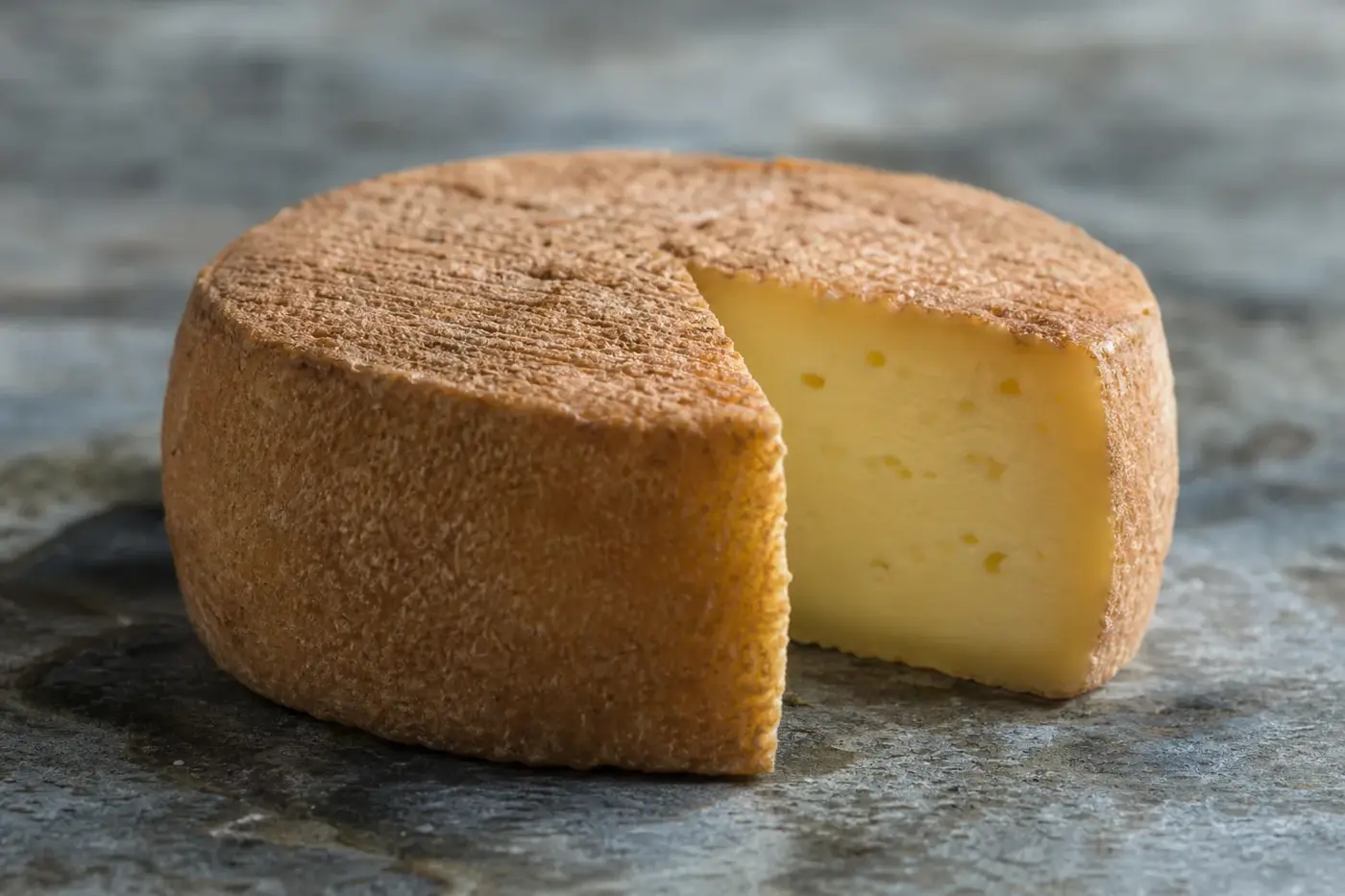
Cut through Fat Cow's bread-crust-coloured rind and a smooth, waxy interior comes into view. There is sweetness here, too, which its maker associates with Swiss cheeses. Made by Highland Fine Cheeses in Tain, Scotland, it wears a washed exterior that might have you expecting something softer. You may see it called semi-soft, but the dairy calls it semi-hard: for what lies beneath the rind, follow the maker's lead. [1, 2, 3]
Meet Fat Cow at a glance
| What to know | The detail |
|---|---|
| Name | Fat Cow [1] |
| Maker | Highland Fine Cheeses [2] |
| Made in | Tain, Scotland [2] |
| Milk | Pasteurised cow's milk [1, 8] |
| Style | Semi-hard, washed rind [3] |
| Whole cheese | A round wheel [3] |
| Coagulant | Rennet; type uncertain [1] |
| Named starter cultures | Uncertain [1] |
| Rind flora | Maker identifies Brevibacterium [1] |
| Maturation period | Uncertain [1, 8] |
| Vegetarian suitability | Uncertain [1] |
| Declared allergen | Milk [1] |
| Can you eat the rind? | Uncertain [1] |
Get to know that tan rind
Look at the wedge in the maker's photographs and you can trace its curved outer edge, finely textured tan rind and pale yellow cut face. In the current product image, the paste, meaning the cheese inside the rind, looks close and even. It is a fitting appearance for a cheese the dairy describes as smooth and waxy. [3, 4]
The Highland Fine Cheeses brochure brings out the whole wheel, ready for cutting into portions. In that photograph, small openings show in the paste. Together, the images suggest a cheese with a defined body, rather than the flowing centre you might expect from much softer washed-rind cheeses. [3, 4]
Here is something useful to take to your next cheese-counter conversation. Semi-hard describes the body; washed rind describes how the surface is managed during ripening. They answer different questions, which is reassuring when cheese vocabulary starts behaving like a particularly demanding crossword. For more, explore how to tell cheese styles apart. [5]
Find the dairy behind the Highland name
Fat Cow comes from Blarliath Farm on Shore Road in Tain, in the Scottish Highlands. The dairy's history takes the site from a smallholding with a small Shorthorn herd to a dairy surrounded by an industrial estate. According to that account, cheese is still fermented and matured inside the old buildings. [2]
If the business name has you picturing fields in every direction, the setting has a little more to tell you. This is a working dairy with farming roots, a local milk supply and old buildings still earning their keep. The industrial estate is as much part of today's picture as that earlier smallholding. [2]
Highland Fine Cheeses traces its roots to Crowdie. Its current range stretches across mould-ripened, blue and washed-rind cheeses, with Fat Cow part of that broader interest in ripening and surface character. The documented inspiration for Fat Cow is a Bavarian semi-hard cheese: a continental starting point, given a Scottish home. [1, 2]
Follow the milk into the vat
Fat Cow begins with pasteurised cow's milk. The maker says it collects milk from farms around Tain, while its About Us page names Rootfield Farm on the Black Isle as the source of most milk for the business. That describes the dairy's overall supply, rather than a source named specifically for Fat Cow. [1, 2, 8]
The published making account starts with cultures to acidify the milk, followed by rennet to set it into curd. If you are picturing the process, curd is the coagulated milk that becomes cheese; whey is the liquid separated from it. The particular starter cultures and rennet type remain uncertain. For a closer look at the coagulants, turn to rennet explained. [1]
Watch the rind take shape
Cutting, stirring and draining the curd help give Fat Cow its body. The maker's account emphasises removing whey and managing acidity before the curd goes into moulds. Once released from those moulds, the cheese floats in brine, a solution of salt in water. [1]
Then comes the hands-on attention to the surface. Washing with brine and brushing encourage a consistent rind. Published sources give different maturation periods, so the length of ageing remains uncertain. [1, 8]
That washing belongs to the ripening process, not a final tidy before the cheese leaves the dairy. A rind is a living community, and research shows that its treatment helps shape which organisms thrive there. When you look at Fat Cow's washed surface, you are looking at part of how the cheese develops. [5]
A 2014 study used DNA sequencing to examine 137 cheeses from ten countries, with 362 rind samples overall. Rind type and moisture were more closely associated with microbial community composition than geography. The Highland address gives you one part of Fat Cow's story. The treatment of its surface gives you another, closely tied to how it ripens. [5]
Make the first bite count
The dairy's tasting notes bring together sweetness, milk, nuts and orchard fruit, with a suggestion of dairy-cow aroma too. Its brochure adds that smooth, waxy texture. Taken together, those descriptions promise a rounded, relatively delicate cheese beneath the washed exterior. [3]
Start with your nose, then give your tongue a turn. Smell the outside before cutting a small piece of the interior, and consider texture, sweetness and finish separately. There is more to discover that way than by settling straight away on mild or strong.
Try a bite without chutney first, then introduce bread and an accompaniment. You can explore those milky and orchard-fruit descriptions before vinegar, spice or a strongly flavoured drink enters the picture. That first plain bite gives you a useful reference for comparing whatever comes next. Chutney can wait its turn; it rarely suffers from shyness. [3]
Does a slice bend before it breaks? Notice how readily it softens in your mouth and how long the sweetness stays after swallowing. There is no need to reproduce every word of a tasting note. If your cheesemonger gives you the cheese's age, jot it down with the maker's name so your notes are useful next time.
A place for gold and silver
Highland Fine Cheeses records gold for Fat Cow at the 2022 Global Cheese Awards. Silver followed at the same competition in 2023. The maker also lists silver at the 2023 Royal Highland Show. [6]
Keep it cool and serve with care
In Scotland, Food Standards Scotland advises keeping your fridge below 5 °C, covering food and putting ready-to-eat and dairy foods on the upper shelves. Follow the storage instructions and date on your particular pack. Keep those details with the cheese between servings, so they remain easy to consult. [7, 9]
For England, Wales and Northern Ireland, the Food Standards Agency advises leaving chilled food out for the shortest possible time, with a maximum of four hours. That is a limit, not a target for bringing your cheese up to temperature. [9]
For a simple serving, arrange a few thin slices of the paste on a plain plate, with the rind trimmed away. Cut enough for the first round, then bring more from the fridge if you want it. You do not need to put the entire wedge on the table.
For help with wrapping and caring for the cut face, see how to store cheese at home. Keep the pack or your cheesemonger's label with the cheese. Its own handling instructions will then be there when you next reach for a slice. [9]
Give Fat Cow some gentle company
Choose accompaniments with a light touch: the maker warns that stronger flavours can dominate Fat Cow. Plain bread and fresh fruit are useful places to start. Try one accompaniment alongside the cheese, then decide whether you want to add anything else. [1]
| What to serve | Try this | What it brings |
|---|---|---|
| Bread | Plain baguette or an unseeded loaf | A simple base that leaves room for the cheese's flavour |
| Fruit | Sliced pear or a gently tart apple | A way to explore the maker's orchard-fruit description without a preserve |
| Alcohol-free drink | Still or sparkling water | A neutral starting point for comparing bites with and without bread |
| Alcoholic drink | Restrained, unoaked white wine or lightly flavoured lager | A drink that lets the cheese take the lead |
For a Scottish accompaniment, try a plain oatcake without pepper or strongly flavoured additions. Put chutney alongside the cheese rather than spooning it over the top. Add a little at a time, returning to a plain bite if the accompaniment starts to dominate. You can experiment while still keeping Fat Cow's own flavour in view.
Alcoholic pairings are for adults of legal drinking age who choose to drink. Serve a small amount with an alcohol-free option alongside. If you are pregnant, driving, taking medicines that interact with alcohol or recovering from alcohol dependence, you should not drink. Consult the NHS or the relevant national authority for current advice, and explore combinations by style in cheese and wine pairing.
Take Fat Cow beyond the cheese board
Highland Fine Cheeses recommends Fat Cow for dishes that would usually call for Swiss cheeses. In its brochure, grated Fat Cow goes into puff pastry twists with garam masala. It is an invitation from the dairy to take the cheese beyond the board and into everyday cooking. [1, 3]
For a simpler experiment, use it as the topping in your usual cheese-on-toast preparation, rather than treating this as a tested recipe. Begin with plain bread, leaving strong mustard or pickle on the side. Then taste and decide how much accompaniment you want.
Keep your cheese curiosity going
- How Cheese Is Made: From Milk to Cheese: follow the stages behind curd formation and ripening.
- How to Read a Cheese Label: find milk treatment, ingredients and handling instructions on your pack.
General information only, not medical advice: follow the official guidance where you live.
Questions people ask
What milk is Fat Cow made from?
Fat Cow is made from pasteurised cow's milk. Highland Fine Cheeses collects milk from farms around Tain.
Is Fat Cow suitable for vegetarians?
Its vegetarian suitability has not been verified. The cheese is made with rennet, but the type of rennet is not verified.
What does Fat Cow taste like?
The dairy's tasting notes mention sweetness, milk, nuts and orchard fruit, along with a suggestion of dairy cow aroma. It describes the texture as smooth and waxy.
Can you eat the rind on Fat Cow?
The rind's edibility has not been verified. The page suggests serving thin slices of the cheese with the rind trimmed away.
What goes well with Fat Cow?
Plain bread and fresh fruit are suggested starting points. The maker warns that stronger flavours can dominate the cheese.
Sources
- Highland Fine Cheeses, Fat Cow, undated product description and making account, accessed November 2026.
- Highland Fine Cheeses, About Us, undated company history and dairy information, accessed November 2026.
- Highland Fine Cheeses, Highland Fine Cheese Brochure, undated edition hosted by Fine Cheesemakers of Scotland, accessed November 2026. Fat Cow description, formats, photograph and pastry-twist recipe.
- Highland Fine Cheeses, Fat Cow product photograph, undated image linked from the product page, accessed November 2026.
- Cell Press, Cheese rind communities provide tractable systems for in situ and in vitro studies of microbial diversity, Cell, volume 158, 2014. Original sequencing survey and experimental community research.
- Highland Fine Cheeses, Awards, undated awards record containing results for 2022 and 2023, accessed November 2026. Results are attributed to the maker.
- Food Standards Scotland, Storing Food Safely, undated interactive guidance, accessed November 2026.
- Rowcliffe, Highland Fine Fat Cow, undated distributor product information, retrieved November 2026.
- Food Standards Agency, How to chill, freeze and defrost food safely, published 18 December 2017, current retrieved guidance checked November 2026. Stated territorial coverage: England, Northern Ireland and Wales.
- Food Standards Agency, Alerts, live alert index, accessed November 2026. Editorial recall check only.
- Food Standards Scotland, Latest news and alerts, live homepage alert listing, accessed November 2026. Editorial recall check only.
Research combined the maker's production account, brochure and photographs with original rind research, official storage guidance and an attributed awards record; serving combinations are editorial suggestions.
Last checked: November 2026
Last checked November 2026.
The editors suggest you read next
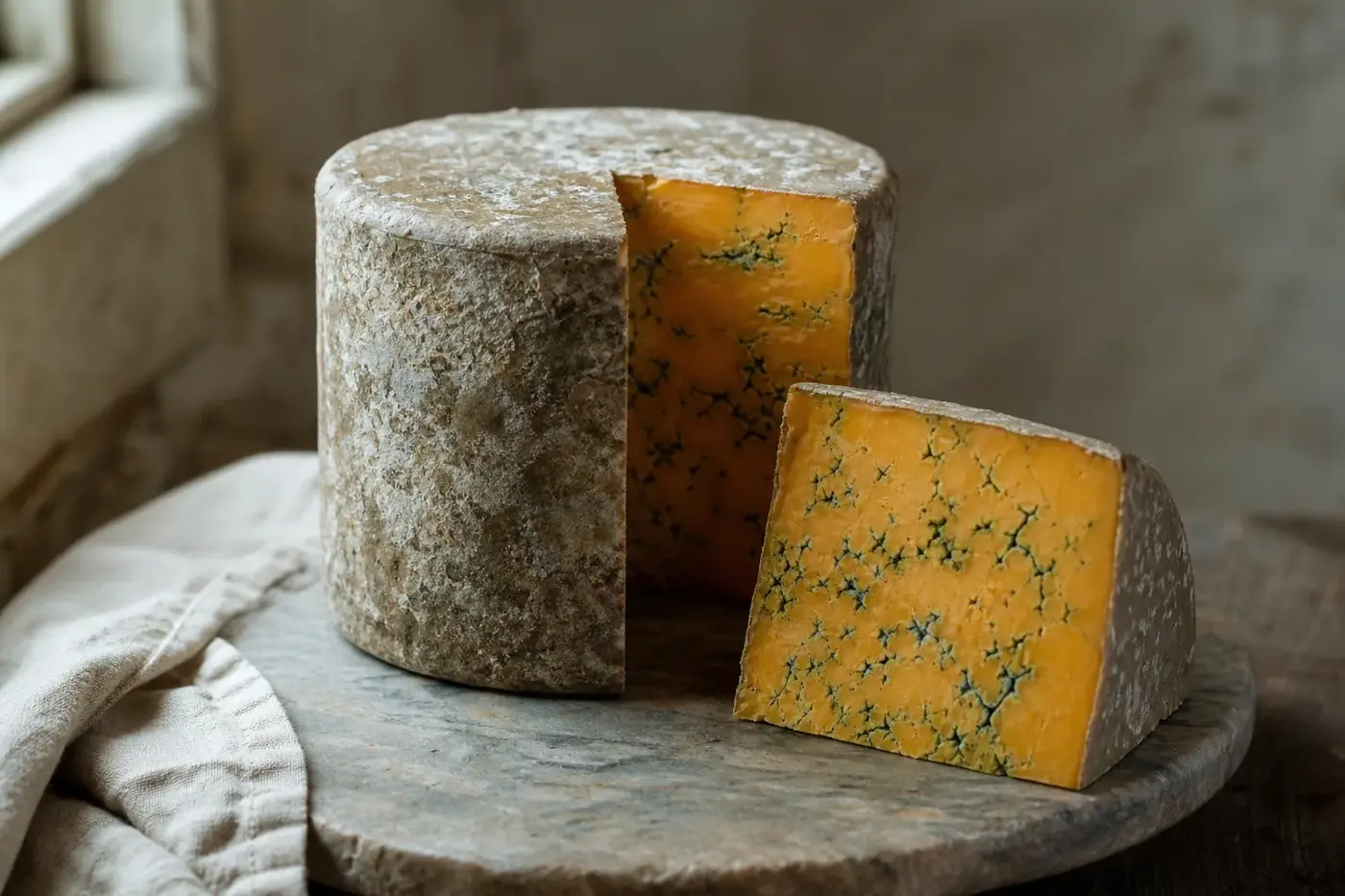
Shropshire Blue
Cut into Shropshire Blue and you get quite a colour scheme: orange crossed by blue-green veins.