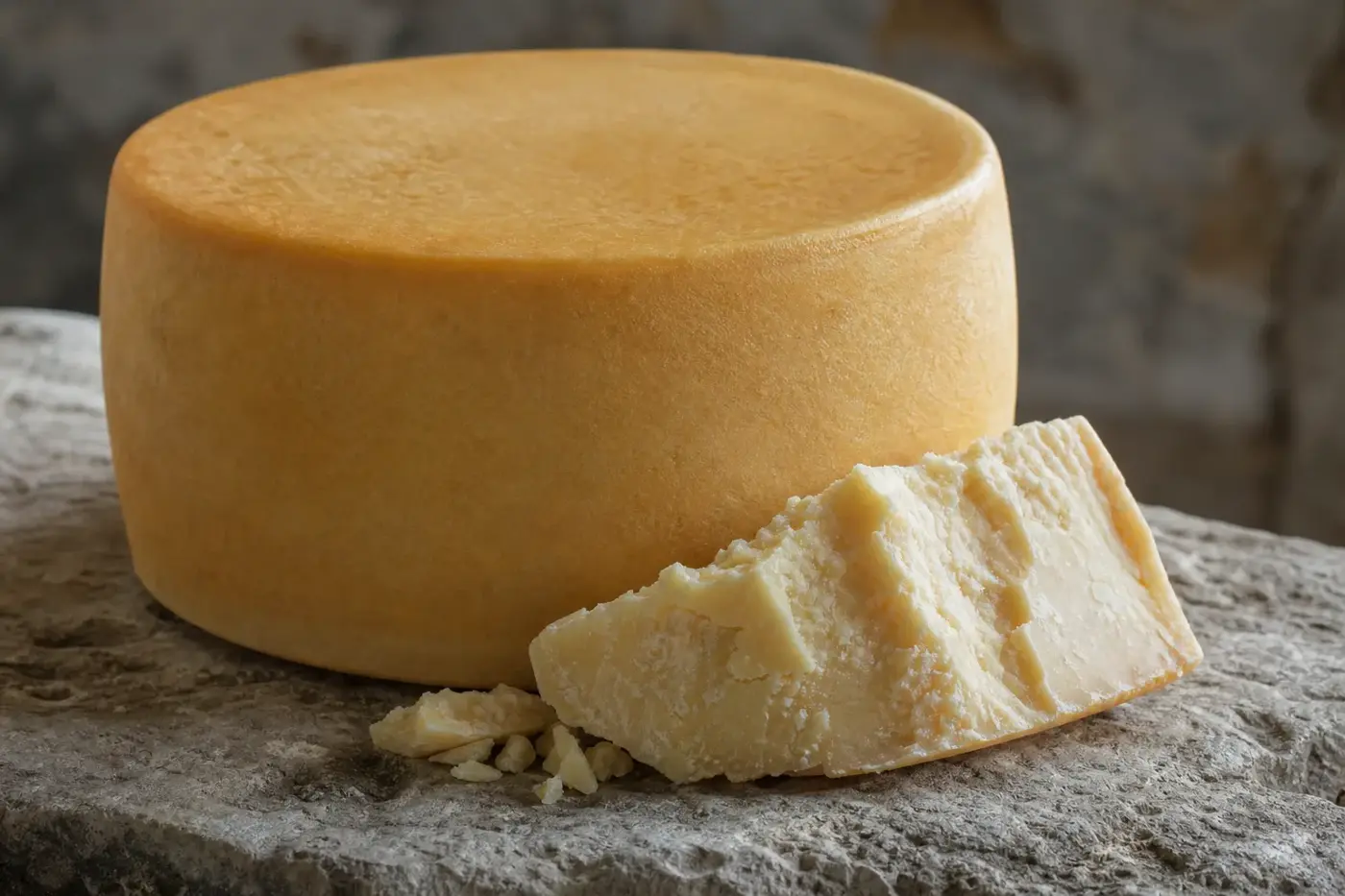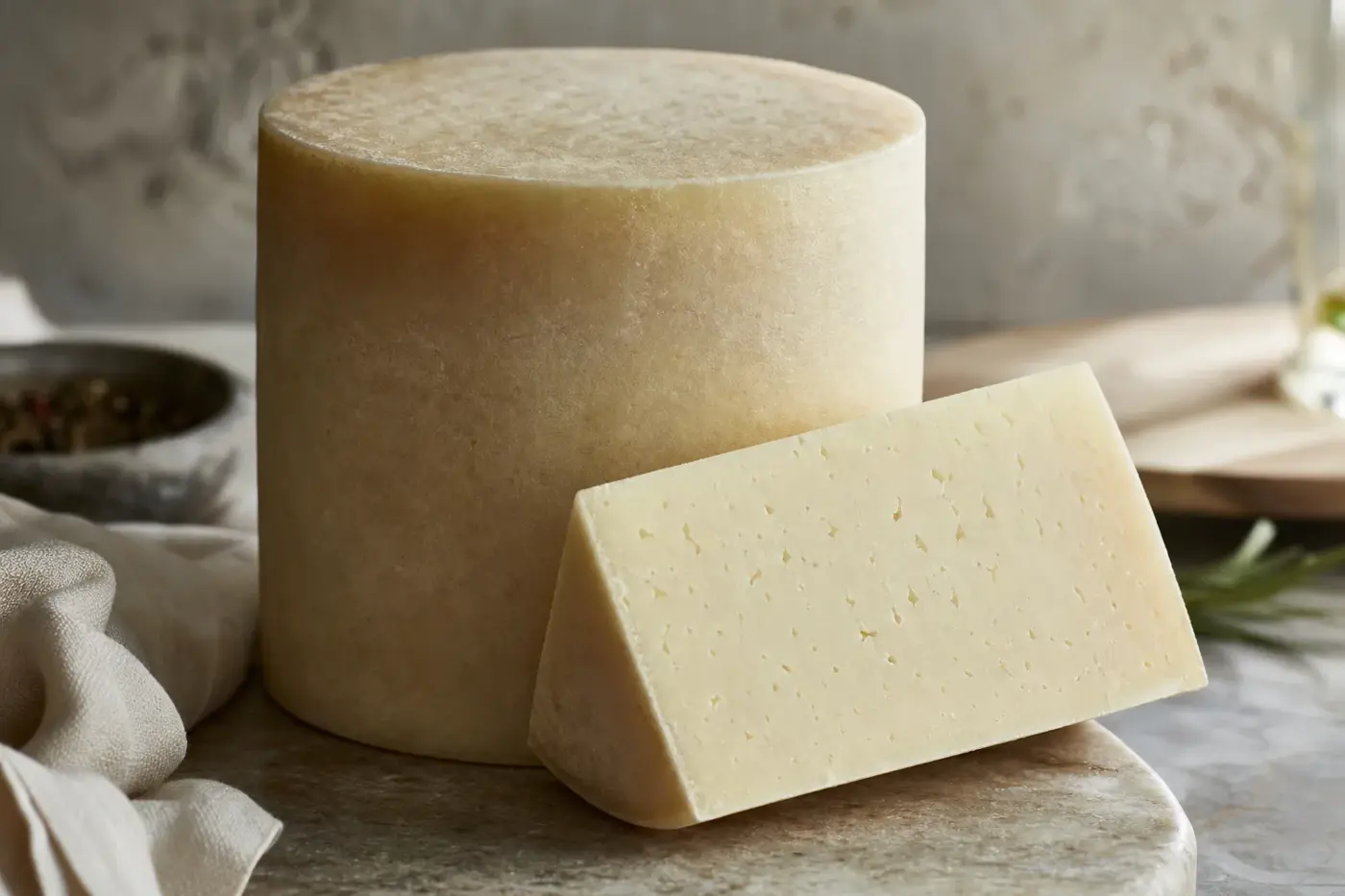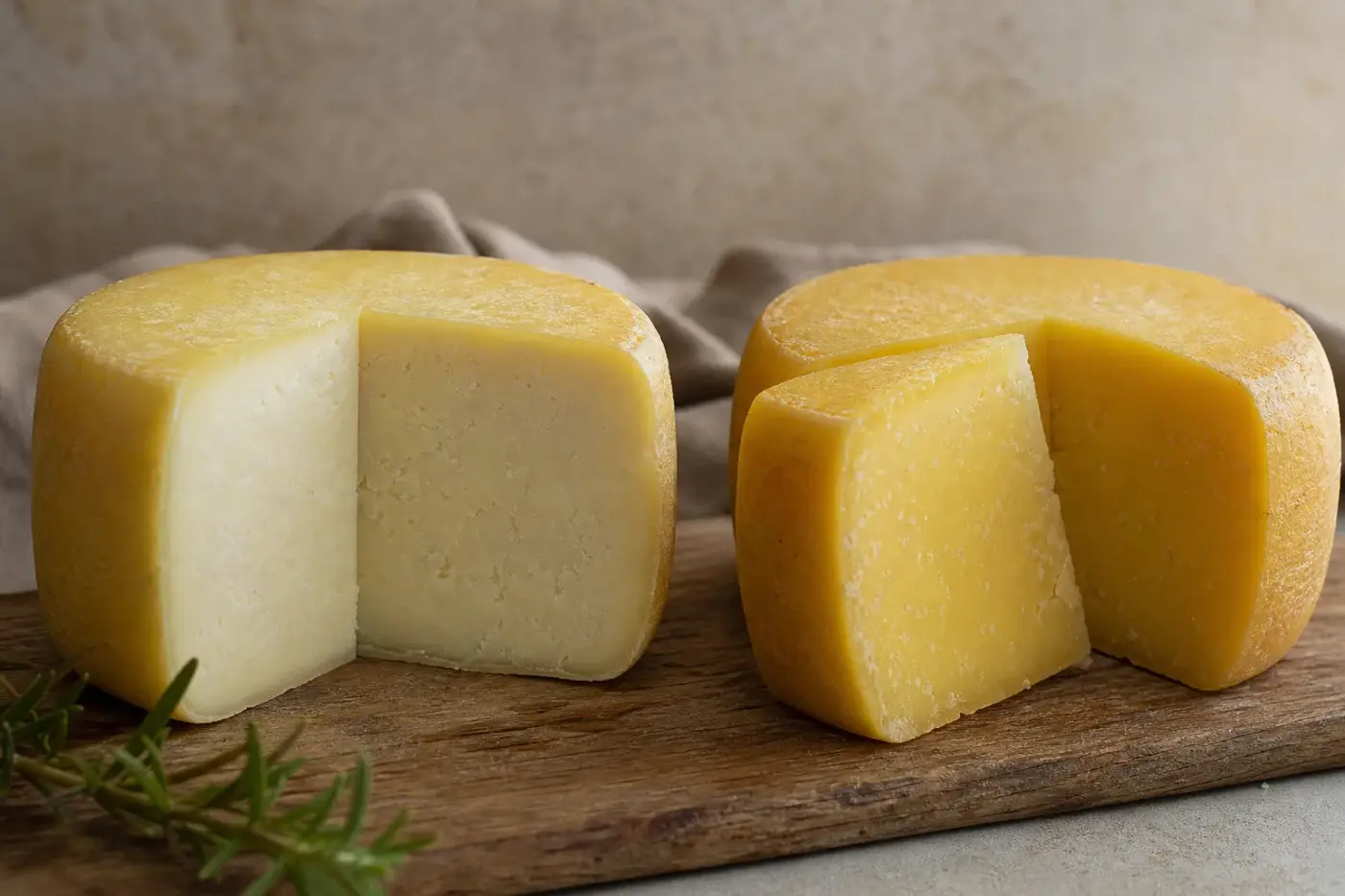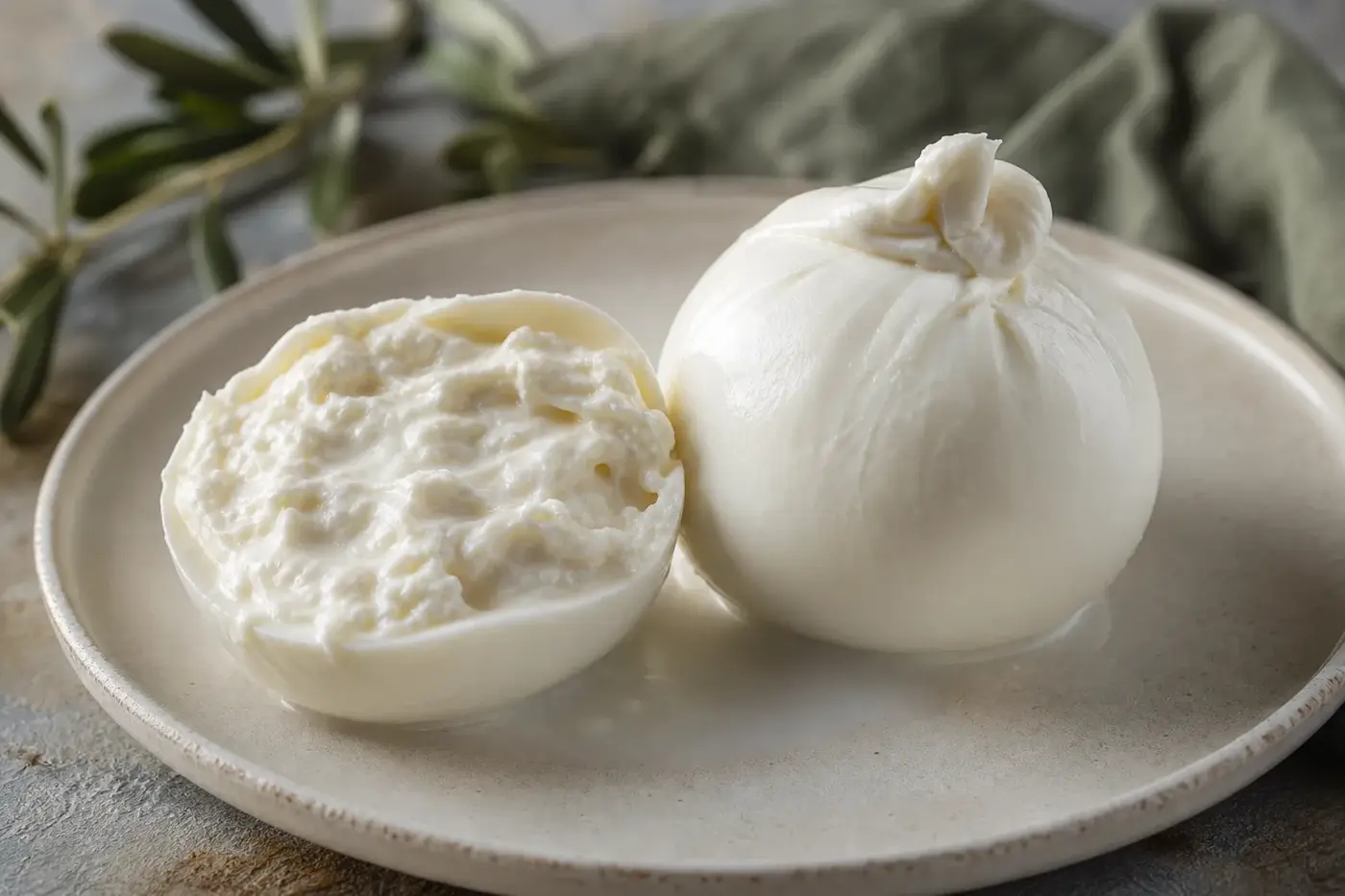
Your knife slips through the smooth white surface. Out comes a little milky liquid, a promising start before you’ve tasted a thing. This is fior di latte: fresh cow’s milk mozzarella with a moist, supple interior, fresh-milk flavour and delicate acidity, as Campania’s traditional-food record describes it. Choose balls in liquid for eating fresh; for pizza, let the moisture your bake can accommodate guide you. [1,2]
A quick introduction before you tuck in
| Your question | What to know |
|---|---|
| What’s its name? | Fior di latte, also written fiordilatte. [1] |
| What kind of cheese is it? | Fresh cow’s milk pasta filata, or stretched-curd cheese. [1,2] |
| Where does it feel most at home? | Its traditional heartland is Campania, especially Agerola. [1] |
| Is there a rind? | No; the outside is a tender skin. [1] |
| What shapes might you find? | Balls, knots, braids and blocks. [1] |
| How is the milk treated? | Check the named product’s label. [4,9] |
| Which protected name offers a comparison? | Mozzarella di Gioia del Colle was registered as an EU PDO in 2020. [3] |
Look for the gloss, then feel the spring
Before your first bite, take a proper look. Fior di latte is milky white, sometimes shaded with straw, with a smooth, glossy surface and a soft consistency. Campania’s traditional-food register records these details alongside the escaping milky liquid, fresh-milk flavour and delicate acidity. “Mild” is doing rather little work for a cheese with all that going on. [1]
Then notice how it yields. The Mozzarella di Gioia del Colle specification describes an elastic interior, gently acidulous milk notes and a fermented finish. This precisely defined example offers a little resistance before giving way. You’re looking for spring, not the softness of a spread. [3,4]
Take the southern Italian route
Agerola has a special place in fior di latte’s Campanian identity. The regional record singles it out and documents rounded shapes, knots, plaits and rectangular forms. Each begins with the maker’s hands shaping the curd. [1]
Look across southern Italy and another distinct tradition takes you to the Murgia area of Puglia and adjoining Basilicata. The legally defined production area for Mozzarella di Gioia del Colle includes specified municipalities in the provinces of Bari and Taranto, plus a delimited part of Matera. Cow’s milk mozzarella has regional identities worth getting to know. [3,4]
For the wider family and its other forms, turn to the guide to mozzarella. When you choose fior di latte, keep three things in mind: the milk, the regional production rules and the format you want to eat.
Into the maker’s hands: where the stretch begins
Stretching gives pasta filata its name, but the curd has to be ready first. Curd is the coagulated part of milk; whey is the liquid separated from it. In traditional cultured production, the curd acidifies before meeting hot water and being worked into a cohesive, stretchable mass. [4]
The Italian ministry’s specification for Mozzarella di Gioia del Colle takes you through one such process. A whey starter from previous production supplies the fermenting culture, while calf rennet coagulates the milk. The maker cuts the curd and lets it acidify under whey. Next come chopping, stretching in hot salted water, shaping and firming in cold water. [4]
Think of acidification as the preparation and stretching as the work that gives the cheese its final structure and shape. You need both stages. Balls, knots and braids are different expressions of that shaping stage, each made from the prepared curd. For more on coagulants, see rennet explained. [1,4]
Cow or buffalo: get to know your mozzarella
Start with the animal behind the milk. Fior di latte belongs to the cow’s milk side of the mozzarella family; buffalo mozzarella uses buffalo milk. Mozzarella di Bufala Campana is a particular EU PDO name, made with whole fresh milk from Italian Mediterranean buffaloes raised within its defined area. The consortium identifies territories in Campania, Lazio, Puglia and Molise. [1,5]
The consortium describes its PDO cheese as porcelain-white, resistant when cut, then softening in your mouth. That description belongs to this particular product, not every mozzarella you meet at the counter. For cooking, give water content and intended use as much attention as milk species. [2,5]
The full name matters, too. In EU law, the registration of Mozzarella di Gioia del Colle explicitly distinguishes the complete protected name from the standalone word mozzarella. Mozzarella is the broader name. A complete PDO name brings a particular production specification with it. [3]
Choose for your plate, not just the name
Will you eat it fresh or put it in the oven? Dairy research distinguishes high-moisture mozzarellas, usually eaten fresh, from low-moisture versions commonly used as ingredients and pizza toppings. That gives you a useful starting point: a moist table cheese or a drier cooking cheese. [2]
| What you’re buying | What to look for | How to use it |
|---|---|---|
| Fresh balls in liquid | Moist cheese in covering liquid. [4] | Enjoy fresh, or drain before cooking. |
| Lower-moisture mozzarella | A label identifying a cooking or pizza product. [2] | Choose for pizza and dishes where excess liquid is unwelcome. |
Ask about intended use, not just the name on the pack. A ball for the table and a cooking block can belong to the same broad family but need different handling in your kitchen. For pizza, moisture, format and preparation tell you more about likely performance than the name fior di latte alone. [2]
Behind a protected name, a particular place
Mozzarella di Gioia del Colle tells you something concrete about place and production. Its EU registration identifies the protected name; the Italian ministry’s published specification defines its production area, whole cow’s milk, local whey starter and calf rennet. The milk may be thermised or pasteurised. Check the pack for the treatment actually used. [3,4]
The specification prohibits direct acidification with organic acids and the use of alternative coagulants. Those requirements belong to this named PDO, not every fior di latte you might buy. It also specifies sale in covering liquid, a useful detail when you’re choosing between a table cheese and a drier cooking format. [4]
Use the exact name when you want to establish origin. Mozzarella di Gioia del Colle and Mozzarella di Bufala Campana identify different cheeses, milk species and geographical requirements. Their EU status is specific to that jurisdiction. For the bigger picture, see protected names explained. [3,5]
Read the label with your meal in mind
Start with the food name and milk species, then look for milk treatment, ingredients and storage instructions. If you need a vegetarian cheese, look for an explicit suitability statement or ask the maker which coagulant is used. Mozzarella di Gioia del Colle requires calf rennet. Its PDO specification answers that question directly. [4]
Read the ingredients list where one is provided, but check separately for the information you need. EU Regulation 1169/2011 exempts certain simple dairy products from an ingredients list; its salt allowance for cheese excludes fresh and processed cheese. Allergen information remains a separate obligation. If milk treatment or coagulant is unclear, ask the supplier before choosing. [6]
For help with dates, declarations and origin wording, turn to how to read a cheese label. Choose the format for your dish first. Then use the label to confirm whether that particular product meets your requirements.
Give it a simple plate, or a turn in the oven
For your first taste, keep the company simple: drained fior di latte, ripe tomato, basil, olive oil and bread. Try the cheese before adding salt or dressing. Its lactic acidity and yielding texture are easier to notice before stronger flavours join the conversation. [1]
For pizza, treat the cheese and its liquid as separate things. Drain only the portion you intend to use, cut or tear it into evenly sized pieces, and let any further liquid drain in the fridge. Add the cheese to the dough without pouring over its covering liquid. That follows the practical distinction between high-moisture table mozzarella and lower-moisture pizza cheese. [2,7]
Pizza wetter than you wanted? Change one thing next time: use less cheese, drain it more thoroughly under refrigeration, or try a product made for cooking. The same thinking applies to baked pasta and vegetable dishes. Choose fresh cheese for distinct, moist pieces, or a drier cooking format when controlling added liquid matters most. [2]
Keep a short note of the format and preparation you used. Try the same dish once with drained fresh cheese and once with a lower-moisture product. Judge each against what you actually want: separate soft patches, a more continuous melted topping, or less liquid around the filling. This is one occasion when taking notes on your dinner has a perfectly respectable purpose.
Keep it chilled and know your dates
Set your fridge between 0 and 5 °C. That is the UK Food Standards Agency’s published household chilling recommendation, applicable to England, Wales and Northern Ireland. Keep chilled dairy products refrigerated and follow the pack’s storage instructions, including directions after opening. If the label says to retain the covering liquid, leave the remaining cheese in it rather than draining the whole pack ahead of time. [7,8]
Check which kind of date your pack carries. UK government guidance distinguishes a use-by date, which concerns safety, from a best-before date, which concerns quality. Fresh cheese with a use-by date must be eaten, cooked or frozen by that date, subject to its storage instructions. That date assumes the food has been stored as directed throughout. [8]
After opening, follow both the manufacturer’s stated limit and the use-by date, whichever comes first. For portion planning and advice on keeping different styles well, see how to store cheese at home. [7,8]
This page summarises published guidance from the official sources it cites. It is not medical advice. Guidance differs between countries and changes over time, so check the current source for where you live, and ask your doctor, midwife, pharmacist or dietitian about your own circumstances.
Pregnancy: find the guidance that applies to you
In the UK, NHS guidance as of November 2026 lists pasteurised mozzarella among the soft cheeses you can eat during pregnancy. Its list also includes hard cheeses, including those made with unpasteurised milk, and soft cheeses cooked until steaming hot. These are the NHS’s published categories. [9]
Look at your actual pack rather than relying on the cheese name. The milk treatments a specification permits and the treatment used for your cheese are separate facts. Mozzarella di Gioia del Colle, for example, permits heat treatment without requiring every producer to use it. If the label is unclear, ask the maker or supplier. [4]
Read the current NHS guidance linked in the sources for the full advice. Outside the UK, consult your country’s food safety authority. Ask your midwife or doctor about your own circumstances. [9]
Where your cheese curiosity takes you next
- Mozzarella: explore the wider family and get to know its different formats.
- Raw Milk, Thermised and Pasteurised Cheese: make sense of the treatments you may encounter on labels.
- Protected Names Explained: PDO, PGI and TSG: untangle geographical protection from a general style name.
Questions people ask
What is the difference between fior di latte and buffalo mozzarella?
Fior di latte is cow’s milk mozzarella, while buffalo mozzarella uses buffalo milk. Mozzarella di Bufala Campana is a particular EU PDO cheese made with milk from Italian Mediterranean buffaloes raised within its defined area.
Can I use fior di latte on pizza?
Yes. Drain fresh fior di latte, cut or tear it into evenly sized pieces and let any further liquid drain in the fridge. For a pizza where excess liquid is unwelcome, a lower moisture cooking mozzarella is another option.
Is fior di latte vegetarian?
Check the individual product for an explicit vegetarian suitability statement, or ask the maker which coagulant is used. Mozzarella di Gioia del Colle requires calf rennet under its PDO specification.
How should I store fior di latte?
The UK Food Standards Agency recommends a fridge temperature between 0 and 5 °C. Follow the pack’s storage instructions, including any directions after opening, and use the cheese within the manufacturer’s stated limit or by the use by date, whichever comes first.
Can I eat fior di latte during pregnancy?
The NHS lists pasteurised mozzarella among the soft cheeses that can be eaten during pregnancy. Check the current NHS pregnancy guidance for the full advice and check the pack for the milk treatment.
Sources
- Regione Campania. Fiordilatte, traditional agricultural food products record, updated 29 August 2019. Source for the regional tradition, cow’s milk, forms and attributed sensory description.
- Journal of Dairy Science. Invited review: Fresh pasta filata cheeses: Composition, role, and evolution of the microbiota in their quality and safety, 2022, article identifier S0022-0302(22)00575-6. Retrieved indexed excerpt distinguishes high-moisture table cheeses from low-moisture cooking cheeses.
- European Commission. Commission Implementing Regulation (EU) 2020/2018 of 9 December 2020 entering a name in the register of protected designations of origin and protected geographical indications (Mozzarella di Gioia del Colle (PDO)), published 10 December 2020, including its annex.
- Ministero dell’agricoltura, della sovranità alimentare e delle foreste. Disciplinare Mozzarella di Gioia del Colle, ministry-hosted amended specification, file dated 3 May 2024, Articles 2, 3 and 5.
- Consorzio di Tutela Mozzarella di Bufala Campana DOP. Bufala Campana, production and product information, undated, accessed November 2026. This is the industry consortium’s account, including its own sensory description.
- European Parliament and Council. Regulation (EU) No 1169/2011 on the provision of food information to consumers, consolidated version dated 1 April 2025, particularly Articles 19, 21, 24 and 25 and Annex II.
- Food Standards Agency, GOV.UK. How to chill, freeze and defrost food safely, published 18 December 2017, live guidance accessed November 2026. Applies to England, Northern Ireland and Wales.
- GOV.UK. Understanding food labelling: Best before and use-by dates, live guidance accessed November 2026.
- NHS. Foods to avoid in pregnancy, live guidance accessed November 2026, section “Cheese, milk and other dairy”.
This piece combines desk research from official Italian descriptions, a published dairy-research excerpt, EU legislation and UK consumer guidance, with clearly identified editorial suggestions for choosing and cooking.
Last checked: November 2026
Last checked November 2026.
The editors suggest you read next
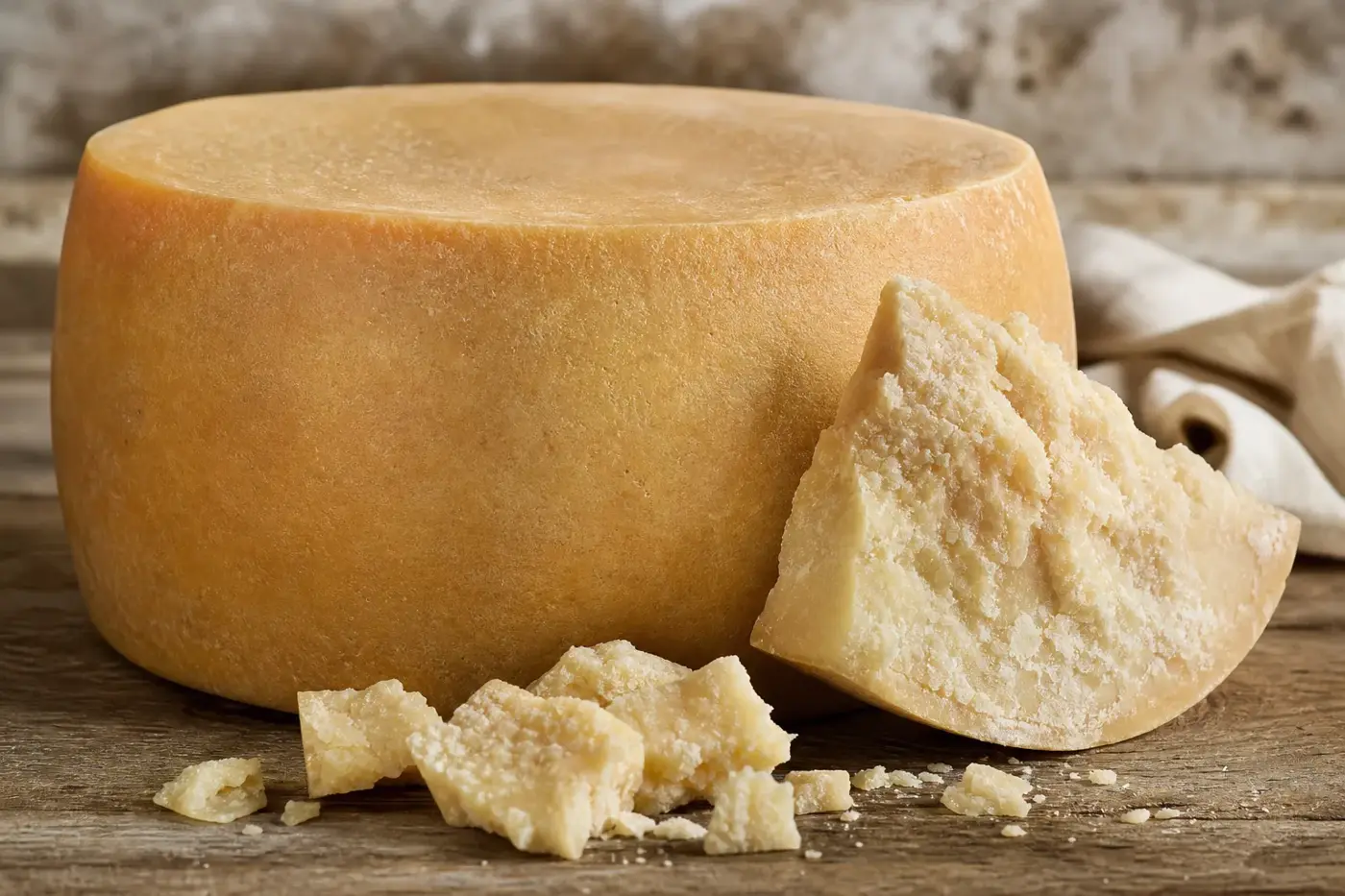
Parmigiano Reggiano
Break into a wheel of Parmigiano Reggiano and flakes fall away, revealing a finely granular cheese, pale straw to straw in colour.