Fontina
In the Aosta Valley’s humid ageing rooms, Fontina wheels are turned, salted and brushed as their brown rinds slowly develop.
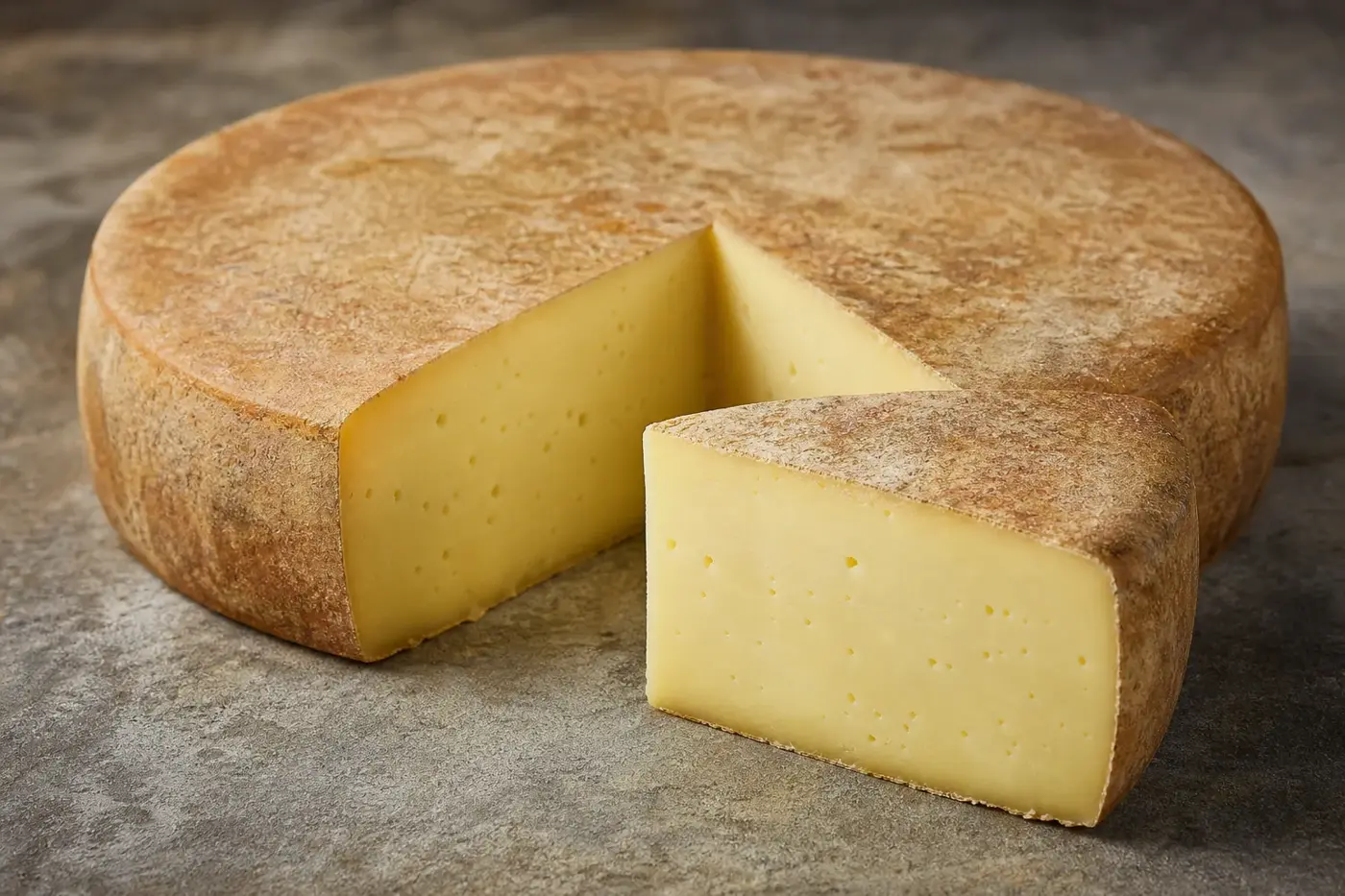
In the Aosta Valley’s humid ageing rooms, Fontina wheels are turned, salted and brushed as their brown rinds slowly develop. Cut into one and you find supple paste, with a flavour that grows stronger as it ages. Summer mountain pastures and raw milk sit at the heart of this Italian cow’s milk cheese’s identity, although its EU protected designation of origin specification also permits thermised milk.[1][2]
| What you might want to know | Fontina |
|---|---|
| Familiar and registered name | Fontina.[2][3] |
| EU authority and dossier | European Commission; PDO-IT-0008; 2026 amendment: PDO-IT-0008-AM02.[2] |
| Where the name is protected | EU: PDO. Great Britain: registered PDO. November 2026.[2][3] |
| Legally defined production area | The entire Aosta Valley, Italy.[1] |
| Milk | EU specification: whole cow’s milk, raw or thermised.[1] Great Britain requirements: not specified on this page. |
| What sets the milk | EU specification: calf rennet.[1] Great Britain requirements: not specified on this page. |
| Minimum maturation | EU specification: 80 days from the beginning of maturation, excluding any preceding drying period.[1] Great Britain requirements: not specified on this page. |
| Wheel size | EU description: 7.5 to 12 kg; diameter 30 to 45 cm; height 7 to 10 cm.[4] Great Britain requirements: not specified on this page. |
| Pregnancy guidance | UK: NHS, Foods to avoid in pregnancy, November 2026.[10] |
Fontina DOP: a whole valley in the name
Choose Fontina DOP and you are choosing a place, not simply an Italian recipe. DOP means denominazione di origine protetta, the Italian expression for protected designation of origin, or PDO. For Fontina, production, maturation and portioning all belong within the defined territory of the Aosta Valley.[1][2]
The name also has a place in the Great Britain GI scheme. Its register records registration on 31 December 2020 at 23:00, separately from the original EU registration date of 21 June 1996.[3] These are distinct registrations: protection belongs to a particular jurisdiction.
That distinction matters when you find cheeses called fontina elsewhere. They are not necessarily Fontina DOP from the Aosta Valley, and EU registration does not itself establish the name’s legal status elsewhere. Read the designation, origin and product information together; the guide to protected cheese names explains how origin protection differs from a style or brand.
Beneath that brown rind
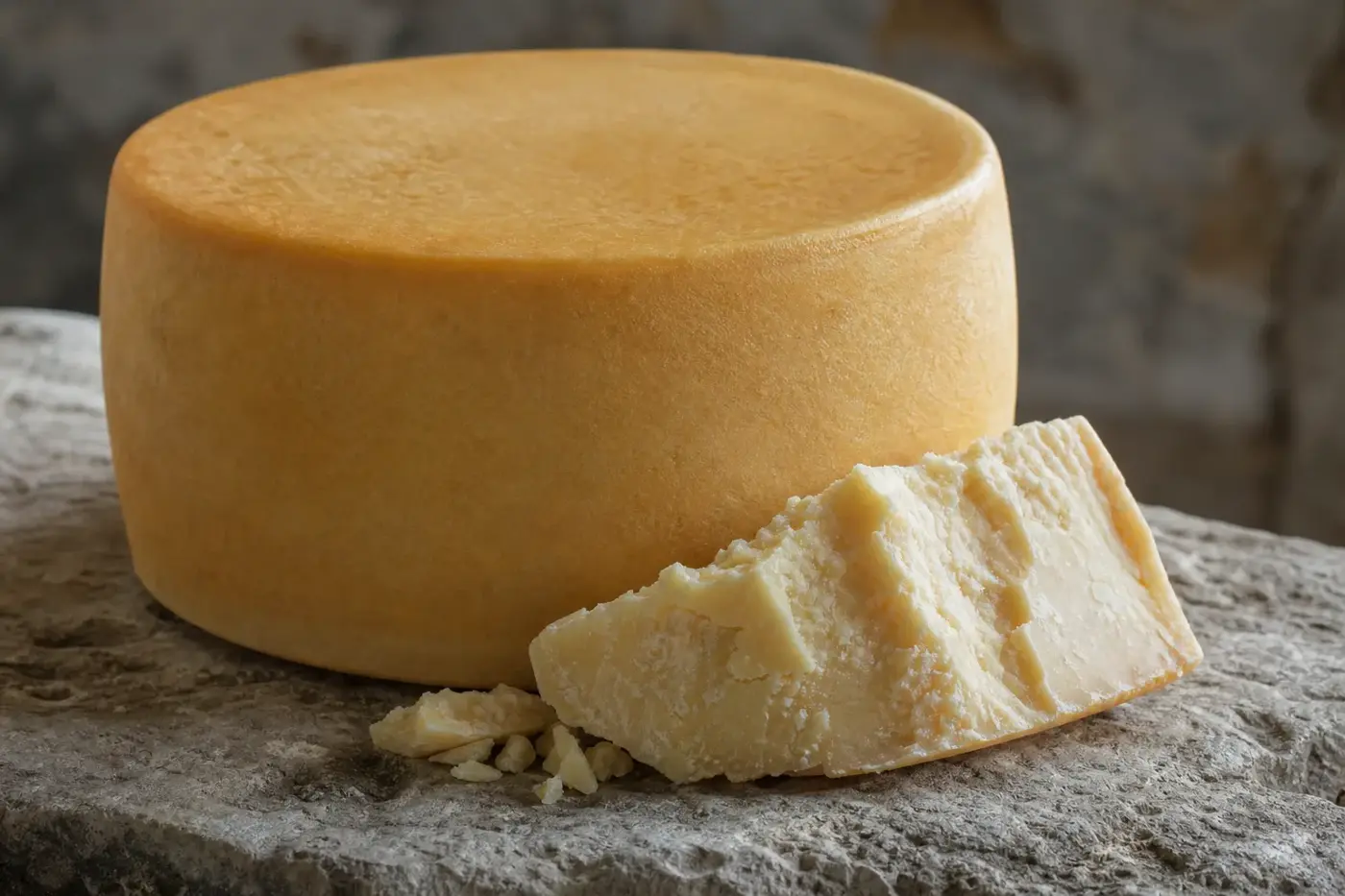
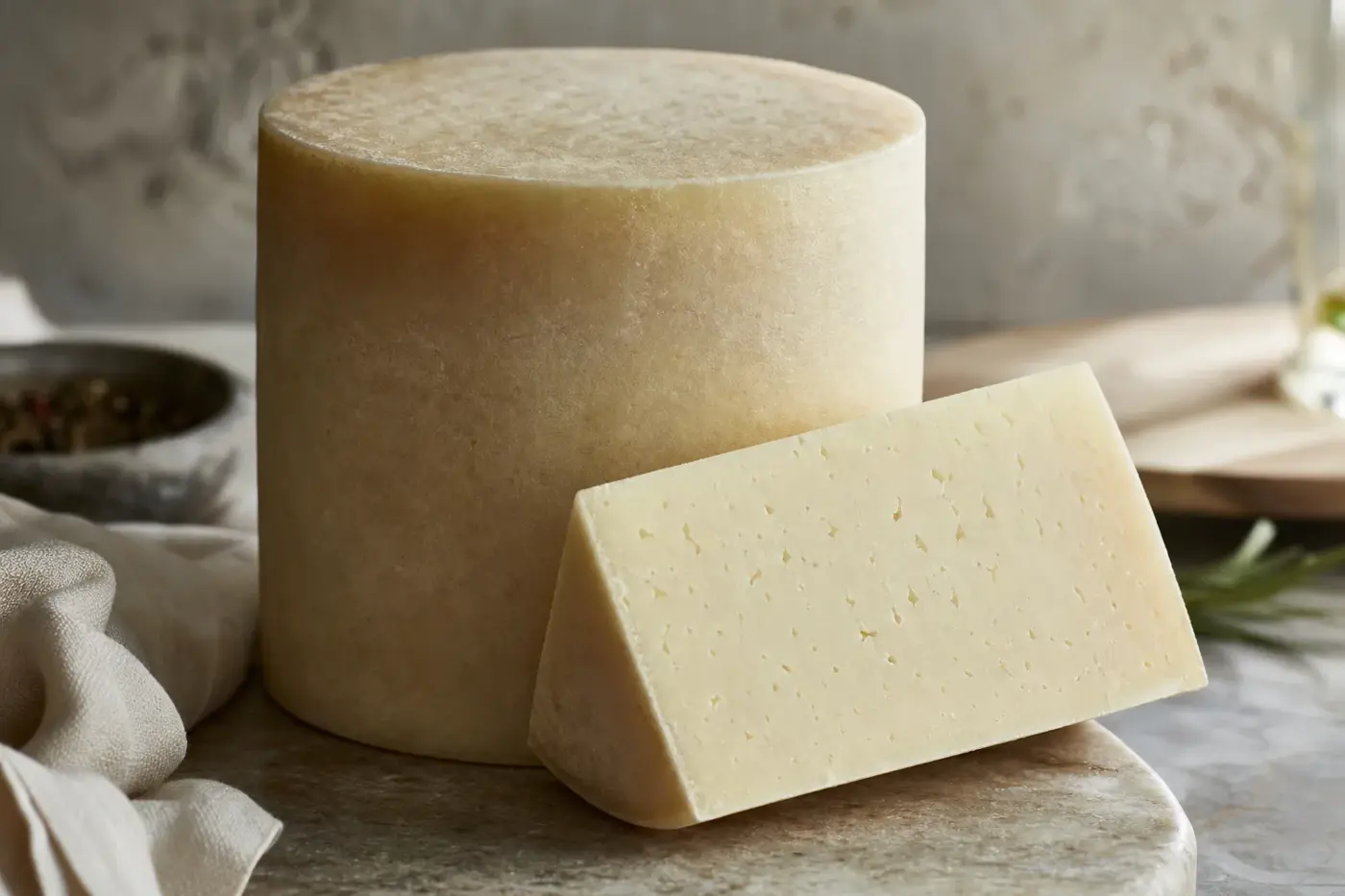
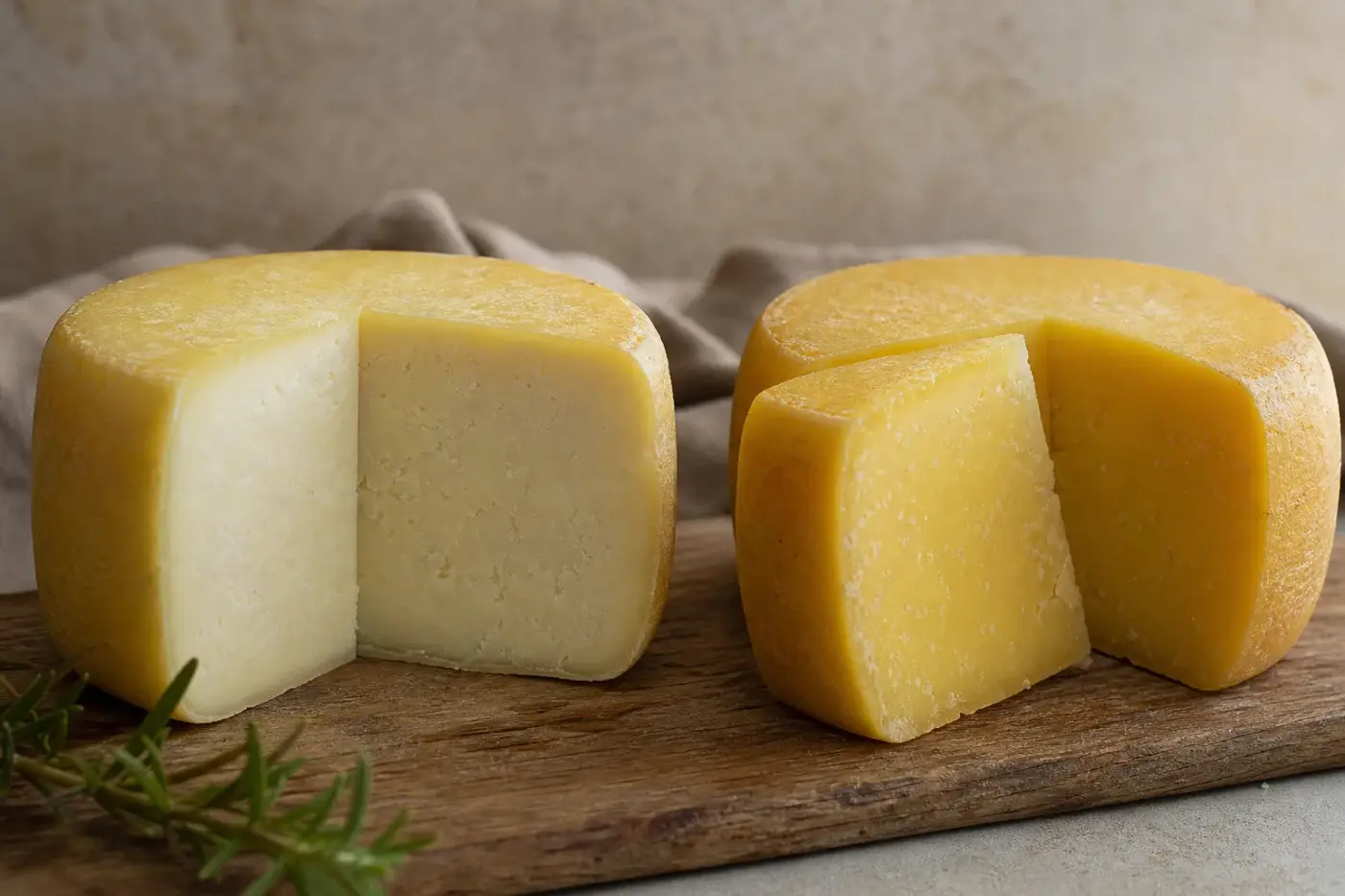
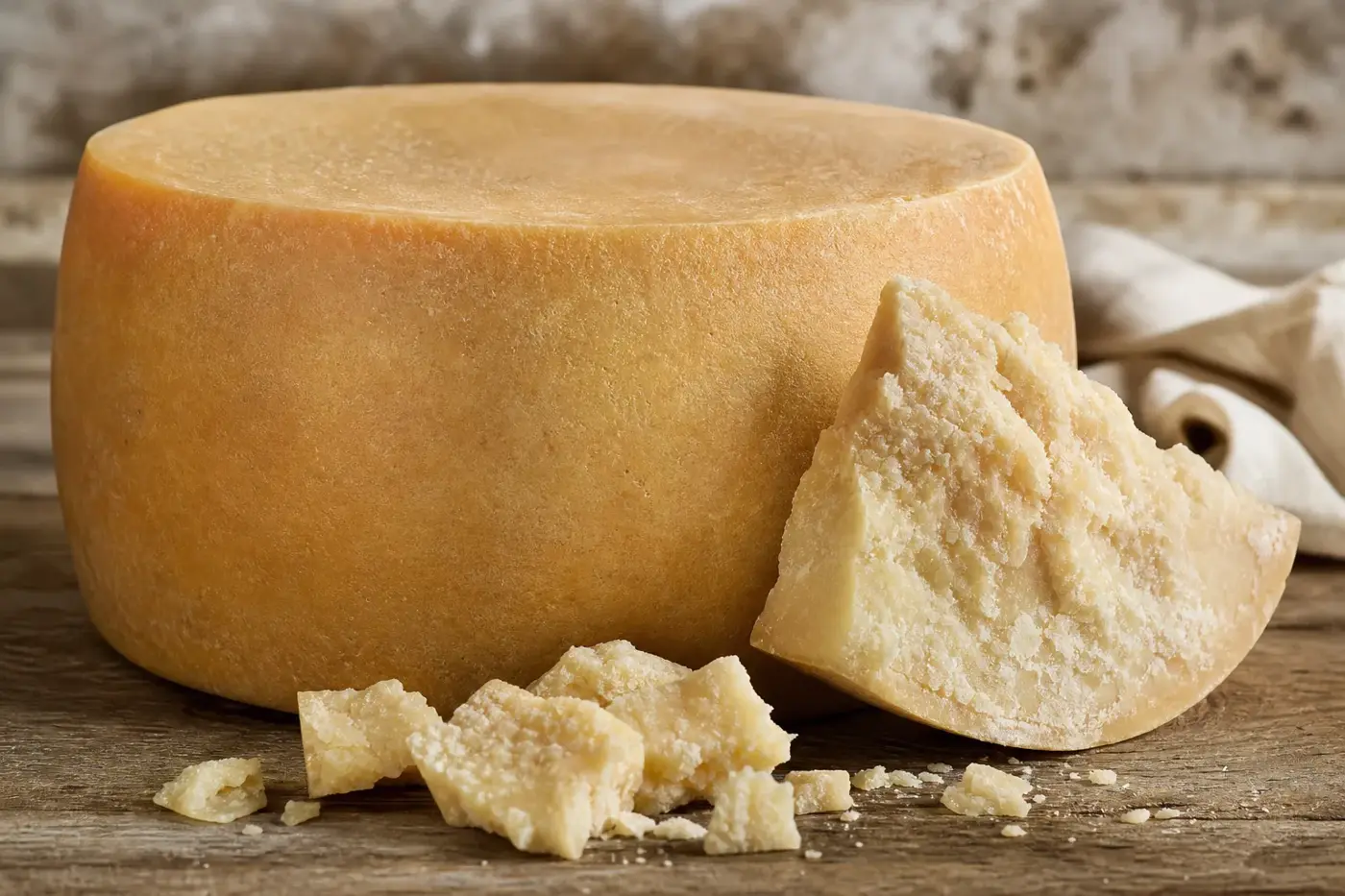
Picture a flattened cylinder with broad, flat faces and a thin, compact rind, ranging from light to dark brown. Cut through it and the paste runs from ivory to straw yellow. The specification describes a soft, elastic interior scattered with characteristic eyes.[4]
Those eyes are openings in the paste, not blue veins. Look beyond the holes, though, because suppleness is central to Fontina’s character. The consortium also highlights its soft, elastic texture, restrained eye formation and orange-brown rind.[5]
At the counter, ask to see a freshly cut surface. You want that overall character, not a prescribed shade or a perfectly arranged set of openings. Production period and maturation can both make a difference under the official description, so recognisable Fontina wheels need not look like identical twins.[4]
Find a strength that suits you
Fontina begins sweet and delicate, then becomes more intense with maturation, according to the official description. Ask how pronounced the wheel in front of you has become. Its name alone cannot tell you its strength.[4]
The consortium describes an intense aroma and a yielding texture, too.[5] Ask your cheesemonger about buttery aromas, nut-like notes and savoury intensity in the piece being cut. Those questions are useful whether you want a gentle sandwich cheese or something more assertive for a cheese plate.
Think of age as a choice of character, not an automatic promotion in quality. If available, try two documented maturities from the same maker. Taste the paste first, then compare aroma, impression of salt and finish, giving each piece a moment before the accompaniments join in.
Meet the cattle behind your cheese
Fontina’s milk must come from the Aosta Valley. The permitted cattle are Valdostana Pezzata Rossa, Pezzata Nera and Castana, including crosses between them.[1] Their names deserve a place in the story alongside the valley.
The 2026 EU amendment brought a significant change: thermised milk is now permitted, and the former single-milking requirement has gone.[2] Under the current specification, milk from consecutive milkings must enter processing within 40 hours of the first milking.[1] Describing Fontina as invariably raw-milk cheese made from one milking therefore leaves part of the picture out.
Thermisation is not pasteurisation. If milk treatment matters to your choice, read the declaration for that particular product: permission in a specification does not tell you what an individual dairy uses. The guide to raw, thermised and pasteurised milk explains the differences.
Calf rennet sets the milk into curd, the coagulated milk solids that become cheese. The curd is then broken, heated, gathered in cloth and pressed in moulds. Only then does maturation begin.[1]
Salt, water and the work of making a rind
Fontina’s brown rind takes patient attention: turning, salting and brushing, repeated over time. The EU specification requires at least 80 days from the beginning of maturation, excluding any preceding drying period.[1] Salt goes onto a face and is allowed to dissolve; that face and the side are then brushed with water and salt, with treatment adjusted to each wheel.[1]
Both faces get their turn. This is active care, rather than cheese simply occupying a shelf. The specified ageing rooms run at 4 to 12 °C with at least 90% humidity, while traditional caves have a separate minimum humidity of 88%.[1]
When you buy, ask how long the cheese has actually matured and how the cheesemonger describes its texture now. The minimum tells you when a cheese can qualify. The wheel being cut has its own production and maturation history, which is worth a conversation.
Follow the herd to summer pasture
Alpeggio is the summer movement of cattle from the valley floor to mountain grazing. The consortium describes a seasonal rhythm: as the cattle graze higher up, hay is cut and gathered lower down for winter feeding.[7]
According to the consortium, the grasses and flowers of those mountain pastures give the milk its aromatic character.[7] That is the seasonal relationship, but each wheel still deserves your attention on its own terms. The official description also recognises that paste texture varies with production period.[4]
Ask about season, maker and age together when comparing pieces. A summer designation and a maturation date tell you different things. Deeper colour, stronger aroma or longer age is only part of the story, not the whole cheese.
At the counter: choose your wedge
Start with the marks on the wheel. The consortium describes three useful identifiers: the Fontina brand, a producer identification mark and a casein plate carrying traceability information. Branding follows checks on compliance and the cheese’s characteristics.[6]
Your wedge may carry only a fragment of a wheel mark. Ask to see the original wheel or its associated product information. On packaged portions, the designation and origin tell you more than a mountain illustration, however persuasive the scenery.
Next, look at condition. A supple cut surface fits Fontina’s documented character better than a dried or cracked one. Ask when the wheel was cut, how the exposed face has been protected and which piece suits your plans.
Appearance can help you assess eating quality, but it cannot establish food safety. Follow the product’s storage instructions, date marking and any recall notice when deciding whether to use it.[9]
Make room for Fontina in your fridge
Protect that cut surface from moisture loss. For a cut piece, the consortium recommends food-grade wrapping fitted closely against it.[8] Buy a manageable quantity and keep the identifying label, especially if several cheeses share a container.
For England, Wales and Northern Ireland, the Food Standards Agency advises a domestic fridge temperature between 0 and 5 °C and following the packaging’s storage instructions.[9] This consumer guidance is your reference at home. Professional maturation-room conditions are not a fridge-setting suggestion.
Each time you use the cheese, check the wrapping and protect the newly exposed face again. Follow any instructions for after opening supplied with the product. For more on wrapping and organisation, turn to storing cheese at home.
Bring bread, fruit and an appetite for tasting
Start with Fontina, plain bread and slices of apple or pear. For its fonduta, the consortium also recommends walnut bread, bread croûtons, apples and pears.[12] An uncomplicated serving is already taking shape.
Try the cheese alone before adding anything sweet or strongly flavoured. Then introduce one accompaniment at a time: fresh fruit for contrast, bread crust for texture, cheese and walnuts for their closer association. Keeping them separate helps you discover which combination you actually prefer, rather than which one makes the busiest plate.
For drinks, try a dry white wine or a light red, with sparkling water or an alcohol-free apple drink alongside. These are pairing suggestions, not tasting findings. The cheese and wine pairing guide offers a broader framework for choosing.
Alcoholic pairings are for adults of legal drinking age, in small servings, and the NHS advises avoiding alcohol during pregnancy.[10] If you are driving, taking medicines that interact with alcohol or recovering from alcohol dependence, do not drink. Check the relevant official advice where you live.
The consortium suggests a tasting temperature around 16 °C.[8] If you let a portion warm, follow the FSA’s advice for England, Wales and Northern Ireland: keep chilled food out for the shortest possible time, with a maximum of four hours during preparation.[9]
From a slice of toast to fonduta
Fontina earns its kitchen place by melting generously. The consortium recommends it for toast and sandwiches, alongside dishes involving pasta, vegetables and meat.[5] You can begin with something as straightforward as toasted bread.
Its best-known regional role is fonduta valdostana. In the consortium’s version, Fontina DOP joins milk, butter and egg yolks to make a sauce served with accompaniments such as bread or potatoes.[12] Use a complete recipe with handling and cooking instructions, particularly because eggs are involved.
Other documented regional uses include polenta concia, a traditional soup and a Valdostana-style cutlet.[11] Between them, you find Fontina in a flowing preparation, a layered dish and a filling. That supple paste has more than one kitchen role.
For everyday cooking, start with something familiar, such as toasted bread or cooked polenta. Match the cheese’s intensity to the other ingredients and taste before adding more salt. If a filling or sauce needs smooth paste alone, trim away the rind.
Rind, milk and the details that matter
The brown rind belongs to Fontina’s documented appearance.[4] Whether you eat the rind on your particular piece depends on the maker’s information about its treatment and suitability for eating. Removing it can also be a straightforward texture choice, at the table or in cooking.
For pregnancy in the UK, the NHS lists hard cheeses, including those made with unpasteurised milk, and pasteurised semi-hard cheeses among cheeses that can be eaten.[10] Read the current guidance alongside the actual product information. Consider how you will prepare the cheese, too.
Milk treatment, cheese category and preparation all matter when interpreting that advice. Ask your midwife or another appropriate health professional about your circumstances. Take the product details rather than relying on the cheese name alone.
If unfamiliar growth appears during storage, consult mould on cheese before deciding what to do. For wider official guidance, including why particular groups receive different advice, see Listeria and cheese safety.
General information only, not medical advice: follow the official guidance where you live.
Questions people ask
Where does Fontina DOP come from?
Fontina DOP comes from the Aosta Valley in Italy. Its defined territory covers production, maturation and portioning.
What does Fontina taste like?
Its flavour begins sweet and delicate and becomes more intense with maturation. Its interior is soft and elastic, with characteristic openings.
Is Fontina made with raw milk?
The EU specification permits whole cow’s milk that is raw or thermised. Check the declaration on the particular product to find out which treatment was used.
Is Fontina vegetarian?
The EU specification requires calf rennet to coagulate the milk. The page does not verify the Great Britain requirements.
How is Fontina used in cooking?
Fontina melts and can be used in toast, sandwiches and dishes with pasta, vegetables or meat. The consortium’s fonduta valdostana combines Fontina DOP with milk, butter and egg yolks to make a sauce.
Sources
[1] Ministero dell’agricoltura, della sovranità alimentare e delle foreste, Disciplinare di produzione «Fontina», April 2026 version, Articles 2 to 8. Official specification.
[2] European Commission, Publication of the communication of an approved standard amendment to a product specification of a geographical indication, C/2026/3578, 7 July 2026, including the Fontina single document. Official Journal publication.
[3] Department for Environment, Food & Rural Affairs, Fontina, protected food name register entry, published 4 January 2021, checked November 2026. Great Britain register entry.
[4] Consorzio Produttori e Tutela della DOP Fontina, Documento unico Fontina DOP (2026), section 3.2. Single document.
[5] Consorzio Produttori e Tutela della DOP Fontina, La Fontina, undated, checked November 2026. An industry body’s description and culinary recommendations. Product description.
[6] Consorzio Produttori e Tutela della DOP Fontina, Certified Quality, undated, checked November 2026. Identification and checks.
[7] Consorzio Produttori e Tutela della DOP Fontina, Alpeggio, undated, checked November 2026. Mountain-pasture account.
[8] Consorzio Produttori e Tutela della DOP Fontina, Come conservare la Fontina D.O.P., undated, checked November 2026. Used for wrapping and sensory serving temperature, not its cellar-storage advice. Storage account.
[9] Food Standards Agency, How to chill, freeze and defrost food safely, published 18 December 2017, checked November 2026. Applies to England, Northern Ireland and Wales. Official consumer guidance.
[10] NHS, Foods to avoid in pregnancy, current page checked November 2026. Official pregnancy guidance.
[11] Consorzio Produttori e Tutela della DOP Fontina, Ricette Tradizionali della Valle d’Aosta, undated, checked November 2026. Commercially interested industry recipe collection, used for documented culinary examples. Regional dishes.
[12] Consorzio Produttori e Tutela della DOP Fontina, Fonduta di Fontina Dop, undated, checked November 2026. Commercially interested industry recipe, used for ingredients and suggested accompaniments, not reproduced as a tested method. Fonduta account.
Researched through official specification documents, the EU amendment publication, the Great Britain register, official UK safety guidance and attributed consortium accounts, with no site tasting or recipe testing.
Last checked: November 2026
Last checked November 2026.
The editors suggest you read next
Parmigiano Reggiano
Break into a wheel of Parmigiano Reggiano and flakes fall away, revealing a finely granular cheese, pale straw to straw in colour.