Garrotxa
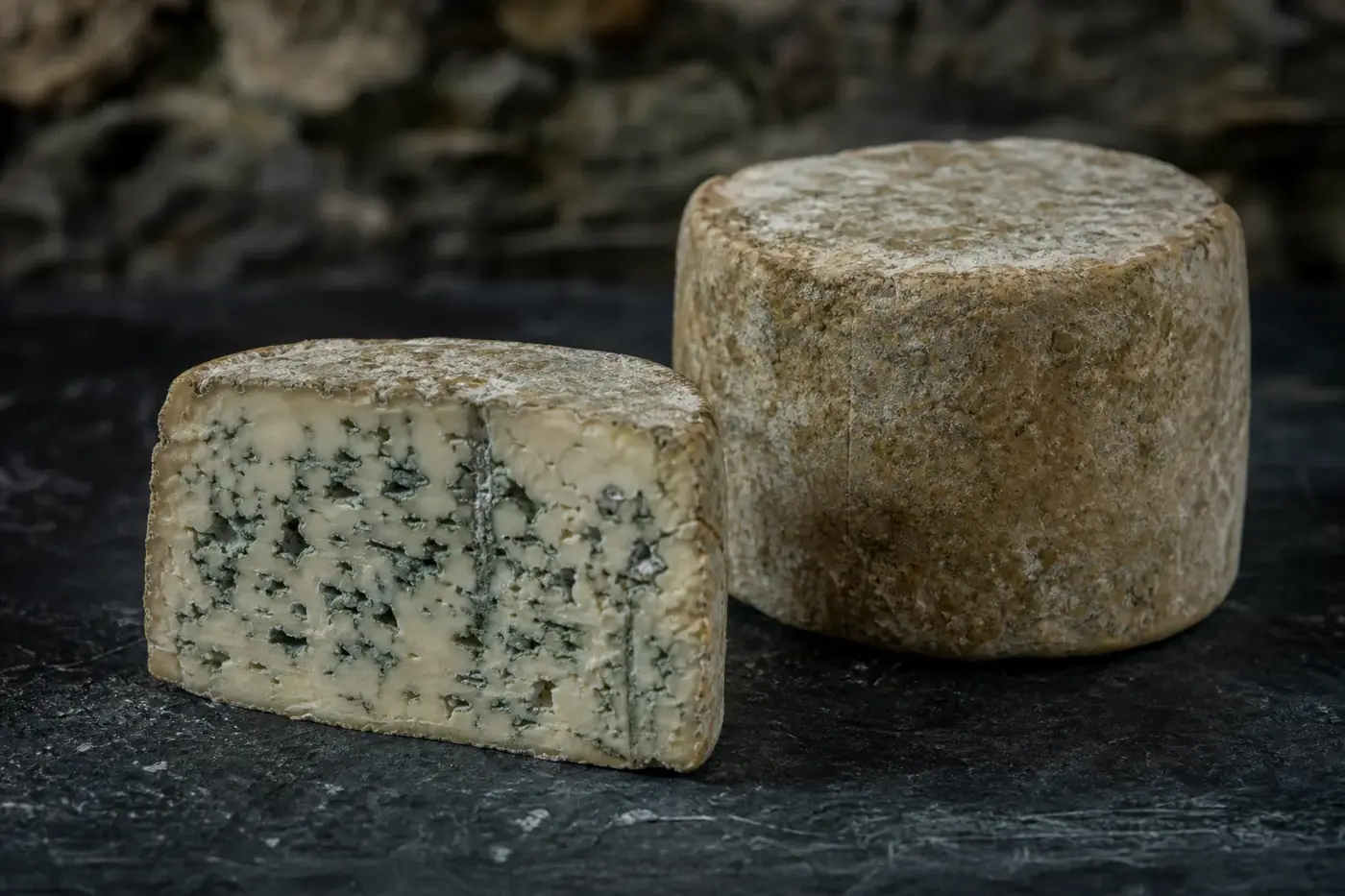
Your knife passes through a grey coat, and the smell of a damp cellar gives way to delicate milk flavours.
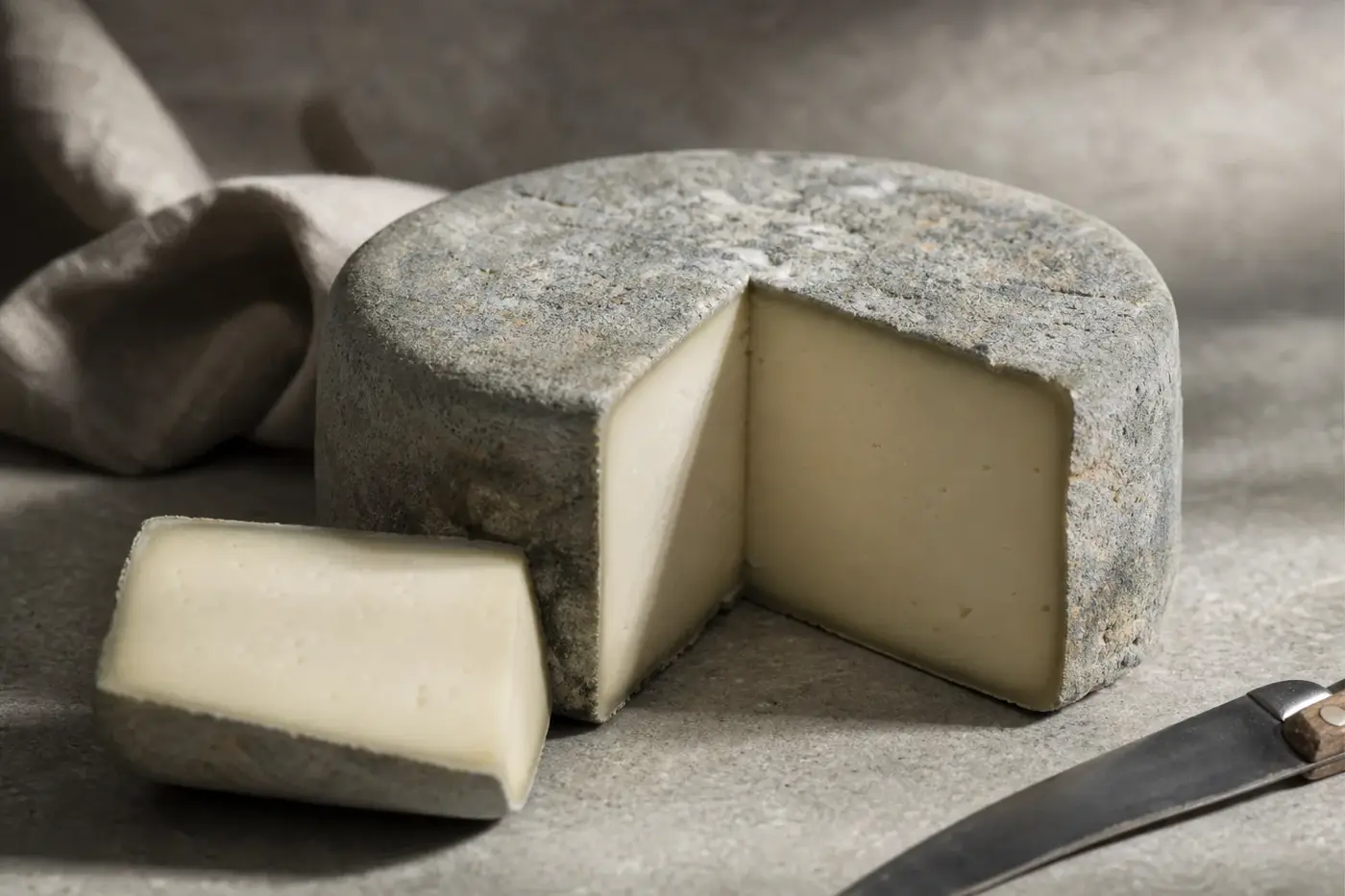
Your knife passes through a grey coat, and the smell of a damp cellar gives way to delicate milk flavours. Inside is a pale, compact centre: Garrotxa, the Catalan goat’s cheese with a rather gentler character than its wardrobe suggests. Its 1980s revival carried a local name into dairies across Catalonia. The Catalan designation overview describes that sensory contrast; the official registration account tells the story of its return. [1,3]
| What you want to know | The detail |
|---|---|
| Name | Garrotxa. [1] |
| Registered names | Formatge Garrotxa; Queso Garrotxa. [2] |
| EU status | PGI, registered and in force; November 2026 status. [1,2] |
| Registration authority and identifier | European Commission; PGI-ES-02876. [3] |
| Where it is made | All Catalonia, Spain. [1] |
| Milk and treatment | Whole pasteurised goat’s milk. [4] |
| Coagulant in PGI specification | Animal rennet. [4] |
| Minimum maturation under PGI | 21 days. [4] |
| Ages you might find | Examples include 75 days and 2 to 3 months. [7,9] |
| Rind | Naturally developed grey to blue-grey mould. [4] |
| Pregnancy guidance | UK NHS advice, November 2026. [11] |
Follow the name to Catalonia
Find La Garrotxa on the map and you have found a comarca, or administrative county, in Girona province in north-eastern Catalonia. The cheese takes its name from here, but its protected territory reaches further. The PGI covers the whole autonomous community of Catalonia, Spain, so a wheel made elsewhere in Catalonia can qualify too. Think of the name as an introduction to its home county, rather than a boundary around every recognised dairy. [1,3,5,9]
Meet the young cheesemakers who brought it back
In the 1980s, young people leaving cities for the countryside helped revive Garrotxa. The official registration account takes you to Torre Marimon, an agricultural college, where they learnt cheesemaking before bringing the method to dairies across Catalonia. This local cheese became part of a wider Catalan story, as people moved and their new skills travelled with them. [3]
Bauma’s importer, Rogers Collection, adds a participant’s perspective in a commercial account published in 2025. It connects the revival with goat farmers and specialist cheesemaking advice, tracing Bauma’s own beginnings to a rural collective in 1979. Together, the accounts describe rural beginnings, a revival in the 1980s and production spreading afterwards. They do not give you one settled invention date or a recipe handed down unchanged. [3,8]
What the protected name tells you
“Formatge Garrotxa / Queso Garrotxa” became a European Union protected geographical indication, or PGI, through Commission Implementing Regulation (EU) 2023/2872, published on 20 December 2023. EUR-Lex records the regulation as in force. The Catalan agriculture department also lists the registered designation and its specification; November 2026 is the reference date for these listings here. [1,2]
For EU PGI-certified cheeses, the specification sets shared rules for ingredients, production and appearance, while leaving room for makers’ choices. At the counter, ask who made your cheese and whether that product is certified. Older product literature, export descriptions and labels saying simply “Garrotxa” need their date and market taken into account. The same name does not promise an identical cheese. [2,4,6]
If those initials leave you wondering, turn to the protected names guide. It explains PGI, PDO and TSG.
Into the dairy: milk, rennet and pressed curd
The PGI recipe begins with whole pasteurised goat’s milk and requires animal rennet. Rennet is the enzyme preparation that sets milk; here it works alongside acidification by lactic cultures, a method called mixed coagulation. The curd, the solids separated from the liquid whey, is cut, moulded and pressed. Salt follows, either in brine or applied dry by hand. [3,4]
Two details deserve your attention when shopping. A PGI wheel uses animal rennet, so if you are vegetarian, assess any differently described product individually. The specification also allows optional lysozyme, and Montbrú’s published Garrotxa sheet includes egg lysozyme among its ingredients. Read the actual pack for milk, egg and other allergens rather than relying on the cheese’s name. [4,6]
You can explore those choices in rennet explained. For the difference between raw and pasteurised milk, turn to milk treatments.
A grey coat, carefully tended
Garrotxa develops its grey rind naturally during maturation. The PGI specification names Mucor and Penicillium among the surface fungi and requires them to develop without artificial inoculation. Cheesemakers turn the wheels and gently tend the growing coat by hand, encouraging an even covering. That cellar look takes care, not neglect. [4]
Beneath the rind, the paste loses water, firms up and develops aromatic compounds, while the surface helps regulate moisture loss. The legal minimum maturation is 21 days, though examples on sale spend longer ageing. Forever Cheese, importer of Sant Gil d’Albió, describes a cheese matured for 75 days; Rogers Collection lists Bauma wheels aged for 2 to 3 months. Those ages give you something useful to compare when choosing between makers. [4,7,9]
Little wheels, proper slices
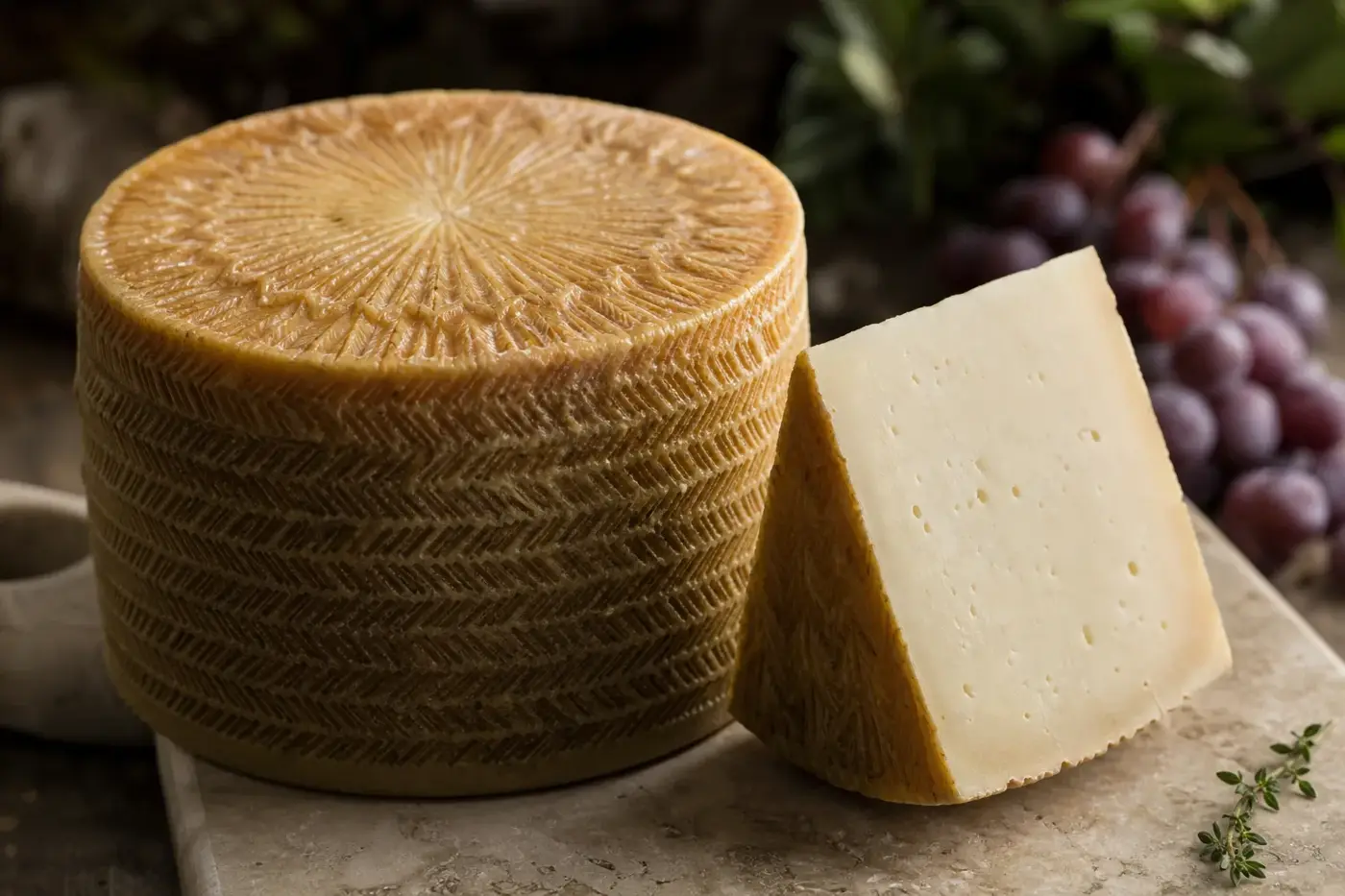
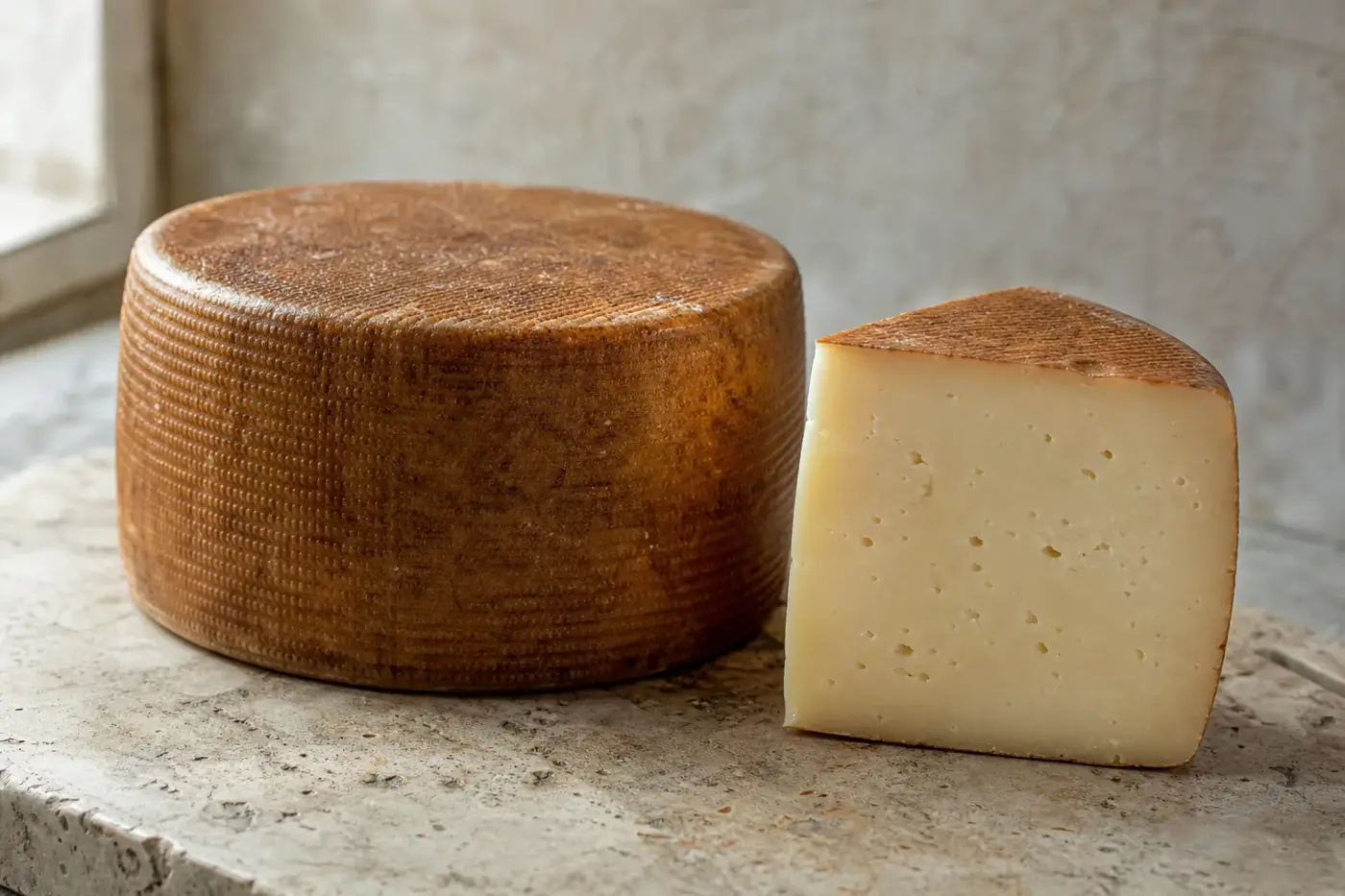
The registered formats are small cylinders with rounded edges, weighing approximately 500 g or 1 kg. The smaller measures about 10.5 cm across, the larger about 14.5 cm, with tolerances set out in the specification. The official texture description is firm and smooth. [1,3]
Firm need not mean unyielding: you can expect some elasticity here. The Catalan department describes a consistent, close-textured cheese, while the EU description emphasises its smooth paste. This is a cheese for a proper slice, not a flowing centre. For your first purchase, ask the cheesemonger to show you the cut face and talk you through that particular wheel’s age. [1,3]
Taste the milk beneath the cellar aromas
Fresh goat’s milk, a butter-like aroma, lactic flavours and slight acidity form Garrotxa’s official flavour profile. The rind supplies that damp-cellar smell. Notice the contrast as you taste: a milky centre beneath an earthier surface, rather than the sharp tang you might expect from goat’s cheese. [1]
Then follow the differences between makers. Both Sant Gil d’Albió and Bauma have nut and herb notes in their respective importers’ descriptions, with Rogers Collection calling Bauma slightly acidic and nutty on the finish. Forever Cheese describes Sant Gil’s version as full-bodied, with nuts, herbs and a long finish. Montbrú’s own sheet promises a more intense taste and a lightly citrus finish, giving you another useful clue at the counter. [6,7,9]
At the counter, look beyond the rind
Start with a named producer, clear storage instructions and a date that suits your eating plans. For a whole PGI wheel, the specification describes an intact cylinder without cracks or unusual surface colouration. The grey to blue-grey coat is expected. If something looks unlike the maker’s normal appearance, especially on a cut portion, ask before buying. [4,10]
Keep the label or counter ticket. It carries the maker, batch and handling details you may need later, and you should follow any recall affecting that product and batch. If unfamiliar growth appears after purchase, consult mould on cheese alongside the producer’s advice. The name “Garrotxa” alone cannot explain a new change on your piece. [10]
Keep it cool and serve with care
For home storage, the Food Standards Agency’s guidance for England, Wales and Northern Ireland recommends a fridge between 0 and 5 °C and following dairy packaging instructions. Keep the remaining cheese covered and refrigerated. Follow any directions for use after opening, letting the particular label determine how long you keep it. [10]
Cut only what you expect to eat, bringing that portion out shortly before the meal to lose a little refrigerator chill. Return the remainder promptly. The same FSA guidance says chilled food should spend the shortest possible time out during preparation, with a maximum of four hours. Keep your serving window brief. [10]
If you would like to eat the rind, ask whether the maker intends that product’s surface to be eaten and whether any coating or treatment needs removing. If it is intended to be eaten, consult current food safety advice for your circumstances before tasting it. The damp-cellar aroma belongs to Garrotxa’s official sensory character, but the particular product still matters. [1]
This page summarises published guidance from the official sources it cites. It is not medical advice. Guidance differs between countries and changes over time, so check the current source for where you live, and ask your doctor, midwife, pharmacist or dietitian about your own circumstances.
Pregnant? Begin with current UK guidance
The UK NHS lists pasteurised semi-hard cheeses among foods you can eat in pregnancy. It advises thoroughly cooking pasteurised or unpasteurised mould-ripened soft cheeses with a white coating, and says any cheese cooked until steaming hot can be eaten. Those are cheese categories, not advice naming Garrotxa itself. Confirm your actual cheese’s classification with its producer; if anything remains unclear, consult your midwife or doctor using current NHS guidance. [11]
Set out the tomato bread and Catalan wine
Start with pa amb tomàquet, bread rubbed with tomato: Montbrú suggests it as a companion for Garrotxa. The maker also recommends young red wine or barrel-aged white wine, while Rogers Collection suggests dry or fruity whites for Bauma. For a straightforward pairing, choose a Catalan wine in one of those broad styles and taste it alongside your cheese. [6,9]
In autumn, try sliced pear or apple; in season, fresh figs. Keep accompaniments separate so you can compare bites, with plain bread and water as an alcohol-free starting point. Adults of legal drinking age who choose wine could try one small serving of a young Catalan red or a white aged in a barrel.
People who are pregnant, driving, taking medicines that interact with alcohol, or recovering from alcohol dependence should not drink. Consult current advice from the NHS or the equivalent authority where you live.
Garrotxa has a place in the kitchen, too: Bauma’s importer suggests salads and other cooked uses. Try slices alongside tomatoes and bread, or scatter small pieces over a simple salad. No complicated recipe is required, which leaves more time for the important business of tasting. Begin with a little cheese, taste the whole dish, then decide whether it wants more cheese or seasoning. [9]
A little more for the cheese-curious
- How to Store Cheese at Home: practical help with wrapping, refrigeration and cut portions.
- Cheese and Wine Pairing: The Complete Guide: a broader framework, including alcohol-free alternatives.
Questions people ask
What does Garrotxa taste like?
The official flavour profile includes fresh goat’s milk, butter, lactic flavours and slight acidity. The rind smells of a damp cellar.
Is Garrotxa vegetarian?
Garrotxa made under the PGI specification uses animal rennet. Vegetarians should check any differently described product individually.
Can I eat Garrotxa during pregnancy?
The UK NHS says pasteurised semi-hard cheeses can be eaten in pregnancy, but its guidance names categories rather than Garrotxa itself. Confirm the cheese’s classification with its producer and consult your midwife or doctor using the current NHS guidance if anything remains unclear.
Can you eat the rind on Garrotxa?
Ask whether the maker intends the surface of that product to be eaten and whether any coating or treatment needs removing. If the rind is intended to be eaten, check current food safety advice for your circumstances before tasting it.
How long is Garrotxa aged?
The PGI specification requires at least 21 days of maturation. Marketed examples include a 75 day cheese and wheels matured for two to three months.
Sources
[1] Generalitat de Catalunya, Departament d’Agricultura, Ramaderia, Pesca i Alimentació. Indicació geogràfica protegida Formatge Garrotxa. Official designation overview, updated 1 August 2024. Production territory, formats, sensory profile and certification information.
[2] European Commission. Commission Implementing Regulation (EU) 2023/2872 of 13 December 2023 entering a name in the register of protected designations of origin and protected geographical indications (Formatge Garrotxa/Queso Garrotxa (PGI)). Official Journal, published 20 December 2023. EUR-Lex identifies the instrument as in force.
[3] European Commission. Publication of an application for registration of a name pursuant to Article 50(2)(a) of Regulation (EU) No 1151/2012, single document for Formatge Garrotxa / Queso Garrotxa, 2023/C 303/05, 28 August 2023. Identifier PGI-ES-02876. Product description, geographical area and historical account. )
[4] Generalitat de Catalunya. Pliego de condiciones de la Indicación Geográfica Protegida “Formatge Garrotxa” / “Queso Garrotxa”. EU registration version, December 2023. Sections B, C and E cover appearance, ingredients, production, rind development and maturation.
[5] Statistical Institute of Catalonia, Idescat. Garrotxa and Territorial and entity codes: Comarques i Aran, 19 Garrotxa. Current official geographical records retrieved November 2026.
[6] Formatges Montbrú. Garrotxa: Formatge semicurat de cabra / Queso semicurado de cabra. Undated bilingual producer product sheet, retrieved November 2026. Ingredients, tasting description, formats and pairing suggestions. This is the producer’s commercial account.
[7] Forever Cheese. Garrotxa. Undated importer product page, retrieved November 2026. Sant Gil d’Albió product, pasteurised goat’s milk, 75-day maturation and the importer’s tasting description. This is a commercial supplier’s account.
[8] Rogers Collection. Bauma: Crafting Tradition and Excellence, The Story of Garrotxa IGP Cheese. 8 January 2025. Retrospective account of Bauma and the revival, published by its importer.
[9] Rogers Collection. Spanish Cheese: Garrotxa, Bauma. Product sheet, revision marked 1/9/2023. Retrieved text covers the Girona connection, maturation, ingredients, sensory description and suggested uses. Its designation terminology is superseded by the official registration sources above.
[10] Food Standards Agency. How to chill, freeze and defrost food safely. Published 18 December 2017; current online guidance retrieved November 2026. Applies to England, Northern Ireland and Wales. Sections on chilling, packaging instructions and time outside refrigeration.
[11] NHS. Foods to avoid in pregnancy. Current online guidance retrieved November 2026. Section “Cheese, milk and other dairy”. Source link: Not verified. The editor must verify and add the official document URL before publication.
Researched through official designation documents, Catalan geographical records, published producer and importer descriptions, and UK official food guidance, with historical accounts and commercial tasting notes attributed to their sources.
Last checked: November 2026
Last checked November 2026.
The editors suggest you read next