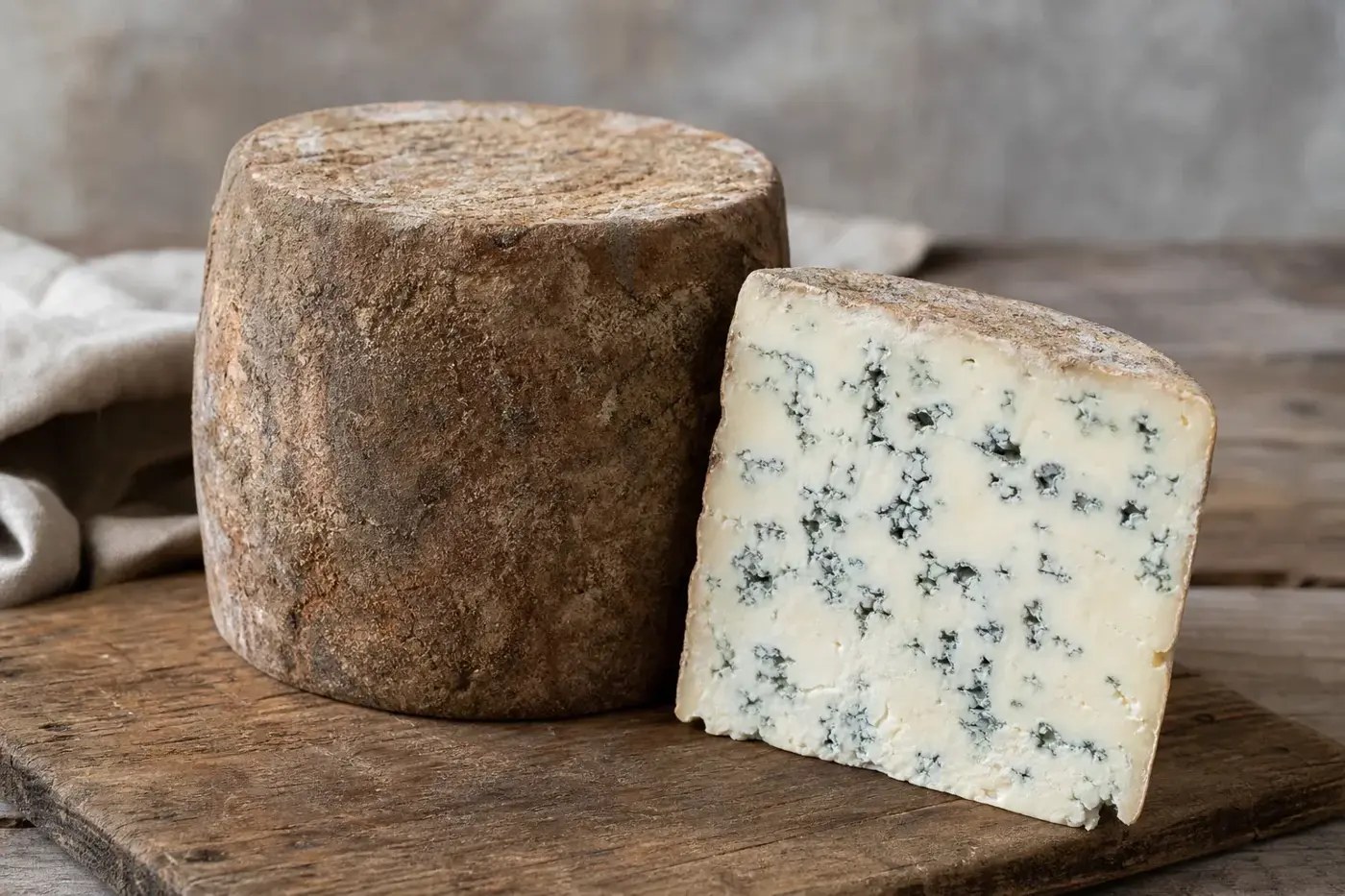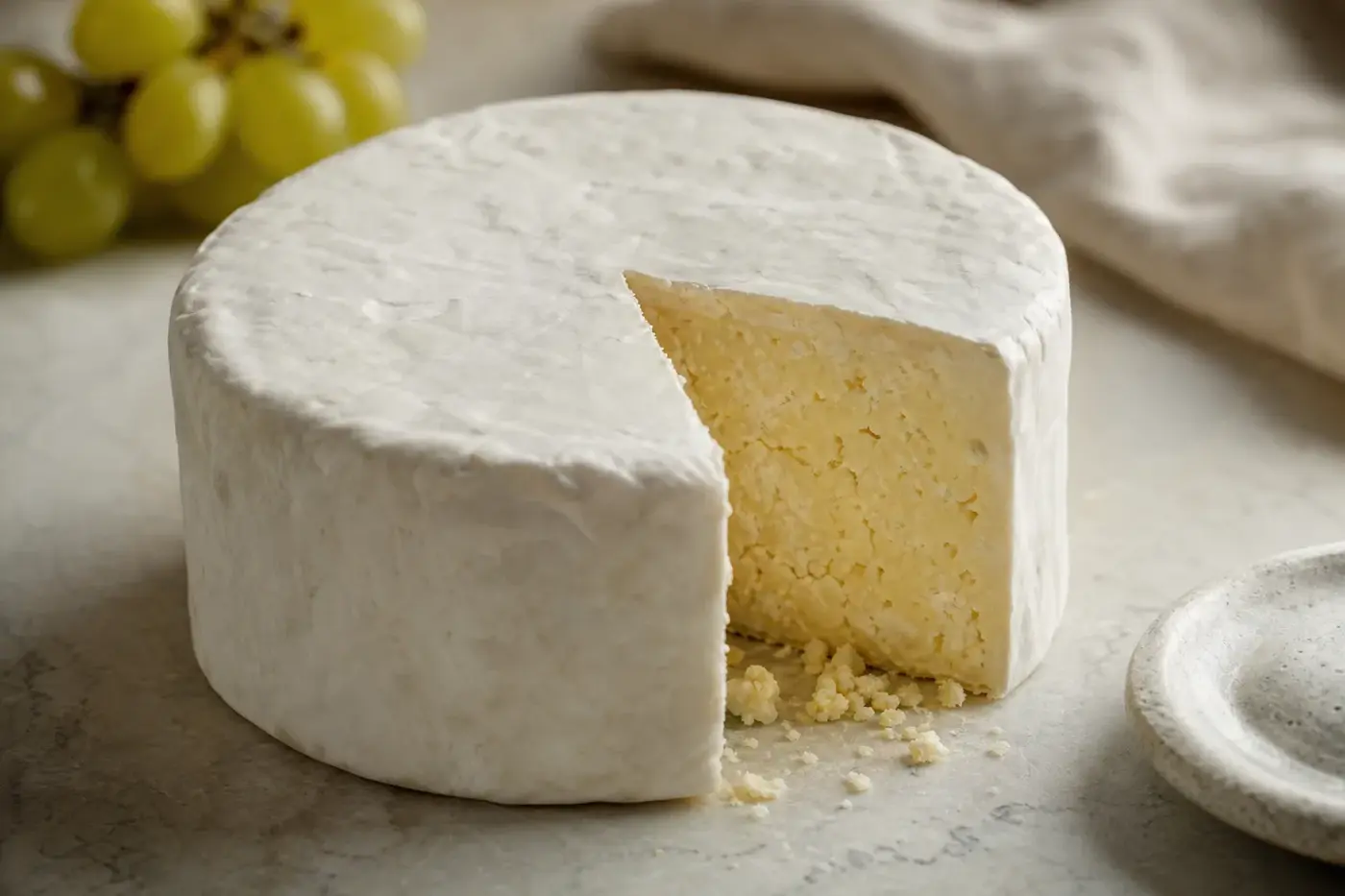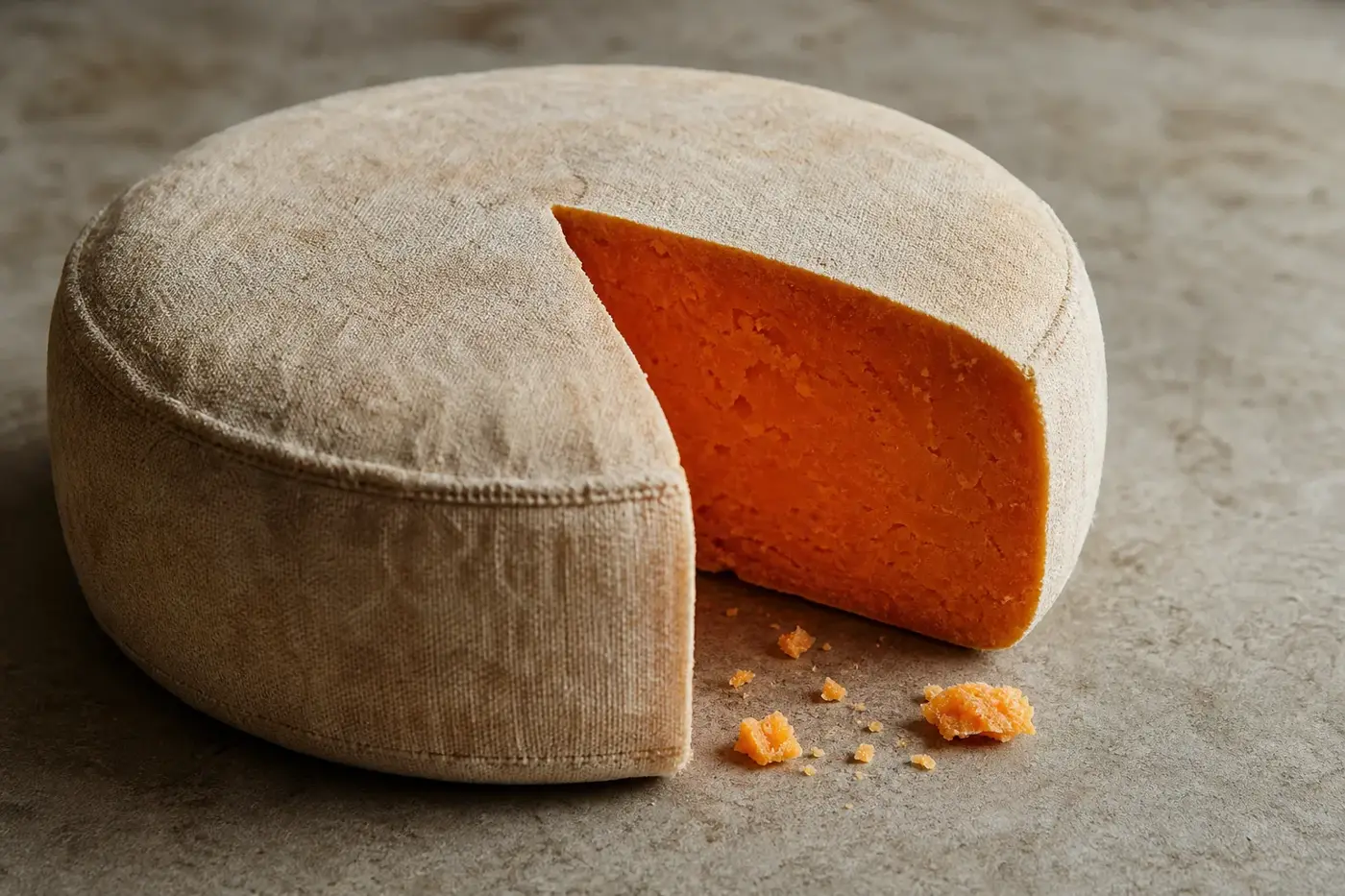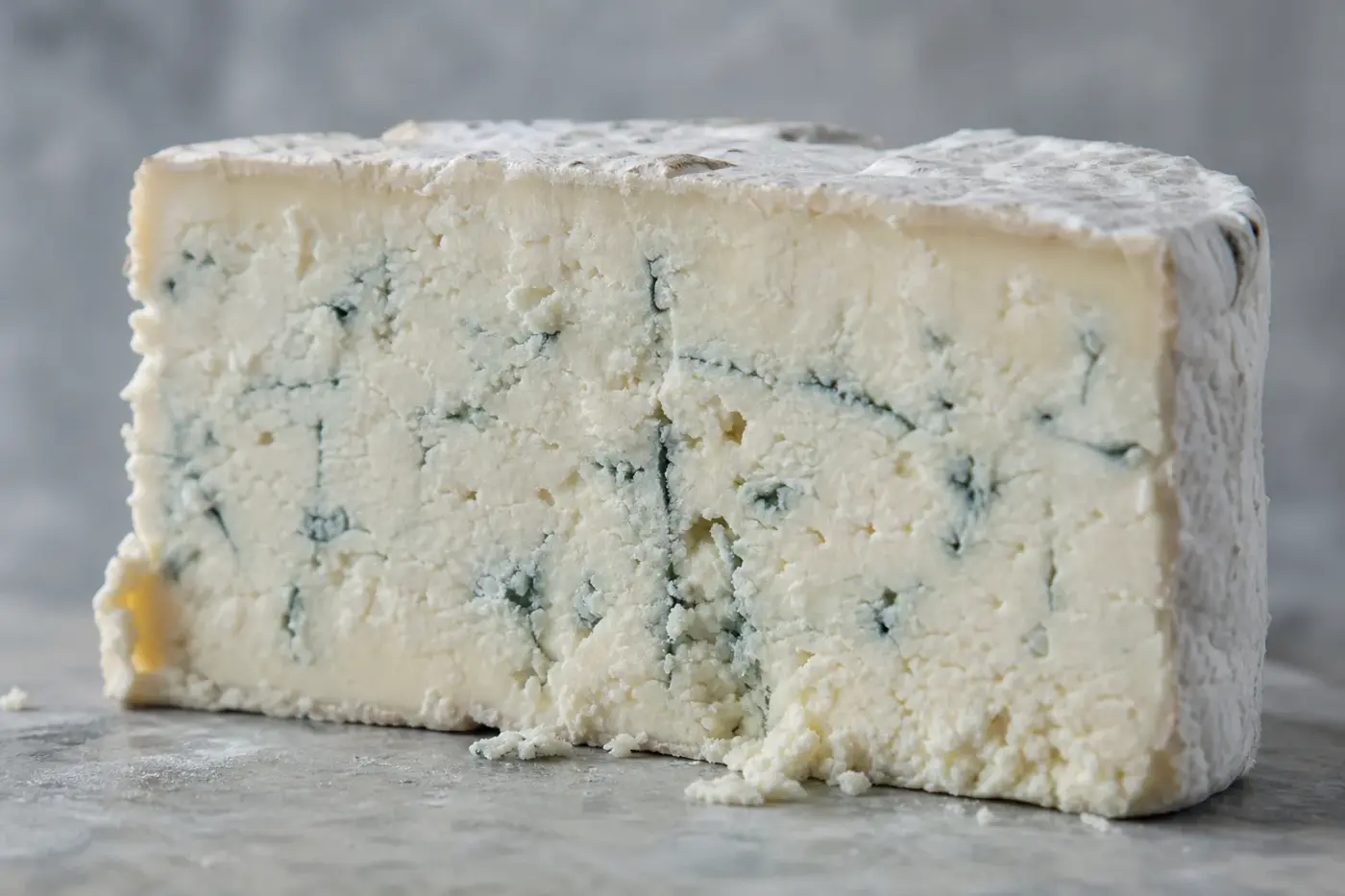
Take a bite where the pale cheese meets a little blue. Sweetness comes first in Ticklemore Cheese Dairy’s description of Harbourne Blue, followed by earthy notes and a lingering tang. Made near Totnes in Devon, England, this goat’s milk cheese brings gentle blue mould and savoury depth to the milk’s freshness. You are tasting a dairy’s particular devotion to blue cheesemaking.[1][2]
| At a glance | What to know |
|---|---|
| Name | Harbourne Blue.[1] |
| Maker and home | Ticklemore Cheese Dairy, Ashprington, near Totnes, Devon, England.[2] |
| Milk | Goat’s milk; the maker names a South Molton supplier from March 2026.[1] |
| Milk treatment | Pasteurised goat’s milk for Neal’s Yard Dairy’s selection.[6] |
| Style | Blue-veined cheese.[1] |
| Named blue culture | Penicillium roqueforti, declared by Neal’s Yard Dairy for its selection.[6] |
| Coagulant | Vegetarian coagulant, declared by Neal’s Yard Dairy.[6] |
| Usual ageing | Average age of 4 to 8 months for Neal’s Yard Dairy’s selection.[6] |
Meet Devon’s blue cheese family
Three milks, three blue cheeses. Ticklemore makes Devon Blue from cow’s milk, Beenleigh Blue from sheep’s milk and Harbourne Blue from goat’s milk. Harbourne is not an occasional guest in a sprawling range: it belongs to a family devoted to blue cheesemaking.[2]
You will find the dairy on Sharpham Barton Lane in Ashprington, near Totnes. Keep one distinction in mind when you shop: Ticklemore Cheese Dairy is a separate business from Sharpham Dairy, which makes Sharpham Ticklemore Goat. Full names earn their keep at this cheese counter.[2]
The maker dates Harbourne’s beginnings to the mid-1980s. Its story follows cheesemaking at Beenleigh, near Totnes, then the purchase of goat’s milk to develop Harbourne alongside the existing sheep’s milk blue. Practical dairy work gave rise to a cheese with its own milk and character.[1][3]
That history gives you a useful place to begin tasting. Meet Harbourne as a Devon blue with a goat’s milk identity, rather than expecting it to live up to another cheese’s name or reputation.
Follow the milk back to the goats
Milk suppliers change, and Harbourne’s story includes just such a handover. Ticklemore says it began using milk from a South Molton supplier in March 2026, after its previous supplier retired.[1] Neal’s Yard Dairy still lists a Somerset supplier.[6] If the source matters to your choice, ask the seller about the particular batch.
The maker describes a herd of mainly Saanen goats, with some Toggenburg goats. Its account records housed animals receiving silage and supplementary feed, with fresh barley straw. That is the picture to keep in mind, rather than an imagined scene of goats grazing somewhere in Devon.[1]
Harbourne is made with pasteurised milk. Ticklemore’s January 2020 production account describes pasteurisation before the milk enters the cheesemaking vats, while Neal’s Yard Dairy’s current ingredient declaration specifies pasteurised goat’s milk.[5][6] You can explore the differences in raw, thermised and pasteurised milk.
Keep the information that comes with your piece. The seller’s declaration is your useful reference for ingredients and coagulant, especially if your previous purchase was a while ago. Today’s cheese deserves today’s details, rather than a remembered description.
Get to know the blue in your slice
Light blue veining and a crumbly texture are central to Neal’s Yard Dairy’s description of Harbourne. Its listed whole-cheese selection weighs 2,415 to 2,735 g. Your small counter portion belongs to a rather more substantial whole.[6]
When choosing a cut piece, look at the paste: the interior beneath the surface. Ask your cheesemonger to show you the veining and describe that batch’s texture. The cheese in front of you, supported by the seller’s account, tells you more than a photograph of another wheel.
At the table, try a bite containing pale paste and a little blue veining. Follow it with a piece that has less blue. You can explore the balance across your portion without letting its strongest-looking patch do all the talking.
From the vat to that gold foil
Those blue veins need some practical help. In Ticklemore’s January 2020 production account, salt is rubbed over the cheeses repeatedly before they are spiked. The spikes admit oxygen, encouraging blue mould inside.[5]
First, though, comes the vat. Starter culture goes into the milk before rennet, the coagulant that sets it. The curd is cut and stirred, whey is removed, and the cheeses are turned before moving to the salting room. The account follows that work through to the finished, wrapped cheese.[5]
For ripening, the dairy described a humid room held at 9 to 10 °C, followed by refrigerated maturation. The cheeses stayed until at least three months old, normally longer. Season and taste determined when they left, scraped and wrapped in gold foil.[5]
That January 2020 account captures the maker’s process at the time. Neal’s Yard Dairy separately lists an average age of 4 to 8 months for its Harbourne selection.[6] Age, alongside texture and flavour, is a useful subject to bring to the counter.
If you would like to follow the wider journey, how cheese is made explains coagulation, draining and ripening. Read it as context for the dairy’s account, rather than instructions for making Harbourne at home.
Let your palate find its own way
Sweetness, savoury flavour and restrained blue intensity feature in Ticklemore’s tasting notes, along with a smooth texture. The dairy also identifies occasional fruity and coconut-like undertones.[1] Look out for them, but there is no need to turn each mouthful into a scavenger hunt.
Neal’s Yard Dairy points you towards freshness, slight floral notes, occasional delicate sweetness and a crumbly texture.[6] Those different descriptions give you useful questions to ask. Does today’s piece break and crumble, or feel smoother? Is the blue gentle or more pronounced?
The dairy’s present-day account describes a cheesemaker whose work covers both production and subsequent cheese care.[4] That continuity makes maturity worth discussing. Ask about the batch’s age and how the seller finds it eating.
Taste a little without bread first, noticing texture, flavour and the finish after swallowing. Smell the freshly cut piece separately, keeping aroma and flavour as distinct observations. Then try an accompaniment and decide which published tasting terms suit the cheese in front of you.
A bronze for Harbourne
On 20 March 2026, Harbourne Blue received bronze at the British and Irish Cheese Awards. The organiser’s results name Harbourne Blue, entered by Ticklemore Cheese Ltd, in class G54, “Blue Goat / Sheep / Buffalo”.[7]
The date, class and entrant give that recognition its useful detail. This was a particular entry judged in a named competition and year. When you choose your own piece, let a conversation about its current maturity and texture sit alongside that award-winning background.
Give the first bite a little space
Start simply: a small piece of cheese, plain bread or an unseasoned cracker, and one accompaniment. The maker suggests figs, walnuts and honey.[1] Taste the cheese plain first, then try those additions separately, so sweetness or a strongly flavoured cracker does not take charge.
Tell your cheesemonger what you are planning before they cut your portion. A tasting with several cheeses, a single-cheese course and a piece partly destined for cooking call for different conversations. Say how many people are eating and what else you will serve; a cheeseboard need not always be a competitive sport.
At home, Food Standards Agency guidance for England, Wales and Northern Ireland recommends refrigeration at 0 to 5 °C. Keep chilled food out for the shortest possible time, with a maximum of four hours.[8] Put out a small amount, replenish when needed and keep the rest chilled.
Follow that framework rather than chasing a fixed “room temperature”. Your warm kitchen and a cool dining room are different settings. Keep things practical, with storing cheese at home on hand for more detail.
Pour a little, taste again
The dairy suggests dessert wine or crisp sparkling cider with Harbourne.[1] If you are an adult of legal drinking age and choose alcohol, begin with a small serving and taste the cheese first. You can also choose an alcohol-free drink.
Try an alcohol-free sparkling apple drink as a counterpart to the cider suggestion. Choose sparkling water when you want the cheese to stay firmly at the centre. Keep figs, walnuts or honey separate on the plate, so you can compare mouthfuls rather than commit to one combination.
Change one thing at a time: cheese alone, then bread, then your chosen drink. You will find it easier to notice what each addition brings. For a more deliberate comparison, Cheese and wine pairing offers a broader framework.
Choose a good piece, enjoy the last morsel
Start with Ticklemore’s published stockist list. The dairy says it does not offer its own mail-order service, so contact a seller directly to ask whether Harbourne Blue is available and what the current piece is like.[9]
Take three questions with you: how old is this batch, what texture should you expect, and what storage instructions come with your cut portion? At home, keep the wrapping information, especially any date and the seller’s instructions. Those details belong with the cheese you actually bought.
Follow the storage instructions and relevant date on the packaging. The FSA advises refrigerating dairy products and following the storage information supplied with the food.[8]
If your last piece is heading for the kitchen, the maker recommends sauces, risottos and pasta.[1] Choose whichever suits what you are already making, rather than buying a second ingredient simply to finish the cheese. Add a little, taste, then decide whether the dish needs more.
Keeping a cooked dish containing Harbourne? FSA guidance for England, Wales and Northern Ireland says to cool it and refrigerate within one to two hours. Eat it within 48 hours or freeze it.[8]
General information only, not medical advice: follow the official guidance where you live.
Questions people ask
What milk is Harbourne Blue made from?
Harbourne Blue is made from goat’s milk. Neal’s Yard Dairy specifies pasteurised goat’s milk for its selection.
What does Harbourne Blue taste like?
Ticklemore describes a balance of sweetness and savoury flavour, with restrained blue intensity and occasional fruity and coconut notes. Neal’s Yard Dairy notes freshness, slight floral flavours and occasional delicate sweetness.
Is Harbourne Blue suitable for vegetarians?
Neal’s Yard Dairy declares a vegetarian coagulant for its Harbourne Blue selection. Check the information accompanying the piece you buy.
What goes well with Harbourne Blue?
Ticklemore suggests figs, walnuts and honey. Its suggested drinks are dessert wine or crisp sparkling cider.
How should Harbourne Blue be stored?
The Food Standards Agency advises refrigerating dairy products and following the storage information supplied with the food. Its guidance for England, Wales and Northern Ireland recommends refrigeration at 0 to 5 °C and keeping chilled food out for no more than four hours.
Sources
[1] Ticklemore Cheese Dairy, Harbourne Blue, undated live product page, including its March 2026 milk-supply update. Maker’s product account.
[2] Ticklemore Cheese Dairy, Ticklemore Cheese Dairy, undated live homepage, retrieved November 2026. Dairy, products and address.
[3] Ticklemore Cheese Dairy, Our Origins, undated published history, retrieved November 2026. Maker’s historical account.
[4] Ticklemore Cheese Dairy, About us, Present, undated live account, retrieved November 2026. Dairy’s account of its work.
[5] Ticklemore Cheese Dairy, Milk to Cheese, 15 January 2020. Dated production account.
[6] Neal’s Yard Dairy, Harbourne Blue, undated live product and selection information, retrieved November 2026. A commercial seller’s own ingredient declaration, selection ages, weights and tasting description. Seller’s product information.
[7] British and Irish Cheese Awards, British and Irish Cheese Awards, Non Retailers, results for 20 March 2026, class G54. Official competition results.
[8] Food Standards Agency, How to chill, freeze and defrost food safely, published 18 December 2017, live guidance retrieved November 2026; applies to England, Northern Ireland and Wales. Official household guidance.
[9] Ticklemore Cheese Dairy, Stockists, undated live page, retrieved November 2026. Maker’s stockist information.
This desk-researched article compares the maker’s current product information and dated production account with a selecting cheesemonger’s records, official competition results and official household food guidance.
Last checked: November 2026
Last checked November 2026.
The editors suggest you read next
West Country Farmhouse Cheddar Cheese
Large pieces of curd turn and stack under the cheesemaker’s hands.