Ticklemore
Before you reach for the knife, take a closer look at Ticklemore’s white rind.
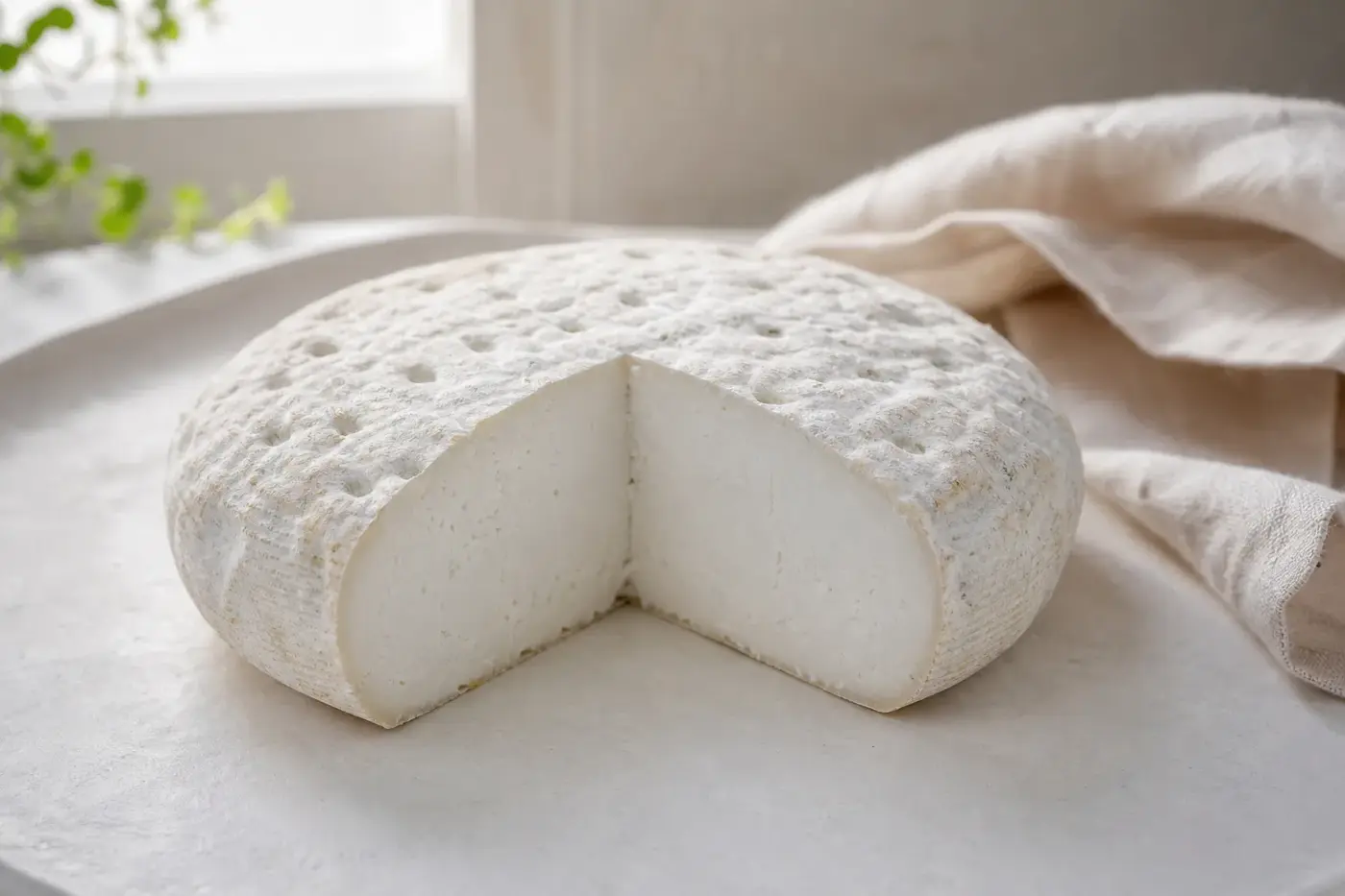
Before you reach for the knife, take a closer look at Ticklemore’s white rind. Those little indentations and its flattened, round-shouldered shape carry the imprint of a plastic colander. Made by Sharpham Dairy in Devon from pasteurised goat’s milk, this pale, semi-hard cheese has delicate lemon and herb notes, according to its maker. The colander has rather outdone itself. [1][2]
| What you might want to know | The details |
|---|---|
| Name to look for | Ticklemore. [1] |
| Maker’s product name | Sharpham Ticklemore. [1] |
| Who makes it, and where | Sharpham Dairy, Devon, England. [1][2] |
| Milk | Pasteurised goat’s milk. [2] |
| Where the milk comes from | Three local farms, according to the maker. [3] |
| Style | Semi-hard, white mould-ripened. [2] |
| What sets the milk | Vegetarian rennet, declared by the maker. [2] |
| Rind | Natural, white, bloomy and edible. [2] |
| Time maturing at the dairy | Four weeks, according to the maker’s product information sheet. [2] |
| Sizes to look for | Approximately 1.7 kg whole cheese and 280 g truckle. [2] |
Follow Ticklemore down a Totnes street
The name takes you to a street in Totnes associated with a cheese shop. Sharpham traces Ticklemore’s beginnings to the mid-1980s and the cheesemaking community around Totnes in south Devon. You are getting a small piece of local history here, rather than a clue to the milk or the method. [3]
At the cheese counter, the maker’s name matters too. Sharpham Dairy makes this white-rinded goat’s cheese; Ticklemore Cheese Dairy is a separate, independent business making blue cheeses. Ticklemore Cheese Dairy explains the distinction on its website, helping you untangle the names of these neighbouring Devon businesses. [7]
Once you have the right cheese, you have two textures to explore: a crumbly body and an outer layer softened by surface ripening. The Academy of Cheese classifies the make as crumbly and the subsequent ripening as external mould and yeast ripening. Think of it in two stages: first the structure created during making, then the changes as the cheese develops. [8]
Look for the colander marks and the chalky heart
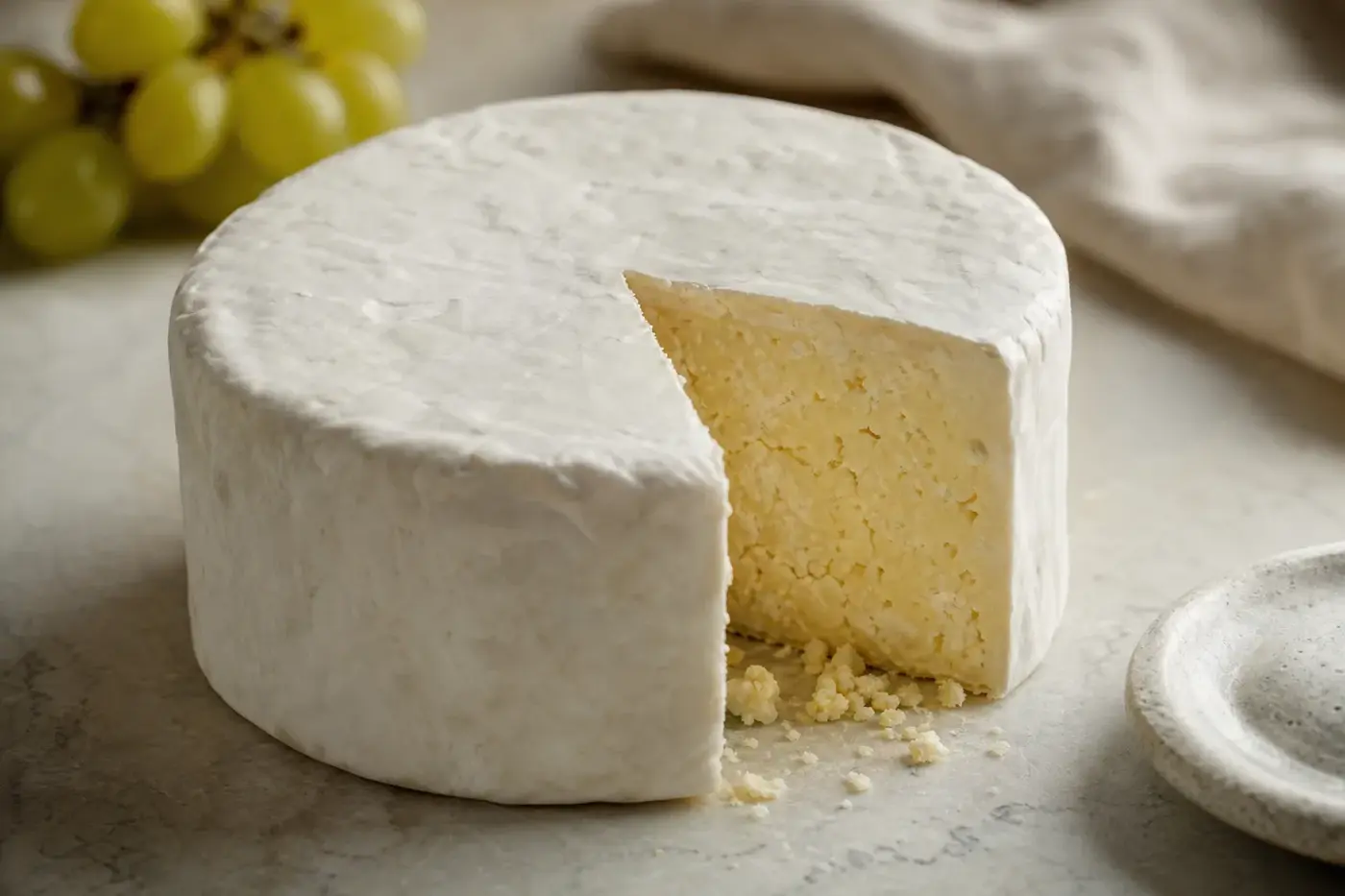
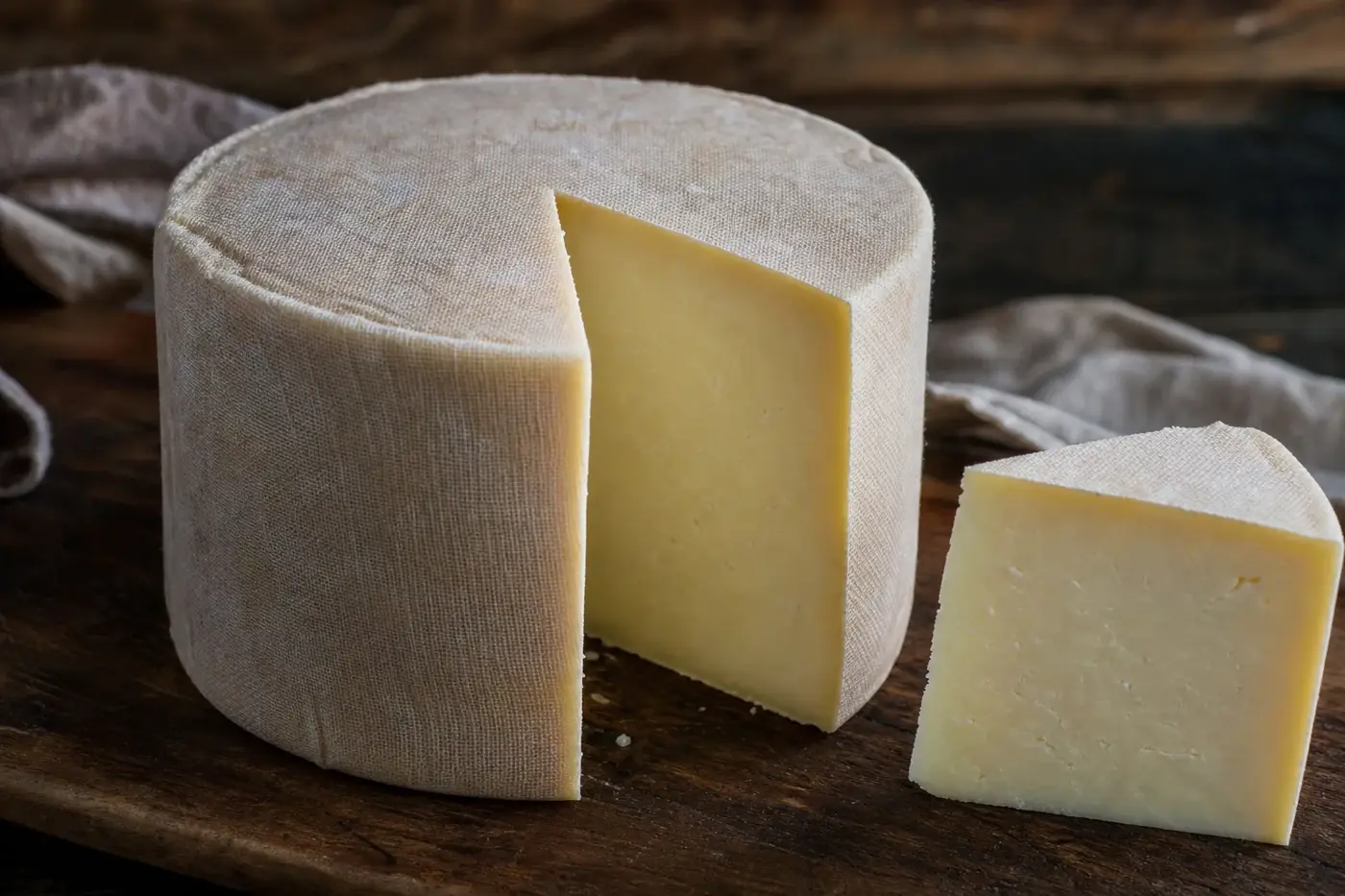
Ticklemore gives you a particularly good view of its making. A plastic colander creates those rounded shoulders and the patterned surface that Sharpham calls crenellated, meaning the repeated indentations around the cheese. Follow them around the rind and you can see the shaping stage written into the finished cheese. [1]
Cut a wedge and the colour inside is strikingly pale. The maker describes a bright white, chalky centre beneath the bloom. Cheesemakers call that interior the “paste”, a useful word when you want to compare the centre with the rind and find your way around the textures in a slice. [2]
The white bloom is a ripening surface growth, not a wrapper added for sale. The Academy identifies Ticklemore’s external ripening as predominantly involving Penicillium candidum. That activity at the surface explains how a cheese with a semi-hard body also develops its mould-ripened exterior. [8]
Before your first bite, look along the wedge from its point to its outer edge. Compare the central paste with the cheese nearest the rind. There is more than one texture waiting in that slice, so give each part a little attention.
Meet the goats behind the milk
Ticklemore begins entirely with pasteurised goat’s milk. Sharpham says it comes from three local farms, and its product information sheet names British Saanen, British Alpine and British Toggenburg goats. Those details give you the milk and sourcing picture for this particular cheese. [2][3]
Sharpham also makes cow’s milk cheeses, so descriptions from elsewhere in the range can lead you astray. When you choose Ticklemore, look for the maker’s goat’s milk declaration. An account of the dairy as a whole cannot tell you everything about the piece in your hand.
The maker declares Ticklemore’s rennet vegetarian. Rennet helps milk set into curd, the solid material from which the cheese develops. That declaration establishes vegetarian suitability, but it does not identify the particular coagulant technology used. [2]
If you are curious about microbial and fermentation-produced coagulants, turn to rennet explained. For pasteurisation, thermisation and the differences between other treatments, see milk treatments.
Follow the curds through four weeks at the dairy
Ticklemore’s firm body starts with smaller curds. Sharpham cuts them into smaller pieces to release more whey, the liquid that separates during cheesemaking. The dairy directly connects that extra drainage with the firmer texture you find in the finished cheese. [4]
This handling of the curd lays the foundation for the semi-hard style. The surface bloom comes later, adding another part of Ticklemore’s character. As you taste, keep those stages in mind: the body begins with curd handling, while the exterior develops during maturation.
The colander supplies the familiar profile and visible surface pattern. A white bloom then completes the exterior described in the maker’s product information sheet. Shaping and rind development are separate stages, although they reach your cheeseboard as one recognisable cheese. [2]
Sharpham specifies four weeks of maturation at the dairy and says Ticklemore can be matured to sixteen weeks old. These are production and ageing figures, not substitutes for the storage instructions and date on the cheese you buy. Keep those details with your cheese. [2]
The care can continue beyond the dairy door. Neal’s Yard Dairy describes rewrapping incoming Ticklemore and moving it into a cold maturing space to slow development. That account concerns the cheesemonger’s own handling, not the temperature in Sharpham’s maturation rooms. [5]
Want to follow the journey from the beginning? Visit how cheese is made for the stages from setting the milk through drainage to ripening.
Taste your way through lemon, herbs and flinty crumble
Start with three things in mind: citrus brightness, herbal character and the way the paste breaks apart in your mouth. Sharpham describes the flavour as mellow, with lemon and herb notes, and the texture as firm and flinty. These are useful starting points, not a vocabulary test with cheese at the end. [3]
Neal’s Yard Dairy describes light, gently lemony flavours, herbaceous notes that deepen with age, and a firm, chalky texture. Lemon, herbs and chalkiness run through both accounts. Follow those clues rather than expecting every goat’s cheese to have a strongly animal flavour. [5]
Ask your cheesemonger how old the piece being cut is. A younger cheese and one kept longer by an affineur, a specialist cheese maturer, may offer different balances of delicacy and developed flavour. Neal’s Yard specifically links increasing age with deeper herbal notes. [5]
Try the centre first, then take a bite that includes both paste and rind. Does the aroma, texture or finish change? You are comparing what happens in those two mouthfuls, not collecting every word from a tasting note.
If you have several cheeses to taste, make this comparison before reaching for chutney or a drink. Then come back to the same piece with an accompaniment. Notice which qualities still stand out and which move into the background.
Give Ticklemore a little room at the table
Bring out only what you plan to serve. Sharpham recommends letting Ticklemore come towards room temperature just before eating; its product FAQ suggests about thirty minutes. If you are not eating the whole cheese, portion it first and leave the rest refrigerated, as the dairy advises. This is particularly useful when you have a large wedge. [1][3]
Keep food safety guidance alongside that serving advice. The Food Standards Agency tells people in England, Wales and Northern Ireland to keep chilled food out for the shortest possible time, with a maximum of four hours during preparation. Return the cheese promptly to the fridge rather than leaving it as a centrepiece throughout an extended meal. [6]
For the first mouthful, keep your accompaniments simple. Try plain bread or an unsalted cracker, then something fruit-led. You can get to know the cheese before sweetness, seasoning or crunch starts competing for your attention.
Sharpham suggests fresh figs and crumbling Ticklemore into salads. Its published chutney pairings include red onion with rosemary and thyme. That puts sweet onion alongside the herbal character you have already met in the cheese. [1][2]
There is no need to assemble every accompaniment on one plate. Try them as alternatives, served beside the cheese rather than on top. Everyone can choose how much to add, without turning a wedge into an excavation project.
| What to try | A simple way to enjoy it | Where the idea comes from |
|---|---|---|
| Fresh figs | Alternate a bite of fruit with a bite of cheese. | Maker’s serving suggestion. [1] |
| Onion and herb chutney | Start with a little, then add more to taste. | Maker’s published pairing. [2] |
| Dry rosé | If you are an adult of legal drinking age, try a small serving. | Sharpham recommends its Pinot Rosé. [3] |
| Still or sparkling water | Sip between bites to focus on texture and aroma. | Editorial tasting suggestion. |
Want to explore the balance a little further? Find more on acidity, sweetness and intensity in cheese and wine pairing.
Put that crumble to work in the kitchen
Salads, pasta, risotto and pizza all feature among Sharpham’s suggestions for Ticklemore. The dairy recommends crumbling it through salads and using it in cooked dishes. You can leave recognisable pieces to enjoy directly, or let the cheese become part of the dish as a whole. [1]
For your first experiment, choose a recipe you know and change only the cheese. You do not need to alter several ingredients to learn something useful. A salad makes the comparison especially straightforward: taste Ticklemore alone, then try it with the dressing and vegetables.
Think about what you want the cheese to contribute. To explore Ticklemore itself, keep the other ingredients restrained. In a more strongly seasoned dish, enjoy it as one component among others, without expecting every delicate note to stand out equally. Both approaches have their place; choose the one that suits your meal.
Keep it cool, then decide about the rind
Sharpham specifies refrigerated storage at 0 to 5 °C (32 to 41 °F). Keep the supplied storage information with your cheese, especially if you buy a cut portion and might otherwise discard its original label. Those details need to stay with the piece you will eat. [1]
The Food Standards Agency advises keeping your domestic fridge at 5 °C (41 °F) or below. Follow the storage instructions and date information on the packaging. [6]
The maker says Ticklemore’s natural bloomy rind is edible. Try it with the paste if you like, or leave it aside if you prefer. [2] Unexpected mould that appears during storage is a different matter: consult mould on cheese rather than judging it by its resemblance to the intended white bloom.
Need help with the remaining portion? Turn to how to store cheese at home for advice on wrapping and organising cut cheese.
General information only, not medical advice: follow the official guidance where you live.
Questions people ask
What milk is Ticklemore made from, and is it vegetarian?
Ticklemore is made from pasteurised goat’s milk from three local farms, according to Sharpham. The maker declares its rennet vegetarian.
Can you eat the rind on Ticklemore?
Yes, Sharpham says the natural white bloomy rind is edible. Its surface ripening predominantly involves Penicillium candidum, according to the Academy of Cheese.
What does Ticklemore taste like?
Sharpham describes a mellow flavour with lemon and herb notes and a firm, flinty texture. Neal’s Yard Dairy says its herbaceous notes deepen with age.
How long is Ticklemore matured?
Sharpham specifies four weeks of maturation in the dairy. It says Ticklemore can be matured to sixteen weeks old.
How should Ticklemore be stored and served?
Sharpham specifies refrigerated storage at 0 to 5 °C and suggests allowing the portion to be eaten to come towards room temperature for about thirty minutes. The Food Standards Agency advises keeping a domestic fridge at 5 °C or below. Check its current guidance and follow the cheese’s packaging instructions.
Sources
- Sharpham Dairy, Sharpham Ticklemore, current product page, undated, retrieved November 2026. Product identity, appearance, serving suggestions, formats, milk treatment, rind and refrigerated storage.
- Sharpham Dairy, Sharpham Ticklemore: Product Information Sheet, undated PDF in the August 2025 upload directory, retrieved November 2026. Milk, breeds, rennet, maturation, formats, rind and pairing information.
- Sharpham Dairy, Sharpham Ticklemore, cheese profile and product FAQ, undated, retrieved in search results November 2026. Local milk sourcing, historical account, tasting descriptions and serving advice.
- Sharpham Dairy, Cheesemaking at Sharpham, undated, retrieved in search results November 2026. Ticklemore-specific statement about cutting curds smaller to release whey and establish a firmer texture.
- Neal’s Yard Dairy, Ticklemore, current product and maturation account, undated, retrieved November 2026. The cheesemonger’s own sensory description and handling practice. Commercial source selling the cheese.
- Food Standards Agency, How to chill, freeze and defrost food safely, published 18 December 2017, current retrieved version, November 2026. Applies to England, Northern Ireland and Wales. Refrigeration, time outside refrigeration and packaging instructions.
- Ticklemore Cheese Dairy, Ticklemore Cheese Dairy, current website, undated, retrieved November 2026. Explicit distinction between its independent business and Sharpham Ticklemore Goat.
- Academy of Cheese, Level Two: 75 Cheese Brochure, February 2022 version, retrieved in search results November 2026. Ticklemore entry, page 23: crumbly make and external mould and yeast ripening classification.
Researched from the maker’s published information, a cheesemonger’s documented handling account, cheese education material and official refrigeration guidance, with editorial serving suggestions identified separately.
Last checked: November 2026
Last checked November 2026.
The editors suggest you read next
West Country Farmhouse Cheddar Cheese
Large pieces of curd turn and stack under the cheesemaker’s hands.