How Swiss Cheese Gets Its Holes
Picture 90 litres of milk and a trace of powdered hay.
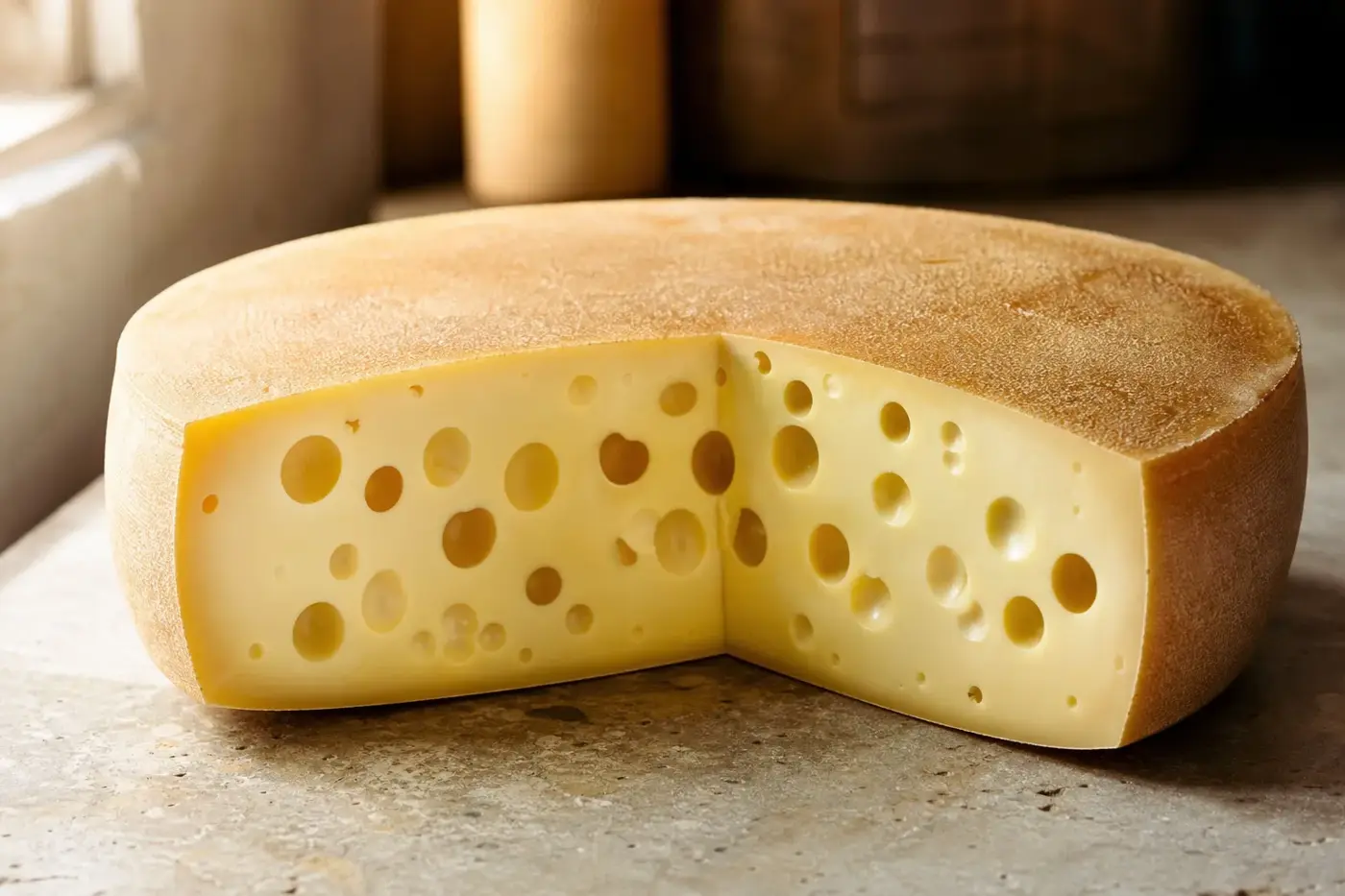
Picture 90 litres of milk and a trace of powdered hay. It sounds an unlikely recipe, but in 2015 that pairing helped Agroscope researchers reveal how Emmentaler’s great round holes begin. Following experimental cheeses as they ripened, they found that microscopic plant particles could give the openings, known as eyes, somewhere to start. Bacteria supply the carbon dioxide that fills them; the cheese’s body decides how they grow. [3, 4, 5]
Take a look inside Emmentaler’s famous eyes
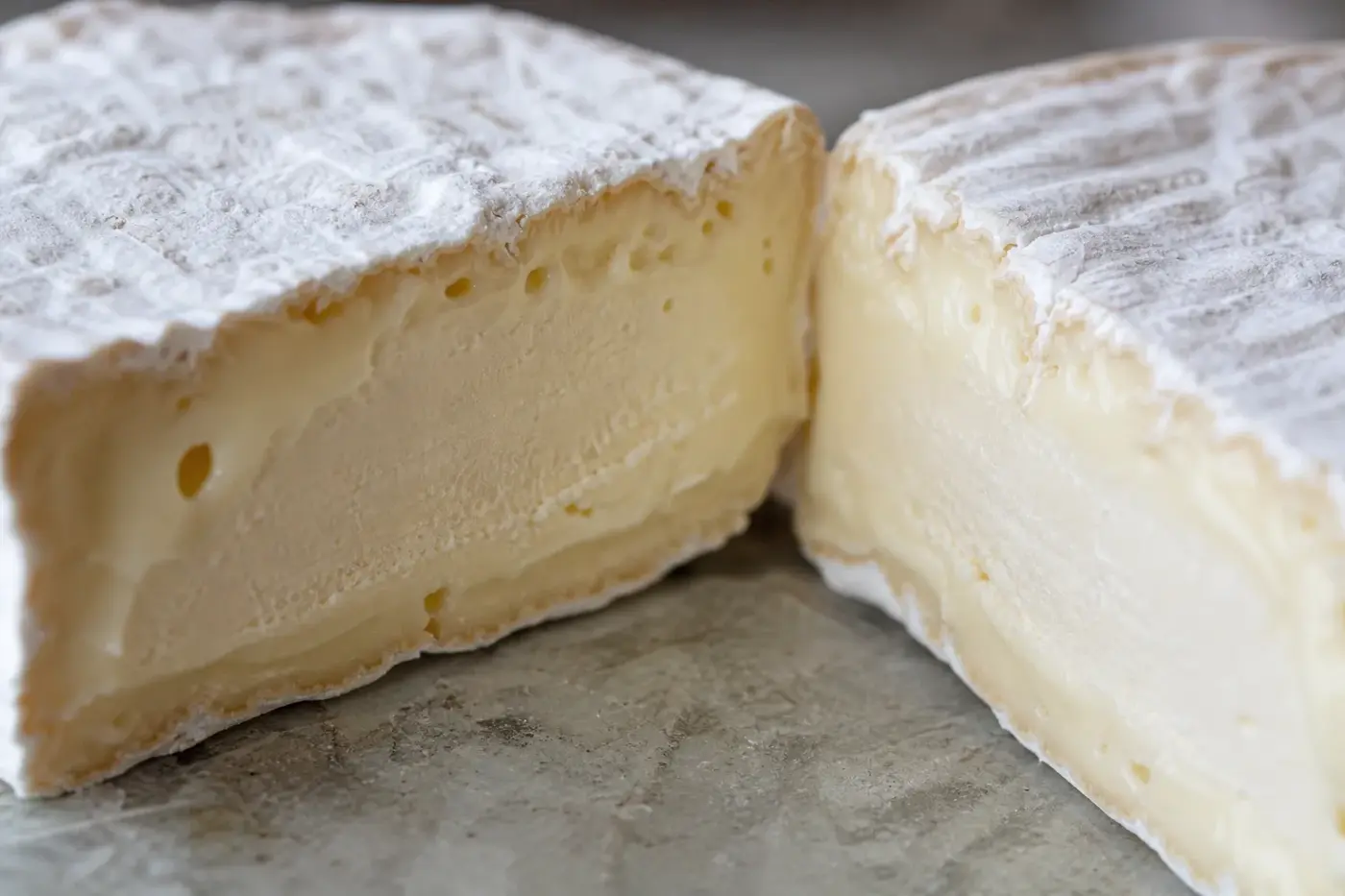
Cut into Emmentaler and those generous openings are part of what you should find. The Swiss protected designation specification calls for clean, regular eyes, round to slightly oval, mostly 2 to 4 cm across. Around them must be an elastic paste, the cheesemaking word for the body beneath the rind. The rounded cavities need that yielding body. [1]
Not every Swiss cheese has the same interior. The Swiss Gruyère specification allows eyes without requiring them; any present should mostly measure 4 to 6 mm. You can explore that contrast in le gruyère. Emmentaler’s large openings come from a particular manufacturing tradition, not simply a Swiss address. [1, 2]
In November 2026, Emmentaler holds Swiss registration as a protected designation of origin, commonly presented as Emmentaler AOP. Its Swiss specification requires raw milk and propionic fermentation. [1, 12] “Swiss-type cheese” casts a wider net, taking in cheeses made outside Switzerland whose recipes can differ substantially. [6]
First, the bacteria pass the baton
Long before you can spot a large eye, starter bacteria are preparing its fuel. These deliberately added cheesemaking cultures turn lactose, the sugar in milk, into lactic acid. In Emmental production, thermophilic starters do this during the first day of manufacture. These bacteria are suited to relatively warm conditions. [7]
That first fermentation feeds the next. Lactate, the form of lactic acid available in the cheese environment, becomes food for propionic acid bacteria during ripening. Think of a bacterial relay: one group makes something the next can use. That handover sets up the fermentation that supplies the gas. [7, 8]
Meanwhile, the cheesemaker builds the body that must hold it. Rennet, a preparation of milk-clotting enzymes, forms curd; cutting, heating, draining and pressing bring that curd together. You can follow the broader sequence in how cheese is made. The eyes develop inside this already formed cheese, rather than being shaped during those earlier steps. [9]
Meet the bacteria that bring the bubbles
The key organism is Propionibacterium freudenreichii. During ripening, it consumes lactate and produces propionate, acetate and carbon dioxide. Propionate and acetate remain among the cheese’s flavour-related compounds. Carbon dioxide supplies the gas for the eyes, but those eyes still need somewhere to begin. [8, 9]
Not all that gas becomes a visible bubble. Carbon dioxide can dissolve in the cheese, travel through it or escape at the surface. Eyes develop where enough retained gas collects at suitable starting points. You need the right balance of gas production, dissolution and loss, rather than simply plenty of gas. [4, 5]
Agroscope’s research diagrams bring the whole cast together: gas-producing cultures, the cheese body, tiny nuclei and the boundary formed by rind or wrapping. A nucleus is a starting site for a pocket. Even vigorous fermentation cannot deliver a particular eye pattern unless the rest of that system plays its part. [4]
Give a growing eye room to stretch
An eye grows by pushing cheese aside. As gas gathers, the surrounding paste must stretch to make room for the cavity. A cohesive, elastic body can accommodate a rounded opening; one that fractures can develop splits instead. The texture you feel when you eat the cheese also helps shape its eyes. [5, 6]
A wheel does not inflate like one uniform balloon. Its composition, the way its curds have fused and the spread of starting sites all influence the result. In a 2023 study, researchers compared experimental cheeses with different fat levels. They used computed tomography to measure internal cavities without cutting the cheeses open. [5]
In those experiments, increasing fat content increased the cheese’s capacity to dissolve carbon dioxide and reduced relative eye volume. So your view of the cut surface tells only part of the gas’s story. Some carbon dioxide can stay dissolved in the paste rather than filling a large, easily visible opening. [5]
A little hay makes a visible difference
How little hay could make a difference? In 2015, Agroscope researchers added powdered hay to microfiltered cheese milk, testing eight experimental Emmental variants, with one replicate. Additions ranged from 0.0625 to 4 mg of hay powder in 90 litres of milk. The cheeses then ripened for 130 days. [3]
Computed tomography followed eye development between 30 and 130 days. Eye number and size changed with the dose, showing that plant microparticles could act as eye nuclei. Here was a physical starting point for the pockets, alongside the already established bacterial source of the gas that expands them. [3]
Hay particles start pockets; fermentation fills them. Agroscope’s subsequent presentation illustrated cavities within plant particles as eye-seeding sites and reported that different plant materials were not equally effective. The particle’s structure mattered. Simply having a solid speck in the milk was not enough. [4]
The authors proposed that traces of hay dust entering raw milk had long supplied natural nuclei. Their experiment established the particles’ effect under its test conditions, rather than explaining every eye in every cheese. You still need the whole process: gas formation, gas retention and a surrounding paste with the right properties. [3, 4, 5]
Why some eyes grow larger than others
There is no single dial for eye size. The recipe sets several controls at once: cultures govern fermentation, while curd and composition shape the material being inflated. Ripening determines how long gas production and structural changes continue. The result comes from their interaction, not simply turning the temperature up or down. [4, 5, 7]
| What makes a difference? | What it means for the eyes |
|---|---|
| Choice of cultures | Bacterial strains and starter combinations change fermentation and gas production. [6, 7] |
| Moisture and texture | Water, fat and protein affect how the paste stretches and holds dissolved gas. [5] |
| Ripening temperature | A warm ripening room encourages propionic fermentation; cooling slows it. [3] |
| Time spent ripening | Eyes develop during maturation; continuing gas production and texture changes can alter them. [4, 6] |
| Places for eyes to begin | The number of starting sites helps determine how many separate gas pockets form. [3] |
With comparable gas production, fewer nuclei can yield larger eyes. More nuclei can divide the gas among more openings. That is why counting holes and measuring them answer different questions. A cheese with many small eyes need not have produced less gas than one with a few large ones. [6]
Taste what the hole makers bring
The fermentation that makes Emmentaler’s eyes also helps build its characteristic flavour. Agroscope’s technical account links propionic fermentation with nuttiness. The Swiss specification describes the flavour it produces as acidic, sweet, lightly salty and slightly spicy. You are tasting the whole cheese, of course: the empty spaces contribute little to a mouthful. [1, 6]
A 2004 study explored that contribution using miniature Emmental cheeses and cheese-juice cultures, with and without P. freudenreichii. Researchers used gas chromatography-mass spectrometry to identify volatile compounds. They found that propionibacteria influenced acids, esters and other compounds. Their contribution to flavour went well beyond making the carbon dioxide responsible for eyes. [9]
A subsequent study tested three propionibacterial strains with three lactic starter combinations in duplicate miniature cheeses. The strains produced the same volatile compounds, but in different amounts; starter combinations also affected the results. So similar-looking eyes can come with different flavour profiles. The cultures at work matter to what you taste. [7]
Raclette research offers a revealing comparison. Added P. freudenreichii changed fermentation products and flavour development during 12 weeks at 11 °C, and a trained panel detected flavour differences. Yet the experimental cheeses developed no eyes. Flavour activity and visible holes do not have to advance together. [10]
Know your round eyes from unwanted cracks
Look closely at a slice and you can distinguish a rounded eye from a narrow split. In Emmental production, irregular openings, slits and cracks are recognised ripening defects. They are associated with the relationship between gas formation and the cheese’s mechanical properties. A body that has become too brittle cannot accommodate expanding gas as an elastic one can. [6]
Other cheeses are deliberately made with a close texture, using different cultures and manufacturing conditions. As the Gruyère specification makes clear, large eyes are not compulsory across Swiss cheesemaking. In Emmental, though, too little eye development can be a quality problem. Those openings belong to this particular style. [2, 6]
There is another distinction worth making when you inspect a slice: an eye is not a cheese crystal. One is a cavity; the other is a solid deposit. The Emmentaler specification allows mineral salt deposits inside the eyes of mature cheese. Look at the opening itself separately from anything deposited on its inner wall. [1]
Choose your Emmentaler with more than eyes in mind
Start with origin and declared age, then ask about the maker’s flavour description. For Swiss Emmentaler AOP, the specification’s regular, rounded eyes give you a useful reference for appearance. Use cheese labels to compare identity and origin. There is no need to award your purchase to the largest hole. [1, 7]
- Take a good look at the cut surface. Notice the number and shape of the eyes, the thickness of cheese between them and any splits. Compare what you see with the description for that particular cheese. Emmentaler and Gruyère need not meet the same visual standard. [1, 2]
- Let the pack guide your storage. The Food Standards Agency’s November 2026 guidance for England, Northern Ireland and Wales recommends a home fridge between 0 and 5 °C (32 to 41 °F), refrigerated dairy storage and following packaging instructions. See how to store cheese at home. [11]
- Serve a portion; keep the rest chilled. The same agency advises leaving chilled food out for the shortest possible time during preparation, with a maximum of four hours. Follow that limit alongside the pack’s instructions. When you taste, record flavour and texture separately from eye size. [11]
General information only, not medical advice: follow the official guidance where you live.
Questions people ask
What causes the holes in Swiss cheese?
During ripening, Propionibacterium freudenreichii produces carbon dioxide as it uses lactate. Eyes form when enough retained gas gathers at suitable starting points and pushes the surrounding cheese aside.
Does hay make the holes in Emmentaler?
Agroscope experiments showed that microscopic plant particles could act as starting points for eyes. Bacteria supply the carbon dioxide that fills the pockets, while the cheese’s body affects how they grow.
Why do some cheeses have larger holes than others?
Eye size depends on the interaction of cultures, starting sites, cheese composition and ripening. With comparable gas production, fewer starting sites can yield larger eyes, while more sites can share gas among more openings.
Do the holes give Emmentaler its flavour?
The empty spaces do not themselves create the flavour. The propionic fermentation that supplies their gas also contributes to flavour, and Agroscope links it with nuttiness.
How should I store and serve Emmentaler?
The Food Standards Agency advises keeping a home fridge between 0 and 5 °C, storing dairy in the fridge and following packaging instructions. It also advises leaving chilled food out for the shortest possible time during preparation, up to a maximum of four hours. See the Food Standards Agency’s guidance for England, Northern Ireland and Wales.
Sources
- Swiss Federal Office for Agriculture. Pflichtenheft: Emmentaler. Consolidated specification incorporating the decision of 4 November 2025. Articles 1, 3 and 5 establish the Swiss designation, raw-milk character, eye description, texture, flavour and mineral deposits. Official specification.
- Swiss Federal Office for Agriculture. Pflichtenheft: Gruyère. Current consolidated document retrieved November 2026, Article 5(2). Official specification. (blw.admin.ch)
- Agroscope and collaborating research institutions. Mechanism and control of the eye formation in cheese. International Dairy Journal, volume 47, 2015, pages 118 to 127. Original experimental study. Publisher record and retrieved text.
- Agroscope. Mechanism and control of the eye formation in cheese. Research presentation, IDF Cheese Science & Technology, Dublin, 2016, slides 7 to 17. Institutional presentation.
- Agroscope and FoodCon. The total eye volume of cheese is influenced by different fat-levels. International Dairy Journal, volume 144, 2023, article 105690. Original experimental study. Full paper.
- Agroscope Liebefeld-Posieux. Swiss cheese. ALP science, number 518, 2008, reproducing technical material from Cheese problems solved, 2007. Sections on eye development, texture, defects and flavour. Institutional publication.
- INRA and collaborating research institutions. Propionibacterium freudenreichii strains quantitatively affect production of volatile compounds in Swiss cheese. Lait, volume 85, 2005, pages 57 to 74. Original analytical study. Full paper.
- INRA and collaborating research institutions. Emmental Cheese Environment Enhances Propionibacterium freudenreichii Stress Tolerance. 2015. Introduction and experimental account. Full paper.
- INRA and collaborating research institutions. Varied volatile compounds are produced by Propionibacterium freudenreichii in Emmental cheese. Food Chemistry, volume 87, 2004, pages 439 to 446. Original analytical study. Full paper.
- INRA-Agrocampus and collaborating researchers. The addition of Propionibacterium freudenreichii to Raclette cheese induces biochemical changes and enhances flavor development. Journal of Agricultural and Food Chemistry, volume 53, 2005, pages 4157 to 4165. Original analytical and sensory study. PubMed record and abstract.
- Food Standards Agency. How to chill, freeze and defrost food safely. Published 18 December 2017, current page retrieved November 2026. Applies to England, Northern Ireland and Wales. Official guidance.
- Swiss Federal Office for Agriculture. Register der Ursprungsbezeichnungen und geografischen Angaben. Emmentaler entry, including the amendment decision of 4 November 2025, retrieved November 2026. Official register.
This piece was researched from Swiss official specifications, original experimental papers and institutional technical guidance, with consumer storage advice checked separately against the named food safety authority.
Last checked: November 2026
Last checked November 2026.
The editors suggest you read next