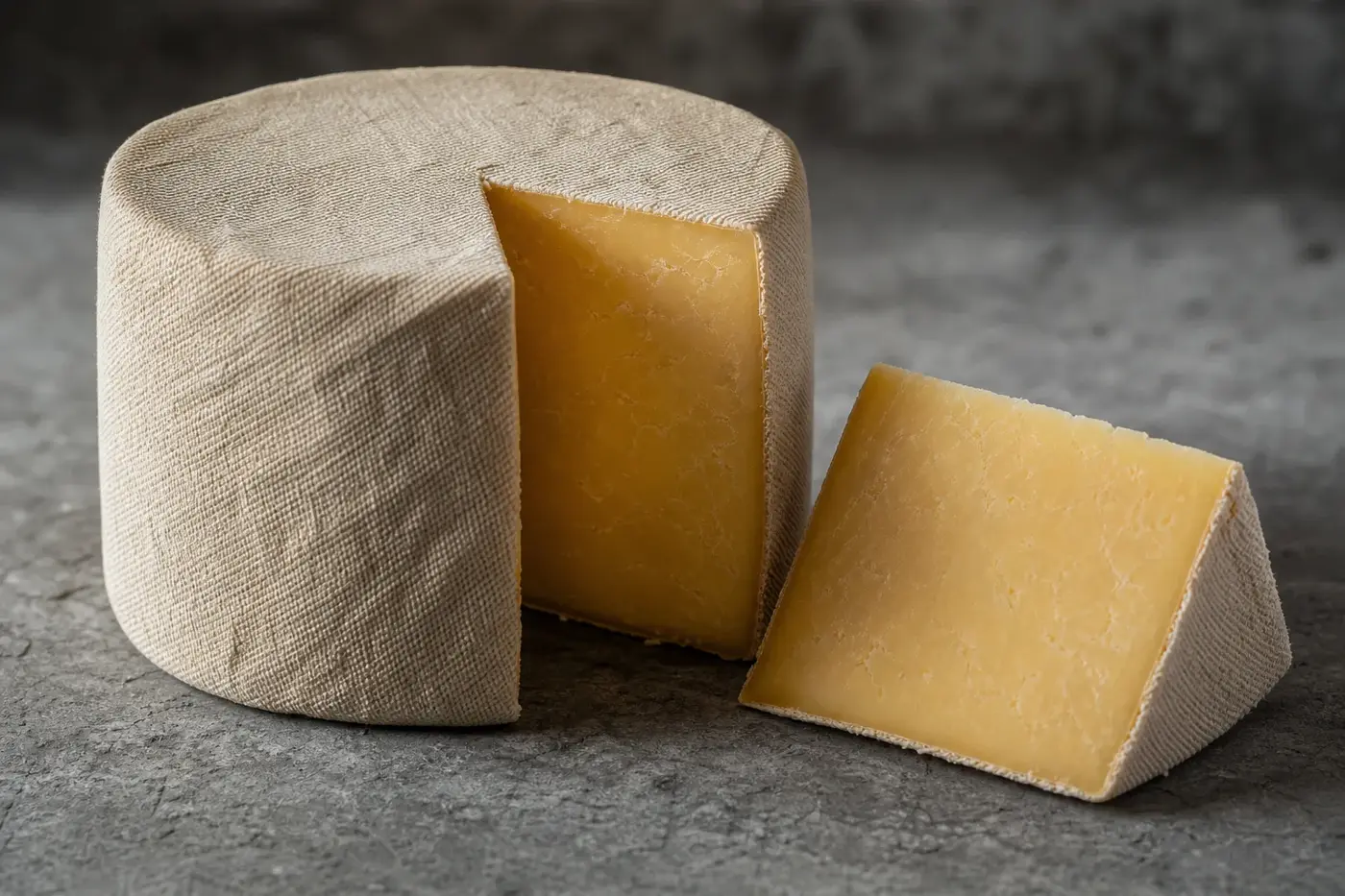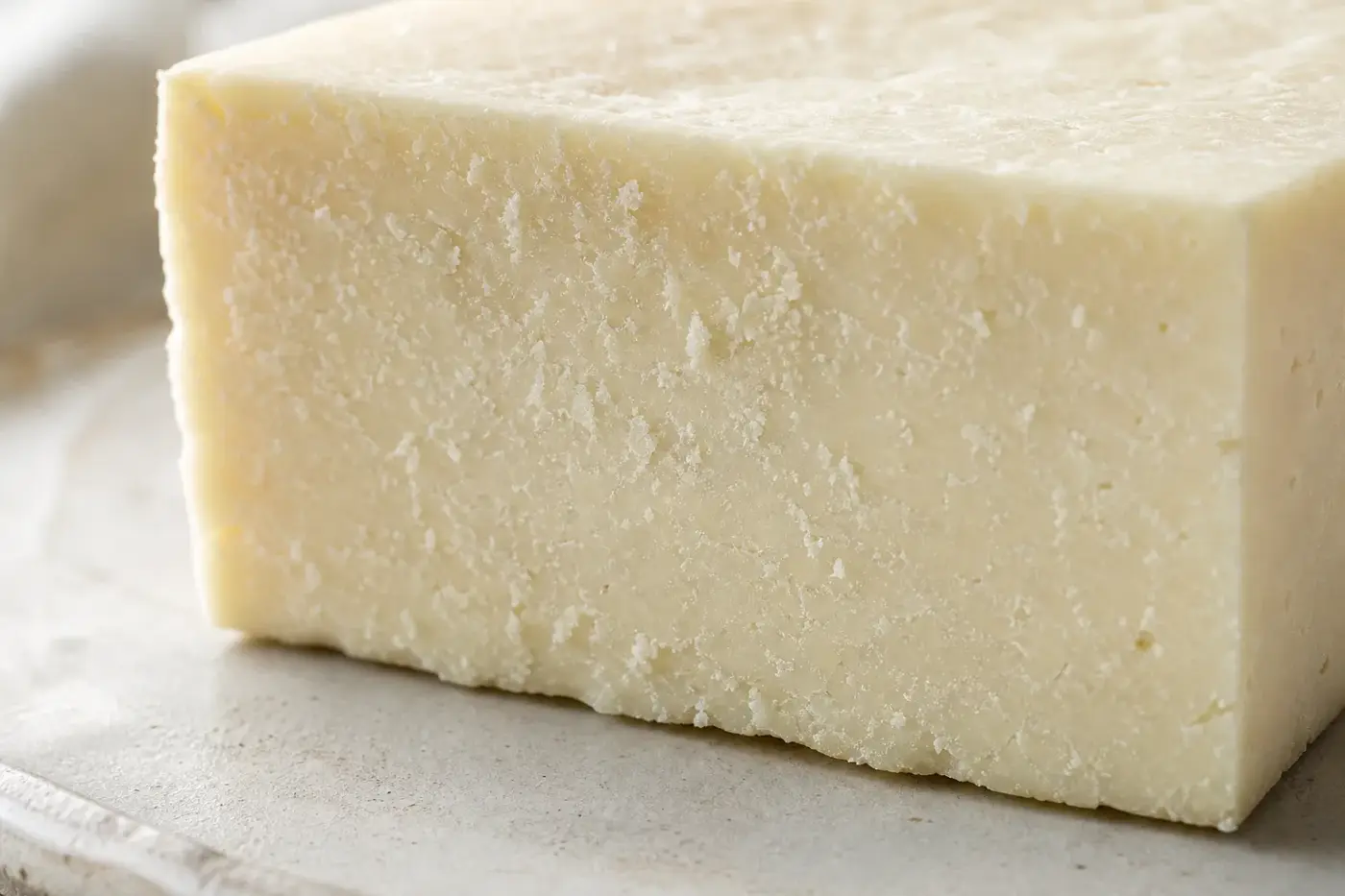
Take a bite of a pale ivory wedge of Lanark White. There is firmness first, then a faint grain, with the grassiness, savouriness and nuttiness described by its maker, Errington Cheese. This semi-hard cheese starts with raw milk from the farm’s own ewes, at the foot of the Pentland Hills in South Lanarkshire. [2, 3]
Your quick introduction to Lanark White
- Name: Lanark White. [1]
- Maker: Errington Cheese. [2]
- Made at: Walston Braehead Farm, South Lanarkshire, Scotland. [2, 3]
- Milk: Sheep’s milk from the maker’s own ewes. [2]
- Milk treatment: Raw, unpasteurised. [2]
- Style: Firm, semi-hard. [1]
- Rennet type: No details recorded here.
- Salting method: No details recorded here.
- Typical maturation period: No details recorded here.
- Rind development and treatments: No details recorded here.
- Registered name, registration authority and register ID: No details recorded here.
- Protection status in the EU: No details recorded here.
- Protection status in Great Britain: No details recorded here.
- Protection status in Northern Ireland: No details recorded here.
- Protection status in Switzerland: No details recorded here.
- Protection status in the United States: No details recorded here.
- Applicable legal standard: No details recorded here.
- Legal minimum ageing: No details recorded here.
- Reference date: November 2026.
Follow the farm’s year beneath the Pentland Hills
Grazing land, arable fields and woodland sit together at Errington’s family farm beneath the Pentland Hills. The business dates its handmade cheesemaking to 1985. Lanark White is part of a wider dairy operation making both sheep’s and goat’s milk cheeses. [2, 3]
Here, the seasons set the pace. A short growing season means making hay and silage for the livestock. The sheep graze outdoors in warmer months and come indoors for winter, with grass, hay and silage forming their diet. [3]
Meet the ewes behind the cheese
Lanark White begins with milk from Errington’s own ewes, used raw. The farm keeps Lacaune dairy sheep, whose milking season runs from spring through September. [2, 3]
You will see warming mentioned in the maker’s production account, which also explicitly describes the milk as raw. Warming is a cheesemaking step, not a reason to assume a different milk treatment. For a guide to the terms, turn to raw milk, thermised and pasteurised cheese. [1]
This page summarises published guidance from the official sources it cites. It is not medical advice. Guidance differs between countries and changes over time, so check the current source for where you live, and ask your doctor, midwife, pharmacist or dietitian about your own circumstances.
Follow the milk from vat to mould
In the maker’s published sequence, the milk is warmed first. Cultures and rennet follow, forming curd: the set milk that will become cheese. The curd is then cut and cooked, pressed into a mould, salted and left to age. [1]
Errington’s broader account takes you closer to the vat. The set milk is cut into small cubes, rested and gently stirred before the whey, the liquid separated from the curd, is drained. That account also describes steps for particular cheeses, including piercing for blue cheese and cloth handling for Corra Linn. [4]
There is a whole journey between milk and a finished wedge. You can explore the wider process in how cheese is made.
Step into the stone maturation rooms
Thick stone walls help hold humidity in the traditional farm buildings Errington uses for maturation. Inside, the dairy describes turning its hard cheeses by hand twice a week. That steady rhythm comes from its general maturation account, rather than a separate ageing timetable for Lanark White. [4]
Take your time with that ivory bite
In the maker’s product photograph, you can see pale ivory cut surfaces and a wedge that holds its shape. Errington describes smoothness with a little granularity, suggesting Gouda and pecorino as familiar comparisons. If you know those textures, you already have somewhere to start. [1, 5]
The tasting notes move from light grassiness and botanical notes to savouriness and nuttiness. There is sweetness, too, followed by a slight tang. With age, the cheese’s bite becomes firmer. [1]
Begin with a small piece on its own. Smell the cut face before bringing in bread or fruit, then notice the resistance as you bite and whether the texture feels smooth or faintly granular. After swallowing, note what lingers, recording aroma separately from taste so the impressions stay distinct.
Give Lanark White room on your board
For your first taste, serve plain slices with the accompaniments alongside. The chutney can wait; it does not need to chair every meeting. Cut your purchased wedge into manageable slices from its cut faces, so everyone can try the cheese alone before building a mouthful.
On a mixed board, give Lanark White its own space and knife. Try it before a strongly flavoured blue, giving those grassy and botanical notes your attention. This suggested order follows the maker’s contrasting descriptions of Lanark White and Lanark Blue. [1, 6]
Handling it at home in England, Wales or Northern Ireland? Follow the current Food Standards Agency guidance on chilled food. [7]
Bring the pears and let sweetness wait
Errington recommends roasted pears, honey, fig jam and crostini alongside Lanark White. Start with crostini and one fruit accompaniment. Keep honey or jam in a separate dish, so you can choose sweetness rather than find it in every bite. [2]
For a simple alcohol-free drink, try still or lightly sparkling water. Serve fruit separately to keep your attention on the cheese. If you would like to explore broader pairing principles, see cheese and wine pairing.
Save a piece before you reach for the grater
Errington recommends Lanark White on its own or grated over dishes. For your first kitchen outing, grate a little over a plain dish you know well, then taste before adding more. Keep an ungrated piece beside it so you can compare the same cheese in two forms. [1]
Take good care of your wedge
Start with the storage instructions and date on the piece you bought. For households in England, Wales and Northern Ireland, the Food Standards Agency recommends keeping the fridge between 0 °C and 5 °C. It also says dairy products should be refrigerated. [7]
Return the unserved portion promptly and keep its original label. If your cheese has been freshly cut, ask the cheesemonger to record any instructions, especially if it has been rewrapped at the counter. For the wider routine, turn to how to store cheese at home.
White or Blue? Get to know the difference
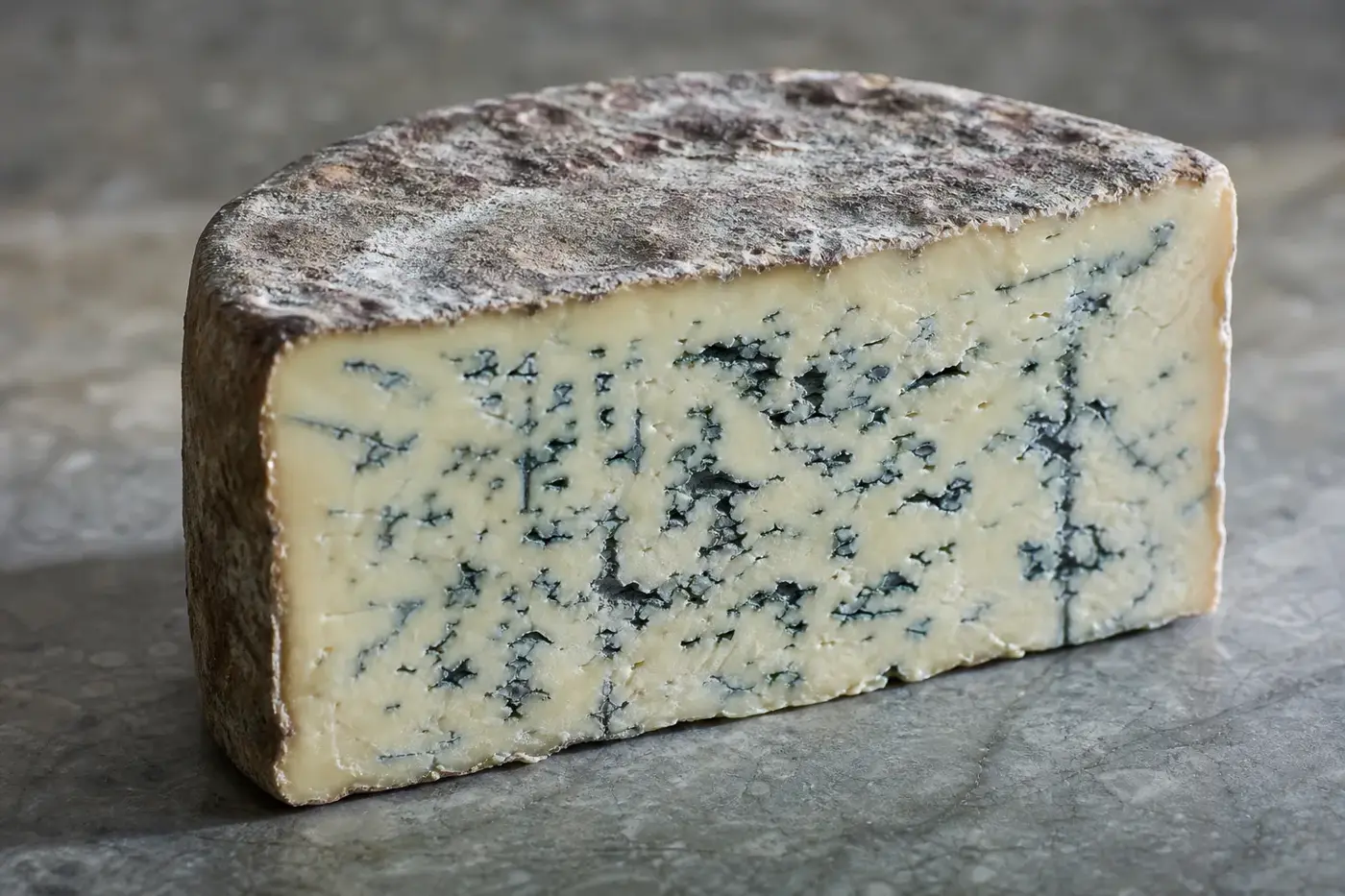
Lanark White and Lanark Blue share a maker and a place in Errington’s sheep’s milk range, but they are different cheeses. Lanark Blue is semi-soft, blue-veined, earthy, tangy and salty. Its production includes adding blue mould culture and piercing during ageing to support those veins. [6]
At the counter, use the full name to get the cheese you have in mind. Choose Lanark White for the maker’s firmer, non-blue cheese. Ask for Lanark Blue when you want blue veining and its associated flavour. [1, 6]
Follow your cheese curiosity a little further
- How Cheese Is Made: From Milk to Cheese: follow the main stages from the vat to the finished cheese.
- How to Store Cheese at Home: build a practical storage routine for your household.
Questions people ask
What does Lanark White taste like?
Errington describes grassy and botanical notes alongside savouriness and nuttiness. The cheese also has sweetness and a slight tang, with a firmer bite developing as it ages.
Is Lanark White made with pasteurised milk?
No. It is made with raw, unpasteurised sheep’s milk from Errington’s own ewes.
How long is Lanark White aged?
Its typical maturation period has not been verified. Errington ages cheeses in traditional farm buildings with thick stone walls.
How does Lanark White differ from Lanark Blue?
Both are made by Errington from sheep’s milk. Lanark White is firm and has no blue veining, while Lanark Blue is softer, with blue veins and an earthy, tangy, salty character.
How should I store Lanark White?
Follow the storage instructions and date on the piece you bought. For households in England, Wales and Northern Ireland, the Food Standards Agency recommends a fridge between 0 °C and 5 °C and says dairy products should be refrigerated. See its current guidance on chilled food.
Sources
-
Errington Cheese, Lanark White, undated product description, production account and tasting notes, retrieved November 2026.
Read at erringtoncheese.co.uk -
Errington Cheese, Farmhouse cheese, made by hand, undated homepage, including the Lanark White description, accompaniments and contact address, retrieved November 2026.
Read at erringtoncheese.co.uk -
Errington Cheese, Our Farm, undated account of the South Lanarkshire farm, dairy sheep and seasonal management, retrieved November 2026.
Read at erringtoncheese.co.uk -
Errington Cheese, Our Cheesemaking Story, undated account, particularly “Cheesemaking process”, stages 1 to 10, retrieved November 2026.
Read at erringtoncheese.co.uk -
Errington Cheese, Errington Cheese Lanark White 1, undated product photograph displayed on the Lanark White product page, retrieved November 2026. Publication permission has not been established.
Read at images.squarespace-cdn.com -
Errington Cheese, Lanark Blue, undated product description and production account, retrieved November 2026.
Read at erringtoncheese.co.uk -
Food Standards Agency, How to chill, freeze and defrost food safely, published 18 December 2017, live version retrieved November 2026, particularly “Chilling food”; stated scope: England, Northern Ireland and Wales.
Read at gov.uk -
Food Standards Scotland, Alerts, live listing retrieved November 2026, used for the preliminary recall check.
Read at foodstandards.gov.scot -
Food Standards Agency, Alerts, live listing retrieved November 2026, used for the preliminary recall check.
Read at alerts.food.gov.uk
This desk-researched draft draws on the maker’s published accounts and photograph, with household handling guidance checked against the Food Standards Agency.
Last checked: November 2026
Last checked November 2026.
The editors suggest you read next
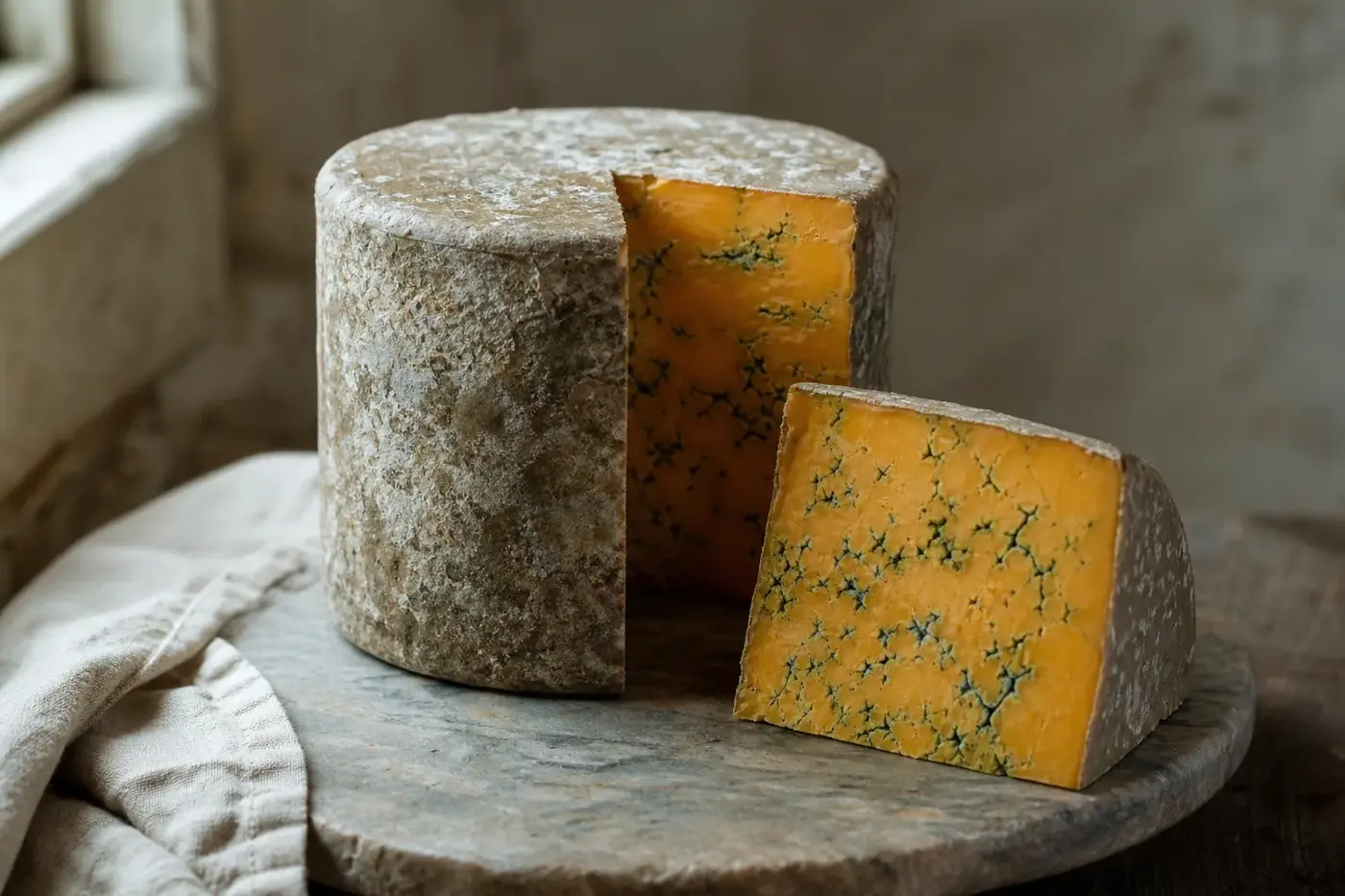
Shropshire Blue
Cut into Shropshire Blue and you get quite a colour scheme: orange crossed by blue-green veins.