Little She
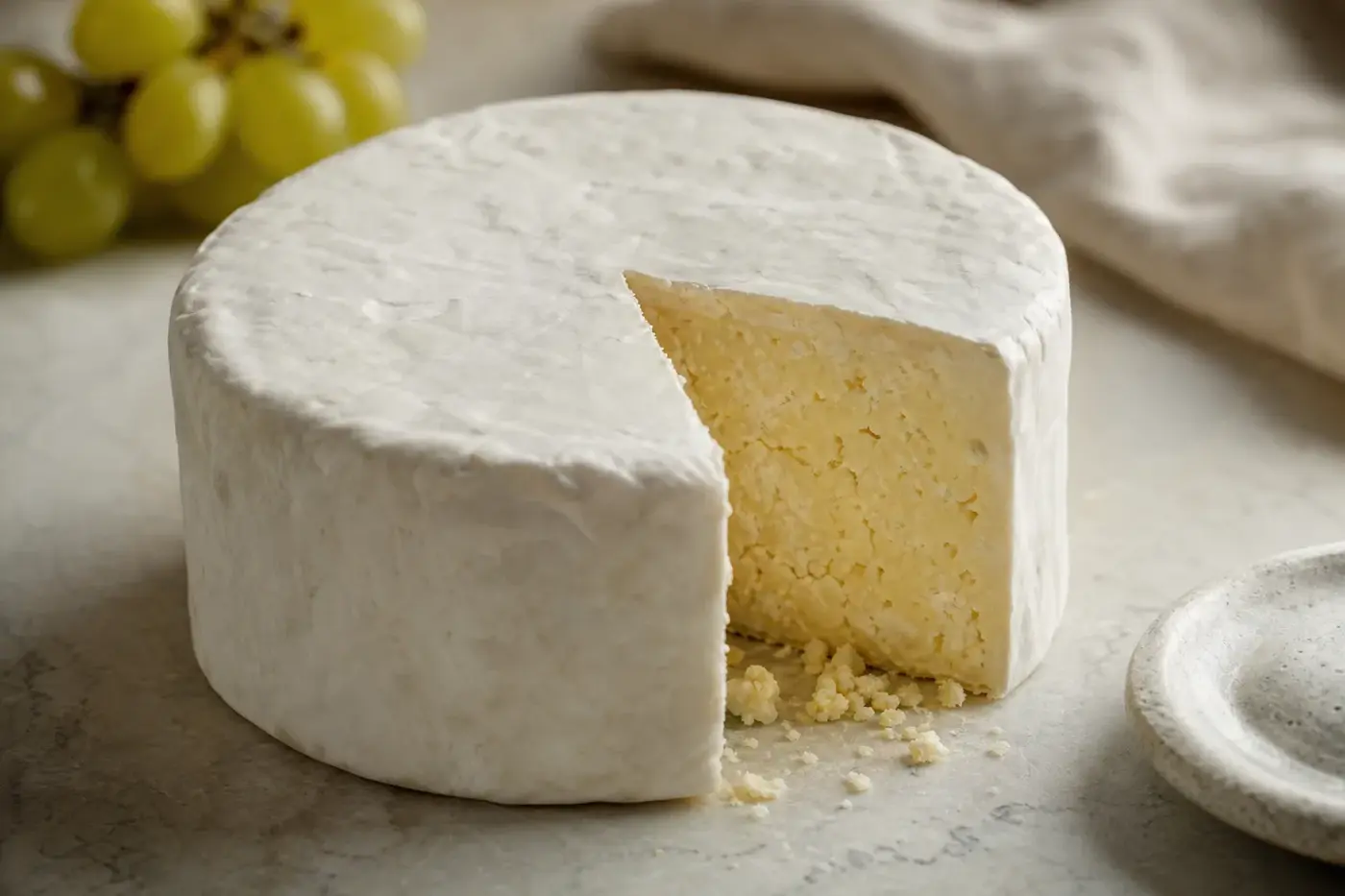
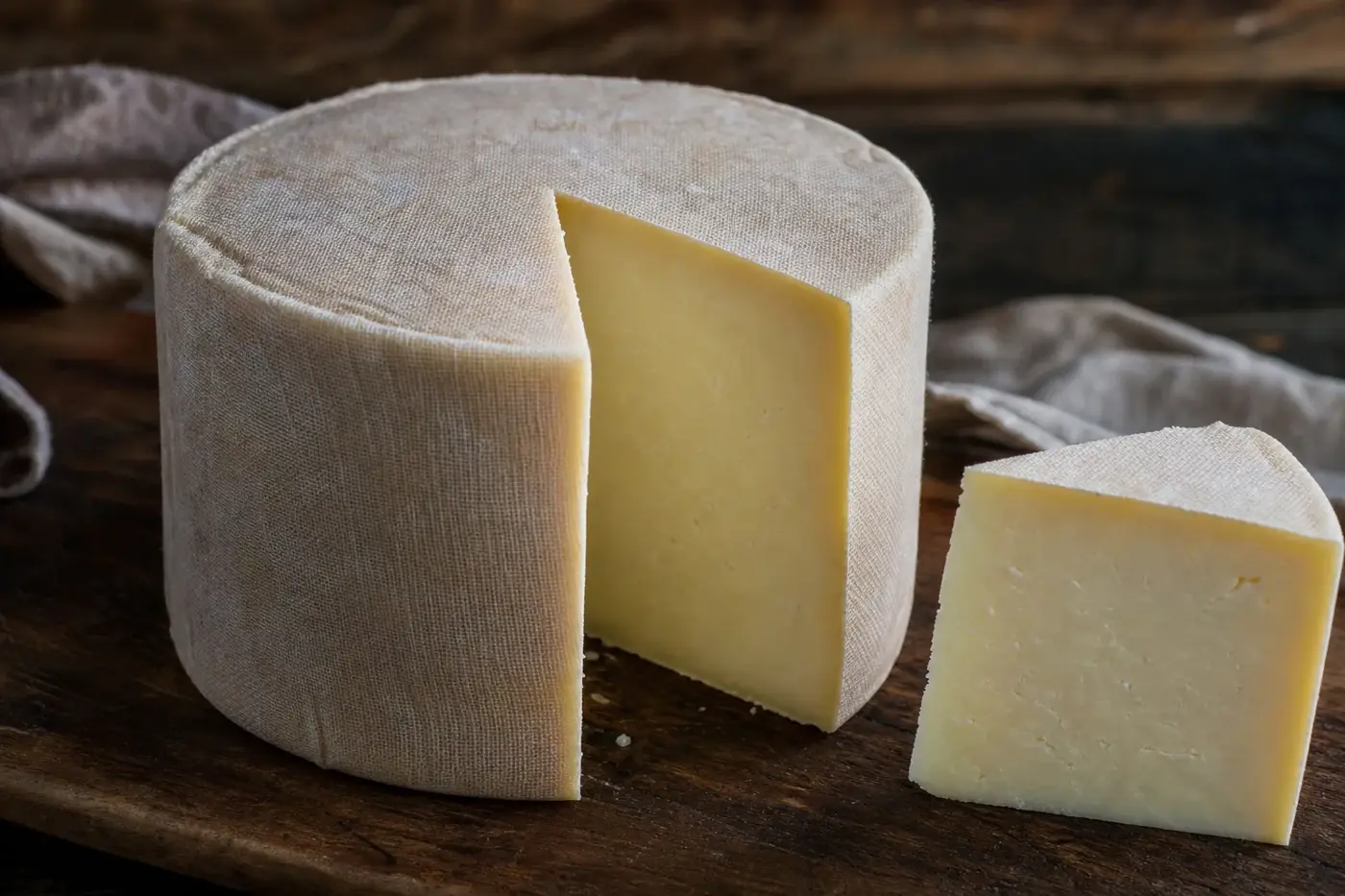
Cut through Little She's white bloom and you reach a centre that softens as it ripens.
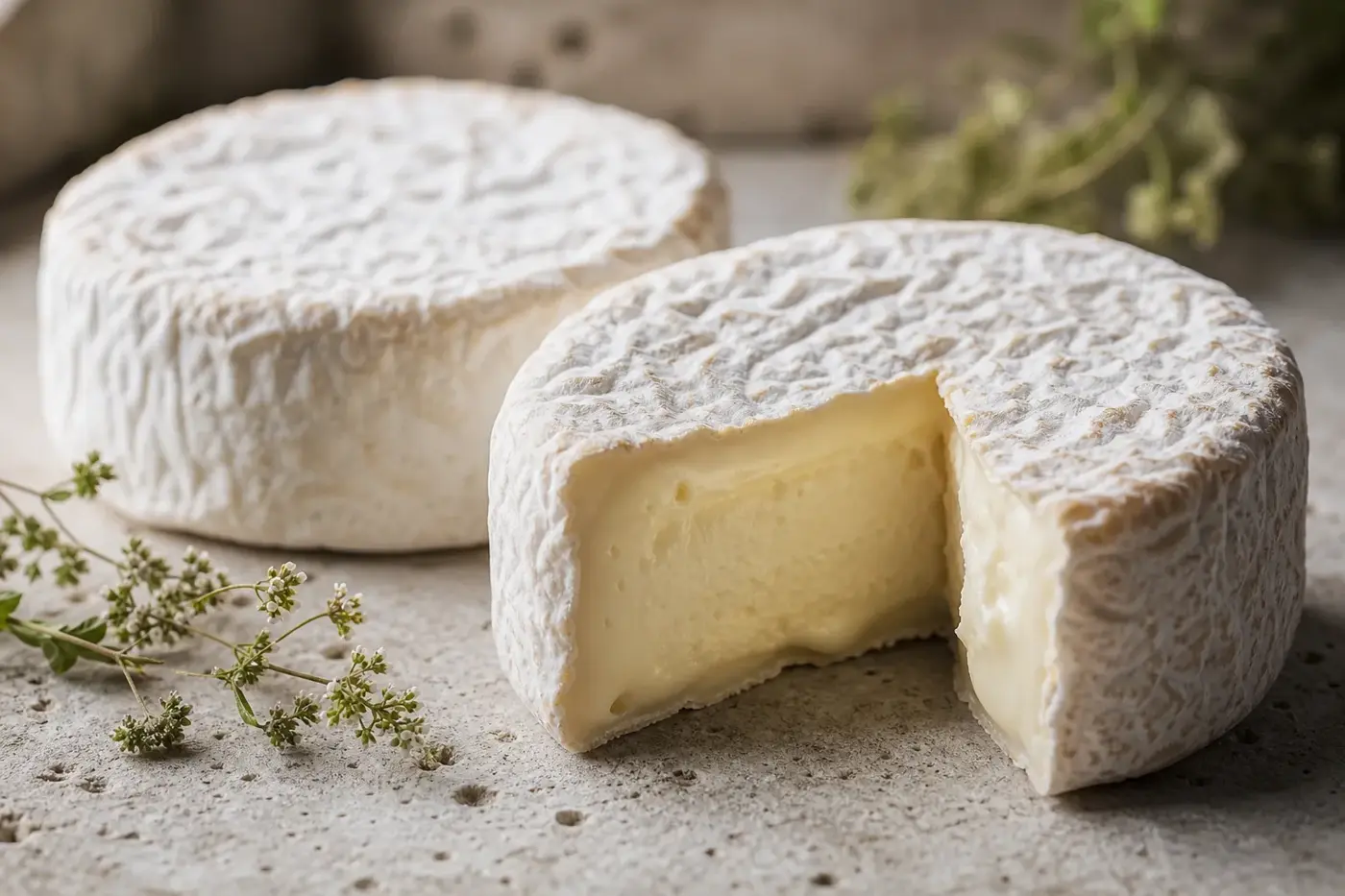
Cut through Little She's white bloom and you reach a centre that softens as it ripens. This delicate sheep's milk cheese comes from White Lake Cheese in Somerset, England. The maker describes sweet, milky flavours that grow a little stronger with age. You have good reason to pay attention to that first mouthful. [1, 2]
| Get to know Little She | From the maker, November 2026 |
|---|---|
| Maker and home | White Lake Cheese, Bagborough Farm, Pylle, Somerset, England. [2] |
| Milk | Sheep's milk. [1] |
| Milk treatment | Thermised; listed by the maker as unpasteurised. [1] |
| Rennet | Vegetarian, according to White Lake. [1] |
| Style and rind | Soft cheese with a bloomy rind. [1] |
| Listed weight | 130 g. [1] |
| UK pregnancy guidance | NHS guidance for white-rinded, mould-ripened soft cheese applies; see below. November 2026. [7] |
Take your time with this little cheese
If you know Brie and Camembert, you already have a starting point. White Lake places Little She alongside them in style: soft cheese, a white surface bloom and an interior that changes as it ripens. Here, sheep's milk takes a delicate, yielding form rather than becoming a firm cheese for shaving or grating. [1]
Give your first mouthful a moment to itself. Then try another with bread, fruit or a drink, and notice what changes. You get to know the cheese before its companions begin offering their opinions.
Milk, texture and maturation each tell you something different. Sheep's milk names the animal source; “soft” describes texture; “mould-ripened” tells you that mould development contributes to maturation. The guide to telling cheese styles apart shows how those separate characteristics fit together. [1, 4]
Follow Little She down to Somerset
Little She's home is Bagborough Farm, on Bagborough Lane at Pylle, near Shepton Mallet. White Lake also describes its location as near Glastonbury. This is a working cheesemaking premises, giving that Somerset address a life beyond the label. [2]
White Lake dates the business's beginnings to 2004, while the family farm's cheesemaking roots reach back to the 1930s. In the maker's account, the facility was designed for small-batch production. There was room to experiment and, later, to expand. [2]
The wider operation works with goat's, sheep's and cow's milk. White Lake says the goat's milk comes from its own herd and the cow's milk from a nearby farm. Keep those arrangements separate from Little She: the cheese on this page is made from sheep's milk. [1, 2, 3]
Solar installations serve the goat farm and cheesemaking facilities, while a wood-fuelled biomass boiler heats milk. These details give you a glimpse of the equipment behind the cheese. They are not a measure of Little She's environmental footprint. [3]
Thinking of visiting? White Lake's FAQ distinguishes its production premises from a farm shop. Before you travel, consult the maker's current official information for collection arrangements and access conditions. [8]
A small word on the milk label matters
“Thermised” is the word to notice in Little She's product information. White Lake places it within the field for unpasteurised milk. That is more specific than simply calling this a raw-milk cheese. [1]
Thermisation involves heat, but it is not pasteurisation. Tetra Pak's technical handbook describes a moderate treatment used in milk handling before cheesemaking. Its example settings explain the general process, not Little She's particular production method. [4]
When you choose an individual cheese, read its current wrapper alongside the maker's information. Milk treatment, storage instructions and date marking answer different questions, so give each a look. The guide to raw, thermised and pasteurised cheese explains the wider distinctions and why these terms are not interchangeable.
Behind the bloom and the yielding centre
White Lake's description gives you two production details: Little She uses vegetarian rennet and has a bloomy-rind style. The bloom develops on the surface. Inside, the cheese softens as it ripens. [1]
Rennet is the enzyme preparation that helps milk form a gel. From this come curd, the solid portion that develops into cheese, and whey, the liquid separated during cheesemaking. These are the first steps in the transformation described in the technical handbook. [4]
Starter cultures commonly ferment milk sugar into lactic acid. Ripening organisms and enzymes then help change texture and flavour. These are general cheesemaking principles, rather than a detailed recipe for Little She. [4]
At the counter, tell the seller when you plan to serve your cheese. Ask about its texture, date and handling instructions, and whether that particular piece is ready for your occasion. White Lake's general care guidance says its cheeses may arrive at different stages of ripeness, making this a useful conversation to have before you buy. [5]
Let the milk lead your tasting
Delicacy, sweetness and a milk-led flavour lead White Lake's description of Little She. With age, the maker notes a modest increase in strength. You have a changing cheese to explore, rather than a fixed set of tasting words to learn. [1]
Start by smelling the freshly cut cheese. Taste a little of the interior, also called the paste, then a piece with rind. Notice whether that outer layer changes your impression, whether the sweetness remains and how long the flavour stays after you swallow.
You do not need an elaborate catalogue of aromas. A brief note in your own words will be more useful next time than borrowed tasting vocabulary. Nobody is marking your homework.
Keep texture and strength in separate notes. First notice how readily a piece cuts or spreads; then describe its flavour. That simple distinction helps you follow the changes without assuming that softer always means stronger.
Make a little space on your plate
Start simply: Little She, plain bread or an unsweetened cracker, and one fresh accompaniment. A restrained plate gives the delicacy White Lake describes some room. You can always add another flavour once you have tasted the cheese itself.
Prepare and serve it in this order:
- Read the wrapper first. Follow its storage instructions and look at the date before preparing your plate. UK government guidance distinguishes safety-related use-by dates from quality-related best-before dates. [6]
- Prepare only what you will serve. Use a clean knife and plate, keeping the cheese separate from raw foods. The FSA's food-handling guidance stresses cleaning and avoiding cross-contamination. [9]
- Follow current FSA advice. Consult its guidance for England, Wales and Northern Ireland on keeping chilled food out of the fridge before serving. [10]
- Give the cheese the first mouthful. Taste it alone, then add bread or fruit to discover what each brings.
- Return the remainder to the fridge promptly. Follow the wrapper's instructions for the opened cheese. [6, 10]
A slice of ripe pear or apple makes a simple starting point. Put chutney alongside, so each person can choose how much sweetness, acidity and spice to add. Offer plain bread as an alternative to strongly seasoned crackers.
These combinations are suggestions rather than pairings from a site tasting. For your own small tasting, add one accompaniment at a time. You will get a clearer comparison, and a better sense of what you enjoy, than by piling several additions into the same mouthful.
Pour something that leaves room for the cheese
For an alcohol-free start, try still water, lightly brewed tea or an apple-based drink. Serve it separately, rather than pouring it over the cheese. Water gives you the simplest reference point; tea and an apple-based drink each bring another flavour to compare.
Adults of legal drinking age who choose alcohol could try a small serving of dry white wine or cider. If you are pregnant, driving, taking medicines that interact with alcohol, or recovering from alcohol dependence, you should not drink. Consult current NHS advice.
If you would like to explore further, the cheese and wine pairing guide offers a broader framework. Use it to guide your comparisons. Keep Little She at the centre of the tasting, and notice what each drink changes.
Keep it cool and choose your moment
White Lake recommends refrigerating soft cheese. It advises keeping its cheeses in their original packaging, or using foil for an unfinished piece. Its general care guidance also directs you to the date and batch information supplied with the cheese. [5]
In England, Wales and Northern Ireland, the FSA advises keeping a domestic fridge between 0 and 5 °C (32 to 41 °F). Use a fridge thermometer and follow the product's storage instructions. The thermometer gives you a temperature reading rather than an estimate from the dial. [10]
Keep ripeness and date marking as two separate considerations. UK government guidance says a use-by date concerns safety, while a best-before date concerns quality. Correct storage matters before either date. [6]
When you cut Little She, compare its texture with the stage you discussed with the seller. A softer piece may suit spreading; a firmer one may give you neater portions. Keep those observations alongside the wrapper information, rather than letting softness alone decide when you eat it.
For the wider practicalities, turn to the guide to storing cheese at home. Texture can help you plan your plate. Storage and date instructions still need their own attention.
This page summarises published guidance from the official sources it cites. It is not medical advice. Guidance differs between countries and changes over time, so check the current source for where you live, and ask your doctor, midwife, pharmacist or dietitian about your own circumstances.
Vegetarian rennet and pregnancy guidance
White Lake lists Little She's rennet as vegetarian. If you need details of the particular coagulant, consult the maker or the current product information. [1]
During pregnancy in the UK, NHS guidance says white-rinded, mould-ripened soft cheeses must be thoroughly cooked, whether their milk is pasteurised or unpasteurised. Cheese cooked until steaming hot is among the foods it lists as suitable to eat. The key distinction here is the cheese category and cooking treatment, not sheep's milk alone. [7]
Consult the current NHS pregnancy food guidance for November 2026, and ask your midwife or another healthcare professional about your circumstances. The NHS explains that unpasteurised or soft-ripened dairy foods may contain Listeria bacteria. [7]
Questions people ask
What does Little She taste like?
White Lake describes it as delicate, sweet and milky. Its flavour becomes a little stronger with age.
Is Little She made with pasteurised milk?
No. White Lake lists its sheep's milk as thermised and unpasteurised. Thermisation is a heat treatment distinct from pasteurisation.
Is Little She suitable for vegetarians?
White Lake lists its rennet as vegetarian. For details of the particular coagulant, consult the maker or current product information.
Can I eat Little She during pregnancy?
The NHS advises that white rinded, mould ripened soft cheeses must be thoroughly cooked during pregnancy, whether made with pasteurised or unpasteurised milk. It lists cheese cooked until steaming hot as suitable to eat. See the current NHS pregnancy food guidance and ask your midwife or another healthcare professional about your circumstances.
How should I store Little She?
White Lake recommends refrigerating soft cheese and keeping its cheeses in their original packaging, or using foil for an unfinished piece. In England, Wales and Northern Ireland, the FSA advises a fridge temperature between 0 and 5 °C.
Sources
- White Lake Cheese, Little She, undated current product description and product information, retrieved November 2026. Product page.
- White Lake Cheese, Introduction to Your Cheese, undated current company history and location information, retrieved November 2026. Maker's account.
- White Lake Cheese, Sustainability, undated current account of milk sourcing and premises, retrieved November 2026. Maker's statement.
- Tetra Pak, Dairy Processing Handbook, chapter 16, Cheese, current online edition, retrieved November 2026. Sections “Basic cheese facts”, “Definitions”, “Thermisation” and “Starter”. Technical handbook.
- White Lake Cheese, Caring for Your Cheese, undated current guidance, retrieved November 2026. Only packaging, refrigeration, date marking and variation in supplied ripeness are relied upon here. Care guidance.
- GOV.UK, Understanding food labelling: Best before and use-by dates, current online guidance, retrieved November 2026. Date guidance.
- NHS, Foods to avoid in pregnancy, current online guidance, retrieved November 2026, section “Cheese, milk and other dairy”. Pregnancy guidance.
- White Lake Cheese, FAQ, undated current visitor and collection information, retrieved November 2026. Official FAQ.
- Food Standards Agency, Providing food at community and charity events, updated 4 September 2026, applicable to England, Northern Ireland and Wales. Sections “Keeping food safe” and “Chilled food”. Official guidance.
- Food Standards Agency, How to chill, freeze and defrost food safely, published 18 December 2017, current online text retrieved November 2026, applicable to England, Northern Ireland and Wales. Official chilling guidance.
Researched from White Lake's published product and farm information, a dairy-processing technical reference, and current NHS and government food-handling guidance; serving combinations are labelled editorial suggestions.
Last checked: November 2026
Last checked November 2026.
The editors suggest you read next
West Country Farmhouse Cheddar Cheese
Large pieces of curd turn and stack under the cheesemaker’s hands.