Maighean
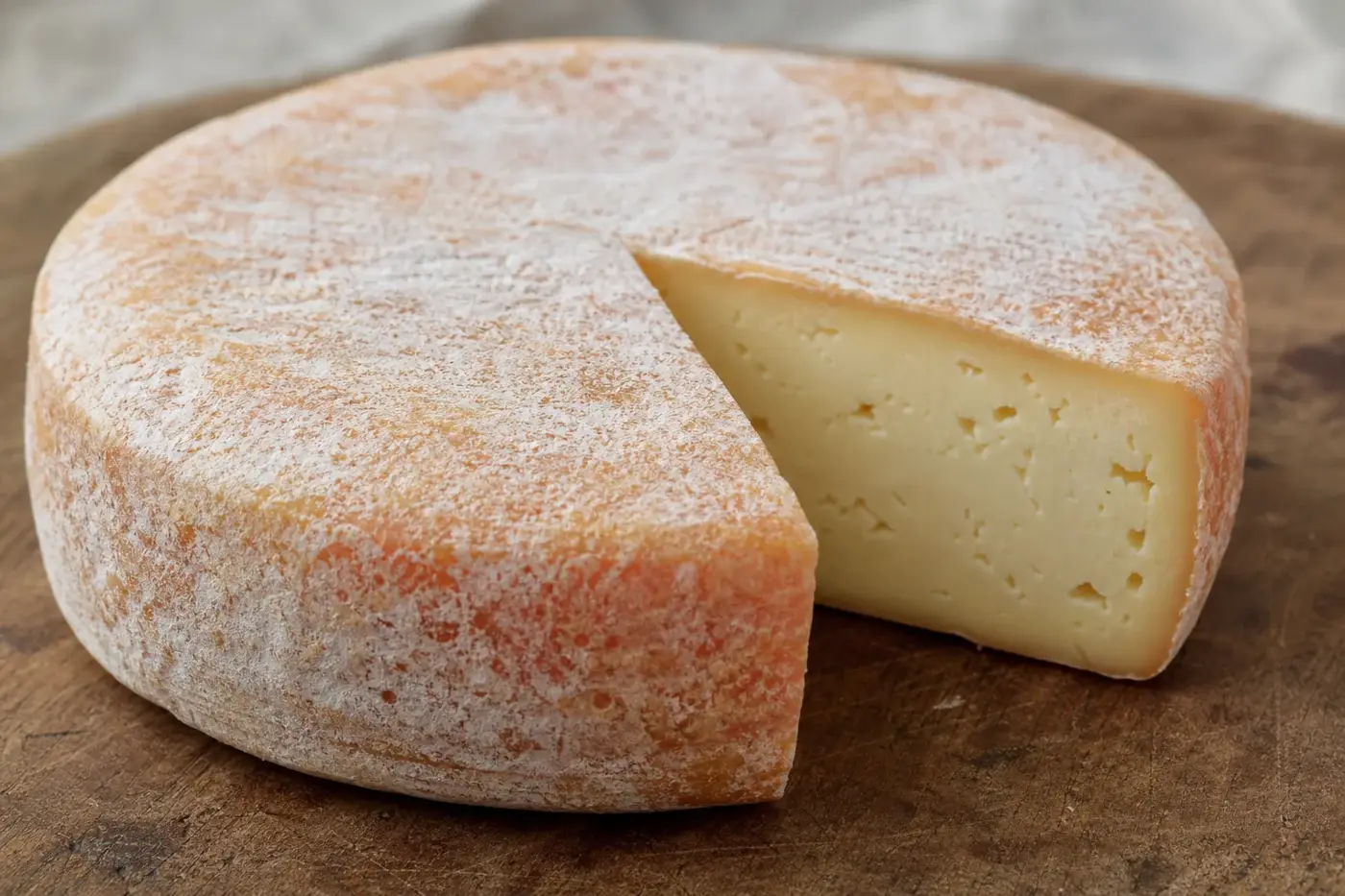
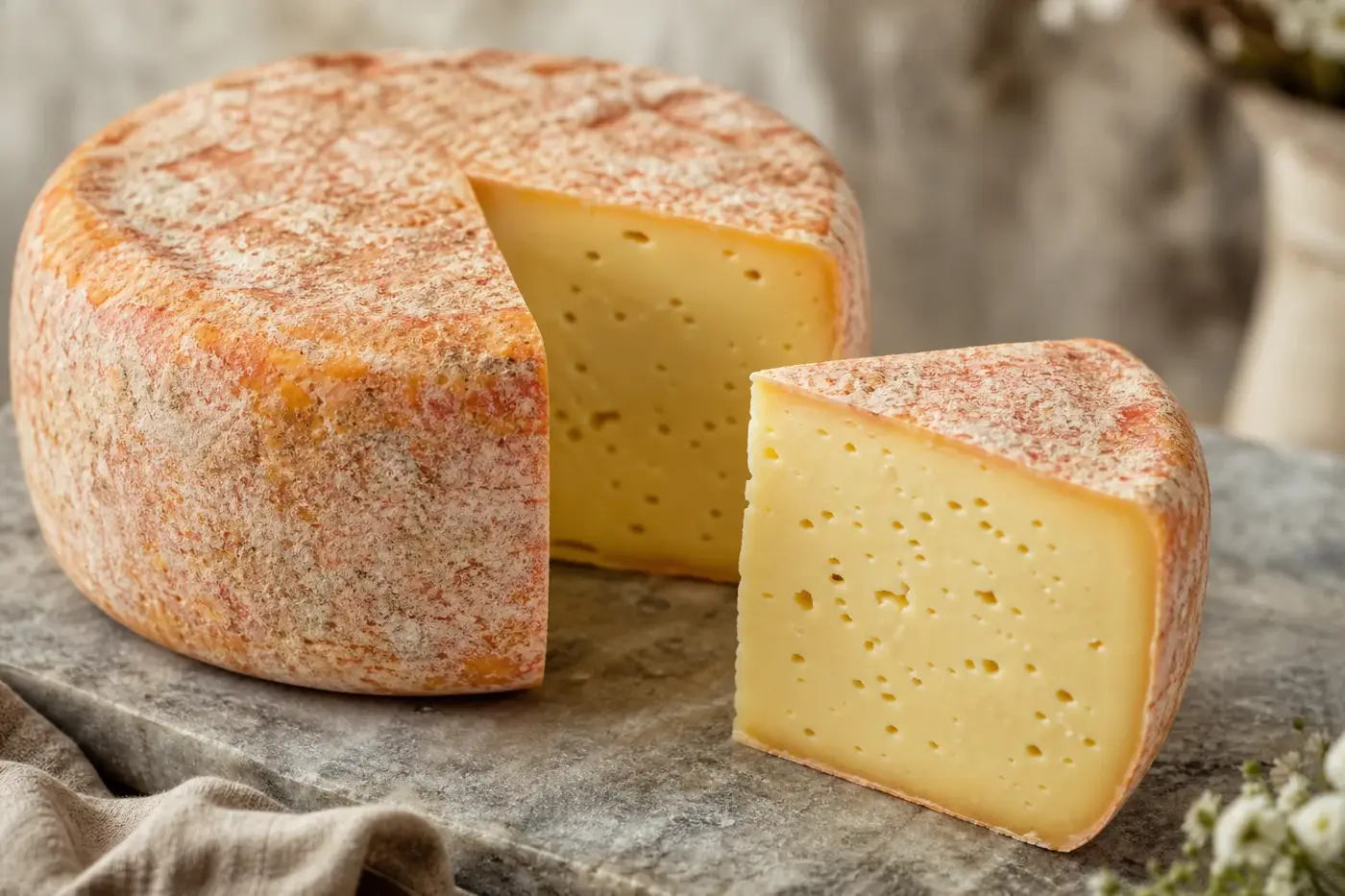
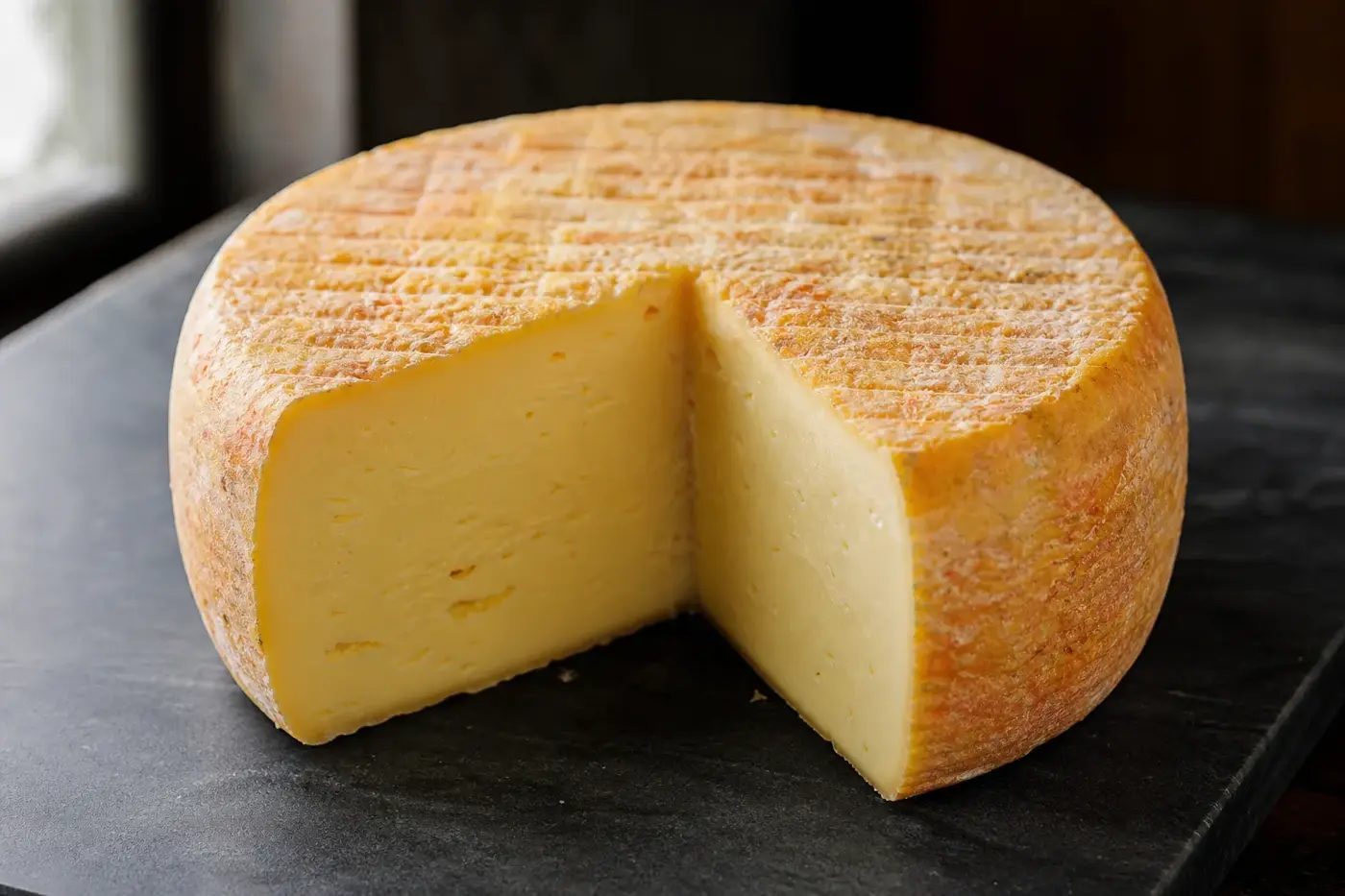
Cut through Maighean’s white mould rind and you meet yellow paste, with a robust, earthy mouthful to follow.
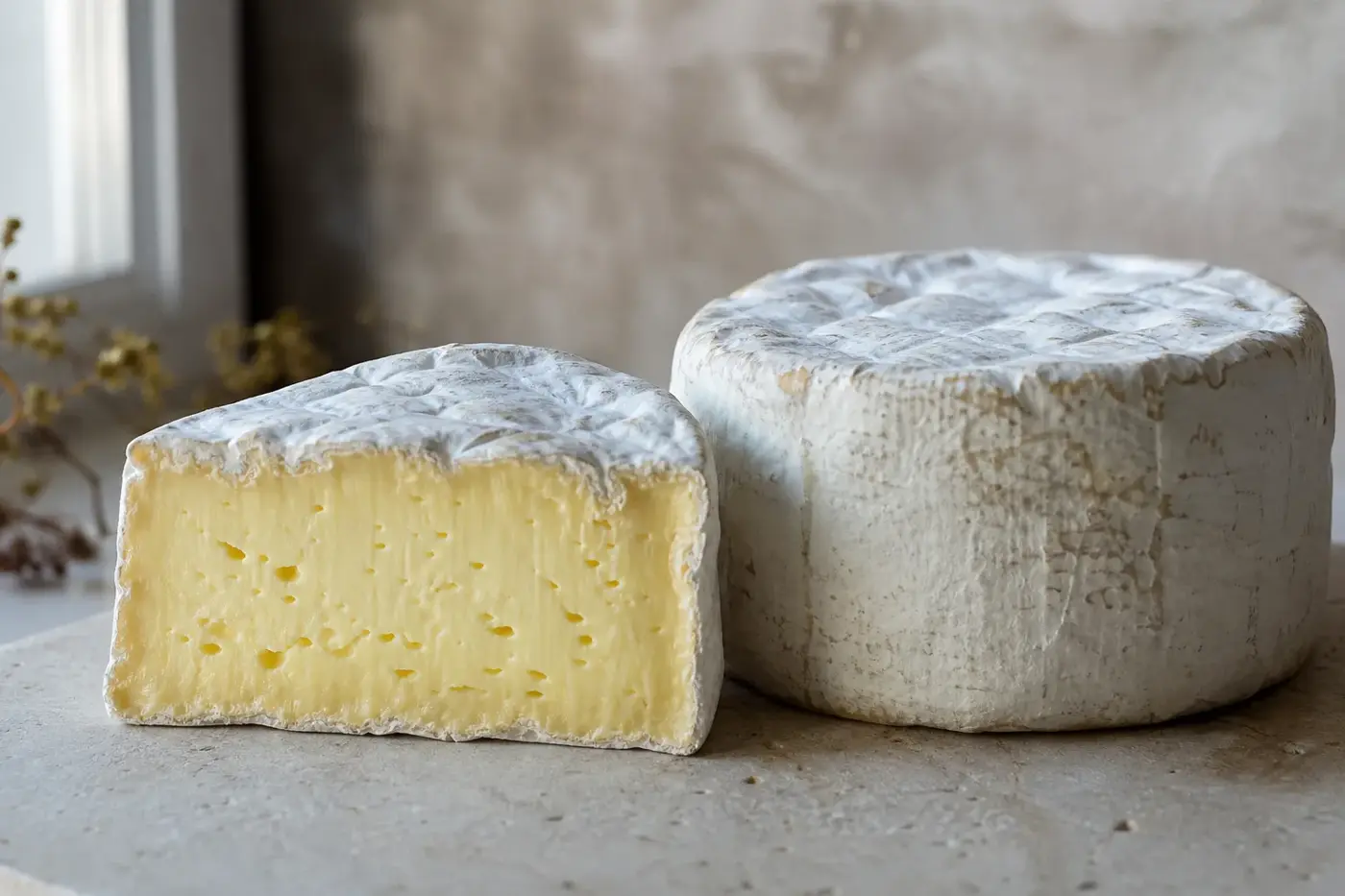
Cut through Maighean’s white mould rind and you meet yellow paste, with a robust, earthy mouthful to follow. This soft raw cow’s milk cheese comes from Cooleeney Farm in Tipperary, with milk supplied by its own herd. The rind and the ripening beneath it shape what reaches your plate; Cooleeney puts full maturity at 8 to 10 weeks. [1,2]
| Your guide to Maighean | The details |
|---|---|
| Name | Maighean. [1] |
| The maker and the place | Cooleeney Farm, Tipperary, Ireland. [1,2] |
| Milk | Raw cow’s milk from the farm’s own herd. [1] |
| Style | Soft, white mould-ripened. [1] |
| Beneath the rind | Yellow paste. [1] |
| Coagulant | Rennet described by the maker as vegetarian. [1] |
| Time to full maturity | 8 to 10 weeks, according to the maker. [1] |
| Available formats | 200 g and 1.7 kg. [1] |
| Pregnancy guidance | Ireland: HSE advice, November 2026. [6] |
Step onto the Tipperary farm behind the rind
Peaty soil, clover-rich grass and a pedigree Friesian herd: this is how Cooleeney describes its farm in Tipperary’s dairy country. You have somewhere to picture now, rather than just an Irish address on a label. [2]
The clearest connection between that place and your cheese is the milk. Cooleeney names its own herd as Maighean’s milk source, linking the finished cheese directly to the farm. [1]
Milk is only the beginning, though. The cheesemaker creates the conditions in which ripening organisms develop. Maighean’s character takes shape through that sequence, from the raw material to the patient work of maturation. [3,4]
Start with the milk, then follow the flavour
Maighean begins with raw cow’s milk, not pasteurised milk. That matters to its identity, but raw milk cannot explain every flavour by itself. Milk, cultures, manufacture and maturation all have a part in how the cheese develops. [1,4]
First, bacteria turn milk sugar into lactic acid. The changing acidity helps determine which microorganisms can thrive. Later, enzymes and ripening organisms alter proteins and fats, changing texture and producing compounds that contribute to aroma and flavour. [4]
That is why two soft cow’s milk cheeses can follow different paths, even when their descriptions sound remarkably alike. Milk treatment matters, but it belongs within the larger story of making and ripening cheese. You can follow those distinctions in raw, thermised and pasteurised milk.
From milk to a cheese worth waiting for
Cooleeney describes Maighean’s rennet as vegetarian and its milk as raw. Rennet helps milk set into a gel. Those are the particulars of Maighean; the general soft-cheese process helps you picture what happens next. [1,3]
In a rennet-set cheese, milk proteins join into a network that holds fat and water. The solid part is curd; the liquid released as that network contracts and drains is whey. How the cheesemaker handles the curd, and how much whey remains, help determine moisture and texture. [3]
Acidification and drainage work together, rather than politely taking turns. Cheesemakers manage acid development, curd handling and salting to prepare the conditions for ripening. In soft, mould-ripened cheeses, retained moisture helps create a paste that can soften as surface flora develops. [3]
For Maighean, Cooleeney puts full maturity at 8 to 10 weeks. [1] Ask your seller how old a piece is and when it should be ready to eat. That age describes development, not storage after purchase: follow the pack instructions and the refrigerated-food guidance below. [7]
Look closely: that white rind is working
Maighean ripens from the surface, where mould grows with oxygen available. Acidity, salt, moisture and the ripening environment help determine which organisms flourish there. The white rind has a job to do, beyond looking presentable on your cheeseboard. [1,3]
Penicillium camemberti is a characteristic mould of this style. Yeasts and the yeast-like fungus Geotrichum candidum can play a part too. Research on this cheese family describes early surface organisms consuming lactate, reducing acidity and preparing the way for further ripening activity. [5]
The effects of those changing conditions spread towards the centre. Shifts in acidity and mineral balance, alongside protein breakdown, help explain the softer outer layer you may see around a firmer middle. With further maturation, that contrast can become less pronounced. [4,5]
Give the cut face a proper look before you take a bite. Follow it from rind to centre, comparing the layer just beneath the rind with the middle, and notice how each feels on your knife. You will learn more about this family’s ripening pattern than by judging the whole cheese from one spot. [5]
Get to know Maighean, one impression at a time
Creamy texture, earthy and animal notes, robust flavour: these are Cooleeney’s descriptions of Maighean. The maker’s cited tasting account does not describe how its aroma and flavour change with age. [1]
Give texture, smell and flavour a moment each. Notice how the paste feels, smell the cheese before eating, then pay attention to what lingers afterwards. If you find a firmer centre and a softer layer beneath the rind, record them separately: ripening from the outside in makes those differences worth exploring. [5]
Treat the maker’s description as a starting point, not an entrance exam for the cheeseboard. Does your piece hold its shape, yield under the knife or spread easily? Is the earthiness clearest in the aroma, the rind or the finish? Ordinary words will tell you more than a single score for strength.
Write down the date, too. Note whether you tasted it straight from refrigeration or after a short warming period. When you return to Maighean, you will have both your impressions and the tasting conditions to compare.
Let the first mouthful speak for itself
Start with a small piece and plain bread or crackers. Give yourself time to notice paste and rind before adding anything sweet, sharp or strongly flavoured. Bring in accompaniments one at a time, so you can judge each combination.
For Irish advice on refrigeration and food left out of the fridge, consult the HSE’s current guidance. [7]
Try this simple tasting order:
- Cut a small portion with a clean knife, keeping the remaining cheese refrigerated.
- Taste the paste first, then compare a bite with rind if the product’s instructions permit it.
- Add bread, then a small piece of apple or pear, rather than building a heavily dressed mouthful straight away.
- Note texture, aroma and finish before trying a drink.
Alcohol free cider alongside fresh apple is one option. Plain sparkling water keeps your attention on the cheese. These serving and pairing suggestions are not the maker’s pairings.
Make room in the fridge, and keep the label
Follow the pack’s storage directions. For Irish advice on chilled food, use by dates and food after opening, consult the HSE’s current guidance. [7]
Keep the label with your cheese, particularly if a seller has cut and rewrapped it. If you buy a cut portion, ask for storage and opening instructions, and keep a written record. You will have something useful to consult later, rather than relying on a remembered maturation age or the rind’s appearance.
Use clean utensils and a clean serving surface. Return the unserved portion to the fridge promptly, following the same Irish refrigeration guidance. [7] For the wider handling routine, see how to store cheese at home.
This page summarises published guidance from the official sources it cites. It is not medical advice. Guidance differs between countries and changes over time, so check the current source for where you live, and ask your doctor, midwife, pharmacist or dietitian about your own circumstances.
Find the health guidance that applies to you
In Ireland, turn to the HSE’s current pregnancy and listeriosis guidance for its advice on dairy products. Ask your midwife about your own circumstances. [6,7]
The HSE also identifies older people, newborn babies and people with weakened immune systems as being at higher risk of serious illness from listeriosis. [7] If you live outside Ireland, consult your national guidance and discuss your circumstances with your healthcare professional.
For a wider explanation of the organism and why it matters to cheese, you can read listeria and cheese safety.
Let Maighean lead you to your next discovery
- How Cheese Is Made: From Milk to Cheese: follow the transformation from coagulation to ripening.
- How to Tell Cheese Styles Apart: Milk, Rind, Texture and Method: discover where white mould-ripened cheeses fit among the wider styles.
Questions people ask
Where is Maighean made and what milk is used?
Maighean is made by Cooleeney Farm in Tipperary, Ireland. It uses raw cow’s milk from the farm’s own herd.
What does Maighean taste like?
Cooleeney describes Maighean as creamy and robust, with earthy and animal notes. It has a yellow paste and a white mould rind.
How long does Maighean take to mature?
Cooleeney puts full maturity at 8 to 10 weeks. The page suggests asking the seller how old a piece is and when it is expected to be ready to eat.
Is Maighean made with vegetarian rennet?
Cooleeney describes the rennet used in Maighean as vegetarian. The cheese is made with raw cow’s milk.
Can I eat Maighean during pregnancy?
The page does not state the HSE’s specific advice for Maighean. Check the HSE’s current pregnancy and listeriosis guidance, and ask your midwife about your own circumstances.
Sources
- Cooleeney Farm, Maighean, undated product page, retrieved November 2026. Maker’s declarations for milk, rind, paste, flavour, maturity, rennet, formats and cider pairing. Product page.
- Cooleeney Farm, homepage, undated, retrieved November 2026 through its indexed extract. Maker’s account of the Tipperary setting, Friesian herd, soil and grass. Maker’s website.
- American Society for Microbiology, The Basics of Cheesemaking, Microbiology Spectrum, volume 1, number 1, 31 October 2013. Sections on coagulation, acidification and surface ripening. Journal article.
- Frontiers in Microbiology, A Review on the General Cheese Processing Technology, Flavor Biochemical Pathways and the Influence of Yeasts in Cheese, volume 12, article 703284, 29 July 2021. Review of manufacture and biochemical changes during ripening. Full text.
- Heliyon, Yeasts in different types of cheese, 2021. Section 3.5, “Mould surface ripened”, retrieved extract checked November 2026. Article record.
- Health Service Executive, Ireland, Foods to avoid in pregnancy, current online guidance retrieved November 2026. Sections on dairy products, food hygiene and alcohol. Official guidance.
- Health Service Executive, Ireland, Listeriosis, current online guidance retrieved November 2026. Sections on higher-risk groups, refrigeration, opened foods and pregnancy. Official guidance.
- U.S. Dairy, How Long Can Cheese Sit Out?, 10 April 2026. Industry guidance on warming cheese before serving. Article.
Researched from the maker’s published information, peer-reviewed explanations of cheese manufacture and ripening, and Irish official consumer guidance.
Last checked: November 2026
Last checked November 2026.
The editors suggest you read next