Country: Norway
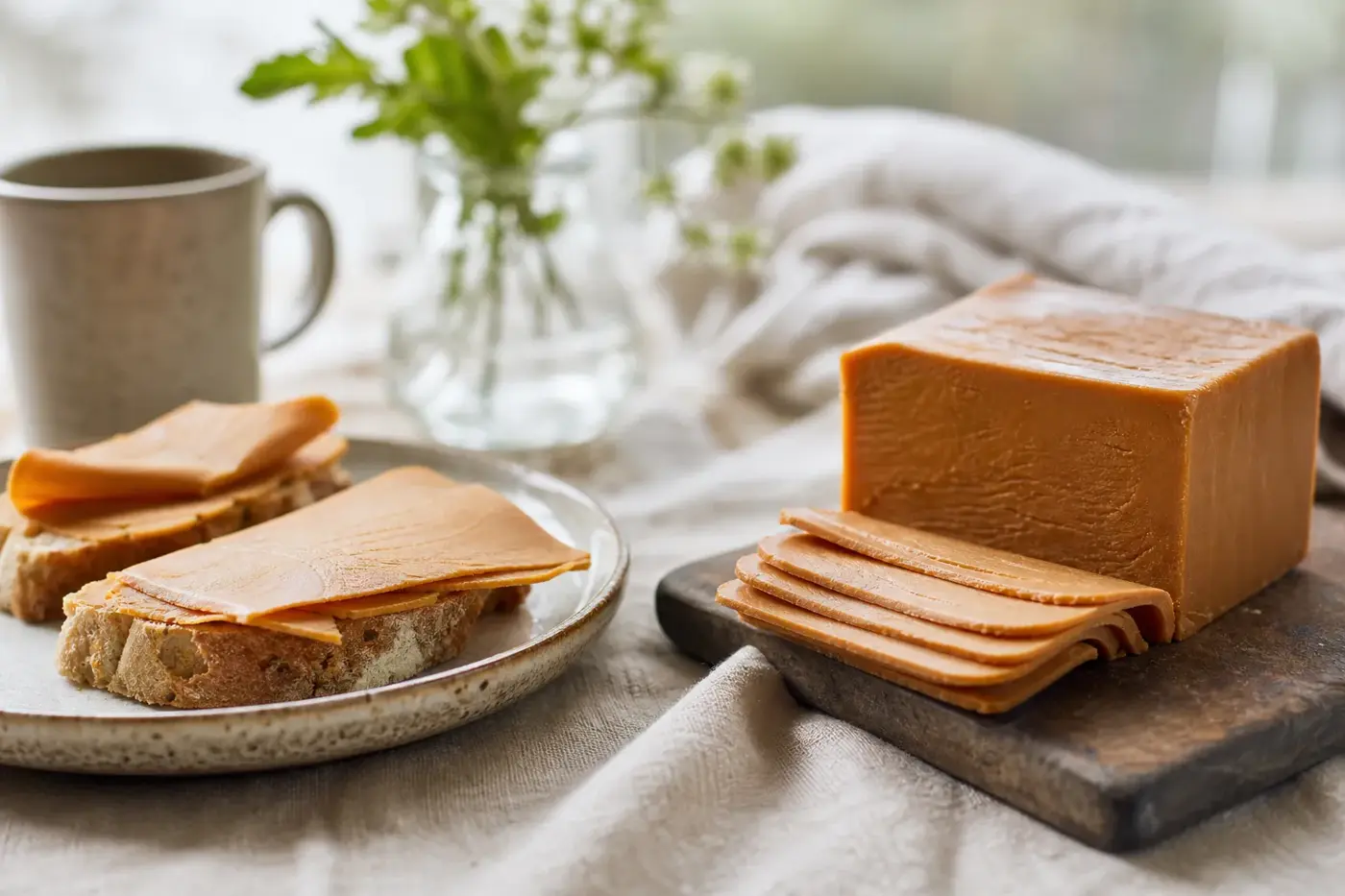
A thin, caramel-coloured slice of brunost settles onto your breakfast bread. Before it reached your plate, it was whey, the liquid left behind in cheesemaking, cooked down into a firm block.[3] At a Norwegian summer farm, or seter, that transformation belongs to a seasonal rhythm: animals graze outlying pastures, and their milk becomes butter, cheese and other dairy foods.[1][2]
Follow the curd, then follow the whey. These are two delicious routes into Norway’s cheese traditions. That brown breakfast slice has rather more company than you might expect.
| Get your bearings | What you’ll find |
|---|---|
| Milks to meet | Cow’s milk, goat’s milk and mixtures of both.[3][4] |
| Traditions to taste | Summer-farm dairying, concentrated whey products and soured skimmed-milk cheeses.[1][3][5] |
| Names to look for | Brunost, Gudbrandsdalsost, Jarlsberg, Norvegia, Nøkkelost, gammelost and pultost.[3][4][5][6][7][8] |
| Norwegian protected names | Gamalost frå Vik and Skjørost fra Røros-traktene, listed under geographical protection in Norway’s approved-products register, November 2026.[9][10] |
| People behind the scheme | Mattilsynet administers the Norwegian scheme; Stiftelsen Norsk Mat handles applications and advises applicants.[11] |
One farm, three ways with milk
Butter, sharp sour-milk cheese and sweet brown whey cheese might seem unlikely companions. On a Norwegian farm, they tell different parts of the same story. Cream could become butter, soured skimmed milk could become pultost or gammelost, and suitable whey could be concentrated into brown cheese.[3][5]
That resourcefulness mattered. The Norwegian food-heritage publication Surmjølksost explains why skimmed-milk cheesemaking was important in a farm economy where butter was a principal product for sale.[5] The cream had its role, but the rest of the milk had work to do too.
Summer farming carried that knowledge beyond the home farm. UNESCO describes livestock moving to outlying land in late spring, then returning with their keepers at the season’s end. Its joint recognition of Norwegian and Swedish summer farming in 2024 encompasses dairy production, animal husbandry, land management, crafts and oral traditions.[1]
You can taste those connections for yourself. Put a brown whey cheese beside a sharp sour-milk cheese and a mild slicing cheese. These are three approaches to dairying, not three stops on a simple scale of maturity; for the broader distinctions, see how to tell cheese styles apart.
Follow the milk into the mountains
Summer farming brings outlying grazing into the dairy year. Norsk Seterkultur, the organisation representing this tradition, describes vegetation, animal care, grazing and cheesemaking as connected fields of knowledge passed between generations. Its account takes in modern operations as well as small mountain farms worked in traditional ways.[2]
Give your tasting journey a few geographical bearings. Vik, in Sogn, is associated with Gamalost frå Vik, while farther inland, Gudbrandsdalen is closely connected with the development of cream-enriched brown cheese. Around Røros, you’ll find a fresh sour-milk tradition in skjørost: distinct cheese histories across the fjord and mountain districts.[3][9][10]
Climate makes itself felt most clearly in the working year. Visit Norway presents summer-farm visits as a summer activity; UNESCO describes the journey out to grazing and home again. Think of mountain pasture as a seasonal source of feed and a place of skilled work, rather than a flavour description for every Norwegian cheese.[1][12]
You’ll meet cow’s milk and goat’s milk separately and together. In brown cheese, the distinction involves whey and cream as well as milk added to the mixture. Melk.no, the Norwegian dairy information organisation, distinguishes cow-based mysost, goat-based geitost and mixed brown cheeses, with Gudbrandsdalsost the best-known mixed example.[3]
Read the ingredients when you compare packets. “Brown cheese” is a family name, not a promise that everything inside will taste alike. The milk mixture and its treatment give you a much better guide.
Make room for Norway’s very different cheeses
Brunost: the whey to caramel colour
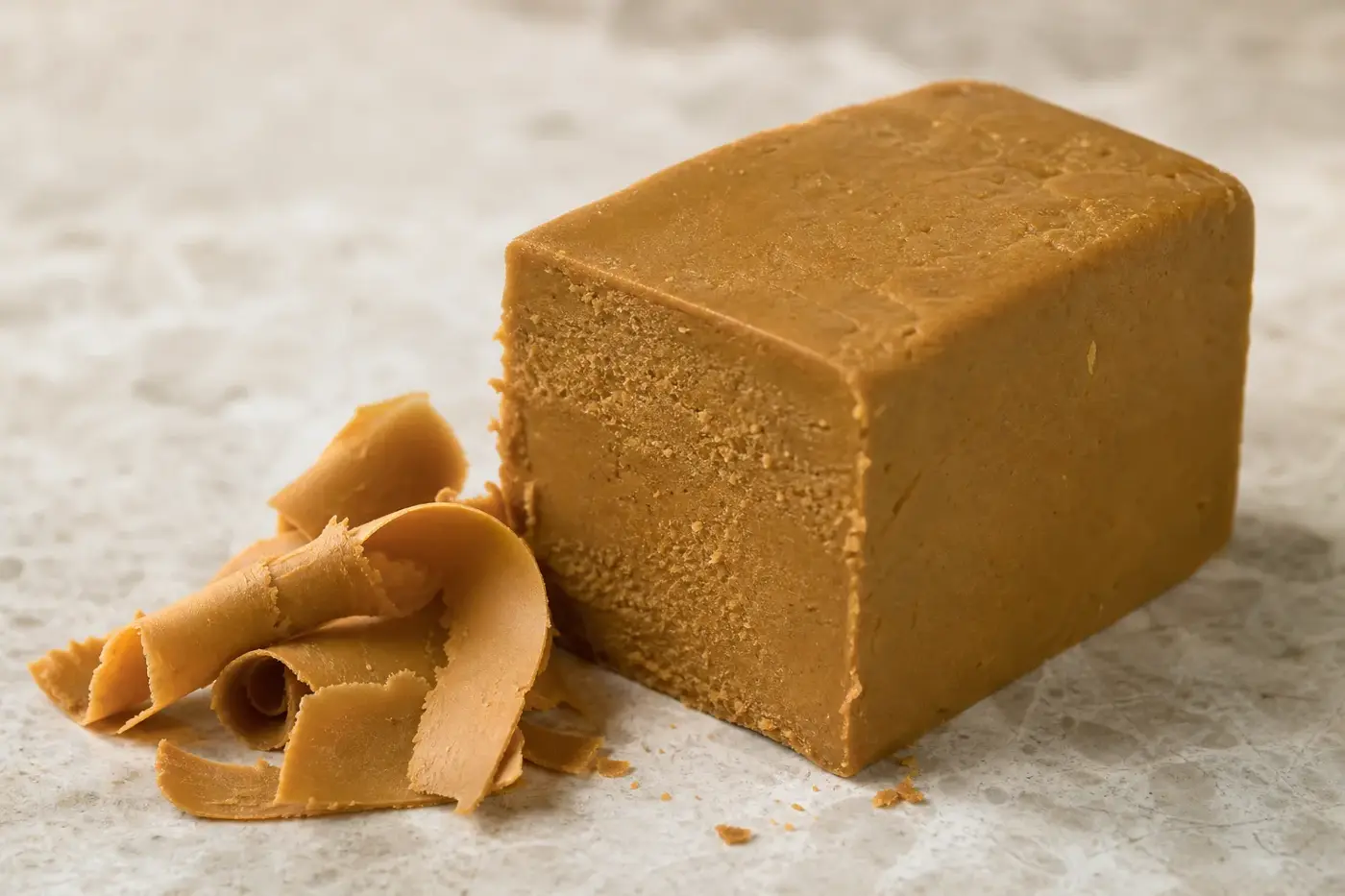
Brunost means brown cheese, but its story starts with whey. Milk or cream may be added, depending on the product. Rather than draining away liquid and maturing curd, the producer removes water from the whey mixture until it can set into a firm, sliceable block.[3]
Cooking browns the mixture and develops its characteristic caramel-like flavour. Melk.no describes controlled concentration, browning and cooling, with stirring during cooling to keep lactose crystals small enough to avoid a sandy texture. Ingredients matter, but technique matters too: the same account associates darker brown cheeses with stronger flavour.[3]
The firmness beneath your cheese plane comes from concentration and cooling, not the maturation that shapes a slicing cheese. Its sweetness is connected with milk sugar retained in the whey mixture. That explains much of brunost’s distinctive character at the table; for the curd-and-whey story, follow how cheese is made.[3]
Gudbrandsdalsost: let the milk tell its story
Gudbrandsdalsost belongs to the mixed-milk branch of the brown-cheese family. TINE describes its product as made from cow’s and goat’s milk, with a rounded, full, caramel-like character. Its tasting material contrasts this with cow-based Fløtemysost, described as lighter and milder.[4][13]
Bring goat’s milk brown cheese into your comparison next. TINE describes its Geitost as strong-flavoured, with pronounced goat’s milk character and caramel-like sweetness underneath. Beside Gudbrandsdalsost, it shows you how milk composition shifts the balance within the brown whey family.[14]
Let the ingredient declaration guide you, rather than the darkest block or the largest goat illustration. The goat on the packet has already done its persuasive work. Taste each cheese on the same plain bread or crispbread, so the differences have room to speak.
Jarlsberg, Norvegia and Nøkkelost: find your slicing cheese
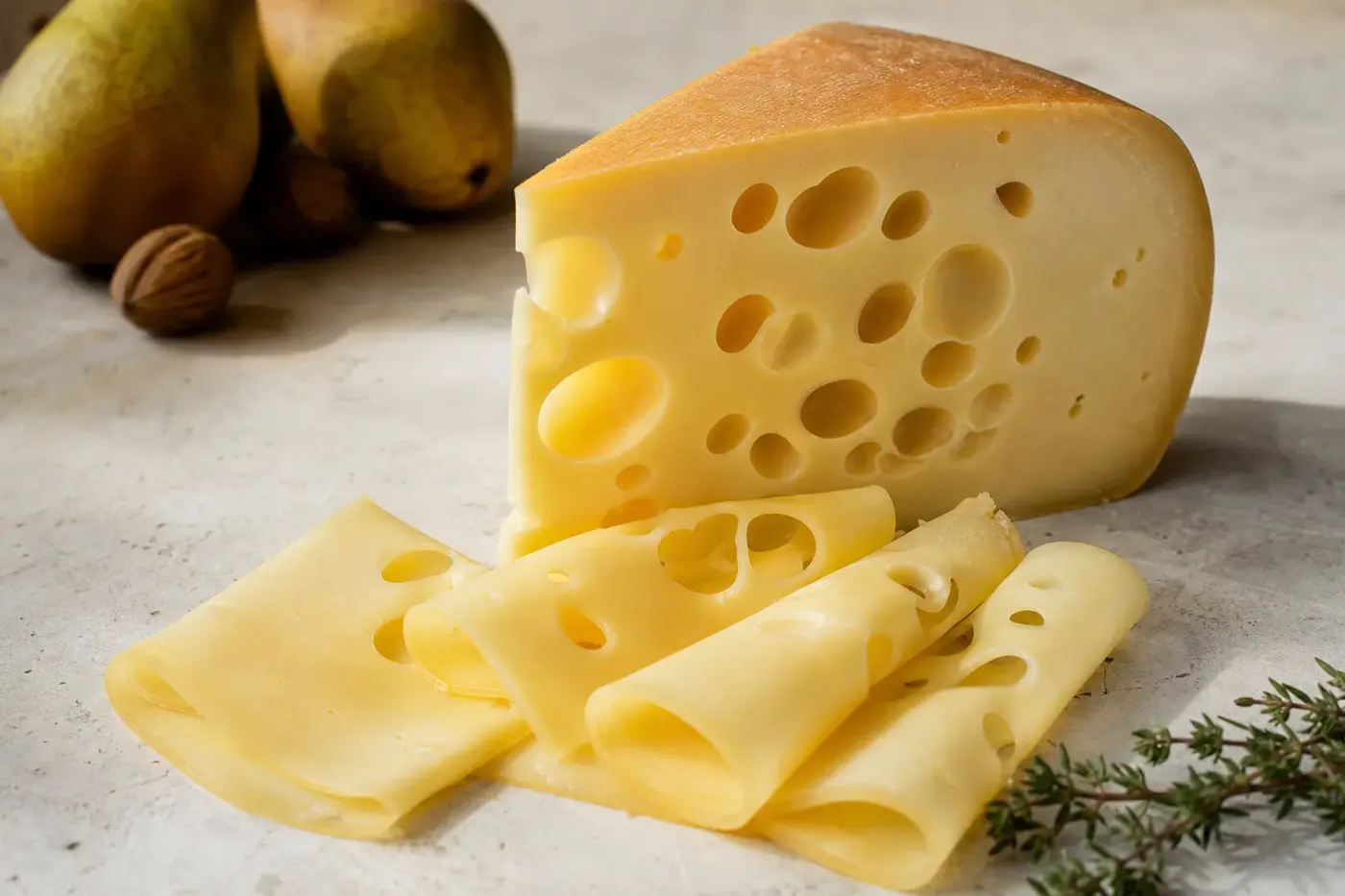
Large holes, smooth texture and sweet, nut-like flavour: that is Jarlsberg in TINE’s description. Behind the familiar cheese sits a modern development story. TINE traces the present cheese to research at the agricultural college in Ås during the 1950s, with the brand established in 1956.[6][15]
Norvegia gives you another familiar slicing-cheese choice. TINE describes its current Original product as mild and suitable for bread and melting. Taste it beside Jarlsberg to compare a restrained everyday cheese with Jarlsberg’s more explicitly sweet, nut-like producer description.[7][15]
If you’re after spice, turn to Nøkkelost. TINE describes the current Norvegia Nøkkel product as flavoured with cumin and cloves. Keep those names precise when comparing makers’ versions or translating Norwegian labels: they describe that particular product.[8]
These names also call for a distinction between traditions, cheese types and brands. Jarlsberg and Norvegia appear in TINE’s brand portfolio. Brunost and pultost, by contrast, describe broader kinds of dairy product.[3][5][6][7]
Gammelost, pultost and skjørost: take the sour-milk route
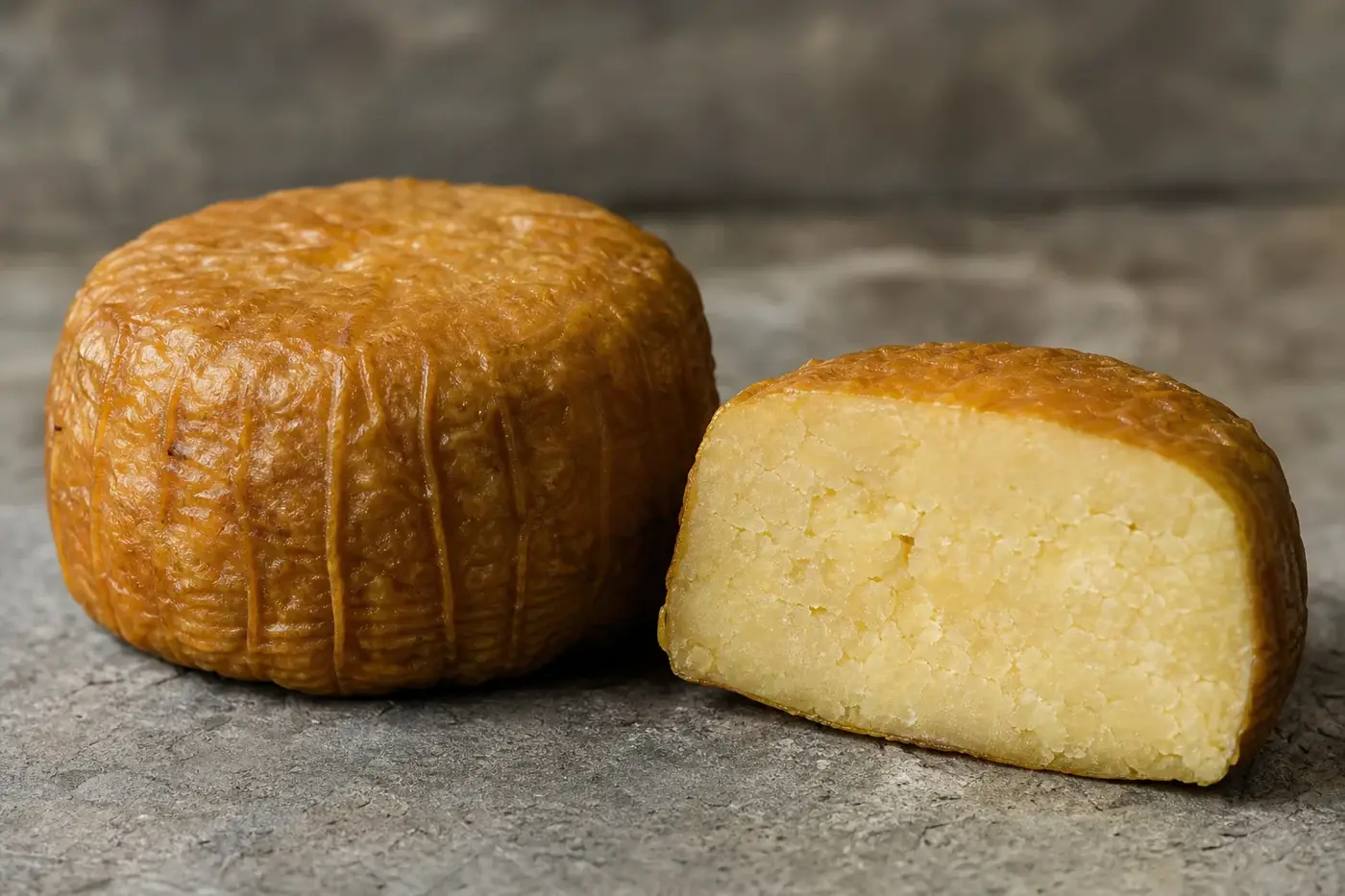
Sharp, aromatic and mould-ripened, gammelost brings you into Norway’s sour-milk cheese tradition. You’ll also see it written gamalost. It includes Gamalost frå Vik, a geographically protected name whose register description gives those flavours and requires production in Vik municipality.[9]
Gammelost’s history does not rest on a single, unchanging farm recipe. Kringom, the regional cultural-history resource, documents differences between Hardanger and Sogn production, including milk acidity and treatment of the curd. It also records the move from summer-farm cheese to dairy production in Vik.[16]
Pultost begins with soured skimmed milk. In Surmjølksost, the curd is drained, crumbled and ripened, then seasoned with salt and caraway. Stiftelsen Norsk Mat describes a sharp, sour, aromatic cheese whose texture and flavour vary with method and ripeness.[5][17]
For a fresh contrast, try skjørost. The register describes Skjørost fra Røros-traktene as a mild, fresh cheese made from soured skimmed milk. Unlike ripened pultost and gammelost, it reaches the table fresh, traditionally with sour cream, flatbread and cured meat.[10]
Protected names: the place belongs on the label
Those place words have a purpose. Norway’s approved-products register lists Gamalost frå Vik and Skjørost fra Røros-traktene under geographical protection. Each complete name is the protected designation; the place is not an optional addition to a general cheese name.[9][10]
Norway runs its own protected food-name scheme under national legislation. Its three categories concern origin, geographical association and traditional character. Mattilsynet administers the scheme, while Stiftelsen Norsk Mat supports applications and applicants.[11]
| Name to look for | Norwegian register category, November 2026 | What you’ll find in the register |
|---|---|---|
| Gamalost frå Vik | Geographical protection | Mould-ripened sour-milk cheese produced in Vik municipality.[9] |
| Skjørost fra Røros-traktene | Geographical protection | Fresh sour-milk cheese associated with the Røros district.[10] |
Norwegian and EU registration are separate legal records, so keep the two distinct. The Norwegian scheme’s explanation points readers separately to the EU system and describes EU producers applying for protection in Norway. A Norwegian designation establishes Norwegian registration; protection elsewhere depends on that jurisdiction’s record.[11]
An application is different from registration, with its own status and date. Stiftelsen Norsk Mat announced that it received an application for Pultost as a protected traditional speciality on 16 March 2026.[17] For the distinctions behind the labels, see protected names explained.
Start your tasting at breakfast
Bread, crispbread, waffles: brown cheese is comfortable company for all three, as Melk.no records. TINE also presents Jarlsberg and Norvegia as bread toppings. You needn’t wait for a separate tasting board to meet Norwegian cheese; breakfast has already made room.[3][7][15]
For your first brunost encounter, take a cheese plane and make thin slices for bread or crispbread. Taste a little before adding another topping. Give that concentrated sweetness and dairy character a moment without competing flavours.
Carry the same simplicity into a matpakke, the packed lunch. Choose a bread topping you enjoyed at breakfast, then keep the comparison clear. A slice of mild cheese beside a slice of brown cheese tells you more than several unfamiliar cheeses all requesting your attention at once.
Ready to go further? Ask for four contrasting samples: a mild slicing cheese, Gudbrandsdalsost, goat’s milk brown cheese, and pultost or gammelost. Add fresh skjørost if available; each earns its place through a different combination of ingredients and production, not merely another name on the board.[3][5][7][9][10][14]
A little cream, and a continuing cheese story
At Solbråsetra in Gudbrandsdalen in 1863, cream was added to whey cheese. Goat’s milk followed later. Melk.no and TINE identify this as an important development in brown cheese, within an already established whey-product tradition.[3][4]
Behind that moment lies the wider farm practice of finding uses for milk’s different fractions. Butter production left skimmed milk for sour-milk cheeses, while concentrating whey created another family of products. Those linked processes help explain why assertive, lean sour-milk cheeses and sweet brown whey products both belong in Norway’s dairy story.[3][5]
Dairies later brought production into larger organisations. Kringom records Vik dairy starting in 1897, becoming part of Sognemeieriet in 1972, and entering further regional combinations in 1985 and 1999. Today, TINE describes its parent company, TINE SA, as a cooperative owned by milk producers.[16][18]
Small-scale skills are drawing renewed attention too. The 2024 Surmjølksost programme brought traditional sour-milk cheeses into tastings and contemporary cooking, including documented use of pultost from Avdem. Norsk Seterkultur describes continuing farm production and practical knowledge passing to new learners.[2][5]
You don’t have to choose between these strands to understand Norwegian cheese. Research-led branded cheeses, cooperative production and farm-based traditions remain active together. This is not a story in which every new arrival clears the table of what came before.[2][15][18]
Go tasting, and meet the makers
A summer farm brings animals, grazing and dairy food into the same frame. Start with the summer-farm listings signposted by Visit Norway and the organisations Norsk Seterkultur, HANEN and Norsk Gardsost. Before setting off, confirm whether the farm welcomes visitors, makes cheese on site, and offers tastings or a shop.[2][12]
Check the particular season rather than assuming a mountain farm is a year-round attraction. Ask about booking, road access, walking distance and accessibility. Establish whether you’ll be visiting a working dairy or a café: both can be worthwhile, but they offer different encounters with cheesemaking.
At a farm shop, ask which products are made there and which come from elsewhere. At a market or specialist cheesemonger, ask for contrasting methods, not simply the strongest cheeses. In a restaurant, ask for the maker and locality of each cheese on your plate.
Give origin as much attention as the cheese name. A familiar Norwegian name, a Norwegian brand and a cheese made at the farm you’re visiting answer different questions. The most revealing follow-up is often the simplest: who made this particular cheese, from which milk, and where? See how to read a cheese label.
Questions people ask
What is brunost made from?
Brunost starts with whey, the liquid left behind when cheese is made. Milk or cream may be added, and the mixture is concentrated and cooled until it forms a firm block.
What is the difference between Gudbrandsdalsost and Geitost?
Gudbrandsdalsost is a brown cheese made from cow’s and goat’s milk, with a rounded, caramel-like character. TINE describes its Geitost as strong-flavoured, with a pronounced goat’s milk character and caramel-like sweetness.
How do Norwegians eat brunost?
Bread, crispbread and waffles are familiar companions for brown cheese. It can be cut into thin slices with a cheese plane.
Which Norwegian cheeses have protected geographical names?
Norway’s approved-products register lists Gamalost frå Vik and Skjørost fra Røros-traktene under geographical protection. The complete names, including the place words, are the protected designations.
Can you visit a Norwegian summer farm to taste cheese?
Visit Norway provides summer-farm listings, as do organisations including Norsk Seterkultur, HANEN and Norsk Gardsost. Before travelling, check whether the farm welcomes visitors, makes cheese on site and offers tastings or a shop.
Sources
- UNESCO. Summer farming at fäbod and seter: knowledge, traditions and practices related to the grazing of outlying lands and artisan food production. Nomination 02109, inscription 2024.
- Norsk Seterkultur. Norwegian Summer Farming Culture: Dairymaids’ Knowledge Recognised by UNESCO. English brochure, 2025.
- Opplysningskontoret for Meieriprodukter, Melk.no. Brunost (mysost). Undated online technical and cultural account, accessed November 2026.
- TINE. TINE Industri 2026 produktkatalog. Brown-cheese section, 2026.
- Norges Bondelag, hosted publication. Surmjølksost. Dyrsku’n programme and heritage account, 2024, particularly “Ulike typar surmjølksost”.
- TINE. Jarlsberg. Undated brand page, accessed November 2026.
- TINE. Norvegia Original. Undated product description, accessed November 2026.
- TINE. Norvegia Nøkkel. Undated product description, accessed November 2026.
- Stiftelsen Norsk Mat, Beskyttede Betegnelser. Gamalost frå Vik. Approved-product entry, accessed November 2026.
- Stiftelsen Norsk Mat, Beskyttede Betegnelser. Skjørost fra Røros-traktene. Approved-product entry, accessed November 2026.
- Stiftelsen Norsk Mat, Beskyttede Betegnelser. Protection of geographical indications in Norway. Undated scheme explanation, accessed November 2026.
- Visit Norway. Visit a Norwegian summer mountain farm. Undated national tourism guidance, accessed November 2026.
- TINE. Brunost smakskort. Norwegian and English product tasting descriptions, 2025.
- TINE. TINE Geitost. Undated product description, accessed November 2026.
- TINE. Historien om Jarlsberg and Jarlsberg-original. Undated producer accounts, accessed November 2026.
- Kringom, regional cultural-history resource. Gamalost frå Vik Meieri. Historical account drawing on dairy and regional archives, originally published 1999, accessed November 2026.
- Stiftelsen Norsk Mat, Beskyttede Betegnelser. 3 nye søknader om Beskyttet betegnelse. Published 24 March 2026.
- TINE. Om TINE. Current organisational description, accessed November 2026.
Researched through Norwegian scheme records, cultural-heritage publications and producer descriptions, with tasting language attributed to its source.
Last checked: November 2026
Last checked November 2026.
The cheeses of Norway
The editors suggest you read next
French Cheese: The Complete Guide
Picture Normandy’s pastures, then follow the milk towards the Loire’s goat dairies, the Jura’s shared cheesemaking traditions and the sheep country of the Pyrenees.