Oka
A monk arrives at Oka in Quebec on 18 February 1893, carrying cheesemaking knowledge connected to the French monastery cheese Port-du-Salut.
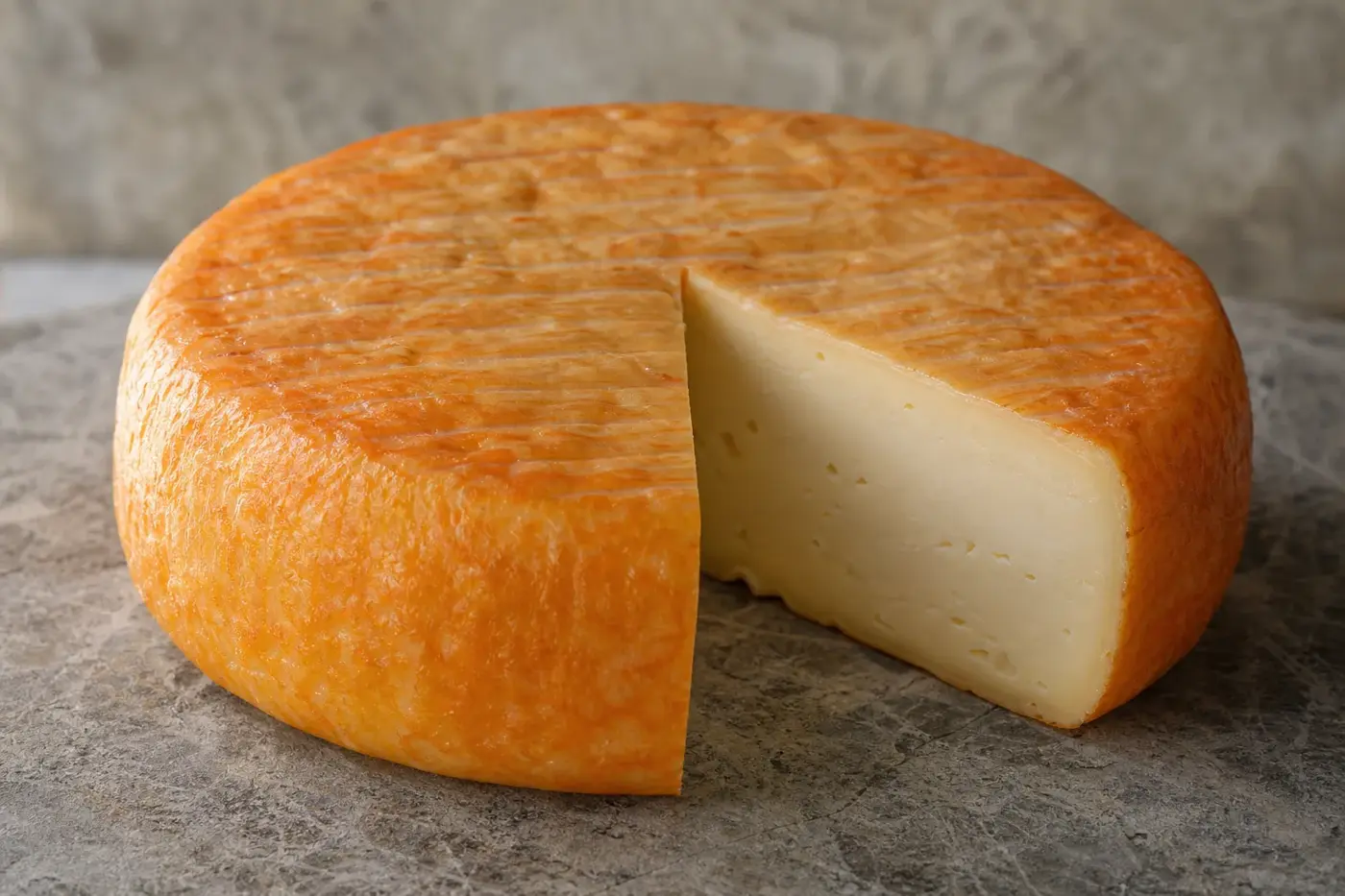
A monk arrives at Oka in Quebec on 18 February 1893, carrying cheesemaking knowledge connected to the French monastery cheese Port-du-Salut. It is the beginning of a Canadian cheese story that will travel well beyond the abbey walls. Today, you can taste that inheritance in cow’s milk, a washed rind and a savoury character shaped by careful attention to the cheese’s surface as it ripens. [1][2][3]
| Meet Oka | What you’ll want to know |
|---|---|
| Name | Oka; sold under the OKA brand. [2][3] |
| Where it began | The Trappist community at Oka, Quebec, Canada, in 1893. [1][2] |
| Milk | Cow’s milk. [3][4] |
| Style | Semi-firm, with a washed rind. [3][4] |
| Historical producer | Agropur. Lactalis Canada announced an agreement to acquire Agropur’s fine cheese business in July 2026. [2][6] |
| Current producer and operator | Not specified here |
| Published ripening periods | Standard OKA: more than 35 days; OKA Classique: more than 60 days, according to the manufacturer. [3][4] |
| Current milk treatment and coagulant | Not specified here |
| Registered geographical name, authority and identifier | Not specified here |
Follow the monks from France to Quebec
Oka’s story begins with the Trappist community and cheesemaking knowledge brought from France. The producer’s historical account dates the monk’s arrival to 18 February 1893 and connects his knowledge to Port-du-Salut. Local historical research adds training at the abbey of Port-du-Salut and the production of a semi-firm cheese at Oka in 1893. [1][2]
That puts Oka among the monastery washed-rind cheeses. Follow it into Quebec, though, and you find a tradition taking root in its own surroundings. Drawing on abbey records, the local historical society describes cheesemaking growing alongside agricultural education and the surrounding dairy industry. In 1894, the community fitted out a ripening cellar, improving the facilities where the cheese matured. [1]
The monks already knew their way around milk. The historical record describes butter and other cheese production before 1893. What makes that year important is Oka’s development in the Port-du-Salut tradition, rather than the community’s first venture into cheesemaking. [1]
See how Oka left the abbey walls
Agropur dates its involvement in Oka production to 1981. Its account describes cheesemaking knowledge passing from the monks to the commercial operation, with maturation continuing in the original cellars. Those cellars give you a physical thread connecting the monastery cheese with its later life. [2]
On 15 July 2026, Lactalis Canada Inc. announced an agreement to acquire Agropur’s fine cheese business, including OKA. The announcement said the transaction remained subject to closing conditions and approval by Canada’s Competition Bureau. An agreement is not a completed transfer. [6]
When you choose your cheese, read the producer information on that particular package, especially while business arrangements are changing. The brand, manufacturing location and company responsible for the product are separate parts of the story. Keep that distinction in mind when reading a cheese label.
Let the wedge make the introductions
You’ll find standard OKA and Classique in the producer’s catalogue as whole wheels and smaller portions. Begin with the name on the label. It gives you your first useful clue to the cheese inside. [3][4]
L’Artisan is particularly easy to recognise. The manufacturer describes a firmer cheese with conspicuous holes, giving Oka’s established flavour a different internal structure. Those openings belong to L’Artisan’s character, so don’t expect every cheese carrying the Oka name to look or feel the same. [7]
Discover what the rind brings to the party
With Classique, the extra attention starts on the outside. According to the manufacturer, additional rind washing and longer ripening develop its stronger character. Selected wheels mature for more than 60 days, compared with more than 35 days for standard OKA. [3][4]
A washed rind develops through treatment during maturation. It is part of Oka’s identity, not simply a covering you encounter on the way to the middle. The producer credits Classique’s extended maturation and extra washing with its more pronounced flavour and characteristic aroma. Standard OKA gets a gentler tasting description: hazelnut and butter. [3][4]
Those published ripening periods apply to particular products. Use them to help you choose, rather than as a description of every Oka. Other cheeses in the range have their own descriptions. For the broader journey from milk to curd, the solid material separated from whey, explore how cheese is made.
Find the Oka that suits your appetite
Traditional Oka offers a sliceable, yielding paste beneath an aromatic exterior. Within that style, standard OKA brings the manufacturer’s gentle hazelnut and butter notes, while Classique takes a more assertive direction. “Washed rind” need not mean a cheese determined to have the last word. [3][4]
Texture offers you another way in. The producer classifies standard OKA and Classique as semi-firm, but L’Artisan and Raclette as firm. That distinction helps whether you want a wedge to eat as it comes or a cheese developed with a particular texture or cooking use in mind. [3][4][7][8]
| Find your Oka | What makes it different |
|---|---|
| Standard OKA | More than 35 days’ ripening; the maker describes hazelnut and butter notes. [3] |
| OKA Classique | Selected wheels, more than 60 days’ ripening and extra rind washing; stronger flavour and aroma. [4] |
| OKA L’Artisan | Firm paste with prominent holes. [7] |
| OKA Raclette | Developed for melting and browning; more than 35 days’ ripening. [8] |
| OKA L’Artisan Fumé | The holed L’Artisan format with a smoke flavour. [9] |
| OKA avec Champignons | Mushroom and truffle flavour profile; a visibly different, speckled rind. [10] |
Give your cheesemonger the exact product name when you ask for a recommendation. “Oka” opens the conversation. “Classique”, “L’Artisan” or “Raclette” tells them much more about the texture, flavour or use the manufacturer has in mind.
Get acquainted with the milk and rennet
Start with the package you have in your hands. Look for the full product name, milk treatment, ingredient list and storage instructions. Details for your actual variety and market are more useful than a general description of the Oka range.
If the source of the rennet matters to you, ask the producer which coagulating enzyme that product uses. “Enzymes” on a label does not answer that question. Have the package details ready so the manufacturer can match its answer to the right cheese.
For help with the terminology, turn to rennet and its different sources. You can also explore the differences between raw, thermised and pasteurised milk in milk treatments explained.
Bring your Oka to the table
Before eating the rind, consult that product’s instructions or ask the producer whether it is intended to be eaten. Remove all packaging before you serve the cheese.
For a whole wheel, follow the producer’s general cutting advice: cut wedges from the centre. If you have a wedge already, offer slices that give each person some paste and some exterior. Cut more as you need it, rather than slicing the entire piece at once. [11]
In Canada, Health Canada advises keeping cold food at 4 °C (40 °F) or below. Consult its current guidance before you serve cheese outside refrigeration. [13]
Give Oka room on your cheeseboard
Start with plain bread or crackers, a few slices of apple or pear, and the cheese itself. This simple serving suggestion lets you get to know Oka before adding a sweet preserve. Taste the paste and exterior separately, then together, and discover which you prefer.
For a revealing comparison, set standard OKA beside Classique. Their documented differences in maturation and washing give you something specific to explore. Serve them separately with their names visible, then consider the balance of aroma and flavour you enjoy. Longer ripening need not win by seniority. [3][4]
Still or sparkling water makes an alcohol free accompaniment. Keep it alongside the fruit and bread, and give yourself space to return to the cheese.
Take Oka into the kitchen
If you fancy cooking with Oka, OKA Raclette is the range’s clearest documented starting point. The manufacturer describes a cheese developed to melt slowly and brown, recommending it for pasta gratins and grilled cheese sandwiches. Either gives you a straightforward route to a melted topping or filling. [8]
Potatoes or a vegetable gratin are further serving suggestions for the same approach. Choose the named variety before adapting your dish. Be gentle with stronger accompaniments until you know how much of Oka’s character you want in the finished food.
For a finished cooked dish in Canada, follow Health Canada’s leftovers guidance, dated 10 April 2025. It covers cooling, refrigeration, storage and reheating. [14]
Care for the piece you take home
Follow the package’s storage instructions and keep your cheese wrapped in the refrigerator. Health Canada specifies 4 °C (40 °F) or below. Its general storage table gives two to three weeks for semi-soft cheese and five weeks for firm cheese. Those broad categories are not a product-specific storage period for a cut Oka wedge. [13]
For your cut piece, follow the manufacturer’s instructions or ask the cheesemonger who cut and wrapped it. Note the opening or cutting date so you can follow the advice consistently. For wider handling questions, see storing cheese at home.
Oka’s expected aroma is part of its appeal, but it cannot tell you whether the cheese is safe. Health Canada cautions that smell and taste cannot establish food safety, so neither replaces storage instructions or a recall check. If there is a recall, match the precise product and package codes against the Canadian Food Inspection Agency’s notice and follow its directions. [13][15]
General information only, not medical advice: follow the official guidance where you live.
Questions people ask
What is the difference between standard OKA and OKA Classique?
Standard OKA ripens for more than 35 days and has hazelnut and butter notes, according to the manufacturer. Selected wheels of Classique ripen for more than 60 days and receive extra rind washing, giving them a stronger flavour and aroma.
Does all Oka have holes?
The manufacturer describes OKA L’Artisan as a firm cheese with prominent holes. Its texture should not set expectations for every cheese carrying the Oka name.
Can you eat Oka rind?
Check the instructions for the particular product or ask the producer whether its rind is intended to be eaten. Remove all packaging before serving.
Is Oka made with pasteurised milk, and is it vegetarian?
The page does not verify the current milk treatment or coagulant. Check the particular package and ask the producer which coagulating enzyme it uses if the source of the rennet matters to you.
How should Oka be stored?
Follow the package instructions and keep the cheese wrapped in the refrigerator. Health Canada advises keeping cold food at 4 °C or below; consult its current guidance for storage information.
Sources
- Société d’histoire d’Oka, OKAMI, volume 29, number 1, summer 2016, “Diversification de l’industrie laitière à Oka”. Historical research with references to abbey records. Retrieved PDF.
- Agropur, Plaisirs et Fromages, Fromagerie d’Oka, undated historical account, website footer 2017. Producer’s account.
- Agropur, Plaisirs et Fromages, Fromage OKA, undated product catalogue. Product description.
- Agropur, Plaisirs et Fromages, Fromage OKA Classique, undated product catalogue. Product description.
- Agropur, Agropur Announces Agreement to Sell Its Fine Cheese Business, 15 July 2026. Search-retrieved statement; full-page retrieval was blocked. Company announcement.
- Lactalis Canada Inc., Lactalis Canada Advances Canadian Dairy Leadership Position With Strategic Acquisition of Agropur’s Fine Cheese Division, 15 July 2026. Company announcement.
- Agropur, Plaisirs et Fromages, Fromage OKA L’Artisan, undated product catalogue. Product description.
- Agropur, Plaisirs et Fromages, Fromage OKA Raclette, undated product catalogue. Product description.
- Agropur, Plaisirs et Fromages, Fromage OKA L’Artisan Fumé, undated product catalogue. Product description.
- Agropur, Plaisirs et Fromages, Fromage OKA avec Champignons, undated product catalogue. Product description.
- Agropur, Plaisirs et Fromages, Conseils, undated. General advice on cutting wedges and slicing as needed. Producer’s advice.
- Government of Ontario, Foodland Ontario, Cheese, undated. Serving guidance.
- Health Canada, Safe food storage, current retrieved version, checked November 2026. Canadian storage guidance.
- Health Canada, Food safety tips for leftovers, page dated 10 April 2025. Canadian leftovers guidance.
- Canadian Food Inspection Agency, Food recalls and alerts: What you need to know, current retrieved version, checked November 2026. Recall instructions.
Researched through local historical research, the manufacturer’s published catalogue, dated corporate announcements and Canadian official food handling guidance.
Last checked: November 2026
Last checked November 2026.
The editors suggest you read next
American Cheese: The Processed Slice Explained
Watch a slice of American cheese soften over your burger.