Canadian Cheese
Lift the cloth on an Avonlea Cheddar wheel and you meet 12 to 18 months of patient maturation on Prince Edward Island.
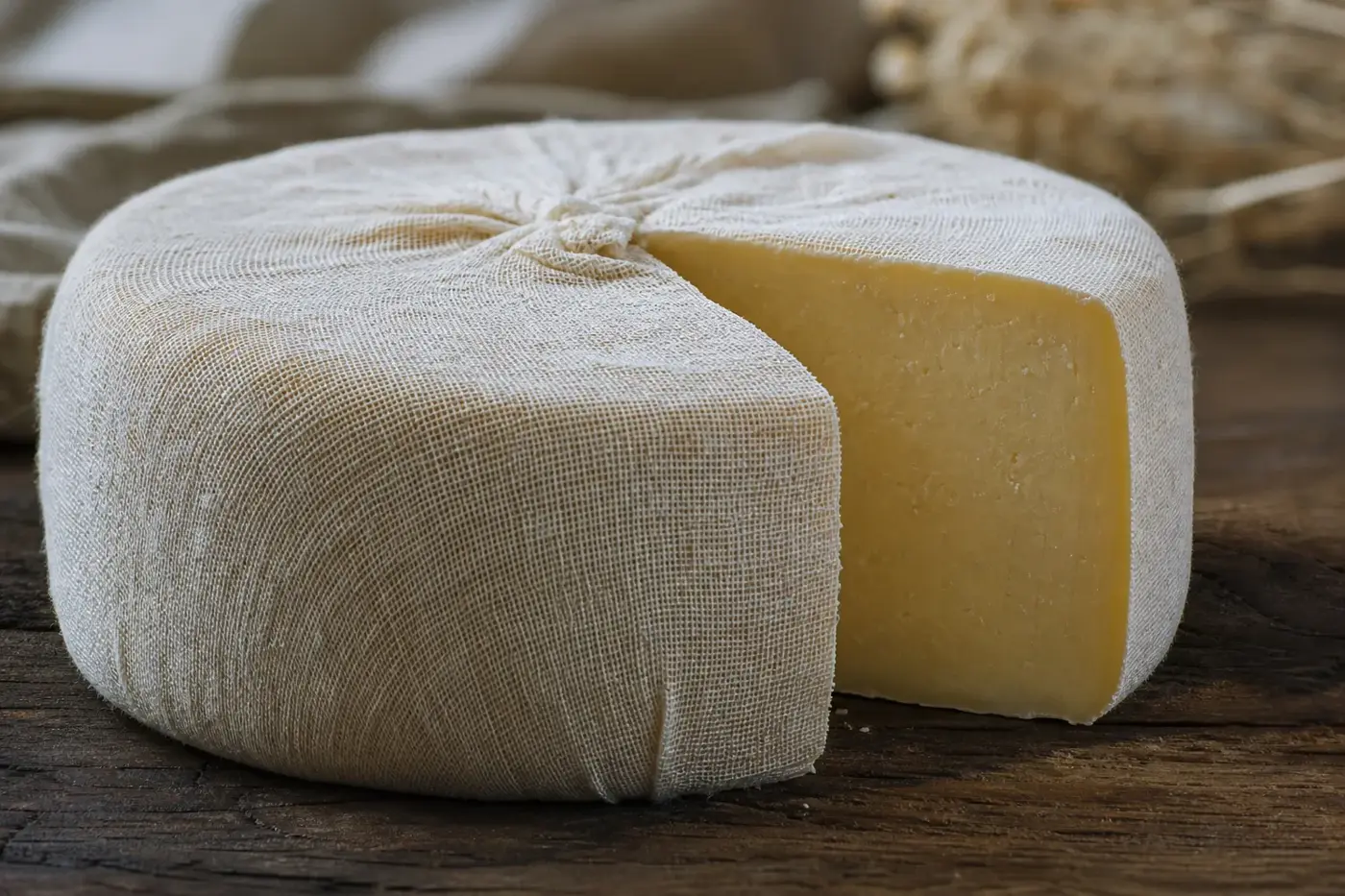
Lift the cloth on an Avonlea Cheddar wheel and you meet 12 to 18 months of patient maturation on Prince Edward Island. The recipe has travelled further: COWS Creamery traces it to the Orkney Islands.[10] Follow that wheel and you enter a story stretching from nineteenth-century Ontario factories to Quebec’s fresh curds and surface-ripened cheeses, with distinctive dairies reaching Vancouver Island. Along the way, clothbound cheddar, sheep’s milk cheese and soft white-rinded wheels give you quite different tastes of Canadian dairying.[1,2,7,9,10,15]
A few essentials before you set off
| What to know | Your starting point |
|---|---|
| Country | Canada.[1,2] |
| Milks you’ll meet | Cow, goat, sheep and water buffalo.[4] |
| Federal legislation | Food and Drug Regulations, Division 8, Dairy Products.[16] |
| Federal guidance for processors | Canadian Food Inspection Agency.[17] |
| Consumer safety guidance | Health Canada.[18,19] |
Start in Ontario, where the factory changed everything
Picture farmers sending their milk to a shared cheese factory rather than making every cheese on their own farms. Parks Canada dates Canada’s first cheese factory to 1864, in Oxford County, Ontario. It identifies the spread of co-operative factories as the beginning of modern dairying in eastern Canada.[2]
Two strands of settler cheesemaking helped shape that change. A Canadian agriculture booklet published in 1936 records French families bringing knowledge from France, and United Empire Loyalists bringing cheddar-making knowledge into Ontario from the United States. Those routes reveal intertwined French and British dairy traditions.[1] Canada’s Indigenous food histories sit alongside this settler dairying account and deserve recognition in their own right.
That factory system leaves you with a useful question at the cheese counter: who supplied the milk, and who made the cheese? They may be different businesses.[1,9,13] Both names can tell you more than a producer’s address alone.
Cheddar’s British connection continued through exports. Agriculture and Agri-Food Canada’s review of 2008 records cheddar exports of 5,088 tonnes, with the United Kingdom their largest market.[3] British demand remained part of the story long after those nineteenth-century factories transformed production.
Give Canadian cheddar a little time
You needn’t begin with a rare wheel. Alongside mozzarella, cheddar is one of Canada’s most common varieties, according to the federal cheese sector profile.[4] A young block, an older cutting cheese and a clothbound wheel offer three inviting routes into that familiar name and its export history.
Age changes what reaches your palate. Agriculture and Agri-Food Canada explains that microbial and enzyme activity develops flavour during ripening.[4] Laiterie Charlevoix describes its cheddar flavour as strengthening with age; COWS Creamery describes a smooth, firm cheese with a tangy finish, offering versions aged one, two and three years.[5,6] Let those descriptions guide you: the oldest cheese needn’t automatically win your affection.
Ask for two ages from the same maker and taste them side by side. Does your slice bend or break, feel smooth or more granular, leave a sharpness after swallowing? Age becomes something you can feel and taste, rather than a number to nod knowingly at. For the making method behind it, explore cheddar.
Meet Quebec through curds, rinds and Le 1608
Begin with fresh curds: cheddar before long maturation. Laiterie Charlevoix describes its cheddar en grains as an unripened firm cheese without a rind, and lists pasteurised milk among the ingredients.[5] Here, you can pay attention to the cheese’s body without a developed rind competing for notice. Ask when the curds were made and how to store them, then follow the pack instructions, including refrigeration requirements.[19]
With Oka, let the familiar name prompt a few more questions. Who is the current maker, what milk treatment is used, and how is the rind described? Read the answers alongside the label, because the name alone cannot tell you everything. Contrasting Charlevoix cheeses make useful companions for your Quebec selection.
Le 1608 takes you into firm, surface-ripened territory. Laiterie Charlevoix, based at Baie-Saint-Paul, says it launched the cheese in 2008 to honour Quebec City’s four-hundredth anniversary. Its product page identifies thermised milk, heat-treated below pasteurisation.[7,17] The occasion reaches into history; the cheese itself is a modern creation.
The dairy also makes Le Fleurmier de Charlevoix, a soft cheese with a bloomy rind, and L’Hercule de Charlevoix, a firm cooked-curd cheese.[8] That bloomy rind is the pale surface growth associated with this soft-ripened style. Fresh, soft-ripened and firm cheeses from one producer give you plenty of reasons to look beyond a single Quebec signature.
Follow Ontario’s milk beyond cheddar
Cow, goat, sheep and water buffalo milk all find a place in Monforte Dairy’s range. The dairy describes different suppliers for each, showing you how species, supplying farm and milking season help shape a cheese’s identity.[9] Ontario’s cheddar heritage remains rooted in Oxford County’s factory story, but contemporary production reaches much further.[2]
For chèvre, meaning goat’s cheese, and soft-ripened cheeses, Monforte says its goat’s milk comes through the Ontario Dairy Goat Co-operative. It identifies a named farm supplying sheep’s milk, with sheep’s cheese production running from May to October. Cow’s milk comes through Dairy Farmers of Ontario, with a selected supplying farm. These details reflect the maker’s own sourcing account as at November 2026.[9]
Unwrap an island cheddar, then meet its blue neighbour
On Prince Edward Island, Avonlea Clothbound Cheddar brings that Orkney Islands recipe into local dairying. COWS Creamery says it uses unpasteurised Holstein cow’s milk from local island farms, microbial rennet and no added colour, then matures the cheese for 12 to 18 months.[10] Rennet helps set milk into curd, the solid material separated from liquid whey.[4]
The cloth helps shape the wheel’s maturation, an approach COWS credits with a robust flavour.[10] Remove it before serving; it has done its work by then. For a contrast from the same island producer, try Blue Moo, which COWS describes as a triple-cream blue with a butter-like, savoury character.[11]
Your Atlantic trail needn’t end at the island. The federal manufacturers directory, dated March 2022, records Knoydart Farm Cheese at Merigomish in Nova Scotia.[12] Use directories to discover names, then consult the producer’s current range before seeking a particular cheese. As your regional tasting takes shape, ask what connects the choices: milk source, maturation, or simply their place on the map.
Head west, from Prairie curds to Comox Brie
New Bothwell, Manitoba, is home to Bothwell Cheese, which says local dairy farmers supply its milk. Its range spans mild, medium, old and extra-old cheddars, alongside fresh curds.[13] You have everyday cutting cheeses beside the cheddar family’s youngest expression. Start with the village and dairy on the pack, and a broad regional label becomes a much more particular place.
In Saskatchewan, Sunnyside Creamery describes an on-farm cow’s milk operation making quark, cottage cheese, cheddar curds, paneer and ricotta among its dairy products.[14] Looking towards Alberta, the March 2022 federal directory records Lakeside Farmstead Cheese in Sturgeon County and Sylvan Star Cheese in Alberta.[12] Consult each producer’s current information before planning your purchase or visit.
British Columbia’s Comox Valley brings you another soft-ripened cheese: Natural Pastures’ Comox Brie. The producer describes a white bloomy rind, a softening centre and flavours moving from cultured-butter notes towards earthier, savoury tones.[15] Taste it beside a firm cheddar. You can compare cheese ripening beneath its rind with one chosen chiefly for its mature interior.
Find a Canadian cheese for your next board
| Style to try | Canadian example | Milk information | What to look forward to |
|---|---|---|---|
| Fresh curds | Laiterie Charlevoix cheddar en grains | Pasteurised milk | Unripened, with no rind.[5] |
| Soft-ripened | Comox Brie | Cow | White bloomy rind.[15] |
| Washed-rind | Mt. Becher Trail | Water buffalo | Washed-rind cheese in Natural Pastures’ buffalo collection.[15] |
| Blue | Blue Moo | Not specified here | Triple-cream blue.[11] |
| Firm, aged | Avonlea Clothbound Cheddar | Cow | Clothbound; matured 12 to 18 months.[10] |
Producer descriptions are presented as at November 2026. Maturation follows the maker’s stated practice.
Get to know the milk and the maker
Milk species gives you a starting point, not the whole tasting experience. Cow, goat and sheep do not specify rind, texture or age. Mixed-milk cheese combines species, while a dairy working with several species may keep them in separate products.
Agriculture and Agri-Food Canada includes combinations of milks in its sector description.[4] Read the ingredients for your particular cheese. A description of the dairy’s entire range does not necessarily describe the wheel in front of you.
For farmhouse production, ask two direct questions: is the cheese made on the farm from that farm’s milk, and who matures it? Sunnyside’s own herd and creamery offer a different arrangement from Monforte’s selected outside suppliers and Bothwell’s local dairy-farm supply.[9,13,14] Milk source, method and handling tell you more than scale alone.
Buying raw milk cheese? Know the Canadian rules
Canada allows cheese made from unpasteurised milk to be sold under specified conditions. CFIA guidance for on-farm processors says cheese made from raw milk, or milk treated below pasteurisation, is stored for 60 days before sale to the final consumer. Exceptions require authorisation from Health Canada and provinces where applicable. This is the Canadian processor guidance as at November 2026.[17]
The federal Food and Drug Regulations, section B.08.030, give “stored” a precise meaning: held at 2 °C or more for at least 60 days from the beginning of manufacture.[16] That temperature is a legal minimum, not advice for your fridge. Provincial requirements can also apply, and CFIA expressly directs processors to them.[17] Explore raw milk, thermised and pasteurised cheese for the differences between treatments.
Health Canada advises people at greater risk of food poisoning to avoid cheese made from unpasteurised milk. Its Canadian information sheet identifies pregnancy, age 60 or over, children aged five or under, and weakened immunity as relevant groups. Consult its current cheese choices guidance for the detailed categories, and ask your own clinician about your circumstances.[18]
Bring your cheese home and make a board of it
Begin with four details: producer, place of manufacture, milk treatment and stated age. Tell your cheesemonger when and how you plan to serve the cheese, then ask what is ready. Build contrast with fresh and rindless, soft and bloomy, blue, or firm and aged styles. The cheese label guide helps you decode the pack and distinguish a company address from where the cheese was made.
For storage in Canada, Health Canada recommends a refrigerator at 4 °C (40 °F) or below. Buy chilled foods near the end of your shopping trip, take them home promptly and follow the pack’s storage directions. Keep cheese protected from raw meat and its juices.[19] Compare current Canadian recall notices with your product’s brand, size and lot details, and follow any matching warning.[20]
Make your first board a comparison, not a contest to see which cheese can shout loudest. Choose a fresh cheese, a soft-ripened cheese and an aged firm cheese; add a blue if your guests enjoy it. Serve small portions and keep the rest refrigerated. Remove cloth and other non-food coverings before anything reaches the board.
For accompaniments, start with crisp apple and plain local bread. The apple brings fresh contrast; the bread gives you somewhere neutral to return between cheeses. Try alcohol-free apple cider with cheddar, or still water across the board. Laiterie Charlevoix suggests fresh or dried fruit and nuts with Le 1608.[7]
A little more reading before your next slice
- How to Tell Cheese Styles Apart: Milk, Rind, Texture and Method: get to know the features behind the style names.
- How to Store Cheese at Home: put storage principles to work with your next purchase.
General information only, not medical advice: follow the official guidance where you live.
Questions people ask
What kinds of cheese are made in Canada?
Canadian cheeses include fresh curds, bloomy rind cheeses, blue cheeses and aged cheddar. The milk represented includes cow, goat, sheep and water buffalo.
What are Canadian cheddar curds?
Laiterie Charlevoix describes its cheddar en grains as an unripened firm cheese with no rind. It lists pasteurised milk among the ingredients.
Can raw milk cheese be sold in Canada?
Canada allows cheese made from unpasteurised milk to be sold under specified conditions. Canadian Food Inspection Agency guidance says it is stored for 60 days before sale to the final consumer, unless otherwise authorised by Health Canada and provinces where applicable.
What does Health Canada advise about cheese during pregnancy?
Health Canada advises people at greater risk of food poisoning, including those who are pregnant, to avoid cheese made from unpasteurised milk. Check its current cheese choices guidance for the detailed categories.
How should I store Canadian cheese?
Health Canada recommends a refrigerator at 4 °C or below and advises following the pack’s storage directions. It also says to protect cheese from raw meat and its juices.
Sources
- Department of Agriculture, historical section of publication A63-1-4-1936, 1936. The passage records French settler cheesemaking, Loyalist transmission of cheddar-making knowledge and the transition from farm to factory production.
- Parks Canada, First Cheese Factory National Historic Event, online designation record, undated. Plaque text records Oxford County, 1864, and the spread of the co-operative factory system.
- Agriculture and Agri-Food Canada, Report A71-17-2008E, 2008 reporting year, export discussion. The report records cheddar export volume and the importance of the United Kingdom market.
- Agriculture and Agri-Food Canada, Cheese sector profile, edition incorporating 2025 data and June 2026 statistics. Sections on cheese manufacture, milk species and Canadian production.
- Laiterie Charlevoix, Cheddar en grains, undated current product page. Ingredients and product characteristics. Producer source.
- COWS Creamery, COWS Creamery Cheddar, undated current product page. Listed ages, milk treatment and producer flavour profile. Producer source.
- Laiterie Charlevoix, Le 1608 de Charlevoix, undated current product page. Launch account, style, milk treatment, accompaniments and dairy address. Producer source.
- Laiterie Charlevoix, Nos fromages, undated current range page. Product classifications for Le Fleurmier de Charlevoix and L’Hercule de Charlevoix. Producer source.
- Monforte Dairy, Monforte Dairy, undated current website, milk sourcing sections. Producer source.
- COWS Creamery, Avonlea Clothbound Cheddar, undated current product page. Recipe attribution, milk source, maturation, coagulant, colour and cloth covering. Producer source.
- COWS Creamery, COWS Blue Moo, undated current product page. Product classification and producer flavour profile. Producer source.
- Agriculture and Agri-Food Canada, Canadian cheese manufacturers directory, federally inspected manufacturer list dated March 2022. Used as a dated directory, not confirmation of present production.
- Bothwell Cheese, Our Way of Life, undated current company page. Milk supply, location and cheese range. Producer source.
- Sunnyside Creamery, About Us and Sunnyside Creamery, undated current website pages. Own-herd account, Saskatchewan operation and dairy product list. Producer sources.
- Natural Pastures Cheese Company, Comox Brie and current cheese collection navigation, undated. Comox Brie location, classification and tasting notes; Mt. Becher Trail listed in the water buffalo collection. Producer sources.
- Department of Justice Canada, Food and Drug Regulations, C.R.C., c. 870, Division 8, particularly B.08.030. Consolidated official text retrieved November 2026.
- Canadian Food Inspection Agency, Good manufacturing practices: On-farm dairy processors, modified 22 June 2023. Raw material and product labelling sections.
- Health Canada, Unpasteurized or raw milk, modified 29 September 2026; and Safer cheese choices for people at greater risk of food poisoning: Information Sheet, current online edition retrieved November 2026.
- Health Canada, Safe food storage, current online edition retrieved November 2026. Consumer shopping, refrigeration and cross-contamination guidance.
- Government of Canada, Find recalls, advisories and safety alerts, cheese search retrieved November 2026; Canadian Food Inspection Agency, Various brands of organic cheeses recalled due to Listeria monocytogenes, updated 14 October 2026. The latter warning concerns specified products and codes.
This desk-researched article brings together Canadian agricultural records, federal legislation and agency guidance with attributed producer descriptions.
Last checked: November 2026
Last checked November 2026.
The cheeses of Canada
The editors suggest you read next

French Cheese: The Complete Guide
Picture Normandy’s pastures, then follow the milk towards the Loire’s goat dairies, the Jura’s shared cheesemaking traditions and the sheep country of the Pyrenees.


