Provola dei Nebrodi
Cut into one variety of Provola dei Nebrodi and a whole green lemon appears at its heart.
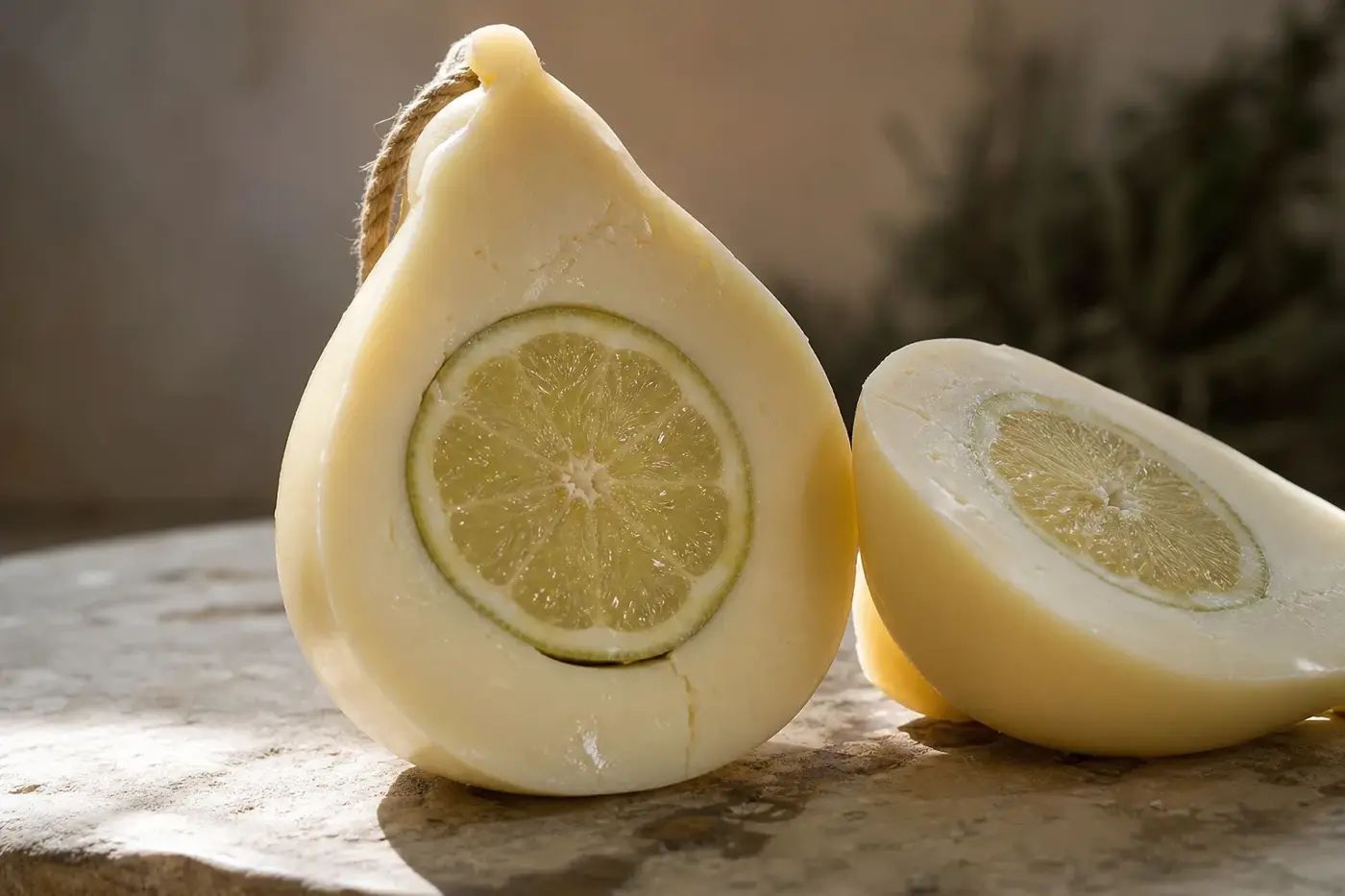
Cut into one variety of Provola dei Nebrodi and a whole green lemon appears at its heart. Not quite what you expect to find in your cheese. The cheesemaker tucks it in as curd stretching finishes; the fruit gradually releases moisture, keeping the surrounding cheese softer. [1][2]
It is a memorable introduction to this raw whole cows’ milk cheese from north-eastern Sicily’s mountain dairy country. Here, pasture, wooden tools and skilled stretching give you soft, pale young provola, firm golden cheeses and a distinctive flaky variety. There is plenty to explore before you even reach the lemon. [1][2]
| What to know | The details |
|---|---|
| Familiar and registered name | Provola dei Nebrodi. [2][5] |
| EU registration identifier | PDO-IT-02394. [2] |
| Registration legislation | Commission Implementing Regulation (EU) 2020/1319, Articles 1 and 2. [4] |
| Great Britain | Registered PDO; UK scheme registration dated 31 December 2020. November 2026 record. [5] |
| Legally defined origin | Specified municipalities in the Sicilian provinces of Messina, Catania and Enna. [1] |
| Milk and coagulant | Raw whole cows’ milk; kid or lamb rennet paste. [1][2] |
| Sizes you will find | Fresh cheeses: 1 to 2 kg. Other specified varieties: 2 to 10 kg. [1] |
| Legal minimum ageing by variety | Not verified against the current specification |
| Pregnancy guidance | Consult the UK NHS guidance and US CDC guidance. November 2026 guidance. [6][7] |
Follow the cows into Sicily’s mountains
At least 240 days of grazing each year anchor Provola dei Nebrodi in its mountain farming landscape. Published requirements also call for a substantial contribution from forage to the cows’ diet. Mountain and hill grazing complement each other, giving farmers different feeding areas as availability changes. [2]
The Nebrodi lie in north-eastern Sicily’s mountain country, but the cheese’s territory does not simply follow the mountain range. It reaches into named municipalities across three provinces. Under the published EU single document, milk production, cheesemaking and ageing must all happen within that defined area. [2]
Origin, then, is more than attractive scenery on a label. Ask where the milk came from, where the cheese was made and how long it matured. Those questions connect the piece on the counter with the farms and cheesemakers behind it.
Get to know the cheese beneath the rind
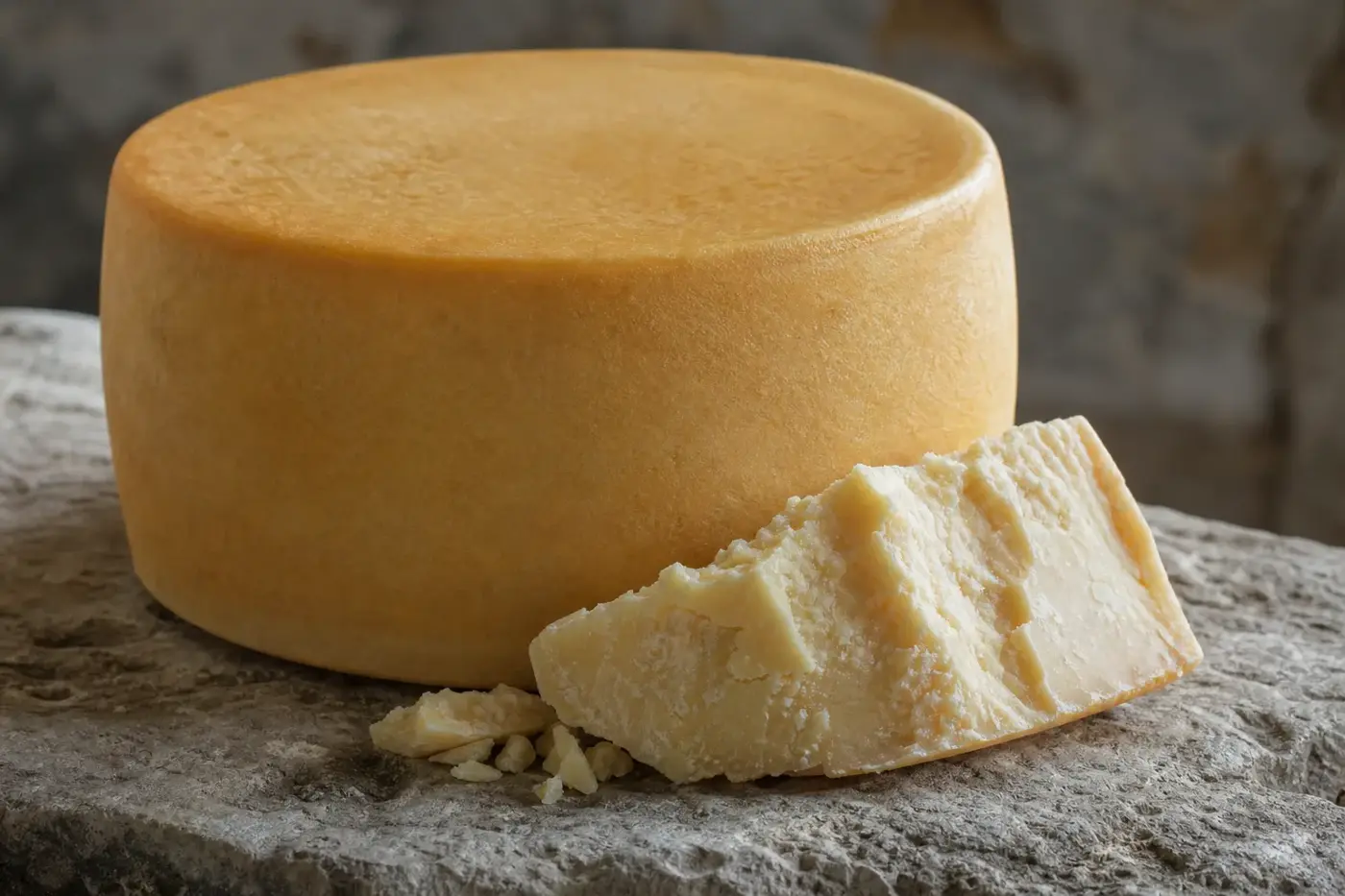
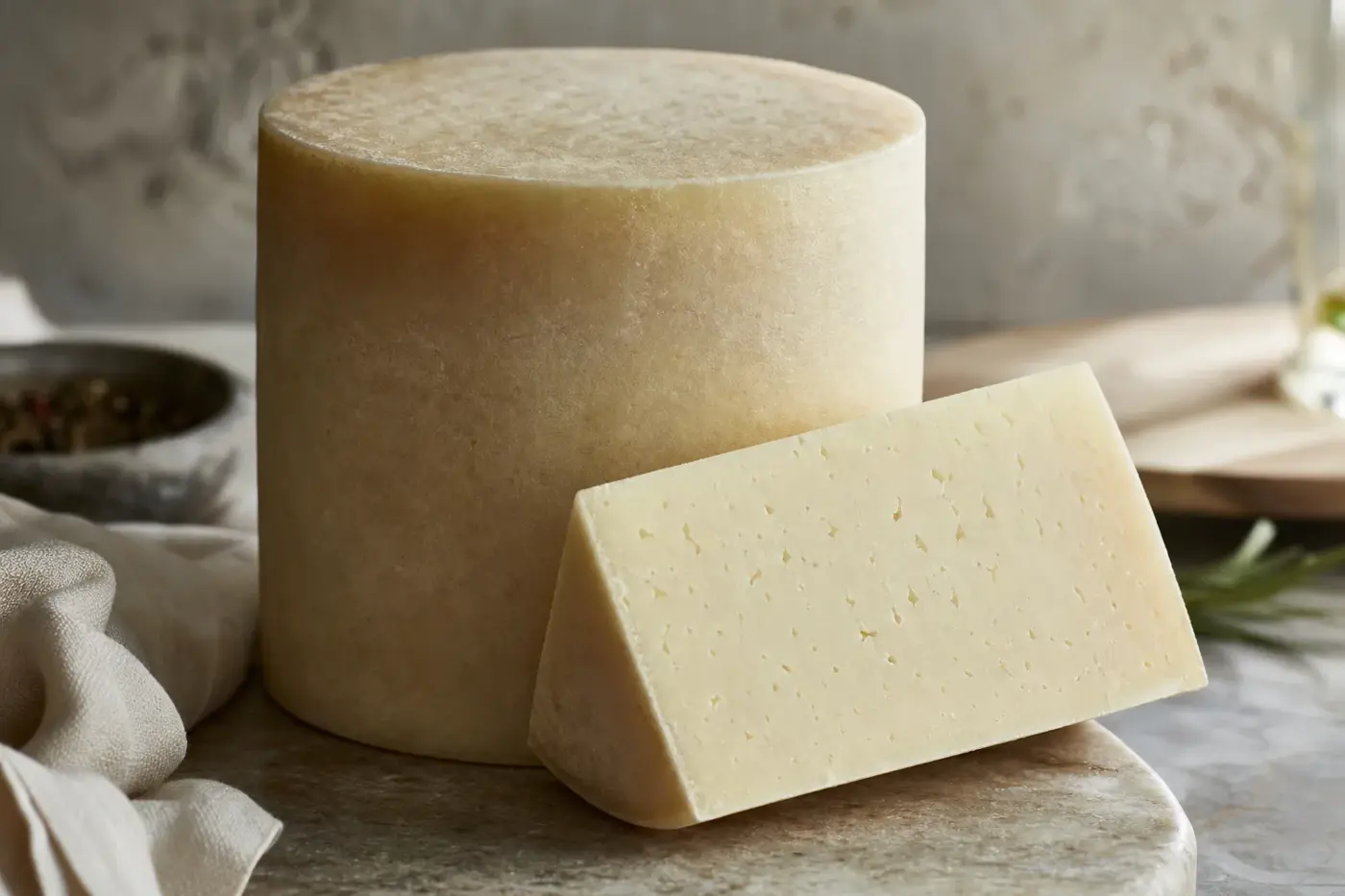
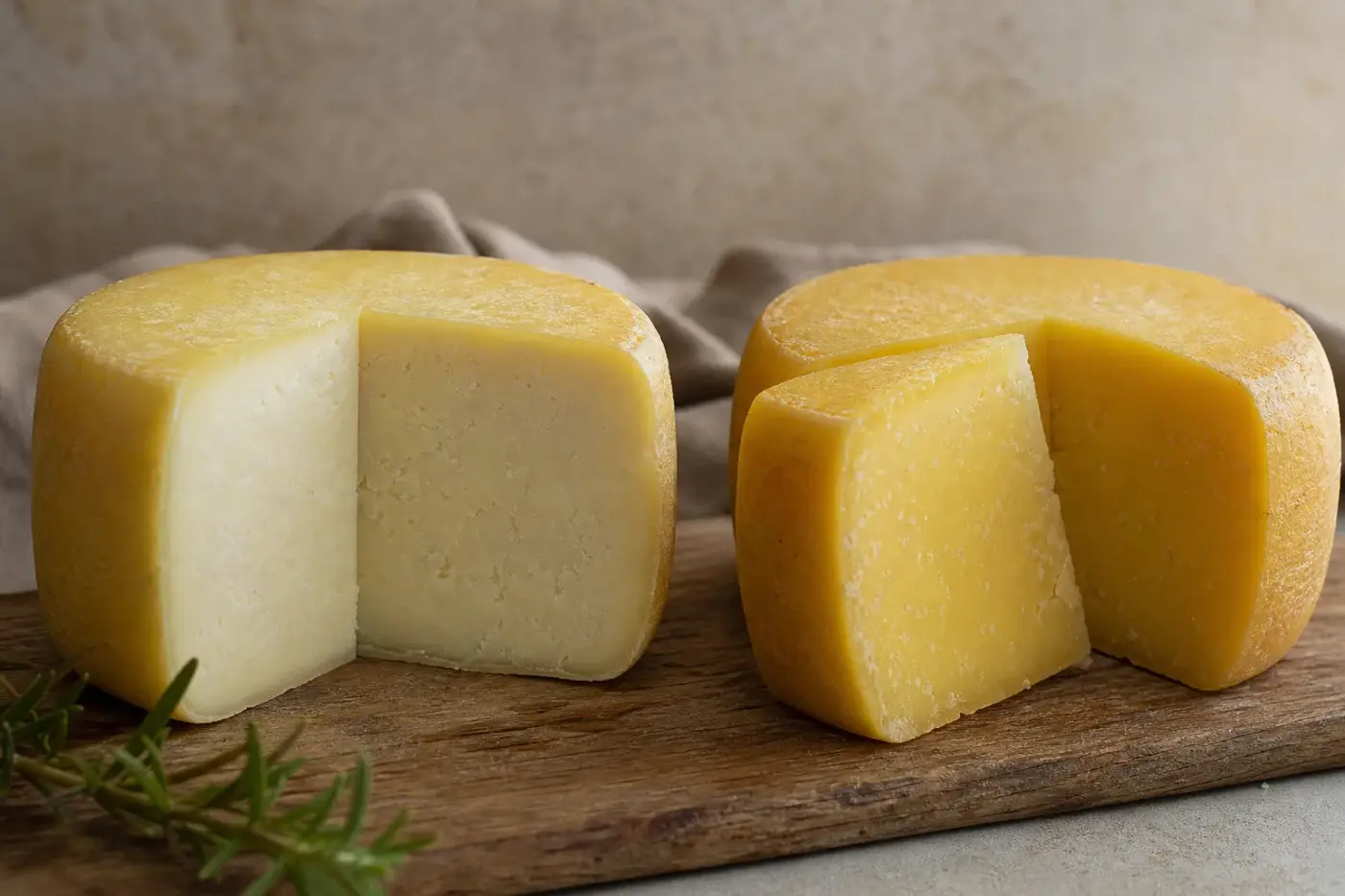
You might notice the pear-like shape first, sometimes with a small head above the neck. The older varieties are described more precisely as oval, with a short neck. As the cheese matures, its thin, smooth rind turns towards gold and its interior moves from ivory towards amber. [2]
Sicily’s traditional-products inventory describes a compact paste. [3] When choosing a portion, look across the whole cut surface rather than letting a handsome rind decide for you. Ask the seller which variety you are looking at and what texture to expect.
Fresh and long-aged cheeses offer quite different experiences. Choose fresh for softness, or an aged piece for a firmer cheese to cut into smaller portions. The category on the label tells you more than the size of the whole cheese. [1]
Let milk and pasture lead the tasting
Raw whole cows’ milk is required by the protected production method. If you want pasteurised provola, you need a different product from cheese made under this specification. [1] The guide to milk treatments explains raw, thermised and pasteurised milk.
The cows’ menu matters, too. Published feeding rules require at least 60% of the overall dietary dry matter to come from within the defined area, and prohibit silage. [2] Pasture and conserved forage therefore have an important place alongside supplementary feed.
The EU document connects grazing plants with the cheese’s aromatic character. [2] Ask about production season as well as age, then taste two pieces of the same maturity made in different production periods. That comparison tells you more than expecting every cheese bearing this name to taste alike.
Watch skilled hands stretch the curd
Hot water and skilled hands turn the curd into a yielding mass, ready to gather and shape. This is pasta filata, or stretched curd. The cheesemaker works it into its final outline rather than simply pressing it into shape. [2][3]
First comes rennet, the enzyme preparation that coagulates milk to form curd. Sicily’s traditional-products inventory describes finely cutting the curd, adding hot water, draining the whey and allowing the curd to develop before stretching. Wooden surfaces and containers belong to that recorded sequence, too. [3]
Once ready, the curd is worked in hot water, gathered and shaped. Cooling and brine salting follow in the traditional account. [3] For the wider picture, how cheese is made explains these stages as background, not as a recipe for making this regional cheese at home.
Meet the wooden tools doing real work
The wooden equipment does more than look handsome. The EU single document identifies both the equipment and its resident microbial communities as part of the cheese’s connection to its place of production. Commercial starter cultures are not permitted. [2]
The regional inventory names a wooden vat, curd-breaking implements and a draining table among the tools. [3] Their jobs include holding milk, breaking curd, draining and working the stretched mass. These are working tools, not simply objects to admire.
Traditional accounts and binding production requirements serve different purposes. Consult the current specification before treating a particular tool or step as mandatory. If you visit or speak to a cheesemaker, ask what each tool does: you will hear more about judgement and skill than you would by asking only its age.
Find your favourite among five varieties
The published 2020 specification describes five varieties. Ageing separates them, while a particular form also distinguishes two of them. For current requirements, consult the operative specification and its amendments. [1]
| Variety | Specified ageing | What to look for |
|---|---|---|
| Fresca | Less than 30 days. [1] | Your choice for softness |
| Semi-stagionata | 30 to 120 days. [1] | Ask the age of your piece |
| Stagionata | More than 120 days. [1] | Your choice for firmness |
| Sfoglia | At least five months. [1] | Look for layers across the cut |
| Con limone verde | At least 90 days. [1] | Look for the whole lemon inside |
In the published sensory description, sweet, delicate flavours give way to a more pronounced savoury and piquant character. For aged cheeses, it records grass, hay, mushroom and butyric notes. Treat these tasting descriptions as things to look for, rather than a list you must dutifully complete. [2]
Begin an age comparison with a plain piece of each cheese. Notice the firmness, then the aroma, then the flavour that stays after you swallow. Bread or another accompaniment can join afterwards, supporting the comparison rather than covering up the differences.
Take a closer look at that lemon
The whole green lemon belongs to the published protected specification. It is not an extra flourish outside it. The cheesemaker encloses it at the end of stretching, and its gradual release of moisture keeps the surrounding cheese softer. [1]
Ask to see a cut through the centre when you choose this variety. The cross-section shows you how it is constructed at a glance. It also helps you decide how to divide your piece at home.
For your first serving, keep to plain bread and water. Give yourself time to explore the cheese and its citrus centre before adding anything sweet or strongly seasoned. The lemon has already secured the starring role.
Understand what the protected name promises
“Provola dei Nebrodi” was registered as a protected designation of origin by Commission Implementing Regulation (EU) 2020/1319. Adopted on 22 September 2020 and published on 23 September, the regulation provided for entry into force on the twentieth day after publication, 13 October 2020. [4]
Great Britain’s official register separately lists the name as a registered PDO. Its UK scheme registration is dated 31 December 2020. [5] These two records concern their respective jurisdictions.
At the counter, start with the full registered name, then read the product identification and label. If you want this precise cheese, look closely at any description that merely sounds regional. The guide to protected names explains geographical designations, brands and general styles, helping you make sense of the details.
Choosing between Provola, Provolone and Caciocavallo
Similar outlines can make the choice seem simpler than it is. Provolone and Caciocavallo are also names used for stretched curd cheeses, but they are not interchangeable with Provola dei Nebrodi. Compare exact varieties and specifications, including milk, origin and maturation, before choosing a substitute. [1][2]
Tell the seller what you want your cheese to do. Are you slicing it for a board, adding it to a cooked dish or using an aged piece as a finishing ingredient? Discuss texture, salt and flavour strength: how that piece behaves matters more than its familiar silhouette.
Make your visit to the counter count
Ask for the variety, approximate age, maker and storage instructions. If you buy a cut portion, keep its label or photograph the information supplied at the counter. The guide to reading cheese labels helps you organise those questions and keep the answers useful once you get home.
Kid or lamb rennet is specified, so this cheese is unsuitable if you avoid animal rennet. [1][2] To explore the alternatives used in other cheeses, turn to rennet explained.
If you deliberately avoid raw milk, choose a different product whose producer confirms that it uses pasteurised milk. Ask about age and milk treatment separately. Maturity does not replace the milk declaration. [1]
This page summarises published guidance from the official sources it cites. It is not medical advice. Guidance differs between countries and changes over time, so check the current source for where you live, and ask your doctor, midwife, pharmacist or dietitian about your own circumstances.
Store it carefully, serve it simply
Keep refrigerated food at 5 °C (41 °F) or below, following the label’s storage and opening instructions. That is the Food Standards Agency’s household advice for England, Northern Ireland and Wales. Protect ready-to-eat cheese from contamination by raw food; storing cheese at home explains wrapping and fridge organisation. [8]
Put out a modest portion and replenish it as needed, rather than leaving your whole supply on the board. Under the FSA’s hot-weather advice, discard perishable food left unrefrigerated for more than two hours during hotter-than-usual weather. [9]
Try bread for your first taste, pear beside a firmer piece, or a little honey tasted separately rather than poured over everything. Water and unsweetened tea offer alcohol-free starting points. These are suggestions for comparison, not documented traditional pairings.
Choose with care when your circumstances call for it
If you are pregnant in the UK, consult the NHS advice on cheese. Match its categories to the particular product you are buying, rather than relying on the name alone. [6]
In the US, the CDC guidance on cheese and listeria is relevant if you are pregnant, aged 65 or older, or have weakened immunity. [7] When deciding what to serve, use the official source for your country and your circumstances.
Questions people ask
Where is Provola dei Nebrodi made?
It comes from specified municipalities in the Sicilian provinces of Messina, Catania and Enna. Milk production, cheesemaking and ageing must all take place within the defined area.
Is Provola dei Nebrodi made with raw milk?
Yes. The protected production method requires raw whole cows’ milk.
How long is Provola dei Nebrodi aged?
In the published 2020 specification, fresh cheese is aged for less than 30 days, while the aged variety is aged for more than 120 days. Sfoglia is aged for at least five months, and the whole lemon variety for at least 90 days. Check the operative specification and its amendments for current requirements.
Is Provola dei Nebrodi suitable for vegetarians?
The specification calls for kid or lamb rennet paste. It is therefore unsuitable for people who avoid animal rennet.
What does Provola dei Nebrodi taste like?
The published sensory description ranges from sweet and delicate to more savoury and piquant. For aged cheeses, it records grass, hay, mushroom and butyric notes.
Sources
- Italian Ministry of Agriculture, Food Sovereignty and Forests (MASAF). Disciplinare di produzione della Provola dei Nebrodi, ministry listing dated 23 September 2020, Articles 2, 3 and 5. Official specification.
- European Commission. Publication of an application for registration of a name pursuant to Article 50(2)(a) of Regulation (EU) No 1151/2012, single document “Provola dei Nebrodi”, 2019/C 257/05, 31 July 2019. Official single document.
- Regione Siciliana. Schede PAT 2022, entry “Provola dei Nebrodi”, 2022. Traditional-practice account, distinguished here from the protected specification. Regional inventory.
- European Commission. Commission Implementing Regulation (EU) 2020/1319 of 22 September 2020, Official Journal L 309, 23 September 2020, page 7. Official Journal containing the registration act.
- Department for Environment, Food & Rural Affairs. Provola dei Nebrodi, protected food-name register entry, published 4 January 2021; live entry checked November 2026. Great Britain register entry.
- NHS. Foods to avoid in pregnancy, live guidance, checked November 2026, section “Cheese, milk and other dairy”. UK pregnancy guidance.
- US Centers for Disease Control and Prevention. Preventing Listeria Infection, 31 January 2025 edition, checked November 2026. US prevention guidance.
- Food Standards Agency. How to chill, freeze and defrost food safely, published 18 December 2017; live guidance checked November 2026. Official household chilling guidance.
- Food Standards Agency. Food safety in a heatwave, advice for consumers, live guidance checked November 2026. Official hot-weather guidance.
Researched from the published specification, EU registration documents, official regional records and national food-safety guidance, with serving suggestions identified as editorial opinion.
Last checked: November 2026
Last checked November 2026.
The editors suggest you read next
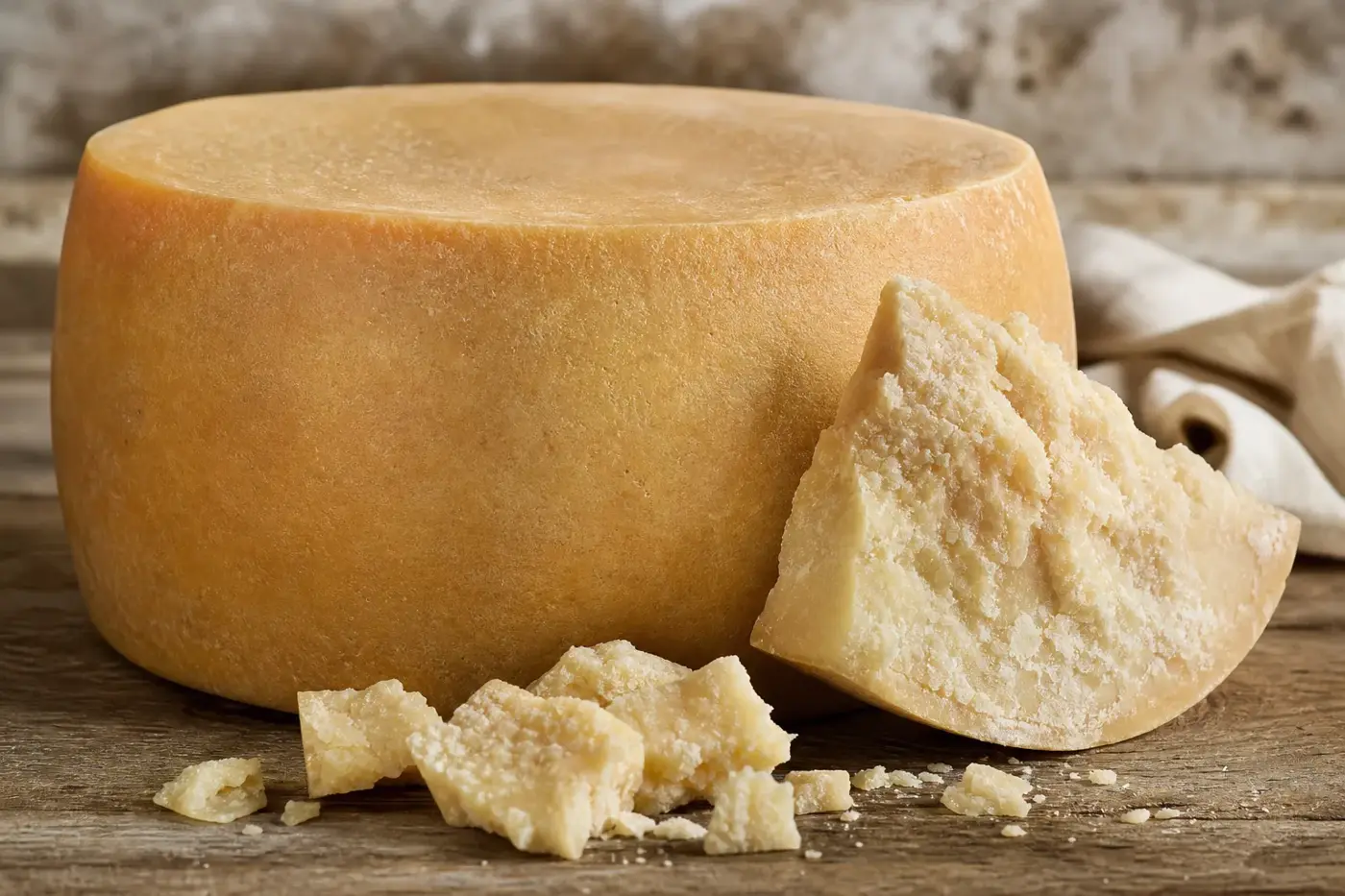
Parmigiano Reggiano
Break into a wheel of Parmigiano Reggiano and flakes fall away, revealing a finely granular cheese, pale straw to straw in colour.