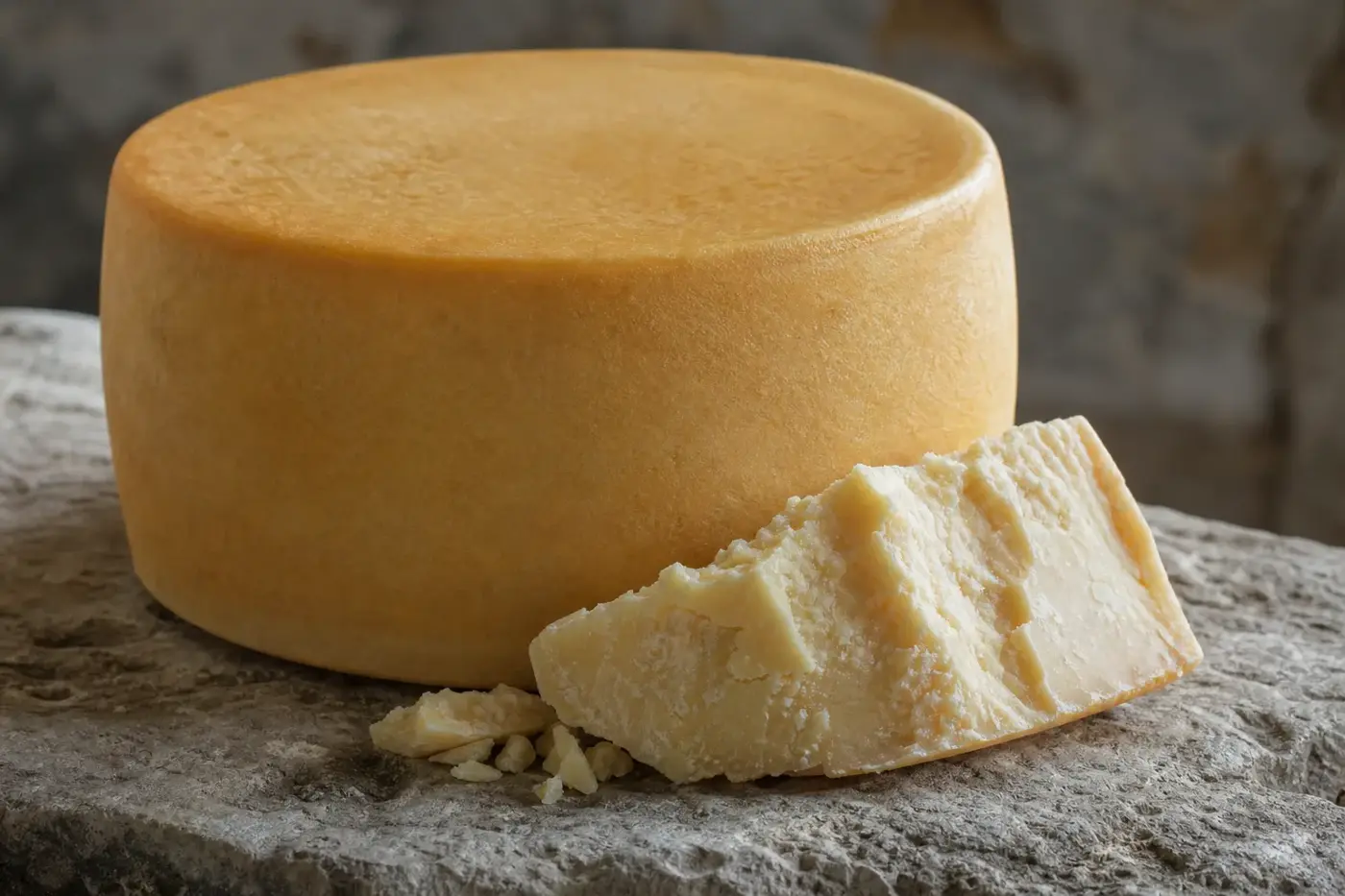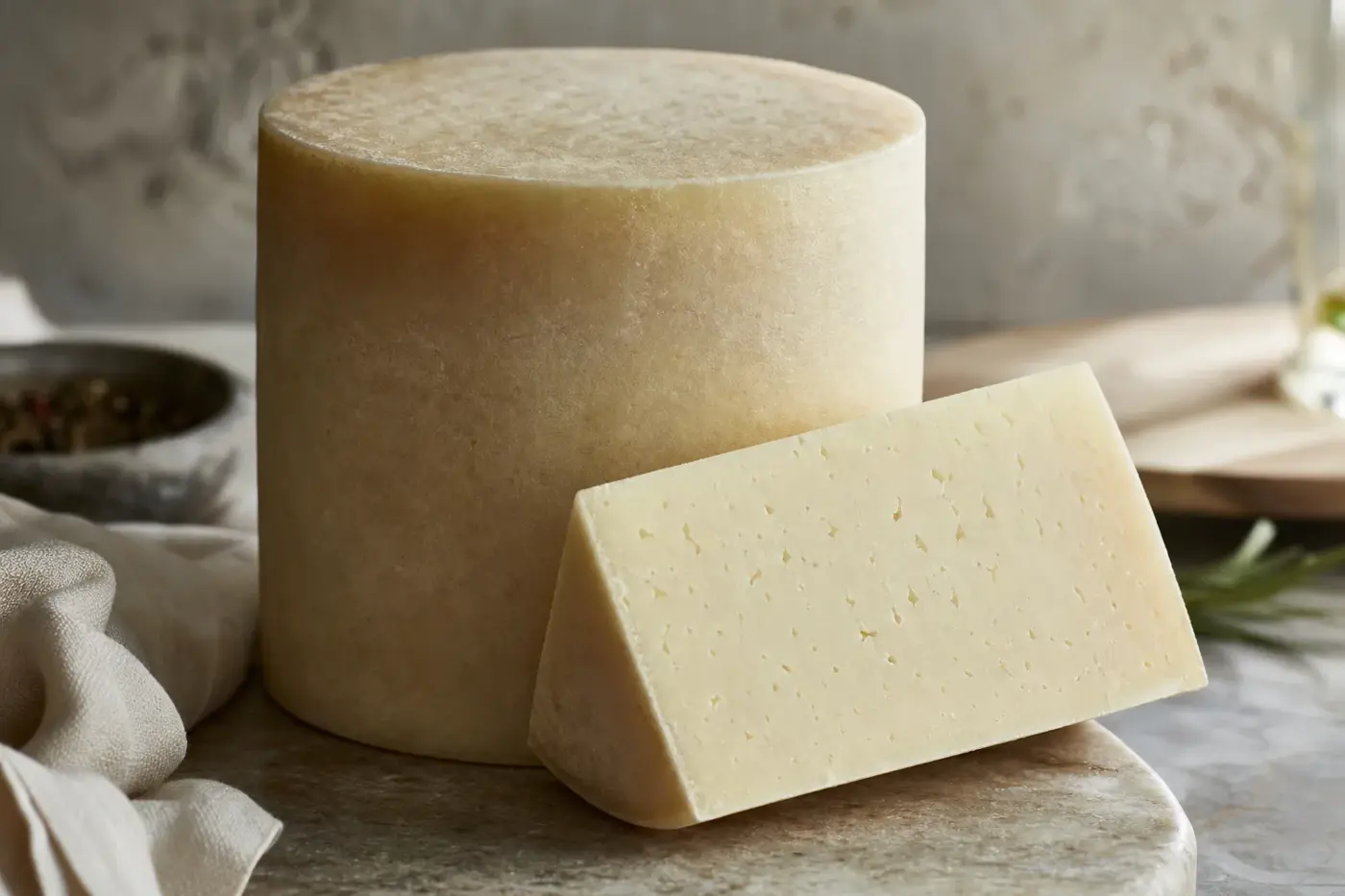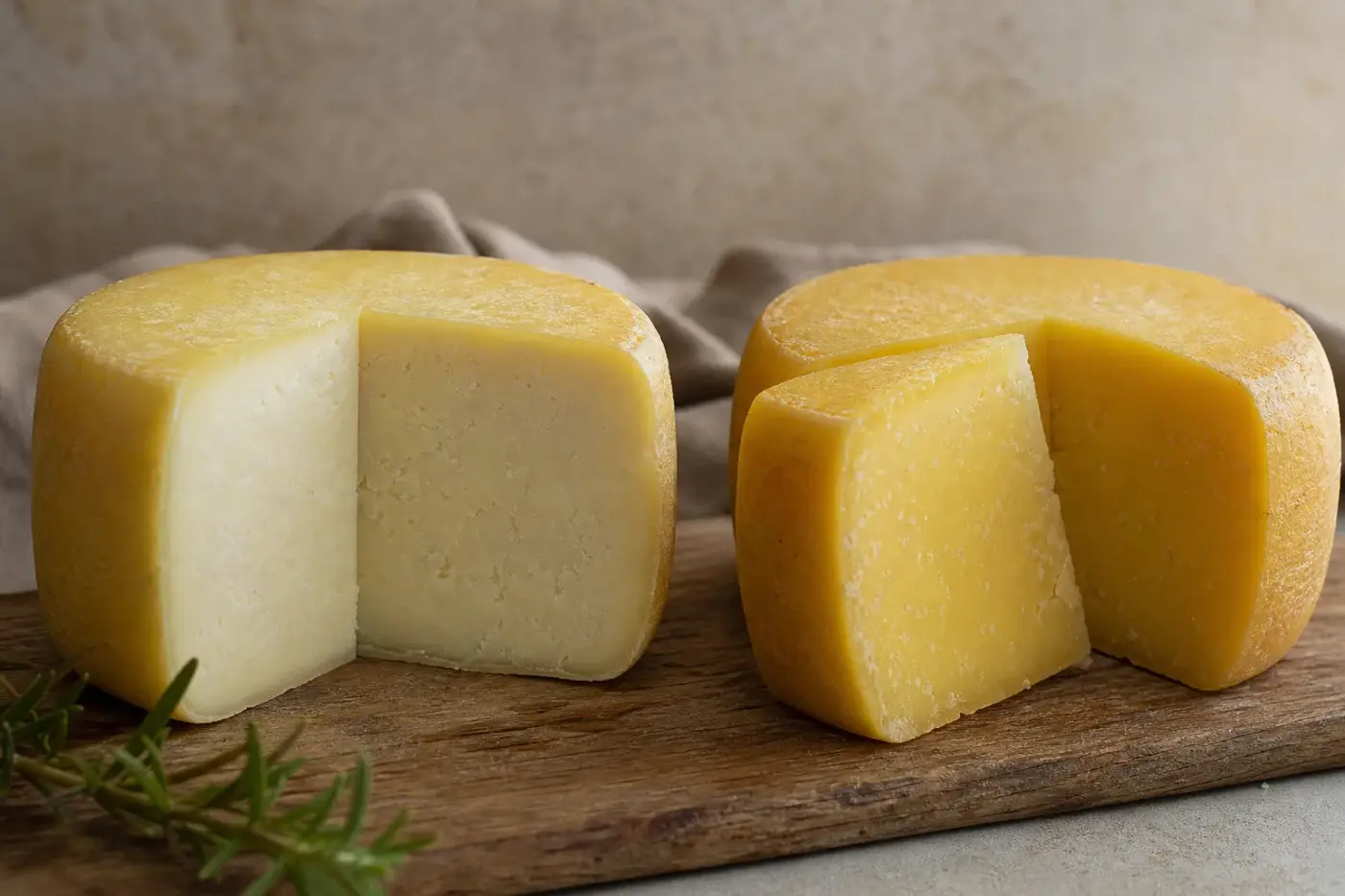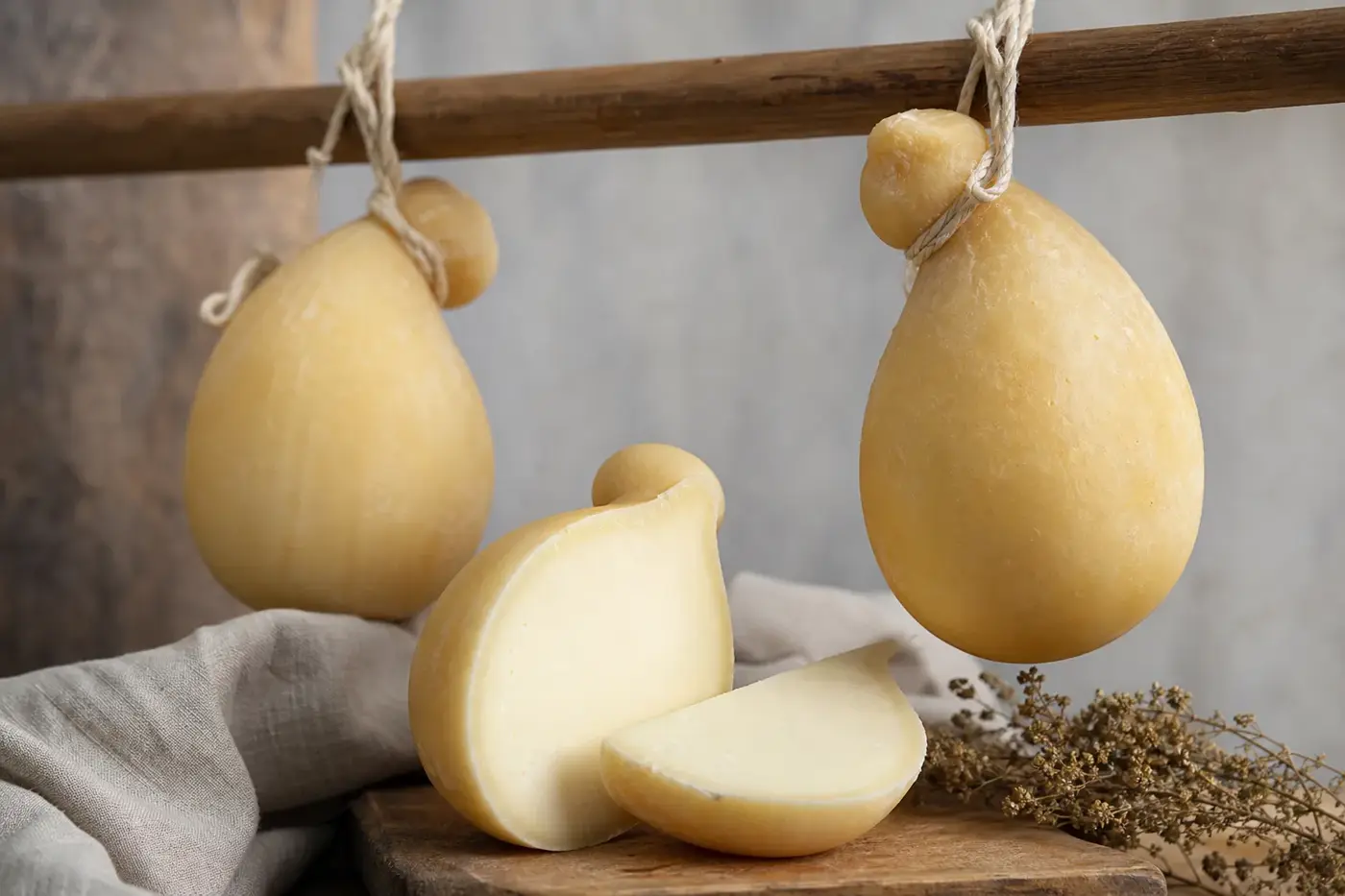
Two cheeses hang astride a rail, each tied at the neck. As they mature, the ties press their marks into the rind, leaving a little record of the caciocavallo tradition.[2][4] Here is a southern Italian family of stretched curd cheeses with several shapes and a flavour that changes with age.
Taste it young and, in the Silano consortium's description, you find sweetness and delicacy. Leave it longer and the flavour becomes more piquant.[2] You might find room for both. Cheese lovers are accomplished at making room.
| Meet the family | Your quick guide |
|---|---|
| How it is made | Pasta filata, meaning stretched curd, followed by maturation.[1][2] |
| Where it belongs | Southern Italy; Caciocavallo Silano's specified area includes defined territories in Calabria, Campania, Molise, Puglia and Basilicata.[1] |
| Milk in the documented Silano tradition | Cows' milk, raw or thermised.[1][2] |
| Shapes to look for | Ovoid with a small head, or truncated cone without one, according to local practice.[2] |
| Related protected designation | Exact name: Caciocavallo Silano. Great Britain: registered PDO as of November 2026. Registration authority: Defra; no register identifier supplied.[3] |
| Allergen | Milk.[1][7] |
Follow the stretch into the maturing room
If you know fresh mozzarella, you have a useful starting point. Caciocavallo takes that familiar stretching technique into the maturing room. Ripening gives it a skin, a compact interior and a developing flavour, with youthful sweetness and delicacy giving way to greater piquancy in the Caciocavallo Silano producers' consortium's description.[2]
At the counter, begin with two questions: where was it made, and how long has it matured? A regional name starts the conversation. The producer's description and the cheese's age help you choose something supple for slicing or more assertive for the table or kitchen.
For the vocabulary behind those differences, explore how to tell cheese styles apart. It gives you a useful way into the cheese counter.
Find the neck, then follow the shape
Picture a rounded body, a narrowed neck and a small head. Tie that neck to another cheese and the pair can hang on opposite sides of a supporting rail. The consortium documents both the suspension and the impressions those ties can leave in the rind.[2][4]
Do not insist on a head, though. Calabria traditionally favours a truncated cone without one, while the other regions producing Caciocavallo Silano generally use an oval shape with a head. Both sit within the consortium's documented range.[2]
Let the outline lead you towards its place of origin. A headless Calabrian cheese belongs to the same stretched-curd tradition as its conspicuously pear-shaped neighbours. Local practice tells you more than a familiar silhouette can on its own.
A name with a hanging question
Cheeses sitting a cavallo, astride a support: you can see why that explanation sticks. The Silano consortium presents the hanging practice as the probable origin of the name.[2] The picture is certainly memorable.
The scholarly Vocabolario Storico della Lingua Italiana della Gastronomia leaves the etymology open. Alongside hanging, it discusses shapes resembling small horses and a proposed connection with an Arabic word for moulds.[5] The hanging is documented; the naming remains unresolved.
That historical dictionary also records medieval forms of the name in southern Italian sources, including Sicily. You are meeting a word with a long history. The cheeses it described, however, could change over time.[5]
Today, Caciocavallo Silano must use cows' milk. That tells you what goes into this cheese, rather than settling the older question of how the family acquired its name.[1][5]
Get to know what goes into your cheese
Caciocavallo Silano offers a particularly clear view of one member of the family. Its published specification requires cows' milk, either raw or given a specified thermisation treatment. Thermisation is a heat treatment, but it is distinct from pasteurisation.[1]
The specification also permits calf or kid rennet paste and a natural whey starter prepared in the dairy.[1] Rennet sets milk into curd. The whey starter carries microorganisms from an earlier cheesemaking into the next batch.
If dietary requirements guide your choice, ask the producer about milk treatment, starter and coagulant. The specification tells you what is permitted. Your particular product's information tells you what actually went into it.
For a little more background, turn to the guides to milk treatments and rennet. They unpack the terms you may meet on the label or at the counter.
Watch the cheesemaker test the stretch
A cheesemaker puts a small piece of curd into hot water. Will it stretch into continuous, elastic fibres? For Caciocavallo Silano, that is the test of readiness.[1]
Before that moment comes coagulation. Rennet sets the milk, the curd is broken into smaller pieces, and lactic fermentation prepares it for stretching. Acidification and stretching are connected stages, not separate tricks.[1]
Once ready, the curd is worked in hot water, gathered and shaped. Cooling follows, then salting in brine and suspension for maturation.[1] The consortium describes the sequence as curd formation, curd maturation, stretching, shaping, cooling and salting, drying, and cheese maturation.[6]
Notice the two kinds of waiting. The curd matures before stretching; the finished cheese ripens afterwards. Handling warm curd creates those rounded surfaces, while the character you eventually taste develops in the maturing room.
Cut into that straw-coloured rind
The consortium describes Caciocavallo Silano's rind as thin, smooth and straw-coloured. Beneath it, the paste is compact and homogeneous, with very small openings and a stronger straw colour towards the outside.[4] “Paste” is simply the cheesemaker's word for the body beneath the rind.
With age, the flavour moves from sweet and delicate to more pungent.[2] Choose for the occasion, rather than treating maturity as a ladder you ought to climb. A gentler cheese can suit a sandwich or a quiet accompaniment; a sharper one can carry more of a dish's flavour.
Ask about the surface before you prepare it. The consortium says transparent treatments may be used.[2] Find out what covers your particular cheese, then follow its label.
To taste maturation for yourself, try two ages from the same producer. Keeping the maker constant makes age easier to follow. Otherwise, differences in milk, processing and maturation can all join the conversation.
Take the southern route beyond Sila
Caciocavallo Silano reaches beyond the Sila area. The Italian ministry's published specification covers defined territories across five southern regions. The name can therefore take you to several places beyond the area it first brings to mind.[1]
Shape gives you a visible clue to those regional traditions. Here is the distinction recorded by the consortium, along with useful questions to bring to the counter:
| Silano tradition | Shape you will usually see | What to ask about |
|---|---|---|
| Calabria | Truncated cone without a small head.[2] | Producer, locality and actual maturation |
| Campania, Molise, Puglia and Basilicata | Oval form with a small head.[2] | Producer, locality and actual maturation |
Enjoy the regional detail, but do not expect shape to predict every flavour. Start with the consortium's progression from sweet and delicate when young to more piquant with age. That is more useful than expecting a fixed tasting note from each region.[2]
Sicily has a place in the name's history, too. The scholarly dictionary records medieval Sicilian forms alongside mainland usage.[5] Those entries tell you the word was there, not what a modern Sicilian variety tastes like.
Read right to the end of the protected name
Caciocavallo Silano is the specific designation listed by the Italian agriculture ministry among its PDO cheeses.[8] Caciocavallo is the wider family name used throughout this article. When you read a label, that extra word matters.
In Great Britain, Caciocavallo Silano appears on the official register as a registered protected designation of origin, with UK-scheme registration dated 31 December 2020. Its status in November 2026 was registered PDO.[3] PDO means protected designation of origin.
Look for the complete name and identification on the product. For help separating a cheese style from a registered name, turn to protected names explained.
Meet the neighbours: mozzarella and provolone
Put caciocavallo beside mozzarella and the clearest difference is fresh versus matured. Mozzarella gives you the familiar fresh example. Caciocavallo brings a rind and a ripening period to the stretched-curd approach.[2][9]
Provolone is a closer comparison when you want a matured table or cooking cheese. The Provolone Valpadana consortium identifies stretching and maturation as parts of production. It also distinguishes sweet, piquant, smoked and matured versions.[10]
When substituting, judge the cheeses in front of you, not just their family names. A supple, gently flavoured cheese does a different job from a firm, piquant one. Keep the quantity unchanged and a strongly matured substitute may still appoint itself head of the dish.
Choose your piece and keep it well
Ask for the maker, locality, milk treatment, rennet and age. For something milder, look towards younger examples. For greater pungency, ask about longer maturation, following the consortium's description.[2]
Tell the monger what you plan to do with it before choosing a portion. If you want slices, ask for a suitable texture. For cooking, explain whether the cheese should sit quietly among the ingredients or provide the main flavour.
At home, the Food Standards Agency's guidance for England, Wales and Northern Ireland advises keeping your fridge between 0 and 5 °C. It also advises refrigerating dairy products and following the packaging's storage instructions.[11] Keep the label with the cheese, so dates and instructions stay within reach.
Cut only what you intend to serve. When bringing chilled cheese to the table, follow the same FSA guidance: keep it out for the shortest possible time, with a maximum of four hours during preparation.[11] You will find the wider routine in storing cheese at home.
Set a little something alongside
Try a younger example with plain bread, ripe pear or roasted peppers. With a more piquant cheese, start with bread and a little fig preserve. Adjust the sweetness to your taste.
If you are comparing ages, water gives you the clearest comparison. An alcohol-free apple drink is another option, particularly alongside bread and fruit.
In the kitchen, try thin slices in a toasted sandwich, pieces folded into a vegetable filling, or grated cheese over baked pasta. These are serving suggestions rather than tested recipes. Match the cheese's intensity to the dish, and taste before adding more salt.
Make an informed choice for your dietary needs
Caciocavallo Silano is made from milk.[1] The NHS distinguishes milk allergy from lactose intolerance: lactose free dairy products are not suitable for someone with a milk allergy. Read the product's allergen information and speak to a GP or another health professional about suspected reactions.[7]
If you follow a vegetarian diet, consult the producer's declaration and the full ingredient information for your particular cheese. The documented Silano specification permits calf or kid rennet.[1] The family name alone cannot tell you whether a product suits your diet.
For pregnancy, UK NHS guidance as of November 2026 lists pasteurised semi hard cheeses and pasteurised or unpasteurised hard cheeses among the choices it permits. It also lists cheese thoroughly cooked until steaming hot.[12] Check the current NHS guidance for your product's milk treatment and cheese category, and ask your midwife about your circumstances.
General information only, not medical advice: follow the official guidance where you live.
Questions people ask
Why is it called caciocavallo?
The Silano consortium suggests the name probably comes from cheeses hanging astride a support, or a cavallo. A historical dictionary also discusses shapes resembling small horses and a proposed connection with an Arabic word for moulds, but says the origin is uncertain.
What milk and rennet are used in Caciocavallo Silano?
Caciocavallo Silano is made from cows' milk, which may be raw or thermised. Its specification permits calf or kid rennet, so vegetarians should check the producer's declaration and full ingredient information.
How does caciocavallo compare with mozzarella?
Both use stretched curd, but mozzarella is the fresh example, while caciocavallo is matured and develops a rind. According to the Silano consortium, the cheese is sweet and delicate when young and becomes more piquant as it ripens.
How should caciocavallo be stored?
The Food Standards Agency advises refrigerating dairy products at between 0 and 5 °C and following the storage instructions on the packaging. Its guidance for England, Wales and Northern Ireland also advises keeping chilled food out for the shortest possible time, with a maximum of four hours during preparation.
Can you eat caciocavallo during pregnancy?
The NHS lists pasteurised semi hard cheeses and pasteurised or unpasteurised hard cheeses among the choices it permits during pregnancy. It also lists cheese thoroughly cooked until steaming hot. Check the current NHS guidance for the product's milk treatment and cheese category, and ask your midwife about your circumstances.
Sources
[1] Ministero dell'agricoltura, della sovranità alimentare e delle foreste. Disciplinare di produzione della Denominazione d'Origine Protetta “Caciocavallo Silano”, January 2024 version, Articles 2, 3 and 5. Official specification.
[2] Consorzio di Tutela Formaggio Caciocavallo Silano DOP. Il Caciocavallo, undated, retrieved November 2026. Producer-body account of shapes, ingredients, maturation and surface treatments. Consortium account.
[3] Department for Environment, Food & Rural Affairs. Caciocavallo Silano, protected food-name register, published 2021, retrieved November 2026. Great Britain register entry.
[4] Consorzio di Tutela Formaggio Caciocavallo Silano DOP. Consorzio di Tutela Formaggio Caciocavallo Silano DOP, undated homepage, rind and paste descriptions, retrieved November 2026. Consortium reference.
[5] AtLiTeG. Vocabolario Storico della Lingua Italiana della Gastronomia: caciocavallo, online entry, undated, retrieved November 2026. Sections 0.6 to 0.8; entry marked as awaiting revision. Historical dictionary entry.
[6] Consorzio di Tutela Formaggio Caciocavallo Silano DOP. Fasi di produzione, undated, retrieved November 2026. Production sequence.
[7] NHS. Dairy and alternatives in your diet, reviewed December 2023, retrieved November 2026. Sections on milk allergy and lactose intolerance. NHS guidance.
[8] Ministero dell'agricoltura, della sovranità alimentare e delle foreste. Disciplinari DOP e IGP prodotti agricoli, 1.3 Formaggi, current online index, retrieved November 2026. Ministry specification index.
[9] Consorzio di Tutela Mozzarella di Bufala Campana DOP. Official homepage, undated, retrieved November 2026. Consortium reference.
[10] Consorzio Tutela Provolone Valpadana. Official homepage and product-navigation categories, undated, retrieved November 2026. Consortium reference.
[11] Food Standards Agency. How to chill, freeze and defrost food safely, published December 2017, retrieved November 2026. Applies to England, Wales and Northern Ireland. Official storage guidance.
[12] NHS. Foods to avoid in pregnancy, current online guidance, retrieved November 2026. Section “Cheese, milk and other dairy”. NHS pregnancy guidance.
Research used the Italian ministry's published specification, the Great Britain register, a scholarly historical dictionary, attributed consortium descriptions and UK official consumer guidance; pairing and cooking suggestions are editorial desk research.
Last checked: November 2026
Last checked November 2026.
The editors suggest you read next
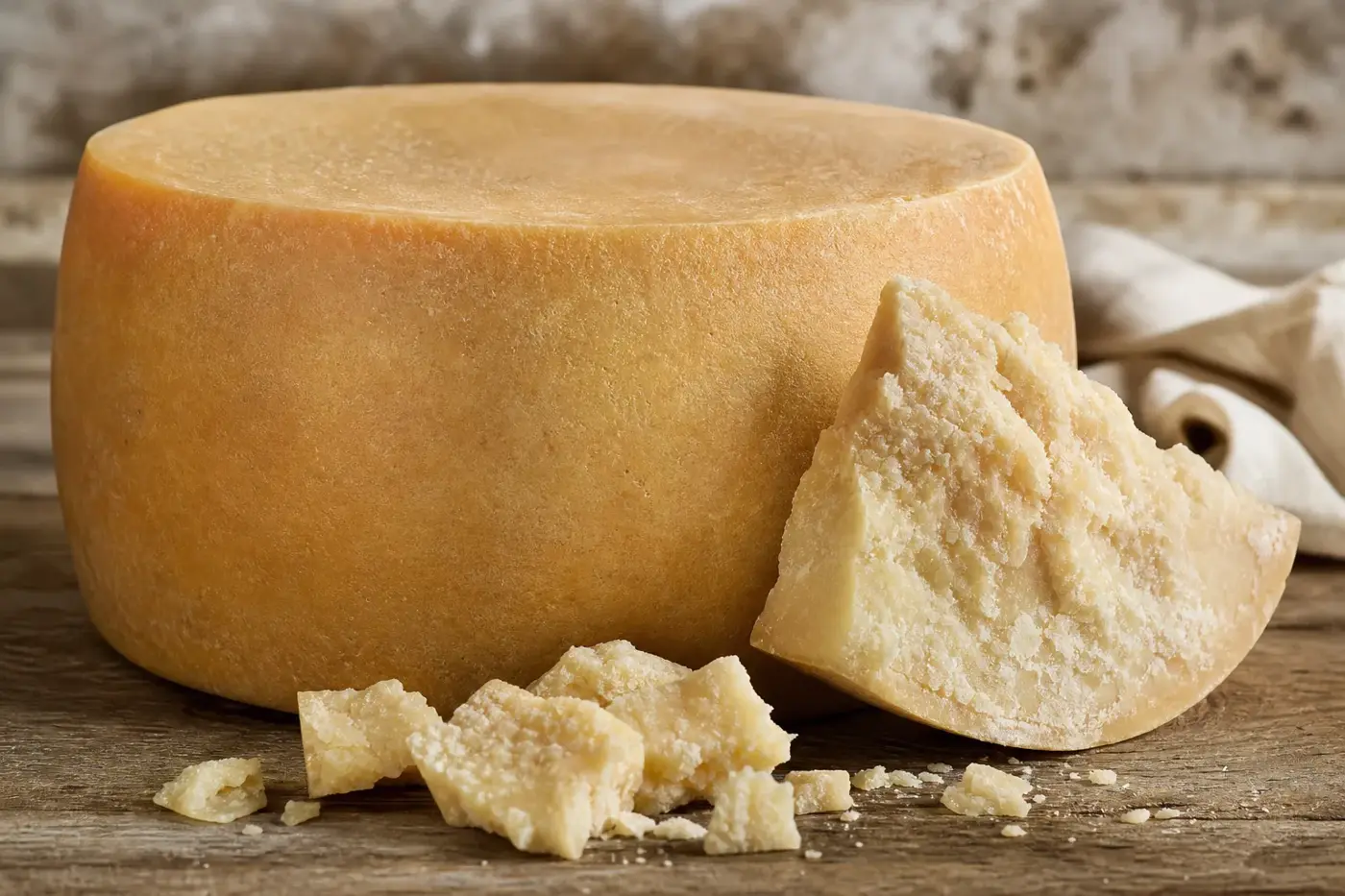
Parmigiano Reggiano
Break into a wheel of Parmigiano Reggiano and flakes fall away, revealing a finely granular cheese, pale straw to straw in colour.