Queijo Terrincho
Picture Portugal’s “hot land”, with Churra da Terra Quente sheep grazing dry uplands, fallow fields and river valleys.
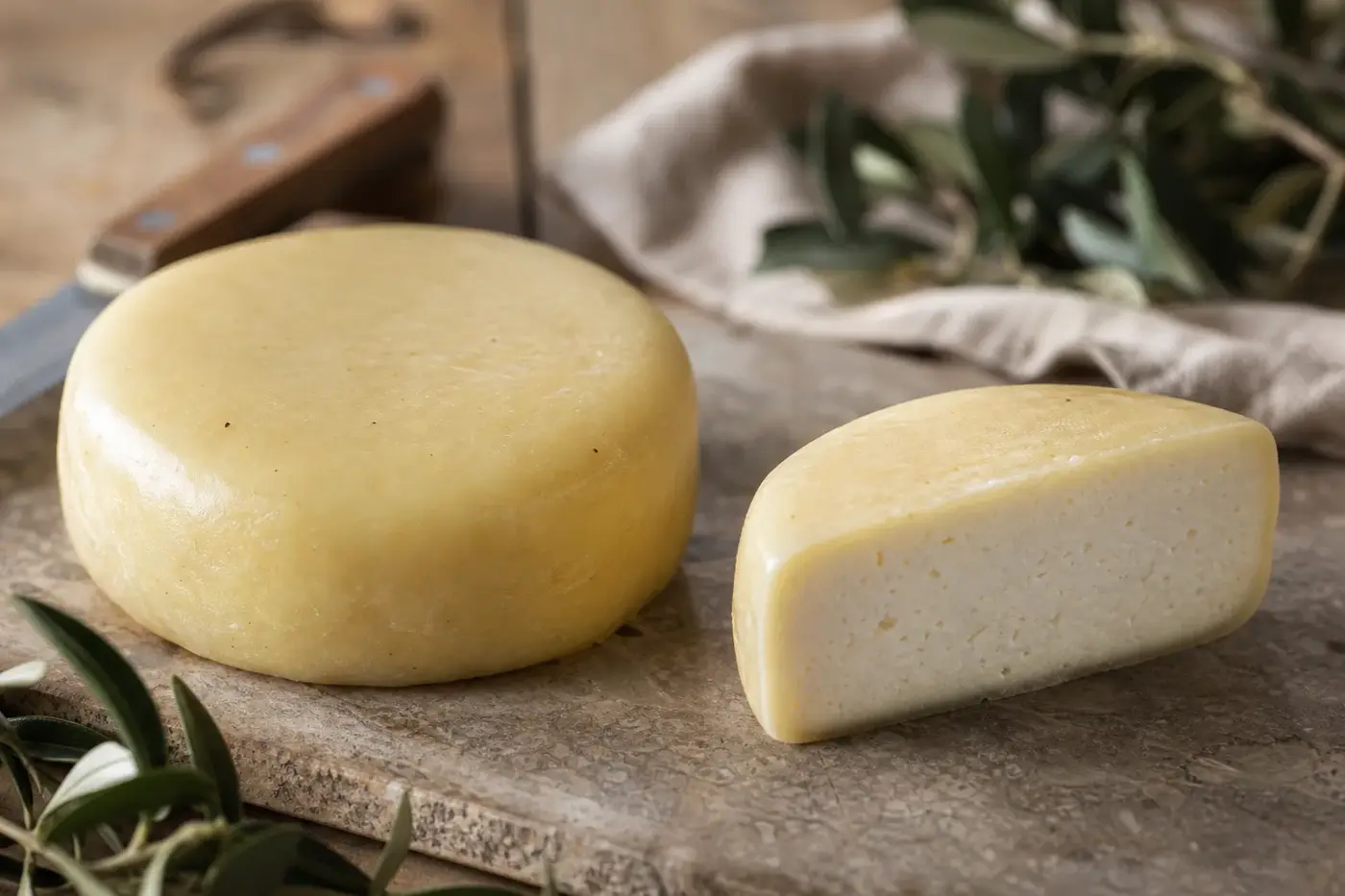
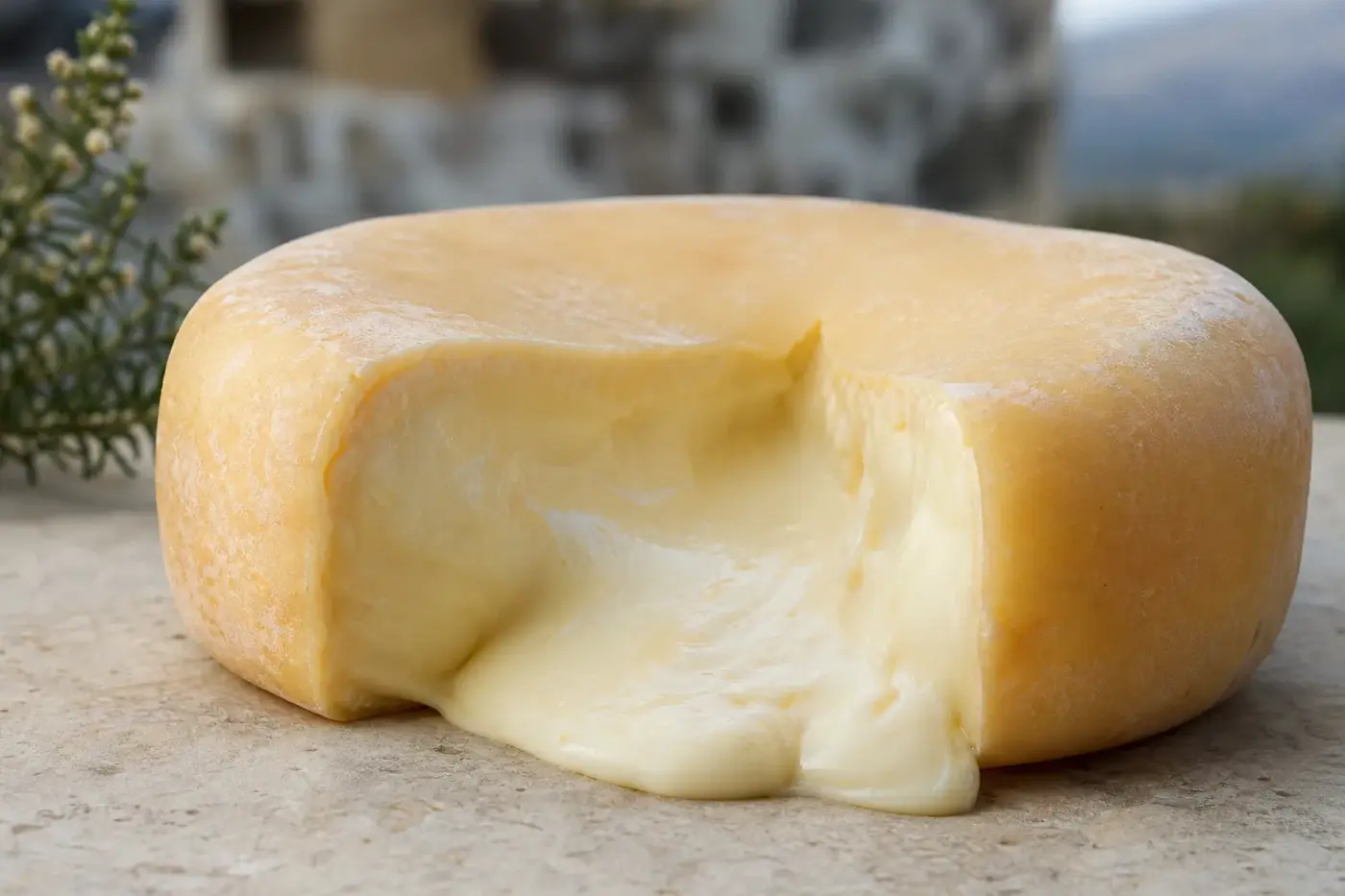
Picture Portugal’s “hot land”, with Churra da Terra Quente sheep grazing dry uplands, fallow fields and river valleys. Cut into the low, pale-rinded wheel their raw milk becomes, and you find a white heart that grows firmer and yellower with age. Leave it longer and Terrincho Velho brings a stronger character to the table. Both belong to a published specification linking Queijo Terrincho to these sheep, inland north-eastern Portugal and a defined way of making cheese.[3,4]
| At a glance | What you need to know |
|---|---|
| Familiar and registered name | Queijo Terrincho.[1,3] |
| Where it comes from | Terra Quente and the upper Douro Valley, Portugal; a legally delimited area.[3] |
| EU identifier | PDO-PT-0218; amendment identifier PDO-PT-0218-AM01.[3] |
| EU registration | Originally registered on 21 June 1996; specification amendment approved by Commission Implementing Regulation (EU) 2020/1415. Current eAmbrosia procedural status: unconfirmed.[1,2] |
| Great Britain protection | Registered PDO; scheme registration dated 31 December 2020. Register information: November 2026.[1] |
| Milk and coagulant | Exclusively raw milk from Churra da Terra Quente ewes; animal rennet.[3] |
| Minimum maturation | Queijo Terrincho: 30 days. Terrincho Velho: 90 days.[3] |
Step into Portugal’s hot land
Terra Quente means “hot land”. Follow the specification’s account of the cheese’s origins and dry plateaux give way to deeply cut valleys, including those of the Douro, Sabor, Tua and Côa. Around you are vineyards, olive groves, almond trees and cereal fields, all sharing the landscape.[4]
The legal boundary is much more precise than “Trás-os-Montes”. It includes Mogadouro, Alfândega da Fé, Torre de Moncorvo, Freixo de Espada à Cinta, Mirandela, Vila Flor, Carrazeda de Ansiães and Vila Nova de Foz Côa. Macedo de Cavaleiros is included except for Edroso, Espadanedo, Ferreira, Murçós and Soutelo de Mourisco; São João da Pesqueira is included except for Riodades and Paredes da Beira.[3]
Elsewhere, the boundary picks out individual parishes. These are Rio Torto, São Pedro de Veiga de Lila, Veiga de Lila, Valpaços, Vales and Possacos in Valpaços; Longroiva, Fonte Longa, Poço do Canto and Meda in Meda; and Escalhão, Vilar de Amargo, Algodres and Mata de Lobos in Figueira de Castelo Rodrigo. These are the parish names recorded in the published boundary.[3]
Meet the sheep behind your slice
Churra da Terra Quente sheep are central to Terrincho’s story. The specification requires them to be born and raised within the defined area and entered in the breed register. It describes extensive husbandry, with the animals spending much of their day grazing rather than relying entirely on indoor feeding.[4]
Do not picture an uninterrupted carpet of green pasture. The sheep feed on rough grazing, fallow ground and water meadows, supplemented by forage crops and locally available tree foliage. When feed is scarce, supplies may come from outside the area, up to an annual ceiling of 50% of feed dry matter.[3]
Here, breed, land use and husbandry fit together. The specification presents that connection as the foundation of Terrincho’s regional character. Keep this working landscape in mind when you taste, alongside the things you can observe directly: age, texture and the treatment of the rind.[4]
From raw milk to a finished wheel
Terrincho begins with raw sheep’s milk and animal rennet. Its specified composition excludes milk from other species. The rennet is an enzyme preparation that sets milk into a gel-like curd, taking a different route from Portuguese sheep’s milk cheeses made with cardoon.[3,9]
The documented method starts with filtering the milk, warming it for coagulation and adding rennet. The 2016 amendment describes a temperature of 30 to 35 °C and a setting time of approximately 50 minutes. Pressing follows, using manual or pneumatic equipment.[5]
Earlier production rules describe cutting the curd into small grains, draining it through cloth and working it into moulds. Pressing removes whey, the liquid that separates from the curd, before salting. During maturation, the cheeses are turned and washed, with attention paid to the condition of the rind.[10]
Treat these descriptions as a glimpse into production, not a home recipe. If you would like to follow the transformations behind your slice, read how cheese is made.
Take a closer look beneath the rind
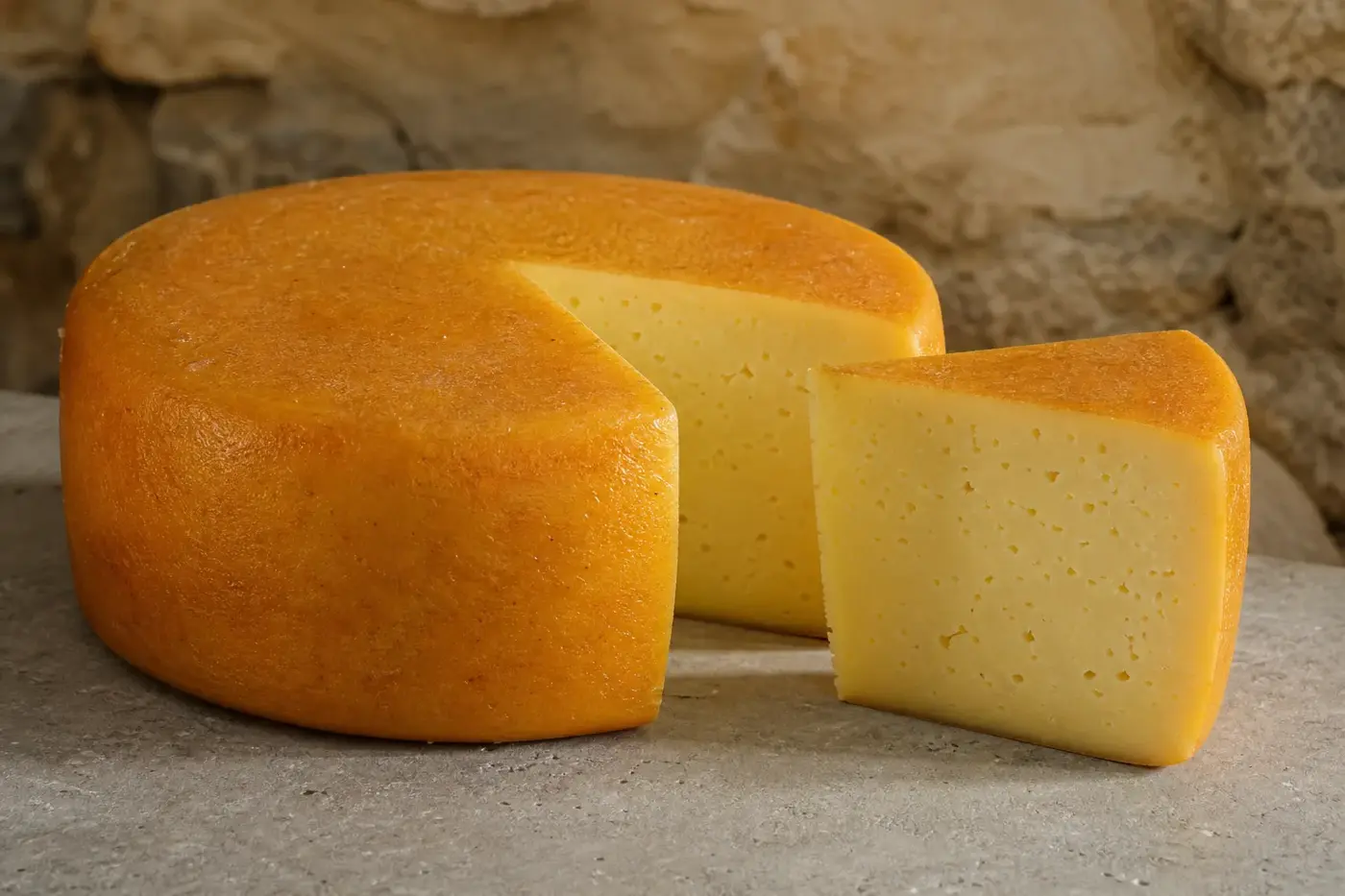
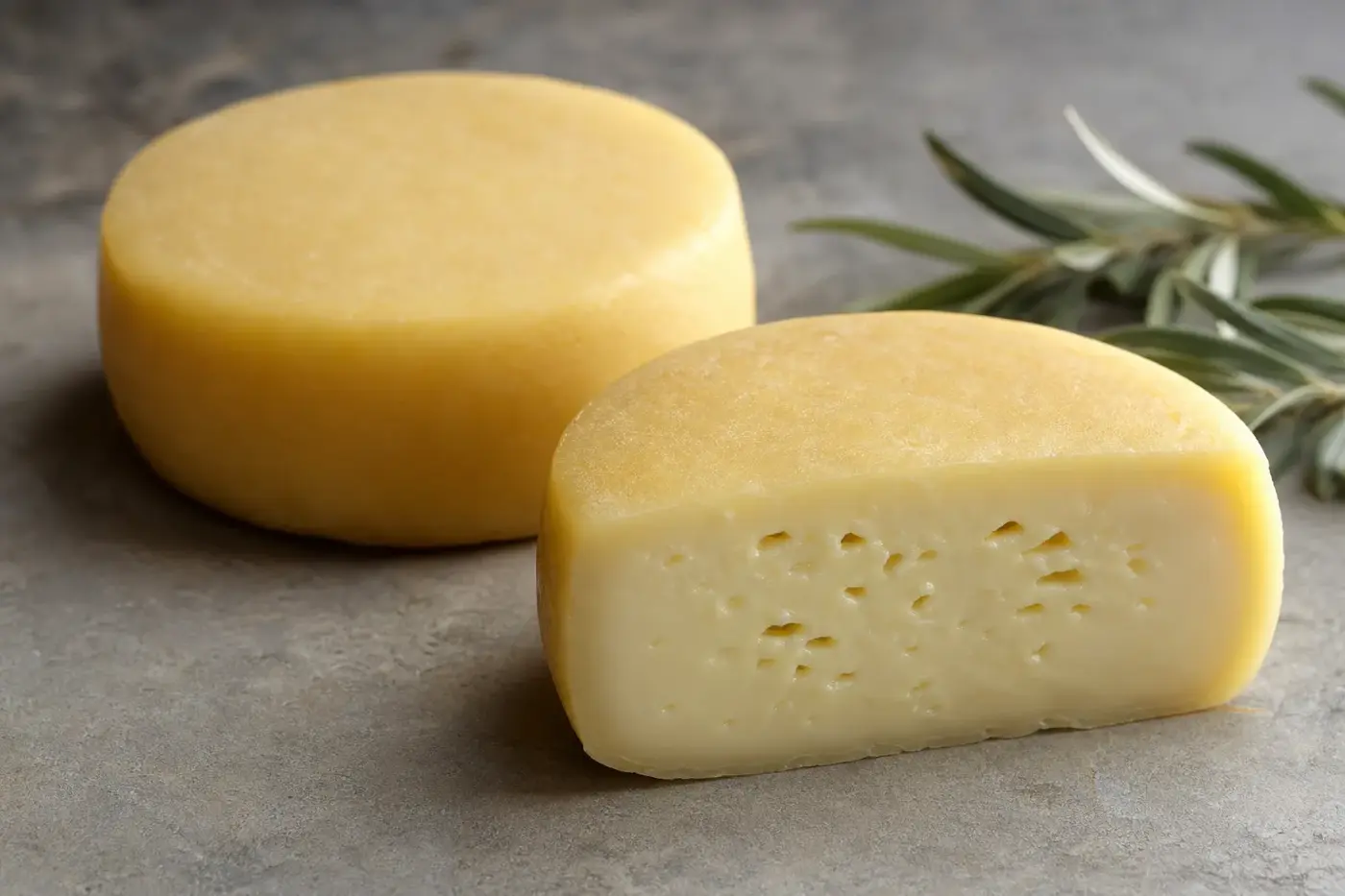
You are looking for a low, round wheel, rather than a tall cylinder. The specification describes younger Terrincho’s rind as whole, smooth and supple, with an even light straw-yellow colour. Inside, the paste is white, close-textured and slightly unctuous, with a few openings.[4]
The approved amendment brought smaller merendeira wheels alongside the larger format. Standard younger wheels weigh 700 to 1,100 g and measure 12 to 20 cm across; the smaller format weighs 350 to 550 g. Standard Velho wheels weigh 500 to 1,000 g.[3]
For your first encounter, ask to see a cut surface as well as the outside. Does the slice hold firmly, and is the paste white or yellow? Look for the openings in that otherwise close structure. You have a useful starting point for comparing younger and older cheeses, before the tasting even begins.
Younger Terrincho or Velho: find your favourite
Age makes the clearest difference. The Portuguese agriculture authority describes younger Terrincho’s aroma and flavour as mild, clean and characteristic; Velho is stronger. Its account follows the paste from paler and less firm to the harder, yellowish cheese that develops with longer maturation.[6]
| What goes into the character | Queijo Terrincho | Terrincho Velho |
|---|---|---|
| Minimum maturation | 30 days.[3] | 90 days.[3] |
| Maturation temperature | 5 to 12 °C.[4] | 8 to 14 °C.[4] |
| Relative humidity during maturation | 80 to 90%.[4] | 75 to 85%.[4] |
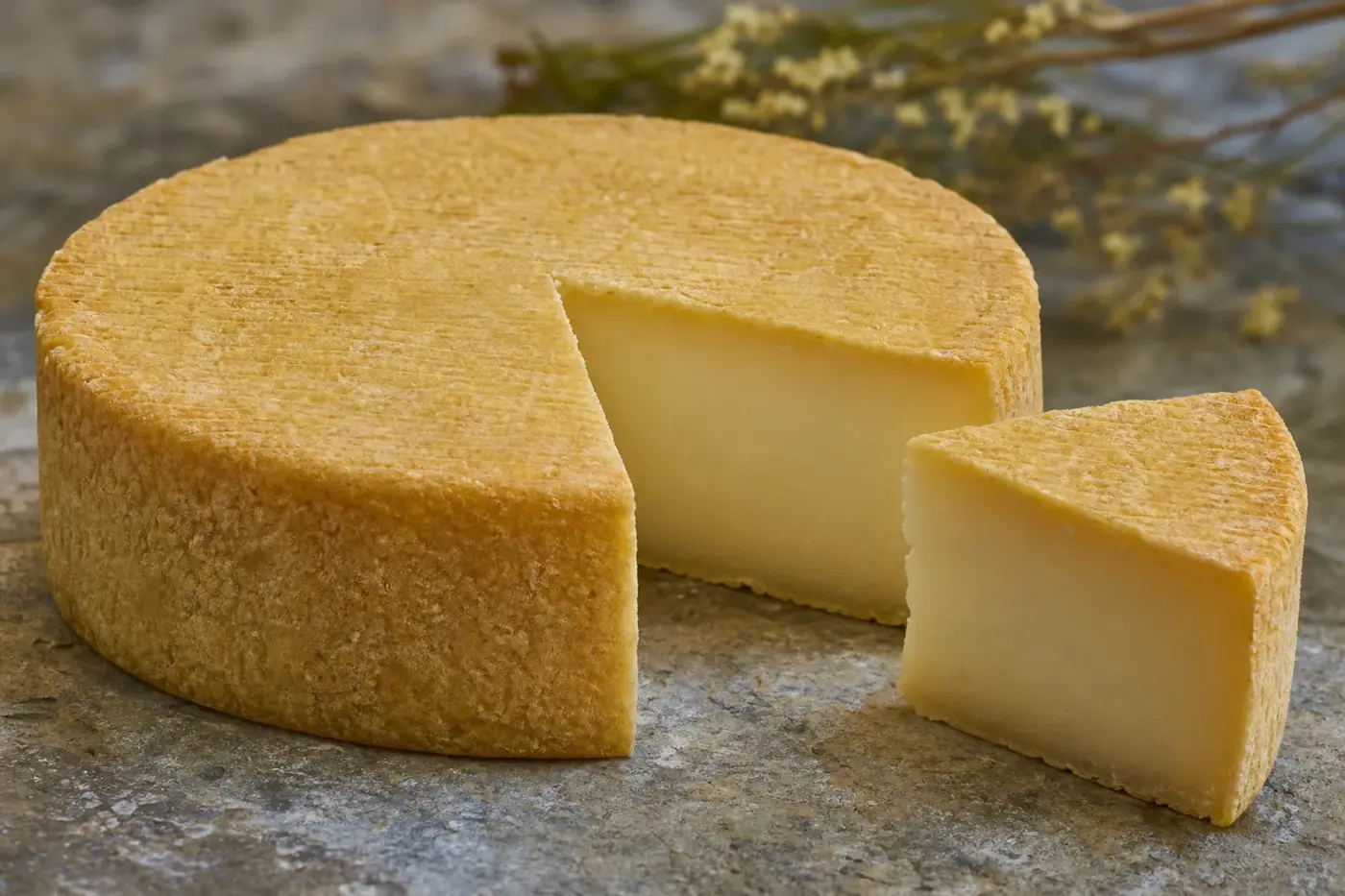
| Paste to expect | White; softer, sometimes deformable when cut.[3] | Yellowish; hard, holding its shape when cut.[3] |
Velho has some distinctive presentations, too. The specification describes a red-pepper coating prepared with grape marc spirit or virgin olive oil, and cheese presented immersed in virgin olive oil. If you see that red exterior, it comes from the documented treatment, not a naturally red rind.[3,4]
Choose younger Terrincho for a gentler character, or Velho for firmer texture and greater intensity. Ask the seller how long each batch has actually matured. The minimum age establishes eligibility for the designation; the batch’s age tells you more about the particular cheese waiting on the counter.
What the protected name brings to the table
Queijo Terrincho’s protected designation ties the cheese to a defined origin and method. It covers the specified sheep’s milk, animal rennet, geographical boundary, maturation and product characteristics. The EU amendment was approved in 2020; Great Britain’s register separately records Queijo Terrincho as a registered PDO.[1,2,3]
Ask the seller to show you the original product identification, and keep the batch information. Before publication, consult the operative specification and responsible certification body for the current identification and certification requirements.
Buying a cut portion? Ask the cheesemonger to retain or show the original identification. Record the maker’s name, batch details and age, so you have something useful to go on next time. Those particulars help you find a similar cheese again, rather than simply another wheel carrying the same protected name.
A product name, its certification and a producer’s own branding each tell you something different. For help making sense of them, see protected names and reading a cheese label.
Bring it home and give it proper care
Start at the counter with three questions. Is this younger Terrincho or Velho, how long has the batch matured, and what treatment or packaging does it have? For cheese in olive oil or with a pepper coating, read the storage instructions and ingredient information supplied for that presentation.
At home, follow the packaging instructions, including date marks. The Food Standards Agency’s guidance for England, Wales and Northern Ireland recommends a fridge between 0 and 5 °C. Keep the instructions with any cut portion: the dairy’s maturation conditions are not your home storage guide.[7]
Wondering how long chilled food can stay out of the fridge? For England, Wales and Northern Ireland, consult the current Food Standards Agency guidance.[7]
Cut small wedges so each shows the paste and its edge. If you are tasting across ages, begin with the younger cheese, then move to Velho. Notice firmness, aroma and how long the flavour stays with you. That order gives you a starting point, not a reason to disregard your own preferences.
For the everyday business of wrapping and handling, turn to storing cheese at home. Keep the advice handy alongside the instructions supplied with your cheese.
Make room for bread, fruit and Portuguese wine
Begin with plain bread and the cheese. Add one accompaniment at a time, giving yourself a clear taste of each combination. You can decide whether you enjoy sweetness, find contrast interesting, or prefer a quieter partner that lets you concentrate on the cheese.
The suggestions below draw on the documented differences between younger Terrincho and Velho.[6] Think of them as pairing ideas, rather than the results of a recorded site tasting. There is no need to turn your table into an examination desk.
| Your cheese | Try it with | What to notice |
|---|---|---|
| Younger Terrincho | Plain wheat bread and fresh pear | A restrained starting point for its milder character. |
| Younger Terrincho | A fresh Portuguese white wine, or sparkling water | A refreshing drink before more forceful combinations. |
| Terrincho Velho | Rye bread and fresh apple | Compare firm cheese with substantial bread and crisp fruit. |
| Terrincho Velho | A Portuguese red from the Douro, or unsweetened black tea | Try a modest serving and judge how it supports the stronger cheese. |
Ask for a wine style rather than expecting every bottle from a region to behave alike. For younger Terrincho, start with a white without conspicuous oak. For Velho, try a red whose tannin does not dominate the mouthful. The cheese deserves a say, rather than a supporting role in somebody else’s dinner.
Wine suggestions are for adults of legal drinking age, in small servings. Bread, fruit, water and tea make a complete alcohol-free tasting. For a broader approach, see cheese and wine pairing.
Follow your curiosity to other Portuguese cheeses
Queijo de Nisa offers a revealing comparison through its coagulant. Portugal’s veterinary and food authority describes it as a raw sheep’s milk cheese made with cardoon, with a semi-hard paste and a slightly acidulated flavour. It shares Terrincho’s milk species, but takes a different route to setting it.[9]
Serpa gives you another comparison to explore. The same authority describes a softer, unctuous paste, few or no openings and a stronger flavour with some piquancy, again using cardoon. Taste these alongside Terrincho and you can explore different methods and textures within Portuguese sheep’s milk cheesemaking.[9]
Keep your comparisons specific: cheese, maker, age where supplied, and what you notice. A short note such as “slice holds firmly, aroma stronger than the younger wheel” gives you something concrete to return to. At your next tasting, that will tell you more than a general score.
General information only, not medical advice: follow the official guidance where you live.
Questions people ask
What is the difference between Queijo Terrincho and Terrincho Velho?
Queijo Terrincho matures for at least 30 days, while Terrincho Velho matures for at least 90 days. Velho is stronger, with a harder, yellowish paste; younger Terrincho is milder, with a white, softer paste.
What milk and rennet are used to make Queijo Terrincho?
It is made exclusively from raw milk from Churra da Terra Quente ewes. Animal rennet is used to turn the milk into curd.
Where does Queijo Terrincho come from?
It comes from a legally delimited area in Terra Quente and the upper Douro Valley in Portugal. The boundary includes places such as Mogadouro, Mirandela and Vila Flor, with some municipalities included only in part.
Why does some Terrincho Velho have a red exterior?
The specification describes a red pepper coating prepared with grape marc spirit or virgin olive oil. The red exterior comes from this treatment, not from a naturally red rind.
What can I serve with Queijo Terrincho?
The page suggests plain wheat bread and fresh pear with younger Terrincho. For Velho, it suggests rye bread and fresh apple.
Sources
- Department for Environment, Food & Rural Affairs. Queijo Terrincho. Great Britain protected food names register, published 2021, checked November 2026. Register entry.
- European Commission. Commission Implementing Regulation (EU) 2020/1415 of 1 October 2020 approving a non-minor amendment to the specification for a name entered in the register of protected designations of origin and protected geographical indications (“Queijo Terrincho” (PDO)). 2020. Official text.
- European Commission. Application for approval of a non-minor amendment to the product specification: “Queijo Terrincho”, including the Single Document. Official Journal C 186, 5 June 2020, pp. 8 onwards. Official publication.
- Caderno de especificações: Queijo Terrincho, Denominação de Origem Protegida. Amended specification, undated document hosted by Qualifica Portugal. Specification PDF.
- Portuguese Government. Despacho n.º 13349/2016, de 9 de novembro. Diário da República, 2016, particularly the annex on description, traceability, production and labelling. Official text.
- Direção-Geral de Agricultura e Desenvolvimento Rural. Queijo Terrincho DOP. Undated official product summary, indexed text retrieved November 2026. Product summary.
- Food Standards Agency. How to chill, freeze and defrost food safely. Published 18 December 2017; live version checked November 2026. Applies to England, Northern Ireland and Wales. Official guidance.
- Portuguese postal technical publication, hosted by Direção-Geral de Alimentação e Veterinária. Queijos Portugueses, 2º Grupo. 2011. Used for attributed comparative descriptions, not present-day legal requirements. Document PDF.
- Direção-Geral de Agricultura e Desenvolvimento Rural. Normas de produção do “Queijo Terrincho”. Original specification, undated scanned document. Used for the documented traditional process, not superseded dimensions or composition limits. Document PDF.
This desk-researched article compares the published EU amendment, Portuguese specification and national records, with official household guidance for the serving section.
Last checked: November 2026
Last checked November 2026.
The editors suggest you read next
Queijo Serra da Estrela
Cut into Queijo Serra da Estrela and watch its pale interior gently abandon its shape.