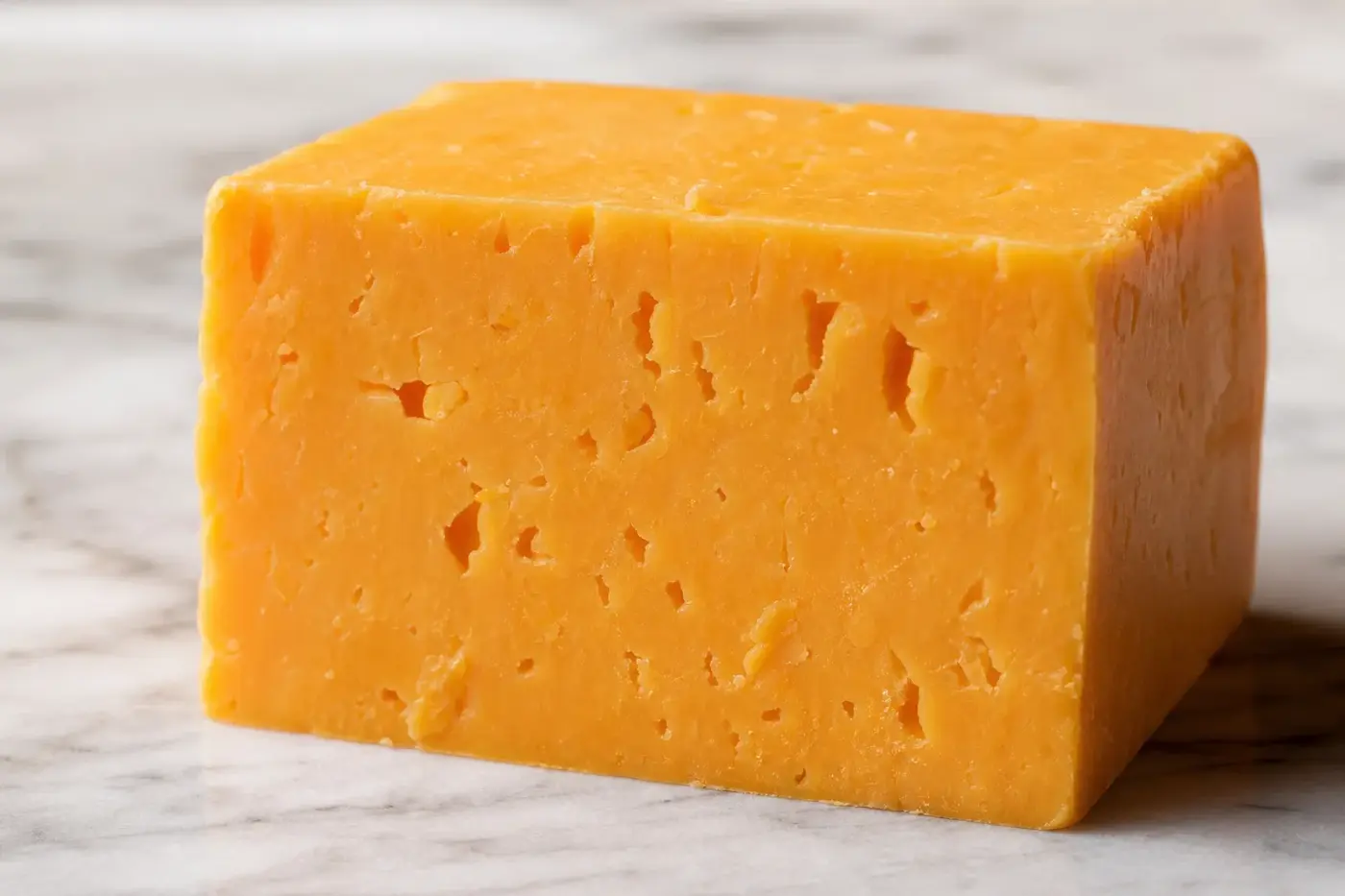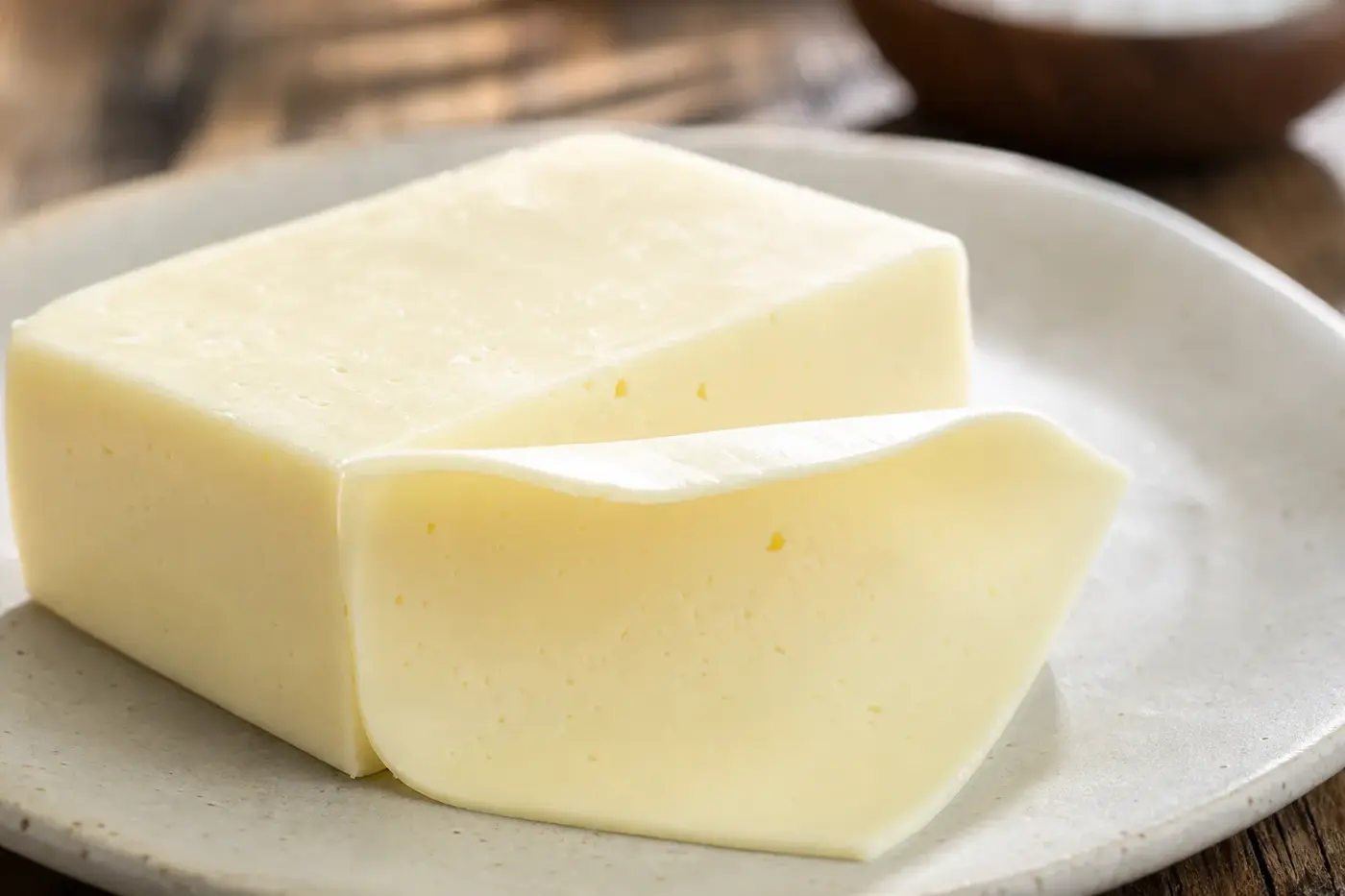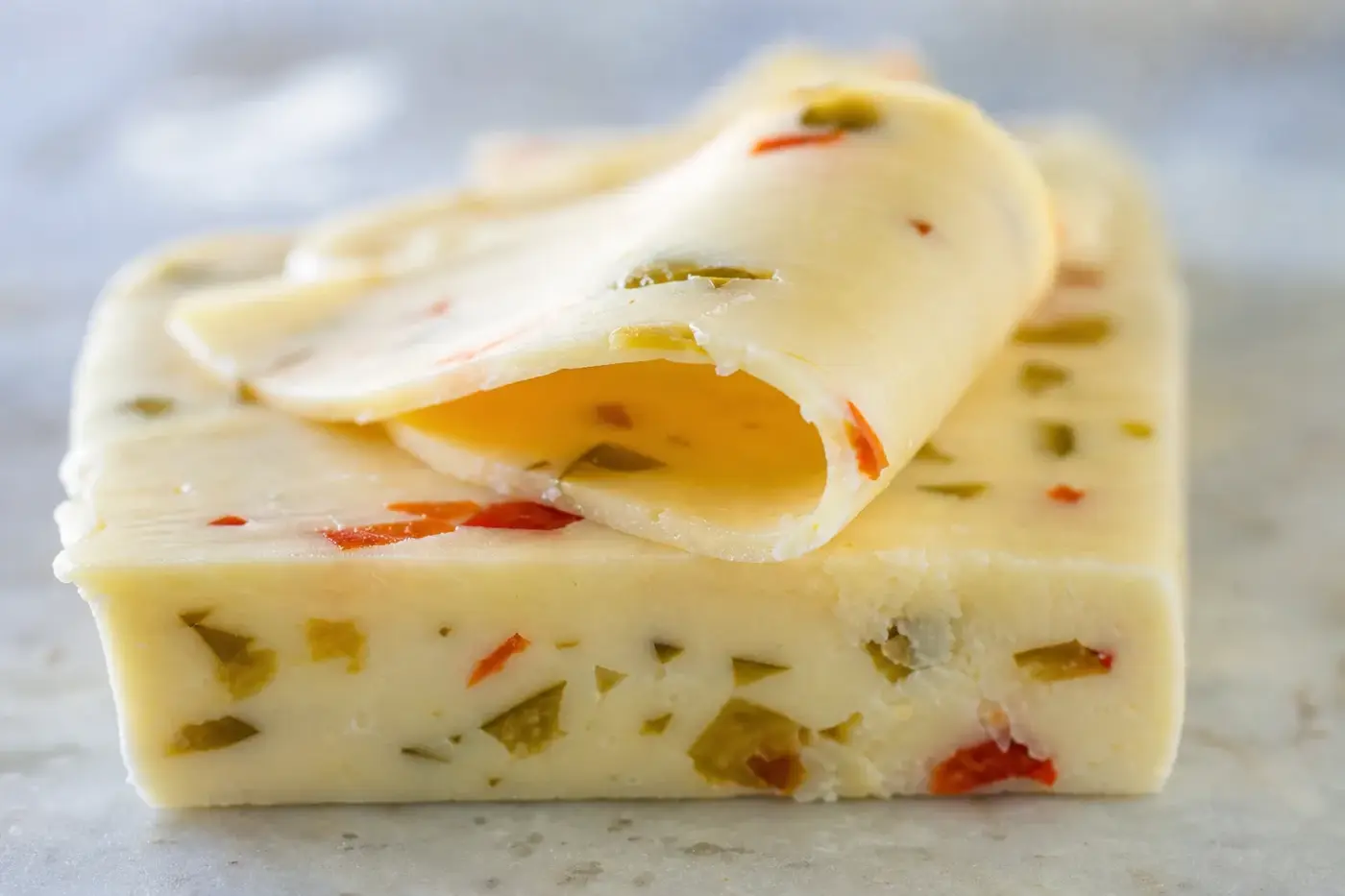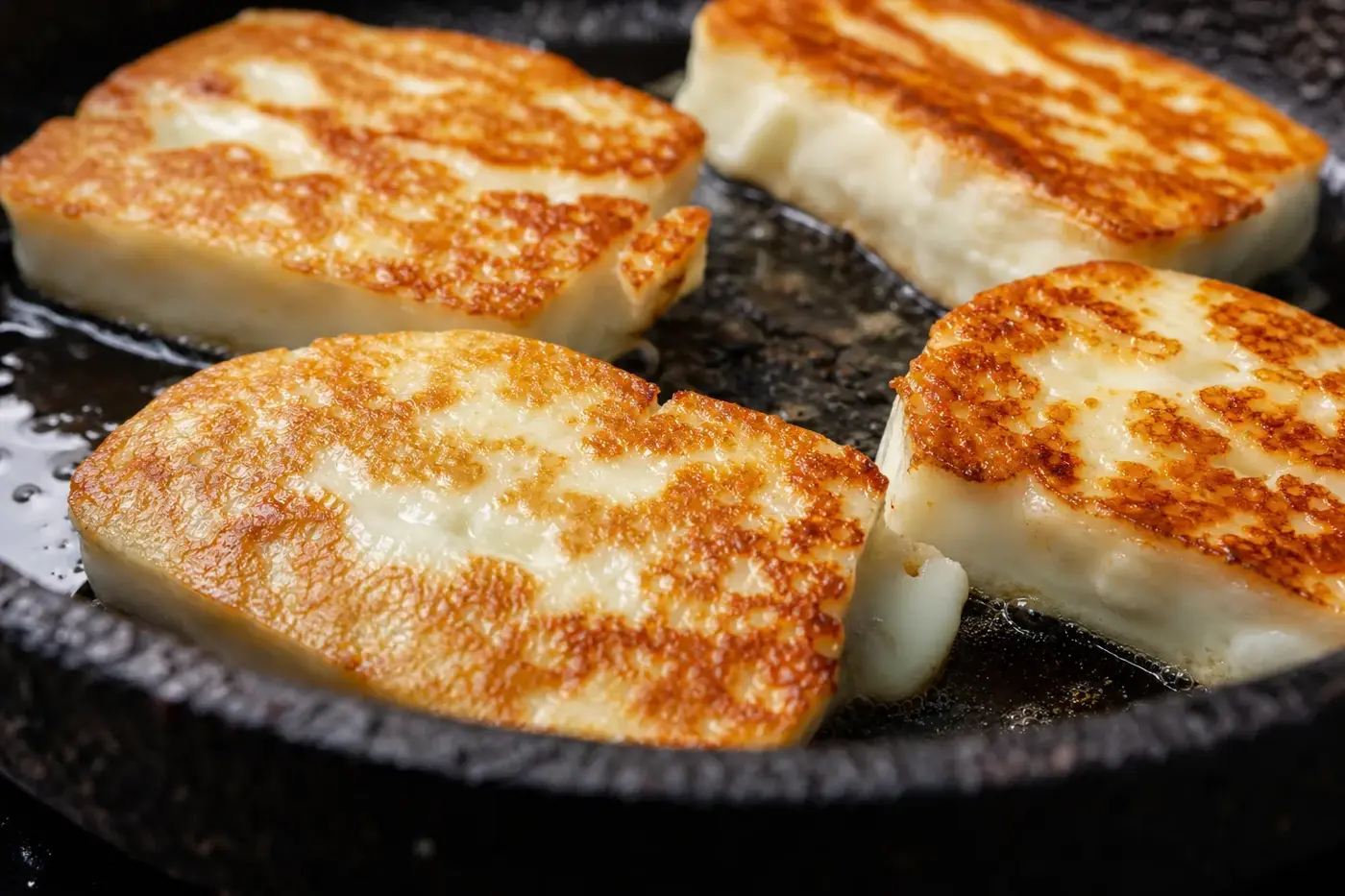
A slice of queso blanco meets a hot pan. You wait for a puddle, but it may hold its shape instead. Choose another version and you have a cheese to crumble over dinner. The name means “white cheese”, but across the Americas it covers everything from crumbly toppings to firm table cheeses. [1][2]
The useful clue is how the milk became curd: heat and acid or rennet, followed by draining and pressing. Get to know that part of the story and you will have a better idea of what belongs in your pan. [1][2]
One name, plenty of local character
Queso blanco gives you a name before it gives you a recipe. Tropical Cheese, a producer serving Latin American and Caribbean markets, describes variations across Latin America. It places its own version within Cuban, Dominican and Puerto Rican food traditions, giving you a regional picture rooted in the maker’s market and understanding of the cheese. [3]
Mexico’s naming traditions resist neat boxes, too. In 1987, Mexico’s consumer authority, Profeco, published a preparation headed “queso fresco (Panela)”. That brings together names that English language cheese lists often separate. The historical overlap tells you more than three tidy categories would; how the milk is set remains the more useful distinction. [4]
The US Food and Drug Administration includes queso blanco in its food safety category of “queso fresco-type cheeses”. Your pack may therefore carry a familiar regional name while official guidance addresses a broader family. Before you cook, get to know the particular cheese, not just its name. [8][12]
Meet your cheese: crumbly or ready to slice?
Cut into queso blanco and you will usually find a white or off-white, fresh, rindless cheese. The US Dairy Export Council’s reference manual describes its representative version as firm and crumbly, with a mild flavour, a tart finish and some saltiness. That is one portrait, not the whole family album. The name covers a wider range of textures and flavours. [1][6][8]
Tropical Cheese offers a different picture: fresh and firm, with a mild, sweet flavour. The producer recommends its version as a table cheese. Set beside that tart, crumbly example, it gives you good reason to study the description and cut surface before choosing something to slice or scatter. [3][6]
Follow the milk from curd to cheese
The first big moment is coagulation, when milk sets into curd, the solid material separated from liquid whey. Heat and acid make milk proteins gather together; rennet, a milk clotting enzyme preparation, takes another route. Those beginnings help establish the texture. Draining, shaping and salting then refine it. [2]
New Mexico State University’s extension guide records two methods under the queso blanco name. One uses heat and acid, supplied by vinegar, without rennet or culture. The other uses rennet to set whole milk, with little or no bacterial culture. If you want to know which route your cheese follows, the ingredients list tells you more than the shared name. [1]
Even the milk brings variations. A panela product sheet published by Chihuahua’s family welfare agency describes fresh or powdered milk, whether whole, partly skimmed or skimmed, with possible rennet and lactic cultures. This Mexican description shows you how broad the ingredients can be. Check your own pack for milk species, treatment and ingredients. [5]
Next comes draining to remove whey, pressing to bring the curd particles together, and moulding to give the cheese its shape. The dairy science review The Basics of Cheesemaking identifies queso blanco as a pressed example of heat and acid coagulation. Salt may join the recipe too, in amounts that vary from one recipe to another. [1][2]
Why some slices stand their ground
Why does one cheese stay together in your pan? Its protein structure helps decide. During heat and acid coagulation, heating changes whey proteins so they associate with one another and with casein, the principal cheese protein. Acid changes the conditions in which they gather, helping create a structure that stays in a distinct piece rather than flowing. [2][7]
Research published in Food Structure in 1991 found that heat and acid coagulated white cheese did not melt when heated alone. The researchers examined its structure using electron microscopy and tested it in processed cheese mixtures. Their findings explain the behaviour of this production route, although the finished cheese’s formulation still matters. [7]
Rennet does not promise you a melting cheese, either. The US Dairy Export Council explains that Hispanic fresh cheeses, including panela, soften without flowing because of their relatively high pH, a measure of acidity. Ask whether your particular queso blanco is meant for frying, crumbling or melting. Its colour cannot tell you. [6]
Finding your way around queso blanco, queso fresco and panela
Queso fresco means fresh cheese, so the name describes age rather than one way of setting milk. Panela is commonly presented as a particular fresh cheese within Mexican usage. These documented preparations give you a clearer guide than treating the three names as separate categories with fixed boundaries. [1][4][5]
| Name in the source | How it is made or described | What you can expect |
|---|---|---|
| Heat and acid queso blanco | Set with vinegar and heat, then drained and pressed. [1] | Holds its shape in suitable frying applications. [1] |
| Queso fresco, NMSU example | Made with rennet, cultured buttermilk and vinegar. [1] | Grainy, soft and crumbly; tolerates heating. [1] |
| Panela, Mexican examples | Profeco’s preparation uses rennet; Chihuahua also lists possible cultures. [4][5] | Fresh, with descriptions ranging from spreadable to sliceable. [5] |
Need a substitute? Choose it for the job: crumbly queso fresco can give you separate pieces for a garnish, while sliceable panela may suit a sandwich. For a hot pan, look for the maker’s specific frying recommendation. Being white and fresh does not mean two cheeses will cook alike. [1][5][6]
Make room on your plate, then reach for the pan
Fruit, guava paste and quince paste are Tropical Cheese’s suggested companions for its queso blanco. The producer also serves it beside rice and beans. Try modest slices alongside fruit, or cubes beside beans, rather than automatically reaching for your grater. It can have the evening off. [3]
With a crumbly version, scatter small pieces over beans, roasted vegetables or a filled arepa so you find them through each bite. If yours slices neatly, tuck a slice into an arepa instead. Serve fresh salsa separately for contrast, letting each person choose how much acidity and chilli to add.
For frying, choose only a version recommended for the purpose and follow the producer’s cooking instructions. Heat and acid queso blanco is documented as suitable for frying or grilling; a soft table cheese needs its own directions. Remember that a browned outside is not the same as a centre heated sufficiently throughout. [1][12]
Choose the pack that suits your plans
Start with the milk description, then turn to the ingredients. Look for whether the milk is pasteurised and whether acid, rennet or cultures are listed. If you still cannot tell how it will cook, ask the seller. The guide to reading cheese labels explains the wider terminology you might meet. [1][5]
As at November 2026, US FDA guidance recommends that people at higher risk who choose these cheeses look for sealed, unopened packs. You should find the producer identified, a date and a statement that the milk is pasteurised. The guidance advises against unrefrigerated products and swollen packaging. [8]
Choose a pack that fits the meal you have planned, and read its directions before opening. Consider the storage temperature, date and instructions after opening together. Planning several meals? Read those instructions first rather than assuming an opened block will last throughout the week. [9][10]
Keep it cold and keep the date in sight
For England, Wales and Northern Ireland, the Food Standards Agency recommends keeping your domestic fridge between 0 and 5 °C and following the pack’s storage instructions. Dairy products and foods carrying a use by date need refrigeration. Use a fridge thermometer to find the temperature, rather than relying on the control dial. [9]
A use by date is about safety; a best before date is about quality, according to UK consumer guidance. Follow the producer’s use by date and any shorter instruction for use after opening. Your nose cannot establish whether food remains suitable after its use by date. Keep the original packaging so you have the instructions to hand. [9][10]
As at November 2026, US FDA guidance for queso fresco type cheeses recommends refrigeration at 4 °C (40 °F) or below and advises against keeping opened leftovers. Discard cheese held between 4 and 60 °C (40 and 140 °F) for longer than two hours. The guidance also advises washing your hands and utensils before and after handling. [8]
This page summarises published guidance from the official sources it cites. It is not medical advice. Guidance differs between countries and changes over time, so check the current source for where you live, and ask your doctor, midwife, pharmacist or dietitian about your own circumstances.
Pregnancy and pasteurisation: know the guidance for you
As at November 2026, UK NHS pregnancy guidance lists pasteurised soft cheeses such as paneer, ricotta and mozzarella among foods you can eat. Mould ripened soft cheeses and soft blue cheeses have different advice: eat them only if cooked until steaming hot. For unpasteurised soft cheeses, consult its separate advice against the product you have. [11]
As at November 2026, US CDC guidance advises people at higher risk of listeriosis to heat queso fresco type cheeses to 74 °C (165 °F), or until steaming hot. The FDA identifies pregnant people, adults aged 65 or over and people with weakened immunity as higher risk groups. Pasteurisation reduces contamination from milk, but cheese can become contaminated afterwards. [8][12]
If you are in the US and pregnant, aged 65 or over, or have weakened immunity, the FDA recommends avoiding higher risk foods, including queso fresco-type cheeses made with pasteurised or raw milk. Consult that advice and ask your healthcare professional about your circumstances. Where heating is advised, it is the centre of your cheese that matters, not the colour of its surface. [8][12]
Questions people ask
What is queso blanco?
Queso blanco means “white cheese” and describes several fresh cheeses across the Americas. Versions range from crumbly toppings to firm table cheeses.
Does queso blanco melt?
Some versions hold their shape when heated rather than flowing. Heat and acid queso blanco is documented as suitable for frying or grilling, but the finished cheese’s formulation matters.
What is the difference between queso blanco, queso fresco and panela?
Queso fresco means fresh cheese, while panela is commonly presented as a particular fresh cheese in Mexican usage. The names overlap, so the documented method and product description are more useful than treating them as fixed categories.
How should queso blanco be stored?
For England, Wales and Northern Ireland, the Food Standards Agency recommends a fridge temperature between 0 and 5 °C and following the pack’s storage instructions. UK consumer guidance says to follow the use by date and any shorter instruction for use after opening.
Can I eat queso blanco during pregnancy?
The UK NHS lists pasteurised soft cheeses such as paneer, ricotta and mozzarella among foods that can be eaten, and gives separate advice for unpasteurised soft cheeses. In the US, the FDA recommends that pregnant people avoid queso fresco cheeses made with pasteurised or raw milk, while the CDC advises people at higher risk to heat them to 74 °C or until steaming hot. Check the relevant NHS, FDA or CDC guidance and ask your healthcare professional about your circumstances.
Sources
- New Mexico State University Cooperative Extension Service, Making Homemade Cheese, Guide E-216, reprinted June 2008. Sections “No-rennet Queso Blanco”, “SAFE Queso Fresco” and introductory descriptions of draining and moulding. Retrieved from the University of California Agriculture and Natural Resources document repository.
- American Society for Microbiology, The Basics of Cheesemaking, Microbiology Spectrum, volume 1, number 1, published 31 October 2013. Sections on milk proteins, coagulation, whey expulsion and salting.
- Tropical Cheese, Queso Blanco, Spanish language product page, undated, checked November 2026. The producer’s descriptions of its own cheese, regional associations and serving suggestions. Commercial producer source.
- Procuraduría Federal del Consumidor, Revista del Consumidor, number 120, February 1987, page 40, “Elaboración de queso fresco (Panela)”. Used as historical evidence of terminology and ingredients.
- DIF Estatal Chihuahua, Manual ETC, “Queso Panela” product sheet, undated, checked November 2026. Description and sensory characteristics.
- US Dairy Export Council, Reference Manual for U.S. Cheese, 2015 edition. Queso blanco profile and discussion of restricted melt and flow. Industry technical reference.
- Food Structure, Structure, Meltability, and Firmness of Process Cheese Containing White Cheese, volume 10, number 3, article 2, 1991. Research abstract and experimental summary, hosted by Utah State University.
- US Food and Drug Administration, Queso Fresco-type Cheeses Consumer Guidance, live version checked November 2026. Definitions, higher risk groups, purchasing, refrigeration and handling.
- Food Standards Agency, How to chill, freeze and defrost food safely, published 18 December 2017, live GOV.UK version checked November 2026. Applies to England, Northern Ireland and Wales.
- GOV.UK, Understanding food labelling: Best before and use-by dates, live version checked November 2026.
- NHS, Foods to avoid in pregnancy, live version checked November 2026. Section “Cheese, milk and other dairy”.
- US Centers for Disease Control and Prevention, How Listeria Spread: Soft Cheeses and Raw Milk, dated 16 January 2025, checked November 2026.
This piece was researched from university dairy references, a primary experimental study, Mexican public authority publications, attributed producer descriptions and current official food safety guidance.
Last checked: November 2026
Last checked November 2026.
The editors suggest you read next
American Cheese: The Processed Slice Explained
Watch a slice of American cheese soften over your burger.