Queso de Burgos
Open a pack of Queso de Burgos and you meet white, moist cheese, with fresh milk taking centre stage.
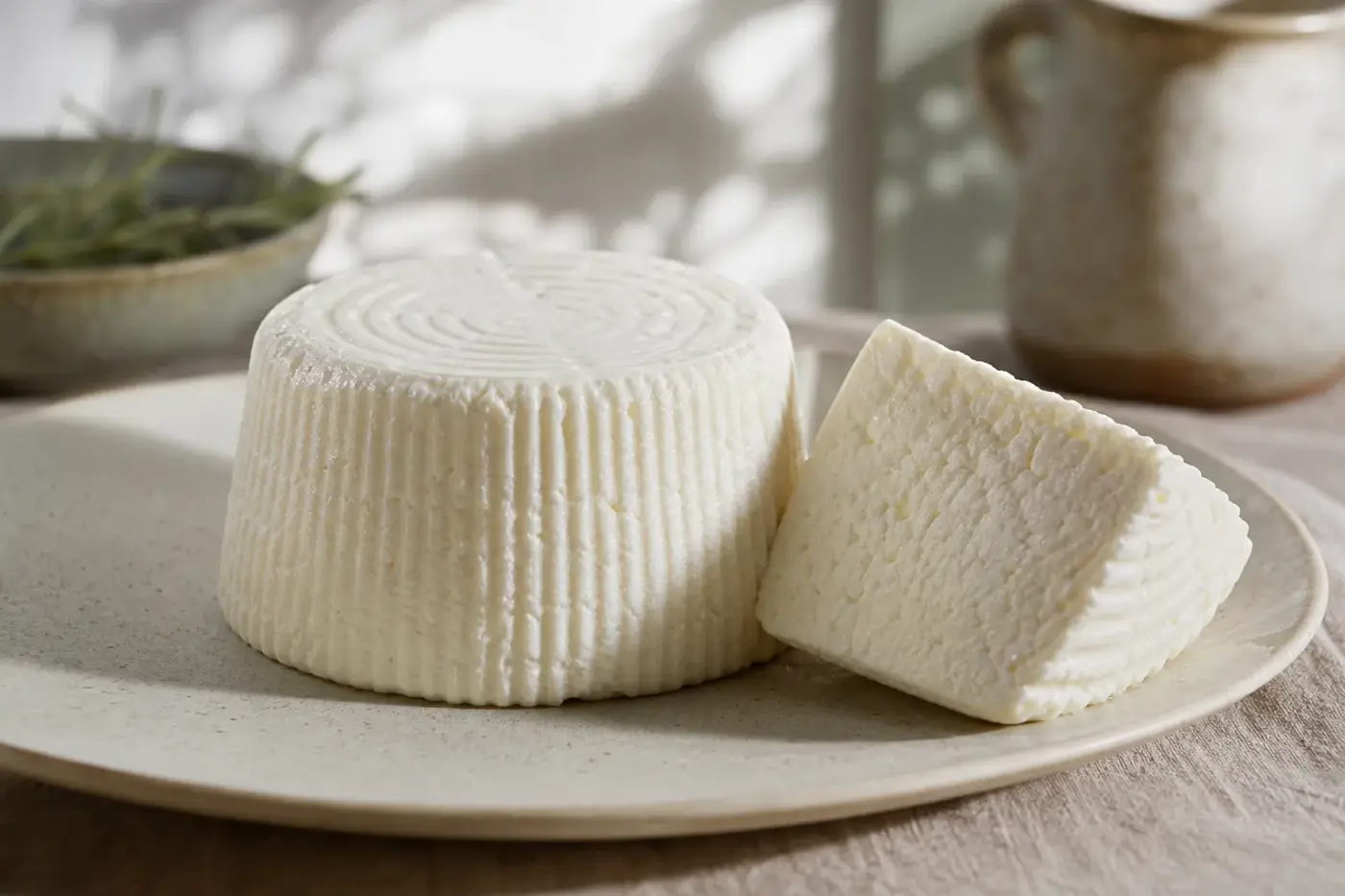
Open a pack of Queso de Burgos and you meet white, moist cheese, with fresh milk taking centre stage. There is no rind to negotiate, no grand entrance required. Spain's agriculture ministry describes the flavour as mild, lactic and slightly sweet. [1]
Its story begins with sheep's milk in the Castilian countryside around Burgos. Today, cow's milk and mixed-milk versions give you good reason to read beyond that familiar name. The label tells you about the milk, the method and how to keep it. [1,3]
Get to know your Burgos
| What to know | Your quick guide |
|---|---|
| Name | Queso de Burgos. [1] |
| Cheese style | Fresh and unripened. [2] |
| Traditional home | Burgos, Castilla y León, Spain. [1,3] |
| Milk | Historically sheep's milk; cow's milk and mixtures also documented. [3] |
| Outside | No rind; white or slightly yellowish, and moist. [1] |
| EU protection | PGI registration reported by Spain's agriculture ministry on 10 September 2025. [1] |
| Registered name | Queso de Burgos. [1] |
| Official pregnancy guidance | UK NHS, November 2026. [5] |
Follow the sheep through Burgos farmland
Picture crops and grazing sheep rather than mountain dairies. This story begins in the province of Burgos, where Spain's agriculture ministry traces the cheese's reputation to the eighteenth century. It also records the original sheep's milk basis. [1,2]
The product specification sets that sheep husbandry within the rural farming economy of the Duero basin, in Castilla y León. Sheep fed on pasture, uncultivated margins and the stubble left by crops. Animals and agriculture belonged to the same working landscape. [2]
Their milk became something to eat relatively promptly, rather than a wheel destined for long maturation. That gives you a more particular picture than “fresh cheese” on a supermarket shelf. Burgos is part of the cheese's story, not merely the name on its pack. [2]
Give that gentle milk flavour some room
The pleasure here is a moist, yielding paste. Beneath the rindless surface, the interior is white, with the mild, lactic, slightly sweet flavour described by the ministry. You taste milk rather than the sharpness or developed rind aromas of a ripened cheese. [1]
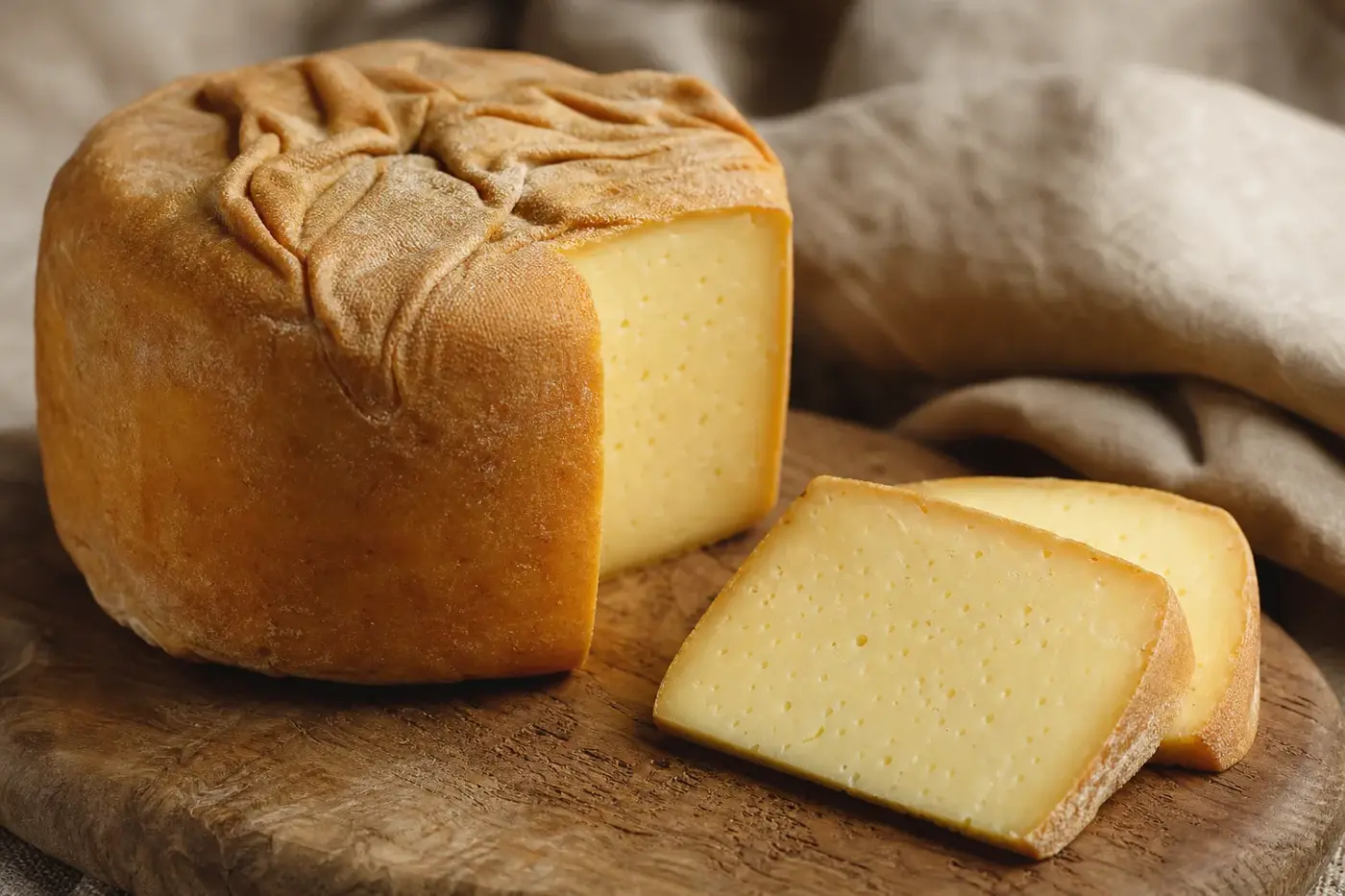
Take a look at its shape, too. It is characteristically cylindrical, sometimes tapering towards one end, with possible impressions from moulds or cloth. Once you unpack it, there is no rind between you and the cheese, so handle it gently. [1,2]
Choose accompaniments that leave room for that mild milk character. The soft paste rewards a gentle approach. Bigger flavours can easily take over, and you bought the cheese to taste it.
Sheep, cow or both? Read a little closer
Today's protected specification requires a mixture of cow's and sheep's milk. An older ministry reference records a broader commercial shift from sheep's milk towards cow's milk or mixtures. That helps explain the different versions you may have encountered under the same familiar name. [2,3]
The ministry's registration announcement divides the cheese into three versions by sheep's milk content: Queso de Burgos contains 5 to 10%, Selecto 11 to 30%, and Supremo more than 30%. These are composition categories. Supremo sounds ready to accept an award, but the name alone is not a verdict on quality. [1]
Next, compare salt per 100 g, the ingredients and the producer's description of texture. A much wetter or less salted cheese may do a different job from its neighbour on the shelf. Think about your dish: would you like a spoonable accompaniment, neat slices or pieces for a salad?
From milk to a tender, unpressed curd
The PGI method begins with pasteurised milk and enzymatic coagulation. Rennet or another permitted enzyme sets the milk into curd, its soft solid part. Cutting, stirring and draining release some whey, the liquid portion, before the curd goes into perforated moulds. [2]
The cheeses are then turned, unmoulded and packed. There is no pressing and no maturation. Ultrafiltration is excluded from the specification. [2]
You may still come across ultrafiltration in an older, broader ministry description of industrial production. That account covers a widely used cheese name; the protected specification sets requirements for the particular PGI. Keep those two scopes apart and the different methods make sense. For more on the process behind the curd, see how cheese is made. [2,3]
Why the protected name points to Burgos
Spain's agriculture ministry announced Queso de Burgos's entry into the European register on 10 September 2025. In November 2026, ITACyL, Castilla y León's agricultural technology institute, listed it among its PGIs. On Spanish labels, look for IGP, indicación geográfica protegida, rather than the English abbreviation PGI. [1,4]
The ministry defines the PGI production area as the province of Burgos. This European designation is separate from a regional promotional or certification logo. Look for the specific designation and its identification on the product, rather than simply a regional-looking design or the maker's address. [1]
If protected origin matters to you, those details offer more than a suggestive label. See protected names explained for the differences between schemes.
Turn the pack around before you choose
Start with three useful words: vaca means cow, oveja means sheep, and mezcla means mixture. Read any percentages alongside them. Then look for pasteurizada, the producer's declaration of milk treatment, because the familiar cheese name only tells you so much.
Turn to the ingredients and nutrition panel next. Compare salt and any added ingredients, then choose what suits your dish. A general description introduces the style; the pack tells you about the cheese you are holding.
Before choosing a pack size, find the date and storage instructions for both before and after opening. Buy an amount you can use within those directions. If you transfer the cheese to another container, keep the label for its date, batch identification and handling instructions. You can find more in the guide to reading a cheese label. [6,7]
Make room for bread, honey and fruit
Bread and a little honey give you a simple place to start. Keep the cheese central, with honey alongside rather than spread over it in a thick coat. These suggestions follow the mild, milky character described by the ministry. [1]
For fruit, try sliced pear, figs or berries, choosing whatever is good locally. A little fruit beside a plain slice makes quite a different plate from a fully dressed fruit salad. Decide which you fancy before everything goes into the bowl.
For something savoury, bring together tomatoes, cucumber and olive oil. Add the cheese last to help its pieces stay intact. Taste the whole combination before reaching for salt, especially if you have included olives or salted bread.
For a contemporary lunch, set it over cooked, cooled lentils with chopped herbs, or serve it beside roasted vegetables. Its mildness has a useful role here. Enjoy that gentleness rather than expecting the force of a strongly matured cheese.
Keep it cold, and keep track of opening
Keep your fridge between 0 and 5 °C, as the UK Food Standards Agency advises. Its guidance applies to England, Wales and Northern Ireland, and says dairy products should be refrigerated according to their packaging instructions. Take the portion you need, then return the cheese promptly. [6]
The limit after opening matters just as much as the printed date. Follow whichever instruction means finishing the cheese sooner, use clean utensils and note the opening date if you might forget. One product's long unopened life tells you nothing about another's, or about how long an opened tub remains suitable. [6,7]
UK official guidance draws a clear distinction: use-by is about safety; best-before is about quality. Do not eat the cheese after its use-by date. Food Standards Scotland warns that normal looks or smell cannot tell you whether food past that date is fit to eat. See how to store cheese at home for broader handling advice. [7,8]
Find the right guidance for your dietary needs
If you need a vegetarian cheese, look at the particular product. The PGI permits natural rennet or microbial coagulating enzymes, so seek an explicit vegetarian statement or ask the producer which coagulant it uses. The designation alone cannot answer that question. [2]
For lactose, the individual pack matters too. The UK NHS identifies lactose as a sugar in dairy foods, including those made from cow's, sheep's and goat's milk. Changing the animal does not, by itself, establish the lactose content. [9]
If you need a lactose-free product, look for a specific declaration. Discuss dietary changes with a dietitian or GP rather than choosing on the strength of the milk species alone. [9]
Milk allergy calls for different care. The NHS distinguishes intolerance from food allergy, which can be life-threatening. If you manage a milk allergy, take product-specific advice from your clinician rather than choosing by cheese style. [9]
For pregnancy, consult the NHS guidance on foods to avoid in pregnancy, with November 2026 as the reference point here. It covers pasteurised and unpasteurised soft cheeses and cooking. Ask your midwife about your own circumstances. [5]
Choose the fresh cheese your dish needs
“Fresh cheese” leaves room for plenty of differences in texture and salt. Mexican producer Quesos Navarro describes its cow's milk queso fresco as granular, crumbly, salty and lactic. Spain's ministry describes Queso de Burgos as mild and slightly sweet: the same broad category, but different characters on your plate. [1,10]
Mozzarella or cottage cheese can give you alternatives for an everyday plate. Adjust the accompaniments and portioning to the cheese you have. The names are not interchangeable instructions.
For a recipe, start with what you need the cheese to do. Should it hold its shape in slices, crumble over other ingredients or mix into a dressing? Match that task, rather than expecting every fresh cheese to make an exact substitute.
General information only, not medical advice: follow the official guidance where you live.
Questions people ask
What does Queso de Burgos taste like?
Spain’s agriculture ministry describes it as mild, lactic and slightly sweet. It is a fresh, unripened cheese with a moist interior and no rind.
Is Queso de Burgos made from sheep’s milk?
It was historically made from sheep’s milk, but the protected specification now requires a mixture of cow’s and sheep’s milk. Queso de Burgos contains 5 to 10% sheep’s milk, Selecto contains 11 to 30%, and Supremo contains more than 30%.
Is Queso de Burgos a protected cheese?
Spain’s agriculture ministry announced its entry into the European register on 10 September 2025. Its PGI production area is the province of Burgos. On Spanish labels, look for IGP, meaning indicación geográfica protegida.
Is Queso de Burgos suitable for vegetarians?
It depends on the product. The protected specification allows natural rennet or microbial coagulating enzymes, so look for a vegetarian statement or ask the producer which coagulant it uses.
How should I store Queso de Burgos?
The UK Food Standards Agency advises keeping the fridge between 0 and 5 °C and refrigerating dairy products according to their packaging instructions. Check the instructions for both before and after opening, and follow whichever means finishing the cheese sooner.
Sources
- Ministerio de Agricultura, Pesca y Alimentación, announcement concerning the European registration of Queso de Burgos, 10 September 2025. Supports the ministry's registration announcement, historical association, production area, composition categories and sensory description. Retrieved ministry announcement.
- Ministerio de Agricultura, Pesca y Alimentación, Pliego de condiciones de la Indicación Geográfica Protegida “Queso de Burgos”, document identified by filename dated 30 December 2024. Sections B, C, E and F cover description, area, production and geographical connection. Retrieved specification.
- Ministerio de Agricultura, Pesca y Alimentación, Queso de Burgos, undated food reference sheet, retrieved November 2026. Used as a broader historical description, separately from the PGI specification. Retrieved reference sheet.
- Instituto Tecnológico Agrario de Castilla y León, Pliegos de condiciones y documentos únicos de las DOP / IGP agroalimentarias, current online listing, checked November 2026. Retrieved official listing.
- NHS, Foods to avoid in pregnancy, reviewed 15 June 2026, checked November 2026. Current UK pregnancy guidance.
- Food Standards Agency, How to chill, freeze and defrost food safely, published 18 December 2017, current online text checked November 2026. Applies to England, Wales and Northern Ireland. Retrieved refrigeration guidance.
- GOV.UK, Understanding food labelling: Best before and use-by dates, current online text checked November 2026. Retrieved date-label guidance.
- Food Standards Scotland, Use-by and best-before dates, current online guidance checked November 2026. Retrieved Scottish guidance.
- NHS, Lactose intolerance, reviewed 8 July 2026, checked November 2026. Retrieved intolerance guidance.
- Quesos Navarro, Queso Fresco, undated product page, checked November 2026. Commercial producer source, used only for its own product description. Retrieved product information.
- Food Standards Agency, Alerts, current official listing, checked November 2026. Retrieved alerts listing.
- Agencia Española de Seguridad Alimentaria y Nutrición, Alertas alimentarias, current official listing, checked November 2026. Retrieved Spanish alerts listing.
This desk-researched article compares Spanish official descriptions and specification documents with published UK consumer guidance; serving suggestions are editorial, without a site tasting or recipe test.
Last checked: November 2026
Last checked November 2026.
The editors suggest you read next