Queso Fresco
Soft white curds land on a taco, tumble into black beans and settle over the sauce on enchiladas.
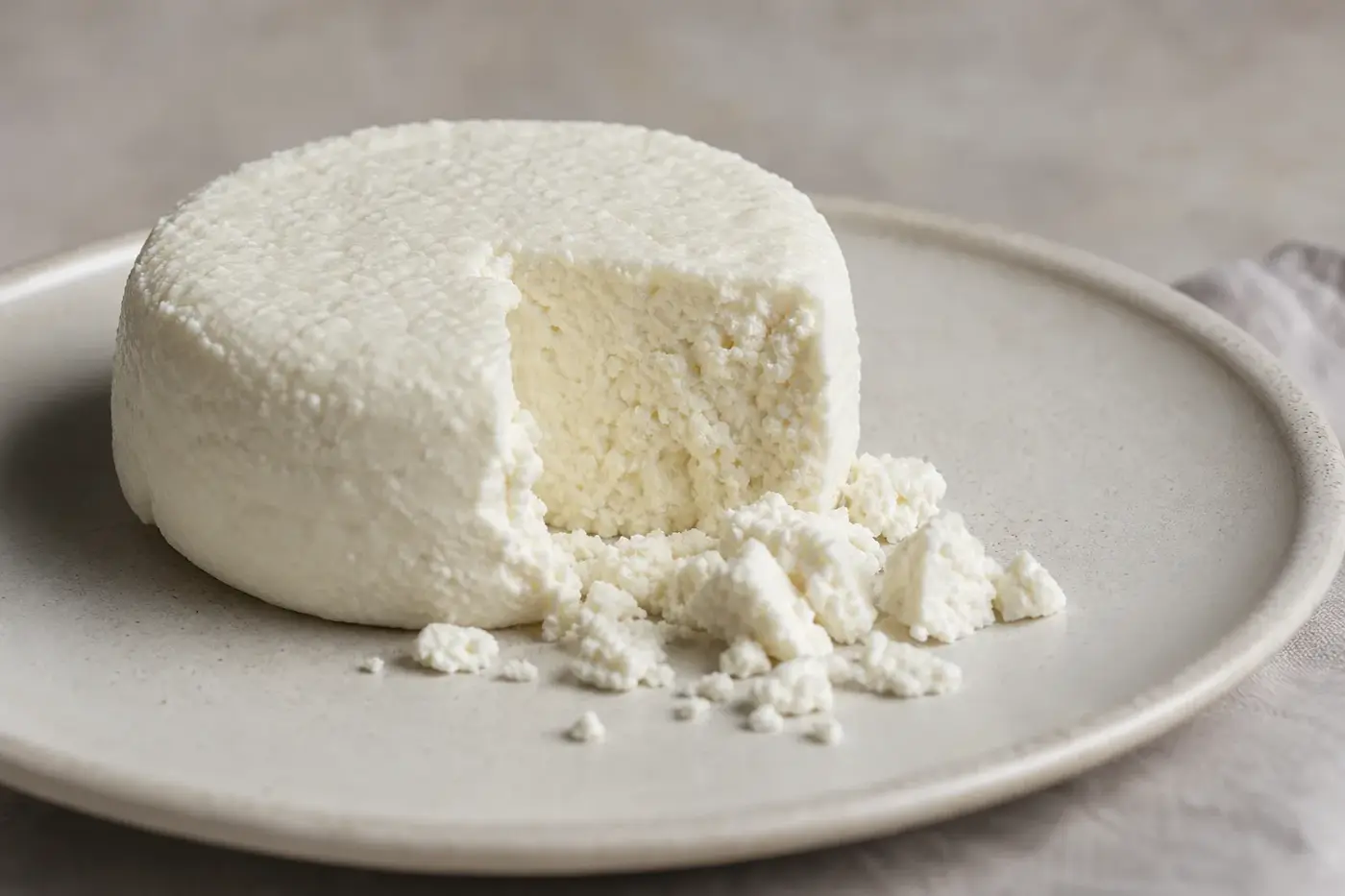
Soft white curds land on a taco, tumble into black beans and settle over the sauce on enchiladas. This is queso fresco at home on the Mexican table: moist, mild and content to let the rest of your plate do the talking. Its name means “fresh cheese”, but across Latin America it describes a family of related cheeses, not one identical product.[1][2][3][4]
Your first taste of queso fresco
| What to know | The essentials |
|---|---|
| Name | Queso fresco, meaning fresh cheese.[1] |
| Style | Fresh and high in moisture, without substantial ripening.[1][4] |
| Milk | Cow's milk in the cited producer example.[2] |
| Rind | None in the familiar table style; Mexico's broader category permits a thin rind.[1] |
| How the curd forms | Rennet or other suitable coagulants under Mexico's NOM-223-SCFI/SAGARPA-2018, section 3.2.[1] |
| Milk treatment | Check the product; the cited Cacique cheese uses pasteurised milk.[2] |
| Official pregnancy guidance | Consult the UK NHS guidance and US CDC guidance. Guidance date: November 2026.[9][10] |
One fresh name, a whole family to meet
Mexico's NOM-223-SCFI/SAGARPA-2018 defines queso fresco by its high moisture, lack of ripening and absent or thin rind. Within that description, there is room for different recipes, salt levels and curd sizes. You are choosing from a broad category, rather than buying one prescribed cheese.[1]
Two makers give you a taste of that variety. Cacique describes its Mexican-style queso fresco as soft and moist, with salty, slightly tangy curds and mild, milky notes. Goya presents its version as a crumbling cheese for Mexican dishes, including tacos, sopes and chilaquiles.[2][3]
Beyond Mexico, the FDA uses queso fresco-type as an umbrella for related fresh cheeses in Latin American cuisines. Descriptions change with the country and style. Read the maker's account alongside the name on your pack: it helps you picture what is inside.[4]
That matters when you follow a recipe from another country. Before choosing a replacement, ask what you need the cheese to do: crumble, slice or melt? The shared Spanish name tells you it is fresh; the label and recipe tell you more about its place in the kitchen.
From milk to soft, milky curds
First comes coagulation: milk proteins form a soft gel, or curd, which can be separated from watery whey. Mexico's standard permits rennet, a milk-clotting enzyme preparation, or other suitable coagulants. It also allows other techniques that produce the specified cheese characteristics.[1]
The curd is then drained, salted and formed into the finished cheese. Draining takes away some whey but leaves the high moisture that defines this family; salt supplies the seasoning. Cacique's cited product lists cultured pasteurised milk, salt and enzymes, although the list does not specify the enzymes' role in coagulation.[2]
For milk treatment, trust the product label rather than the traditional name. The FDA's guidance covers both pasteurised and raw-milk versions. If those terms need untangling, the guide to raw milk, thermised and pasteurised cheese explains the distinctions.[11]
After a melting cheese? Choose carefully
On a hot dish, queso fresco generally softens rather than turning into a smooth, flowing sauce. Cacique suggests letting its cheese soften on steaming soups. Its Oaxaca, by contrast, is presented specifically as a melting cheese for quesadillas.[2][7]
Picture the bite you want before you choose. Queso fresco gives you distinct pieces of fresh cheese against a warm filling. For stretchy melted cheese inside a tortilla, Oaxaca is the more useful choice.[2][7]
Crumble, scatter and make it yours
Queso fresco belongs on top of a dish just as comfortably as inside it. These suggestions draw on topping uses documented by Cacique and Goya. Let your plate decide the amount: even a devoted cheese lover need not tuck everything under a blanket.[2][3]
- Tacos: crumble over the assembled filling, leaving small, separate pieces.
- Enchiladas: scatter over the sauce just before serving, or use as a fresh-cheese filling.
- Beans: spoon into bowls, then finish with coarse crumbles.
- Soups: add a little to each bowl; do not expect it to dissolve into the broth.
- Salads: scatter irregular pieces among the vegetables rather than mashing them into the dressing.
Goya gives this finishing role plenty of room across Mexican cooking, naming tostadas, sopes and chilaquiles alongside tacos and enchiladas. Before breaking up your cheese, think about the texture you want. Use a fork gently for a loose sprinkle, or leave larger pieces for a filling where the cheese stays distinct.[3]
Use clean hands or a clean fork, and take out only what you will serve. Keep track of time as well as temperature. The FDA's queso fresco guidance says to discard cheese left between 4 °C and 60 °C (40 °F and 140 °F) for more than two hours.[4]
Find the Mexican cheese your dish needs
Do you want loose crumbles, neat slices, a salty topping or a melting filling? The kitchen task often gives you the clearest distinction. These descriptions come from the named manufacturers, rather than legal definitions for every cheese carrying each name; regional names and producers' methods can overlap.[2][4][5][6][7]
| Cheese | How it is described | What it brings to your kitchen |
|---|---|---|
| Queso fresco | Cacique: soft, moist, curd-like.[2] | Crumbles, toppings and fillings. |
| Queso blanco | CDC: among related fresh, soft cheeses.[10] | Let the product's cooking description guide you. |
| Panela | Cacique: similar to queso fresco, less crumbly.[5] | Slicing, crumbling and pan-searing. |
| Cotija | Cacique: aged, dry, salty, granular; does not melt.[6] | A bold grated or crumbled topping. |
| Oaxaca | Cacique: ribbons wound into a knot.[7] | Melting inside quesadillas. |
For neat pieces rather than a loose sprinkle, look to panela. Cacique describes a slight squeak in its curds and a texture between firm ricotta and halloumi. The maker also records its basket pattern, a mark associated with the cheese's traditional draining containers.[5]
A good swap starts with the cheese's job
If you need a mild topping or filling, start with panela. Cacique describes its version as its mildest cheese and less crumbly than queso fresco. Cut or break it into pieces, rather than expecting exactly the same loose curds.[5]
For a salty, crumbly finish, try a smaller amount of cotija. Its dry, aged character changes the balance of your dish, so adjust the other seasoning. Cacique compares cotija's flavour with feta; feta is another option when a salty accent matters more than matching queso fresco's mildness. Let your particular pack and recipe guide you.[2][6]
For melting, choose a cheese made for it: Oaxaca, for instance, or one described in the mozzarella guide. Queso fresco will not become a flowing cheese through sheer encouragement, however persuasive you feel. Substitution is a cooking decision; keep the replacement's own name when describing the finished dish.[7]
Buying in Britain? Begin with the pack
Start with the chilled pack, not just the cheese name. Look for milk treatment, the maker's identity, date marking and storage instructions, including use after opening. The US FDA's product-specific selection advice offers useful pointers: choose sealed, labelled packs made with pasteurised milk, and reject swollen packs or cheese that is not cold.[4]
If you cannot tell how the milk was treated, ask the retailer or maker. Next, read the cooking description. A fresh cheese intended for slicing may behave differently from one described as crumbly, however familiar the name looks.
Check the ingredients for additions and milk, too. Cacique's cited example declares milk as an allergen and lists enzymes without identifying their source, so that wording alone cannot establish vegetarian suitability.[2] For the wider checks, turn to the guide to reading a cheese label.
Keep your fresh cheese properly chilled
Queso fresco's moist, relatively low-acid environment can support Listeria, which can grow even under refrigeration. The CDC identifies queso fresco-type cheeses as a particular concern. The FDA also notes that contamination can happen after pasteurisation, so freshness and careful cold storage both matter.[11]
UK NHS advice is to keep chilled ready-to-eat foods at 5 °C or below, follow storage instructions and use opened food within two days unless the packaging says otherwise. Follow the use-by date as well. The FSA's refrigeration guidance for England, Wales and Northern Ireland recommends using a thermometer to check your fridge.[8][12]
For higher-risk US consumers who continue eating queso fresco, the FDA advises storage at 4 °C (40 °F) or below, prompt use and no leftovers after opening.[4] If you need help arranging that cold space, the home cheese storage guide offers practical guidance.
This page summarises published guidance from the official sources it cites. It is not medical advice. Guidance differs between countries and changes over time, so check the current source for where you live, and ask your doctor, midwife, pharmacist or dietitian about your own circumstances.
Pregnancy and higher risk: follow your local guidance
Advice differs between countries, and pasteurisation is only part of the picture. If you are pregnant in the UK, consult the current NHS advice on milk and cheese, including its instructions for particular soft cheeses and cooking. That page does not name queso fresco individually.[9]
The US CDC specifically advises people who are pregnant, aged 65 or older, or have weakened immunity to avoid unheated queso fresco-type cheeses, whether made from pasteurised or raw milk. It lists these cheeses heated to 74 °C (165 °F), or until steaming hot, among the alternatives.[10]
Under that US advice, a warm topping and a thoroughly cooked ingredient are different choices. Adding cheese after a dish leaves the heat does not establish that the cheese itself has reached the CDC's heating condition. Decide how you will use it before cooking, rather than relying on warmth from the food beneath it.[10]
For your own circumstances, follow the official guidance where you live and discuss questions with your doctor or midwife. The article on Listeria and cheese safety explains how milk treatment, manufacturing hygiene and subsequent handling each affect safety.[11]
Questions people ask
What is queso fresco?
Queso fresco means fresh cheese. In Mexico, it is a moist cheese without substantial ripening, often crumbled over dishes such as tacos and enchiladas.
Does queso fresco melt?
It generally softens with heat rather than flowing into a smooth sauce. For a stretchy melted filling in a quesadilla, the page suggests Oaxaca instead.
Is queso fresco made with pasteurised milk?
That depends on the product. The FDA’s guidance covers both pasteurised and raw milk versions, while Cacique’s cited queso fresco uses pasteurised milk.
Can I eat queso fresco during pregnancy?
The UK NHS does not name queso fresco individually in its pregnancy guidance, so consult its current advice on cheese and cooking. The US CDC advises pregnant people to avoid unheated queso fresco, whether made with pasteurised or raw milk. The CDC lists cheese heated to 74 °C or until steaming hot as an alternative; see its [Listeria prevention guidance](https://www.cdc.gov/listeria/prevention/).
How should I store queso fresco?
The NHS advises keeping chilled ready to eat foods at 5 °C or below and following the storage instructions and use by date. It also advises using opened food within two days unless the packaging says otherwise.
Sources
- Secretaría de Economía and SAGARPA. NOM-223-SCFI/SAGARPA-2018, Queso-Denominación, especificaciones, información comercial y métodos de prueba, 2018 text, particularly sections 3.1, 3.2 and 3.6.
- Cacique Foods. [Queso Fresco](../queso-fresco/), undated product description and ingredients, retrieved November 2026. Commercial primary source for its own product and tasting descriptions.
- Goya Foods. [Queso Fresco](../queso-fresco/), undated product description, retrieved November 2026. Commercial primary source for its own product and suggested uses.
- US Food and Drug Administration. Queso Fresco-type Cheeses Consumer Guidance, web guidance retrieved November 2026.
- Cacique Foods. [Panela](../panela/), undated product description, retrieved November 2026. Commercial primary source for its own cheese.
- Cacique Foods. [Cotija](../cotija/), undated product description, retrieved November 2026. Commercial primary source for its own cheese.
- Cacique Foods. [Oaxaca](../oaxaca/), undated product description, retrieved November 2026. Commercial primary source for its own cheese.
- Food Standards Agency. How to chill, freeze and defrost food safely, published 18 December 2017, web version retrieved November 2026. Applies to England, Northern Ireland and Wales.
- NHS. Foods to avoid in pregnancy, web version retrieved November 2026, “Cheese, milk and other dairy”.
- US Centers for Disease Control and Prevention. Preventing Listeria Infection, 31 January 2025, retrieved November 2026.
- US Centers for Disease Control and Prevention. How Listeria Spread: Soft Cheeses and Raw Milk, official search extract retrieved November 2026.
- NHS. Listeriosis, official search extract retrieved November 2026, “How to avoid listeriosis”.
Researched through desk research using Mexico's published cheese standard, attributed producer descriptions and country-specific public health guidance.
Last checked: November 2026
Last checked November 2026.
The editors suggest you read next
American Cheese: The Processed Slice Explained
Watch a slice of American cheese soften over your burger.