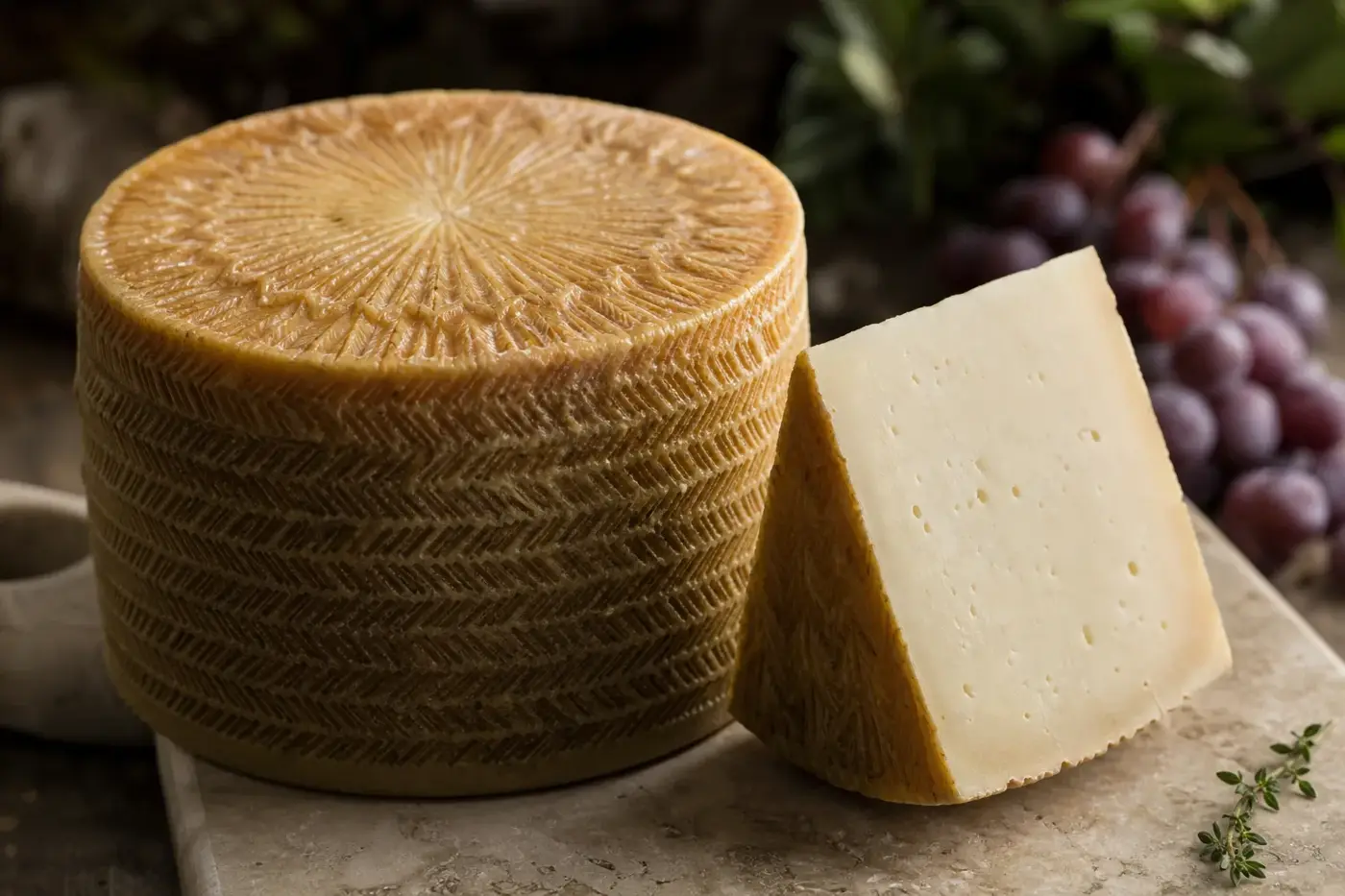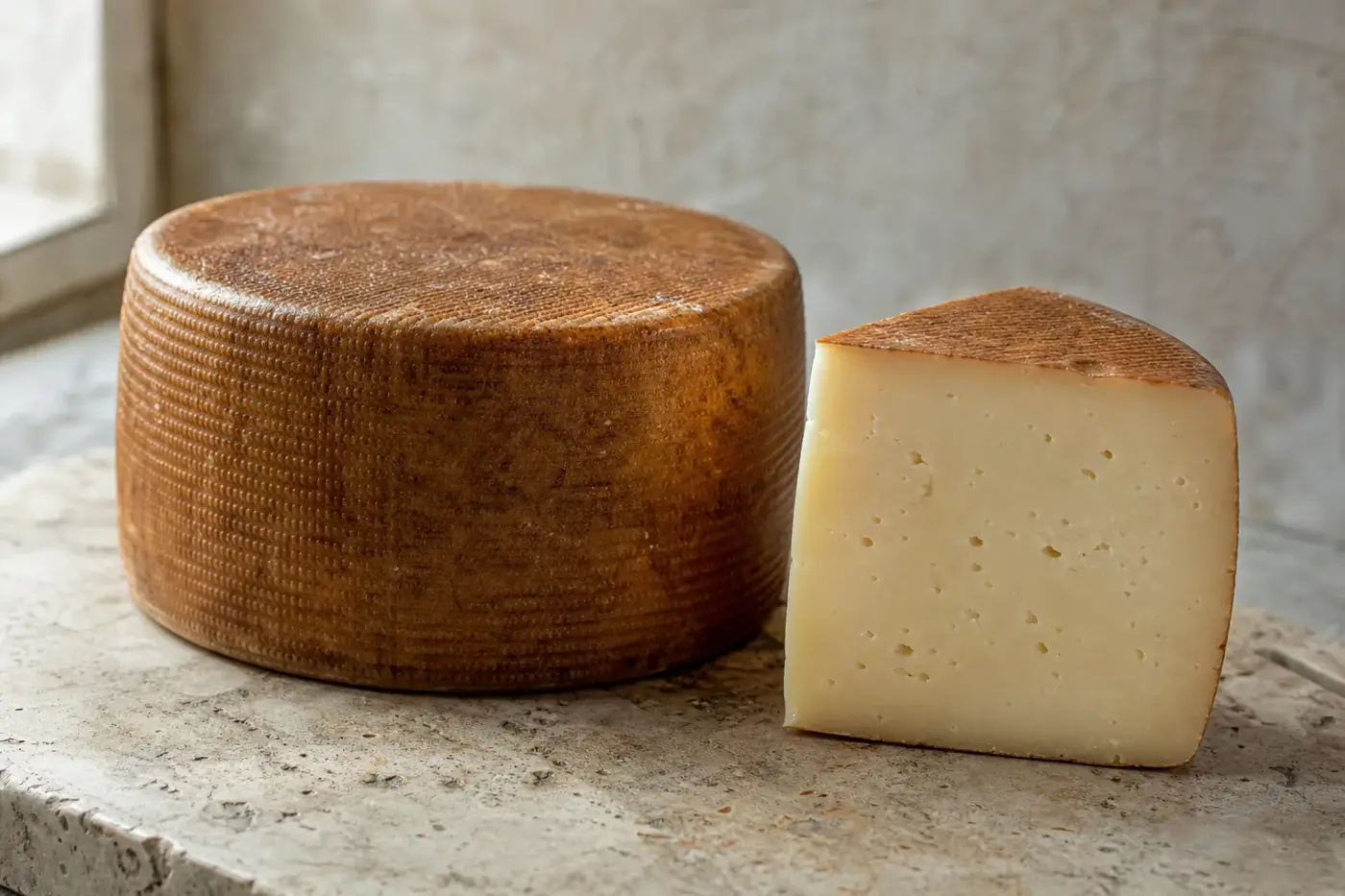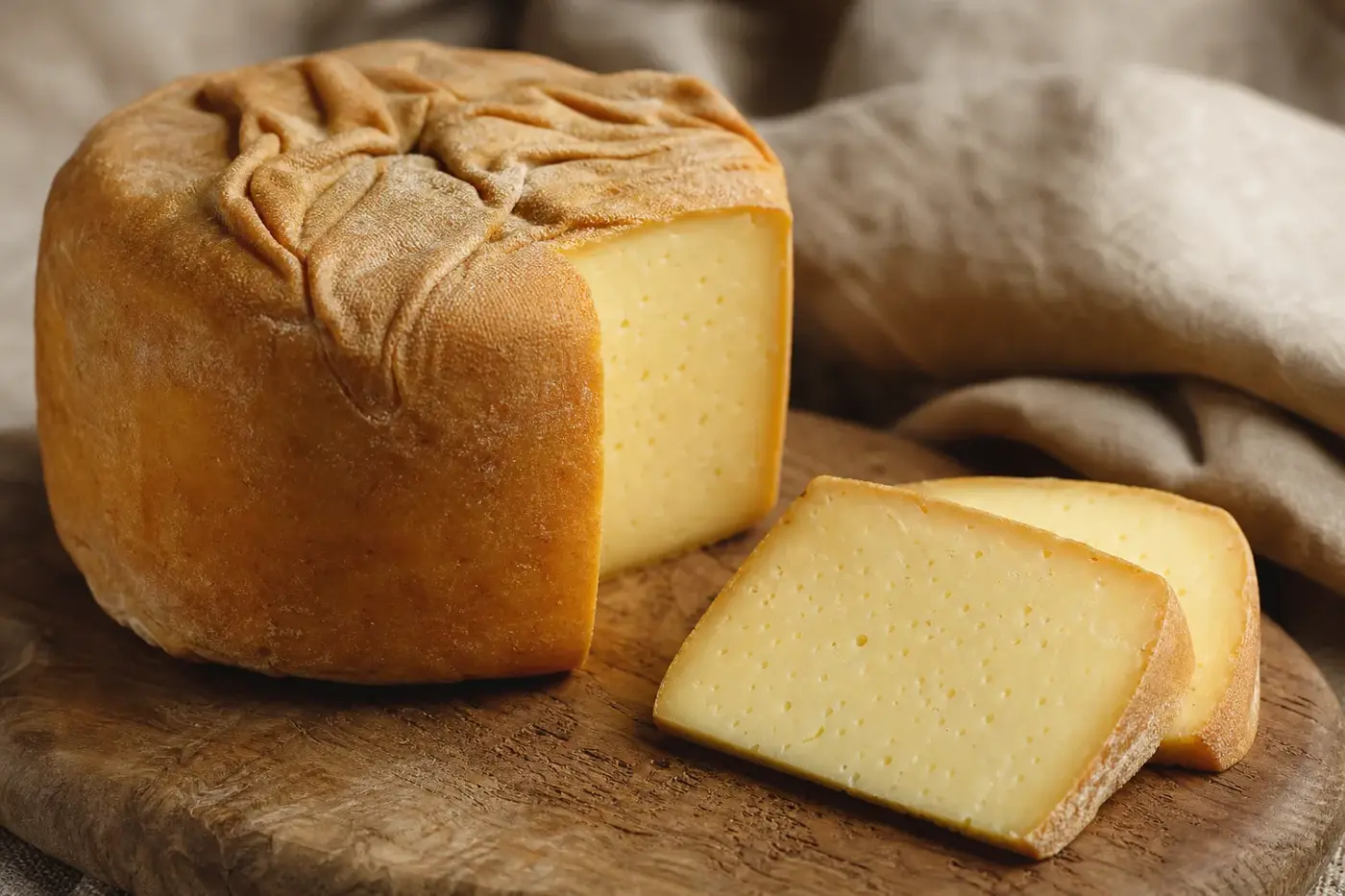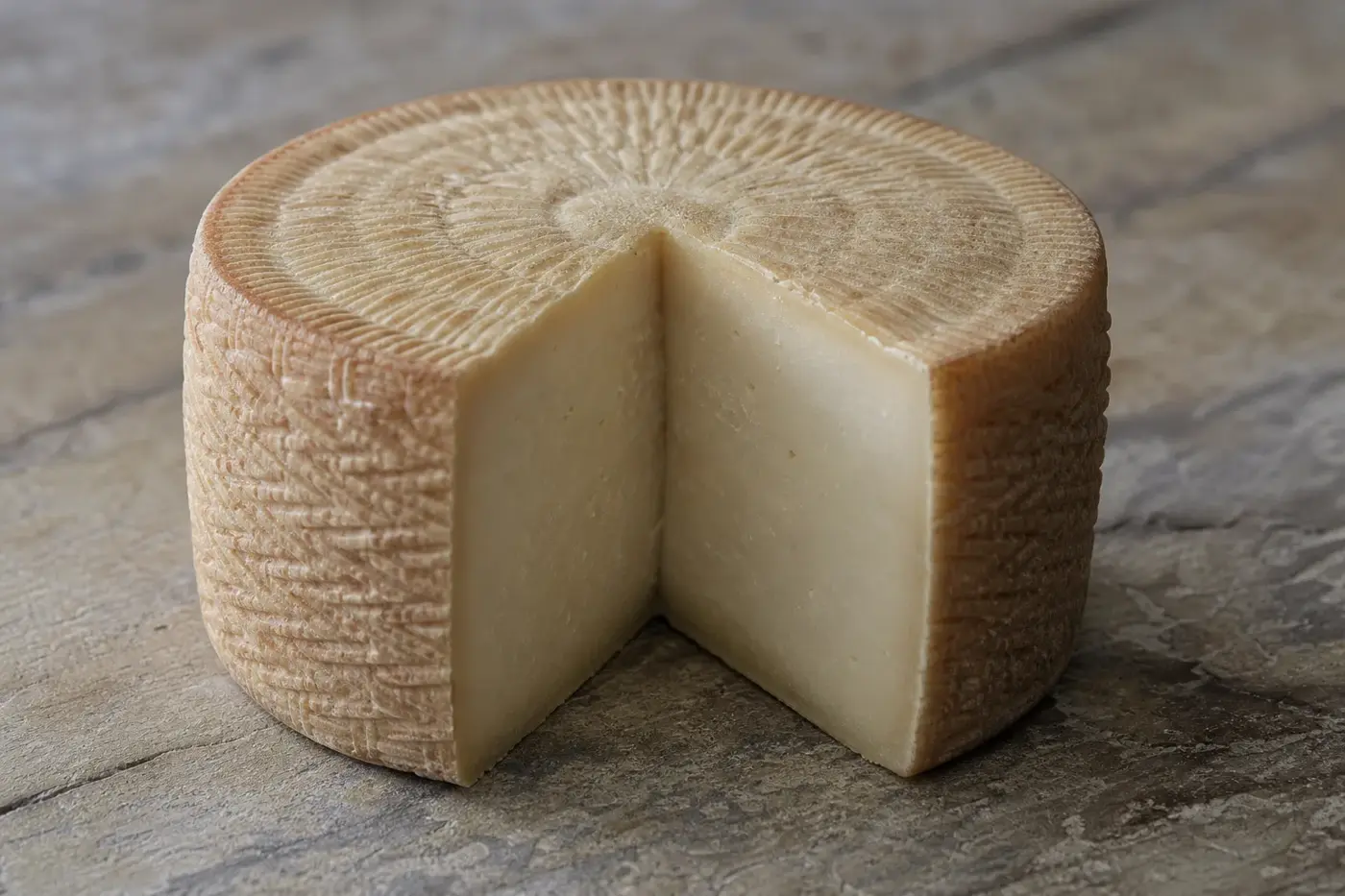
Take a plain slice. First comes cooked butter and hay; in an older piece, walnut notes and a sharper, piquant edge take their place. Those are the designation council’s tasting notes for Queso Zamorano, the firm sheep’s milk cheese of Spain’s dry Zamora plains. Give that long, savoury finish a moment before reaching for more.[5]
You are tasting a cheese rooted in the province of Zamora, in Castilla y León. Its pressed paste develops a deeper character as it matures. Exploring more than one age is research, of course, even when it looks suspiciously like a second helping.[2,5]
Meet the sheep beyond Zamora’s city streets
Look beyond the city of Zamora to the whole province. This is a landscape of plains, valleys and contrasting terrain, with hot, dry summers and winter frosts. The specification describes grazing that includes crop residues, rather than one uninterrupted sweep of pasture.[2]
Churra and Castellana are the native sheep breeds at the heart of the specification. The rules also allow first-generation offspring of Churra or Castellana mothers and Spanish Assaf fathers. Those crossed ewes cannot supply replacement stock within the holding.[2]
Keep that detail in mind when you reach the cheese counter. The permitted milk does not come exclusively from pure Churra or Castellana sheep. A neat description is appealing, but this one needs a little more room.[2]
This page summarises published guidance from the official sources it cites. It is not medical advice. Guidance differs between countries and changes over time, so check the current source for where you live, and ask your doctor, midwife, pharmacist or dietitian about your own circumstances.
Follow the milk from vat to mould
Your Queso Zamorano may begin with raw or pasteurised milk: the council’s technical sheet allows both. Check the pack or the seller’s product information to find out which you are buying. Milk treatment belongs beside maker and age in the cheese’s description; the milk treatment guide explains the distinctions.[4]
The transformation starts with rennet, a milk-clotting enzyme preparation. It coagulates the milk into curd, the solids that will become cheese. The curds are then cut into small grains, gradually reheated, moulded and pressed.[1]
Next comes salt, applied dry or in brine. Then maturation takes over, with turning and cleaning along the way.[1]
At the counter, ask for the cheese’s actual age in months. That differs from the minimum maturation required for a wheel of its size, and tells you more than a broad maturity description. Choose younger cheese for slicing, or a more mature piece for shaving or grating. Start with the age of the piece in front of you.
Read the rind and let the age reveal itself
Look at a whole wheel and you will see basket-like pleita impressions around its sides. Flower-pattern mould impressions mark the broadly flat faces of this cylindrical cheese. Enjoy the pattern, but give the name and numbered identification more attention than a familiar-looking rind.[2,4]
Inside, age changes the feel as well as the flavour. The council’s younger-cheese notes of cooked butter and hay give way to walnut-like flavours, greater intensity and a more pronounced piquant edge. The mouthfeel moves from moderately elastic and unctuous towards something more friable, floury or granular.[5]
You do not need a tasting-room vocabulary to use those clues. Look for them in your slice, or ask your cheesemonger to talk you through them before you choose.
Start plain, before bread, fruit or wine joins in. Does the paste bend slightly, or break? Follow the flavour after swallowing, too. The first bite has not told you everything.
If you are comparing ages, taste the less intense piece first. Keep the accompaniments the same, so you can concentrate on what changes from one cheese to the next.
Fond of Manchego? Leave room for Zamorano
The comparison comes naturally: Queso Zamorano and Manchego both have pressed sheep’s milk curds and a firm, compact paste. Their geographical and breed rules differ, though. Give each the chance to taste like itself, rather than asking one to audition for the other’s part.[1,6]
| What shapes your cheese | Queso Zamorano specification | Queso Manchego specification |
|---|---|---|
| Where it comes from | Zamora province, Castilla y León.[2] | Defined municipalities in Albacete, Ciudad Real, Cuenca and Toledo, Castilla-La Mancha.[6] |
| The sheep | Churra, Castellana and the specified first cross.[2] | Manchega.[6] |
| How the curd is handled | Pressed curd.[1] | Pressed curd.[6] |
If you enjoy Manchego, try Zamorano at a similar age. Note the maker and milk treatment too, rather than crediting the cheese’s name with every difference you taste. In the kitchen, choose the texture and strength your dish needs. Name whichever cheese you actually use.
Find your cheese by its name and number
Look for Queso Zamorano Denominación de Origen Protegida and its numbered counter-label. Whole wheels also carry a numbered casein identification plate. The specification permits packaged portions, slices and grated cheese, provided their provenance remains identifiable.[1]
Buying a wedge cut from a larger wheel? Ask your cheesemonger to show you the original identification. Then ask who made it, how long it has matured, and whether the milk is raw or pasteurised.
Keep the wrapping, or photograph the label. Finding a cheese you love is a pleasure. Having the details to find it again saves you describing it as “that lovely one” at the counter.
Defra’s November 2026 listing gives Queso Zamorano registered PDO status in Great Britain.[3] To separate origin information from the other wording on your pack, turn to the cheese label guide and the explanation of protected names.
Keep it cool and serve just what you need
Keep your cheese refrigerated according to its storage instructions, and retain the date information. For England, Wales and Northern Ireland, the Food Standards Agency advises a domestic fridge temperature between 0 and 5 °C (32 to 41 °F), and refrigeration for dairy products. Use its food packaging or a suitable covered container, keeping it separate from raw foods.[7,9]
When you are ready to serve, cut only what you expect to eat. Let that portion lose its refrigerator chill while you prepare the board, leaving the rest refrigerated. Taste a small piece to judge readiness. A thin slice and a large wedge will not warm at the same pace.
Keep that brief warming within official handling limits. The FSA advises leaving chilled food out for the shortest possible time during preparation, with a maximum of four hours. NHS guidance says to eat ready-to-eat food within four hours of removing it from the fridge.[7,9]
For everyday storage questions, turn to the home storage guide. Keep the instructions handy so you can refer to them when you put the cheese away.
Before serving the rind, read the maker’s instructions and ask about any coating. Trimming it away and serving the paste is a straightforward option. Remove the identification plate and any packaging before slicing or grating. Keep them with the label, rather than on the serving plate.
For a wedge, cut slim triangles that include both the centre and the area near the rind, trimming the rind as needed. If your mature piece is brittle, offer small broken pieces instead. Work with the texture rather than forcing it into uniform slices.
Bring Spanish wine, bread and fruit to the table
Give the cheese the first mouthful to itself. Then try one accompaniment at a time, guided by the council’s savoury, buttery tasting notes and the increasingly piquant character of older cheese.[5] Wine, sweet fruit paste and strongly flavoured bread can wait their turn.
With a more mature piece, try a Spanish red labelled Toro or Rioja. For a less mature cheese, a Spanish dry white offers another starting point. Let your enjoyment choose the bottle. A regional match is a suggestion, not a guarantee.
Wine pairings are for adults of legal drinking age. People who are pregnant, driving, taking medicines that interact with alcohol, or recovering from alcohol dependence should not drink. Choose water or sparkling water instead, and consult the relevant official advice for your circumstances; the NHS offers advice on alcohol in pregnancy.[8]
For an alcohol-free plate, start with water or sparkling water. Add plain crusty bread and fresh pear, apple or grapes for contrast. A little quince paste offers a sweeter alternative. Serve it alongside, so everyone can choose how much sweetness goes into a mouthful.
One wedge, bread and one fruit make a useful first board. You have enough variety to explore without crowding the cheese. On a broader board, give Queso Zamorano its own space and knife.
Taste from quieter flavours towards the more forceful piece. Leave accompaniments separate, so you can return to each cheese on its own terms.
Give your dish a Zamorano finish
Try shavings over warm vegetables, a bean salad or a bowl of soup. A firmer, more mature piece can be finely grated over pasta or potatoes. Let the texture guide your cut: slices when it holds together, smaller fragments when it breaks readily.
Add a little, taste, then decide whether you need more cheese or salt. That pause is particularly useful when you change ages or makers. Leave some shavings visible on vegetables. For soup or pasta, try a little finely grated at the table before adding it to the whole batch.
The council publishes a cheese preparation using Zamorano at six, eight and twelve months, bringing different maturities into its cooking repertoire.[10] For your everyday introduction, keep things simple. A finishing touch lets you judge how much flavour you want before committing to more.
Keep milk details and health guidance close
Start with the actual product: read its milk treatment, allergen information, storage instructions and date. The NHS identifies unpasteurised milk and dairy products as possible sources of listeria.[9] Keep those details available when you serve other people, too.
If milk treatment raises questions about your circumstances, take the label to your doctor, midwife, pharmacist or dietitian. The cheese’s name alone cannot give them the full description.
For pregnancy in the UK, the NHS lists pasteurised or unpasteurised hard cheeses among foods that can be eaten. It lists pasteurised semi-hard cheeses separately, and advises avoiding unpasteurised milk itself.[8] Read that guidance alongside your product description, particularly if the retailer describes the texture differently.
Pregnant people, newborn babies, people with weakened immunity and older people are among the groups the NHS identifies as being at higher risk of serious illness from listeriosis. Its prevention advice includes keeping chilled foods cold, following use-by dates and label instructions, and separating raw foods from ready-to-eat foods.[9] Follow any individual advice from your care team.
The linked UK guidance here is dated November 2026. If you live elsewhere, consult your country’s official advice, since recommendations may differ. Keep the maker and batch details so you can compare them with an official recall notice if necessary. Follow any notice that matches your product.[11,12]
Find your next cheese-board companion
- Cheese and Wine Pairing: The Complete Guide: find drinks to suit texture and intensity.
- Cheese Food Safety: The Complete Guide: explore the wider guidance and its official sources.
Questions people ask
Where is Queso Zamorano made?
It is made in the province of Zamora in Castilla y León, Spain. The production area covers the whole province, not just the city.
Is Queso Zamorano made with raw milk?
It can be made with either raw or pasteurised sheep’s milk. Check the pack or the seller’s product information to find out which was used.
What does Queso Zamorano taste like?
The designation council describes cooked butter and hay in younger cheeses. As the cheese matures, it describes walnut notes, greater intensity and a more piquant edge.
How is Queso Zamorano different from Manchego?
Both are firm cheeses made from pressed sheep’s milk curds, but their geographical and breed rules differ. Zamorano comes from Zamora province and uses Churra, Castellana or the specified first cross, while Manchego comes from defined municipalities in Castilla La Mancha and uses Manchega sheep.
How can I recognise protected Queso Zamorano?
Look for Queso Zamorano Denominación de Origen Protegida and the numbered counter label. Whole wheels also carry a numbered casein identification plate.
Sources
- Ministerio de Agricultura, Pesca y Alimentación, Pliego de condiciones de la DOP «Queso Zamorano», Revision 1, 22 April 2015, identifier PDO-ES-0089. Official specification.
- Instituto Tecnológico Agrario de Castilla y León, Pliego de condiciones “D.O.P. Queso Zamorano”, Revision 1, 22 April 2015, official regional copy. Specification and geographical link.
- Department for Environment, Food & Rural Affairs, Queso Zamorano, GB protected food names register, published 4 January 2021, live entry checked November 2026. Register entry.
- Consejo Regulador de la Denominación de Origen Queso Zamorano, Ficha técnica, undated, retrieved November 2026. This is the designation council’s own technical account. Technical sheet.
- Consejo Regulador de la Denominación de Origen Queso Zamorano, Descripción, undated, retrieved November 2026. Sensory descriptions are the council’s. Published cheese description.
- Ministerio de Agricultura, Pesca y Alimentación, Pliego de condiciones “D.O.P. Queso Manchego”, revision dated 3 November 2022. Official specification used for the comparison.
- Food Standards Agency, How to chill, freeze and defrost food safely, published 18 December 2017, live version retrieved November 2026; applies to England, Northern Ireland and Wales. Official handling guidance.
- NHS, Foods to avoid in pregnancy, live guidance retrieved November 2026. Official pregnancy guidance.
- NHS, Listeriosis, live guidance retrieved November 2026. Official risk-group and prevention guidance.
- Consejo Regulador de la Denominación de Origen Queso Zamorano, Recetas, undated, retrieved November 2026. Cited only for its documented use of three cheese maturities. Council recipe page.
- Food Standards Agency, Alerts, live food and allergy alert index, retrieved November 2026. Official alert index.
- Agencia Española de Seguridad Alimentaria y Nutrición, Alertas alimentarias, live alert index, retrieved November 2026. Official Spanish alert index.
Researched through desk research comparing official specifications, the GB register, the designation council’s published accounts and UK agency guidance.
Last checked: November 2026
Last checked November 2026.
The editors suggest you read next