Rogue River Blue
Peel back the Syrah grape leaves and a whole year begins to unfold.
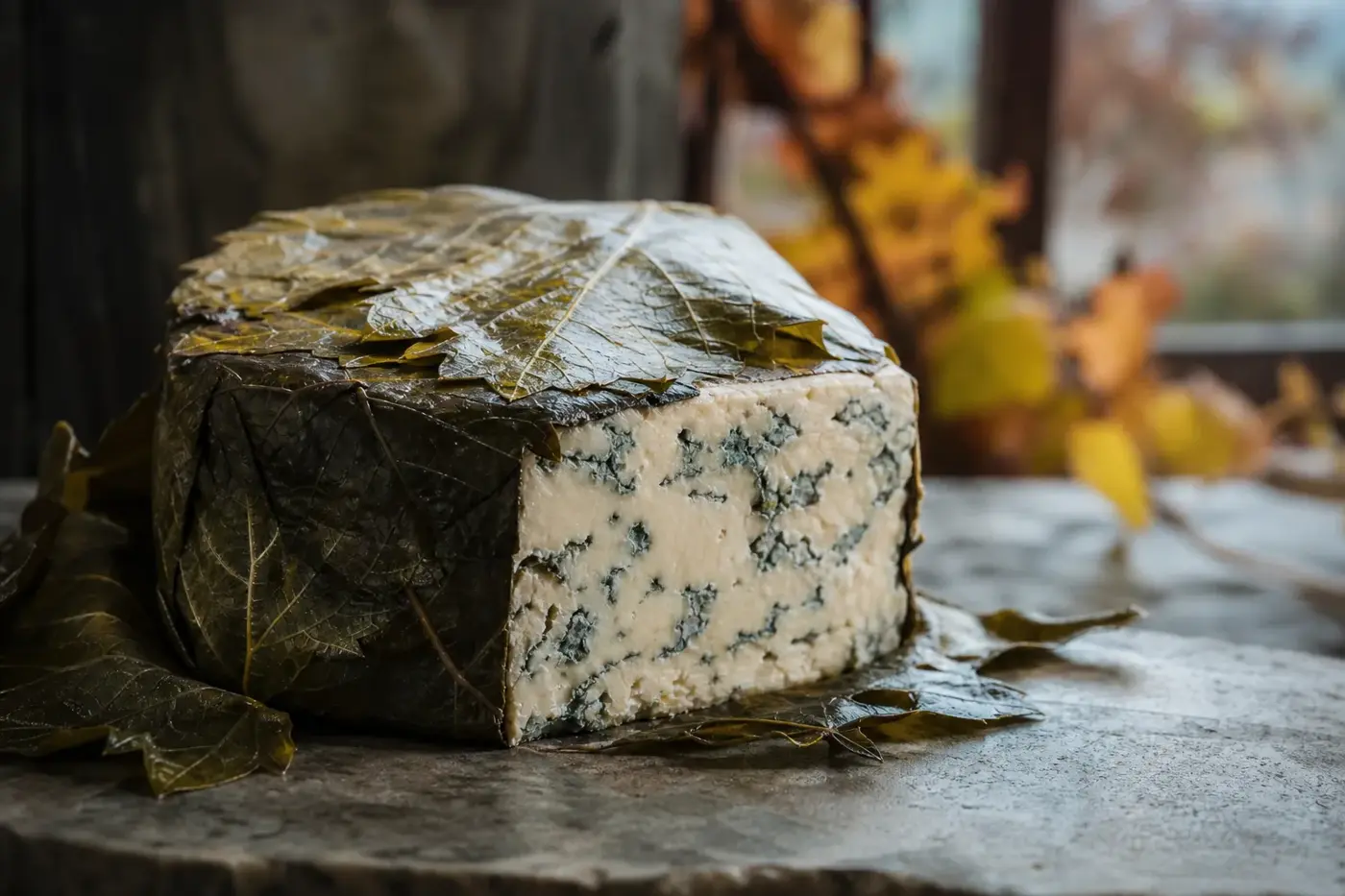
Peel back the Syrah grape leaves and a whole year begins to unfold. Spring brings the leaves, soaked in pear spirits; autumn brings the milk in southern Oregon. Between making and seasonal release, Rogue River Blue spends months in Rogue Creamery’s caves. Raw organic cow’s milk belongs to its documented history, but the maker now specifies organic pasteurised cow’s milk, so read the label on the cheese you buy. [1][2][3]
| What you might want to know | The details |
|---|---|
| Cheese and maker | Rogue River Blue, made by Rogue Creamery in Central Point, Oregon, United States. [1][3] |
| Milk on the current label | Organic pasteurised whole cow’s milk; certified organic by Oregon Tilth. [1] |
| Milk in its history | The creamery’s October 2019 announcement connects Rogue River Blue with its raw-milk cheesemaking tradition. [3] |
| Coagulant on the current label | Microbial enzyme. [1] |
| The blue mould | Penicillium roqueforti. [1] |
| Those leaf wrappings | Syrah grape leaves soaked in pear spirits or pear liqueur, in the maker’s terminology. [1][2] |
| Time spent ageing | Current product page: 9 to 12 months. Creamery history: release nearly a year after making. [1][2] |
| Main declared ingredient allergen | Milk. [1] |
| Pregnancy guidance | UK NHS guidance on blue and unpasteurised cheeses, November 2026. [7] |
Follow the autumn milk beside the Rogue River
Cooler weather arrives, and the pasture starts growing again. For Rogue River Blue, that is the signal to begin. In its announcement of the 2019 World Cheese Awards result, Rogue Creamery described production starting around the autumnal equinox and continuing for a few months. Autumn pasture brought richer milk with higher butterfat: this was the moment worth capturing. [3]
At that time, the milk came from the creamery’s certified organic dairy farm in Grants Pass, with pastures beside the Rogue River. You can trace the connection without much distance between the dots. The grass changes, the milk changes, and the cheesemakers set that milk on a long journey towards blue cheese. [3]
Then comes the wait, stretching into another autumn. The creamery’s history describes wheels ageing for many months, receiving their leaves, then ripening further before release around the following autumnal equinox. What reaches your plate is a harvest cheese shaped by successive seasons, not something hurried to the counter within weeks. [2]
Let the label tell you which milk
Rogue River Blue’s raw-milk reputation comes from the creamery’s own record. Its 2019 announcement explicitly placed the cheese within an American raw-milk cheesemaking tradition. Today, the product page lists pasteurised milk in both its milk description and ingredients. [1][3]
Before buying, read the pack or ask your cheesemonger to look at the wheel’s label. An older description gives you the history, but not necessarily the milk treatment of your particular piece. For the differences between treatments, turn to raw, thermised and pasteurised cheese.
A little air, a long wait and those blue veins
Those blue veins are cultivated, not a fortunate accident. Rogue Creamery lists Penicillium roqueforti among the ingredients. This ripening mould belongs inside Rogue River Blue; it is not an unwanted surface growth that appeared after you brought it home. [1]
Air gives the mould its opportunity. The Food Standards Agency’s assessment of blue cheese describes cheesemakers needling wheels to admit oxygen, allowing mould to flourish along the openings. That describes the general blue-cheese process, rather than Rogue Creamery’s individual piercing schedule. [4]
Next come the caves. The creamery’s history describes building Roquefort-style ageing caves for its blues. Its contemporary 2019 announcement identifies Rogue River Blue specifically as cave-aged. [2][3]
In the producer’s account, this managed maturation is followed by the leaf treatment and further ripening. Making the wheel is only the beginning; the months spent developing it matter just as much. You can follow the wider journey, from setting milk to ripening, in how cheese is made. [2][4]
Why the Syrah leaves earn their place
The wrapping does more than dress the cheese for dinner. Rogue Creamery’s history describes Syrah grape leaves picked in spring and soaked in pear liqueur. After an initial spell of ageing, the wheels are wrapped and continue maturing, taking on the leaves’ character. [2]
Spring leaf gathering and autumn cheesemaking meet in the same production cycle. By the time you see those overlapping leaves at the counter, they have already helped shape what lies underneath. They are part of the making, not simply a finishing touch before sale. [2]
The creamery uses several names for the soaking liquid: pear spirits, pear liqueur and pear brandy. Pear-spirit-soaked leaves describes the treatment broadly. For the more specific wording, the current ingredients list says organic pear liqueur. [1][2]
At the table, open the wrapping gently and leave some beside your wedge. Before anyone takes a bite, you can show them something of what makes this cheese distinctive. Keep any string or other packaging separate from the food.
Beneath the leaves, a fudgy heart
Under the overlapping leaves sits a round wheel with a pale interior threaded with blue. Rogue Creamery likens the colour to linen and describes the texture as fudgy. As the cheese ages, calcium lactate crystals develop, giving you another detail to look for in a freshly cut wedge. [1]
The maker’s flavour notes move through pear brandy, vanilla, toffee, truffle and fig, alongside a pronounced blue-cheese character. Rather than hunting for every flavour, pay attention to the contrasts. There is fruit and sweetness, something earthy, and the sharper character of the blue. [1]
Try a small piece on its own before reaching for bread or fruit. The published tasting notes are invitations, not an exam you forgot to revise for. Does fruit bring the sweetness forward? Does plain bread make the blue character easier to pick out?
The outside may offer something distinctive, too. Rogue Creamery’s FAQ attributes a pink hue towards the rind to the pear spirits used for the leaves. Keep that description in mind when you open a fresh piece. [5]
When an Oregon blue took the world title
On 18 October 2019, Rogue Creamery announced that Rogue River Blue had become World Champion at the World Cheese Awards in Bergamo, Italy. Its announcement recorded 3,800 entries from 42 countries. This was the first overall championship for an American-made cheese. [3]
Not just the best blue, then, but the overall winner. An earlier milestone came in 2003, when Rogue River Blue took the competition’s blue-cheese distinction and finished as Reserve Champion. In 2019, it reached the top of the competition. [2][3]
For American cheese, this was a conspicuous international achievement with a distinctly Oregon identity. You can see that identity in the route to the judging table. Seasonal milk, extended maturation and a regional leaf treatment give it its own story, rather than an imitation of a single European cheese.
Getting your hands on the seasonal release
Autumn making does not mean the cheese is ready that autumn. The creamery’s history places release around the following autumnal equinox, after nearly a year of development. Current product information gives an ageing period of 9 to 12 months, so think of production, maturation and retail availability as separate dates. [1][2]
Ask your cheesemonger which release they have, when the wheel was opened and how they will wrap your portion. Retailers receive and cut wheels at different points. A seasonal make does not mean there is one universal last day of sale.
Buy for the occasion, rather than letting the words “seasonal release” negotiate the size of your wedge. For a first encounter, a small wedge per person gives everyone a taste. You can always return for another.
Give the first bite a little breathing room
Rogue Creamery recommends unwrapping its cheese about 30 minutes before serving, allowing the texture to soften and the aromas to become more apparent. [5] Count preparation and table time together within the US FDA’s limit: two hours out of refrigeration, or one hour if the surroundings exceed 32.2 °C (90 °F). [6]
Keep the serving simple so you can give the cheese your attention. A little preparation is enough:
- Cut only what you intend to serve, then refrigerate the rest.
- Open the leaves carefully and set the cheese on a plain plate or board.
- Offer a small piece alone before introducing accompaniments.
- Put bread and fruit alongside, letting guests choose how much to combine.
Start with plain bread, sliced pear and a restrained spoonful of fruit compote. The creamery recommends fruit compote, and its tasting notes suggest accompaniments that echo the fruit character without covering the cheese. Take that first taste simply, then see which combinations you enjoy. [1]
Find a glass to sit beside the blue
Rogue Creamery recommends the alcoholic drinks below. The pairing explanations and alcohol-free choice are suggestions drawn from its flavour descriptions, rather than a recorded tasting. [1]
| In your glass | What to look for |
|---|---|
| Sauternes | Sweetness alongside the blue character, with fruit notes linking the two. |
| Gewürztraminer | An aromatic choice beside the maker’s pear and spice-associated character. |
| Chocolate stout | Darker flavours to explore with the toffee and earthy notes. |
| Alcohol-free pear drink with sparkling water | An echo of the pear treatment, with sweetness you can adjust. |
Alcoholic pairings are for adults of legal drinking age. If you drink, choose a small serving, and give the alcohol-free option an equal place at the table. You will find broader approaches in cheese and wine pairing.
Bring it home, wrap it well, keep it cool
Begin with the essentials: milk treatment, ingredients and storage instructions. Ask to see the product information and keep those details with a cut portion. The guide to reading a cheese label shows you what to look for.
Get your cheese into the fridge promptly. Rogue Creamery recommends suitable paper, such as cheese paper or parchment, followed by a bag or container to reduce moisture loss. Its FAQ advises against freezing because this changes the texture and flavour. [5]
In England, Wales and Northern Ireland, FSA consumer guidance recommends a fridge temperature between 0 and 5 °C, alongside the pack’s storage directions. US FDA guidance recommends 4 °C (40 °F) or below. Use a fridge thermometer; your hand is not a reliable substitute. [6][8]
Learn the difference between expected blue veining and a suspicious new change. The FDA advises discarding food that looks or smells suspicious, while stressing that harmful contamination can be present without visible spoilage. Never taste questionable cheese to decide whether to keep it; mould on cheese explains more. [6]
Choosing cheese when you need extra care
UK NHS pregnancy guidance says soft blue veined cheeses, whether pasteurised or unpasteurised, should be eaten only when thoroughly cooked until steaming hot. Its advice distinguishes cheese categories and milk treatments, so read the current guidance alongside your product label. This guidance is dated here to November 2026. [7]
In the United States, the CDC advises choosing pasteurised milk and dairy products. It identifies particular risks from raw-milk products for young children, older adults, pregnant people and people with weakened immune systems. This guidance is dated here to November 2026. [9]
If you have been advised to avoid raw-milk cheeses, read the declaration on the actual cheese you are buying. Follow the official guidance for where you live. For your individual circumstances, speak to the relevant healthcare professional.
General information only, not medical advice: follow the official guidance where you live.
Questions people ask
Is Rogue River Blue made with raw or pasteurised milk?
The current product information lists organic pasteurised whole cow’s milk. The creamery’s 2019 announcement connected the cheese with its raw milk tradition, so check the label on the cheese you buy.
How long is Rogue River Blue aged?
The current product page gives an ageing period of 9 to 12 months. The creamery’s history describes release around the autumnal equinox following the cheese’s making.
What does Rogue River Blue taste like?
Rogue Creamery describes a pronounced blue cheese character with notes of pear brandy, vanilla, toffee, truffle and fig. It describes the texture as fudgy, with calcium lactate crystals developing as the cheese ages.
How should I store Rogue River Blue?
Rogue Creamery recommends wrapping it in cheese paper or parchment, then using a bag or container to reduce moisture loss. Its FAQ advises against freezing because this changes the texture and flavour.
Can I eat Rogue River Blue during pregnancy?
The UK NHS advises that soft blue veined cheeses, whether pasteurised or unpasteurised, should be eaten only when thoroughly cooked until steaming hot. See the current NHS pregnancy guidance and check the product label.
Sources
- Rogue Creamery, Rogue River Blue, undated current product page, retrieved November 2026. Milk, ingredients, certification declaration, ageing, appearance, texture, flavour and pairing suggestions. Product information.
- Rogue Creamery, Our Story, undated current company history, retrieved November 2026. Autumn milk, cave history, spring-picked Syrah leaves, wrapping sequence, release cycle and earlier competition history. Company history.
- Rogue Creamery, Rogue River Blue Wins World’s Best Cheese, press release, 18 October 2019, hosted by the Oregon Cheese Guild. Seasonal production explanation, historical milk source, raw-milk context and competition announcement. Dated announcement.
- Food Standards Agency, The risk to vulnerable consumers from Listeria monocytogenes in blue cheese, report retrieved November 2026. Section 4.1 and Figure 1 explain needling and internal mould development. Risk assessment.
- Rogue Creamery, Frequently Asked Questions, undated current page, retrieved November 2026. Serving, wrapping, freezing and the pink hue near Rogue River Blue’s rind. Cheese care guidance.
- US Food and Drug Administration, Are You Storing Food Safely?, current page retrieved November 2026. Refrigeration, room-temperature limits, suspicious food and invisible contamination. FDA storage guidance.
- NHS, Foods to avoid in pregnancy, current page retrieved November 2026. Dairy and blue-cheese advice for pregnancy. NHS pregnancy guidance.
- Food Standards Agency, How to chill, freeze and defrost food safely, published 18 December 2017, current GOV.UK version retrieved November 2026. Applies to England, Northern Ireland and Wales. FSA chilling guidance.
- US Centers for Disease Control and Prevention, Raw Milk, 31 January 2025, retrieved November 2026. Raw-milk risks and advice to choose pasteurised products. CDC raw-milk guidance.
This desk-researched article compares the creamery’s current product information with its dated historical account and official food safety guidance.
Last checked: November 2026
Last checked November 2026.
The editors suggest you read next
American Cheese: The Processed Slice Explained
Watch a slice of American cheese soften over your burger.