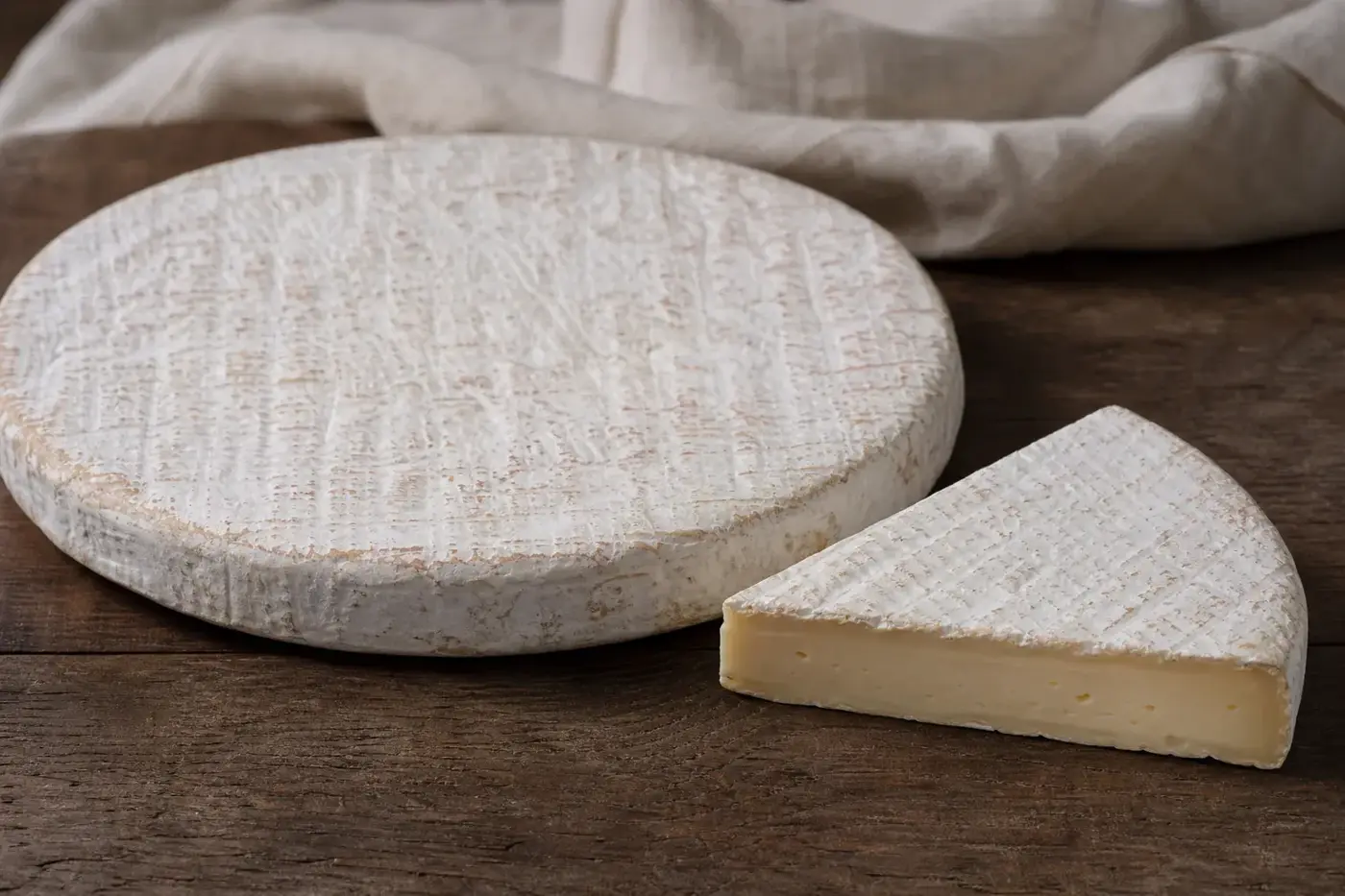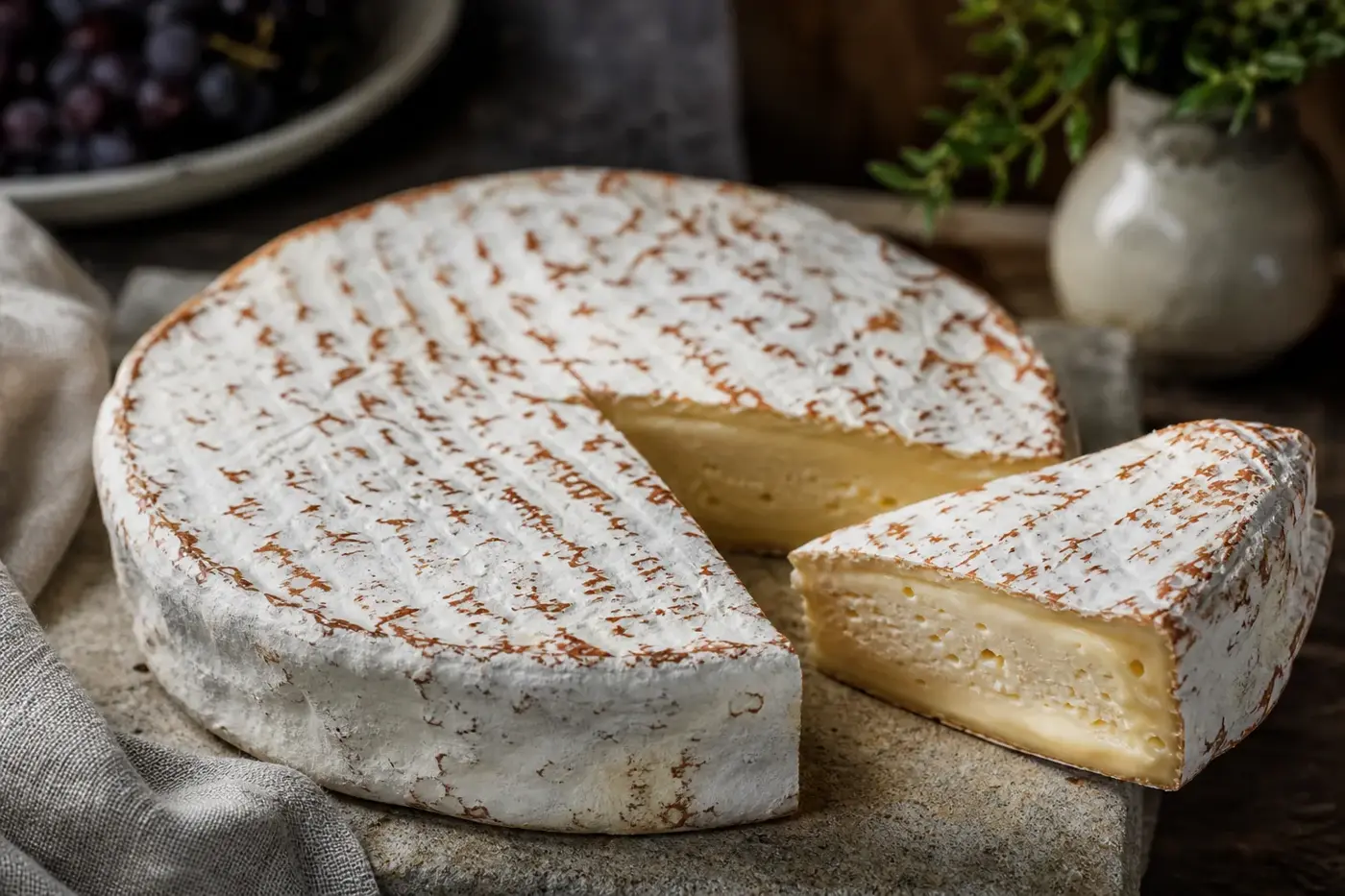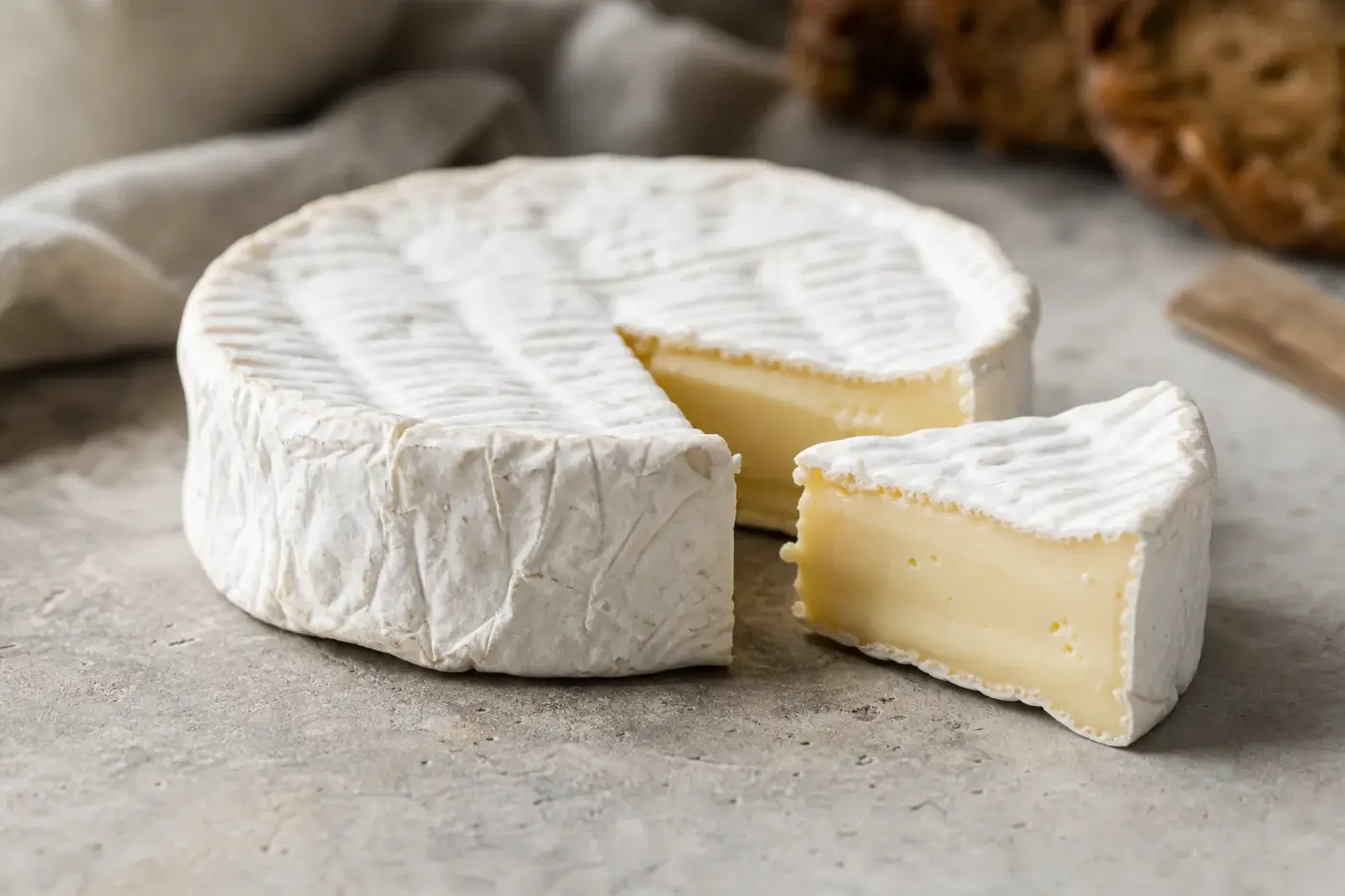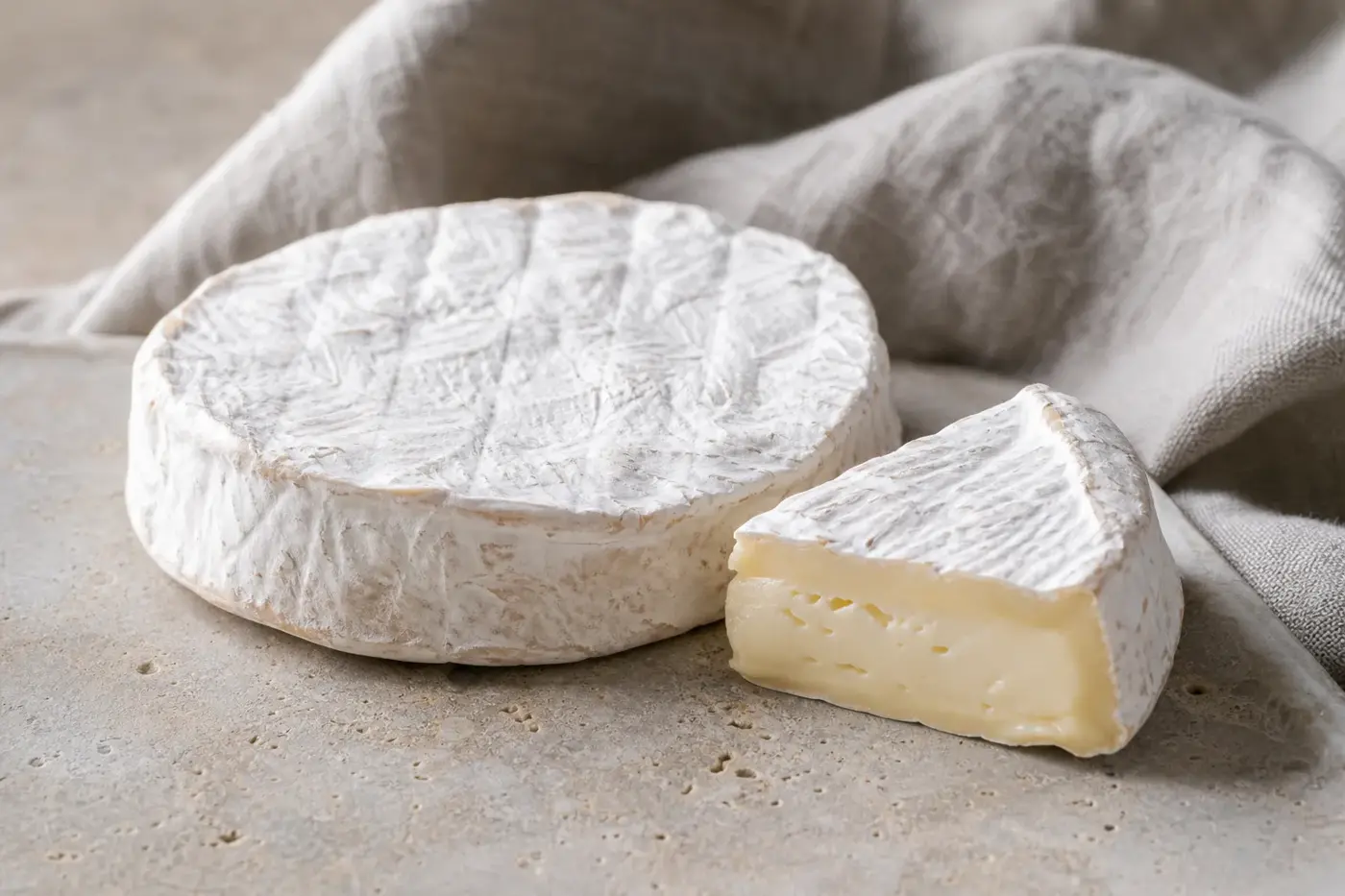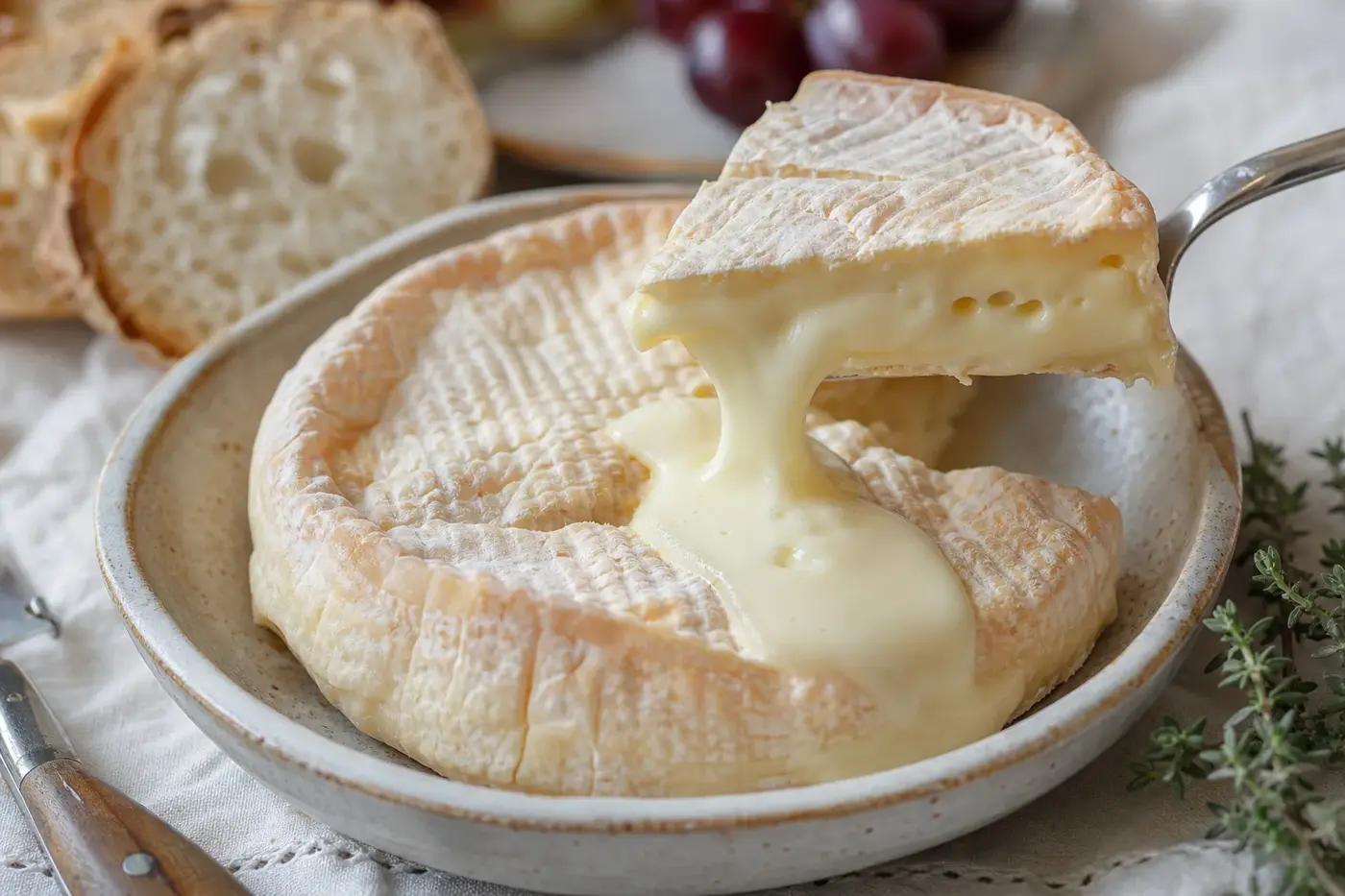
You reach for a knife. The Saint-Félicien has other ideas: after more than 20 days of maturing, Vercors Lait’s version can flow beneath its pale, supple rind. A spoon may be the better appointment. This small French cow’s milk cheese offers a generous cheese course, while cream-enriched versions bring the fresh-cream character their makers describe, with a dish to hold that yielding centre. [2][3][4]
| At a glance | What to know |
|---|---|
| Name | Saint-Félicien |
| Type | Soft, surface-ripened cow’s milk cheese [1] |
| French standard | Décret n° 2007-628, Annex, Saint-félicien row [1] |
| Documented production | Saint-Just-de-Claix, Isère; Villard-de-Lans, Isère [2][3] |
| Milk treatment | Raw or thermised in the producer examples below [2][3] |
| Cream | Added in the Étoile du Vercors recipe [2] |
| Size | French standard: 150 to 220 g; 8 to 12 cm diameter [1] |
| EU geographical registration and register ID | Not specified here |
| France, national geographical designation | Not specified here |
| Exact registered name | Not specified here |
| Allergen | Milk [2] |
| Legal minimum ageing | Not specified here |
| Product ripening | Tentation de Saint-Félicien: 9 to 14 days [4] |
| Pregnancy guidance | NHS advice for the UK, November 2026 [7] |
Take a closer look at that yielding heart
Before you cut, look at the rind. It is thin, ivory to white, and often finely wrinkled. Étoile du Vercors describes a round cheese with a white bloomy rind; Vercors Lait describes an ivory, supple covering around a smooth, lactic paste. [2][3]
Inside, you find pale cream. The texture might still hold its shape, or it might have softened enough to need the support of its dish. That difference matters as much to your serving plans as it does to the first mouthful. [2][3]
Vercors Lait’s tasting notes begin with freshness and milk, followed by a little salt and a hazelnut finish. Étoile describes a delicate cream flavour; its enriched Tentation version brings notes of fresh cream and hazelnut. These are portraits of individual recipes, not a promise that every Saint-Félicien will taste alike. [2][3][4]
For a neat portion, ask your cheesemonger for a more structured example. If you want to spoon it, choose one already ripened to that texture: Vercors Lait says its paste can flow after more than 20 days of maturing. Alongside the soft, cream-led finish, you may find a gently tangy, lactic impression. [3]
Follow the trail from Lyon to Isère
First, keep two cheeses apart. Lyon’s municipal library distinguishes the cow’s milk Saint-Félicien associated with Isère from caillé doux de Saint-Félicien, a goat’s milk cheese from Ardèche. Follow a reference to the Ardèche town and you may arrive at quite a different cheese. [5]
Then comes the tale of the Lyonnais dairy seller. In its 2009 answer about the cheese’s origins, the library recorded a story in which the seller combined leftover milk with skimmed cream, then supposedly named the result after the square outside the shop. There is a snag: the library’s researchers found no trace of that Saint-Félicien square in Lyon. The central detail remains unresolved, although producer accounts keep the story alive. [5]
The wider Rhône-Alpes dairy tradition gives you firmer ground. The library places the cow’s milk cheese alongside Saint-Marcellin in Isère, while Étoile du Vercors names Saint-Just-de-Claix as its place of manufacture and maturing. Lyonnais food culture and Dauphiné production both have a place in this story. Neither requires a single village origin. [2][5]
Read the label for milk and cream
Turn the cheese over before you settle on it. Étoile du Vercors lists raw and thermised cow’s milk versions with added pasteurised cream; Vercors Lait’s published sheet describes thermised whole cow’s milk. Thermisation is a heat treatment below pasteurisation, so the actual label tells you something the name alone cannot. [2][3]
Look for cream enrichment separately. Tentation de Saint-Félicien is a particular enriched recipe, described by its maker as double cream. The shared Saint-Félicien name does not make every version equally rich, so read the ingredients alongside the producer’s description. The historical Ardèche goat’s cheese belongs to that separate story above. [4][5]
If those milk terms leave you hesitating, turn to the guide to raw, thermised and pasteurised milk. It explains what each means and how they differ.
From tender curd to a finished round
Before anyone reaches for a mould, the milk must become curd. Étoile du Vercors introduces lactic bacteria, then rennet, the coagulant that helps the milk set. The curd is that set part; whey is the liquid removed as it drains. This begins the body that will eventually sit beneath the fine rind. [2]
Both producers describe moving the curd by hand into individual moulds. Draining, salting and maturing follow. Tentation’s maker specifies nine to 14 days of ripening for that particular cheese. That is a product-specific period, not an answer to the separate question of a legal minimum for the Saint-Félicien name. [3][4]
During ripening, surface cultures develop the visible rind. The French naming standard explicitly describes surface moulds, while Vercors Lait describes white flora over lightly wrinkled skin. Maturing develops the finished texture and character. When judging a particular version’s appearance and readiness, use the producer’s sheet alongside what you see in front of you. [1][3][4]
Invite Saint-Marcellin to the table
Saint-Marcellin is the natural cheese to set beside Saint-Félicien. Their methods are closely related, but you will notice the difference in size straight away. Start with named producer examples, then ask about ripeness: these figures and serving suggestions come from Étoile du Vercors’ published product descriptions, November 2026. [2][6]
| What you’re comparing | Saint-Félicien example | Saint-Marcellin example |
|---|---|---|
| Weight | 180 g | 80 g |
| Diameter | About 10 cm | 6 to 8 cm |
| Good company | Country bread | Country bread, honey and walnuts |
The larger Saint-Félicien lends itself to sharing; the smaller Saint-Marcellin is easier to serve as an individual portion. Richness depends on the recipe and any added cream, while softness depends on maturity. Once sufficiently yielding, either may call for bread and a spoon. Choose the cheese in front of you, not just the name. [2][3][6]
Tell your cheesemonger what’s for dinner
“Will this hold a wedge, spread easily or need a spoon?” is a useful opening question. Tell the cheesemonger when you plan to serve it, too. Those two details help them find the right cheese for your meal, rather than simply the oldest or softest one.
Use the maker’s description as your visual guide. A pale, lightly wrinkled rind fits the published descriptions. Discuss aroma in the context of the producer and maturity; if a smell seems sharply unpleasant, ask the seller to assess it. [2][3]
Read the producer, milk treatment, ingredients, storage directions and date marking. Choose intact packaging and keep the label, including its batch information. If you want to spoon the cheese at the table, choose one supported in a dish. The guide to reading a cheese label shows you which details are worth comparing.
Taking Saint-Félicien to someone else’s table? Ask for protective packaging that keeps the dish level. Send the storage directions and date information along with it, so its care continues after the journey.
Give your cheese a cool home
Keep your fridge between 0 and 5 °C and follow the cheese’s storage instructions. This household handling guidance follows Food Standards Agency advice for England, Wales and Northern Ireland. Leave the cheese in its packaging or use a suitable covered container, keeping the identifying label. [9]
The NHS advises eating prepacked or ready to eat foods within two days of opening unless the packaging says otherwise, and using food by its use by date. Keep ready to eat cheese separate from raw foods. Buy with your meal and date in mind, rather than leaving a soft cheese indefinitely in pursuit of greater maturity. [8]
For help with wrapping and organising the fridge, turn to storing cheese at home. Keep the cheese’s own storage instructions to hand.
Set out wedges, or bring a spoon
Étoile du Vercors suggests taking its Saint-Félicien out of the fridge about 20 minutes before eating. Keep that preparation window short, and the cheese away from direct heat. The UK NHS advises eating chilled ready-to-eat foods within four hours of removing them from the fridge, with preparation and table time counted together. [2][8]
If your cheese still holds its shape, cut small wedges with rind and centre in each portion. If it flows, keep it supported in its dish and offer a clean serving spoon, with bread alongside. Consult the producer’s guidance before eating the rind, and remove the packaging and any non food liner before serving.
Bring out only what you intend to eat, leaving the rest refrigerated. Once the cheese is soft enough to spread across bread, there is little need for ceremony. Its dish, a spoon and something crisp to scoop it onto will do nicely.
Begin with bread and follow your taste
Country bread is Étoile du Vercors’ serving suggestion. Its substantial crumb carries the soft paste and gives you a good starting point before anything sweet joins in. Try a lightly toasted slice, adding the cheese at the table. You want a little resistance from the bread without overwhelming those dairy flavours. [2]
A few slices of pear or apple bring juicy, crisp fruit alongside the soft paste. Keep them separate at first, taste the cheese alone, then try a mouthful with fruit. Sweetness can audition before it gets a permanent place on your plate. The toast and fruit are tasting choices, rather than producer recommendations.
The producer suggests Saint-Joseph wine with its Saint-Félicien. Another tasting choice is a small measure of fresh, restrained white wine, allowing the cheese to stay in focus rather than matching it with a powerful drink. For an alcohol-free option, try sparkling water with apple alongside, or an unsweetened apple infusion. [2]
Wine suggestions are for adults of legal drinking age. The NHS advises avoiding alcohol during pregnancy. [7] You can explore more principles in cheese and wine pairing.
What the French naming rules tell you
Behind this soft round sits a precise French description. France’s Décret n° 2007-628 includes Saint-félicien in its annex of cheese names: a predominantly lactic, slightly salted cow’s milk cheese with surface moulds and a cylindrical format. It specifies a diameter of 8 to 12 cm, a height of 2.5 to 3.5 cm and a weight of 150 to 220 g. [1]
A national naming standard is not the same thing as geographical indication registration. The European Commission identifies eAmbrosia as the source of EU legal registration data, including applications and registered names. Look at both jurisdiction and status when you read a geographical claim; regional association alone does not establish registration. [10] The guide to protected cheese names explains PDO, PGI and TSG.
Extra care when you’re more vulnerable
During pregnancy, a softened cheese and a thoroughly cooked cheese are different matters. In UK guidance dated November 2026, the NHS says pregnant people should thoroughly cook mould-ripened soft cheeses with a white coating, whether made from pasteurised or unpasteurised milk. It permits these cheeses when cooked until steaming hot. Letting cheese soften before serving does not meet that advice. [7]
The NHS identifies pregnancy, weakened immunity, newborn babies and increasing age as factors associated with more serious listeriosis. Follow current official guidance where you live, and speak to your clinician about your own circumstances. The dated UK sources are listed below; cheese food safety offers wider context. [8]
If a product is recalled, follow the official notice for the named batch. Keep the producer, batch and date information so you can compare your cheese with notices from France’s RappelConso or the UK Food Standards Agency. You’ll find their recall services linked in the sources to help identify the product in your hands. [11][12]
General information only, not medical advice: follow the official guidance where you live.
Questions people ask
What does Saint-Félicien taste like?
Vercors Lait describes its cheese as fresh and milky, with a little salt and a hazelnut finish. Étoile du Vercors describes a delicate cream flavour, while its Tentation version has fresh cream and hazelnut notes.
How is Saint-Félicien different from Saint-Marcellin?
Their methods are closely related, but Saint-Félicien is larger in the Étoile du Vercors examples. Its Saint-Félicien weighs 180 g and is about 10 cm across, while its Saint-Marcellin weighs 80 g and is 6 to 8 cm across.
Is Saint-Félicien made with raw milk?
It can be made with raw or thermised milk. Étoile du Vercors lists both versions with added pasteurised cream, while Vercors Lait describes using thermised whole cow’s milk.
Can I eat Saint-Félicien during pregnancy?
The NHS advises that mould-ripened soft cheeses with a white coating should be thoroughly cooked until steaming hot during pregnancy, whether made from pasteurised or unpasteurised milk. Letting the cheese soften before serving does not meet that advice. See the current NHS guidance at https://www.nhs.uk/pregnancy/keeping-well/foods-to-avoid/.
How should I store Saint-Félicien?
The Food Standards Agency advises keeping the fridge between 0 and 5 °C. The NHS advises eating prepacked or ready to eat foods within two days of opening unless the packaging says otherwise, and using food by its use by date.
Sources
- French Republic, Légifrance. Décret n°2007-628 du 27 avril 2007 relatif aux fromages et spécialités fromagères, consolidated online text retrieved November 2026, Annex, Saint-félicien row. Official text.
- Fromageries de l’Étoile. Le Saint-Félicien, undated producer product page, retrieved November 2026. Commercial producer source for its own cheese, method and serving suggestions. Producer account.
- Vercors Lait. Le Saint-Félicien, undated illustrated product brochure and technical sheet, retrieved November 2026. Commercial producer source for its own product. Producer PDF.
- Fromageries de l’Étoile. Le Tentation de Saint-Félicien, undated producer product page, retrieved November 2026. Commercial source for the named enriched recipe. Producer account.
- Bibliothèque municipale de Lyon, Documentation Lyon et Rhône-Alpes. Guichet du Savoir: question about the origins of Saint-Félicien, response dated 24 March 2009. Library response.
- Fromageries de l’Étoile. Le Saint-Marcellin IGP, undated producer product page, retrieved November 2026. Used for the producer comparison, not as verification of current GI status. Producer specification and description.
- NHS. Foods to avoid in pregnancy, live guidance retrieved November 2026, cheese and alcohol sections. Official UK pregnancy guidance.
- NHS. Listeriosis, reviewed 10 November 2023, live version retrieved November 2026, risk groups and prevention sections. Official UK guidance.
- Food Standards Agency. How to chill, freeze and defrost food safely, published 18 December 2017, live version retrieved November 2026. Applies to England, Northern Ireland and Wales. Official household guidance.
- European Commission, Directorate-General for Agriculture and Rural Development. Geographical indications registers, live reference page retrieved November 2026. Official register guidance.
- French government. RappelConso, live consumer recall portal, retrieved November 2026. Official French recall notices.
- Food Standards Agency. Alerts, live food and allergy alert service, retrieved November 2026. Official recall notices.
This desk-researched article compares producer descriptions with French legislation, Lyon’s municipal library research and official UK handling guidance.
Last checked: November 2026
Last checked November 2026.
The editors suggest you read next