Teviotdale Cheese
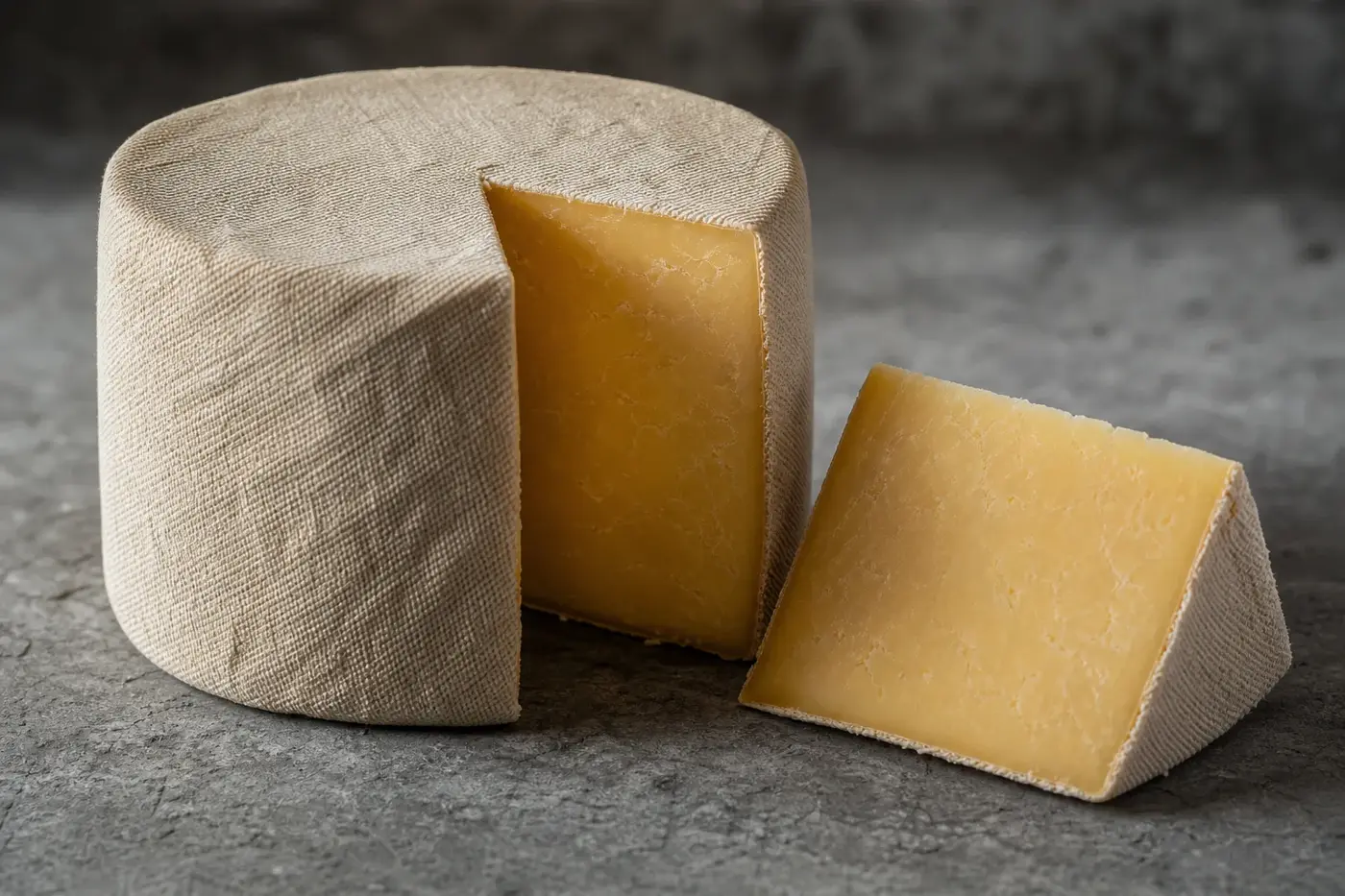
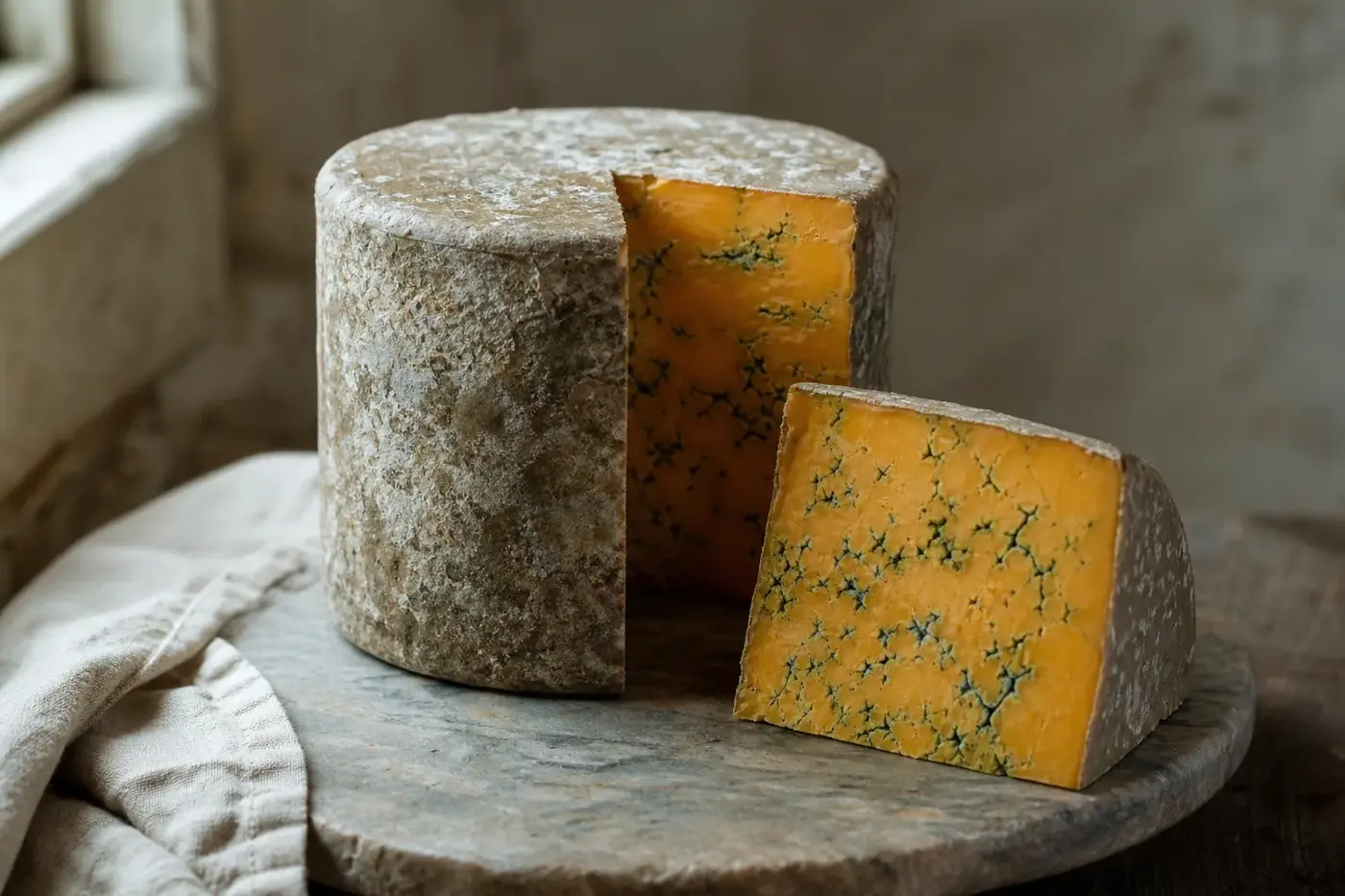
Picture your knife passing through a natural white crust into a yellow centre.
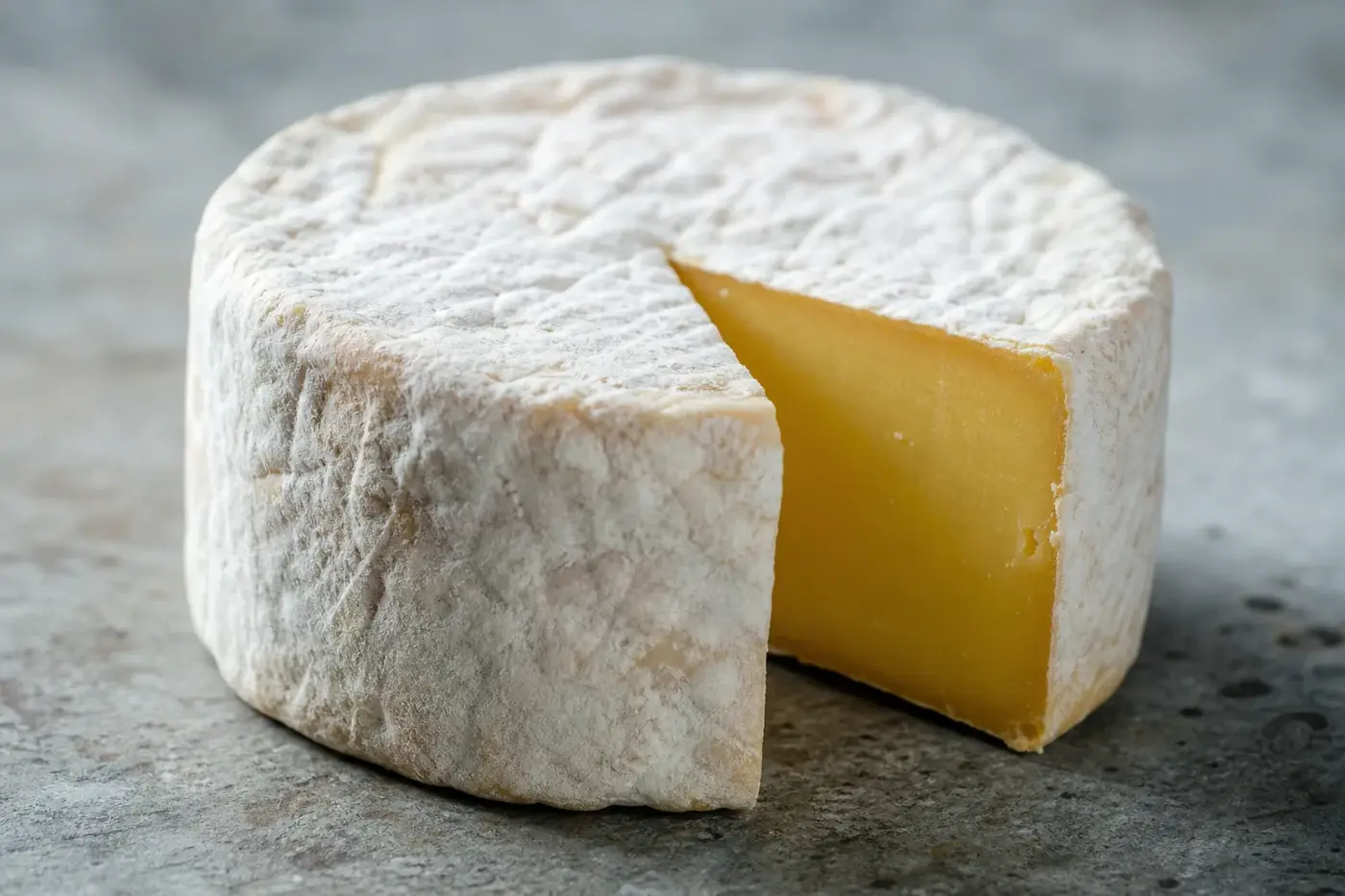
Picture your knife passing through a natural white crust into a yellow centre. The flavour promised by Teviotdale Cheese's original registration application is “fresh, slightly salty and tangy”. Finding a piece for your plate is harder: a regional food report dated March 2025 records no known producers. [3][4]
Developed at Easter Weens Farm in the Scottish Borders in 1983/84, this pressed Jersey milk cheese has a secure place in Great Britain's register of Protected Geographical Indications. Its place on your cheese counter is rather less certain. For now, the paperwork offers a fuller helping than the cheeseboard. [1][2][4]
| At a glance | What you need to know |
|---|---|
| Familiar and registered name | Teviotdale Cheese. [1] |
| Registration authority | Department for Environment, Food & Rural Affairs (Defra), Great Britain. [1] |
| Great Britain status | Registered PGI; November 2026. [1] |
| UK scheme registration | 31 December 2020, 23:00. [1] |
| Original EU registration | 21 January 1998, recorded by Defra. [1] |
| Applicable GB framework | Assimilated Regulation (EU) No 1151/2012, Article 12. [5] |
| Defined production area | Within 90 kilometres of Peel Fell's summit, across the England and Scotland border lands. [7] |
| Milk | Unpasteurised whole Jersey milk. [7] |
| Coagulant | Rennet; type unspecified. [2] |
| Specified maturation | Fifteen days after four days of drying. [7] |
| Composition | Minimum 48% fat in dry matter; maximum 48% water in the whole cheese. [7] |
The Christmas cheese that stayed for the year
Autumn milk needed somewhere to go. At Easter Weens Farm, near Bonchester Bridge, the answer in 1983/84 was a cheese for the Christmas trade. That practical idea gave Teviotdale its start, according to the original registration application. [4]
Demand then carried it beyond Christmas and into the rest of the year. You can see the appeal: a working farm turning seasonal milk into something people wanted long after its intended moment. [4]
This is a story of modern British cheesemaking, not centuries of uninterrupted tradition. The application describes a dairy developing a second cheese for a different purpose. Milk supply and seasonal demand, rather than ancient ritual, set things in motion. [4]
Find Teviotdale on the border map
Start at a hilltop if you want to understand where Teviotdale belongs. The specification draws a radius of 90 kilometres from Peel Fell's summit in the Cheviot Hills. That circle takes in border lands of England and Scotland, with references to the Tyne, Tweed and Solway Firth river systems. [2]
The boundary covers grazing the Jersey herds, making the cheese and maturing it. Teviotdale's story begins in the Scottish Borders, but its formal production area reaches across the border. [2]
If you are considering a revival, keep that distinction in mind. Both the milk supply and the dairy operations must fit the defined area. A Scottish address alone does not settle the question. [2]
Follow the milk, then keep turning
Whole Jersey milk is at the heart of the recipe. There is no heat treatment: the evening milk is chilled, then warmed before joining the morning milking. Starter cultures and rennet follow, although the published method does not identify the rennet's source. [2]
Next comes a carefully prescribed sequence, with turning a regular part of the work. If the vocabulary is new to you, curd is the coagulated milk that becomes cheese, while brine is a salt solution. For the broader journey, follow how cheese is made. [7]
| Stage | What happens |
|---|---|
| Setting | Incubate with starter before adding rennet; cut the curd and let it settle. [7] |
| Forming | Put the curd into moulds; turn and press repeatedly. [7] |
| Salting | Float in brine for nine hours at 13 °C. [7] |
| Drying | Dry for four days, turning daily. [7] |
| Maturation | Mature for fifteen further days, turning daily; the fuller specification gives 11 °C. [2][7] |
The fuller specification calls for 24 hours of pressing, with a turn after 12 hours. Teviotdale evidently expected rather more attention than the occasional admiring glance. [2]
Keep drying and maturation separate when you describe the method. It is four days, then fifteen days, not an ageing range of four to fifteen days. Setting, moulding, pressing and salting come first, each with its own place in the timetable. [7]
Beneath the white crust
“Compact and firm”, with a texture that is “close and smooth”: the original applicant gives you a clear idea of Teviotdale's body. Under the natural white crust, the paste is uniformly yellow. The flavour is described as “fresh, slightly salty and tangy”. [4]
Picture a cylinder about 140 mm across and 100 mm high, weighing 1,110 g. Pressing had a particular purpose here. The application explains that it helped the cheese hold its shape rather than ripen into a runny centre. [4]
What the protected name means for you
Teviotdale Cheese is registered in Great Britain as a PGI, or Protected Geographical Indication. Defra records its UK scheme registration at 23:00 on 31 December 2020. It gives 21 January 1998 as the original EU registration date, while the register entry itself was published on 4 January 2021. [1]
Those dates mark different moments. The 2021 webpage records an earlier registration, not the first granting of protection. Nor can that legal timeline tell you when the dairy last made cheese: that calls for dated production records. [1]
Under Article 12(1) of the assimilated Regulation (EU) No 1151/2012, an operator marketing a product that meets the corresponding specification may use the registered designation. Defra's guidance also requires producer verification and correct use of the registered name and relevant logo. Using the name brings obligations as well as a place on the label. [5][6]
A geographical indication is not a privately owned cheese brand. Defra states that no individual or business owns a GI. Another producer can use the name by meeting the specification and verification requirements, leaving a route for a compliant maker to bring Teviotdale back. [6]
The schemes cover different territories, too. Defra distinguishes the UK scheme's coverage in Great Britain from the EU scheme's coverage in Northern Ireland and the EU. You can explore that distinction in protected names explained. [6]
The farms behind the name
Easter Weens Farm is directly linked with production in the original application, submitted by Easter Weens Enterprise. The later specification on the GB register lists Easter Weens Enterprises and an additional applicant at Garden Cottage Farm, Stich Hill, near Kelso. That second listing gives you an application contact, not a dated record of cheesemaking. [2][4]
The clearest later account appears in Increasing Access to Local Food through Food Hubs. Dated March 2025 and commissioned by South of Scotland Enterprise, this regional food study includes a short section on cheese production. It names Teviotdale and reports that there are currently no known producers. [3]
In a report examining the region's food supply, that places Teviotdale among the absent or dormant cheeses of the time. It does not supply a final production year. To pin down the last batch, you would need a dated record of the dairy's final making. [3]
How to follow a Teviotdale lead
If you want to find Teviotdale, begin with a specialist cheesemonger. Ask for a named producer and a recently made batch, then compare those details with the registered specification. A product page repeating historical tasting notes is a starting point, not the end of your search.
Ask where the dairy is and where its Jersey milk comes from. Find out whether the producer has verification under the relevant GI scheme. Then request the maker's name, batch identification and production date for the cheese on offer.
Those details help you distinguish a newly available Teviotdale from a name lingering in a catalogue. A dated confirmation from the producer is more useful than an undated description, however inviting those tasting notes might be.
Found a batch? Give it the first word
Begin with a small piece on its own. Then try plain bread or an unsalted cracker, keeping strongly flavoured chutneys back for that first taste. Give the smooth paste and fresh, salty tang described in the application room to make their impression. [4]
Apple or pear can follow, with water to drink. These are serving suggestions, not a documented local tradition. If you are sharing a whole cylinder, cut small radial wedges so everyone gets both outer crust and central paste.
For a useful tasting record, start with the producer and production date, if supplied. Note appearance, texture and flavour before returning to the historical description. That gives you a comparison between an identified batch and the published profile, grounded in what is actually on your plate.
Meet its close companion, Bonchester
Bonchester is Teviotdale's closest companion in the historical dossier. Both were developed at Easter Weens, and the application says they shared their early making stages. Teviotdale, though, was pressed and made larger. [4]
That family connection tells you more than simply calling both cheeses Scottish. For a wider view of British cheese, read Cheddar on its own terms. Teviotdale's Jersey milk, pressing, brine salting and prescribed maturation sequence give you specific features to compare with another cheese's character and method. [2][7]
Explore the British and Irish selection through milk, rind, texture and method. Give each cheese its own name and consider it against those same features. Sharing a cheeseboard is a good reason to compare them, not to blur their identities.
Take your cheese curiosity a little further
- How to Read a Cheese Label: find the food name, maker and origin information as you follow a possible lead.
- Cheese: The Complete Guide: give a less familiar regional cheese its place in the wider picture.
General information only, not medical advice: follow the official guidance where you live.
Questions people ask
Can you still buy Teviotdale Cheese?
Current availability is not verified, and a March 2025 regional food report recorded no known producers. Ask a specialist cheesemonger for a named producer and a recently made batch.
What milk is used to make Teviotdale Cheese?
The specification requires unpasteurised whole Jersey milk. The cheese is made with starter cultures and rennet, but the rennet’s source is not specified.
What does Teviotdale Cheese taste like?
The original application describes its flavour as fresh, slightly salty and tangy. It has a natural white crust and a uniformly yellow centre, with a close, smooth texture.
How long does Teviotdale Cheese mature?
The specification requires four days of drying followed by fifteen days of maturation. The cheese is turned daily during both stages.
What does Teviotdale Cheese’s PGI status mean?
Teviotdale Cheese is registered in Great Britain as a Protected Geographical Indication. Defra states that no individual or business owns a geographical indication, and another producer may use the name by meeting the specification and verification requirements.
Sources
-
Department for Environment, Food & Rural Affairs. Teviotdale Cheese. GB protected food name register entry, published 4 January 2021; retrieved November 2026. Official register entry.
-
Department for Environment, Food & Rural Affairs. Product specification: Teviotdale Cheese. Undated specification currently linked from the GB register; retrieved November 2026. Official specification.
-
South of Scotland Enterprise, commissioning organisation. Increasing Access to Local Food through Food Hubs. March 2025, section “Cheese production”, page 37; hosted by Abundant Borders. Report.
-
Easter Weens Enterprise; European Commission, repository. Application for Registration of a Designation of Origin for Teviotdale Cheese under Regulation (EEC) No. 2081/92. Undated historical application, five pages; retrieved from the Commission's eAmbrosia document service, November 2026. Historical application.
-
The National Archives, legislation.gov.uk. Regulation (EU) No 1151/2012, Article 12: Names, symbols and indications. Revised GB text, retrieved November 2026. Article 12.
-
Department for Environment, Food & Rural Affairs. Protected geographical food and drink names: UK GI schemes. Published 31 December 2020, updated 8 March 2024; retrieved November 2026. Official guidance.
-
Ministry of Agriculture, Fisheries and Food; European Commission, repository. Teviotdale Cheese: application summary under Council Regulation (EEC) No 2081/92. Undated historical summary, one page; retrieved November 2026. Official application summary.
This desk-researched account compares the official registration documents with a dated regional food report, keeping historical production, legal registration and present availability separate.
Last checked: November 2026
Last checked November 2026.
The editors suggest you read next
Shropshire Blue
Cut into Shropshire Blue and you get quite a colour scheme: orange crossed by blue-green veins.