Tomme de Savoie
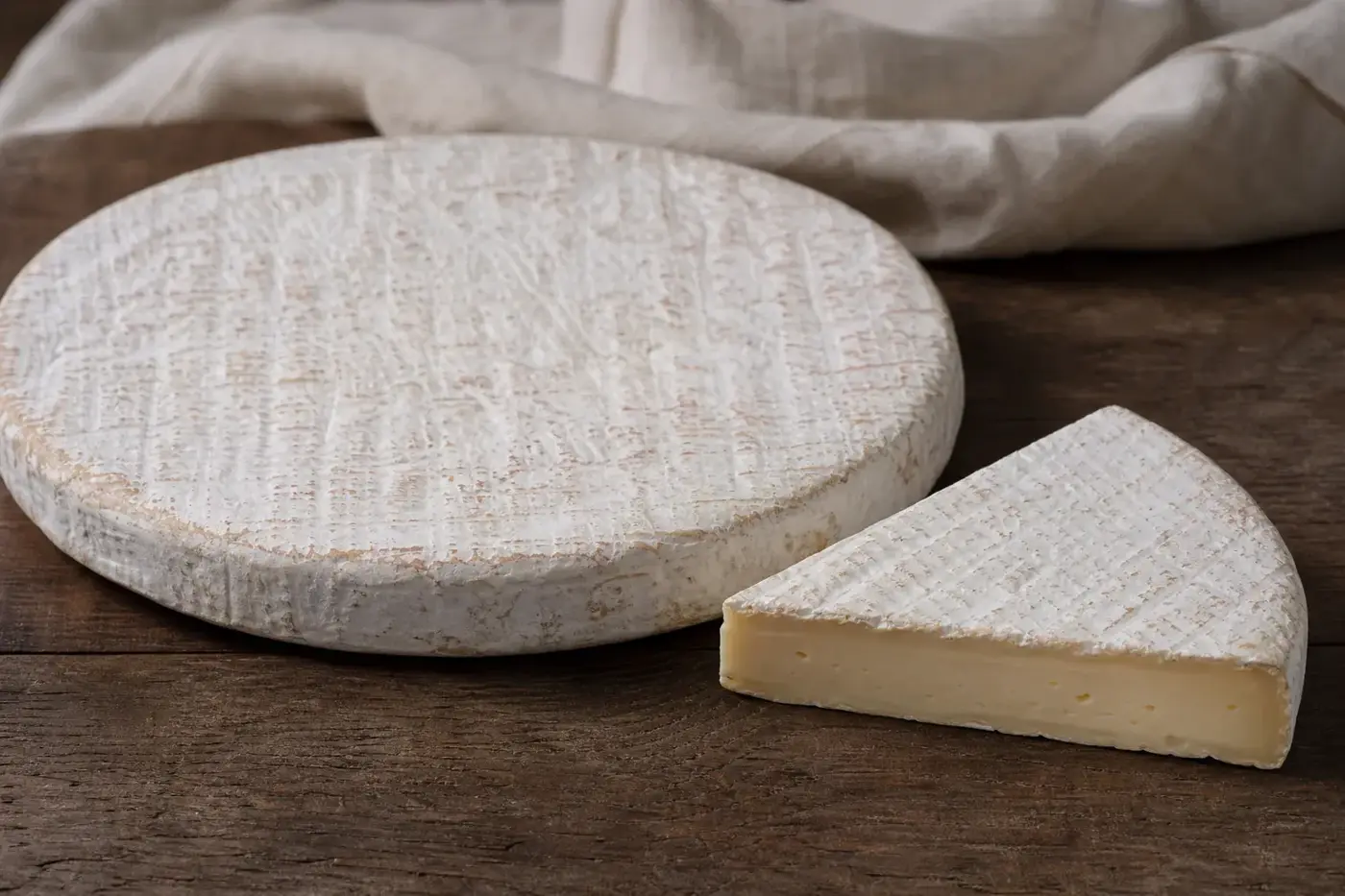
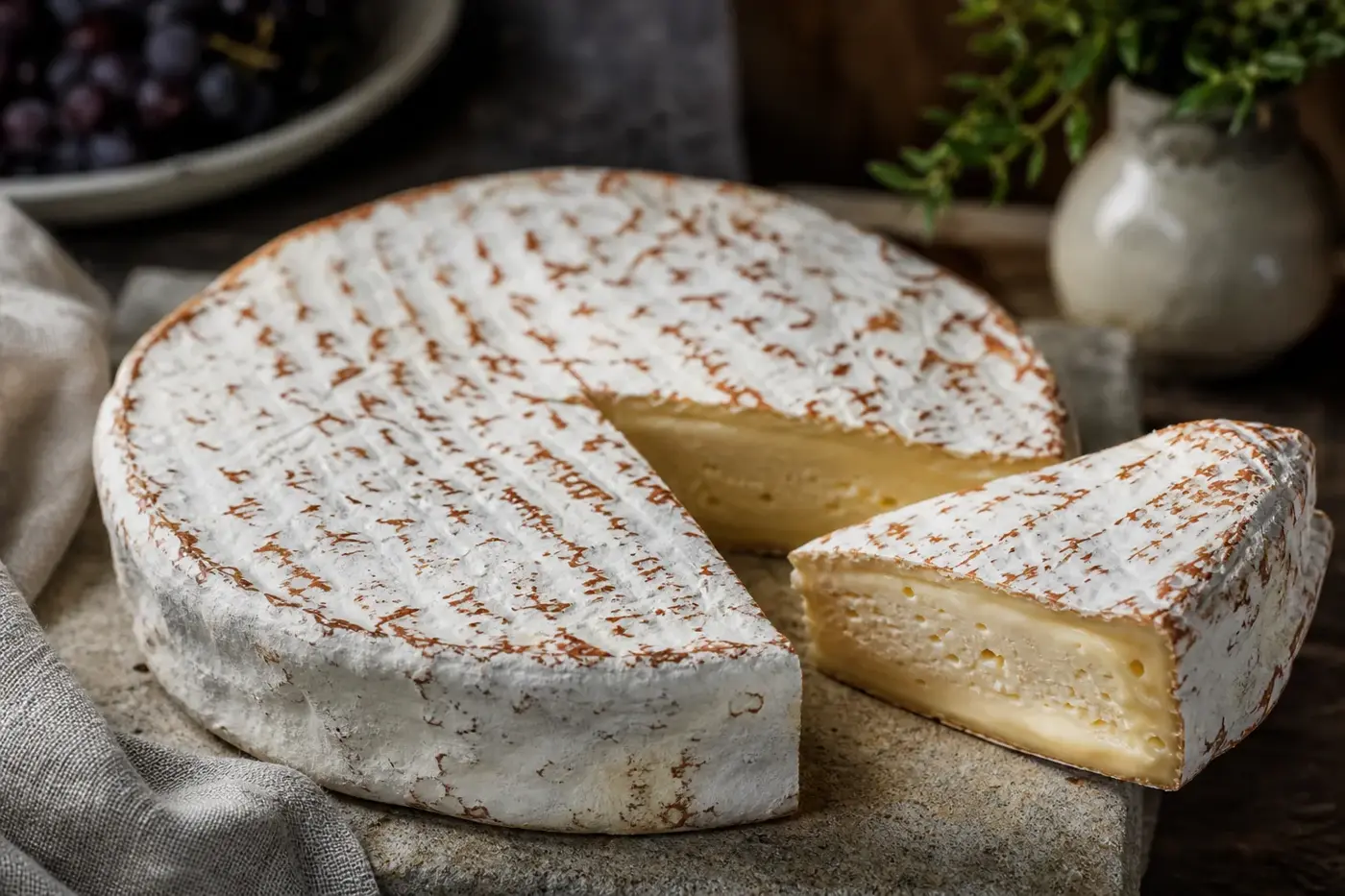
Your knife passes through a mottled grey rind into a pale, supple centre.
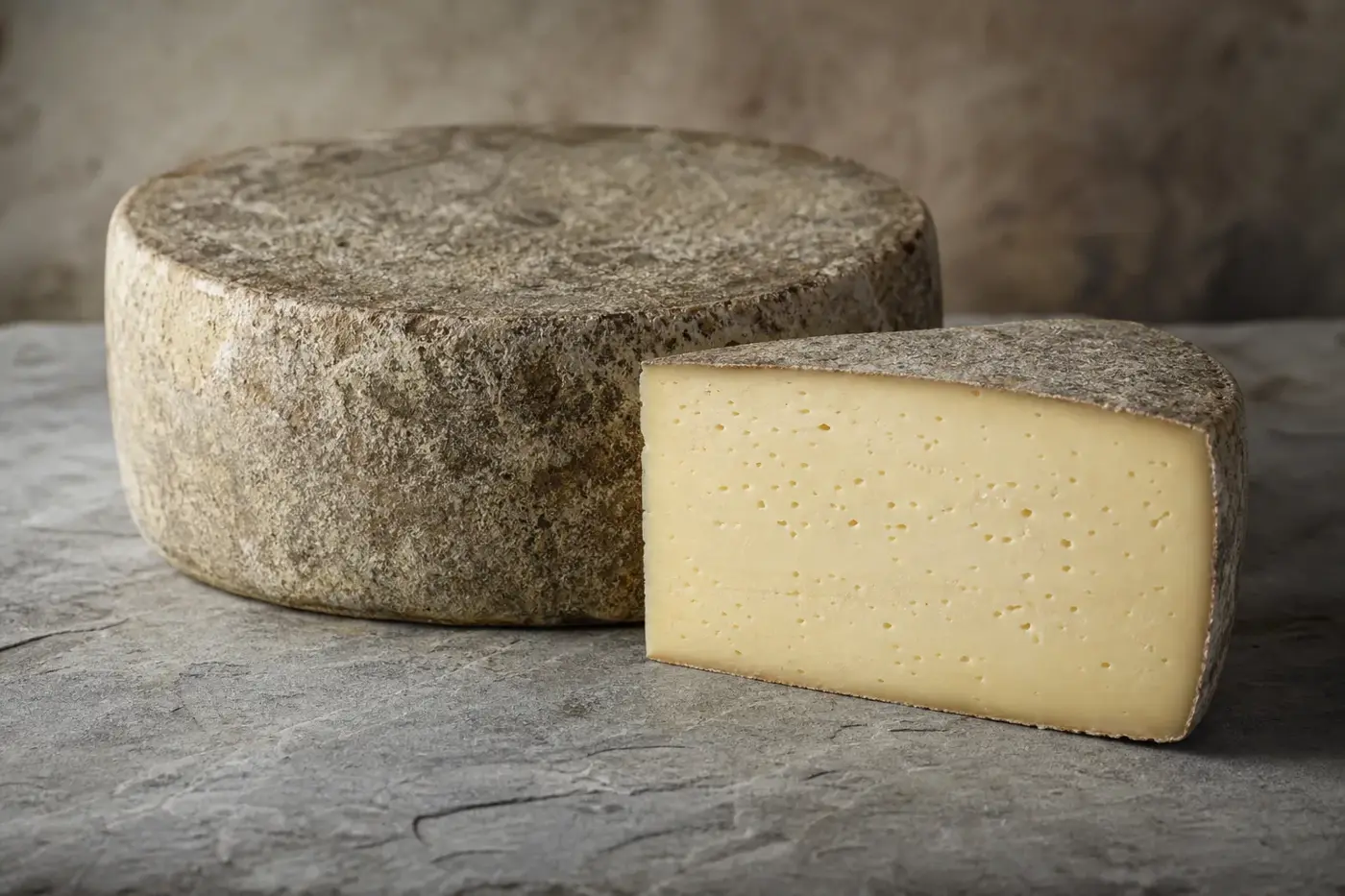
Your knife passes through a mottled grey rind into a pale, supple centre. Yet this French Alpine cow’s milk cheese starts its story with butter: AFTAlp describes Savoyard families taking cream from their milk, then making small cheeses with what remained. That history still shows in Tomme de Savoie’s variable fat levels. Today, its name has EU geographical indication protection, or PGI. [1][4]
Your quick introduction to Tomme de Savoie
| What to know | The details |
|---|---|
| Registered name | Tomme de Savoie. [1][3] |
| Cheese style | Cow’s milk cheese, pressed and uncooked. [1] |
| EU protection | PGI; recognised in 1996. [1] |
| INAO reference | IG/52/94. [1] |
| Great Britain | Registered PGI; UK scheme registration 31 December 2020. [3] |
| Milk treatments allowed | Raw or thermised cow’s milk. [2] |
| Standard wheel | 18 to 21 cm across, 5 to 8 cm high; 1.2 to 2 kg. [4] |
| Smaller wheel | 400 to 900 g; maximum height 8 cm. [2] |
| Typical maturation | Savoicime describes 6 to 8 weeks. [7] |
| Protection and guidance reference date | November 2026. [1][3][11] |
First the butter, then the tomme
Picture the cream being set aside for butter. AFTAlp describes Savoyard families doing just that, then turning the remaining milk into small cheeses. How rich your cheese would be depended on what was left, rather than a single, uniform recipe. [4]
These rustic wheels were never destined to look and taste identical. According to INAO, individual farms once made tommes in their own formats and with their own fat contents. Each household adapted to what it had, which is rather more interesting than absolute sameness. [1]
The nineteenth-century rise of fruitières brought a change. Savoicime describes these dairies allowing farmers to pool their milk, while larger cheeses drew milk away from domestic tomme production. You can follow the shift from making a household cheese with available milk to organising collectively for larger-scale cheesemaking. [5]
An Alpine home, written into the rules
Tomme de Savoie has a legally defined home: all of Savoie and Haute-Savoie, plus specified communes in neighbouring Ain and Isère. Milk production, cheesemaking and maturation must all happen there. That connection to place stays with your cheese from the milk to the finished wheel. [2]
INAO records EU recognition as a PGI in 1996. Great Britain has a separate register, where Tomme de Savoie is a registered PGI with a UK scheme registration date of 31 December 2020. [1][3] For help finding your way through the different categories, start with protected names explained.
Meet the cattle behind your cheese
The milk may be raw or thermised. Thermisation is a heat treatment distinct from pasteurisation, so ask which treatment was used for the cheese you are buying. You can explore the differences in raw milk, thermised and pasteurised cheese. [2]
Abondance, Montbéliarde and Tarentaise cattle take a central role in the production rules. At least 75% of the relevant herd must belong to these breeds. For farmhouse production, that means the farm’s herd; for a processor, it means the overall supplying herd. [2]
Removing cream changes the cheese’s fat content. The specification requires a minimum of 9% fat in the whole cheese and at least 45% dry matter. Keep the label’s measures separate: fat in dry matter excludes water, while the nutrition panel’s fat per 100 g describes the whole food. [2]
The cattle’s menu changes with the seasons, too. Savoicime describes fresh grass in summer, followed by local forage and cereals in winter. [7]
This page summarises published guidance from the official sources it cites. It is not medical advice. Guidance differs between countries and changes over time, so check the current source for where you live, and ask your doctor, midwife, pharmacist or dietitian about your own circumstances.
Follow the curd from vat to mould
First come the cultures, then calf rennet, the enzyme preparation that makes the milk set. Savoicime describes cutting the resulting curd into grains. This separates it from whey, the liquid part of the milk. [6]
The curd and whey are then stirred and may be warmed, with Savoicime giving a ceiling of 40 °C for this stage. “Uncooked” is the cheesemaking category, not a promise that no heating happens. Next, the curd goes into perforated moulds and is pressed by stacking, with repeated turning to help it drain. [6]
Brine salting follows, then maturation. As the cheese matures, the drained curd develops its rind and semi-firm centre. Savoicime describes wooden boards and a typical maturation of 6 to 8 weeks. [2][7]
Take a closer look at that grey rind
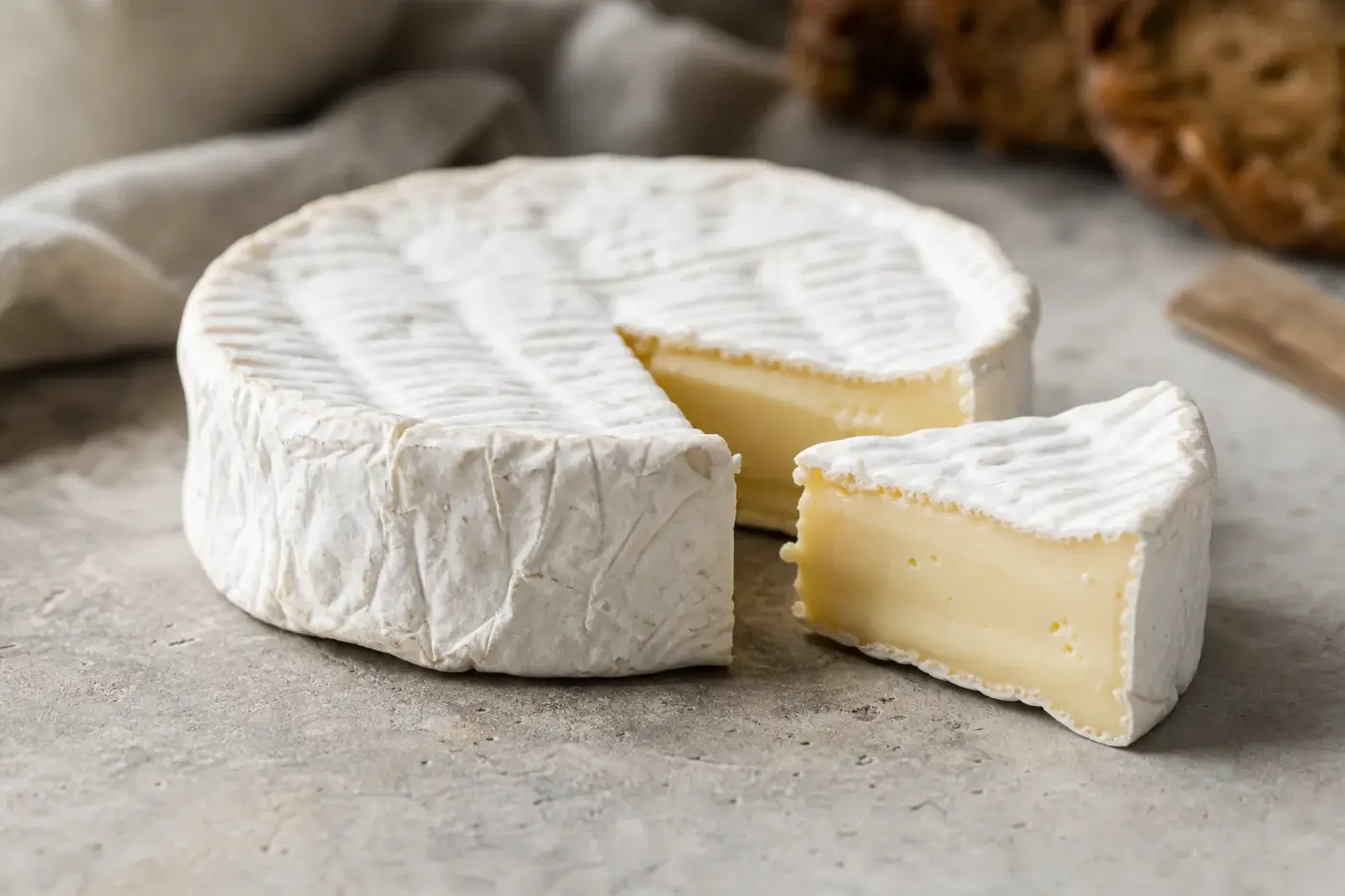
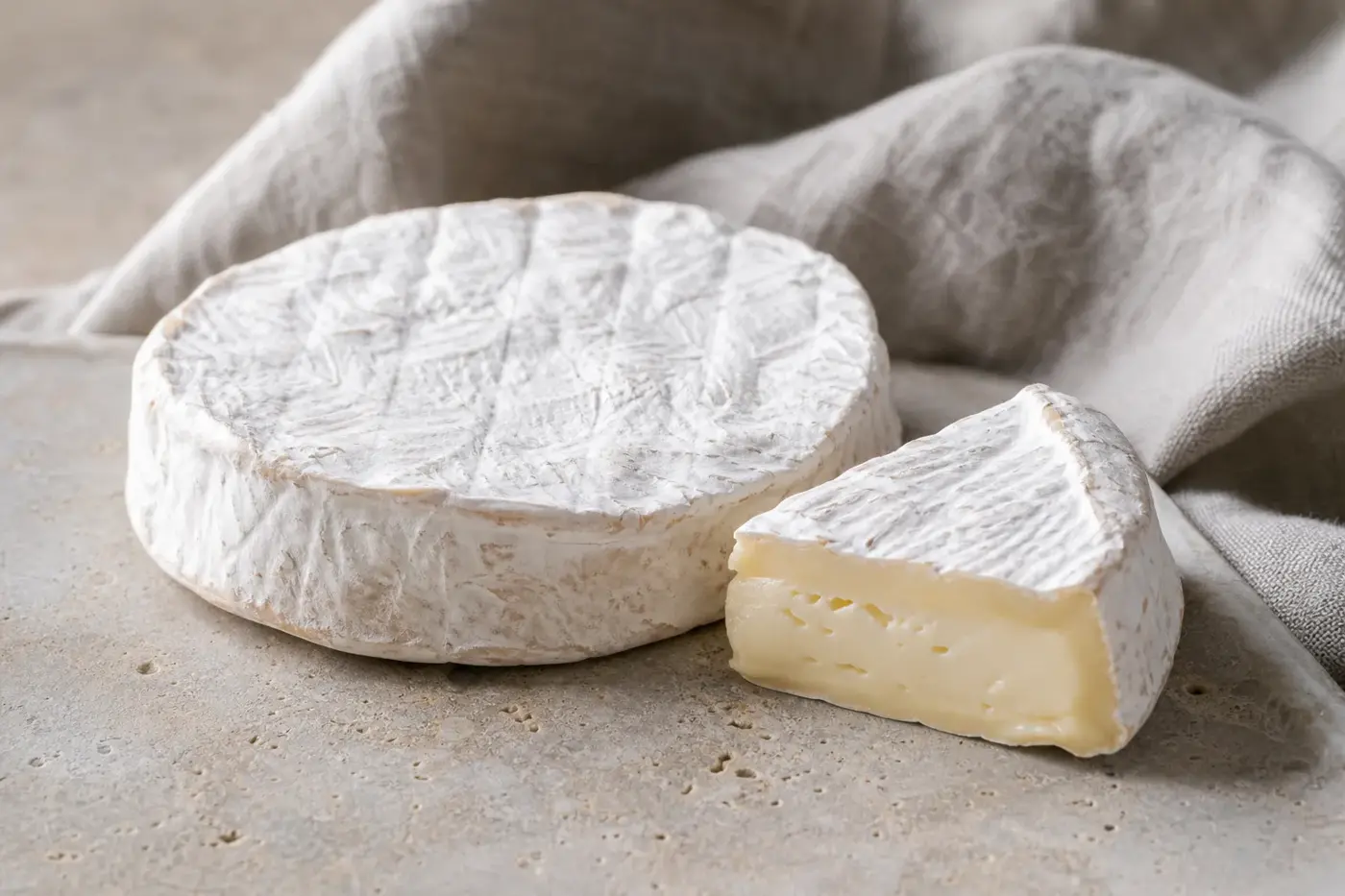
A standard wheel is a low cylinder, broad rather than tall. AFTAlp describes a grey, mottled, bloomy rind surrounding a white to yellow paste with small openings. When your wedge is cut, look for that inviting combination of firmness and suppleness inside. [4]
INAO describes the rind as smooth to slightly uneven and grey to grey-white, with secondary moulds able to develop. Those natural variations give the surface its patchwork appearance. When assessing a cut cheese, look beyond rind colour to the label, condition and handling history. [1]
Find your favourite, from gentle to assertive
Maturation can take Tomme de Savoie from mild to powerful. AFTAlp describes lactic and animal notes, while Savoicime names butter, yoghurt and whey in its tasting account. Those words give you a useful starting point at the counter, whether you want a gentle wedge or one with more to say. [4][8]
Ask about age and fat content together, but give them different jobs. “Young and supple” tells you something a percentage on the wrapping cannot. Begin with the texture you enjoy, then ask how strongly that particular cheese expresses its lactic and animal notes.
Separate aroma, flavour and texture as you ask. Does the stronger character come mainly from the rind, and is the centre still supple? How salty does it taste to the monger? You are choosing a cheese for the way you want to eat it, not awarding a prize for the supposedly “best” age.
Get to know the farm or dairy
There is more than one route from milk to wheel. Savoicime distinguishes cheese made directly on the farm from cheese made in a cooperative. AFTAlp uses fermière and laitière, meaning farmhouse and dairy-made. Ask whether your piece comes from one farm’s production or a dairy processing collected milk. [4][7]
Where the cheese was made and how its milk was treated are separate questions. Ask for the maker’s name, where the cheese matured and whether the milk was raw or thermised. A named affineur, the person or business responsible for maturation, adds another useful detail to its story. [2][7]
A few good questions for the cheese counter
Start with the full name, Tomme de Savoie, and the PGI information. Savoicime describes identifying marks on the top or around the side of the wheel. If your small wedge has no readable mark left on its rind, ask to see the original wheel information or packaging. [7]
Next, ask who made it, how the milk was treated and how long it has matured. When comparing fat figures, distinguish fat in dry matter from fat per 100 g of the whole cheese. For help with the wider vocabulary, turn to How to read a cheese label.
Tell the monger what you have planned. A wedge to slice with bread and a piece for a cooked dish invite different recommendations. Ask for storage and date information with the wrapping, especially when your portion has been cut from a larger wheel.
Make room for bread, soup or a cheeseboard
Bread, a cheeseboard and soup are Savoicime’s suggested starting points. Your first decision is whether to enjoy the paste as it is or bring Tomme de Savoie into a warm dish. A pleasantly manageable dilemma, by cheese counter standards. [8]
Try plain bread with apple or pear, and water alongside. Restrained accompaniments leave you room to explore the cheese itself. For cooking, try a little in vegetable soup or a toasted sandwich, then check the seasoning before adding more salt.
Ask about the rind before cooking, and follow the supplier’s instructions on whether to remove it. If you are catering for an allergy, check the whole ingredient list and any accompaniments. Consider everything on the plate, not just the cheese.
Keep it wrapped, and serve it cool
Keep Tomme de Savoie in its original food paper, even inside a cheese box, as Savoicime recommends. [9] For England, Northern Ireland and Wales, the Food Standards Agency recommends a home fridge between 0 and 5 °C (32 to 41 °F). Keep dairy products refrigerated and follow their packaging instructions. [10]
Serve your cheese cool. Leave the remainder refrigerated and follow the storage instructions supplied with it. [10]
Use the date and storage instructions for the actual piece you bought. An expected mottled rind and an unexpected change on a cut surface need separate assessment. If you are unsure about a change on the cut face, consult the retailer and mould on cheese. You will find more everyday guidance in how to store cheese at home. [1][10]
Pregnancy and higher-risk groups: where to find UK guidance
The NHS pregnancy guidance for November 2026 lists pasteurised semi hard cheeses and certain hard cheeses made from pasteurised or unpasteurised milk among foods that can be eaten. It also says any cheese cooked until steaming hot can be eaten during pregnancy. Read the linked NHS guidance for the full advice and exceptions. [11]
If your Tomme de Savoie is raw or thermised, take its milk-treatment and texture information to your midwife or other clinician. They can help you apply that guidance to your circumstances. [11]
According to the NHS, pregnancy, weakened immunity and increasing age are associated with more serious listeriosis. Its guidance also names unpasteurised dairy products among possible sources of infection. If you are in one of these groups, check the current NHS guidance and ask your doctor, midwife or dietitian about your circumstances. [12]
Meet Tomme de Savoie’s Alpine neighbours
Questions people ask
Where is Tomme de Savoie made?
It must be made in a defined area covering all of Savoie and Haute Savoie, plus specified communes in neighbouring Ain and Isère. Milk production, cheesemaking and maturation all take place within that area.
Is Tomme de Savoie made with raw milk?
Raw or thermised cow's milk is permitted. Ask which treatment was used for the particular cheese.
How long is Tomme de Savoie matured?
Savoicime describes typical maturation of 6 to 8 weeks on wooden boards. The page does not verify a minimum maturation period.
How should I store Tomme de Savoie?
Savoicime recommends keeping it in its original food paper, including inside a cheese box. The Food Standards Agency recommends a home fridge between 0 and 5 °C for England, Northern Ireland and Wales, and says dairy products should be refrigerated with packaging instructions followed.
Can I eat Tomme de Savoie during pregnancy?
The NHS pregnancy guidance lists pasteurised semi hard cheeses and certain hard cheeses made from pasteurised or unpasteurised milk among foods that can be eaten. It also says any cheese cooked until steaming hot can be eaten during pregnancy. Read the NHS guidance for the full advice and exceptions, and discuss the milk treatment and texture of your cheese with your midwife or clinician.
Sources
-
Institut national de l’origine et de la qualité. Tomme de Savoie (IG/52/94), undated product profile, retrieved November 2026. Official product profile.
-
French Ministry of Agriculture and Food. Cahier des charges de l’indication géographique protégée « Tomme de Savoie », approved by the order of 16 December 2019, published in the Journal officiel on 26 December 2019 and Bulletin officiel 2020-1. Official specification.
-
Department for Environment, Food & Rural Affairs. Tomme de Savoie, protected food name register entry, published 4 January 2021, retrieved November 2026. Great Britain register entry.
-
Association des Fromages Traditionnels des Alpes savoyardes, AFTAlp. IGP Tomme de Savoie, undated industry profile, retrieved November 2026. Industry description.
-
Savoicime. Histoire et origines de la Tomme de Savoie IGP, undated producer organisation account, retrieved November 2026. Published history.
-
Savoicime. Les étapes de fabrication, undated producer organisation account, retrieved November 2026. Production account.
-
Savoicime. “Reconnaître la vraie Tomme de Savoie !”, undated producer organisation description, retrieved November 2026. Identification and production description.
-
Savoicime. Accords et dégustation de la Tomme de Savoie IGP, undated producer organisation recommendations, retrieved November 2026. Tasting and serving suggestions.
-
Savoicime. Comment conserver une Tomme de Savoie IGP, undated producer organisation recommendations, retrieved November 2026. Used for wrapping advice only. Wrapping recommendations.
-
Food Standards Agency. How to chill, freeze and defrost food safely, published 18 December 2017, live text retrieved November 2026. The publication states that it applies to England, Northern Ireland and Wales. Official chilling guidance.
-
NHS. Foods to avoid in pregnancy, reviewed 15 June 2026, retrieved November 2026. Official pregnancy guidance.
-
NHS. Listeriosis, live guidance retrieved November 2026. Official listeriosis guidance.
-
French Republic, Légifrance. Arrêté du 11 septembre 2026 relatif à la modification temporaire du cahier des charges de l’indication géographique protégée (IGP) « Tomme de Savoie », Journal officiel of 18 September 2026, text 16. Official text returned through live search, November 2026. Temporary amendment.
-
Food Standards Agency. Alerts, live official alert index, accessed November 2026 for the editorial recall check described below. Official alerts index.
This desk-researched draft brings together the retrieved French specification, official product and registration records, attributed industry descriptions and UK public food safety guidance.
Last checked: November 2026
Last checked November 2026.
The editors suggest you read next