Tomme des Pyrénées
At the cheese counter, you pause over three very different exteriors: black, gold and a mottled natural rind.
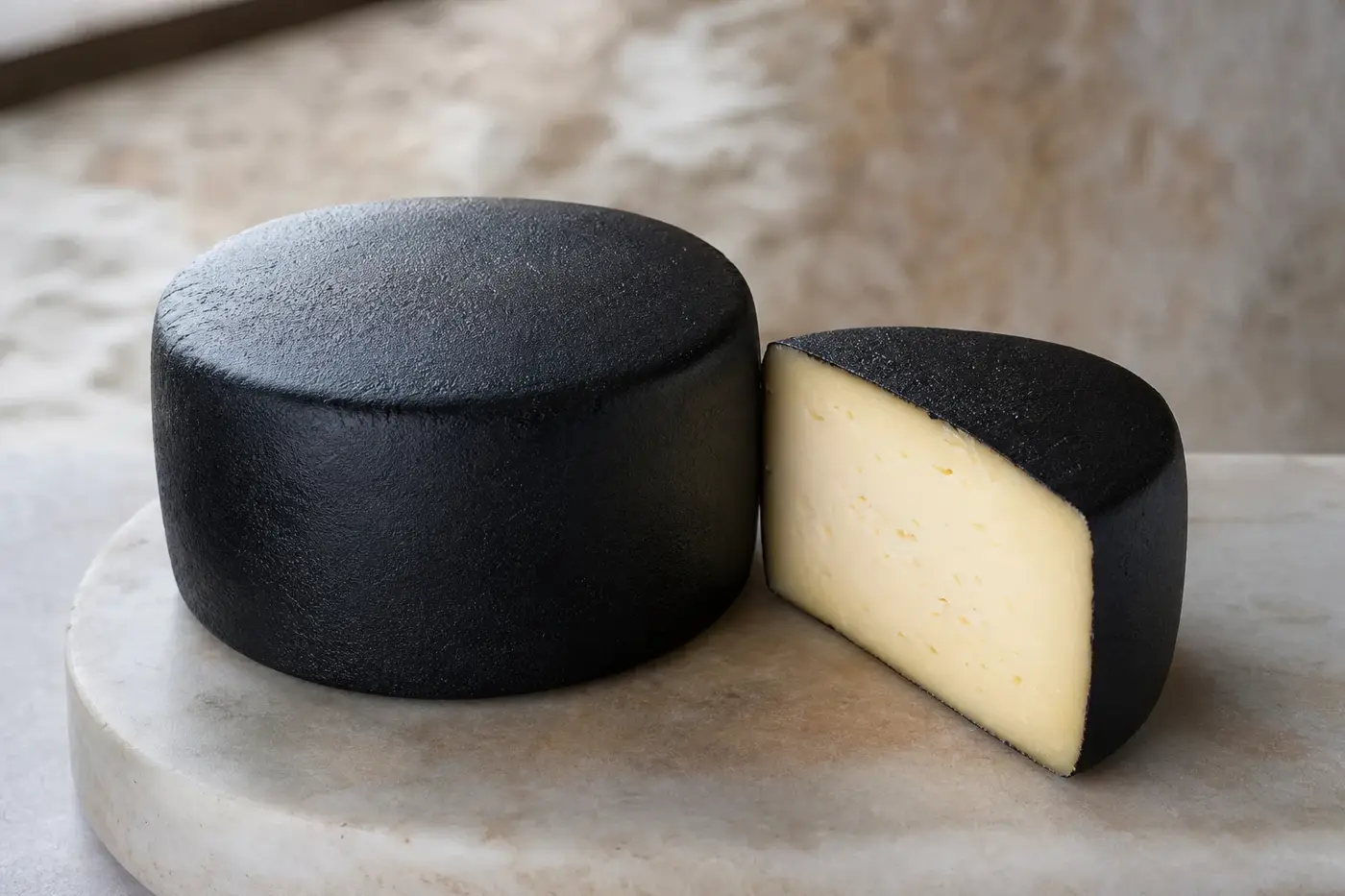
At the cheese counter, you pause over three very different exteriors: black, gold and a mottled natural rind. Beneath each lies a pale, supple interior. These French Pyrenean cheeses share a name, but not a single personality: Tomme des Pyrénées embraces several milks and maturation styles. Registered as a geographical indication in Great Britain's protected food names register, it gives you good reason to look beneath the covering. [2,3]
Your guide at a glance
| What to look for | The details |
|---|---|
| Registered name | Tomme des Pyrénées [1,3] |
| Authority and identifier | INAO: IG/50/94; EU register ID: unconfirmed [1] |
| EU status, November 2026 | PGI, recorded by INAO [1] |
| Great Britain status, November 2026 | Registered PGI; scheme registration 31 December 2020, 23:00 [3] |
| Milk | Cow or goat, or specified mixtures including sheep [2] |
| Milk treatment | Raw, thermised or pasteurised [2] |
| Shape and size | Cylindrical; 400 g to 5.5 kg [2] |
| Time in the cellar | Legal minima depend on milk, format and covering; see table below [2] |
One name, a whole family to meet
Tomme des Pyrénées belongs to France's pressed, uncooked cheese tradition. But “Pyrenean tomme” is a broad regional description, not a substitute for this protected name. If you want cheese made to this specification, look for the complete name and PGI identification. [1,2]
The producers' association traces the original PGI to 1996. It then covered pasteurised cow's milk cheeses with black or golden exteriors. An amendment approved in 2020 brought raw milk, goat's milk and specified mixed milks into the protected identity. An older description may therefore introduce you to only part of today's family. [2,4]
Great Britain's register separately records the name as a registered PGI from 31 December 2020 at 23:00. If you find the different schemes confusing, the guide to protected cheese names explains the distinction. [3]
Follow the shepherds into the valleys
Picture foothills, mountains and enclosed valleys: this is the landscape INAO describes for Tomme des Pyrénées. Abundant upland rainfall supports grass and the keeping of cows, sheep and goats. INAO traces the cheese's background to a summer keeping cheese made by shepherds, a pastoral beginning that helps explain the range of milks you find today. [1]
The French production area is defined by a list of communes. INAO and the published specification give different geographical summaries. For the current boundary, turn to the operative text rather than relying on either summary alone. [1,2]
What milk is in your slice?
Your piece might be made from cow's milk, goat's milk or one of three permitted mixtures. Cow's milk can include 30 to 50% sheep's milk or 30 to 50% goat's milk; goat's milk can include 30 to 50% sheep's milk. Those proportions are all by volume. Sheep's milk has a place here only in a mixture. [2]
The milk may be raw, thermised or pasteurised: the PGI allows all three. Look at your particular cheese's label to find out which treatment was used. For the differences, turn to the guide to milk treatments. [2]
Start with the rind, then peek inside
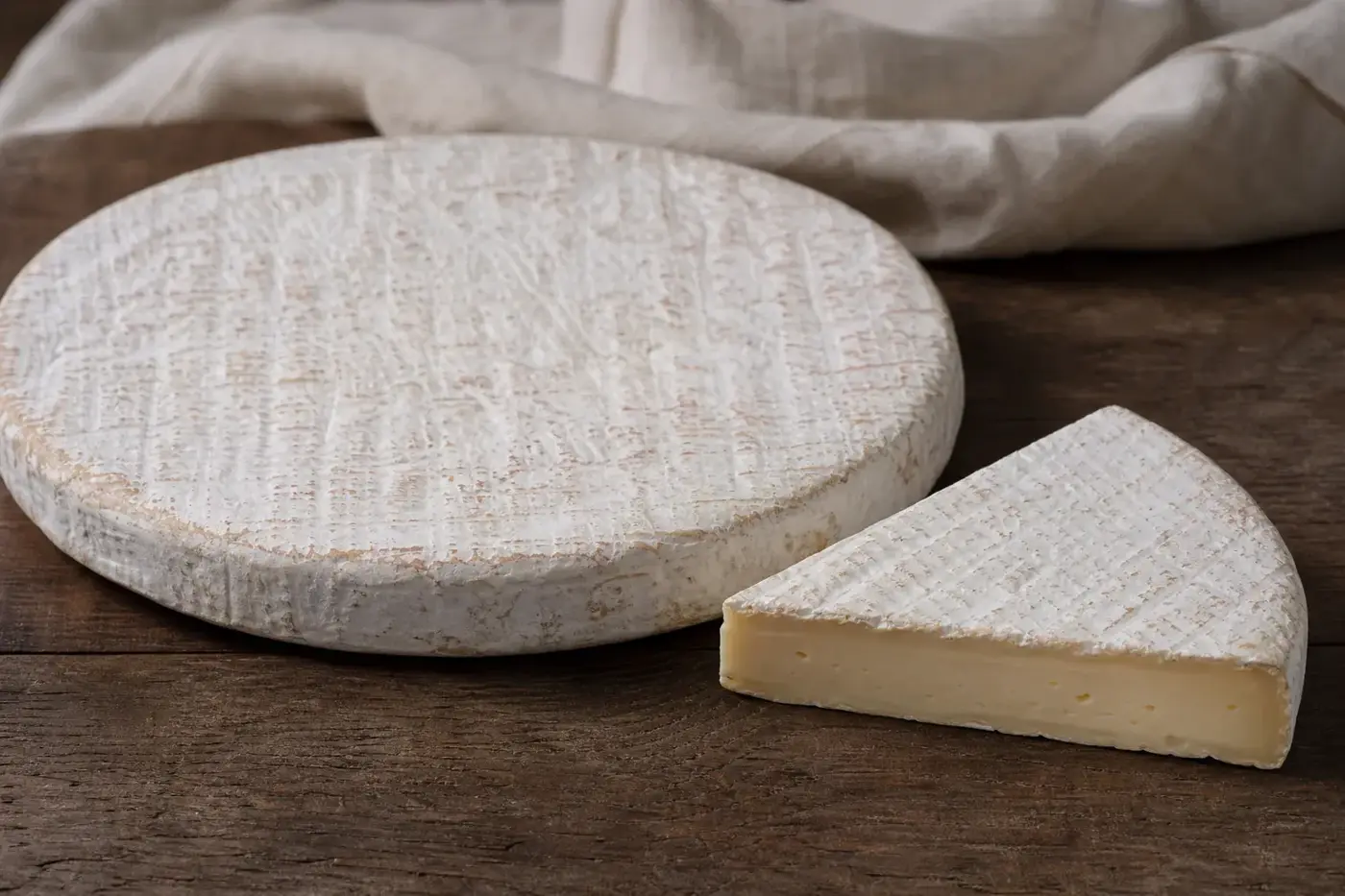
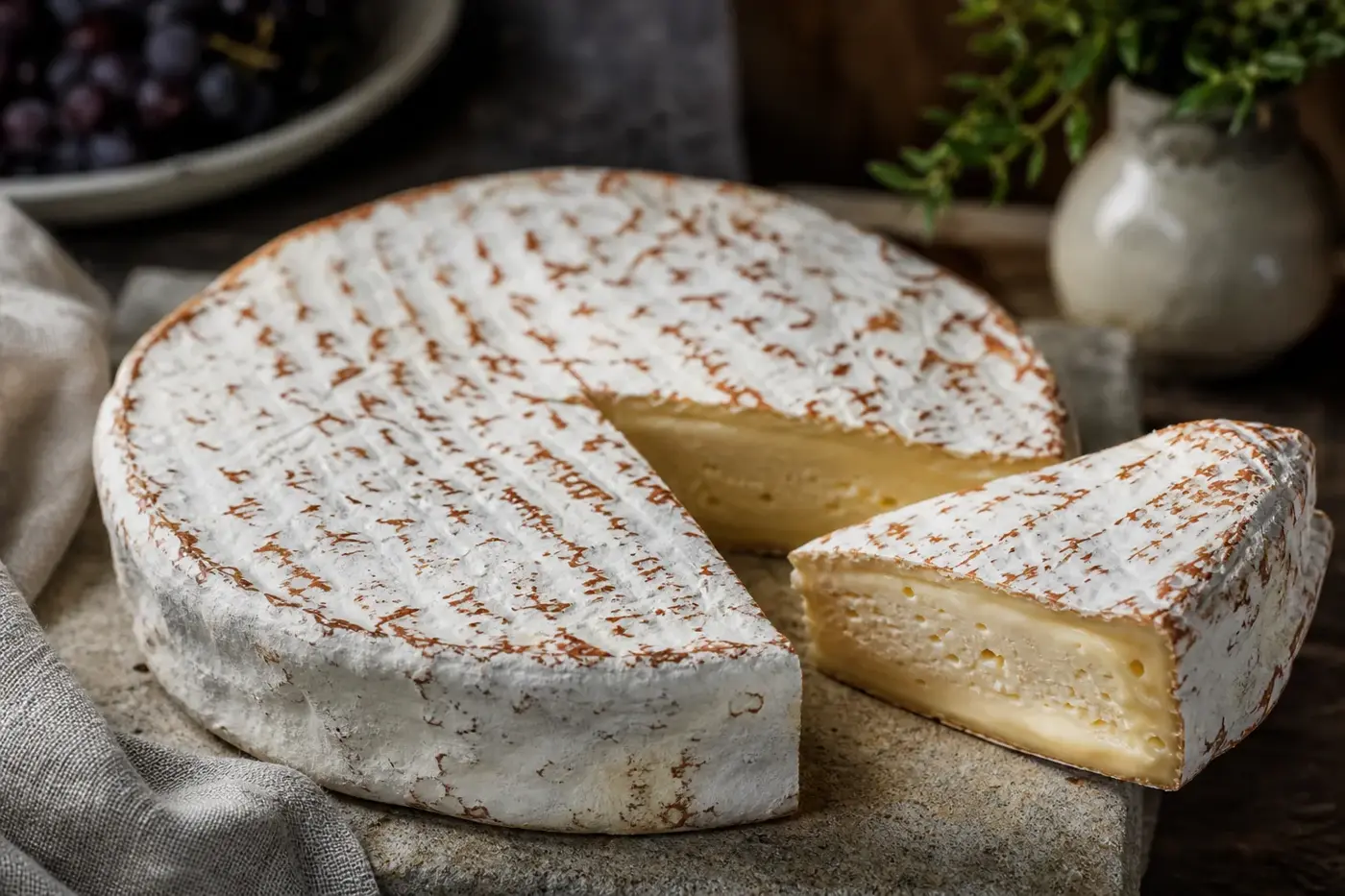
Every wheel is a regular cylinder, with rounded edges and flat, parallel faces. Its diameter must be two to three times its height, keeping those recognisable proportions across the permitted sizes. A natural rind is orange with white, yellow or grey; black or golden coatings are allowed on heat-treated milk cheeses weighing more than 1.5 kg and up to 5.5 kg. [2,5]
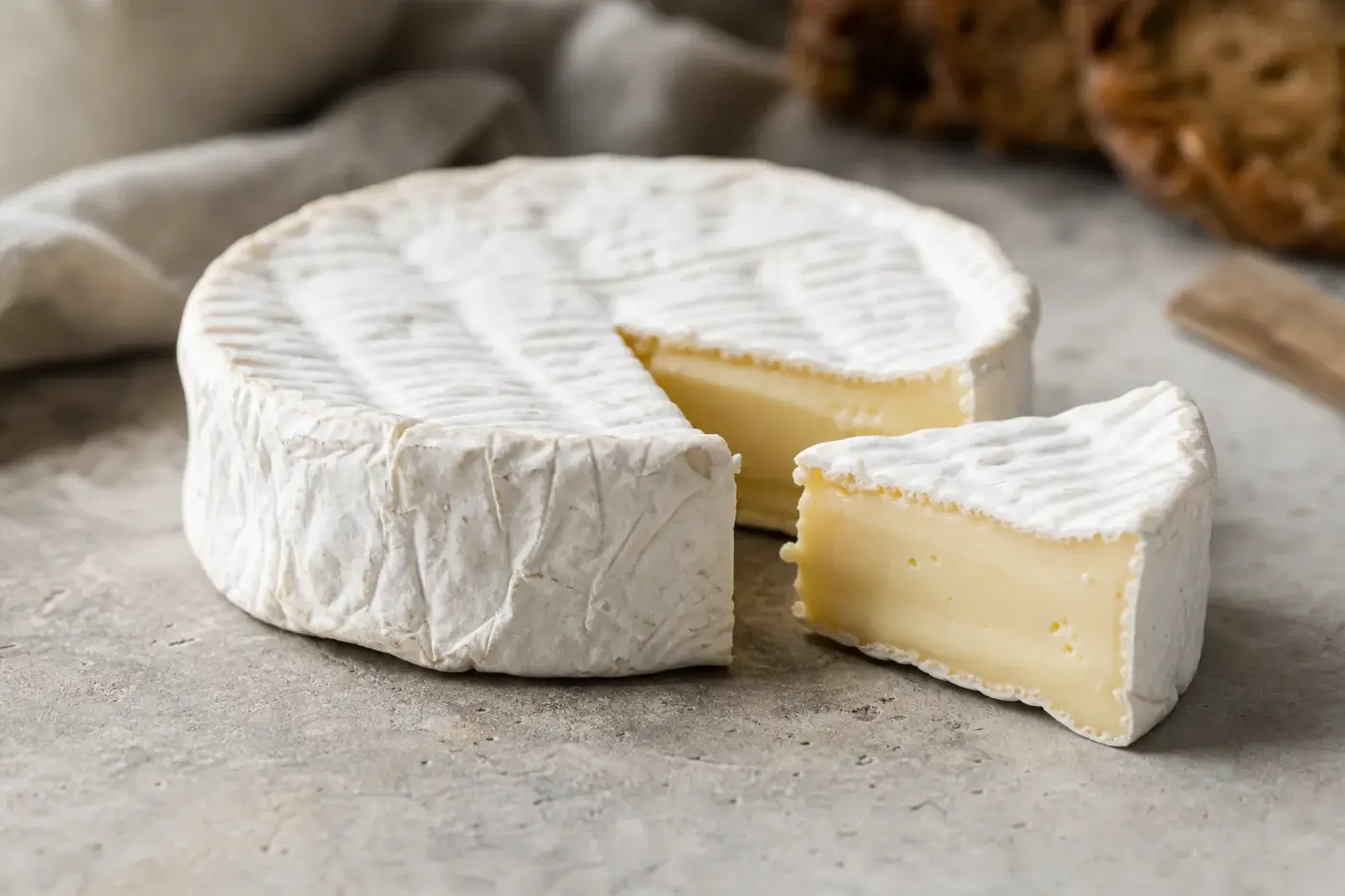
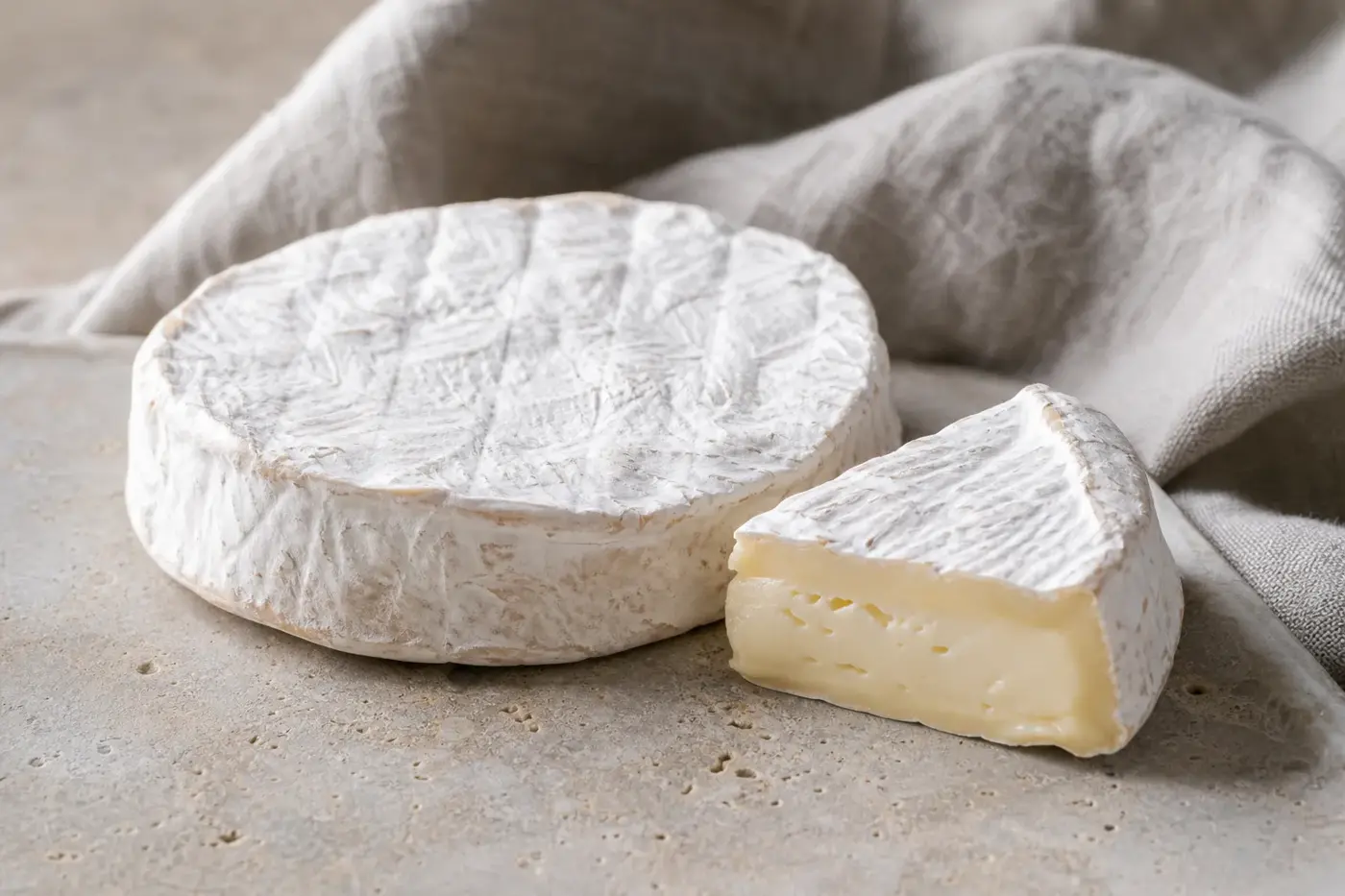
Now look at the cut surface. INAO describes a light, evenly coloured paste, meaning the cheese beneath the rind, with a yielding texture that firms as it matures. The specification allows white, ivory and yellow shades. Any openings are generally irregular: this is not a cheese that lines its holes up for inspection. [1,2,5]
From the maker's hands to the cellar
Here is a small surprise: pressing is optional, although Tomme des Pyrénées is commonly grouped with pressed cheeses. First, a coagulant sets the milk into curd, a solid gel. The maker cuts and stirs it to release liquid whey, then moulds, drains and salts it, using dry salt or brine. [2]
Next comes the cellar, at 7 to 16 °C, with turning and rind care along the way. Raw milk cheeses receive rubbing treatments, either dry or with water or brine. Those temperatures are for production, not your kitchen fridge: follow the refrigeration guidance below at home. [2]
Let the cellar tell its story
Size, milk and covering decide the legal minimum age. For larger heat-treated cow's milk cheeses, even the exterior matters: a black-coated wheel has a shorter minimum than one with a natural rind or golden coating. The requirements below come from the French specification approved in 2020. [2]
| Milk and style | Wheel weight | Minimum maturation |
|---|---|---|
| Heat-treated cow's milk, black coating | More than 1.5 kg to 5.5 kg | 21 days |
| Heat-treated cow's milk, natural rind or golden coating | More than 1.5 kg to 5.5 kg | 45 days |
| Heat-treated goat's or mixed milk; raw cow's or goat's milk | 400 g to 1.5 kg | 30 days |
| Heat-treated goat's or mixed milk; raw cow's or goat's milk | More than 1.5 kg to 5.5 kg | 60 days |
| Raw mixed milk | 400 g to 1.5 kg | 40 days |
| Raw mixed milk | More than 1.5 kg to 5.5 kg | 90 days |
The maturation clock normally starts at renneting; authorised deferred maturation follows a separate counting rule. These figures are minima, not the age of every cheese on the counter. Ask the seller how old your piece actually is. [2]
INAO describes a fresh whey tang in the black-coated cheese. Raw milk versions develop more pronounced aromas according to their milk and maturation, while age makes the texture firmer. That gives you a useful starting point: do you fancy a yielding slice, or a firmer piece with more developed character? [1]
Take your taste buds to the French Alps
Tomme de Savoie takes the comparison into the French Alps, with its own geographically defined identity. The shared word tomme gives you a starting point, not a promise that the cheeses will be alike. Ask about each piece's milk, treatment and age before choosing for your table. [6]
Try Tomme des Pyrénées alongside Comté. Start with the cut surfaces, then compare texture and finish, keeping the bread and accompaniments identical so the differences stay clear. Which would you put in a sandwich, which on a board, and which would you choose for cooking?
Three good questions for the cheese counter
Which milk? Which treatment? How much maturation? Those three questions tell you more than the exterior's colour, so ask to see the label if the cheese is already cut. [2,4]
Look for the full protected name rather than a mountain illustration. A dark covering alone tells you little about milk or age. A handsome mountain cannot do the label's job, however good it looks on the wrapper. [2,4]
If tasting is offered, start with a plain piece before adding bread. Choose the texture you enjoy: stronger flavour does not automatically mean better cheese. Suppleness is useful for sandwiches; for a board that already has a mild cheese, ask for a contrasting milk or age.
Read the individual product's ingredients and handling instructions alongside its identity. The name tells you which specification applies; the label tells you about the piece in front of you. The guide to reading cheese labels helps you navigate those details.
This page summarises published guidance from the official sources it cites. It is not medical advice. Guidance differs between countries and changes over time, so check the current source for where you live, and ask your doctor, midwife, pharmacist or dietitian about your own circumstances.
Get your cheese home and stored safely
Follow the pack's storage instructions at home. The Food Standards Agency's guidance for England, Wales and Northern Ireland recommends a fridge between 0 and 5 °C. Keep the original handling information with a cut piece, especially its date and any instructions for storage after opening. [7]
For the wider storage method, see storing cheese at home. No serving temperature or applicable time limit outside refrigeration is provided here.
Remove wax or plastic coverings before eating. The specification permits paraffin and polyvinyl acetate coverings on qualifying heat-treated milk wheels. If yours has a natural rind, ask the seller about its treatment and eating instructions: looks alone cannot tell you everything applied to the surface. [2]
Give that first bite a little space
Start simply, with sliced country bread, a piece of cheese and fresh pear or apple. Taste the cheese alone, then try each accompaniment separately. The bread keeps the comparison straightforward; the fruit brings a juicy mouthful of its own. Save strongly flavoured relish until after that first taste, so it does not cover the cheese.
For a drink, water is a simple starting point. Or try unsweetened apple juice diluted with sparkling water as a fruit accompaniment.
In the kitchen, begin with open sandwiches, a potato gratin or a savoury tart, using the rind-free cheese as your dairy ingredient. Pick a piece for the flavour you want, whether gentle or more assertive. Taste before adding other salty ingredients, and keep the maker's storage instructions with any cheese you save for another meal.
Questions people ask
What milk is Tomme des Pyrénées made from?
It can be made from cow's milk, goat's milk or specified mixtures that may include sheep's milk. Sheep's milk is permitted only as part of a mixture.
Is Tomme des Pyrénées made with raw or pasteurised milk?
The milk can be raw, thermised or pasteurised. Check the individual cheese's label to find out which treatment was used.
How long is Tomme des Pyrénées matured?
The legal minimum ranges from 21 to 90 days, depending on the milk, wheel size and covering. For larger cow's milk cheeses made with heat treated milk, a black coating requires at least 21 days, while a natural rind or golden coating requires at least 45 days.
Can you eat the rind of Tomme des Pyrénées?
Remove wax or plastic coverings before eating. For a natural rind, ask the seller about the particular product's rind treatment and eating instructions.
How should I store Tomme des Pyrénées?
Follow the pack's storage instructions and keep the original handling information with a cut piece. The Food Standards Agency recommends a fridge between 0 and 5 °C for England, Wales and Northern Ireland.
Sources
-
Institut national de l'origine et de la qualité. Tomme des Pyrénées (IG/50/94), live product record, accessed November 2026. Product identity, sensory description, pastoral context and links to regulatory documents. Official product record.
-
French Ministry of Agriculture and Food. Avis relatif à l’approbation par la Commission européenne d’une modification non mineure du cahier des charges de l'indication géographique protégée « Tomme des Pyrénées », with the associated specification, BO Agri no. 2020-22, 2020. Sections 2, 3 and 5 establish product characteristics, geographical boundaries, permitted milks, production and maturation. Official notice and specification.
-
Department for Environment, Food & Rural Affairs. Tomme des Pyrénées, GB protected food names register entry, published 4 January 2021, accessed November 2026. Registered PGI status and scheme registration date. Official GB register entry.
-
Association Les Fromagers Pyrénéens. Nouveau cahier des charges : la Tomme des Pyrénées IGP se conjugue maintenant au pluriel !, 6 November 2020. The producer association's account of the expansion of the specification, used as an attributed industry statement. Association statement.
-
European Commission. Publication d’une demande d’approbation d’une modification non mineure d’un cahier des charges, “Tomme des Pyrénées”, 2019/C 431/18, 23 December 2019. Amendment application explaining changes to milk types, dimensions and appearance; read alongside the subsequently approved specification in source 2. Official Journal document. )
-
Institut national de l'origine et de la qualité. Tomme de Savoie, geographical record, internal record ID 1548, modification date 5 February 2019, accessed November 2026. Used only for the broad geographical comparison with Savoie. Official geographical record.
-
Food Standards Agency. How to chill, freeze and defrost food safely, published 18 December 2017, live guidance retrieved November 2026; applies to England, Northern Ireland and Wales. Refrigeration and following storage instructions. Official guidance.
Researched through official French product records, the published specification, EU amendment documentation, the GB register and official storage guidance, with the producer association's statements distinguished from regulatory evidence.
Last checked: November 2026
Last checked November 2026.
The editors suggest you read next