Triple Rose
Your knife slips through Triple Rose’s white mould rind into a soft, cream-enriched centre.
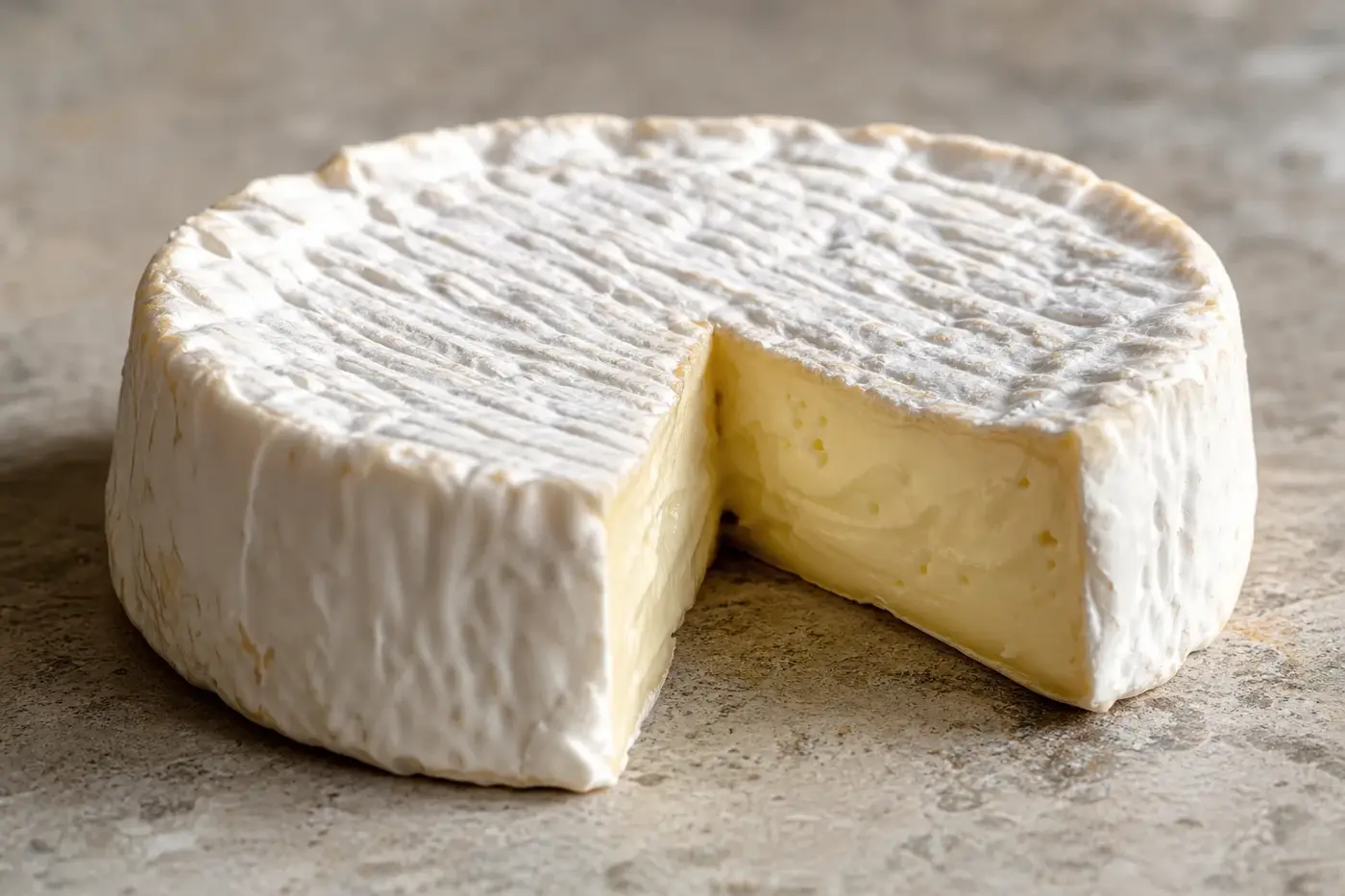
Your knife slips through Triple Rose’s white mould rind into a soft, cream-enriched centre. This is milk from Ballylisk of Armagh’s own herd in County Armagh, Northern Ireland, given a generous helping of cream. But richness is not the whole story: the maker describes salt and lemony notes, a bright little interruption to all that softness. [2,4]
Get acquainted with Triple Rose
| What you might wonder | What to know |
|---|---|
| Name | Triple Rose [1] |
| Maker | Ballylisk of Armagh [1] |
| Home | County Armagh, Northern Ireland [1] |
| Milk | Pasteurised cow's milk, with added cream [1] |
| Style | Soft, white mould-ripened triple cream [1] |
| Rennet | Vegetarian, according to the maker [2] |
| Shape | Circular [2] |
| Ripening period for Triple Rose | Not specified here [2] |
A family farm with roses in its past
Between Portadown and Tandragee, Ballylisk’s family farm sits in the townland that gives the business its name. Around it is Armagh’s pasture and fruit-growing country, home to the farm’s pedigree Holsteins, as the maker identifies them. Your piece of Triple Rose starts with that particular herd, before added cream brings its deliberate richness. [3]
The dairy business dates to 2017. Ballylisk’s account records premises being obtained in June that year, with the first cheeses following in April 2018. A home for the business came first; the cheese followed. [3]
The rose has local roots too. Ballylisk says the townland previously formed part of the McGredy rose farm. Its rose emblem and cheese names acknowledge that connection, so Triple Rose carries a little of the place’s history beneath its rind. [3]
One herd, a short journey and extra cream
“Single herd” tells you where the milk comes from. “Triple cream” tells you about its enrichment. Ballylisk confirms that Triple Rose combines milk from its own herd with added cream, while its product page identifies the milk as pasteurised. [1]
That milk has a short journey ahead. The maker describes collecting raw milk at the farm, then taking it on a five-minute drive to the production facility for pasteurisation. It is raw when collected, but pasteurised before it becomes the finished cheese. [2]
You can explore the wider distinctions in raw milk, thermised and pasteurised cheese. For Triple Rose, keep both farm and recipe in mind: one herd supplies the milk, but that milk does not supply all the cheese’s fat. The added cream has a part of its own to play. [4]
Triple cream, without the number muddle
Triple cream sounds gloriously extravagant. It does not mean that three quarters of the cheese on your plate is fat, though. In culinary usage, triple-cream cheese is commonly described as having at least 75% fat in dry matter. [5]
The cookery reference used here gives that convention on a dry-weight basis. Put simply, it measures the proportion of fat in the solids after you exclude the water. Those last few words make quite a difference. [5]
Nutrition information asks a different question. Grams of fat per 100 g of cheese measure the whole product, including its water. A high fat-in-dry-matter percentage can therefore sit alongside a much lower fat percentage in the cheese you eat, because the figures use different denominators. [5]
To calculate fat in dry matter, divide the weight of fat by the weight of dry matter, then multiply by 100. To turn that back into fat in the whole cheese, you also need the moisture figure. Before comparing percentages, check whether you are looking at the solids or the whole portion. [5]
The hands-on work behind the round
Starter cultures and vegetarian rennet begin the transformation. Ballylisk names both in its production account: cultures are microorganisms that start fermentation, while rennet is the coagulant that helps milk form solid curd. The liquid released from that curd is whey. [2,6]
Next come draining, hand salting and care during ripening. The maker’s account describes a succession of distinct jobs, not simply milk being left to consider its future. Here is how the published method unfolds. [2]
| Stage | What happens along the way |
|---|---|
| Setting | Starter cultures and vegetarian rennet are added. [2] |
| Draining | Curds are tipped into moulds and left overnight to drain and solidify. [2] |
| Salting | Each cheese is salted by hand. [2] |
| Ripening | Cheeses are turned and cared for as they ripen. The period for Triple Rose is not specified here. [2] |
| Finishing | Cheeses are wrapped for distribution. [2] |
Each stage has its moment and helps shape the eventual texture. First the curd forms, then it drains, then the formed cheese matures. For a closer look at the ingredient that helps milk set, head to rennet explained. [6]
Look beneath that white rind
Triple Rose’s white rind is more than a handsome covering. Ballylisk identifies it as white mould-ripened, placing it in the bloomy-rind family: cheeses that mature beneath surface mould. In this family, ripening works from the outside towards the centre. [1,7]
The American Cheese Society describes a rise in pH, meaning a reduction in acidity, as surface mould-ripened cheeses soften. That helps explain why the outer paste can soften before the middle. If “paste” sounds oddly technical, it is simply the cheesemonger’s word for the cheese beneath the rind. [7]
Softening is only part of the story. A microbiological account published by the American Society for Microbiology describes connected changes in acidity, minerals and the milk-protein framework. Together, these explain how a developing bloomy-rind cheese can have a softer layer beneath its white rind and a firmer centre. [6]
Your cut portion offers a glimpse of that process. Compare the centre with the paste just under the rind: does the texture look even, or can you see distinct zones? The cross-section tells you more about ripening than the rind alone. [6,7]
Let the first mouthful set the pace
Salt and lemony notes are the most specific clues in Ballylisk’s flavour description. Look for the way that salt and sharp, citrus-like impression meet the cream-enriched body. These are starting points, not an entrance exam for people with unusually serious cheese knives. [1]
Try your first mouthful alone, then another on plain bread. Does the bread change how you perceive the salt or acidity? Compare rind and centre too, noting what you find rather than searching for elaborate tasting language.
Before tasting, smell the freshly cut surface and the rind separately. Notice whether the paste holds its shape or spreads readily, and whether its texture changes from edge to centre. Those simple observations give you a useful record of the particular portion in front of you.
A regional honour worth noting
Triple Rose has recognition to go with its local roots. The maker records it as best regional cheese of Northern Ireland at the 2022 Virtual Cheese Awards. [1]
Keep it cool and the label close
Keep Triple Rose refrigerated and follow its packaging. The Food Standards Agency’s November 2026 guidance for England, Northern Ireland and Wales advises a domestic fridge temperature between 0 and 5 °C (32 to 41 °F). Check the label for the cheese’s date and any instructions for after opening. [8]
Bring only the portion you plan to serve towards room temperature, leaving the rest refrigerated. The FSA advises keeping chilled food out of the fridge for the shortest possible time during preparation, with a maximum of four hours. Its separate hot-weather advice says to avoid leaving food out beyond two hours in hotter than usual weather, and to discard perishables left out longer. [8,9]
When judging whether this particular cheese is past its best, use the pack’s storage instructions rather than a Triple Rose-specific checklist here. Do not eat the cheese after its use by date. Texture alone cannot answer the safety question. [8,9]
Ripening and food safety are separate matters. A softening paste tells you that the texture has changed, not that the cheese is fit to eat. The FSA advises against eating food after its use-by date and, in its hot-weather guidance, says not to serve food if you are uncertain how long it has been out of refrigeration. [9]
For wrapping, caring for cut surfaces and dealing with unwanted mould, see how to store cheese at home and mould on cheese. Keep the maker’s packaging with the cheese after serving. You will then have the date and storage instructions close to hand.
Make room for Triple Rose on your plate
Plain bread or an unflavoured cracker keeps the accompaniment restrained, with fresh pear or apple alongside. The maker’s description of salty, lemony richness suggests giving the cheese room rather than surrounding it with strong seasoning. Keep fruit and preserves separate so you can choose your own balance. [1]
Try sparkling water for a simple drink, or apple juice if you fancy something fruitier. Start with a small taste of each and choose whichever lets you notice the cheese most clearly. There is no need to build a complicated board around one soft cheese.
Set out your bread, fruit and plates before taking the serving portion from the fridge, and follow the FSA time limits above. Cut across the round so each portion includes both centre and rind. You can then explore the differences while staying within the serving window. [8,9]
Where will your cheese curiosity take you next?
- How to Tell Cheese Styles Apart: Milk, Rind, Texture and Method: find Triple Rose’s place in the wider world of cheese styles.
- How to Read a Cheese Label: make sense of milk treatment, ingredients and storage information.
General information only, not medical advice: follow the official guidance where you live.
Questions people ask
What milk is used in Triple Rose, and is its rennet vegetarian?
Triple Rose is made with pasteurised cow's milk from Ballylisk of Armagh's own herd, with added cream. The maker says it uses vegetarian rennet.
Does triple cream mean the cheese is 75% fat?
Not as eaten. The 75% convention describes fat as a proportion of the solids after water is excluded, rather than as a proportion of the whole cheese.
Why might Triple Rose be softer near the rind than in the centre?
Triple Rose is ripened beneath a covering of white mould, with ripening progressing from the outside towards the centre. In this family of cheeses, the outer paste can soften before the middle.
How should Triple Rose be stored?
Keep it refrigerated and follow the packaging instructions. For England, Northern Ireland and Wales, the Food Standards Agency advises a domestic fridge temperature between 0 and 5 °C; check its current guidance.
What can I serve with Triple Rose?
The page suggests plain bread or an unflavoured cracker, with fresh pear or apple alongside. Sparkling water or apple juice are suggested drinks to try.
Sources
- Ballylisk of Armagh, Triple Rose: Triple Cream Single Herd Cheese, undated product page, retrieved November 2026. Product identity, ingredients, milk treatment, flavour description and maker reported recognition. Read at ballyliskcheese.com
- Ballylisk of Armagh, Our Cheese, undated production and range description, retrieved November 2026. Milk collection, pasteurisation, vegetarian rennet, curd handling and ripening.
- Ballylisk of Armagh, Our Story, undated maker history, retrieved November 2026. Farm setting, herd, business chronology and explanation of the rose name.
- Ballylisk of Armagh, Ballylisk of Armagh, undated official homepage, retrieved November 2026. Single-herd Triple Rose description and family-farm milk provenance.
- Auguste Escoffier School of Culinary Arts, hosted extract from Professional Cooking, chapter 26, “Dairy and beverages”, edition and publication year not identified in the retrieved extract, pages 802 to 803. Dry-matter terminology, triple-cream convention and soft-ripened cheese characteristics.
- American Society for Microbiology, The Basics of Cheesemaking, Microbiology Spectrum, 31 October 2013, DOI 10.1128/microbiolspec.cm-0002-2012. General cheesemaking principles and bloomy-rind maturation.
- American Cheese Society, Best Practices Guide for Cheesemakers, second edition, February 2017, “Surface Mold-Ripened Cheeses”. Outside-in maturation and associated softening.
- Food Standards Agency, How to chill, freeze and defrost food safely, published 18 December 2017, current retrieved text checked November 2026. Guidance expressly applies to England, Northern Ireland and Wales.
- Food Standards Agency, Food safety in a heatwave, advice for consumers, published 27 June 2024, current retrieved text checked November 2026. Hot-weather handling, use-by dates and uncertain refrigeration history.
- Buy NI Food, Ballylisk of Armagh, undated supplier profile, retrieved November 2026. Corroborating listing of the 2021 Great Taste and 2020 Blas na hÉireann results.
Researched through the maker's published accounts, a regional supplier profile, cheesemaking references and official food-handling guidance; serving suggestions are editorial judgements.
Last checked: November 2026
Last checked November 2026.
The editors suggest you read next