Ukrainian Cheese
High on the Carpathian summer pastures, sheep and cattle graze at least 700 metres above sea level.
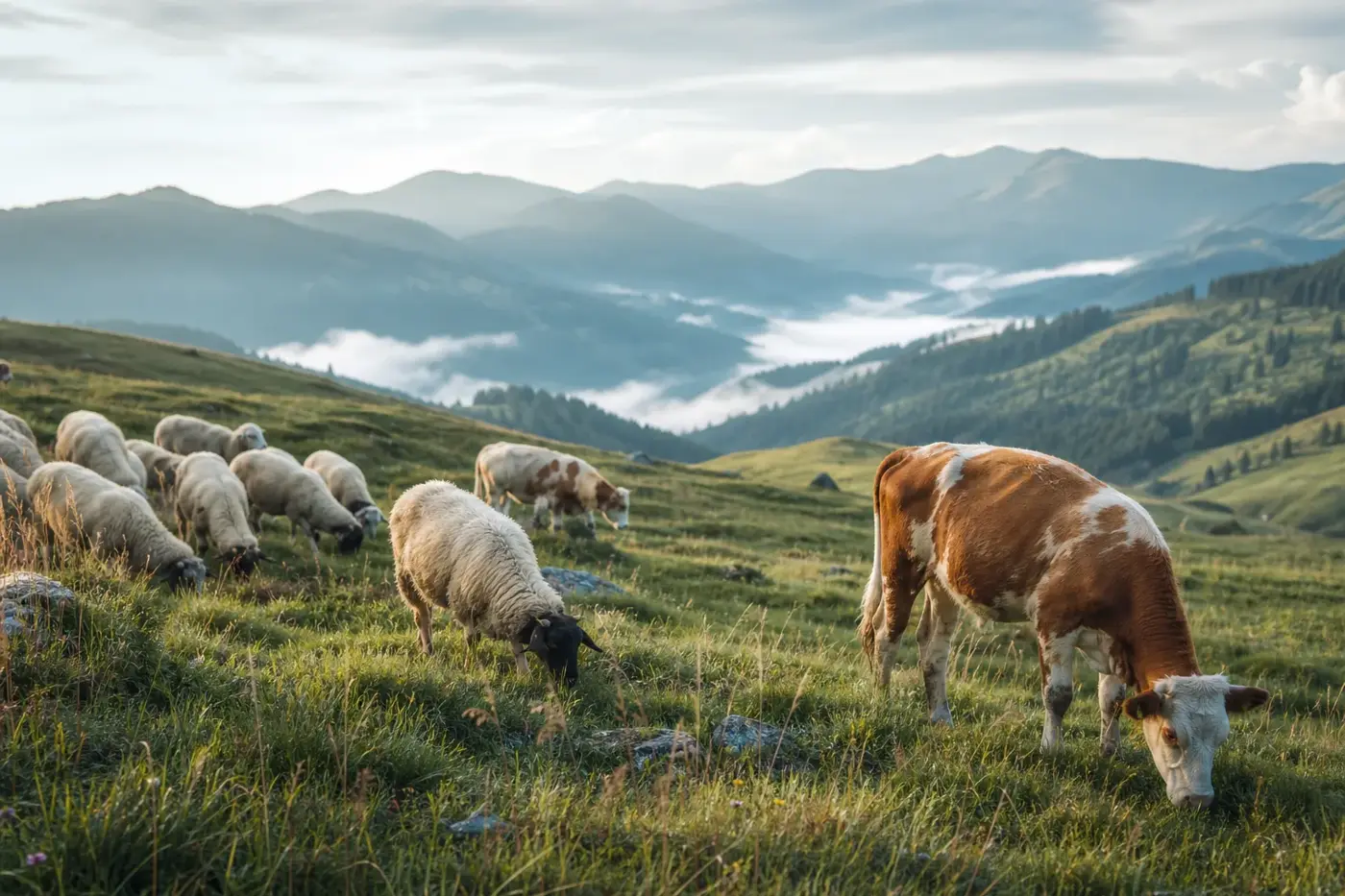
High on the Carpathian summer pastures, sheep and cattle graze at least 700 metres above sea level. These working uplands, known as polonyny, are home to two registered Hutsul cheeses: sheep bryndzia and cow bryndza. Their names carry the pastures, livestock and ways of handling milk with them.[1][2][3]
Follow the story down the mountain and you find fresh sour milk curd for syrnyky and varenyky, household dairying and the firm cheeses of Ukraine’s larger producers. There is a whole cheese culture here, not just a mountain speciality. You may need a little more room in the fridge than planned.[6][7][8]
| Your quick guide | Ukrainian cheese |
|---|---|
| Where to find the mountain cheeses | Ukrainian Carpathians; the two Hutsul indications have different legally defined areas.[2][3] |
| The registered sheep cheese | ГУЦУЛЬСЬКА ОВЕЧА БРИНДЗЯ, Ukrainian registration 3117, registered 11 November 2019.[1] |
| The registered cow cheese | ГУЦУЛЬСЬКА КОРОВ’ЯЧА БРИНДЗА, Ukrainian registration 3118, registered 12 October 2020.[1] |
| Who keeps the register | Ukrainian National Office for Intellectual Property and Innovations, published geographical indications register.[1] |
| Your everyday cooking cheese | Кисломолочний сир, sour milk cheese for syrnyky and sweet or savoury varenyky.[7][8] |
| Registration snapshot | November 2026, Ukrainian register. Protection in other jurisdictions: undetermined.[1] |
Follow the herds to the summer pastures
A polonyna is a working pasture, not simply a fine view. Summer grazing, local livestock and the handling of mountain milk help define the registered Hutsul cheeses. Both records require highland pastures at least 700 metres above sea level.[2][3]
For the sheep cheese, the specification describes a seasonal system built around summer milk. The cow cheese record ties production to animals grazing the Carpathian uplands from the middle of May to the end of September. Pasture, animals and cheesemakers are inseparable from the requirements attached to these names.[2][3]
Those boundaries give Hutsul cheese its mountain identity, but Ukraine’s dairy life stretches much further. Household production and larger agricultural enterprises are part of it too. The USDA’s Kyiv agricultural reporting treats household and industrial milk as separate sectors, taking you well beyond the uplands.[6]
Sheep, cow or goat? Read the whole name
Milk is central to the two registered Hutsul identities. Sheep milk leads one specification; cow milk leads the other. Both allow a limited contribution from other local mountain livestock, including goats.[2][3]
So the full name tells you more than the broad word bryndza. A sheep cheese may contain a permitted mixture, while a cheese led by cow milk need not contain cow milk alone. When you compare makers, give the ingredients as much attention as the front label.
Cow milk also underpins the much larger dairy economy described in Ukraine’s agricultural reporting. Household cattle keeping and commercial herds contribute differently to that supply. Goat milk has an explicit place in the mountain specifications, but the ingredients list tells you whether your producer has used it.[2][3][6]
If you want to explore the broader distinctions, start with milk treatment explained.
Get to know sheep bryndzia: salt, crumble and mountain hay
Picture an ivory to yellowish cheese, crumbly and relatively dry. The specification describes Hutsul sheep bryndzia through sheep milk, gentle acidity, salt and mountain hay. Maturation makes that character sharper and more pronounced.[2]
You will find it registered in Ukraine as ГУЦУЛЬСЬКА ОВЕЧА БРИНДЗЯ. Its record requires at least 80% sheep milk and allows up to 20% cow or goat milk. The defined area encompasses Hutsul territory within Zakarpattia and specified areas of Ivano-Frankivsk and Chernivtsi, following the administrative descriptions printed in the record.[1][2]
The making helps explain the crumble. The initial curd cheese, budz, matures briefly before its rind is removed; then it is ground, salted and packed. Think of something you might crumble or spoon over food, rather than necessarily a neat block resting in brine. That crumbly texture belongs alongside the specification’s salt, acidity and mountain hay.[2]
Get to know cow bryndza: fine grains and smoke
Hutsul cow bryndza brings a different texture to your plate. Its official description gives fine grains and a crumbly yet slightly sticky consistency, with milk, cream, salt and smoke shaping the aroma. The colour runs from pale yellowish to yellow, and maturation makes the flavour more assertive.[3]
This cheese has its own registration as ГУЦУЛЬСЬКА КОРОВ’ЯЧА БРИНДЗА. It requires at least 70% cow milk, with up to 30% sheep or goat milk permitted. Its recorded area covers Ivano-Frankivsk and Zakarpattia, plus the named Putyla, Vyzhnytsia and Storozhynets districts of Chernivtsi.[1][3]
Both cheeses are Ukrainian geographical indications, each recorded under the designation “name of place of origin”. Their status here rests on those Ukrainian registrations. For the differences between national schemes and EU PDO or PGI categories, turn to protected names explained.[1][2][3]
Budz and vurda: two paths from the same milk
Budz begins with curd; vurda begins with whey. Hold on to that distinction and two strands of mountain cheesemaking become much easier to follow.
In the sheep bryndzia process, rennet brings the milk together into curd. Rennet is an enzyme preparation that coagulates milk. The cheesemaker gathers the curd into a head and drains off the whey, the liquid released as cheese forms. That gathered curd cheese is budz.[2]
You may encounter budz before it goes any further. For registered bryndzia, though, drying, short maturation, grinding and salting follow. Calling every budz simply “fresh cheese” misses those later stages and the changes they bring.[2]
Vurda follows the other path. It is a whey cheese, made from the liquid left after the curd is separated, while budz comes from the curd itself. Ask the maker how either has been processed, because the products can differ.
For a closer look at that basic separation, explore how cheese is made.
Find the fresh curd for your Ukrainian kitchen
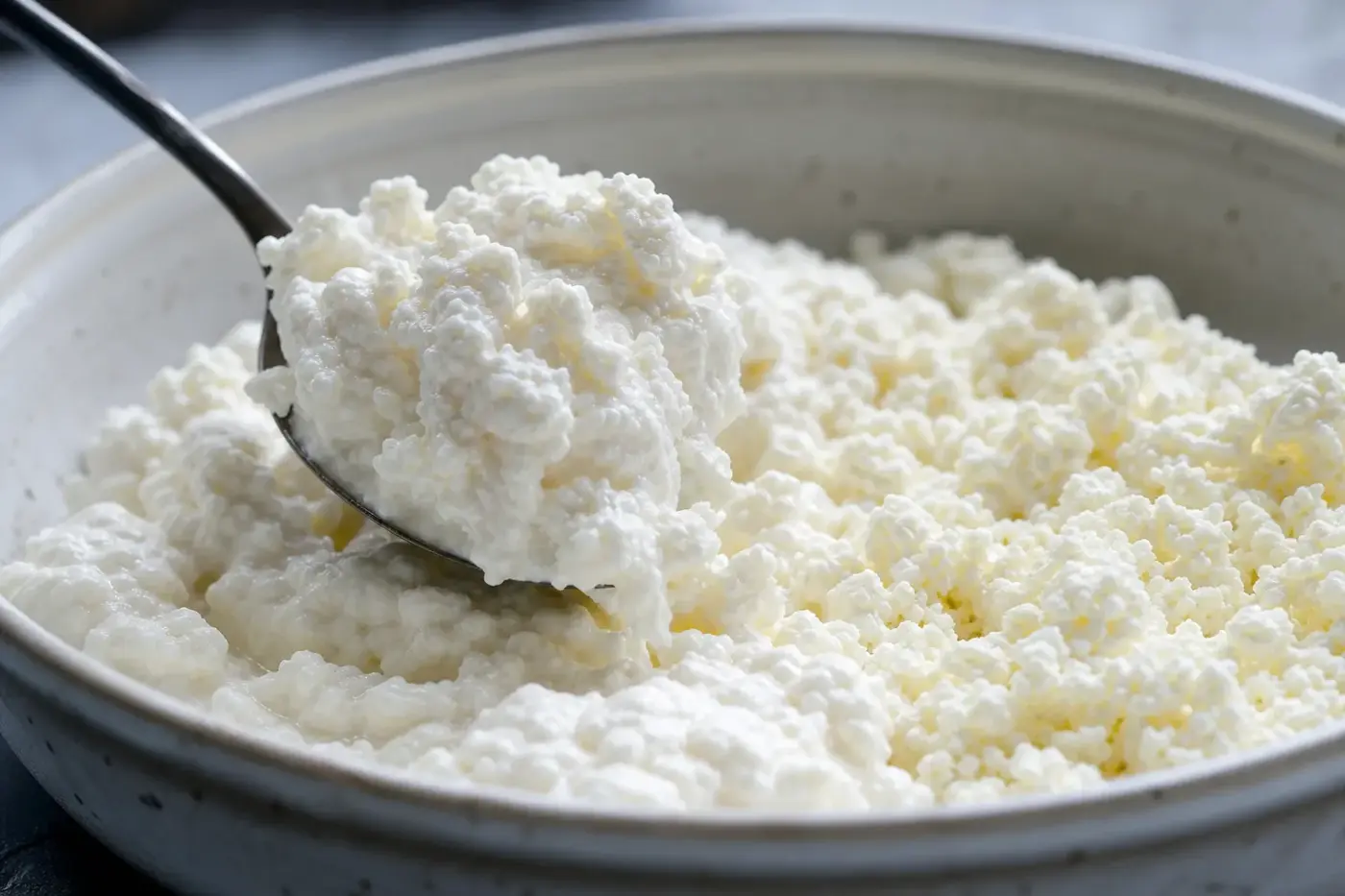
For the fresh cheese used in syrnyky and cheese-filled varenyky, keep this name handy: Кисломолочний сир. Transliterated as kyslomolochnyi syr, it means sour milk cheese. It is a useful shopping companion.[7][8]
Once you reach the kitchen, moisture and texture matter as much as translation. The Klopotenko culinary website recommends soft, reasonably uniform cheese without excessive free liquid for syrnyky. For varenyky, its guidance allows a grainier filling or a smoother one, depending on how you work the cheese.[7][8]
Outside Ukraine, start with those qualities rather than an English label saying “cottage cheese”. Look for plain fresh curd with moisture and texture suited to your dish. Unsalted farmer cheese or well-drained quark are practical substitutions to compare, then follow a recipe written for what you can obtain. That is a cooking suggestion, not a claim that these cheeses are identical.
Put cheese at the heart of syrnyky and varenyky
Syrnyky are cheese-based cakes, not ordinary pancakes with a little cheese waved through. The Klopotenko recipe combines sour milk cheese with egg and flour. Its accompanying guidance discusses raisins, poppy seeds and dried apricots as additions, but cheese remains the main event.[7]
Varenyky wrap fresh cheese in dough. The same culinary source describes sweet and savoury cheese fillings, including a sweet version served with sour cream or honey. You can leave the curds distinct for a grainier filling or work them until smoother.[8]
There is no single “Ukrainian cheese filling” to pin down. Sweetness, additions, dough and accompaniments all vary. For either dish, begin with the recipe’s description of consistency, then notice how much liquid your cheese releases before putting it to work.[7][8]
Before you cook, taste a little plain curd on its own. Follow it with sour cream or a spoonful of preserve. This suggested sequence helps you distinguish the cheese’s own character from the flavour of the finished dish.
Look beyond the mountains for firmer cheeses
Ukraine also makes medium-hard cheese for domestic consumption and export. USDA reporting describes these cheeses returning to established markets in former Soviet countries. At the same time, imported cheeses compete for space on Ukrainian shelves.[6]
Among those imported firm cheeses, the report names Gouda, Emmental, Edam and Cheddar. A familiar European name does not tell you the whole journey or the place of production. Style and origin are separate questions: seeing that name in a Ukrainian shop does not mean the cheese was made in Ukraine.[6]
Those export relationships still show the Soviet trading inheritance. For the cheese in your hand, look for the actual maker, production location and product description. A name alone cannot tell you whether a historical recipe lies behind it.
When choosing a Ukrainian firm cheese, ask a few practical questions. Is it supple or brittle, has it been smoked, and does the maker state its maturation? Those details help you compare dairies without expecting identical results. For help separating manufacturer from packer or distributor, see reading a cheese label.
Taste the marks of salt, smoke and summer
Do not assume Hutsul bryndzia lives in brine. Brining means holding cheese in a salt solution, which can affect flavour, texture and keeping qualities according to the cheese and its storage conditions. The published Hutsul accounts instead describe grinding budz, mixing it with salt and packing it tightly.[2][5]
Smoke has a specific role in the cow bryndza account published by the Ukrainian geographical indications association. There, the budz is smoked before grinding. It belongs to a documented production sequence, rather than being something you should expect from every Ukrainian mountain cheese.[5]
Time makes its contribution too. Both official Hutsul descriptions say the flavour strengthens with maturation. Summer shapes the cheeses earlier still, through pasture requirements that make the season part of the production system.[2][3]
At home, follow the pack rather than assumptions about tradition. Buy according to its storage instructions and remaining labelled life. A maker’s controlled preservation process does not tell you how long an opened retail portion will keep in your domestic fridge.
Meet dairy communities living through war
Some dairy farms have moved; others have stayed and adapted to disrupted daily life. In its 2025 annual report, the USDA’s Kyiv office described farms relocating from areas near the front line to western Ukraine. It also recorded risks from infrastructure attacks and workforce shortages, and linked population displacement with changes in dairy consumption.[6]
A western location does not remove every pressure. FAO’s documentary record from Lviv oblast, dated August 2024, describes a sheep-cheese farm affected by fewer tourists and power outages. Its response included solar panels, a generator and milking equipment obtained with FAO and EU support.[9]
These are distinct experiences, not interchangeable stories. In some places, farms have physically relocated; elsewhere, interrupted electricity and lost visitors have prompted practical adaptation. Both belong in the national picture, while that individual farm’s experience remains its own.[6][9]
Choose your cheese and bring it home
At a Ukrainian grocer or specialist cheesemonger, ask for the full product name, milk ingredients and place of manufacture. For either registered Hutsul cheese, compare the label with the exact Ukrainian name above. If it simply says bryndza, ask how it was made before assuming it follows either specification.[1][2][3]
If imports are unavailable, choose a substitute for the job. Try plain fresh curd for a fresh-cheese dish, a locally available whey cheese when a recipe specifically calls for one, or a crumbly salted cheese for a topping. Keep the substitute’s own name, and taste before adjusting the added salt.
For England, Northern Ireland and Wales, the Food Standards Agency advises keeping your home fridge at 5 °C or below. Follow the pack’s storage instructions and date labels, and consult current official guidance where you live.[10] You can also turn to how to store cheese at home.
Take a tasting trip from fresh curd to salted crumble
Begin gently with plain curd and finish with the more assertive salted cheese. For this suggested route, serve small portions and keep each cheese’s packaging and instructions to hand:
- Plain sour milk curd: taste it without accompaniments. Notice the size of the grains and how much free moisture you find.
- Budz, where available: compare its gathered curd with the looser fresh cheese.
- A Ukrainian medium-hard cheese: study the cut surface, then compare its firmness with both.
- A salted Hutsul cheese: finish here, choosing according to the maker’s description and stated maturation.
Offer plain bread and water first. Then try crumbling the salted cheese over warm potatoes or maize porridge as a serving suggestion. Simple accompaniments leave you room to notice and discuss salt, smoke and texture. Your most elaborate cheeseboard can have the evening off.
General information only, not medical advice: follow the official guidance where you live.
Questions people ask
What is the difference between Hutsul sheep bryndzia and cow bryndza?
Sheep bryndzia requires at least 80% sheep milk and may contain up to 20% cow or goat milk. Cow bryndza requires at least 70% cow milk and may contain up to 30% sheep or goat milk.
What is the difference between budz and vurda?
Budz is made from the curd gathered when milk is coagulated. Vurda is a whey cheese made from the liquid left after the curd has been separated.
What cheese is used for syrnyky and varenyky?
The Ukrainian name is kyslomolochnyi syr, meaning sour milk cheese. For syrnyky, the Klopotenko culinary website recommends soft, reasonably uniform cheese without excessive free liquid.
Is Hutsul bryndzia stored in brine?
Not automatically. Published Hutsul accounts describe grinding budz, mixing it with salt and packing it tightly.
How should Ukrainian cheese be stored at home?
The Food Standards Agency advises keeping a home fridge at 5 °C or below in England, Northern Ireland and Wales. Follow the pack’s storage instructions and date labels, and check the current official guidance where you live.
Sources
[1] Ukrainian National Office for Intellectual Property and Innovations. Реєстр географічних зазначень, live geographical indications register, entries 3117 and 3118, checked November 2026.
[2] Ukrpatent. ГУЦУЛЬСЬКА ОВЕЧА БРИНДЗЯ, published registration record 3117, registered 2019, product description, production method and geographical boundaries.
[3] Ukrpatent. ГУЦУЛЬСЬКА КОРОВ’ЯЧА БРИНДЗА, published registration record 3118, registered 2020, product description, milk proportions, labelling and geographical boundaries.
[4] Ukrinform. Гуцульська коров’яча бриндза: смак столітніх традицій, original reporting, 8 September 2020. Used for its identification of mountain cheese names, not present registration status.
[5] Geographical Indications of Ukraine association. Гуцульська коров’яча бриндза, undated producer-tradition account, retrieved November 2026. An association account, not a regulatory source.
[6] USDA Foreign Agricultural Service, Kyiv. Dairy and Products Annual, report UP2025-0030, 2025. Its estimates and forecasts are identified as such in the report.
[7] Klopotenko culinary website. Рецепт сирників. Як приготувати класичні сирники, undated online recipe and ingredient guidance, retrieved November 2026. A commercial culinary publication.
[8] Klopotenko culinary website. Солодкі вареники з сиром, undated online recipe and serving guidance, retrieved November 2026. A commercial culinary publication.
[9] Food and Agriculture Organization of the United Nations. UKRAINE 2024. Various FAO projects and areas of work across the country, documentary caption, Lviv oblast, 28 August 2024.
[10] Food Standards Agency. How to chill, freeze and defrost food safely, published 18 December 2017, current retrieved text checked November 2026; applies to England, Northern Ireland and Wales.
This desk-researched guide draws together Ukrainian registration records, Ukrainian culinary accounts and dated agricultural reporting; serving and substitution suggestions are identified as editorial suggestions.
Last checked: November 2026
Last checked November 2026.
The cheeses of Ukraine
The editors suggest you read next
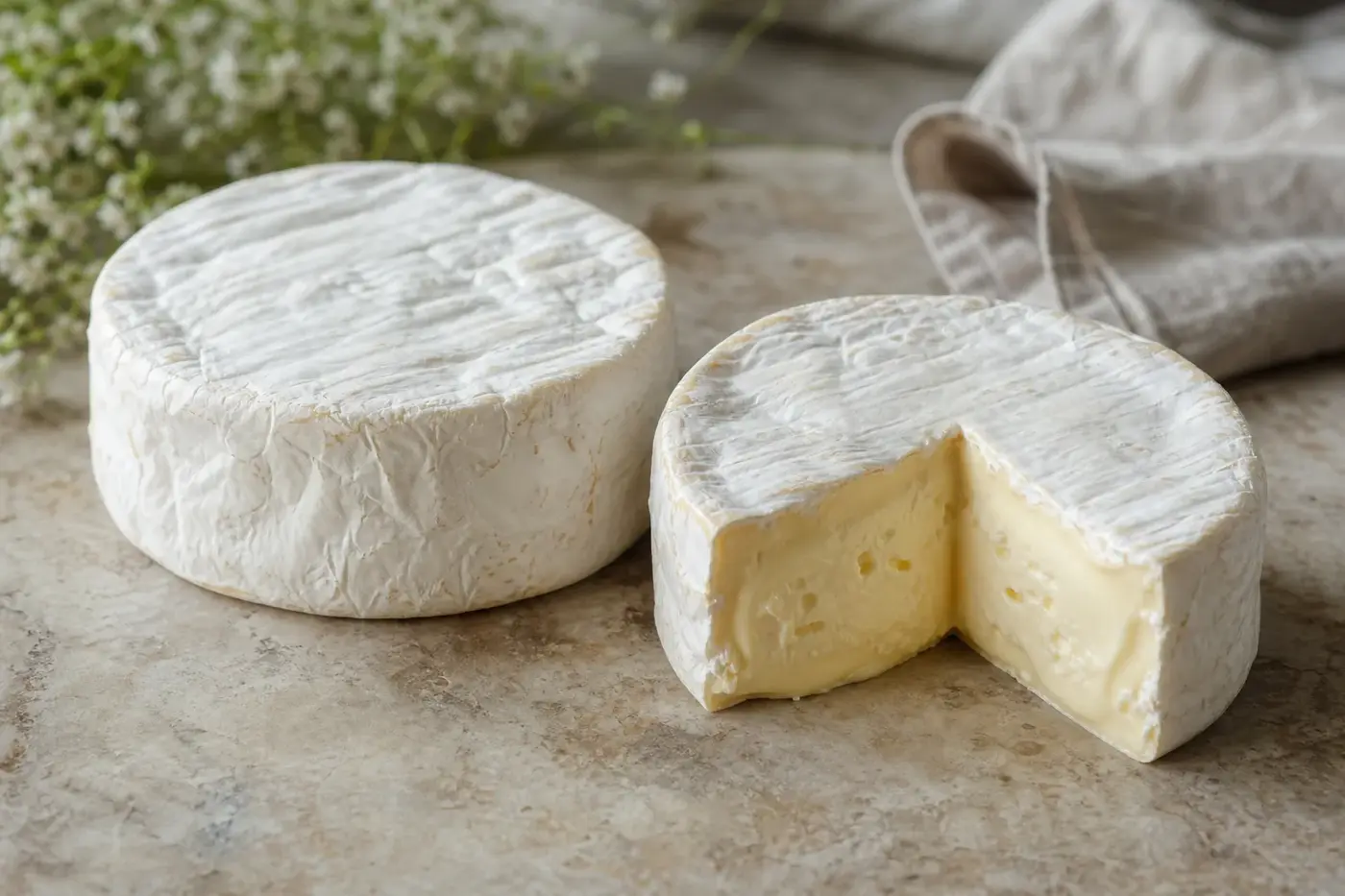
French Cheese: The Complete Guide
Picture Normandy’s pastures, then follow the milk towards the Loire’s goat dairies, the Jura’s shared cheesemaking traditions and the sheep country of the Pyrenees.