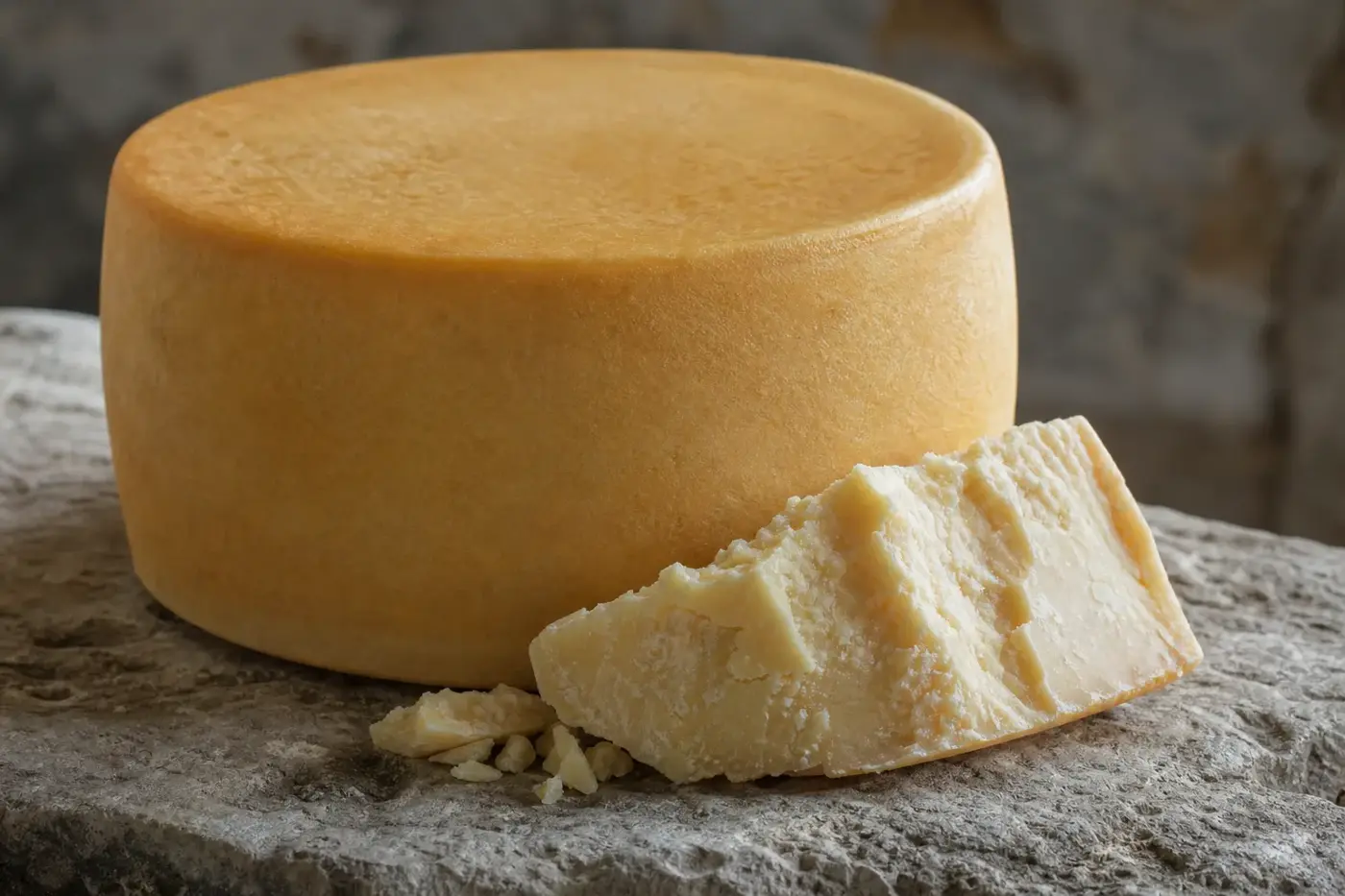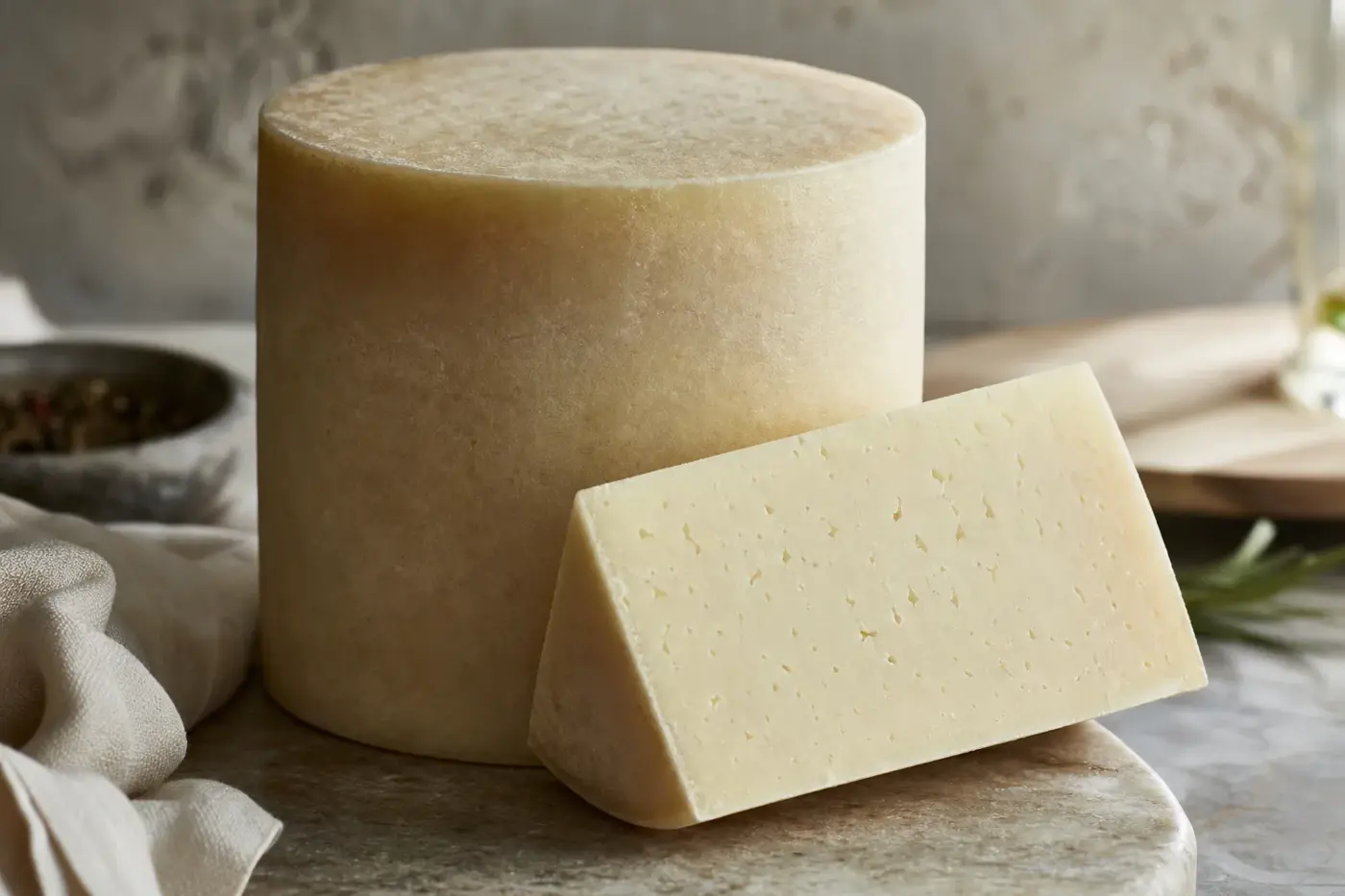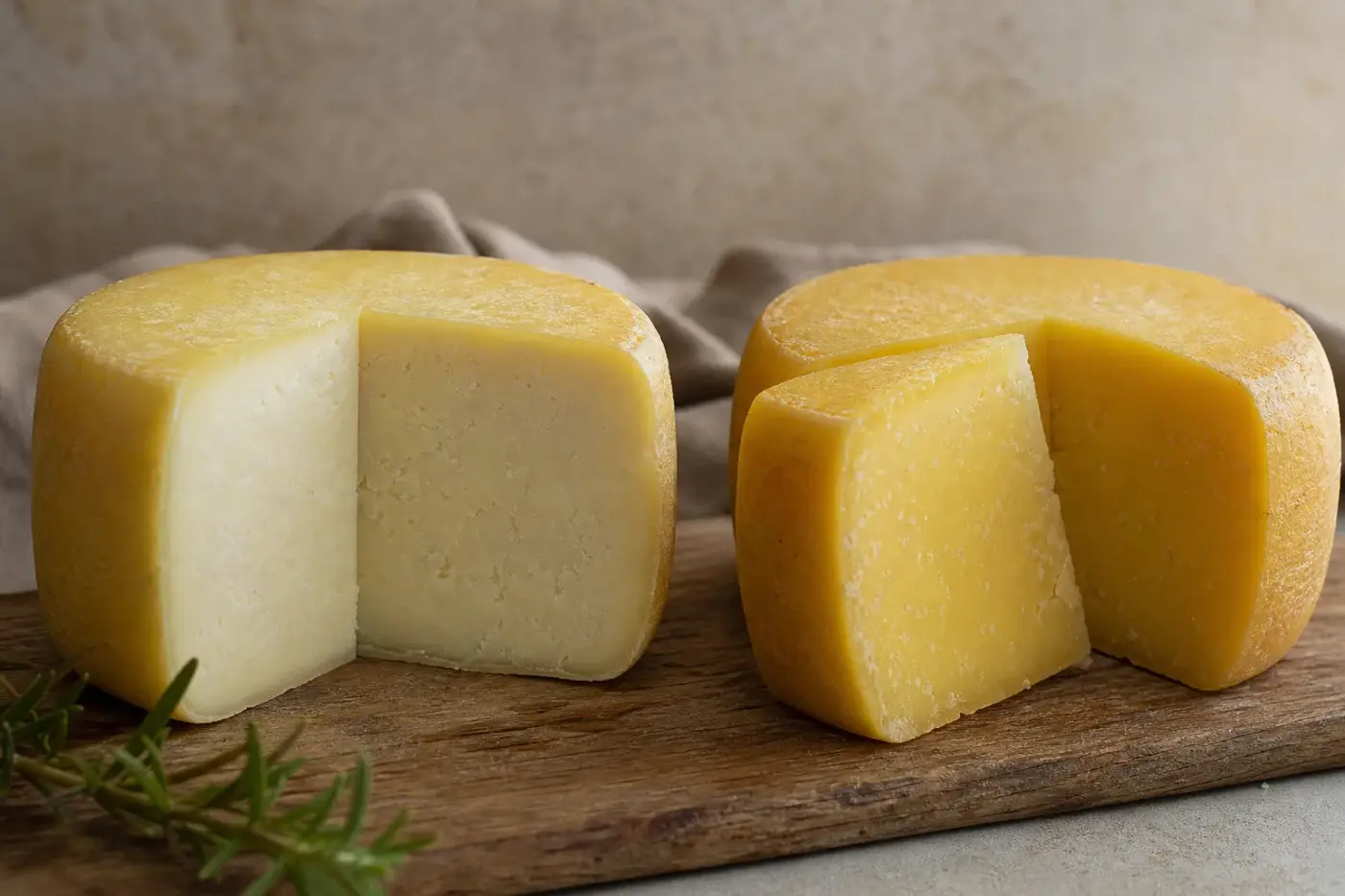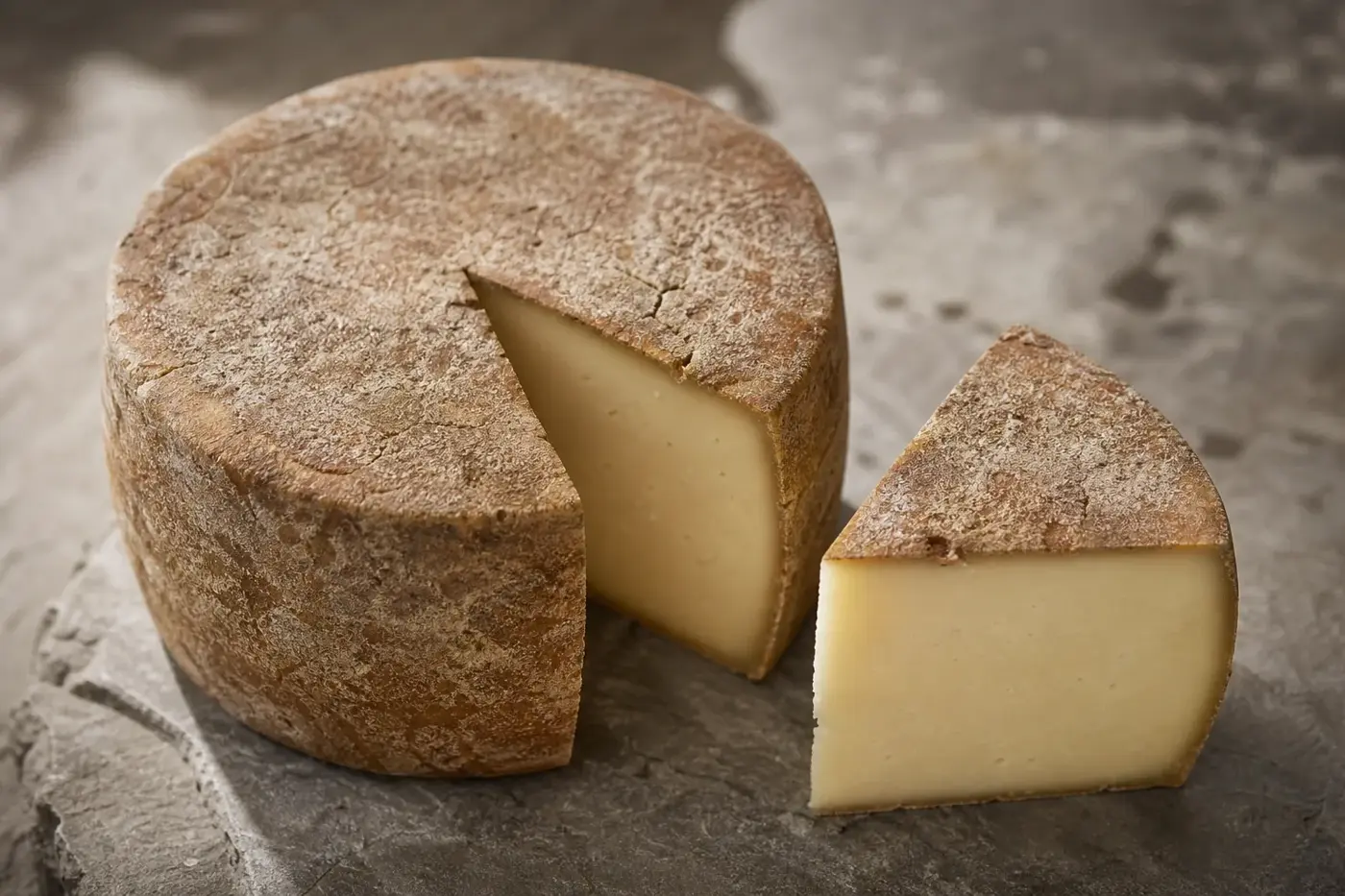
Watch the cream gather on the surface of resting milk. Lift it away for butter, and what remains becomes Valle d'Aosta Fromadzo: a resourceful Alpine cheese, gentle and supple when young or more assertive with age. A little goat’s milk or aromatic plants can change its character again. As of November 2026, Valle d'Aosta Fromadzo is a registered PDO in the EU and Great Britain.[1][3][4][5]
| At a glance | What to know |
|---|---|
| Familiar and registered name | Valle d'Aosta Fromadzo.[1] |
| Alternative specification name | Vallée d'Aoste Fromadzo.[2] |
| EU authority and identifier | European Commission, eAmbrosia, PDO-IT-1504; record EUGI00000013384.[1] |
| EU status | Registered PDO; protected since 21 June 1996. Status at November 2026.[1] |
| Great Britain status | Registered PDO from 31 December 2020. Status at November 2026.[5] |
| Northern Ireland | EU GI scheme applies. Position at November 2026.[6] |
| Where it is made | The whole autonomous region of Valle d’Aosta, Italy.[2] |
| Milk | Cow’s milk from two milkings; small quantities of goat’s milk permitted.[2][3] |
| Fat categories | Below 20%, or 20 to 35%, fat in dry matter.[2] |
| Minimum maturation | 60 days.[2] |
| Shape and size | Cylindrical wheels; regional guidance gives weights of 1 to 7 kg.[4] |
Meet the Alpine region behind the name
Look to Valle d’Aosta, in north-western Italy, for Fromadzo’s name and its legally defined home. Its production area takes in the entire Alpine region. You are not looking at a cheese tied to just one valley, village or mountain pasture.[2]
You will see PDO, meaning protected designation of origin, called DOP in Italian. The EU register records the precise name Valle d'Aosta Fromadzo; the specification also uses the French-language form Vallée d'Aoste Fromadzo.[1][2] Keep both in mind when you browse a cheese counter or read a producer’s description.
The register establishes the name’s protected status. The production specification tells you what a cheese must be to bear it. One protects the name; the other sets out what belongs behind it. The guide to protected names explains their different roles and how they work together.
Butter for trade, cheese for the household
One supply of milk, two useful foods. A regional publication describes cream rising as the milk rested, ready to be collected for butter. The milk left behind became cheese for the household.[4]
That skimming was the point, not an afterthought. Fromadzo was a distinct cheese made alongside butter, with both products serving household and trading needs. Its story begins with making practical use of milk, rather than trying to imitate a whole-milk cheese.[4]
In a historical account published in 2024, the certification organisation CSQA places Fromadzo in the region’s communal, turn-based dairies. It describes an everyday household cheese. Butter and Fontina, by contrast, were destined for trade.[7]
Follow the work and the thread becomes clear: gather milk, let the cream rise, make a keeping cheese from what remains. These accounts give you resourcefulness rather than a single inventor or founding date.[4][7] Not every good cheese needs a grand entrance.
Start with cow’s milk, allow for a little goat
Cow’s milk is Fromadzo’s foundation. The regional authority specifies milk from two milkings and allows small quantities of goat’s milk.[3] Your piece may contain both species’ milk, then, but goat’s milk is an option rather than a requirement.
The cows’ food has a regional connection, too. Their forage is predominantly local, eaten fresh or conserved as hay. That gives Fromadzo an agricultural link to Valle d’Aosta, beyond the boundary drawn around its production area.[2]
For the particulars of a wheel, turn to its maker. La Fromagerie describes naturally partly skimmed milk from Valdostan cattle, and its published catalogue identifies its Fromadzo as raw-milk cheese.[8][9] For another maker’s wheel, you need that producer’s information.
At the counter, keep two questions separate: which milk species were used, and how was the milk treated? The answers tell you different things. The guide to milk treatments helps you make sense of the terminology.
First, give the milk time
Before you get curd, you need patience. The specification describes milk resting for 12 to 24 hours for the semi-fat type and 24 to 36 hours for the lower-fat type, depending on environmental conditions. During that rest, cream separates naturally.[2]
Natural rennet then coagulates the milk at 34 to 36 °C. The liquid becomes a gel that the cheesemaker can handle as curd. The specification also describes the development of the milk’s cheesemaking microflora and permits the addition of natural local lactic cultures.[2]
Handling the curd, moulding and salting produce a cylindrical wheel with almost flat faces. La Fromagerie describes its own wheels as having a slightly convex side.[8] Maturation follows, lasting at least 60 days.[2]
Separating curd from whey, shaping and salting are fundamental cheesemaking operations. You can follow them in how cheese is made. With Fromadzo, though, some of the most distinctive work has already happened while the milk rested and was prepared.
Two fat categories, plenty of character
You will encounter two specified categories: lower-fat, with below 20% fat in dry matter, and semi-fat, with 20 to 35% fat in dry matter.[2] The different milk-resting periods help distinguish how they are made.
The phrase “fat in dry matter” deserves a careful read. It measures fat as a proportion of everything left once water is excluded. That is not the same as grams of fat per 100 g on a nutrition label. Pay attention to the basis of the figure, not just the number.
When choosing your piece, take category as a starting point, alongside age and the look of the cut surface. Ask about both category and maturity. Would you prefer a relatively yielding table cheese or something more developed? Regional descriptions show how much maturation changes Fromadzo, so category alone cannot tell you how it will eat.[3][4]
Follow the milk sweetness to a sharper finish
Young Fromadzo offers gentle sweetness and a pleasant smell of milk, according to the regional authority. Give it time and the flavour grows more pronounced and slightly salty. Sometimes you will find a piquant edge, too.[3]
Beneath the rind, look for compact, elastic paste scattered with small and medium-sized holes. The rind may be straw-coloured or grey, with reddish shades.[3] Take in the cut face as a whole: colour, firmness and the spread of holes all belong alongside maturity.
La Fromagerie describes that progression in its own cheese. Whitish paste becomes straw-yellow with age, while a compact brown-grey rind can develop reddish tones. Mature examples taste stronger and are occasionally pungent.[8]
For your first purchase, ask the cheesemonger about the wheel in front of you. Age helps, but the particular cheese matters more. A restrained, milky piece and one with a pronounced finish can both be Fromadzo. You are simply meeting them at different stages.[3][8]
Make room for juniper, cumin and wild herbs
If you enjoy aromatic cheese, Fromadzo gives you several documented possibilities. The regional authority lists semi-fat cheese with aromatic herbs, including juniper and wild cumin. It sits alongside plain semi-fat, lower-fat and mixed cow’s-and-goat’s-milk versions.[3]
A regional publication also describes juniper berries, cumin seeds and wild fennel seeds added during production.[4] These are examples of regional practice, not a recipe followed by every wheel. Ask the producer exactly what has gone into yours.
Added plants and herbal aromas are not the same thing. La Fromagerie attributes a particular mountain-herb character to its summer cheese, yet its product page lists milk, salt, rennet and starter culture as ingredients.[8] That aromatic description does not describe an added herb.
To get acquainted, start with an unflavoured piece. Then try an aromatic version with plain bread. You give the base cheese its moment first, and the additions room to register afterwards. There is no need to invite the entire condiment cupboard.
Where Fromadzo and Fontina part company
These two cheeses share Valle d’Aosta, but their milk preparation sets them apart. Fromadzo starts with partly skimmed milk and has recognised fat categories. Fontina starts with whole cow’s milk.[2][10]
The regional authority’s Fontina specification, revised in April 2026, permits raw or thermised whole milk from one or more consecutive milkings. Production must begin within 40 hours of the first milking.[10] If you know the older description of Fontina as exclusively a single-milking cheese, that no longer captures the published text.
| What sets them apart | Valle d'Aosta Fromadzo | Fontina |
|---|---|---|
| Milk preparation | Partly skimmed.[2][4] | Whole milk.[10] |
| Milk species | Cow, with small quantities of goat’s milk permitted.[3] | Cow.[10] |
| Milk collection | Two milkings.[3] | One or more consecutive milkings under the April 2026 specification.[10] |
| Production area | Valle d’Aosta.[2] | Valle d’Aosta.[10] |
Choose for the cheese and dish you want, rather than the shared regional address. If a recipe is explicitly built around Fontina, keep Fontina in it. When you explore Fromadzo, give its own variety and maturity the attention they deserve.
Your next conversation at the cheese counter
Start with the maker, maturity, fat category and additions. Who made this wheel, and how mature is it? Which fat category does it belong to? Does it contain goat’s milk or aromatic additions?
Those answers turn a broad cheese name into a clearer picture of what you will take home. Look for the full registered name and keep the producer’s label or counter information. The EU and Great Britain register entries give you the official spelling for comparison.[1][5] The guide to reading cheese labels helps you distinguish the product name, producer details and storage instructions.
For a cheeseboard, describe the character you enjoy and ask for a suitable table cheese. Planning to grate it? Say so: regional guidance distinguishes younger Fromadzo for the table from more mature cheese used grated.[4] Let the actual wheel guide your choice, rather than expecting every piece to behave alike.
Bring it home and taste it simply
Follow the storage instructions supplied with your piece. Food Standards Agency guidance for England, Wales and Northern Ireland, as at November 2026, advises keeping your home fridge between 0 and 5 °C and following packaging instructions and date labels.[11] You will find fuller practical guidance in storing cheese at home.
Ask about the rind, too. La Fromagerie explicitly describes its Fromadzo rind as inedible. Remove it from that producer’s cheese before eating.[8]
Start with a small piece on its own, then try it with plain bread or polenta. These restrained accompaniments let you notice the milk aroma, salt and any piquant finish described by the regional sources.[3][4] With a herb-added version, taste before reaching for chutney or other strongly seasoned accompaniments.
For an alcohol-free pairing, try still water and a few slices of apple or pear. These serving and pairing suggestions are editorial choices, not documented traditions, intended to leave the cheese’s character clear. Taste your Fromadzo first. Then decide whether the fruit makes the next mouthful more enjoyable.
General information only, not medical advice: follow the official guidance where you live.
Questions people ask
Where is Valle d'Aosta Fromadzo made?
Its defined production area covers the whole autonomous region of Valle d’Aosta in Italy. It is a registered PDO in the EU and Great Britain.
What milk is used to make Fromadzo?
Fromadzo is made from cow’s milk collected over two milkings. Small quantities of goat’s milk are also permitted.
What does Fromadzo taste like?
Young Fromadzo is gently sweet and has a pleasant smell of milk. As it matures, its flavour becomes more pronounced and slightly salty, sometimes with a piquant edge.
How is Fromadzo different from Fontina?
Fromadzo begins with partly skimmed milk, while Fontina begins with whole cow’s milk. Both are made in Valle d’Aosta.
Can you eat the rind of Fromadzo?
La Fromagerie describes the rind of its Fromadzo as inedible and says to remove it before eating. Check the producer’s advice for another wheel.
Sources
[1] European Commission. eAmbrosia geographical indication record: Valle d'Aosta Fromadzo, PDO-IT-1504, EUGI00000013384. Live register record retrieved November 2026. Official register record.
[2] Italian agriculture ministry and Regione autonoma Valle d’Aosta. Disciplinare di produzione Valle d'Aosta Fromadzo DOP, dossier containing the Ministerial Decree of 25 September 1995, published in Gazzetta Ufficiale, No. 246, 20 October 1995. Official copies retrieved November 2026. Regional specification.
[3] Regione autonoma Valle d’Aosta. Valle d'Aosta Fromadzo DOP, undated web edition, retrieved November 2026. Regional cheese description.
[4] Regione autonoma Valle d’Aosta, with Cooperativa Produttori Latte e Fontina. Bilingual regional cheese publication, publication date not verified, Fromadzo section. Regional publication.
[5] Department for Environment, Food & Rural Affairs. Valle d'Aosta Fromadzo, Great Britain protected food name register, published 4 January 2021; live entry retrieved November 2026. Great Britain register entry.
[6] Department for Environment, Food & Rural Affairs. Protected geographical food and drink names: UK GI schemes, updated 8 March 2024. Scheme guidance.
[7] CSQA. Vallèe d'Aoste Fromadzo DOP: from home-made dairy tradition to DOP certification, 2024. A certification organisation’s published historical account. CSQA account.
[8] La Fromagerie. Fromadzo DPO, undated producer product page, retrieved November 2026. Commercial producer source for its own product and descriptions. Producer product information.
[9] La Fromagerie. Product catalogue, file hosted in a May 2022 directory; publication date not independently established. Commercial producer source. Producer catalogue.
[10] Regione autonoma Valle d’Aosta. Disciplinare di produzione «Fontina», April 2026 revision, Articles 1 to 5. Fontina specification.
[11] Food Standards Agency. How to chill, freeze and defrost food safely, published 18 December 2017, live guidance retrieved November 2026. Applies to England, Northern Ireland and Wales. Official chilling guidance.
This desk-researched article compares official registration records, published specifications and regional accounts, keeping producer descriptions separate from designation-wide requirements.
Last checked: November 2026
Last checked November 2026.
The editors suggest you read next
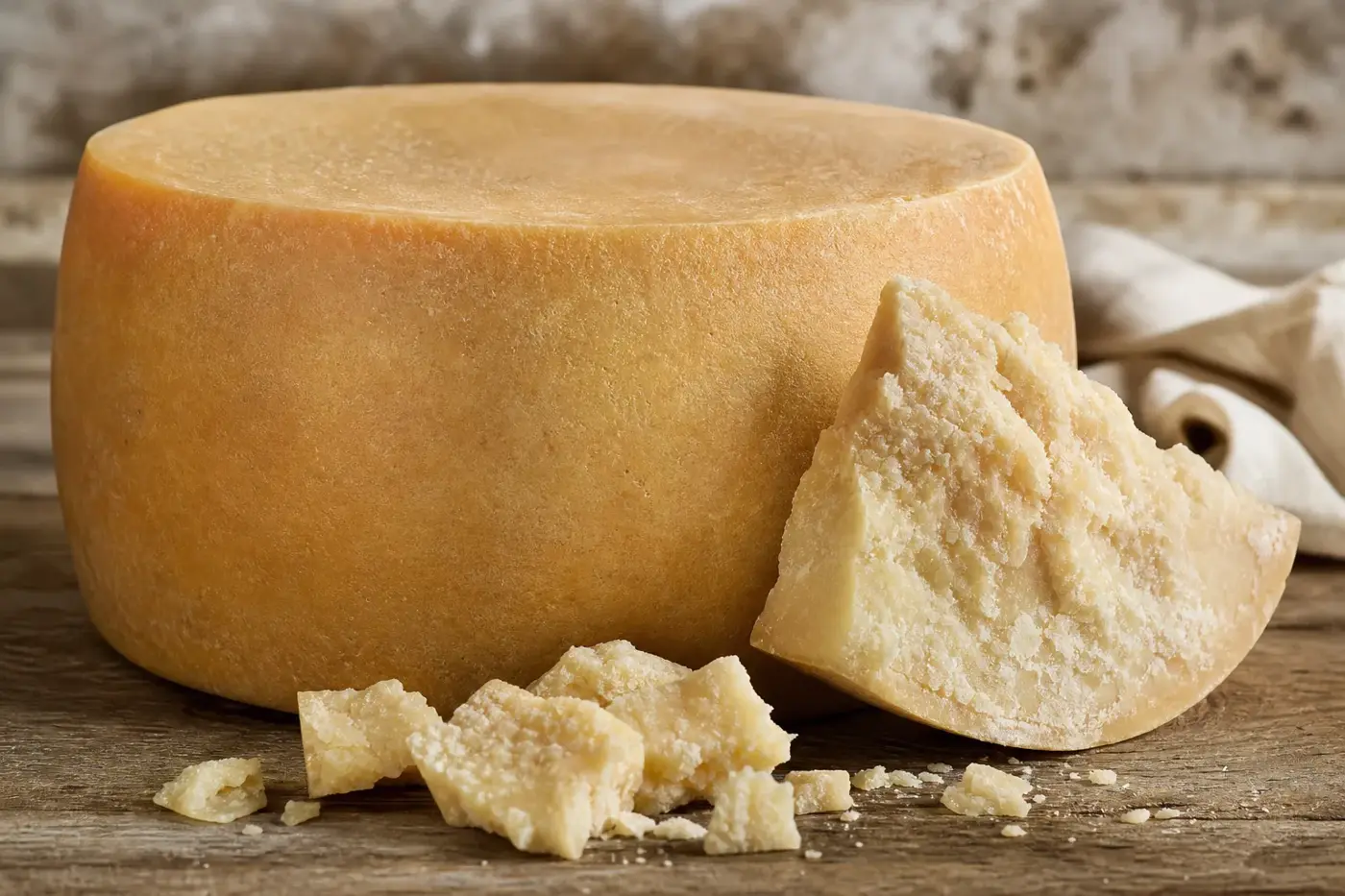
Parmigiano Reggiano
Break into a wheel of Parmigiano Reggiano and flakes fall away, revealing a finely granular cheese, pale straw to straw in colour.