Vermont Cheese
Down in Jasper Hill’s cellars, young cheddar wheels receive lard and another layer of cloth.
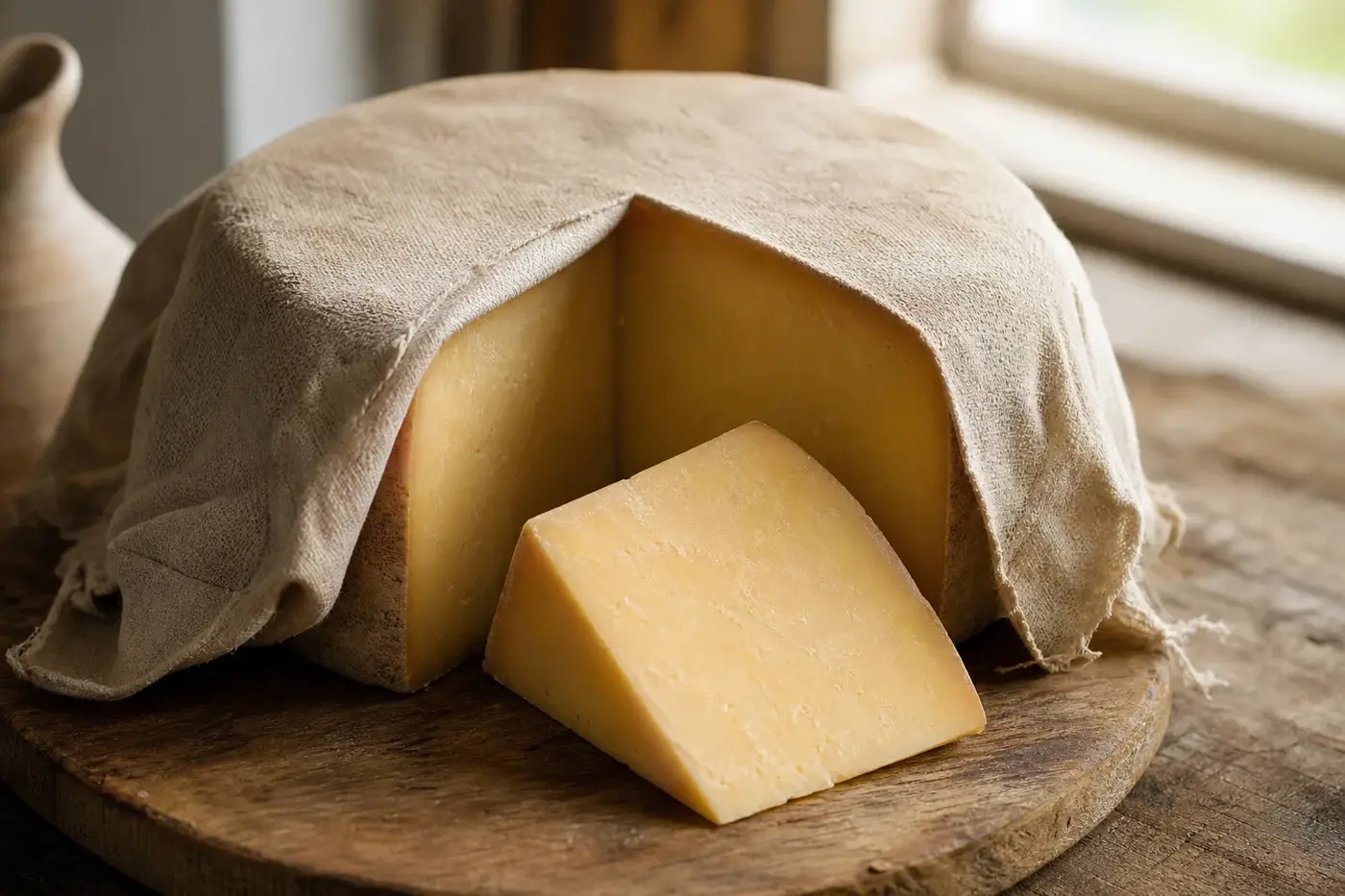
Down in Jasper Hill’s cellars, young cheddar wheels receive lard and another layer of cloth. Then the patient work begins: brushing, turning and watching as they ripen. Your reward, in the maker’s description of Cabot Clothbound, is caramel sweetness, chicken-broth savouriness and toasted nuts. [3]
Here is your first taste of Vermont cheese country. Cheddar shares the table with spruce-wrapped soft cheese, blue and fresh goat cheese. To get beyond the label, start with two questions: where did the milk come from, and who matured the cheese? A Vermont address is the beginning of the conversation, not the whole dinner. [1,2,3,4]
Your quick guide to Vermont cheese
| What to know | Your bearings |
|---|---|
| Where you are | Vermont, New England, northeastern United States [1] |
| Milk to explore | Cow, goat and sheep [1] |
| Styles for your plate | Cheddar, blue, bloomy-rind, washed-rind and fresh goat cheese [1,3,4,5,6] |
| Where the milk comes from | Own-herd milk, bought-in milk and, for some fresh goat logs, imported curd [7,13] |
| Federal cheddar standard | United States, 21 CFR 133.113 [8] |
Look beyond the green hills to the working farms
Those green Vermont hills have work to do. Between New York and New Hampshire, with Canada to the north, this New England state grows feed as well as providing grazing. The hillside catching your eye may support winter feeding rather than serve as pasture all year. [1,9,10]
Farm records give you a glimpse of the longer story. Cheesemaking appears in the 1850 agricultural census for Gray Rocks Farm in Richmond, documented by University of Vermont research. The state’s 2020 Agriculture and Food System Plan follows the later expansion of creameries and cheese factories, recording 66 cheese facilities by 1900, before fluid milk grew in importance. This is the wider dairy story, rather than a chronology of Vermont cheddar. [9,10]
Alongside that larger economy, a newer generation of farmstead and artisan makers found room to work. Vermont Creamery dates its beginning to 1984, with goat cheese central to its early work; Jasper Hill says its original Greensboro creamery began operating in 2003. Farm milk, bought-in milk and specialist maturing opened possibilities well beyond cheddar. [2,7,11]
Follow the milk, not just the address
Which animals supplied the milk for your cheese? What were they eating? Vermont Creamery describes cow diets of grass, grains and hay, and goat diets of dry hay, grain and pasture. Both vary with season and location. [7]
Start by asking about pasture, conserved feed and the milk supply for the particular cheese. Then turn to cultures and maturation. The American Cheese Society classifies cheese through overlapping characteristics, including milk type, texture and production method. Geography is only part of the picture; these sources do not connect seasonal feed changes to an individual cheese’s flavour. [7,12]
Even one producer can draw on several supplies. Vermont Creamery says its fresh goat milk comes from farms in Vermont and Canada, with imported curd supplementing supplies for fresh goat cheese logs. Its cow milk and cream come through Dairy Farmers of America from Vermont farms. Read the product’s sourcing statement alongside its label. [7]
Farmstead and artisan: two words worth knowing
“Farmstead” brings you back to the farm itself. The American Cheese Society defines it as primarily handmade cheese produced where the animals are raised, using only that farm’s own herd or flock milk. Its artisan definition concerns primarily hand production in small batches. A maker buying milk can therefore be artisan without being farmstead. [12]
Get to know cheddar by age and cloth
Start with two ages of cheddar from one maker. Choose a younger cheese with a mild profile and an aged example selected for greater flavour intensity. Compare acidity, firmness and the way each breaks. You will learn more than you would from a collection whose only shared introduction is “sharp”.
With clothbound cheddar, give maturation its turn in the conversation. Jasper Hill lists Cabot Clothbound as pasteurised cow’s milk cheddar from Cabot cooperative farms, matured for nine to fourteen months. Its caramel sweetness, chicken-broth savouriness and toasted-nut notes give you plenty to notice beyond sharpness. [3]
Behind those flavours is the cellar routine. Young wheels receive lard and another layer of cloth, followed by brushing, turning and monitoring during ripening. Affinage is the name for this work of maturing cheese. Remove the cloth before eating; for the broader method, explore cheddar. [3]
Meet the makers, one cheese at a time
Cabot Creamery: cooperative farms, careful maturation
Cabot Clothbound brings two kinds of expertise to your plate. Its milk comes from Cabot cooperative farms, while Jasper Hill handles maturation and dates the collaboration to 2003. [3]
Ask about the particular product to establish its manufacturing location. With any Cabot cheddar, look into milk supply, place of manufacture and maturation. The Clothbound story does not describe the whole range. [3]
Jasper Hill Farm: three routes to ripeness
Jasper Hill makes its raw-milk cheeses in Greensboro, while its pasteurised cheeses begin in Hardwick. Within this one producer’s work, you can explore blue, bloomy and washed rinds. The published product details below give you a November 2026 snapshot. [11]
| Cheese | Milk and where it comes from | What awaits you | Usual maturation |
|---|---|---|---|
| Bayley Hazen Blue [13] | Raw cow milk, Andersonville herd | Natural-rind blue | 3 to 4 months |
| Harbison [5] | Pasteurised cow milk, local pastured herds | Bark-wrapped bloomy rind | 6 to 13 weeks |
| Willoughby [6] | Pasteurised cow milk, local pastured herds | Washed rind | 6 to 12 weeks |
The maker’s tasting descriptions take you in three distinct directions. Bayley Hazen Blue brings pepper, anise and roast-beef savouriness; Harbison heads towards button mushroom, woodland and mustard. For Willoughby, Jasper Hill separates aromas of peat, roast beef and onion from milky, herbal and peach-like flavours. Give your nose a moment before your palate takes over. [5,6,13]
Vermont Creamery: a fresh goat cheese interlude
After matured cow’s milk cheese, try plain fresh goat cheese. Without added herbs or fruit, it gives you a useful contrast when comparing milk species. Vermont Creamery makes fresh and aged goat cheeses and says its milk is pasteurised. Ask about the manufacturing location of the particular fresh goat cheese you choose. [4,7]
Cow, goat or sheep? There is more to the choice
Cow’s milk supplies this selection’s cheddar, blue and soft ripened cheeses. Goat’s milk takes you through fresh and aged styles, while Vermont Tourism also records sheep’s milk cheesemaking in the state. The sources used here describe no individual sheep milk cheese. Let species guide you, but bring rind, milk treatment and age into the decision too. [1,4,5,6,13]
Choose your cheeses, then look after them
For your first selection, ask a cheesemonger for one cheddar, one soft-ripened cheese and either a blue or a fresh goat cheese. Say whether you want slices, a spoonable centre or something to crumble. Check the maker and production information, milk species, treatment and storage instructions. A brand address tells you less than reading the label.
Get products that need chilling into the fridge promptly. Keep it at or below 4 °C (40 °F), and follow package storage directions. These are the United States FDA household recommendations for November 2026. Keep the main supply refrigerated and serve smaller portions. [14]
The FDA limits foods needing refrigeration to two hours at room temperature, or one hour above approximately 32 °C (90 °F). Preparation and display both count towards that time. Include both when deciding how long cheese can remain out of the fridge. [14]
After opening, follow the label rather than assigning every Vermont cheese the same shelf life. For wrapping and fridge organisation, turn to how to store cheese at home. If unexpected growth appears, consult mould on cheese before deciding what to keep.
Leave a little breathing space on the plate
Taste each cheese alone before you add anything. The suggestions below are starting points, not a recorded tasting. The Clothbound and Bayley Hazen Blue flavour notes come from the maker. [3,13]
| Your cheese | Try it with | What to notice |
|---|---|---|
| Clothbound cheddar | Walnuts | Echo the maker’s toasted notes. [3] |
| Cheddar | Apple and unsweetened black tea | Compare cheese, fruit and tea. |
| Fresh goat cheese | Cucumber, bread and sparkling water | Keep the focus on the cheese with simple accompaniments. |
| Blue cheese | Pear and still water | Set fruit beside the maker’s savoury notes. [13] |
Add one accompaniment at a time and notice which flavours stay distinct. Your plate need not become a small, edible obstacle course.
Choosing raw-milk cheese: know the rules
The federal cheddar standard has a specific curing requirement. Under 21 CFR 133.113(a)(1), cheddar made with unpasteurised dairy ingredients must be cured for at least 60 days at a temperature no lower than approximately 1.7 °C (35 °F). That temperature is a minimum, not a maximum. Other cheeses have their own applicable standards, so do not apply the cheddar rule to every style. [8]
The CDC recommends choosing pasteurised milk and dairy products and reading labels carefully. Its United States guidance is dated 31 January 2025; November 2026 is the reference point for this page’s guidance. It identifies children under five, adults over 65, pregnant people and people with weakened immune systems as groups at greater risk of serious illness from germs in raw milk products. Consult its current advice for your circumstances. [15]
Match current FDA recall notices to the exact product and batch, then follow the notice’s instructions. For more on milk treatments, see raw milk, thermised and pasteurised cheese. [16]
Take the cheese trail at a gentler pace
Give yourself a compact route with a mixture of stops. The Vermont Cheese Council’s cheese trail is a useful starting point. Vermont Tourism also highlights farm experiences, cheese shops and maturing businesses, including Shelburne Farms and Jasper Hill. Leave room to enjoy them: the whole state is too much for one day’s tasting itinerary. [1,17]
Before travelling, visit each producer’s official website for visiting arrangements, bookings, accessibility and seasonal details. Find out whether you are heading for a farm visit, a shop or a production tour. Vermont Creamery’s FAQ currently says it offers no general public tours and keeps no cows or goats on site. A creamery is not necessarily a visitor farm. [7]
At each stop, ask one question about milk and one about maturation. Which farms supply this cheese? What changes between making it and releasing it? The answers connect the cheese in your bag to the fields, working barns and cellar care behind it, giving your next tasting something specific to explore.
General information only, not medical advice: follow the official guidance where you live.
Questions people ask
What is the difference between farmstead and artisan cheese?
The American Cheese Society defines farmstead cheese as primarily handmade on the farm where the animals are raised, using only milk from that farm’s own herd or flock. Its artisan definition concerns primarily hand production in small batches, so a cheesemaker buying milk can be artisan without being farmstead.
How long is Cabot Clothbound cheddar matured?
Jasper Hill matures Cabot Clothbound for nine to fourteen months. The maker describes it as having caramel sweetness, chicken broth savouriness and toasted nut notes.
Where does Vermont Creamery get its milk?
Its fresh goat milk comes from farms in Vermont and Canada, with imported curd supplementing the supply for fresh goat cheese logs. Its cow milk and cream come through Dairy Farmers of America from Vermont farms.
What does the CDC advise about cheese made from raw milk?
The CDC recommends choosing pasteurised milk and dairy products and reading labels carefully. It identifies children under five, adults over 65, pregnant people and people with weakened immune systems as groups at greater risk of serious illness from germs in raw milk products. Consult the CDC’s current advice for your circumstances.
Can you tour Vermont Creamery?
Vermont Creamery’s FAQ says it offers no general public tours. It also says it keeps no cows or goats on site.
Sources
- Vermont Department of Tourism and Marketing, Cheese, undated live visitor guide, accessed November 2026. Supports the state’s range of milk species, styles and cheese destinations.
- Vermont Creamery, Story, undated company chronology, accessed November 2026. The maker dates its beginnings to 1984.
- Jasper Hill Farm, Cabot Clothbound, undated product record, accessed November 2026. Covers milk treatment and sourcing, maturation, cloth and lard treatment, tasting notes and the collaboration’s chronology.
- Vermont Creamery, Fresh Goat Cheese and Aged Cheese, undated current collections, accessed November 2026.
- Jasper Hill Farm, Harbison, undated product record, accessed November 2026.
- Jasper Hill Farm, Willoughby, undated product record, accessed November 2026.
- Vermont Creamery, FAQ, undated current company guidance, accessed November 2026. Relevant sections: ingredients and sourcing, pasteurisation, animal feeding and public tours.
- United States Food and Drug Administration, 21 CFR 133.113, Cheddar cheese, electronic text checked November 2026, particularly paragraph (a)(1).
- University of Vermont Historic Preservation Program, Gray Rocks Farm history, revised April 1996. Historical account drawing on agricultural census records.
- Vermont Agency of Agriculture, Food and Markets and Vermont Sustainable Jobs Fund, Vermont Agriculture and Food System Plan 2020, 2020, historical overview. Historical figures are used for their stated period, not as current industry statistics.
- Jasper Hill Farm, The creameries, undated current production account, accessed November 2026.
- American Cheese Society, Cheese definitions and categories, undated current educational reference, accessed November 2026. Relevant sections: classification, milk source and production.
- Jasper Hill Farm, Bayley Hazen Blue, undated product record, accessed November 2026.
- United States Food and Drug Administration, Are You Storing Food Safely?, live consumer guidance checked November 2026, “Storage Basics”.
- United States Centers for Disease Control and Prevention, Raw Milk, 31 January 2025, checked November 2026, particularly “Risk” and “Prevention”.
- United States Food and Drug Administration, Recalls, Market Withdrawals, & Safety Alerts, live index accessed November 2026.
- Vermont Cheese Council, Vermont Cheese Trail, live planning page, updated October 2026 and accessed November 2026.
- United States Food and Drug Administration, Investigations of Foodborne Illness Outbreaks, live investigation index accessed November 2026. Consulted for the editorial safety check.
- United States Food and Drug Administration, Use of Salt Substitutes To Reduce the Sodium Content in Standardized Foods, 91 FR 65057, published 13 October 2026. Consulted to distinguish a forthcoming amendment from the operative cheddar text.
This desk-researched article brings together university and state historical records, current producer descriptions, the federal cheddar standard and United States consumer guidance; sensory descriptions are attributed to their makers.
Last checked: November 2026
Last checked November 2026.
The editors suggest you read next
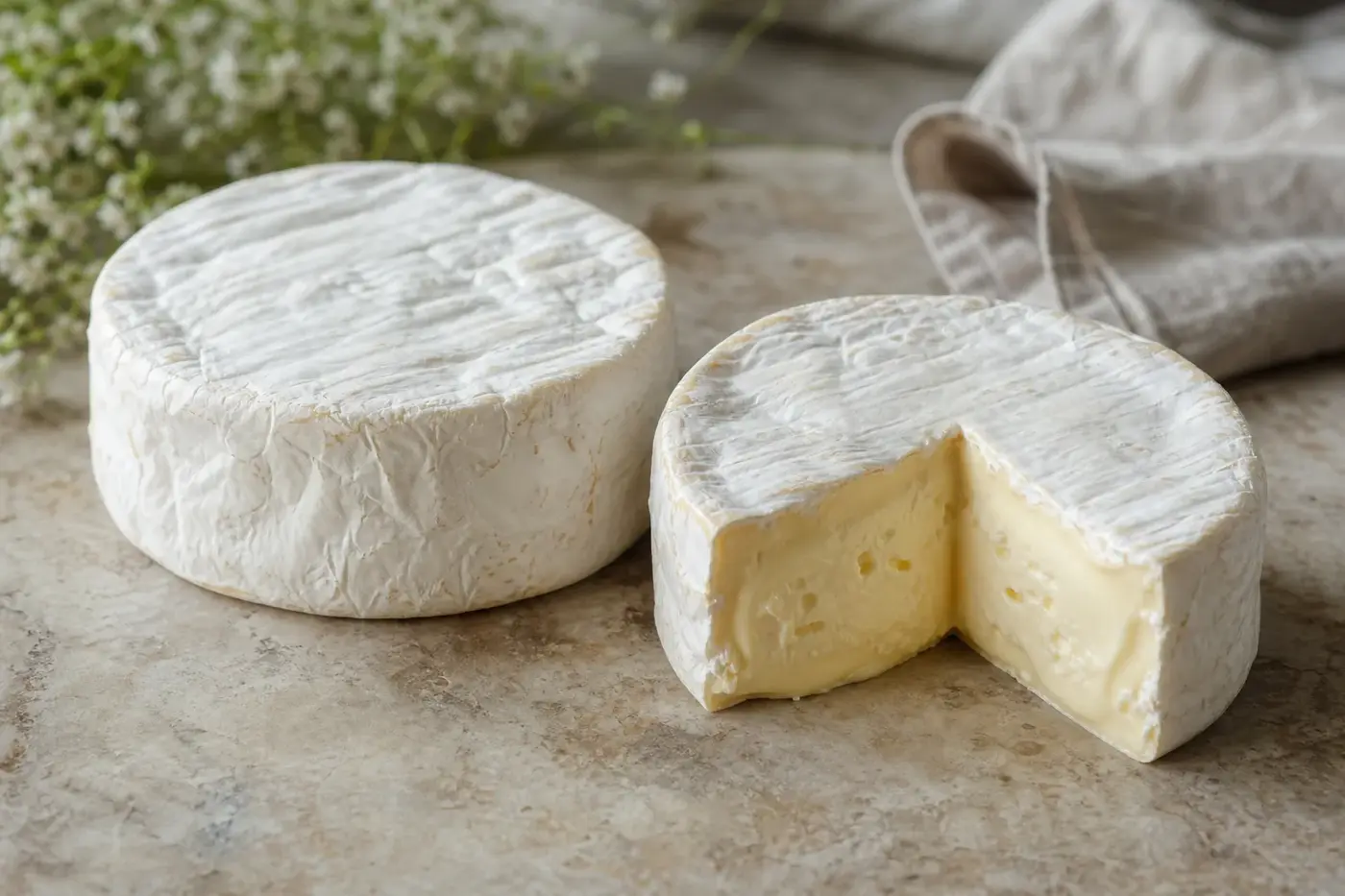
French Cheese: The Complete Guide
Picture Normandy’s pastures, then follow the milk towards the Loire’s goat dairies, the Jura’s shared cheesemaking traditions and the sheep country of the Pyrenees.