White Nancy
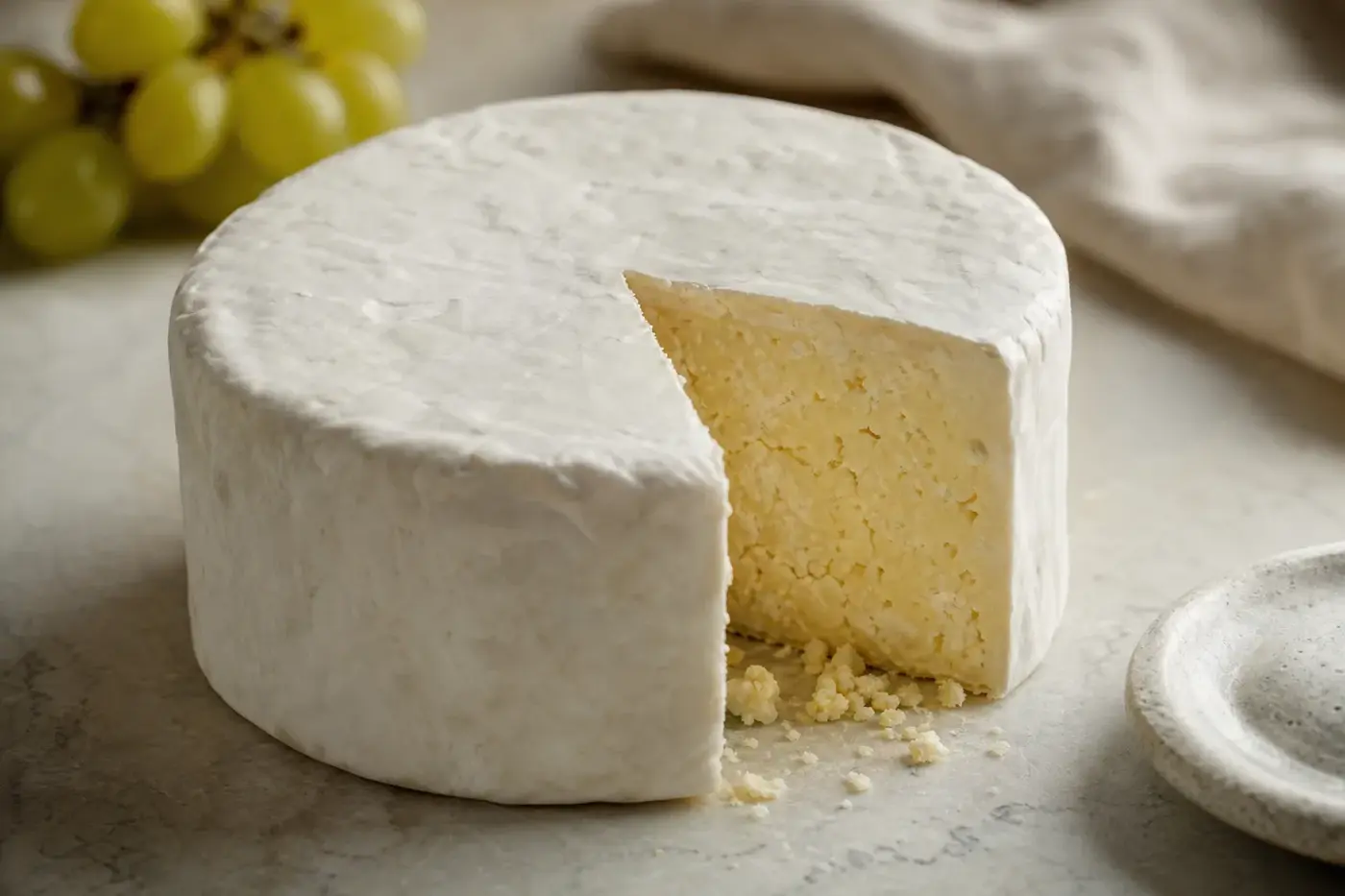
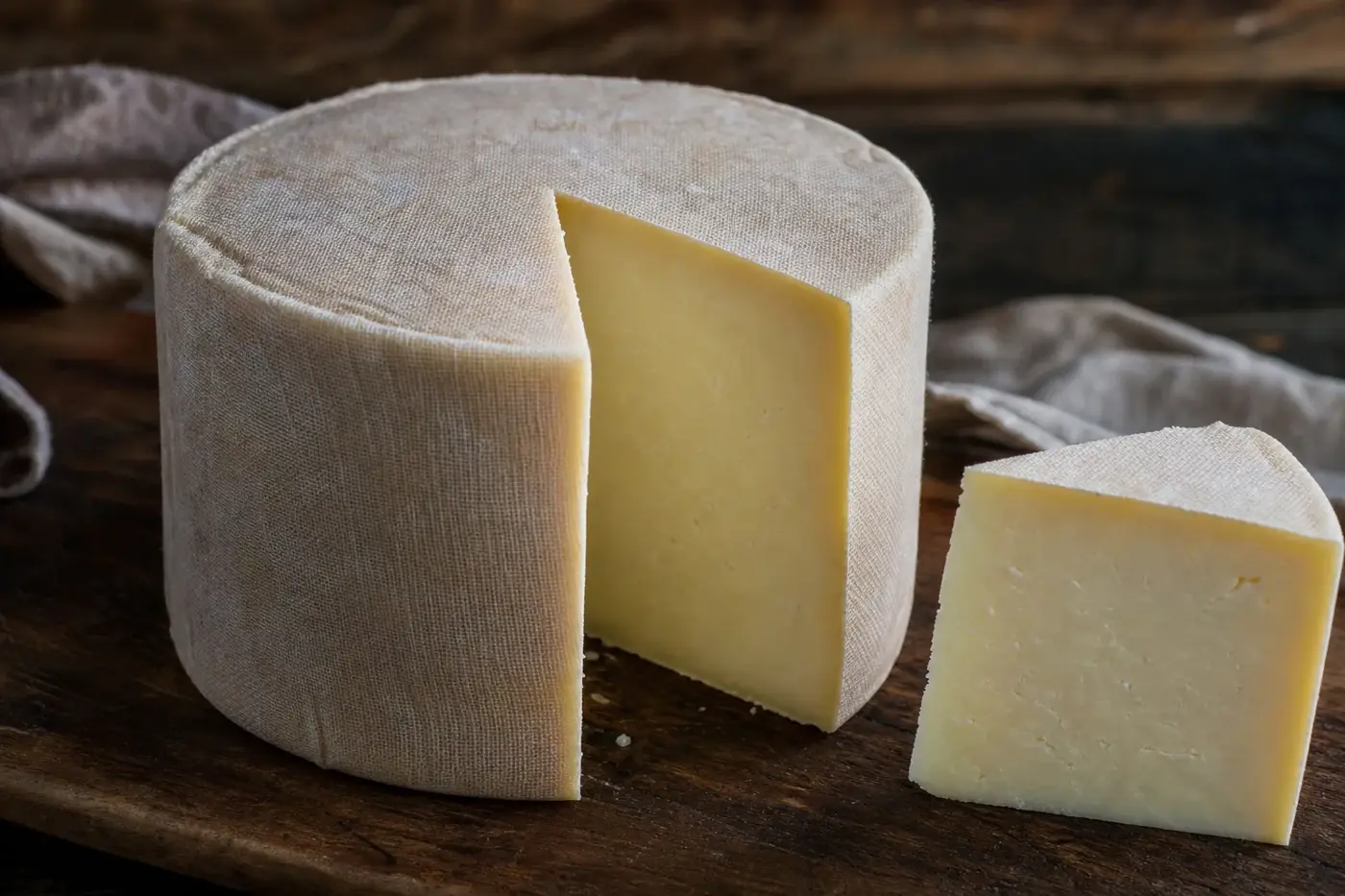
Your knife meets White Nancy’s delicate white mould rind, then breaks into its crumbly goat’s milk centre.
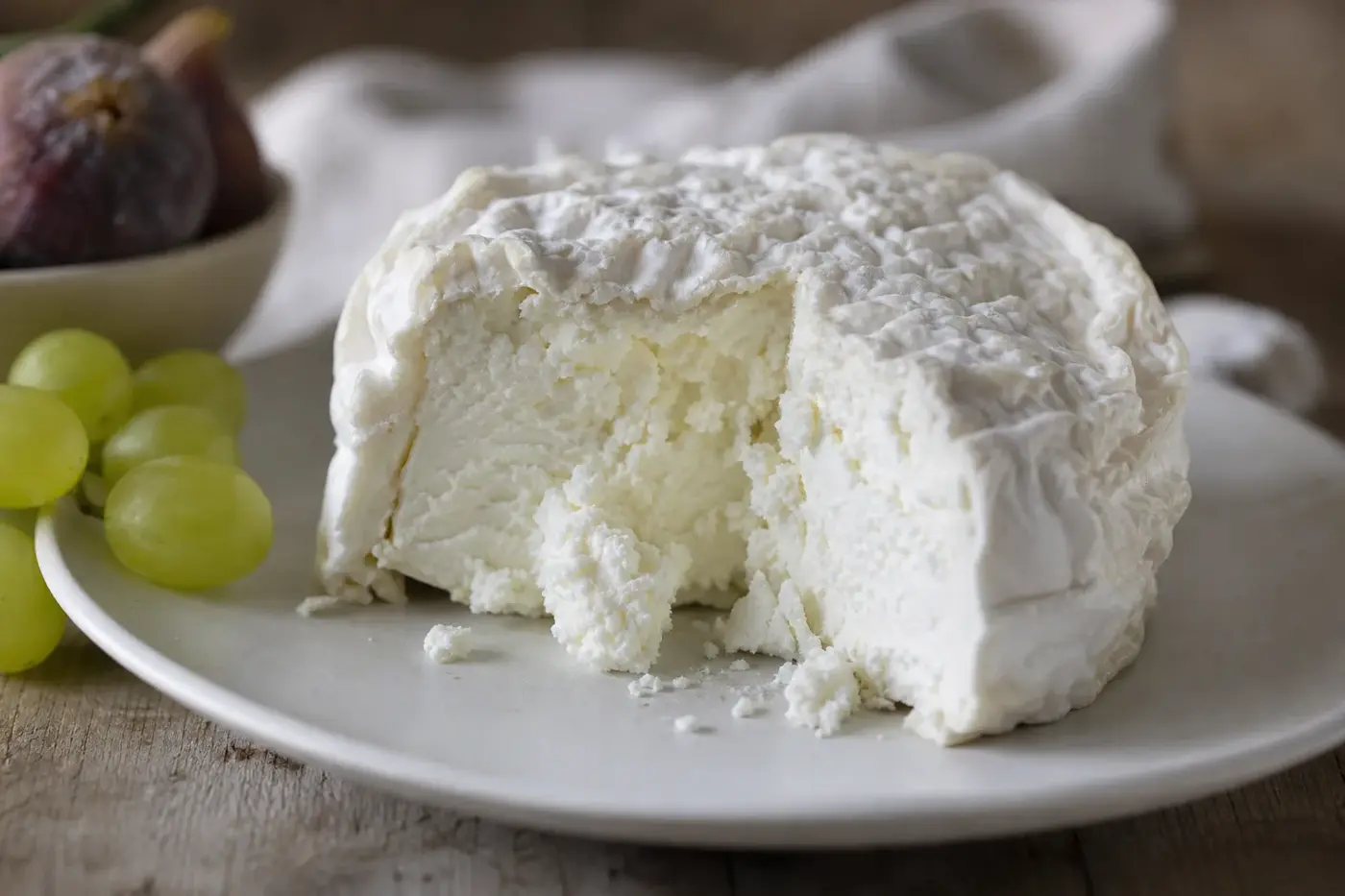
Your knife meets White Nancy’s delicate white mould rind, then breaks into its crumbly goat’s milk centre. The maker’s tasting notes offer an intriguing trio: yoghurt, strawberry and mushroom, with a lightly goaty character. White Lake Cheese lists it among cheeses from its Somerset dairy at Bagborough Farm in Pylle, England; ask the maker for its current production location. [1][2][3]
| Your introduction to White Nancy | The details |
|---|---|
| Maker | White Lake Cheese. [1][2] |
| Production location | Bagborough Farm, Pylle, Somerset, England. [3] |
| Milk | Goat’s milk; ask about current milk treatment. [2] |
| Coagulant | Vegetarian rennet, according to the maker. [2] |
| Rind | White, bloomy rind. [2] |
| Named starter and rind cultures | Ask the maker for details |
| Current whole-cheese weight and dimensions | Ask the maker for details |
| Usual maturation period | Ask the maker for details |
| Registered name, registration authority and register ID | Ask the maker for details |
| Protection status in Great Britain and the EU | Ask the maker for details |
Head to the Somerset farm behind the cheese
White Lake’s story begins in 2004, on a family farm with cheesemaking roots reaching back to the 1930s. Its present dairy stands at Bagborough Farm, near Glastonbury, with a postal address in Pylle, near Shepton Mallet. Goat’s, sheep’s and cow’s milk cheeses all have a place in its range. [3]
That gives you rather more of a story than “British goat’s cheese”. White Nancy has a particular dairy and working farm behind it. White Lake describes a facility built for small-batch production and experimentation, an approach that finds expression in fresh cheeses, white-rinded cheeses, washed rinds and blues. [1][3]
You will find White Nancy in the maker’s Full Monty Christmas Cheese Box listing. That places it in the range, but does not establish current production or availability. A separate product description provides the milk, rennet and sensory details used here; ask the maker for current specifications. [1][2]
For your first encounter, give White Nancy a little room on the plate. Keep accompaniments modest, so you can notice what the rind brings and how the centre breaks beneath your knife. The chutney collection can wait its turn.
If you would like a few bearings before tasting, try the guide to cheese styles. It explores milk, texture and rind as different routes into understanding a cheese. You can follow whichever catches your interest first.
Get to know the milk and rennet
An older White Lake product description calls White Nancy an unpasteurised goat’s milk cheese made with vegetarian rennet. For the piece you are buying now, ask the maker about its current milk treatment and coagulant. [2]
“Unpasteurised” is the maker’s published wording. Read the label accompanying your particular piece as well as the product description, especially if milk treatment or dietary requirements influence your choice. Keep the wrapper until you finish the cheese, so its batch information and storage instructions remain with it.
White Lake’s milk supply includes milk from its own herd of French Alpine goats, alongside supplies for its sheep’s and cow’s milk cheeses. That describes the dairy’s general sourcing. It does not identify the herd behind your individual batch of White Nancy. [3]
For help untangling the heat treatments, turn to raw, thermised and pasteurised milk. If your question is about coagulants, rennet explained distinguishes animal, microbial and fermentation-produced types.
Follow the milk towards its white bloom
Goat’s milk, vegetarian rennet and a bloomy rind give you the published outline of White Nancy’s production. These are the identifying features in the maker’s description. For the finer points of curd handling and maturation, you would need a fuller technical account from the dairy. [2]
The transformation begins when rennet helps liquid milk become a gel. As a coagulant, it allows milk proteins to form a network holding water, fat and other milk components. This is coagulation: the solid material becomes curd, while the liquid released during cheesemaking is whey, as the University of Guelph’s dairy science reference explains. [4]
Moulding gives a cheese its physical form as moisture drains from the curd. With White Nancy, it helps to separate those published production details from the questions you might take to the dairy.
| A step in the making | What to know about White Nancy |
|---|---|
| Milk and coagulation | Goat’s milk and vegetarian rennet. [2] |
| Curd handling and moulding method | Ask the dairy for details |
| Starter and surface culture species | Ask the dairy for details |
| Rind development | The finished cheese has a bloomy rind. [2] |
| Maturation duration, temperature and humidity | Ask the dairy for details |
Some White Lake cheeses leave the dairy ready to eat; others leave younger. The maker’s general care guidance directs you to the information accompanying the cheese. Ask your cheesemonger about the piece in front of you, particularly whether it will be ready on the day you want to serve it. [5]
At home, let your texture preferences guide you within the supplied storage instructions. The softest piece is not automatically the one you will enjoy most. If you would like the wider story, how cheese is made follows the journey from liquid milk to finished cheese.
Taste the centre, then bring in the rind
Yoghurt and strawberry are the notes White Lake describes in White Nancy, with mushroom character coming from the rind. These are the maker’s tasting terms, rather than a fromage.co.uk tasting. [2]
Begin with a little of the centre. Then try a piece with its rind attached and notice the difference: does it seem tangy, fruity or savoury, and does the rind change the finish? Treat the maker’s description as an invitation to explore, not a checklist to complete.
Give texture its own moment. Take a small piece between knife and fork and notice whether it separates cleanly, breaks into fragments or yields under pressure. You are learning what this particular cheese does, not awarding points for softness.
A white rind need not promise a flowing centre. Expecting one can distract you from the pleasures of the piece you actually have. Let White Nancy make its own introduction.
If you buy it at different maturities, jot down the date, supplier, label information and texture. Keep the accompaniments similar each time. You will find it easier to recognise your preferences without mistaking different bread, chutney or serving conditions for a change in the cheese.
Bring that same precision to the cheese counter. If your last piece held its shape and you loved it, say so and ask for something at a similar stage. “Ripe” is a small word to carry quite so many expectations.
Make a little room for White Nancy
Start with plain bread or an unseasoned cracker, then add one accompaniment at a time. This keeps your first mouthful focused on White Nancy. It also gives you a straightforward way to discover which combinations you enjoy.
Give everyone a share of centre and rind
Let the shape of your piece guide your knife. Cut a whole round into wedges from the centre towards the outside, then divide a wedge into smaller pieces that each retain some rind and centre. Leave the middle intact rather than scooping it out, so everyone gets both.
Use a clean knife and a plain board or plate. Set out the amount you expect to eat and keep the rest refrigerated. Give the cheese its own knife, too, to avoid transferring a strongly flavoured accompaniment to the next slice.
If you are in England, Wales or Northern Ireland, consult the Food Standards Agency’s current advice on preparing chilled food. [6]
Find the accompaniment you love
Taste the cheese alone before exploring these combinations. Treat them as suggestions, rather than established pairings from the site:
- Plain bread and fresh pear: a restrained beginning that leaves your attention on the cheese.
- Apple slices and oatcakes: a chance to compare something crisp with something drier and more substantial.
- A little strawberry preserve: try the fruit note in the maker’s description after an unaccompanied taste.
- Still or sparkling water: a simple alcohol-free choice when you want to concentrate on tasting.
- Unsweetened apple juice diluted with sparkling water: an option when you fancy your fruit accompaniment in the glass.
Serve preserves in a separate dish rather than spreading them across every portion. Your guests can choose how much sweetness they want, while some cheese stays available to taste alone. Keeping the choices separate makes comparison easier, too.
White Lake also suggests cooking with White Nancy or crumbling it over a meal. [2] You could begin with a little over cooked vegetables or a simple salad. Let the cheese remain a distinct ingredient, rather than losing it beneath several assertive dressings.
Keep the wrapper and care for your cheese
White Lake advises refrigerating soft or cut cheese, keeping the original packaging or using foil when necessary. Its general guidance also points you towards the wrapper for date and batch information. Keep that information with the cheese once you get it home. [5]
For home storage in England, Wales and Northern Ireland, consult the Food Standards Agency’s current refrigeration advice. Follow White Nancy’s own storage instructions and date marking. [6]
If you move your cheese to another container, keep its wrapping and batch details alongside it. Those details will help identify the cheese accurately if you later need to contact the supplier.
For more practical help with wrapping and keeping your cheese, turn to how to store cheese at home. Keep the cheese’s own instructions close at hand, too.
Get to know the bloom without guessing at ripeness
White Nancy’s white bloom is part of its intended character. Its presence alone is not a reason to throw the cheese away. [2]
When choosing for eating quality, ask your supplier about the stage of the particular piece. Then use your preferred texture to choose between those offered. White Lake’s distinction between younger and ready-to-eat cheeses makes that conversation more useful than judging by appearance alone. [5]
An unexpected change is a separate question from whether you prefer a younger or more mature cheese. Consult the current food safety advice for your country, along with the guidance on unwanted mould on cheese.
General information only, not medical advice: follow the official guidance where you live.
Questions people ask
Where is White Nancy made?
White Lake Cheese lists White Nancy among the cheeses from its Somerset dairy at Bagborough Farm in Pylle, near Shepton Mallet. Confirm its current production location with the maker.
Is White Nancy made with pasteurised milk?
An older White Lake description calls it an unpasteurised goat’s milk cheese. Its current milk treatment is unverified, so check with the maker and read the label.
Is White Nancy vegetarian?
The maker’s older product description says White Nancy is made with vegetarian rennet. Confirm the current coagulant with the maker.
What can I serve with White Nancy?
The page suggests plain bread and fresh pear, or apple slices and oatcakes. White Lake also suggests cooking with the cheese or crumbling it over a meal.
How should I store White Nancy?
White Lake advises refrigerating soft or cut cheese and keeping the original packaging or using foil when necessary. For England, Wales and Northern Ireland, consult the Food Standards Agency’s current refrigeration advice and follow the cheese’s storage instructions and date marking.
Sources
-
White Lake Cheese. The Full Monty Christmas Cheese Box. Undated live listing, retrieved November 2026.
Read at whitelake.co.uk -
White Lake Cheese. White Nancy. Undated product description, retrieved November 2026; the retrieved version carries an older site template.
Read at whitelake.co.uk -
White Lake Cheese. Our story, on the page addressed Introduction to Your Cheese. Undated live page, retrieved November 2026.
Read at whitelake.co.uk -
University of Guelph. Dairy Science and Technology eBook: Cultured Dairy Products and Cheese. Undated online edition, retrieved November 2026.
Read at books.lib.uoguelph.ca -
White Lake Cheese. Caring for Your Cheese. Undated live guidance, retrieved November 2026.
Read at whitelake.co.uk -
Food Standards Agency. How to chill, freeze and defrost food safely. Published 18 December 2017, current retrieved GOV.UK version, November 2026. Applies to England, Northern Ireland and Wales.
Read at gov.uk -
Food Standards Agency. Alerts. Live recall and allergy alert index, retrieved November 2026. Used for the editorial recall check only.
Read at alerts.food.gov.uk
Research began with the maker’s specified Christmas box listing, followed by its product and farm information, a university dairy science reference and official refrigeration guidance.
Last checked: November 2026
Last checked November 2026.
The editors suggest you read next
West Country Farmhouse Cheddar Cheese
Large pieces of curd turn and stack under the cheesemaker’s hands.