Winslade
Your spoon slips beneath Winslade’s white rind into a yielding centre, held inside a narrow spruce collar.
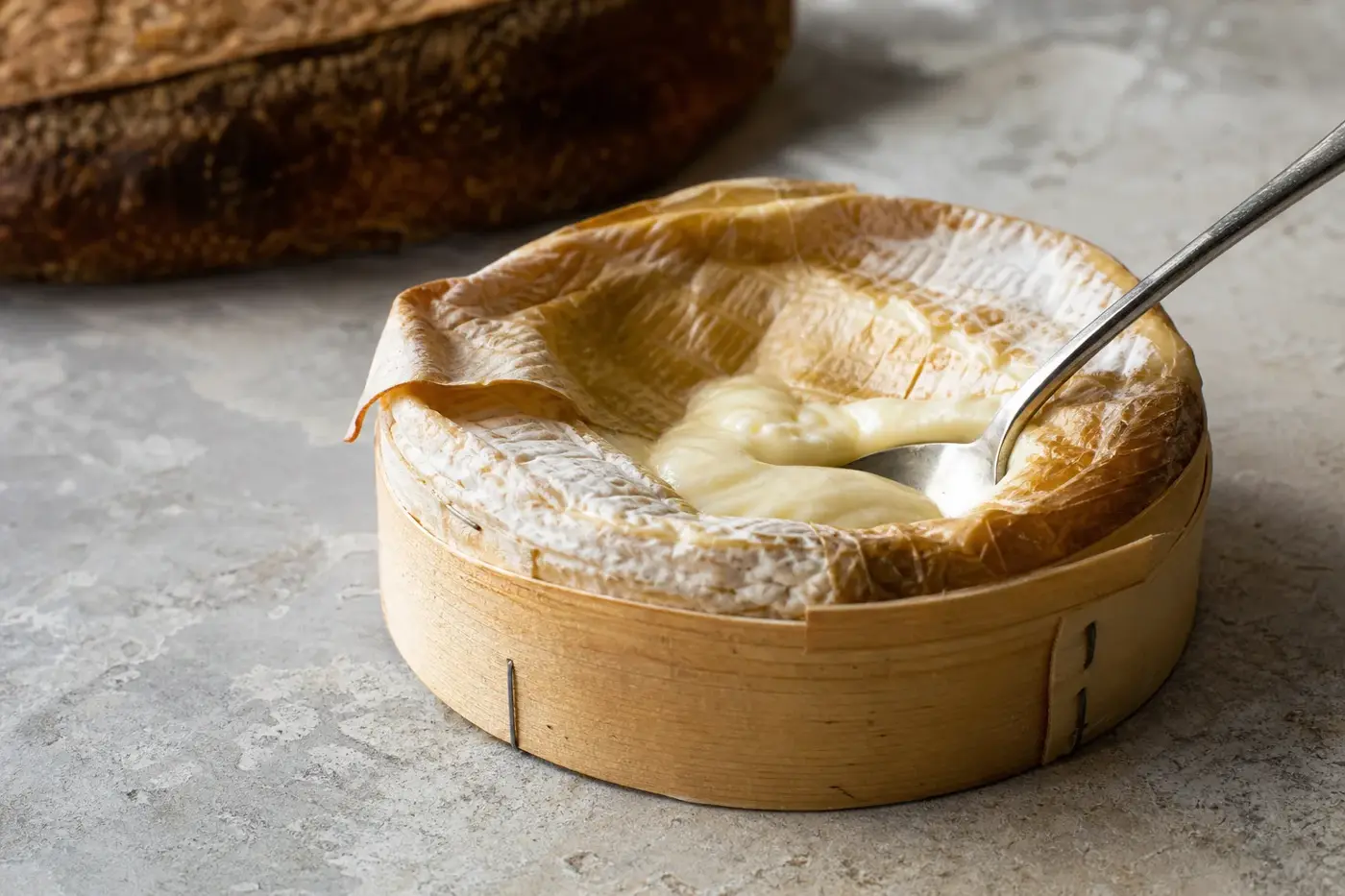
Your spoon slips beneath Winslade’s white rind into a yielding centre, held inside a narrow spruce collar. Hampshire Cheese Company credits that wood with the cheese’s pine note. Developed in Hampshire with Camembert and Vacherin as inspirations, this soft cow’s milk cheese asks little of your carving skills. When it is ripe, leave the binding on and spoon it straight from the collar, as the maker recommends. [1, 6]
| Meet Winslade | What to know |
|---|---|
| Name to ask for | Winslade. [1] |
| Who developed it | Hampshire Cheese Company. [1, 2] |
| Where its story began | Hampshire, England. [2, 5] |
| Current production location | Unspecified. [3, 7] |
| Style | Soft, spruce-bound, surface-ripened cheese. [1, 5] |
| Milk | Cow’s milk. [5, 7] |
| Current maker-confirmed milk treatment | Unspecified. |
| Suitable for vegetarians? | Hampshire Cheese Company describes it as suitable for vegetarians. [1] |
| Documented ripening | Approximately eight weeks in a maker-informed account citing information accessed in May 2023. Current typical period unspecified. [5] |
| Texture when ripe | Soft, yielding and ready for your spoon. [6] |
| Registered name, registration authority and register ID | Unspecified. |
| Complete current maker ingredient declaration | Unspecified. |
Take a closer look at that spruce collar
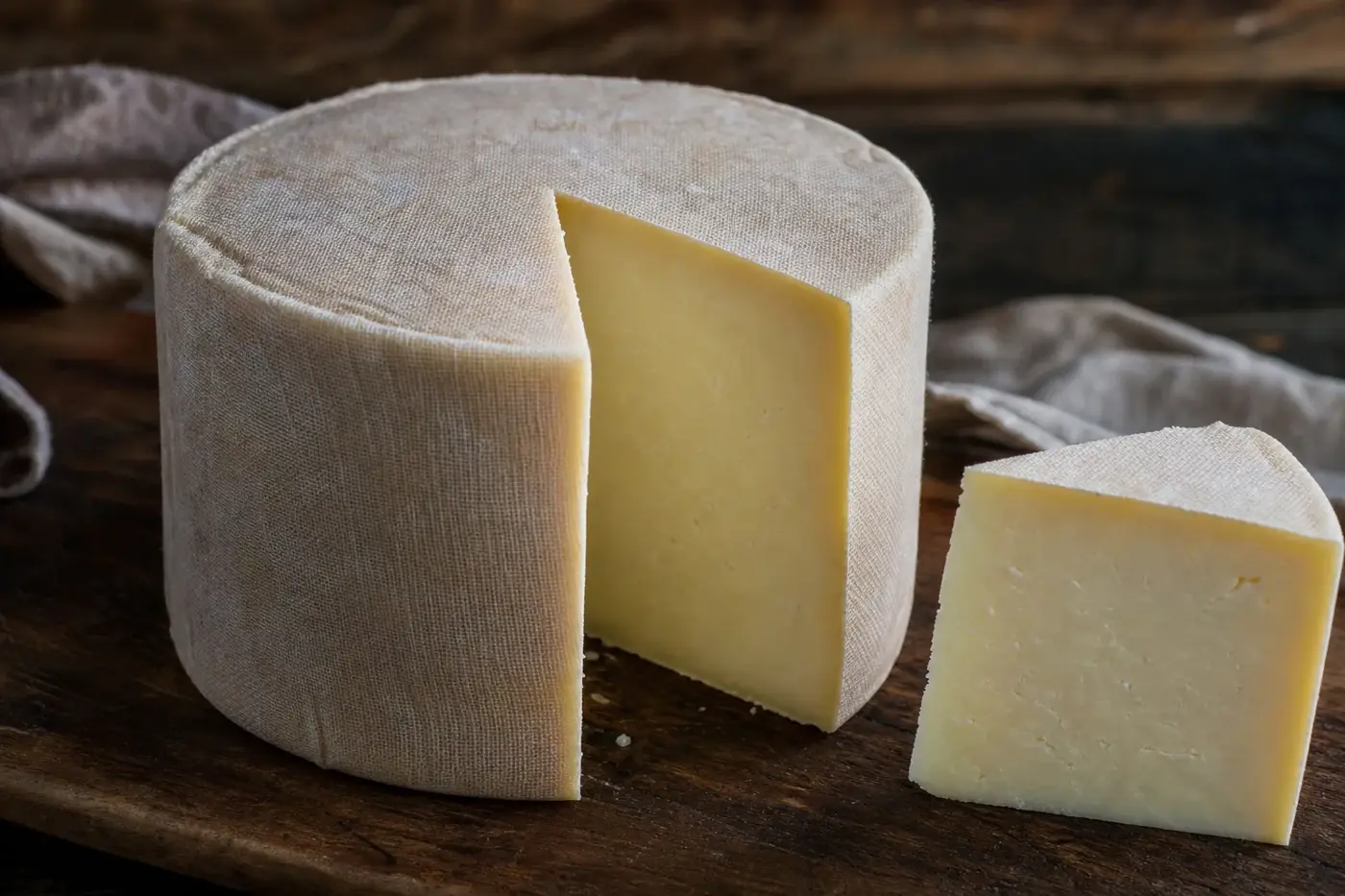
You can recognise Winslade’s outline before you reach for a spoon. The spruce collar circles the side of the round cheese, leaving its pale surface visible above. The maker’s photograph shows a predominantly white exterior; the Academy of Cheese describes a thin rind around a soft, silky interior. [1, 5]
That binding has a job beyond looking handsome. Hampshire Cheese Company recommends spooning this small, surface-ripened cheese directly from its collar when ripe, rather than treating it as an ordinary unbound round. The wood stays put while you serve the soft centre. [6]
You will often hear the pale interior called the paste, the cheesemaker’s word for the body beneath the rind. For a closer look at those distinctions, try how to tell cheese styles apart. With Winslade, compare rind and centre, then see how readily the interior yields. Is this a knife moment, or a spoon moment?
Five years in the making, Hampshire at heart
Winslade took five years to develop, according to Hampshire Cheese Company. Camembert and Vacherin supplied familiar French starting points, but this was a separately developed cheese. Those inspirations open the story; they do not tell you everything. [1]
The company calls Winslade the sibling of Tunworth, its other soft cheese. Its account begins with an initial Tunworth prototype made in a family kitchen. Production later moved to a specialist dairy team in Hampshire. [1, 2]
You get a feel for the handwork in the company’s description of its cheesemaking. It follows the work from handling the milk to wrapping and boxing the finished cheeses, with French-style bassines, the vessels used during cheesemaking, also part of the account. Winslade’s spruce binding sits within that wider small-dairy soft-cheese practice. [2]
The company’s contact page gives an address in Herriard, near Basingstoke, Hampshire. That contact address is distinct from the unspecified current production location. The documented story of Winslade’s development, though, has its roots firmly in Hampshire. [2, 3]
Get acquainted with its French inspirations
Hampshire Cheese Company calls Winslade a Vacherin and Camembert cross. Those names give you a sense of the maker’s inspiration. The finished cheese still has its own name and identity. [1]
On your first encounter, take in the soft-cheese form and spruce-bound presentation. Then turn your attention to the actual cheese in front of you. For ripeness, the maker offers a simple cue: Winslade should feel soft and yielding. [6]
Let the French comparisons make you curious rather than set your expectations in stone. Notice the white surface, the texture beneath it and the woody note the developer attributes to spruce. You will learn more that way than by expecting every feature of either inspiration to appear.
The Camembert guide explores that neighbouring cheese separately. At the counter, ask for Winslade by name and discuss the condition of the particular cheese. That gives you and the cheesemonger more to work with than a request for something “like Camembert”.
Follow the milk into its spruce collar
Hand-ladling, overnight draining and dry-salting all feature in the Academy of Cheese account. This maker-informed description, citing information accessed in May 2023, specifies pasteurised cow’s milk and vegetarian rennet. Rennet is the coagulant that helps milk set into curd, the soft solids from which cheese is formed. [5]
That dated account follows the Hampshire method through the stages below. Here is the route from milk to a cheese wearing its spruce collar.
| Stage in the published account | What happens along the way |
|---|---|
| Setting and cutting | Milk is set with vegetarian rennet, then the curd is cut. [5] |
| Filling and draining | Curds are hand-ladled into moulds and left to drain overnight. [5] |
| Salting and binding | Cheeses come out of their moulds, are dry-salted and receive their spruce collars. [5] |
| Ripening | Cheeses age for approximately eight weeks while surface moulds and yeasts develop. [5] |
Hampshire Cheese Company’s own milk page begins earlier, with collection after the morning milking and the journey to the creamery. It describes the make that follows as slow and gentle. The methods are similar to those practised in Normandy. [4]
That page gives a ripening period of 7 to 8 weeks to encourage surface moulds and yeasts. This is production time, not a suggested extra spell of ageing at home. Once you buy your cheese, follow its packaging and storage directions. [4, 8]
If that journey has caught your interest, there is more to explore beyond Winslade. How cheese is made takes you from setting the milk through to maturation.
Find the quieter flavours beneath the butter
Gentle floral earthiness and a pine note from the spruce are Hampshire Cheese Company’s descriptions of ripe Winslade. The developer also places it on the milder side of Tunworth. If you know its sibling, you have a useful starting point. [1]
On its home page, the company draws attention to buttery flavour and a spoonable texture. Strength need not be your only question. Give the soft interior and those quieter aromatic notes some attention, too. [9]
Try a little on its own before reaching for bread or fruit. How easily does the paste spread, and how prominent is the rind in that mouthful? Then see whether you can pick out the woody note described by the maker.
The cheese’s condition matters to your tasting as well as its flavour. Straight from refrigeration and after the maker’s suggested preparation time are different circumstances. Hampshire Cheese Company recommends taking its cheeses out approximately one hour before serving. [6]
Ask your cheesemonger for a spoon-ready cheese
“Soft enough to spoon” gives the cheesemonger something useful to work with. It is closer to the developer’s description of ripe Winslade than “strong” or “mature”. Tell them when you plan to serve it and how you would like to eat it. [6]
Then ask whether the particular cheese is ready for that occasion. Where possible, talk about the batch in front of you rather than relying on a general age quoted online. The maker’s ripeness cue is reassuringly straightforward: a soft, yielding feel. [6]
Before you take it home, read the packaging’s storage directions and date marking. The Food Standards Agency’s consumer guidance for England, Northern Ireland and Wales says to refrigerate dairy products and follow their packaging instructions. Allow for those directions in your plans. [8]
You have two practical questions to settle. Does the cheese’s condition suit your planned serving, and can you follow its storage instructions until then? The cheesemonger can help with the first; the pack gives product-specific directions for the second. Together, they tell you more than a general description of maturity.
Set the table, leave the collar on
Keep Winslade in its original packaging until you are ready to eat it. Hampshire Cheese Company recommends allowing approximately one hour out of the fridge before serving. Plan that time around when you want to bring it to the table. [6]
If you follow Food Standards Agency guidance in England, Northern Ireland and Wales, chilled food should spend the shortest possible time outside refrigeration during preparation, with a maximum of four hours. The recommended fridge temperature is between 0 °C (32 °F) and 5 °C (41 °F). Follow the packaging instructions and return the cheese to the fridge promptly after serving. [8]
Keep the serving simple and leave the collar in place. You can retire any ambition to produce geometrically perfect wedges.
- Plan your serving time and take out only the cheese you intend to offer.
- Follow the maker’s approximate one-hour preparation guidance, within the refrigeration limits above. [6, 8]
- Unwrap the cheese and put it on a plate that can contain a soft centre.
- Use a clean knife to open the top enough for serving. There is no need to force a yielding cheese into tidy wedges.
- Spoon ripe Winslade from its spruce collar, as the maker recommends. Keep the wood separate from the food. [6]
For your first serving, put accompaniments alongside the cheese rather than over it. Everyone can try the texture and flavour on their own before adding anything else. That also leaves the soft centre clear for spooning.
Let bread and fruit play the supporting parts
Start plainly, leaving room for the floral and pine notes reported by the developer. Think of these accompaniments as suggestions for your own exploration, not a fixed set of pairings. Let the cheese set the pace. [1]
Offer plain baguette or mild sourdough, with pear or apple alongside. For your glass, consider still water or an unsweetened apple drink.
You do not need a grand spread. Bread, one accompaniment and water give you a useful starting point, especially if you want to compare your first plain mouthful with what follows. Keep everything separate so you can return to the cheese by itself whenever curiosity calls.
Look after the next spoonful
For unopened cheese, Hampshire Cheese Company recommends the original packaging. For uneaten cheese, it specifies wax paper rather than clingfilm. Put the wrapped cheese into a sealed plastic box in the fridge. [6]
Use that wrapping advice alongside Food Standards Agency refrigeration guidance for England, Northern Ireland and Wales. Keep your fridge between 0 °C and 5 °C, and follow the packaging’s storage instructions and date marking. Wrapping and refrigeration belong together. [8]
Keep the wrapper after opening so your cheese’s own directions remain close to hand. An online retailer’s delivery-life statement applies to the purchase it describes, not automatically to a cheese bought elsewhere. Use the information supplied with your particular cheese.
If you would like more help with wrapping, arranging the fridge and handling cut cheese, turn to how to store cheese at home.
General information only, not medical advice: follow the official guidance where you live.
Questions people ask
What kind of cheese is Winslade?
Winslade is a soft cow’s milk cheese developed in Hampshire. Hampshire Cheese Company calls it a cross between Vacherin and Camembert.
What does Winslade taste like?
Hampshire Cheese Company describes ripe Winslade as buttery, with gentle floral earthiness and a pine note from the spruce. It says Winslade is milder than Tunworth.
Is Winslade vegetarian?
Hampshire Cheese Company describes Winslade as suitable for vegetarians. An Academy of Cheese account citing information accessed in May 2023 records the use of vegetarian rennet.
Is Winslade made with pasteurised milk?
An Academy of Cheese account citing information accessed in May 2023 specifies pasteurised cow’s milk. Current milk treatment has not been verified with the maker.
How do you serve and store Winslade?
Hampshire Cheese Company recommends leaving ripe Winslade in its spruce collar and spooning it from within. It recommends keeping unopened cheese in its original packaging and wrapping uneaten cheese in wax paper before placing it in a sealed plastic box in the fridge.
Sources
[1] Hampshire Cheese Company. Winslade Cheese. Undated web page, retrieved November 2026.
Read at hampshirecheesecompany.co.uk
[2] Hampshire Cheese Company. Our Story. Undated web page, retrieved November 2026.
Read at hampshirecheesecompany.co.uk
[3] Hampshire Cheese Company. Contact us. Undated web page, retrieved November 2026.
Read at hampshirecheesecompany.co.uk
[4] Hampshire Cheese Company. The Milk. Undated web page, retrieved November 2026.
Read at hampshirecheesecompany.co.uk
[5] Academy of Cheese. Winslade, Cheese Library. Undated entry citing cheesemaker information and a website accessed on 24 May 2023; retrieved November 2026.
Read at academyofcheese.org
[6] Hampshire Cheese Company. How to. Undated storage and serving guidance, retrieved November 2026.
Read at hampshirecheesecompany.co.uk
[7] The Courtyard Dairy. Winslade. Undated product and maturation account, retrieved November 2026. A commercial retailer linked from Hampshire Cheese Company’s website.
Read at thecourtyarddairy.co.uk
[8] Food Standards Agency. How to chill, freeze and defrost food safely. Published 18 December 2017; current retrieved text checked November 2026. Applies to England, Northern Ireland and Wales.
Read at gov.uk
[9] Hampshire Cheese Company. Hampshire Cheeses. Undated home page, retrieved November 2026.
Read at hampshirecheesecompany.co.uk
This desk-researched draft compares the developer’s published descriptions with a maker-informed educational account, the linked retailer’s current listing and official refrigeration guidance.
Last checked: November 2026
Last checked November 2026.
The editors suggest you read next
West Country Farmhouse Cheddar Cheese
Large pieces of curd turn and stack under the cheesemaker’s hands.