Aligot
Lift your spoon and the potatoes follow: long, glossy ribbons, stretching from the pan.
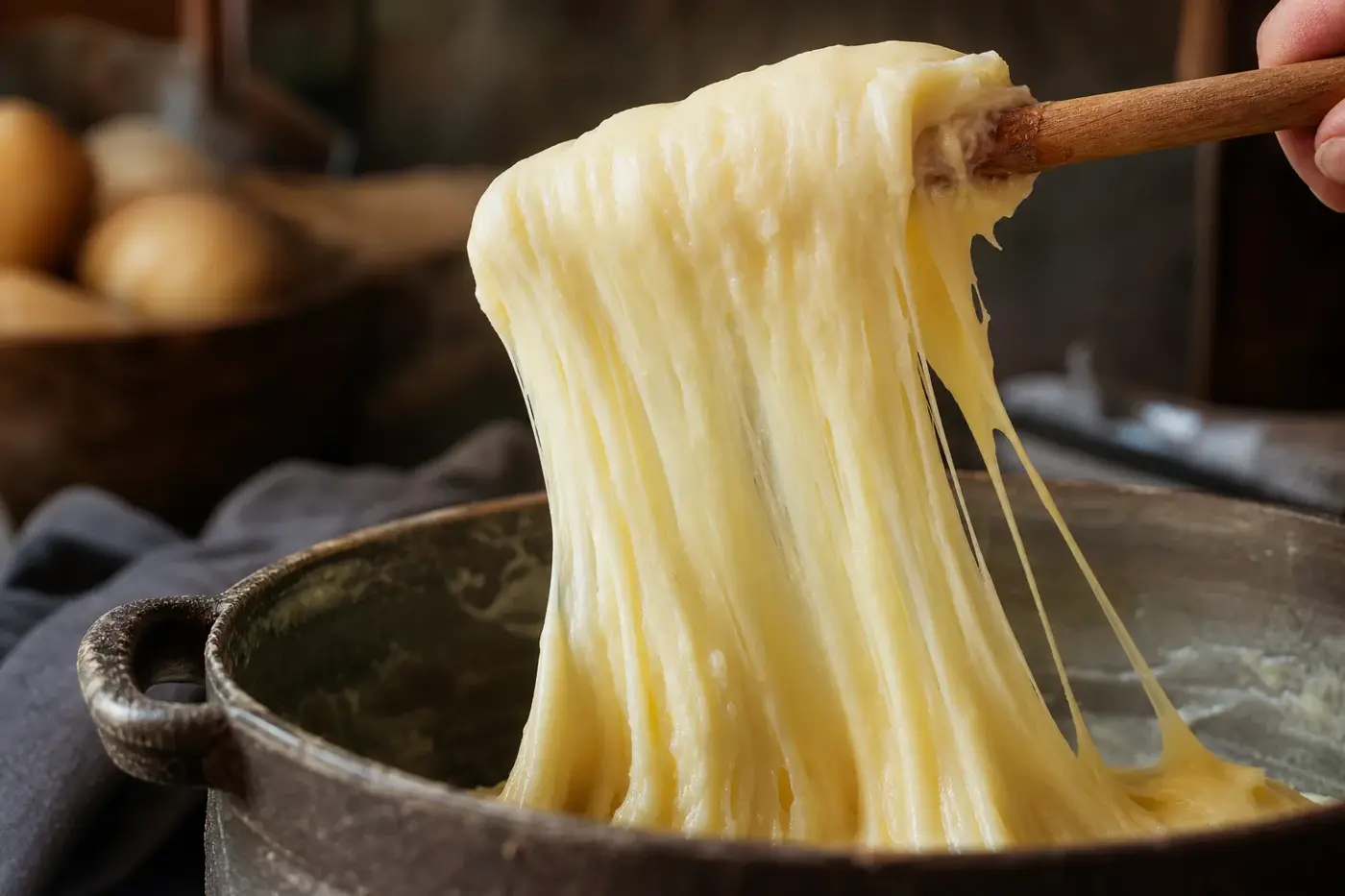
Lift your spoon and the potatoes follow: long, glossy ribbons, stretching from the pan. In Aubrac, fresh tome and a fine potato purée turn smooth, supple and elastic under careful heat and vigorous stirring. The cheese must be very young. That glorious final stretch happens just before you serve, so you have every reason to keep your audience close. [1,2]
Get to know that glorious stretch
Work mashed potato with fresh tome, cream and usually garlic, and the cheese melts into the potatoes. The regional tourism body's recipe calls the decisive moment filant: the mixture draws into threads. That is the moment you are after. [1,2]
Look for something cohesive and supple, with potato and cheese properly united. A puddle of cheese sauce around the mash is not the idea. These two need to commit. [1,2]
Follow the pilgrims into Aubrac
Aligot belongs to the Aubrac plateau. Tourisme en Aubrac connects this regional emblem with pilgrims travelling towards Santiago de Compostela, and with monks serving them bread and fresh tome. Jeune Montagne, the local cheesemaking cooperative, tells the story too, including the suggested link to the Latin aliquid, meaning something. [1,3]
Treat these as regional traditions rather than established accounts of the dish's origins. Jeune Montagne also recounts the later switch from bread to potatoes and links aligot with buronniers, the workers in the plateau's seasonal cheesemaking huts. In this telling, fresh curd and the cooking pot belong together. [3]
For you at the hob, that connection matters more than the origin story. Aligot celebrates cheese at an early stage of production. It is fresh cheesemaking curd that gives the potato pot its character, not the intense flavour of a long matured wheel. [3,4]
Meet fresh tome, your essential ingredient
Ask for fresh tome intended for aligot. Jeune Montagne describes its tome as the first stage in making Laguiole, before it becomes the matured cheese. The published French application document describes Tome fraîche de l'Aubrac as an unsalted, unripened, pressed cheese made from raw whole cow's milk. [4,5]
You can expect a texture that is supple but firm, slight acidity and predominantly milky aromas. A short maturation develops the qualities that make it smooth and elastic in cooking. An aged wedge with tomme on the label has a different job to do. [5]
Tell the seller when you plan to cook. Jeune Montagne recommends using its product very young for the best stretch, so age really matters here. Follow the pack's storage instructions and use by date. [4,10]
Planning a vegetarian meal? Ask the maker or supplier specifically whether animal rennet was used in the cheese you are buying. The rennet guide explains the different types.
Give your potatoes a smooth beginning
Choose potatoes sold for mashing, rather than a firm salad variety. Aux Saveurs de l'Aubrac specifies Bintje, while Jeune Montagne recommends a floury variety with little excess water. The Kitchn uses Yukon Gold in its published version. [2,6,7]
Cut them into evenly sized pieces, cook until completely tender and drain thoroughly. Then pass them through a ricer or food mill before adding the cheese. Deal with lumps now, before your potato turns elastic and starts fighting back. [2,7]
Leave the blender and food processor aside. You have two distinct jobs: first make a fine, mechanically mashed purée, then stir vigorously by hand as the cheese melts. Smooth first, stretchy later. [2,7]
This deliberate elasticity is different from accidentally gluey plain mash. The regional recipe calls for vigorous stirring once the sliced tome goes in. A ricer gives you smooth potato without prolonged blending, leaving that later stirring to bring potato and cheese together. [2,7]
Take your aligot from purée to ribbons
This recipe is adapted from Aux Saveurs de l'Aubrac and Jeune Montagne, with preparation details drawn from the other published recipes cited. Both regional sources are commercial producers or caterers. [2,8]
- Serves: 4 as a substantial accompaniment. [2]
- Time: allow about 1 hour for preparation, cooking and the final stirring. [2]
- Heat: hob only, with gentle heat as the cheese goes in. You can leave the oven off. [2,6]
- Allergen: milk, from the cheese and cream. Check all accompaniment labels.
Put your tools within easy reach
Have a large saucepan, a colander, a potato ricer or food mill, a heavy based pan and a sturdy wooden spatula ready. Your potato saucepan can do both jobs if it is suitable for stirring over low heat. [2,7]
Gather everything for the pan
- 1 kg potatoes
- 400 g (14.1 oz) fresh tome for aligot, thinly sliced
- 250 g (8.8 oz) full fat crème fraîche
- 2 garlic cloves, peeled and finely crushed
- Salt and freshly ground black pepper, to taste
- Water for cooking the potatoes
The potato, cheese, cream and garlic quantities follow the caterer's recipe. Both regional methods call for thinly sliced cheese, so give that preparation a little attention before you start. [2,8]
Stir patiently, then watch for the ribbon
-
Cook the potatoes. Cut them into evenly sized chunks, put them in a saucepan and cover with cold salted water. Bring to the boil, then reduce to a simmer. Allow roughly 20 minutes once simmering, and test with a knife: it should slide through without resistance. If the centres are still firm, keep cooking. [2,7,9]
-
Drain and mash. Tip the potatoes into your colander and drain thoroughly. While still hot, pass them through the ricer or food mill into the heavy pan. Look for lumps now, before anything else goes in. [2,7]
-
Add cream and garlic. Stir in the crème fraîche and crushed garlic. Warm over low heat, stirring until the purée is evenly hot. You want a hot potato base for the cheese to melt into, not a cold one. [1,2,8]
-
Work in the tome. Add the thinly sliced cheese gradually, stirring firmly with your wooden spatula. Scrape the bottom of the pan and fold the mixture back over itself. Let each addition soften into the potato before adding more, keeping the heat gentle throughout. [2,6]
-
Look for ribbons. Keep going until all the cheese has melted and your lifted spatula draws out a continuous ribbon, without separate strands or lumps. Season with salt and pepper. Taste before adding more salt. [2,8]
-
Serve immediately. Bring the pan to the table or transfer the aligot to a warmed serving dish. Once it stretches, stop heating. Prolonged cooking can break the thread. [1,8,9]
Let the texture tell you what it needs
Look for a smooth surface, fully incorporated cheese and a mixture that lifts together. You want a continuous ribbon, not the tallest possible lift above the pan. Potato and cheese should behave as one. [1,2]
If something seems wrong, ask yourself three questions. Is the mash smooth, has the cheese melted, and is the heat too high? The producer specifically warns that excessive heat can destroy the stretch and turn the mixture liquid. [6]
| What you notice | What may be going on | Your next move |
|---|---|---|
| Grainy texture | Potato lumps or unmelted cheese | Work out which. Stir gently to melt cheese; rice potatoes more thoroughly next time. [2,7] |
| Stiff mixture | Dense mash or cooling | Return to gentle heat; work in a little extra cream until supple. [9] |
| No stretch | Unsuitable cheese, incomplete melting or overheating | Gently stir any unmelted slices. Next time, use fresh tome and avoid prolonged heating. [4,6,8] |
Visible pieces of cheese may simply need more gentle melting. But if everything has melted and the mixture stays short and crumbly, resist turning up the heat. Follow the producer's low heat approach rather than trying to force the stretch. [6]
No fresh tome? Take another recipe route
Fresh tome is the choice for the Aubrac version. If you need alternatives, Serious Eats offers a published Alpine cheese recipe, with Swiss cheese and Gruyère as its suggested combination. Its recipe carries a 2023 cross testing report, the strongest evidence here for using other melting cheeses. [9]
Other published recipes pair fresh mozzarella with Gruyère. These give you another route to the dish, with their own texture and flavour. [7,11]
Choose one of those complete recipes rather than simply swapping the cheese in the regional formula. Their proportions of dairy and potato differ, and that balance belongs to the method. Follow the specified choice of fresh mozzarella in particular, rather than switching between products without adjustment. [7,9,11]
Your flavour balance will change too. Fresh unsalted tome starts with a milky, slightly acidic character; the alternatives bring the characteristics of their matured cheese. Taste your finished mixture before salting it, rather than borrowing the seasoning from another version. [5,7,11]
Have the table ready for the stretch
Jeune Montagne suggests grilled sausage, roast meat or aligot as a dish in its own right. If you are serving sausage, get that cooked first and have everything else ready to serve. Then bring the aligot together at the last moment. [8]
For a vegetarian table, try roasted mushrooms or cabbage with browned edges, alongside a sharply dressed green salad. A little acidity and something with bite contrast with the tender, elastic potato. Keep sauces restrained and let the aligot take the centre of the plate.
Before cooking for vegetarian guests, check both the cheese's rennet and the accompaniments. A meat free plate still needs a suitable cheese. Settle that before choosing your recipe, not when the potatoes are already on the hob.
Pour a little contrast into your glass
For an alcohol free pairing, try sparkling water with lemon or a dry alcohol free cider. Either gives you a contrast with the dish.
Give your leftovers proper care
Divide leftovers into smaller portions, cool them and refrigerate within two hours. Keep your fridge between 0 and 5 °C, and eat refrigerated leftovers within 48 hours or freeze them. This handling advice follows the UK Food Standards Agency's guidance for England, Wales and Northern Ireland, as of November 2026. [10,12]
Reheat only the portion you need on the hob, stirring frequently until steaming hot throughout. Work around the bottom and sides of the pan so the dense centre heats as thoroughly as the edges. The FSA advises reheating leftovers only once. [12]
Defrost frozen aligot in the fridge and use within 24 hours of complete defrosting, following the FSA's guidance. Observe any shorter storage instructions supplied with your ingredients. For the cheese before cooking, see the guide to storing cheese at home. [10]
For the best chance of that freshly stretched texture, make the full amount when everyone is ready to eat. The regional method ends as the aligot stretches. Finish your fresh batch just before the meal, then take it straight to the table. [1,2]
General information only, not medical advice: follow the official guidance where you live.
Questions people ask
What is aligot?
Aligot is mashed potato worked with fresh tome, cream and usually garlic. It is an emblem of the Aubrac plateau and is served when the mixture forms smooth, elastic ribbons.
What cheese should I use for aligot?
Use fresh tome intended for aligot, rather than an aged cheese labelled tomme. Jeune Montagne recommends using its product very young for the best stretch.
How do I make aligot stretchy?
Pass the cooked potatoes through a ricer or food mill, then gradually stir thinly sliced fresh tome into the hot purée over gentle heat. Stop heating once the mixture stretches, as prolonged cooking can break the thread.
Can I make aligot without fresh tome?
Serious Eats has a published recipe using Swiss cheese and Gruyère, while other recipes pair fresh mozzarella with Gruyère. Follow a complete recipe designed for the substitute cheeses, as the proportions of dairy and potato differ.
Is aligot vegetarian?
For a vegetarian meal, ask the maker or supplier whether animal rennet was used in the cheese you are buying. Check the accompaniments too.
Sources
- Tourisme en Aubrac. L'Aligot. Undated web edition, retrieved November 2026. Regional association, published recipe and recorded origin tradition.
- Aux Saveurs de l'Aubrac. La recette de l'Aligot d'Aubrac. 23 October 2019. Four-person recipe, Bintje potatoes, ingredients, food mill, gradual cheese incorporation and ribbon cue. Commercial caterer's own recipe.
- Jeune Montagne. L'origine de l'Aligot. Undated web edition, retrieved November 2026. Producer's account of regional tradition, monastic hospitality, bread and buronniers.
- Jeune Montagne. La Tome fraîche de l'Aubrac IGP. Undated web edition, retrieved November 2026. Producer's description of its cheese, production stage and suitability for aligot.
- European Commission, Official Journal of the European Union. Publication of an application for registration of a name, single document for Tome fraîche de l'Aubrac, 2023/C 237/08, 5 July 2023, sections 3.2 and 5. Used for the published product description, not as evidence of current registration status.
- Jeune Montagne. Quel fromage pour l'aligot ? Undated web edition, retrieved November 2026. Floury potatoes, fresh cheese and gentle heat.
- The Kitchn. Pommes Aligot (Cheesy Whipped Potatoes). Updated 24 September 2025. Published potato preparation and mozzarella with Gruyère alternative.
- Jeune Montagne. La Recette de l'Aligot de l'Aubrac, Voyage au cœur des Saveurs de l'Aubrac, fiche 1. Undated producer recipe leaflet. Quantities, thin cheese slices, overheating warning and accompaniments.
- Serious Eats. Pommes Aligot (Cheesy Mashed Potatoes). Updated 19 September 2025; page records cross-testing in 2023. Cooking time, Alpine cheese alternative, adjustment with cream and warmed serving dish.
- Food Standards Agency. How to chill, freeze and defrost food safely. GOV.UK edition, published 18 December 2017, retrieved November 2026. Applies to England, Northern Ireland and Wales.
- Zwilling. Aligot. Undated published recipe, retrieved November 2026. Equal quantities of fresh mozzarella and Gruyère. Commercial cookware publisher's recipe.
- Food Standards Agency. Cooking your food. GOV.UK edition, published 18 December 2017, retrieved November 2026, section 7. Leftovers, reheating once, frequent stirring and steaming hot throughout. Applies to England, Northern Ireland and Wales.
Researched by comparing published Aubrac recipes, the cheese's official application document, original recipe developers' accounts and current FSA consumer guidance.
Last checked: November 2026
Last checked November 2026.
The editors suggest you read next