Australian Cheese
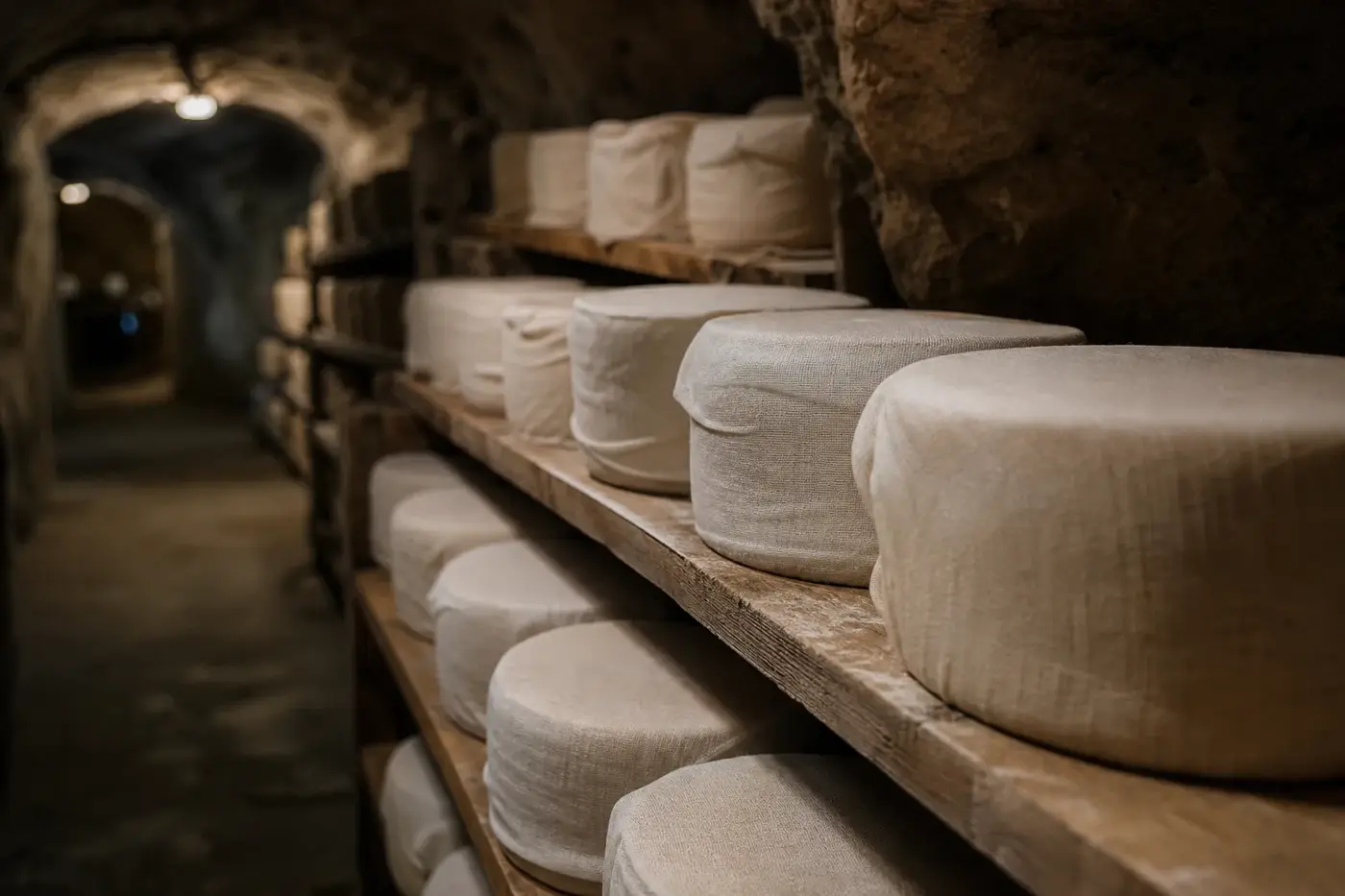
Beneath the farmgate café at Tasmania’s Pyengana Dairy, cheddar rests in cloth for 12 months.
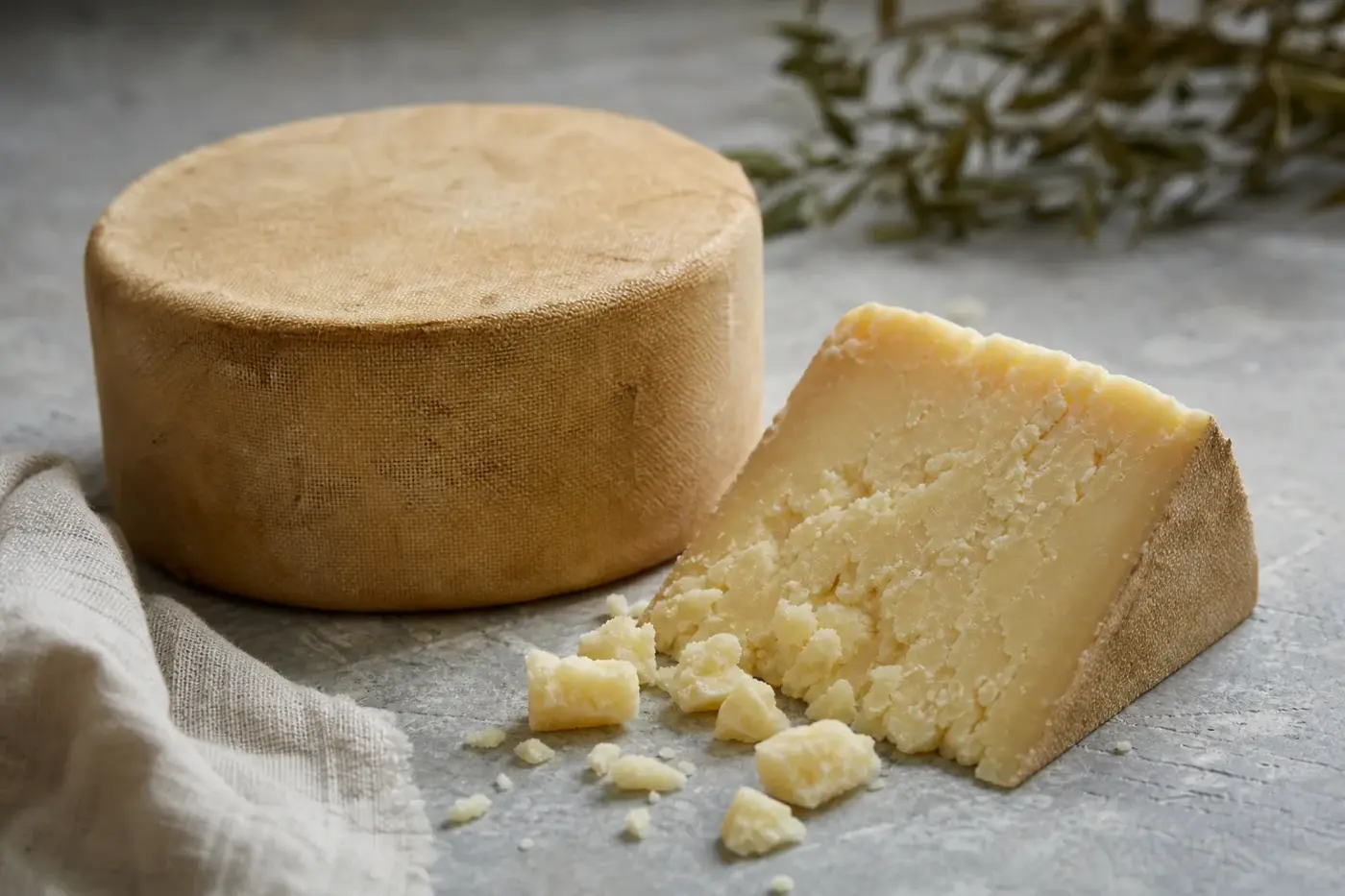
Beneath the farmgate café at Tasmania’s Pyengana Dairy, cheddar rests in cloth for 12 months. Upstairs, you might be thinking about lunch. Down below, tomorrow’s crumbly, bold and bitey cheese is taking its time.[7][8]
That cellar is a fine starting point, but Australian cheese has plenty more to show you. Follow the trail through Tasmania, Gippsland, northeast Victoria’s Milawa, New South Wales and South Australia. You will find large scale cheddar production, smaller dairies washing rinds, and fresh goat’s cheeses offering quite another mouthful.[1][7][11][12][14][15]
Your first taste of the Australian picture
| What you want to know | Where to begin |
|---|---|
| Geographical scope | Australia.[1] |
| Main dairy concentration | Southeastern Australia.[1] |
| Milk represented below | Cow and goat; sheep’s milk examples are not included.[7][12][14][15] |
| Legal definition of cheese | Not established here |
| Food standards | Australia New Zealand Food Standards Code; dairy production requirements include Standard 4.2.4, Australia only.[17][21] |
| Industry body | Dairy Australia, an industry organisation.[1] |
| Reference date | November 2026 |
From ships’ provisions to your cheese counter
Fresh dairy food was a practical challenge when Australia’s early European settlement began in 1788. The State Library of New South Wales records the First Fleet acquiring farm animals at Cape Town. Its historical collections also reveal how heavily the settlement depended on provisions arriving by ship.[2]
In South Australia, the agricultural record picks up milk, butter and cheese production from 1837, initially around the Adelaide Plains and Hills. Cooperative factories and mechanised production followed in the 1880s. By the 1970s, refrigerated bulk milk handling was widespread there, connecting farms to an increasingly centralised processing industry.[3]
Alongside that industrial story, specialist cheesemakers found inspiration in established dairy districts. Milawa began in 1988, adapting European techniques in an old Victorian butter factory. Pyengana Dairy, established in 1992, drew on its valley’s older farm cheesemaking tradition. Both brought individual cheeses into focus in places that already knew their milk.[4][7]
Follow the pasture, follow the water
Look southeast for most of Australia’s milk. Farming conditions favour dairying there, and Dairy Australia’s regional map picks out Gippsland, western Victoria and the Murray region. It also includes Tasmania, New South Wales, South Australia, Western Australia and the subtropical dairy region. Suitable conditions shape this map, rather than the country’s vast outline.[1]
Along the coast, pasture relies largely on rainfall. Northern Victoria and the Riverina also have important irrigated dairy areas, while supplementary grain, hay and silage help farmers manage feed and seasonal production. When you choose a cheese, ask where its milk comes from. A regional name alone cannot tell you how the herd was fed.[1]
New South Wales brings that variety into sharp focus. Its agriculture department describes dairying from subtropical Lismore to semi-arid Finley, with major concentrations on the mid-north and far south coasts. Pasture choice and water management matter enormously here. A sweeping description of Australian grass-fed milk misses those differences.[5]
For your tasting journey, begin in Tasmania, travel through Gippsland and northeast Victoria, then compare the Northern Rivers of New South Wales with the Adelaide Hills. South Australia’s wider dairy belt also runs through the southeast and the Barossa mid-north area, according to its agriculture department. You have plenty to explore beyond a single famous district.[6]
Tasmania: unwrap the cheddar, then meet the blue
At Pyengana Dairy, cheddar begins with cow’s milk sourced solely from the Pyengana valley in northeast Tasmania. The dairy describes hand-working the curds, the solids separated from milk during cheesemaking. Cloth maturation follows beneath the farmgate café. You can trace the cheese through milk, hands and place.[7]
The current Traditional Cloth Matured Cheddar product page specifies 12 months’ maturation and that crumbly, bold, bitey character. Give it the firm cheese spot on your board, beside an everyday block of cheddar, and notice the difference in texture. Ask for the named product, as the dairy lists other cheddar formats too.[7][8]
King Island offers you another Tasmanian introduction. King Island Dairy says every wheel is made on the island with island milk. Its Roaring Forties Blue takes its name from the westerly winds associated with this latitude. A second maturation beneath blue wax develops part of its flavour.[9][10]
The maker describes sweet and slightly fruity notes, suggesting pear, pecans and wholemeal oat biscuits alongside. Set against Pyengana’s crumbly cheddar, it gives you a revealing contrast in texture and character. Taste them separately first, before the blue takes charge, and remove its wax before eating.[8][10]
Victoria: get to know the rind
At Moyarra in South Gippsland, Prom Country Cheese lists natural-rinded semi-hard, soft, marinated and blue cheeses. Its current website identifies Inverloch Blue as a pasteurised cow’s milk cheese. Start with that named cheese if you want an approachable introduction. There is considerably more than cheddar to discover in this district.[11]
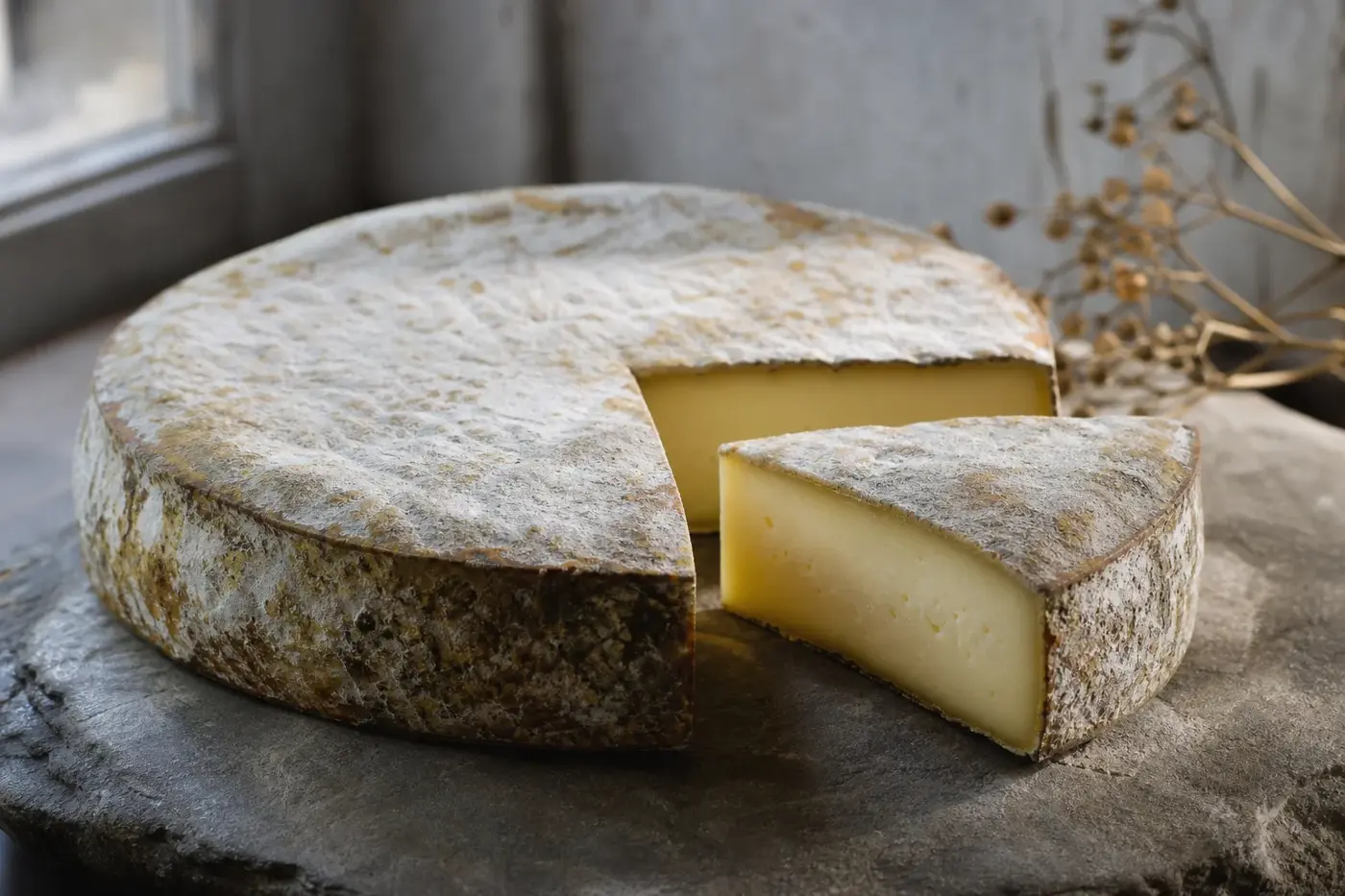
Head to Milawa in northeast Victoria and look closely at the rind. King River Gold is a cow’s milk washed-rind cheese, whose surface is washed during maturation to encourage its characteristic rind. The maker describes a golden exterior, a soft interior and an almost smoky, savoury flavour. You have plenty to consider in a single mouthful.[4][12]
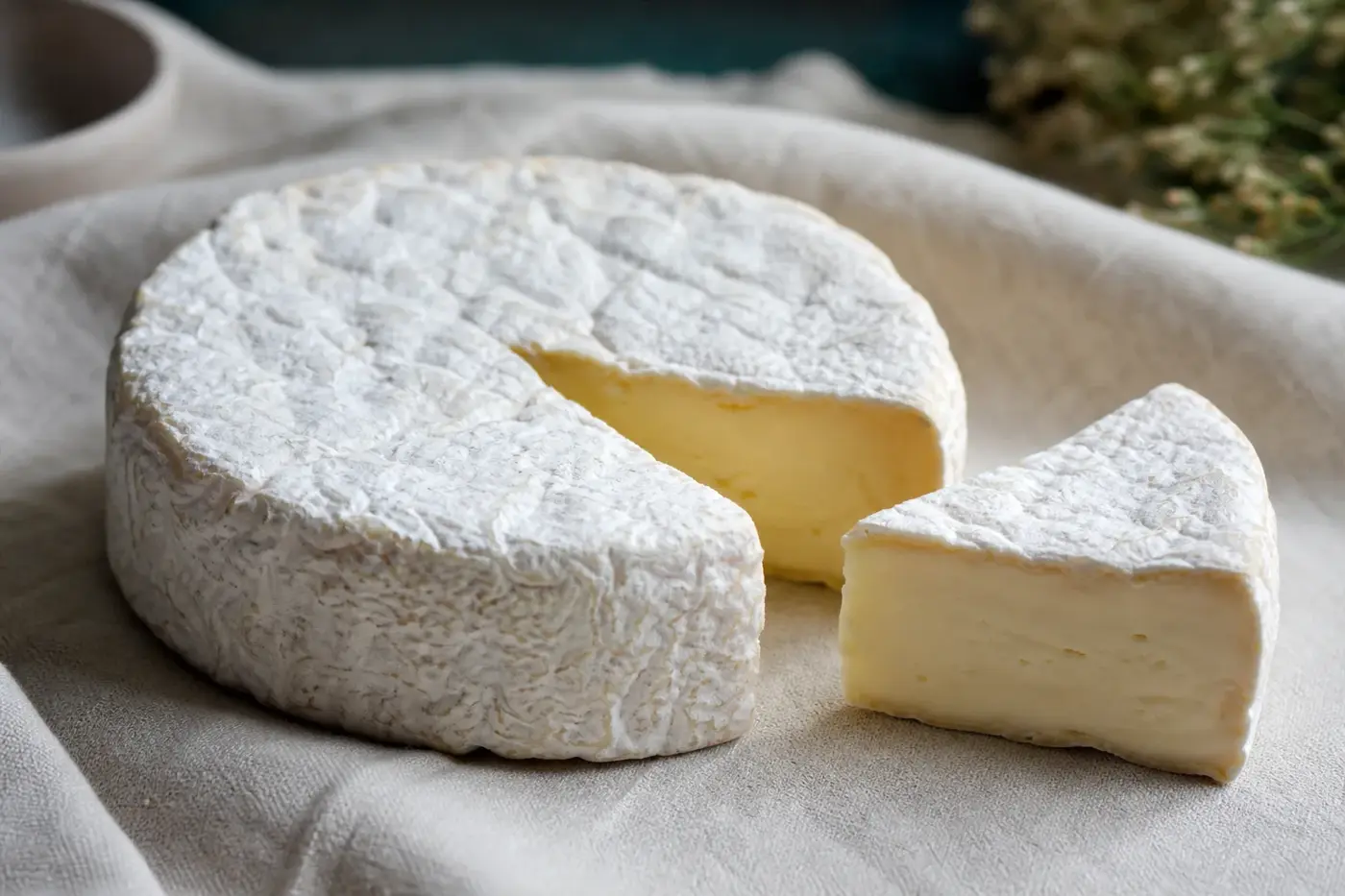
Put Milawa Brie beside it for a white-mould comparison. The producer describes the young Brie as firm, clean and mild, softening from the rind towards the centre as it ripens. Both cheeses use cow’s milk. Taste them together and the influence of rind and maturation becomes much easier to grasp than a catalogue of styles.[13]
Find your fresh favourites in New South Wales and South Australia
In the Northern Rivers, Nimbin Valley Dairy makes a cow-and-goat comparison easy to arrange. Its catalogue separates cheeses crafted from cow’s milk from those crafted from goat’s milk. Ask your stockist for one of each. Confirm product names and milk treatments on the current labels before you begin.[14]
Over in South Australia, Udder Delights places its cheese factory at Lobethal in the Adelaide Hills. It says its cow’s and goat’s milk cheeses use locally sourced milk. Brie, blue, cheddar, chèvre and goat’s curd all appear in the range. You can explore several approaches through one regional producer.[15]
At the counter, be specific about its two fresh goat’s cheeses. The producer describes the chèvre as fresh, acidic and dense, while the goat’s curd is spreadable and almost fluffy. Ask for the texture you want, rather than simply “goat’s cheese”. For a sheep’s milk addition, confirm Australian origin, production region and whether the milk is sheep alone or a mixture.[16]
European methods, distinctly Australian choices
Cheddar is familiar, but it does not get the whole stage. Non-cheddar cheeses accounted for 55% of Australian cheese production in 2024 to 2025. Dairy Australia reports total production above 430,000 tonnes, with fresh cheeses, hard grating cheeses and mould-ripened cheeses among its categories. Cheddar remains substantial, without representing the entire national picture.[1]
European traditions provide techniques rather than one fixed Australian flavour. Milawa explicitly describes adapting European methods to Australian conditions; Pyengana describes inherited valley methods and local milk. Follow those differences through milk, rind, texture and maturation. If the terminology gets between you and your cheese, turn to how to tell cheese styles apart.[4][7]
Let those contrasts guide your board: a fresh cheese, a white rind, a washed rind, a firm cheddar and a blue. You will explore several methods rather than a procession of near neighbours. Ask which cheeses are tasting well at their present age. The oldest does not automatically deserve the best seat.
Raw milk cheese: understand the rules before you buy
Australian raw milk cheesemaking has a regulated pathway under Standard 4.2.4, which applies in Australia only. NSW Food Authority explains that a proposed raw milk cheese process must demonstrate control of Listeria monocytogenes. In New South Wales, its approval is required before manufacture begins. That approval covers the particular process, not an entire cheese style.[17][21]
Imports follow a separate route through border requirements. Australia’s Department of Agriculture, Fisheries and Forestry classifies raw milk cheese as risk food, requiring a recognised foreign government certificate for imports in this category. Biosecurity conditions must also be met. The classification distinguishes raw milk cheese from cheeses made with specified heat treatments and additional controls.[18]
At the counter, ask about the milk treatment of the named product. Raw, thermised and pasteurised are distinct terms, whether you are reading a label or talking to a monger. Find an explanation in raw milk, thermised and pasteurised cheese. Before arranging any import, consult current Australian government conditions.[17][18]
Put together a board worth lingering over
Choose four contrasting styles, with fresh goat’s cheese as an optional fifth. The pairings below begin with makers’ published suggestions; the alcohol-free drinks are editorial alternatives for you to try. Alcoholic options are for adults of legal drinking age who choose to drink, served in small amounts.[10][12][13][16]
People who are pregnant, driving, taking medicines that interact with alcohol, or recovering from alcohol dependence should not drink. Consult current official advice for your country.
| Cheese | Try it with | Something to drink | What to notice |
|---|---|---|---|
| Fresh goat’s chèvre | Baguette | Riesling or sparkling water | Udder Delights suggests bread and riesling; notice the acidity first.[16] |
| Milawa Brie | Plain bread | Sparkling white wine or sparkling water | Milawa recommends sparkling white wine with this white-rind cheese.[13] |
| King River Gold | Plain crackers | Sweet wine or apple juice | Milawa suggests sweet wine alongside its savoury washed rind.[12] |
| Roaring Forties Blue | Pear, pecans and oat biscuits | Still water | Explore the maker’s suggested fruit, nut and biscuit combination.[10] |
| Pyengana cheddar | Plain bread and apple | Still water | An editorial pairing that leaves the crumbly texture in focus.[8] |
Taste each cheese on its own before adding the accompaniment. Start fresh, move through the white rind and cheddar, then finish with the washed rind and blue. Give the blue its own knife.
Pay attention to texture, acidity, salt and finish, then return to your favourites. Comparing them can tell you as much as any individual tasting note. There is no prize for saving the best mouthful until someone else has eaten it.
Keep your cheese cold and serve it with care
FSANZ advises refrigerating perishable food at 5 °C (41 °F) or colder and following the storage instructions on the pack. Before serving, look at use-by dates and official recall notices. Use clean utensils, and keep ready-to-eat cheese separate from raw foods.[19][20]
Time outside refrigeration adds up. For perishable food between 5 °C and 60 °C, FSANZ says less than two hours allows refrigeration again; from two to less than four hours, use it immediately. At four hours or more, throw it away. Count preparation and serving towards the total time in that temperature range.[19]
Small portions help you manage this, particularly in a warm room. Replenish your board from the fridge rather than putting everything out at once.[19]
For wrapping and protecting cut surfaces, turn to how to store cheese at home. Keep each cheese’s original label, too. Its storage instructions, milk declaration and date will then be available when you need them.[19]
Ask the maker, and get to know the season
A shop’s address is not a cheese’s provenance. Begin with the maker’s current range, then ask where the cheese was made and where its milk came from. Pyengana’s valley sourcing and King Island Dairy’s island production statements show the value of specifics. Read the production details for your named cheese rather than relying on the seller’s address.[7][9]
Bring the same curiosity to timing. Pyengana connects older farm cheesemaking with peaks in spring and late summer, and describes grading today’s batches to decide their maturation time. Ask what is available now, when it was made and how long it has matured. Production season and release date tell different parts of the story.[7]
Use how to read a cheese label for the practical details. Before visiting a dairy, confirm access, booking requirements and accessibility directly with the maker.
If the cheese you wanted is unavailable, ask the seller for another in the same style. Make a note of its maker and region. You already have the beginnings of your next tasting.
General information only, not medical advice: follow the official guidance where you live.
Questions people ask
What types of cheese are made in Australia?
Australian cheeses range from cheddar to washed rind, blue and fresh goat’s cheeses. Dairy Australia also lists fresh cheeses, hard grating cheeses and mould ripened cheeses among its production categories.
Where is most Australian milk produced?
Most Australian milk comes from the southeast, where farming conditions favour dairying. Dairy regions include Gippsland, western Victoria, the Murray region and Tasmania.
What is the difference between chèvre and goat’s curd?
Udder Delights describes its chèvre as fresh and acidic, with a dense texture. Its goat’s curd is spreadable and almost fluffy.
Is raw milk cheese made in Australia?
Australian raw milk cheesemaking has a regulated pathway under Standard 4.2.4. In New South Wales, the NSW Food Authority requires approval of the particular process before manufacture begins.
How should Australian cheese be stored?
Food Standards Australia New Zealand advises keeping perishable food refrigerated at 5 °C or colder and following the pack’s storage instructions. It also says that perishable food kept between 5 °C and 60 °C for four hours or more should be thrown away; check its current guidance.
Sources
- Dairy Australia, In Focus 2025: The Australian Dairy Industry, 2025, sections on farming systems and cheese, and Appendix 1, dairy regions. Report.
- State Library of New South Wales, Food they brought with them, undated educational resource, accessed November 2026. Resource.
- Government of South Australia, Primary Industries and Regions SA, Dairy: History of Ag SA, reviewed 20 November 2017. Historical overview.
- Milawa Cheese Company, Our Story, undated producer account, accessed November 2026. Producer history.
- NSW Department of Primary Industries and Regional Development, Dairy, climate vulnerability assessment resource, citing its 2025 industry overview; accessed November 2026. Regional assessment.
- Government of South Australia, Primary Industries and Regions SA, Dairy toolkit, current web resource including 2024 to 2025 industry information, accessed November 2026. Industry resource.
- Pyengana Dairy, About Us, undated producer account incorporating events through December 2025; accessed November 2026. Producer account.
- Pyengana Dairy, Traditional Cloth Matured Cheddar 150g, current product page, accessed November 2026. Product information.
- King Island Dairy, Our Story, current producer account, accessed November 2026. Production and milk origin.
- King Island Dairy, Roaring Forties Blue Cheese, current product page, accessed November 2026. Product information.
- Prom Country Cheese, official website, current producer and range information, accessed November 2026. Producer information.
- Milawa Cheese Company, King River Gold, current product page, accessed November 2026. Ingredients, method and tasting notes.
- Milawa Cheese Company, Milawa Brie, current product page, accessed November 2026. Ingredients, ripening and pairing notes.
- Nimbin Valley Dairy, official website and current catalogue categories, accessed November 2026. Producer website, cow’s milk catalogue and goat’s milk catalogue.
- Udder Delights, official website, current factory, milk and range information, accessed November 2026. Producer information.
- Udder Delights, Goat’s Cheese, current product descriptions and pairing suggestions, accessed November 2026. Chèvre and goat’s curd.
- NSW Food Authority, Dairy processing, current regulatory guidance, accessed November 2026. Processing and raw milk cheese requirements.
- Australian Government, Department of Agriculture, Fisheries and Forestry, Raw milk cheese, current imported-food guidance, accessed November 2026. Import requirements.
- Food Standards Australia New Zealand, Food safety basics, updated 8 July 2025. Official handling guidance.
- Food Standards Australia New Zealand, Australian food recall alerts, current alert index, accessed November 2026. Recall notices.
- Food Standards Australia New Zealand, Primary Production and Processing Standards, current explanatory resource; Federal Register of Legislation, Australia New Zealand Food Standards Code, Standard 4.2.4, Primary Production and Processing Standard for Dairy Products (Australia Only), latest-version entry retrieved November 2026. FSANZ explanation and official legislative entry.
This piece was researched from agricultural records, industry reporting, official Australian guidance and producers’ published information; tasting descriptions are attributed to their makers.
Last checked: November 2026
Last checked November 2026.
The cheeses of Australia
The editors suggest you read next
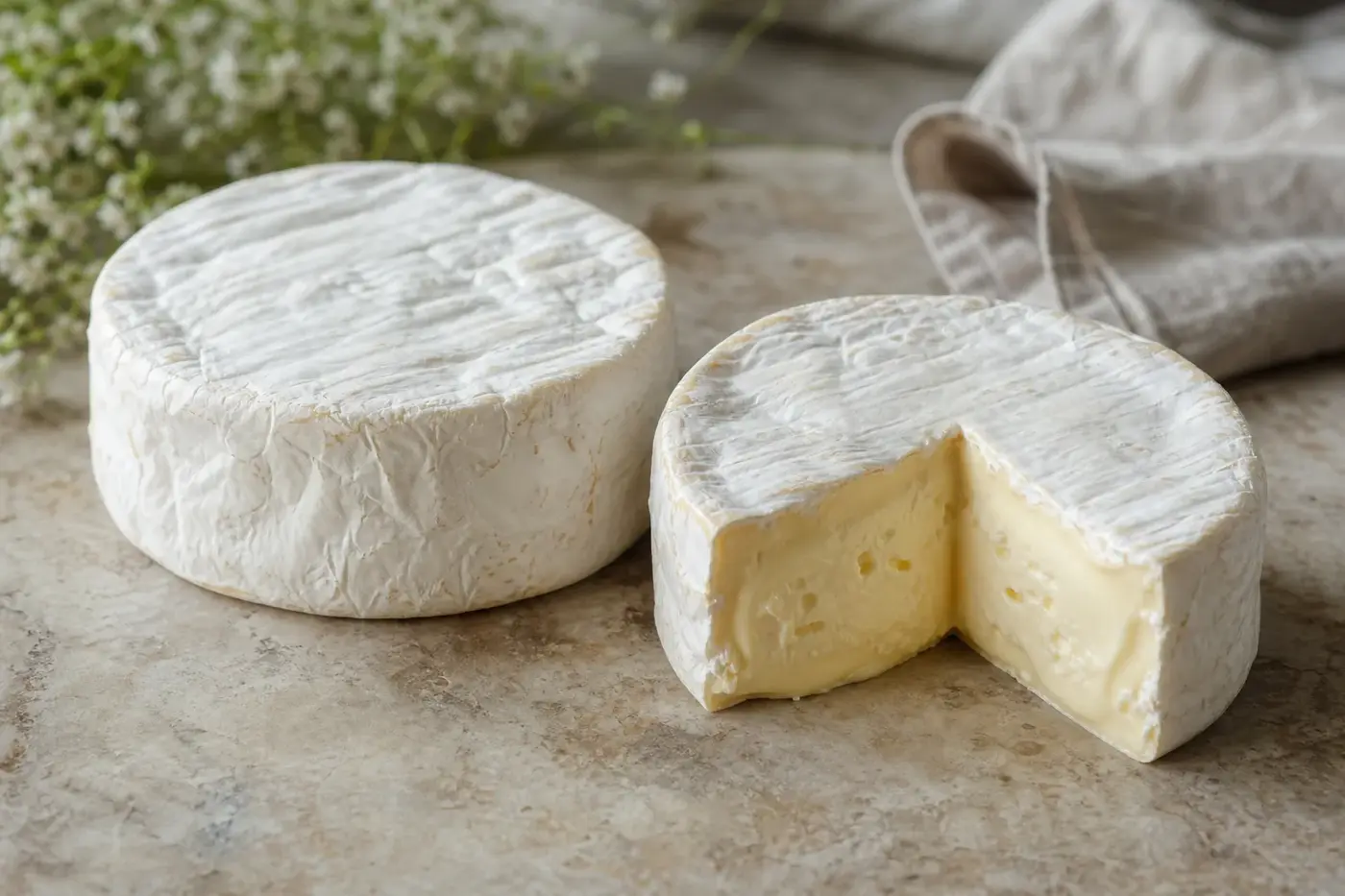
French Cheese: The Complete Guide
Picture Normandy’s pastures, then follow the milk towards the Loire’s goat dairies, the Jura’s shared cheesemaking traditions and the sheep country of the Pyrenees.