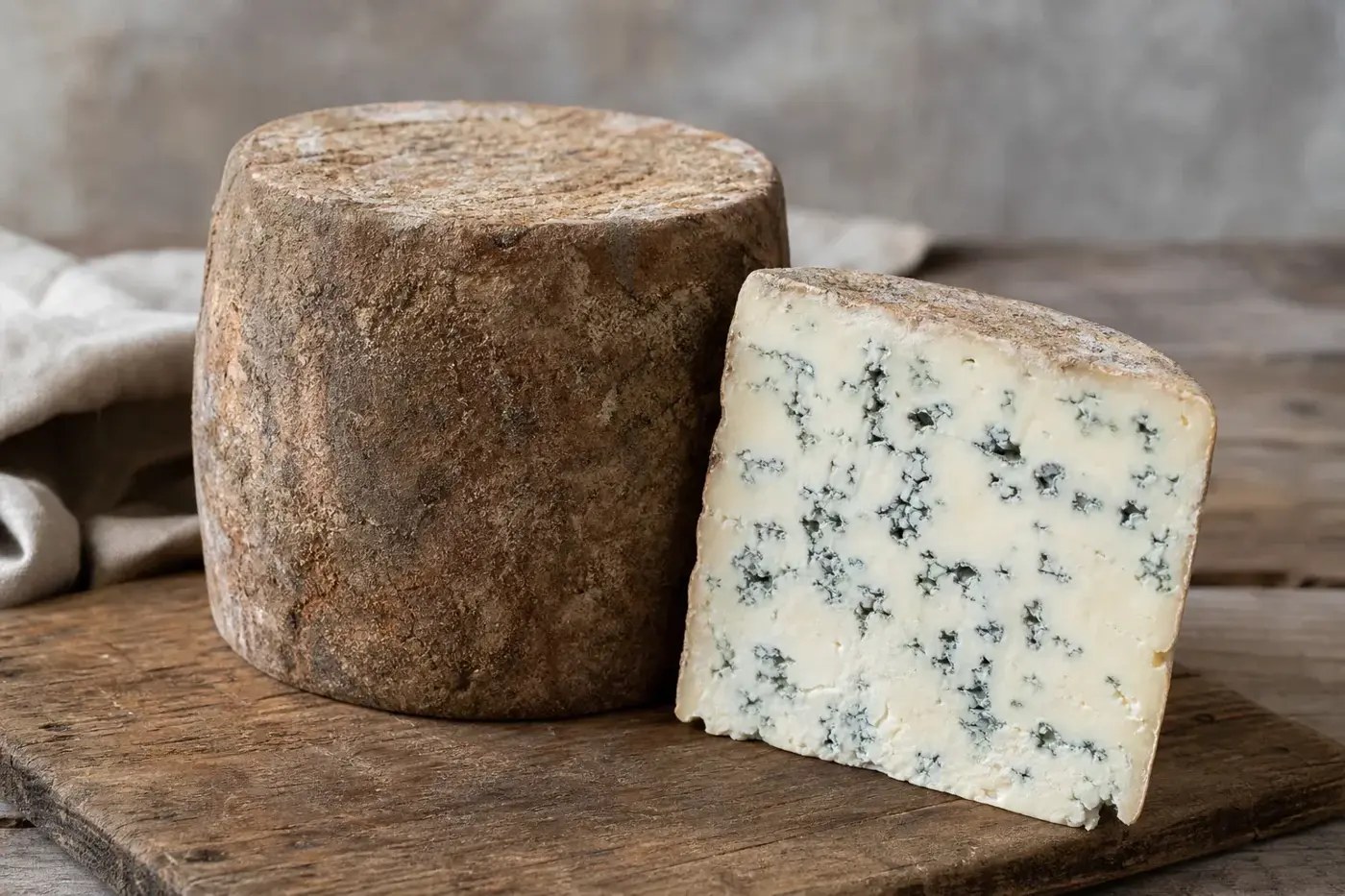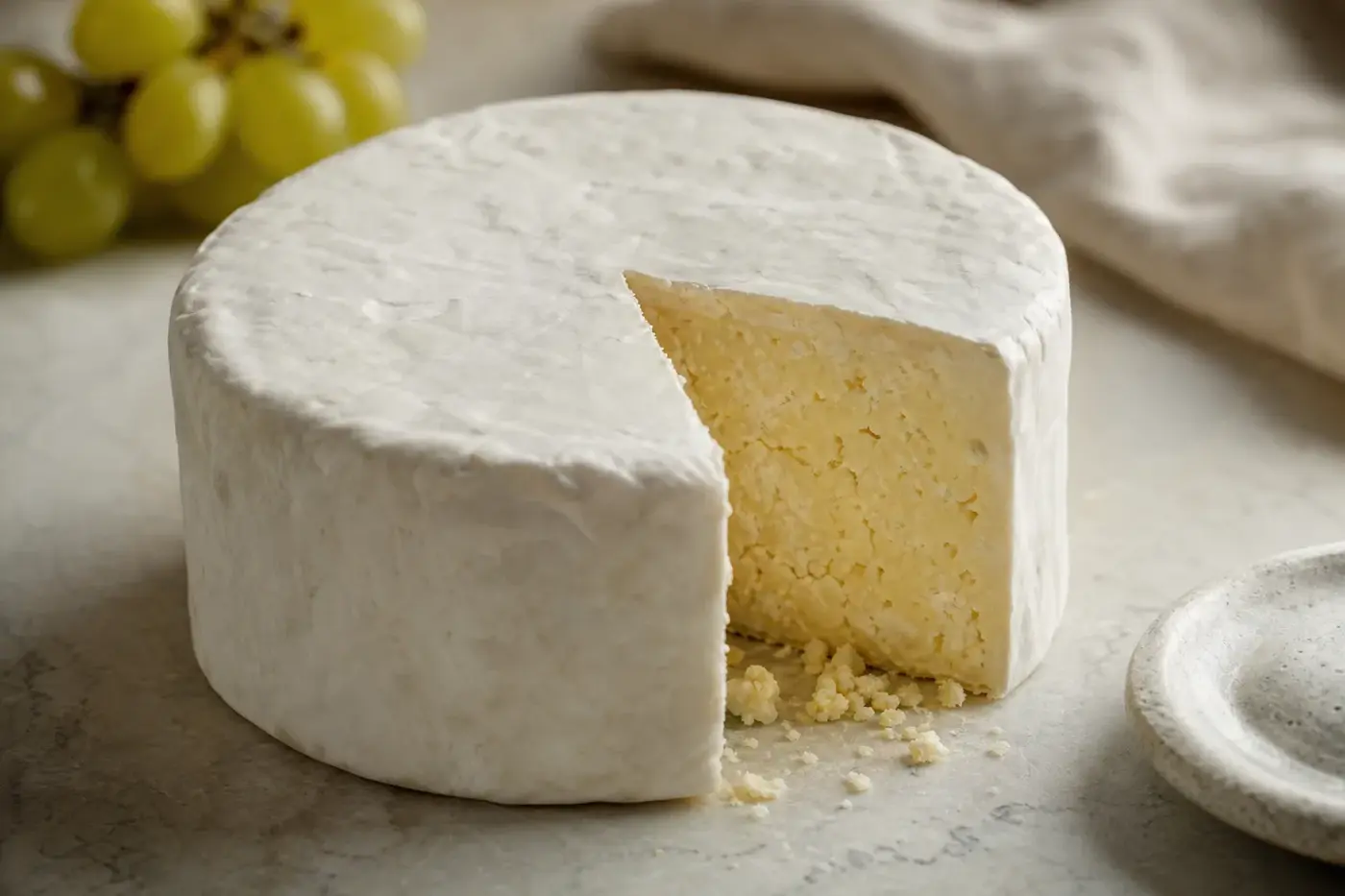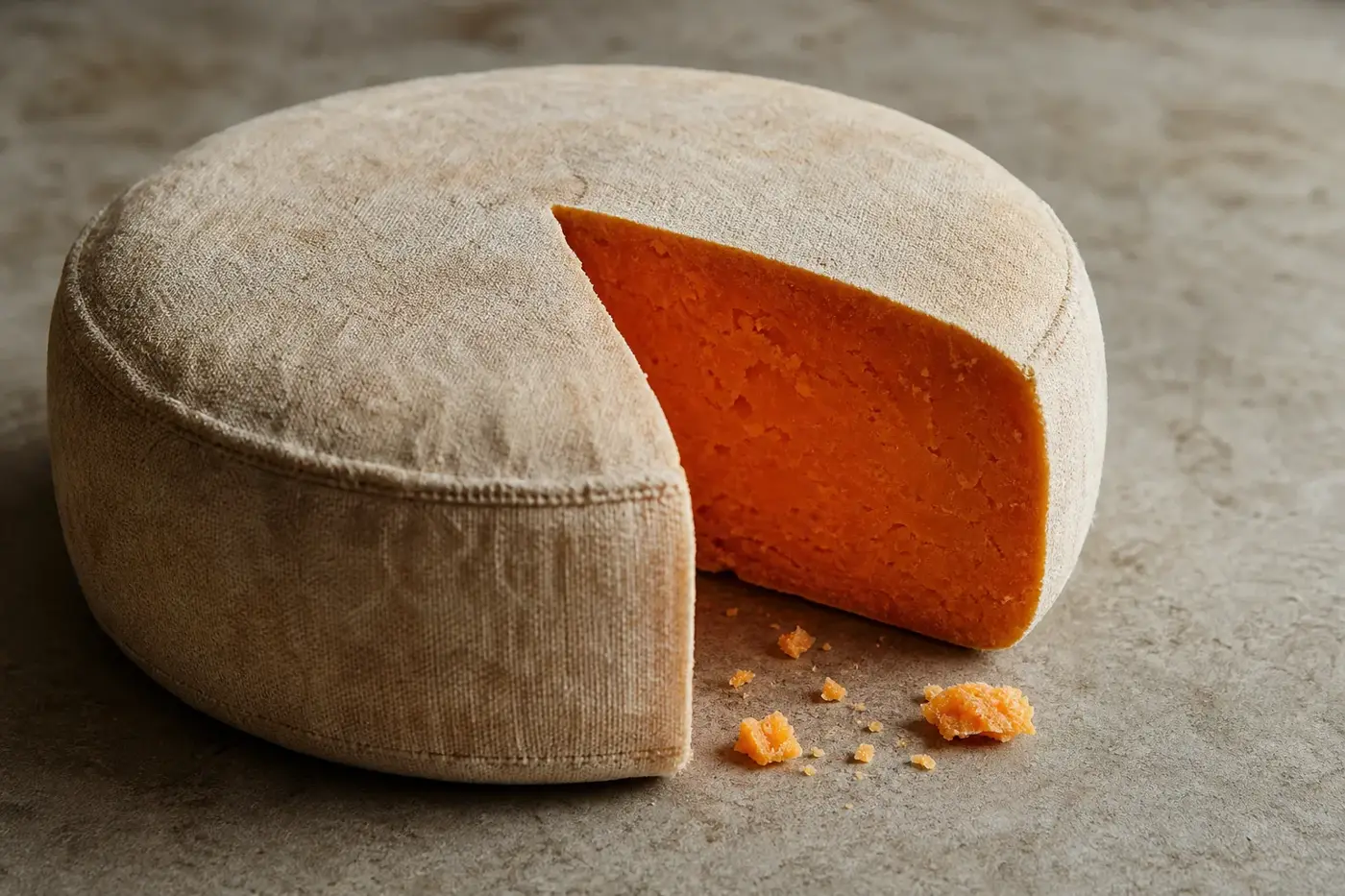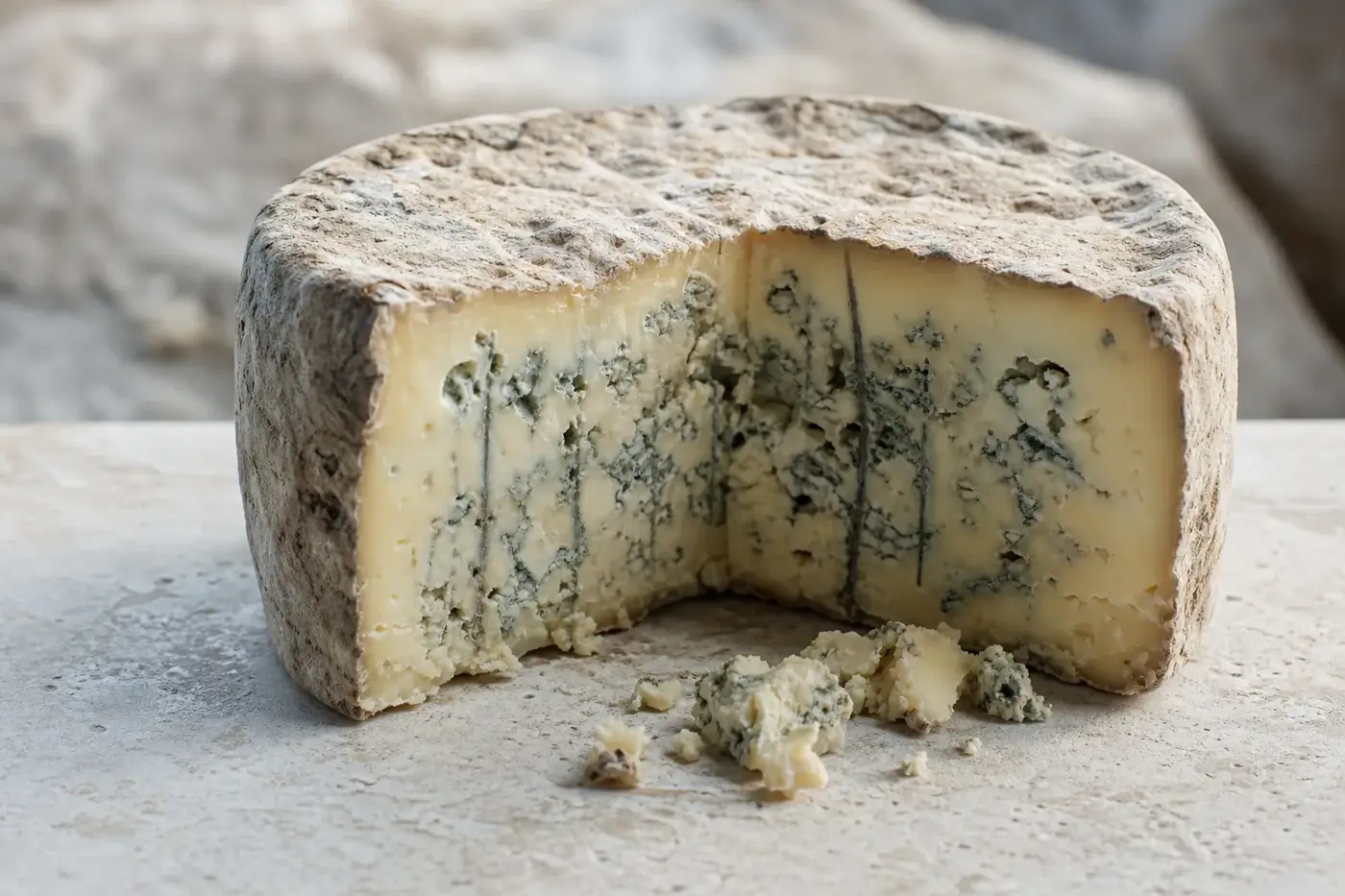
Your knife meets a gentle crumble. Then Bath Blue changes the conversation: smooth on your tongue, pale and creamy, with branching blue veins running through it.[1] At Park Farm in Kelston, near Bath in Somerset, Bath Soft Cheese Co. makes it from cow’s milk, pierces it repeatedly and lets eight to ten weeks do their work.[2][3]
| What you might want to know | Bath Blue |
|---|---|
| Name to ask for | Bath Blue.[1] |
| Who makes it | Bath Soft Cheese Co.[4] |
| Where it comes from | Park Farm, Kelston, near Bath, Somerset, England.[4][5] |
| Milk | Pasteurised cow’s milk from the maker’s own herd.[3][6] |
| Organic status of the milk and current certification | Not established here |
| What sets the curd | Animal rennet; the maker confirms Bath Blue is not vegetarian.[2][6] |
| Ripening mould | Penicillium roqueforti, according to the maker.[2] |
| Time to mature | Usually eight to ten weeks, according to the maker.[3] |
| Outside and inside | Natural rind; pale paste with blue marbling.[1] |
| Registered name, authority and register ID | Not established here |
| Protection status by jurisdiction | Not established here |
Sweet cream meets a little blue bite
Look at a cut wedge and the contrast is already there. The maker describes sweet cream and gentle malt beneath tangy, savoury blueing. That pale cheese and those darker veins promise a conversation about texture and balance, rather than a competition to shout loudest.[1]
“Creamy” and “crumbly” might seem unlikely companions. Here, they belong to different moments: the maker says Bath Blue breaks slightly beneath your knife, then feels smooth in your mouth. When you choose a wedge, consider both how it holds together and how the paste feels on your tongue.[1]
Try a small piece on its own before bread or anything sweet joins in. Then compare a relatively pale morsel with one carrying more veins. You give the cheese the first word, and yourself a chance to explore the contrast its maker describes.
Come down to Park Farm
Bath supplies the familiar name, but Kelston brings you closer to the cheese. Park Farm is home to Bath Soft Cheese Co., which says it makes its cheeses there by hand, using milk from its own cows. Behind the label is a working farm.[4]
The farming family arrived at Park Farm in August 1914, according to the maker’s history. Cheesemaking returned in the 1990s, drawing on an old recipe for Bath Cheese. The Fine Cheese Company’s cheesemaker directory also records that revival, with Bath Blue among the dairy’s later cheeses.[5][7]
The family of cheeses now includes Bath Soft, Wyfe of Bath and Merry Wyfe, each listed separately by The Fine Cheese Company.[7] Ask for Bath Blue by its full name at the counter. “Bath cheese” gives your cheesemonger rather more scope than you may have intended.
From the farm’s cows to pasteurised milk
Bath Blue begins with milk from the dairy’s own cows. In its current FAQ, the maker says all its milk is pasteurised, describing a treatment of 63 °C (145.4 °F) for 30 minutes.[3][6] That is the dairy’s published account as of November 2026.
Where milk comes from and how it is treated are separate questions. Here, the source is the farm’s herd; the treatment is pasteurisation. Keep both in mind when you compare blues, particularly when a counter description has plenty to say about flavour but little about milk.
You can explore that distinction in raw milk, thermised and pasteurised cheese. Rennet matters too: it helps milk set into curd. Bath Blue’s maker identifies animal rennet, and its FAQ confirms that this cheese is not vegetarian.[2][6]
Inside the dairy, patience takes over
Small curds, individual buckets
Starter bacteria begin the process by turning milk sugar into lactic acid. Rennet sets the milk into curd, the solid portion, and cutting it releases liquid whey. According to the dairy, Bath Blue’s curd is cut smaller than Bath Soft’s.[2]
Salt goes straight into the curd before shaping. Perforated moulds give the cheese its form and allow more whey to escape. The maker describes small batches, with work continuing in individual buckets.[2][3]
Step by step, milk becomes the structure you eventually meet beneath your knife. For the wider journey, from setting milk to maturing cheese, turn to how cheese is made.
Hundreds of little openings for air
Those branching veins need air to develop. Bath Blue is pierced hundreds of times to let it in and encourage even ripening inside the cheese.[2] The quiet-looking rind conceals a good deal of activity.
The maker names the ripening mould as Penicillium roqueforti.[2] How that mould is introduced remains unspecified here.
Eight to ten weeks in the making
The maker gives Bath Blue a usual ripening period of eight to ten weeks.[3] Its general cheesemaking account describes controlled temperature and humidity during affinage, the maturation of cheese.[2]
When you reach the counter, ask about the maturity and condition of the piece in front of you. A production period gives you useful background. The immediate question is whether this wedge suits your occasion, and when you intend to serve it.
A natural rind and a marbled centre
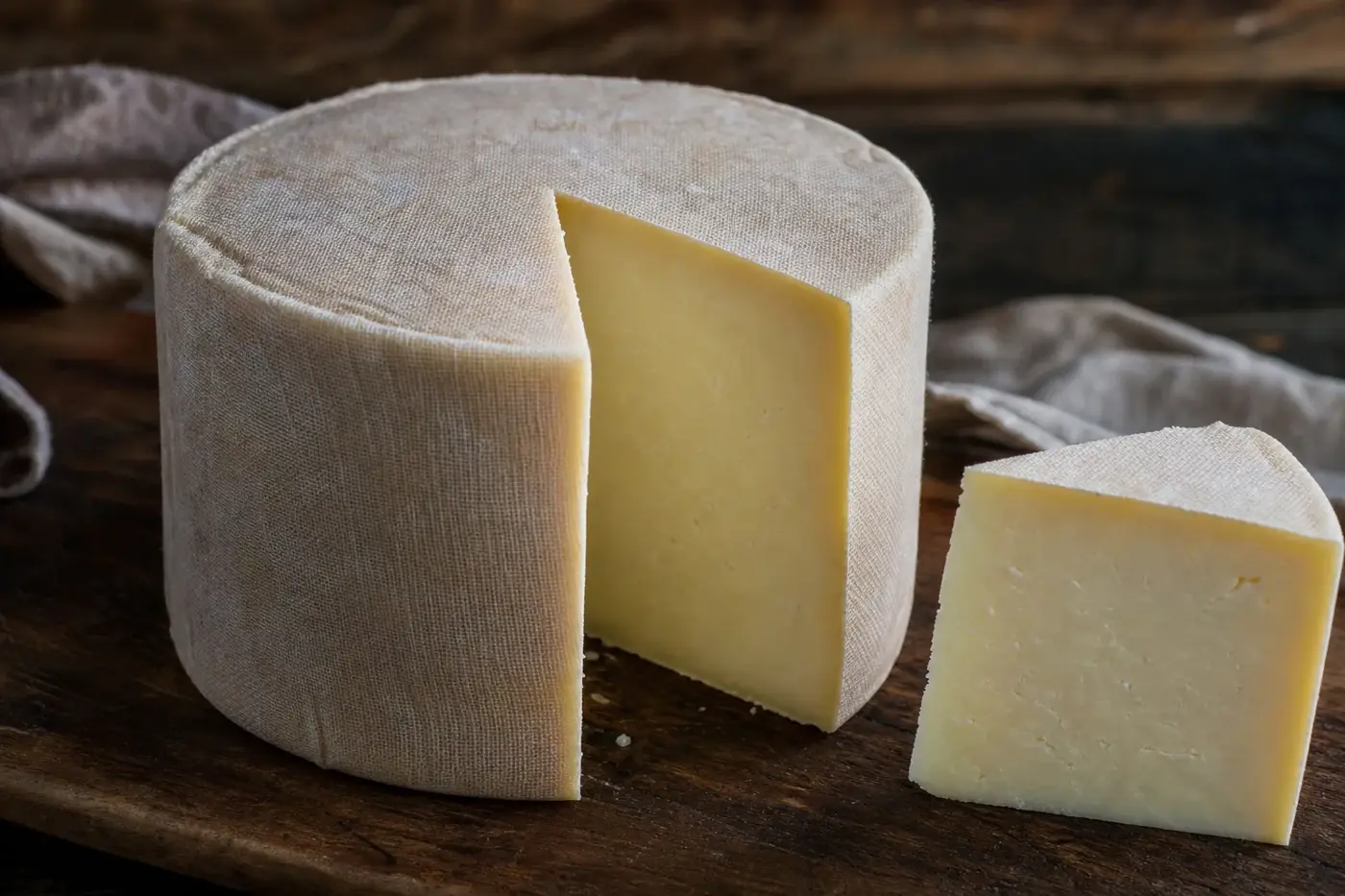
Bath Blue has a natural rind around its pale interior and blue marbling, according to the maker.[1] The Fine Cheese Company’s product photograph shows a round cheese.[7] Cut into it and the pale background lets you see the darker veins clearly.
Research on blue cheeses describes interiors ranging from white to light yellow, threaded with blue-green mould. Both milk and mould strain influence the colour.[8] Bath Blue’s maker also describes a golden cast: picture cream-coloured paste crossed by darker veins, rather than blue throughout.[1]
Before one particularly handsome vein claims your attention, look across the whole cut face. Compare the centre with the area near the rind and notice where the blueing sits. You will have more useful questions for your cheesemonger than the familiar “Is it strong?”
There is more to flavour than “strong”
The maker’s tasting description brings together sweet dairy notes, gentle malt, tanginess and savoury piquancy, with salt woven into the balance.[1] The Fine Cheese Company adds single-cream character and light vegetal notes.[7] These are their published descriptions, rather than a fromage.co.uk tasting.
Smell a freshly cut piece before you taste it. Then set your impressions alongside those descriptions. Which notes come forward, and how does the texture change as you eat?
Ripening helps explain blue cheese’s range of textures and flavours. A scientific review identifies the breakdown of proteins and fats during maturation as important to its sensory character.[8] Another review examines how enzymes from Penicillium roqueforti contribute to blue-cheese flavour.[9]
If you keep tasting notes, give texture, salt, acidity, blue intensity and length of finish their own space. “Strong” is a busy little word, but it cannot reasonably manage the whole cheese. Separate notes also help you tell a cheesemonger what you would enjoy next time.
When Bath Blue became World Champion
In 2014, Bath Blue won the World Champion Cheese title at the World Cheese Awards. The organiser, the Guild of Fine Food, lists Bath Blue from Bath Soft Cheese, England, under the 2014 to 2015 award year in its winners’ archive.[10]
The maker describes the result as Supreme Champion.[3] It is a landmark in Bath Blue’s story, and something to remember when you meet it at the counter. Leave room, though, for the questions only the current cheese can answer: do you enjoy its flavour and texture, and what condition is it in?
Give your first wedge a simple plate
Start with plain bread or crackers, a few slices of pear or apple, and Bath Blue. Try the bread first, then the fruit, and see which combination you prefer. Give yourself time to get to know the cheese before adding more to the plate.
For something sweeter, try quince paste or a little honey. Both appear among the maker’s suggested cheese accompaniments.[6] Water or sparkling water can sit alongside.
If you are in England, Wales or Northern Ireland, consult the Food Standards Agency’s current advice on chilling and serving food.[11] Use that practical guidance when planning how to serve your cheese.
Keep it cool, with the label close by
Refrigerate Bath Blue with its wrapper and date information. The maker says its cheeses carry a use-by date and recommends eating them before it expires.[6] Follow any additional storage instructions supplied with your particular piece.
For England, Wales and Northern Ireland, the Food Standards Agency advises keeping your home fridge at 5 °C or below and checking it with a separate thermometer.[11] Your fridge provides domestic storage. It is a different environment from the controlled conditions in which the dairy matures its cheeses.
Cut only what you intend to serve, cover the rest and return it promptly to the fridge. Keep the label with the cheese so you can plan your next serving. For more on wrapping and arranging your fridge, see how to store cheese at home.
A little reading for your next cheese board
- How to Tell Cheese Styles Apart: Milk, Rind, Texture and Method: find Bath Blue’s place among cheese styles.
- Rennet Explained: Animal, Microbial and Fermentation Produced: get to know Bath Blue’s coagulant.
- How to Store Cheese at Home: make a plan for storage after cutting and serving.
General information only, not medical advice: follow the official guidance where you live.
Questions people ask
What milk is Bath Blue made from, and is it vegetarian?
It is made from pasteurised cow’s milk from the maker’s own herd. The maker uses animal rennet and confirms that Bath Blue is not vegetarian.
What does Bath Blue taste and feel like?
The maker describes sweet cream and gentle malt balanced by tangy, savoury blueing. It breaks slightly under the knife but feels smooth in the mouth.
How long does Bath Blue take to mature?
The maker says Bath Blue usually ripens for eight to ten weeks. Its ripening mould is Penicillium roqueforti.
What goes well with Bath Blue?
The page suggests plain bread or crackers and slices of pear or apple. Quince paste or a little honey offers a sweeter accompaniment.
How should I store Bath Blue?
Keep it refrigerated with its wrapper and date information, and follow any storage instructions supplied with your piece. For England, Wales and Northern Ireland, the Food Standards Agency advises keeping a home fridge at 5 °C or below and checking it with a separate thermometer.
Sources
- Bath Soft Cheese Co., Bath Blue, undated current maker description, retrieved November 2026. Read at parkfarm.co.uk
- Bath Soft Cheese Co., The Art of Making Cheese, undated current maker account, retrieved November 2026. Read at parkfarm.co.uk
- Bath Soft Cheese Co., Bath Blue Cheese, undated current product page, retrieved November 2026. Read at parkfarm.co.uk
- Bath Soft Cheese Co., Bath Soft Cheese, current homepage, retrieved November 2026. Read at parkfarm.co.uk
- Bath Soft Cheese Co., Our History, undated current company history, retrieved November 2026. Read at parkfarm.co.uk
- Bath Soft Cheese Co., FAQ’s, undated current maker guidance, retrieved November 2026. Read at parkfarm.co.uk
- The Fine Cheese Company, Meet the cheesemakers and The Bath Soft Cheese Co., undated directory and supplier profile, retrieved November 2026. Read at thefinecheesecompany.com and Read at thefinecheesecompany.com The company sells the cheese; its sensory descriptions are attributed accordingly.
- Dairy, Blue Cheeses: Microbiology and Its Role in the Sensory Characteristics, volume 4, issue 3, 2023. Retrieved search extract covering the sensory characteristics section, November 2026. Read at mdpi.com
- CRC Critical Reviews in Food Science and Nutrition, Enzymes of Penicillium roqueforti involved in the biosynthesis of cheese flavor, volume 8, issue 2, 1976, pages 191 to 228. PubMed abstract retrieved November 2026. Read at pubmed.ncbi.nlm.nih.gov
- Guild of Fine Food, WCA: Winners of World Champion Cheese 1988-2025, current organiser archive, entry for 2014 to 2015, retrieved November 2026. Read at gff.co.uk
- Food Standards Agency, Food safety in a heatwave: advice for consumers, 2024 guidance, current retrieved version, November 2026; and How to chill, freeze and defrost food safely, official publication landing page, originally published 2017. Read at gov.uk and Read at gov.uk
Researched through the maker’s current descriptions and production account, The Fine Cheese Company’s directory, the award organiser’s archive, published scientific reviews and official consumer guidance.
Last checked: November 2026
Last checked November 2026.
The editors suggest you read next
West Country Farmhouse Cheddar Cheese
Large pieces of curd turn and stack under the cheesemaker’s hands.