Wyfe of Bath
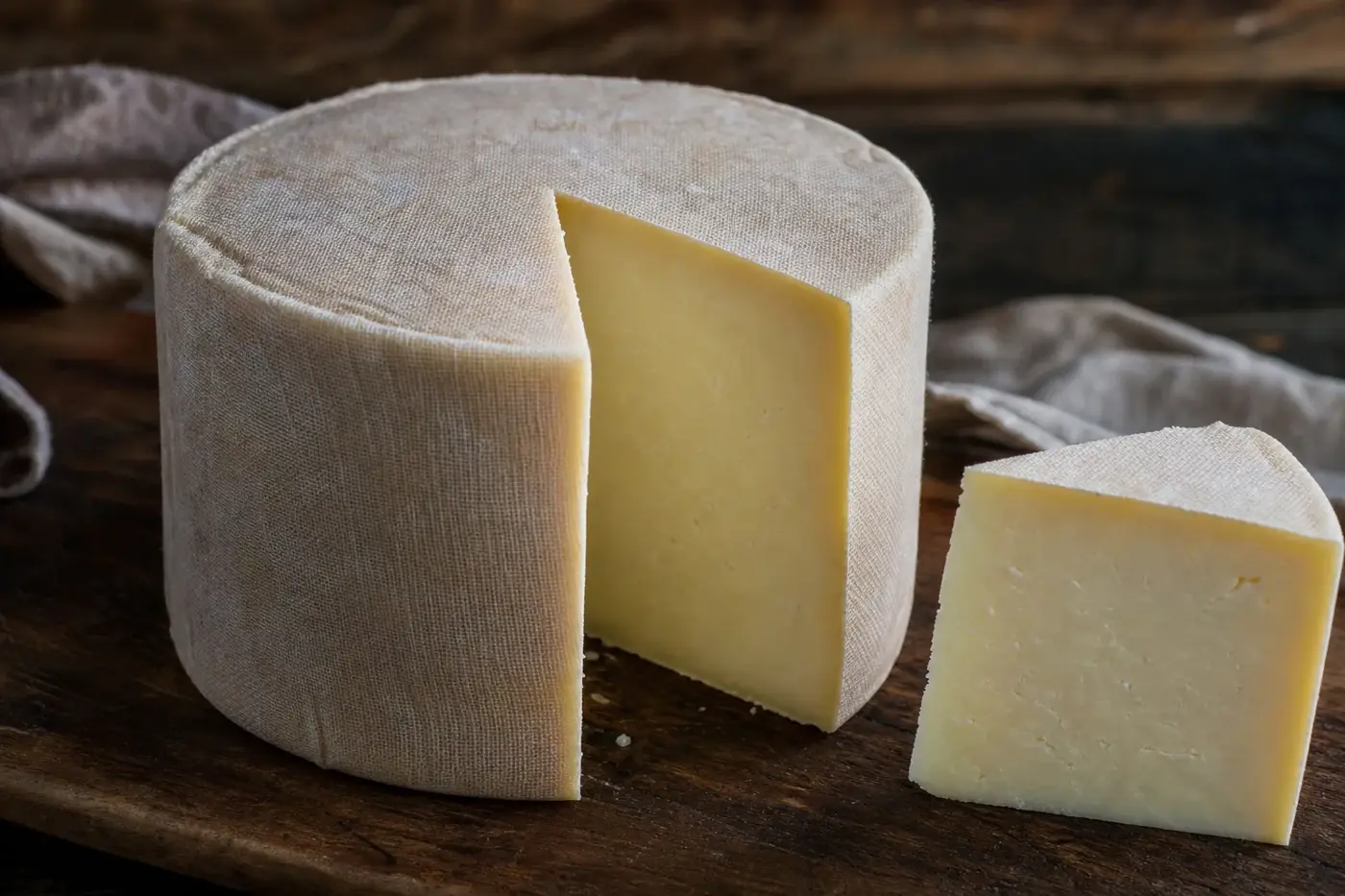
Your knife meets a little resistance, then gives way to a firm, springy slice of Wyfe of Bath.
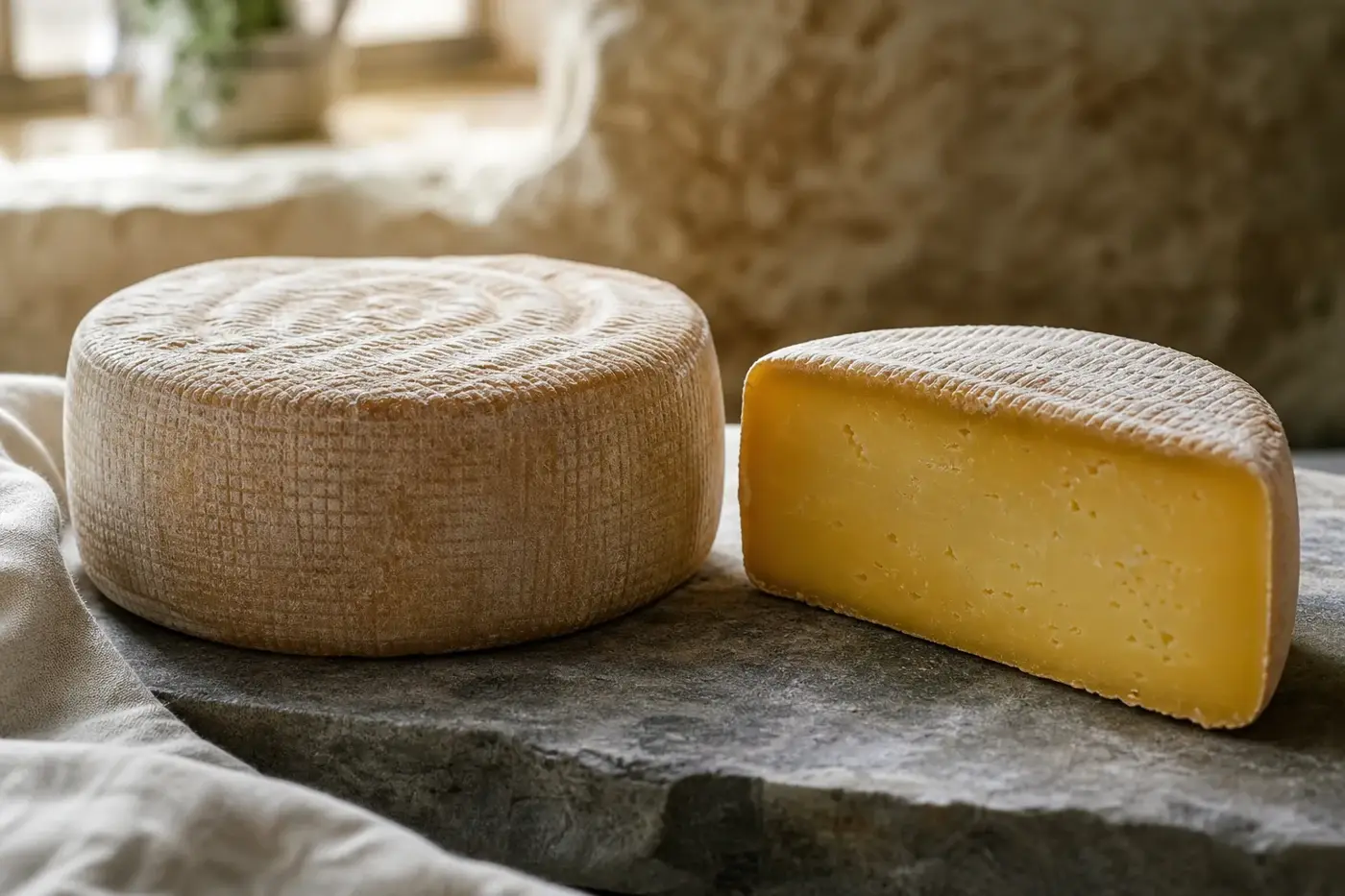
Your knife meets a little resistance, then gives way to a firm, springy slice of Wyfe of Bath. On the rounded surface, cloth-lined baskets have left their signature: a trace of draining curd, not a decorative mould. Made by Bath Soft Cheese Co. at Park Farm in Kelston, near Bath, this Somerset cow’s milk cheese takes its cue from Gouda. [1, 2]
Your first taste of Wyfe of Bath
| What you might ask | Here’s the detail |
|---|---|
| What’s its name? | Wyfe of Bath. [1] |
| Who makes it? | Bath Soft Cheese Co. [1] |
| Where does it come from? | Park Farm, Kelston, Somerset, England. [2, 12] |
| Whose milk goes in? | Cow’s milk from the farm’s own herd. [3, 12] |
| How is the milk treated? | Pasteurised. [3] |
| Organic status | No status given here. |
| What sets the milk? | Microbial rennet; declared vegetarian by the maker. [3] |
| What’s the style? | Semi-hard, Gouda-inspired. [1, 2] |
| What shape is it? | Basket-shaped round. [1] |
| How much does a whole cheese weigh? | Approximately 2.4 kg. [1] |
| How long does it usually mature? | 4 to 6 months. [6] |
| And the Extra Mature version? | Over 12 months. [7] |
| Protection status by jurisdiction | No status given here for the EU, Great Britain, Northern Ireland, Switzerland or US. |
Read the Somerset basket’s signature
Look closely at the surface and you can follow something of the cheese’s making. The basket does a practical job in the dairy, rather than supplying a flourish for your cheeseboard. Curd, the solid part of coagulated milk, drains and takes shape inside cloth-lined baskets. [1, 5]
In a recorded account published by the Royal Geographical Society, the cheesemaker describes turning the cheeses and finding the cloth’s imprint on their surface. You can see the work in the finished cheese. It is a small, pleasing connection between the dairy and your plate. [1, 5]
If you know Gouda, you already have a useful starting point. The Fine Cheese Co., which selects and sells Wyfe of Bath, explicitly names Gouda as the recipe’s inspiration. But this cheese has its own home at Park Farm in Somerset, along with its own name and making choices. Follow the family resemblance in the guide to Gouda. [2]
Come through the gate at Park Farm
At Park Farm in Kelston, a village near Bath in Somerset, England, the herd and dairy share a home. Bath Soft Cheese Co. makes its cheeses here by hand, using milk the company says comes from its own cows. That close connection between farm and cheese is central to Wyfe of Bath. [2, 12]
The family dates its arrival at Park Farm to August 1914. Its account takes you into a mixed farm of dairy cows, pigs, poultry and cereal crops, with cheese made in the farmhouse kitchen. Today’s cheesemaking belongs to a later chapter of that farming story. [4]
According to the maker’s published history, the wish to make a firmer cheese followed the revival of Bath Soft Cheese around 1993. Accounts of curds gathered in cloths and baskets helped inspire Wyfe of Bath. In 2015, a purpose-built creamery opened at the farm. [4]
Meet the literary Wyfe behind the name
Wyfe of Bath takes its name from the Wife of Bath in The Canterbury Tales. Both the maker’s product description and its recorded account for the Royal Geographical Society make the connection. When you look for the cheese, keep that older spelling in mind: Wyfe, not Wife. [1, 5]
In the recorded account, the maker links the choice to the character’s forceful personality and her five marriages. She was hardly going to lend her name to something forgettable. Between the literary reference and the rounded basket shape, you have two good ways to remember this cheese. [5]
A closer look at the milk in your slice
The milk comes from the farm’s own herd of cows. Before cheesemaking begins, the maker describes pasteurising it with a holding treatment at 63 °C for 30 minutes. [3, 12]
Microbial rennet then helps turn the milk into curd. This enzyme preparation is Wyfe of Bath’s coagulant, and the maker identifies the cheese as vegetarian. Other cheeses in the range use different coagulants, so look for the declaration for the named cheese. For the distinctions, turn to the guide to rennet explained. [3]
Follow the curd from basket to brine
First come starter cultures to acidify the milk, followed by rennet to set it. Cutting the resulting curd releases whey, the liquid portion of milk. Some whey is replaced with hot water, raising the curd temperature, and the cheese is subsequently salted in brine. [3]
Amid those practical steps, the baskets leave the clue you can recognise. Cloth supports the curd as it drains and takes shape, while the maker’s historical account describes turning the cheeses in their baskets. That rounded outline identifies a whole Wyfe of Bath before you cut your first slice. [1, 5]
Then the cheese needs time. Bath Soft Cheese Co. gives 4 to 6 months as its usual maturation for Wyfe of Bath. The Extra Mature product page specifies more than 12 months and describes a firmer cheese with a more pronounced tang. [6, 7]
At the counter, ask which version is being cut and, if known, how old it is. You might prefer the younger cheese for a supple slice on bread, or Extra Mature for a stronger tang. The maker’s descriptions give you somewhere useful to begin. [7]
Find the grass, butter and golden sweetness
Beneath that cloth-marked surface is what the maker describes as a deep golden paste. Bath Soft Cheese Co. calls the texture firm yet bouncy and silky. Think of semi-hard here as enough body to hold its shape, with some give when you cut and eat it. [6]
The maker’s tasting notes take you through grass and butter, nuts and sweet caramel. There is savoury depth, too, with occasional pineapple-like brightness. Try a small piece plain before adding bread or fruit, then taste again to see which impressions linger and which recede beside the accompaniment. [6]
Extra Mature is described as firmer and more tangy, while retaining the younger cheese’s nut-like and milky character. If you have both, compare how readily each paste yields, how sharp the finish seems and how long the flavour stays. You can taste what those extra months bring, rather than just reading the age on a label. [7]
Give the outside a moment of attention, too. The maker also describes Extra Mature’s rind as golden. [6]
Leave a little room on the plate
Fruit or chutney are the maker’s suggested partners for Wyfe of Bath. You do not need to surround it with half the cupboard. A simple plate gives you room to enjoy the cheese itself. [6]
- Start with a modest piece. Leave the rest refrigerated. Follow the Food Standards Agency’s current guidance for England, Wales and Northern Ireland on keeping chilled food out of refrigeration. [9]
- Let the shape guide your knife. Cut wedges towards the centre of a whole round. From an existing wedge, cut smaller pieces with a little outer edge and interior in each, giving everyone a similar cross-section.
- Taste it before adding company. Begin plain, then try bread or an unflavoured cracker. The maker’s general accompaniment suggestions include bread, crackers, quince, honey and chutney. Choose one or two so you can still follow the cheese’s flavour. [8]
- Keep the wrapping handy. Retain the product name, storage instructions and date with the cheese after cutting. The guide to reading a cheese label shows you what to look for. [9]
For your first plate, try crisp apple or pear, plain bread and a small spoonful of fruit chutney. The contrasting textures leave space for the grassy, caramel-like and tangy qualities in the maker’s descriptions. Put the chutney beside the cheese rather than over it, so you choose how much joins each mouthful. [6, 8]
Your drink can be simple, too. Try an alcohol free apple drink or sparkling water alongside the cheese.
Turn your slice into a toasted lunch
Wyfe of Bath need not wait for a cheeseboard. The maker’s toasted sandwich recipe puts it with bread, butter and chutney, with ham or onion as optional additions. You have a straightforward route from a piece of cheese to lunch. [10]
Let the cheese provide the filling and the chutney act as the condiment. Taste the cheese plain before deciding how much sweetness or acidity you want alongside it. If you are choosing between regular Wyfe of Bath and Extra Mature, try each separately first, then choose the character you want in your finished sandwich. [7, 10]
Look after the slice you’re saving
Keep Wyfe of Bath refrigerated and follow the instructions on the particular piece you buy. FSA household guidance for England, Wales and Northern Ireland recommends a fridge temperature of 5 °C (41 °F) or below. Use a fridge thermometer to check the temperature rather than relying on the control dial alone. [9]
Bath Soft Cheese Co.’s FAQ says its cheeses carry a use-by date on the wrapping and tells customers to consume them before it expires. Follow that date and any product-specific instructions. For wrapping choices and care of cut pieces, see how to store cheese at home. [8, 9]
Take your curiosity a little further
- How Cheese Is Made: From Milk to Cheese: follow the wider journey through curd and maturation.
- Raw Milk, Thermised and Pasteurised Cheese: get to know the different milk treatments.
General information only, not medical advice: follow the official guidance where you live.
Questions people ask
Where is Wyfe of Bath made?
Bath Soft Cheese Co. makes it at Park Farm in Kelston, Somerset, near Bath. It is inspired by Gouda and made with milk from the farm’s own cows.
Is Wyfe of Bath vegetarian and made with pasteurised milk?
The maker declares Wyfe of Bath vegetarian and uses microbial rennet to set the milk. The cow’s milk is pasteurised at 63 °C for 30 minutes.
What does Wyfe of Bath taste like?
The maker describes grassy, buttery and nutty flavours, sweet caramel, savoury depth and occasional pineapple notes. Its texture is firm, bouncy and silky.
How long is Wyfe of Bath matured?
The maker gives four to six months as the usual maturation. Extra Mature is matured for more than 12 months and is described as firmer and more tangy.
How should I store Wyfe of Bath?
Keep it refrigerated and follow the instructions and date on the wrapping. The Food Standards Agency recommends a fridge temperature of 5 °C or below; see its household guidance for England, Wales and Northern Ireland.
Sources
- Bath Soft Cheese Co., Wyfe of Bath Cheese, current product page, undated, retrieved November 2026. Maker’s account of shape, format, vegetarian declaration and name.
- The Fine Cheese Co., [Wyfe of Bath](../wyfe-of-bath/), current product page, undated, retrieved November 2026. Commercial selector and seller’s account of Gouda inspiration, milk species and location.
- Bath Soft Cheese Co., The Art of Making Cheese, current explanatory page, undated, retrieved November 2026. Maker’s account of its milk treatment and production methods.
- Bath Soft Cheese Co., Our History, current company history, undated, retrieved November 2026. Company account, rather than independently established historical research.
- Royal Geographical Society with IBG, Seven thousand years of enterprise: A self guided walk near Saltford, Discovering Britain walking guide, publication year not verified, retrieved November 2026, section 6, page 17. Recorded cheesemaker’s account.
- Bath Soft Cheese Co., [Wyfe of Bath](../wyfe-of-bath/), current cheese description, undated, retrieved November 2026. Maker’s maturation and sensory descriptions.
- Bath Soft Cheese Co., Wyfe of Bath Extra Mature, current product page, undated, retrieved November 2026. Maker’s product-specific age and texture descriptions.
- Bath Soft Cheese Co., FAQ’s, current FAQ, undated, retrieved November 2026. Accompaniments and the maker’s use-by instructions.
- Food Standards Agency, How to chill, freeze and defrost food safely, published 18 December 2017, current page retrieved November 2026. Applies to England, Northern Ireland and Wales.
- Bath Soft Cheese Co., Ultimate Cheese Toastie, current recipe page, undated, retrieved November 2026. Commercial maker’s serving suggestion, not independently tested by fromage.co.uk.
- Bath Soft Cheese Co., Two Cheese Gift Box, current product page, undated, retrieved November 2026. Maker’s statement of the 2019 competition result.
- Bath Soft Cheese Co., [Bath Soft Cheese](../bath-soft-cheese/), current homepage, retrieved November 2026. Maker’s statement of handmade production at Park Farm using its own cows’ milk.
Researched through the maker’s published production, product and historical accounts, a recorded cheesemaker’s account, a specialist seller’s description and official food-handling guidance; serving and drink suggestions are editorial desk research.
Last checked: November 2026
Last checked November 2026.
The editors suggest you read next
West Country Farmhouse Cheddar Cheese
Large pieces of curd turn and stack under the cheesemaker’s hands.