Bleu de Gex Haut-Jura
Cut into the wheel and pale, irregular blue-green veins appear beneath the rind.
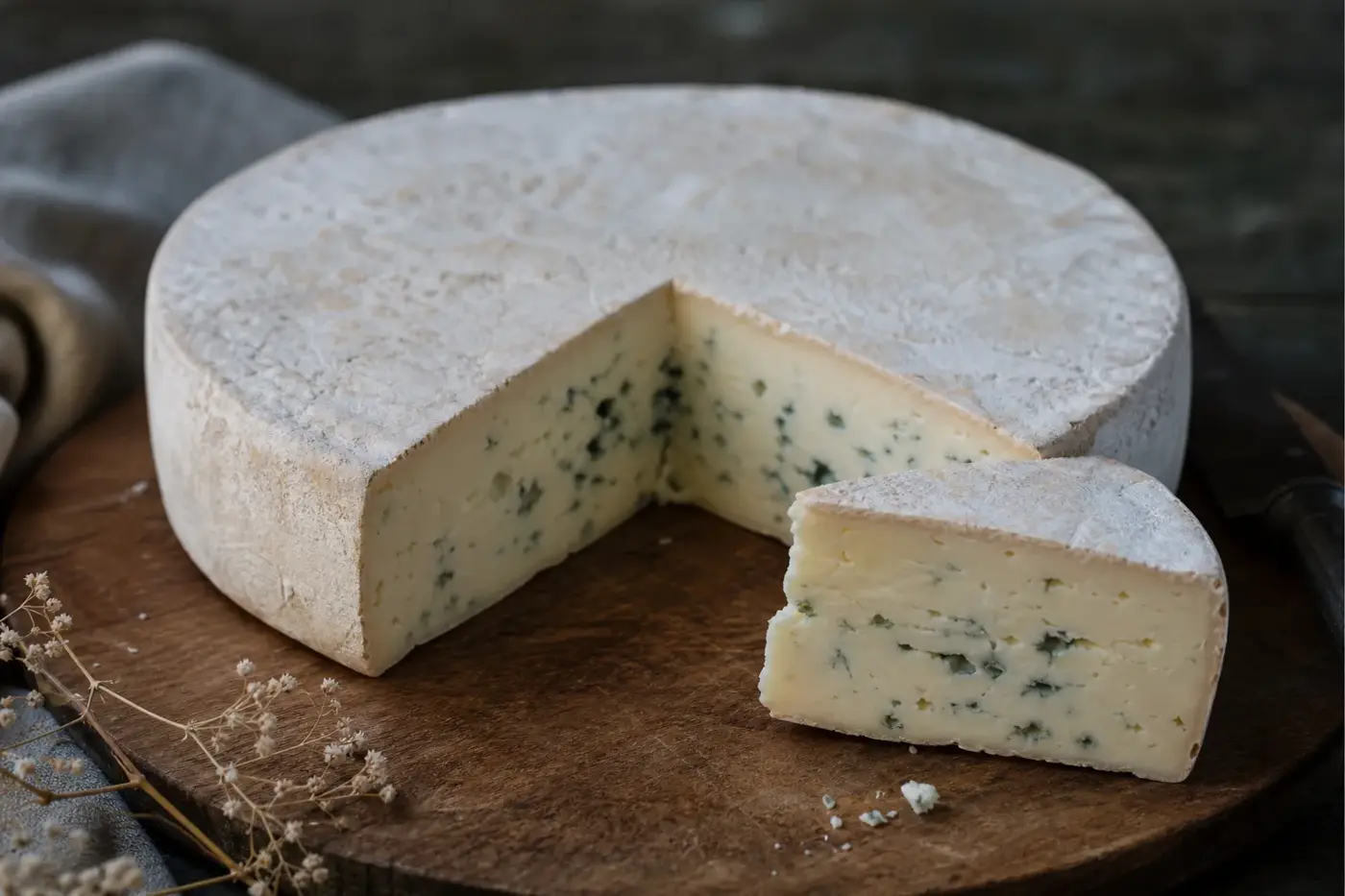
Cut into the wheel and pale, irregular blue-green veins appear beneath the rind. Look for GEX, impressed into one face: this is a Jura mountain blue with a quieter manner than its marbling suggests. Made in eastern France from raw cows’ milk, it has milky flavours, woodland mushroom aromas and a slight bitterness, according to its producers. Its curd is neither cooked nor pressed.[1][3][5]
| What you might want to know | The detail |
|---|---|
| Name to look for | Bleu de Gex Haut-Jura.[1] |
| Official French designation | « Bleu de Gex Haut-Jura » ou « Bleu de Septmoncel ».[1] |
| EU protection | PDO, known in France as AOP, listed by INAO.[2] |
| Great Britain protection | Registered PDO as Bleu de Gex Haut-Jura / Bleu de Septmoncel under the Defra register; registration dated 31 December 2020.[4] |
| Its mountain home | Mountainous parts of the Ain and Jura departments, France.[1] |
| Milk and coagulant | Raw cows’ milk; calf rennet.[1] |
| Permitted blue mould cultures | Penicillium glaucum and Penicillium roqueforti.[1] |
| Minimum time to mature | 21 days from manufacture, including at least 18 days in the manufacturing dairies’ cellars.[1] |
| A whole wheel at sale | 6 to 9 kg; diameter 31 to 35 cm.[1] |
| Main allergen | Milk.[1] |
| Pregnancy guidance | UK NHS advice, November 2026: see the safety section below.[10] |
Look inside that quiet rind
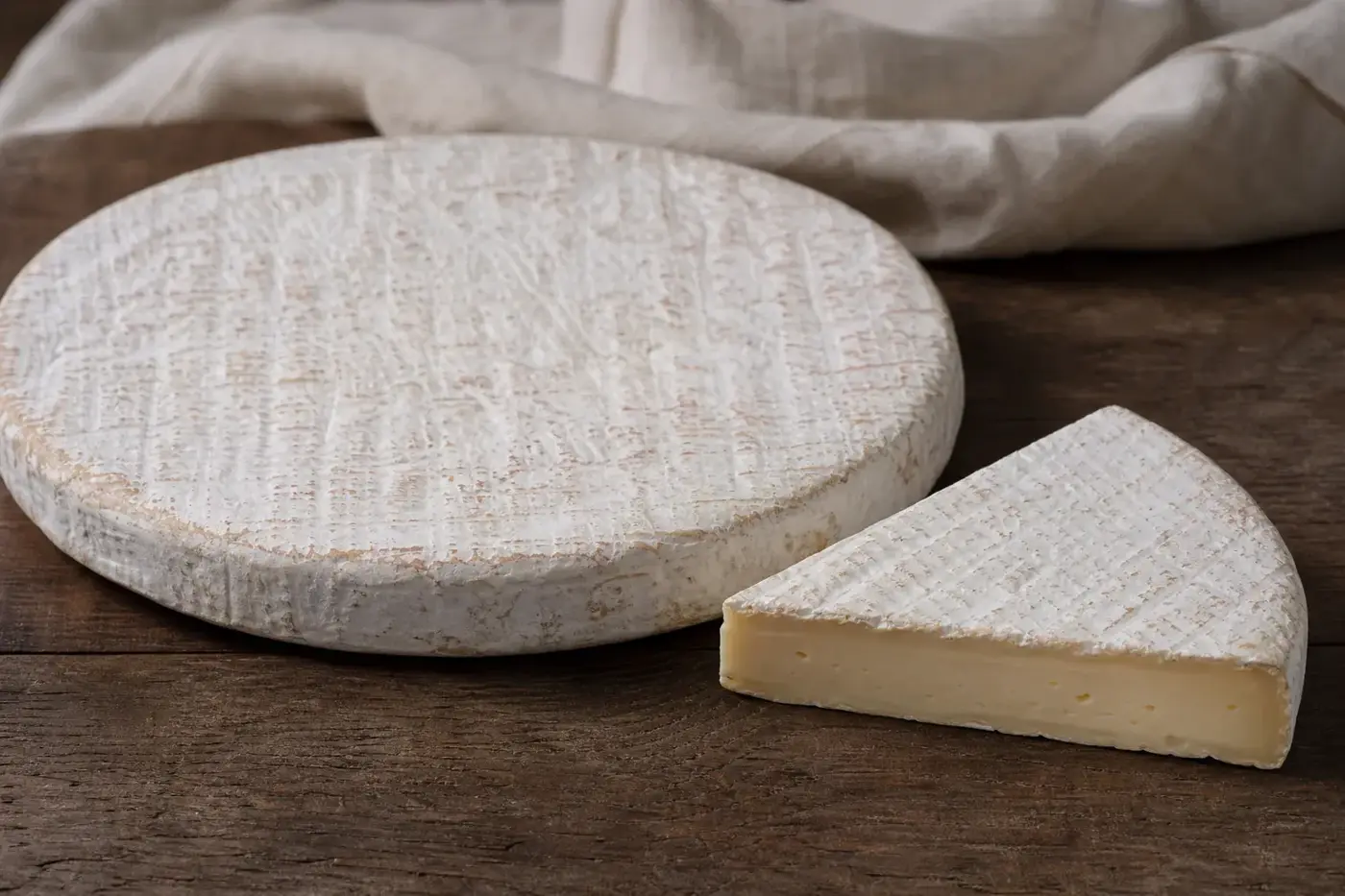
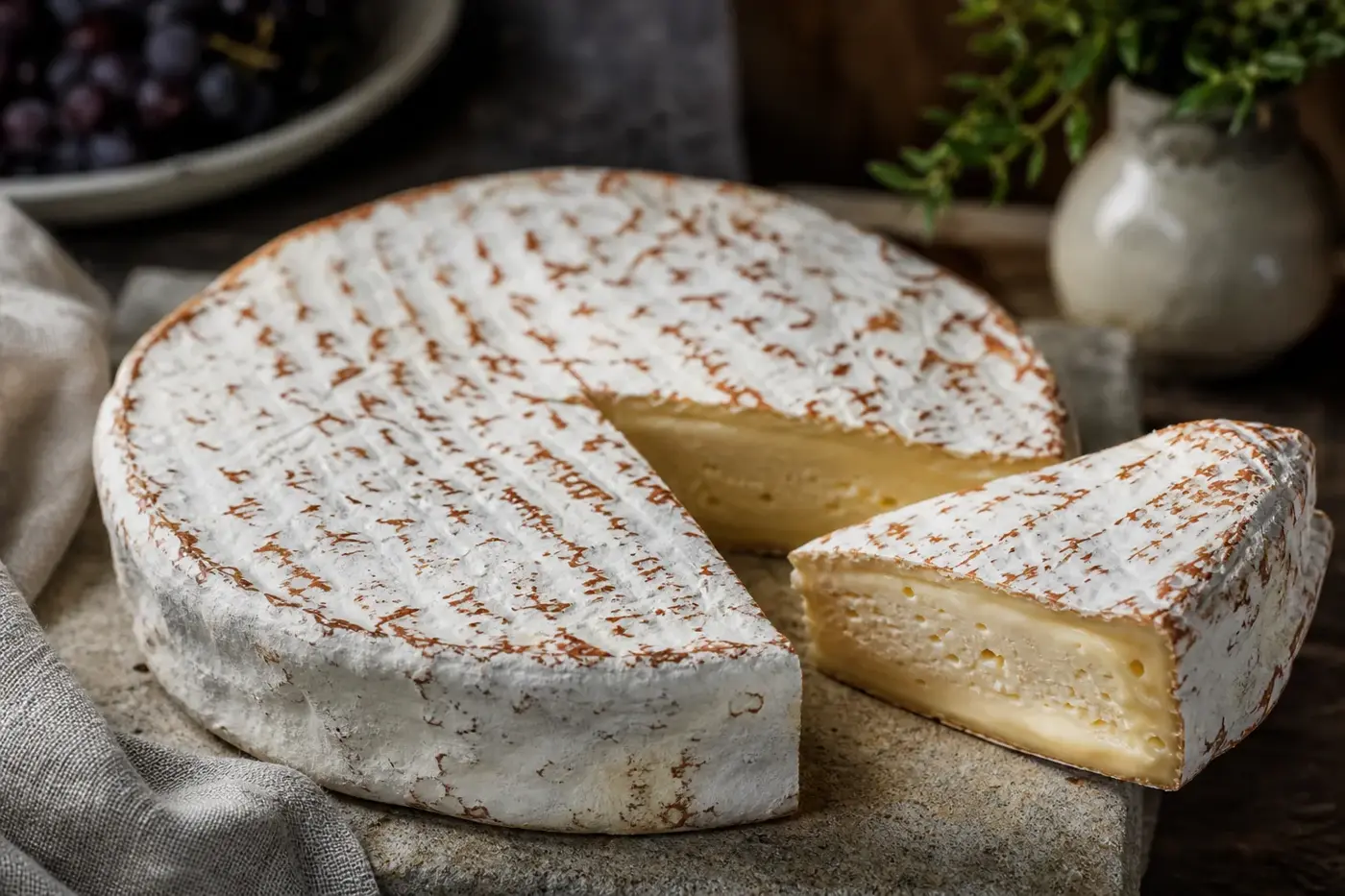
The thin, dry rind gives little away. The producers’ syndicat, the industry organisation representing the cheese, describes a whitish to yellowish exterior surrounding white-to-ivory paste, patterned with pale blue-green mould. You will find that impressed GEX mark on one face of the wheel.[3]
Inside, the blue follows scattered openings. Look for irregular patches rather than an uninterrupted network of veins. The specification also describes yellowish areas where proteins have broken down, alongside occasional white, chalkier patches. This variation in colour and consistency belongs to the cheese’s recognised structure.[1]
The syndicat describes the texture as supple, firm and slightly crumbly. Think pieces to cut, rather than a very soft cheese to spread. When choosing your wedge, take in the whole cut face: the balance of pale paste and blue gives you something useful to discuss with the cheesemonger.[3]
Follow your nose from cream to chanterelles
Chanterelles are the lovely, specific detail in the syndicat’s tasting description. It picks out those mushroom notes alongside lactic aromas, balanced saltiness and a little bitterness. In its account, this is one of the milder blues, with a restrained mushroom character from the mould.[3]
Age changes what reaches you first. The syndicat’s published sensory explanation associates younger, relatively white cheeses with fresh milk, butter and cream aromas. As the blue develops, woodland mushrooms come forward, sometimes joined by vegetal, damp-underwood, animal or roasted notes. These descriptions belong to the industry body’s account of the style.[5]
Very mature examples have local names: Perrachu or Perassu. The syndicat describes darker rind and blue colouring, a more pronounced, saltier impression and less bitterness. Tell your cheesemonger whether you fancy something mostly milky or more developed and mushroom-led. The oldest wedge need not win your affection.[3]
Find its place in the Haut-Jura
For Bleu de Gex, the mountain address matters from milk to mature wheel. Milk production, cheesemaking and maturation must all happen within the defined Haut-Jura area, crossing the boundary between the Ain and Jura departments in eastern France. The name belongs to that place and its production rules.[1][2]
The boundary is precise. Sometimes it includes whole communes; elsewhere, only specified portions qualify. Gex, Lélex and Mijoux are included, for example. Several neighbouring communes qualify only for land at least 800 metres above sea level, so a general Jura address will not do.[1]
Picture the landscape in the specification: folded mountains of limestone and marl, abundant precipitation, cold conditions and extensive grassland among conifer woods. This is more than a handsome backdrop for a label. Pasture and conserved forage organise the dairying system, giving the mountain connection a practical role in the cheese.[6]
Meet the people behind the mountain cheese
By the late eighteenth century, blue cheese was being made in mountain chalets and sold under names including Gex and Septmoncel. That is where the official specification’s historical account takes you. It offers a firmer starting point than the older monastic origin stories preserved in local tradition.[6]
The syndicat’s published history follows cheesemaking from farms into collective village dairies, known as fruitières. It also records the importance of women in farm cheesemaking and in the dairies that followed. The mountains supply the setting, but people carry the story.[7]
Today, the syndicat’s dairy directory lists the cooperatives at Chézery-Forens and Les Moussières, the dairies at Lajoux and Montbrillant, and GAEC Label Grange at Le Poizat. It presents GAEC Label Grange as a farm producer. Some of its own milk becomes cheese on site; another portion goes to the cooperative at Chézery-Forens.[8][9]
That gives you plenty to explore beyond the label. Ask who made your wedge and how mature it is, then note both down. You can connect a favourite flavour with a particular dairy and stage of ripening. A cheese notebook is perfectly reasonable behaviour, whatever the rest of the household thinks.
Get to know its two protected names
If you meet Bleu de Septmoncel, you have not discovered a separate neighbouring blue. It is another designation for Bleu de Gex Haut-Jura. INAO presents the names together, and Great Britain’s register records both in a single PDO entry.[2][4]
PDO means protected designation of origin. AOP, appellation d’origine protégée, is the French abbreviation, and the specification ties the cheese’s name to its defined production area and requirements. For more on the distinction between a protected designation and a cheese style, explore protected names.[1][2]
The Great Britain register records original EU registration on 21 June 1996. Separately, INAO records the opening of a French national opposition procedure for a proposed specification amendment on 16 July 2026. That date marks a procedural step, not an approved change to the production rules.[2][4]
Follow the milk into the dairy
The milk comes from Montbéliarde or French Simmental cattle, or certified crosses of those breeds. Grazing is required when conditions allow, with a basic forage ration drawn from grassland within the area. The specification prohibits silage and other fermented feeds for the holding’s ruminants.[1]
In the dairy, starter cultures begin acidification before rennet coagulates the milk into curd, the solid gel that becomes cheese. Cutting and stirring release the whey, its liquid portion. The syndicat describes manual moulding in linen or jute cloth, followed by turning, draining and dry salting.[6]
Throughout this process, the curd remains uncooked and unpressed. According to the syndicat, the cheesemaker judges when the grains have drained enough for moulding, while preserving the openings that help shape the finished interior. For the wider journey from milk to wheel, follow how cheese is made.[6]
Let a little air into the story
Piercing brings air into the cheese, encouraging its blue mould to develop. Together with the openings between curd particles, this helps explain why the marbling follows such irregular paths. What you see in your slice begins with decisions made in the dairy.[3][6]
The specification requires piercing between the seventh and fifteenth days after manufacture. Maturation takes place on spruce boards, in cellars held between 6 °C and 14 °C. These are production conditions, not temperatures to copy when storing your wedge at home.[1]
Make room for it at your next tasting
If Roquefort is your usual reference for French blue, give Bleu de Gex room to introduce itself. Its documented character is mild, milky, mushroom-scented and slightly bitter. Accept a taste if one is offered: visible blue alone cannot tell you whether a piece will suit your palate.[3][5]
For a simple tasting, set a small piece beside a familiar cheese such as Comté, Brie or Camembert. Start with plain accompaniments, then compare firmness, crumbliness, mushroom aroma and how long the flavour lasts. You are looking for differences, not holding auditions for a replacement favourite.
Choose your wedge and bring it home well
Before buying, ask which dairy made the cheese, its approximate maturity and how the seller recommends storing it. Your small piece may not carry the impressed GEX mark found on the whole wheel. Read the product information as well as looking at the cheese.[3]
Once you are home, keep handling straightforward. The advice below draws on Food Standards Agency guidance for England, Wales and Northern Ireland, and on NHS guidance:
- Keep it refrigerated. The FSA advises a fridge temperature of 0 °C to 5 °C. Follow the packaging’s storage instructions.[11]
- Cover the cut portion. Keep the supplied wrapping where suitable, and separate ready-to-eat cheese from raw foods.[11][12]
- Take out only your serving portion. Let it lose its refrigerator chill while you prepare the table. The FSA advises keeping chilled food out for the shortest possible time, with a maximum of four hours during preparation.[11]
- Read opening instructions and dates. NHS guidance advises using prepacked, ready to eat foods within two days of opening unless the packaging says otherwise. A use-by date concerns safety; a best-before date concerns quality.[12][13]
For more practical help with your wedge, turn to storing cheese at home. Keep the packaging’s instructions alongside that general guidance.
Recognise ripening, and know when to stop serving
Pale blue-green veins, a dry yellowish rind and patches of chalkier paste are described characteristics of Bleu de Gex. Darker colouring and stronger flavour may come with greater age. These features belong to the cheese’s documented range.[1][3]
If it looks spoiled or has changed unexpectedly, stop serving it and ask the seller for advice. Discard it if you suspect spoilage, follow recall instructions, and never let an acceptable smell or appearance override a use-by date.[13] Unwanted mould is a separate question from the intended blue veins: see mould on cheese.
Start with bread, then follow the Jura connection
Plain bread leaves room for you to notice the milky paste and mushroom character. For suggested accompaniments, try pear, apple or walnuts. Set them alongside rather than combining everything, so each person can find the balance they enjoy.
For adults of legal drinking age who choose alcohol, a small serving of Jura Chardonnay offers a regional starting point. Water or an unsweetened apple drink gives you an alcohol-free alternative. Let the cheese’s maturity and your own palate guide you; cheese and wine pairing offers ways to explore.
There is a warm kitchen life beyond the cheeseboard, too. The syndicat’s recipe collection includes tart, sauce, fondue, raclette-style preparations and trout served with the cheese. For your first warm dish, choose a published recipe naming Bleu de Gex and follow its quantities and handling instructions.[14]
This page summarises published guidance from the official sources it cites. It is not medical advice. Guidance differs between countries and changes over time, so check the current source for where you live, and ask your doctor, midwife, pharmacist or dietitian about your own circumstances.
Read the raw milk advice for higher-risk groups
Bleu de Gex is made from raw milk. In its UK pregnancy guidance, November 2026, the NHS advises avoiding soft blue cheeses unless cooked until steaming hot. Its examples include Roquefort, Danish blue and Gorgonzola.[10]
The NHS identifies pregnancy, weakened immunity and increasing age as factors associated with a higher risk of serious listeriosis. If you are in one of these groups, consult its current guidance. Ask your healthcare professional about your own circumstances.[12]
Follow the official advice for your country rather than applying UK recommendations elsewhere. Raw milk and milk treatments explains the production terminology. The NHS sources below provide the health guidance.
Questions people ask
What does Bleu de Gex taste like?
The producers’ syndicat describes it as a mild blue with milky flavours, mushroom aromas and a little bitterness. More mature examples can taste stronger and saltier.
Is Bleu de Gex vegetarian?
The cheese is made with calf rennet. It is made from raw cows’ milk.
Is Bleu de Septmoncel the same cheese as Bleu de Gex?
Yes, Bleu de Septmoncel is another designation for Bleu de Gex Haut-Jura. The Great Britain register records both names in a single PDO entry.
Can I eat Bleu de Gex during pregnancy?
The NHS advises avoiding soft blue cheeses during pregnancy unless cooked until steaming hot. Check the current NHS guidance and ask your healthcare professional about your circumstances.
How should I store Bleu de Gex?
The Food Standards Agency advises keeping chilled food in a fridge at 0 °C to 5 °C and following the packaging’s storage instructions. NHS guidance advises using prepacked, ready to eat foods within two days of opening unless the packaging says otherwise.
Sources
- French Ministry of Agriculture, Cahier des charges de l’appellation d’origine « Bleu de Gex Haut-Jura » ou « Bleu de Septmoncel », associated with notice AGRT1413740V, Bulletin officiel no. 27, 2014. Official specification covering description, area, milk, manufacture and maturation.
- INAO, Bleu de Gex haut Jura ou Bleu de Septmoncel, official product record and associated legal-document list, including the national opposition notice dated 16 July 2026. Retrieved November 2026.
- Syndicat interprofessionnel de défense du Bleu de Gex, Notre fameux Bleu de Gex, undated. Industry descriptions of appearance, sensory character, marking and very mature cheese. Retrieved November 2026.
- Defra, Bleu de Gex Haut-Jura / Bleu de Septmoncel, Great Britain protected food-name register entry, published 4 January 2021. Retrieved November 2026.
- Syndicat interprofessionnel de défense du Bleu de Gex, Goût et saveurs, undated. Industry account of sensory development with maturation. Retrieved November 2026.
- INAO, Cahier des charges de l’appellation d’origine « Bleu de Gex haut Jura » ou « Bleu de Septmoncel », undated hosted edition, sections 5 and 6; and the syndicat’s Notre fabrication, undated. Retrieved November 2026.
- Syndicat interprofessionnel de défense du Bleu de Gex, Notre histoire, undated. Industry historical account. Retrieved November 2026.
- Syndicat interprofessionnel de défense du Bleu de Gex, Nos fromageries, undated directory. Retrieved November 2026.
- Syndicat interprofessionnel de défense du Bleu de Gex, GAEC Label Grange, undated producer profile. Retrieved November 2026.
- NHS, Foods to avoid in pregnancy, current online guidance retrieved November 2026.
- Food Standards Agency, How to chill, freeze and defrost food safely, published 18 December 2017, current online edition applying to England, Northern Ireland and Wales. Retrieved November 2026.
- NHS, Listeriosis, reviewed 10 November 2023, current online edition retrieved November 2026.
- GOV.UK, Understanding food labelling: Best before and use-by dates, current online edition retrieved November 2026.
- Syndicat interprofessionnel de défense du Bleu de Gex, Recettes, undated recipe collection. Retrieved November 2026.
Researched from official French specification documents, INAO and Defra records, attributed industry descriptions and UK official consumer guidance.
Last checked: November 2026
Last checked November 2026.
The editors suggest you read next