Buxton Blue
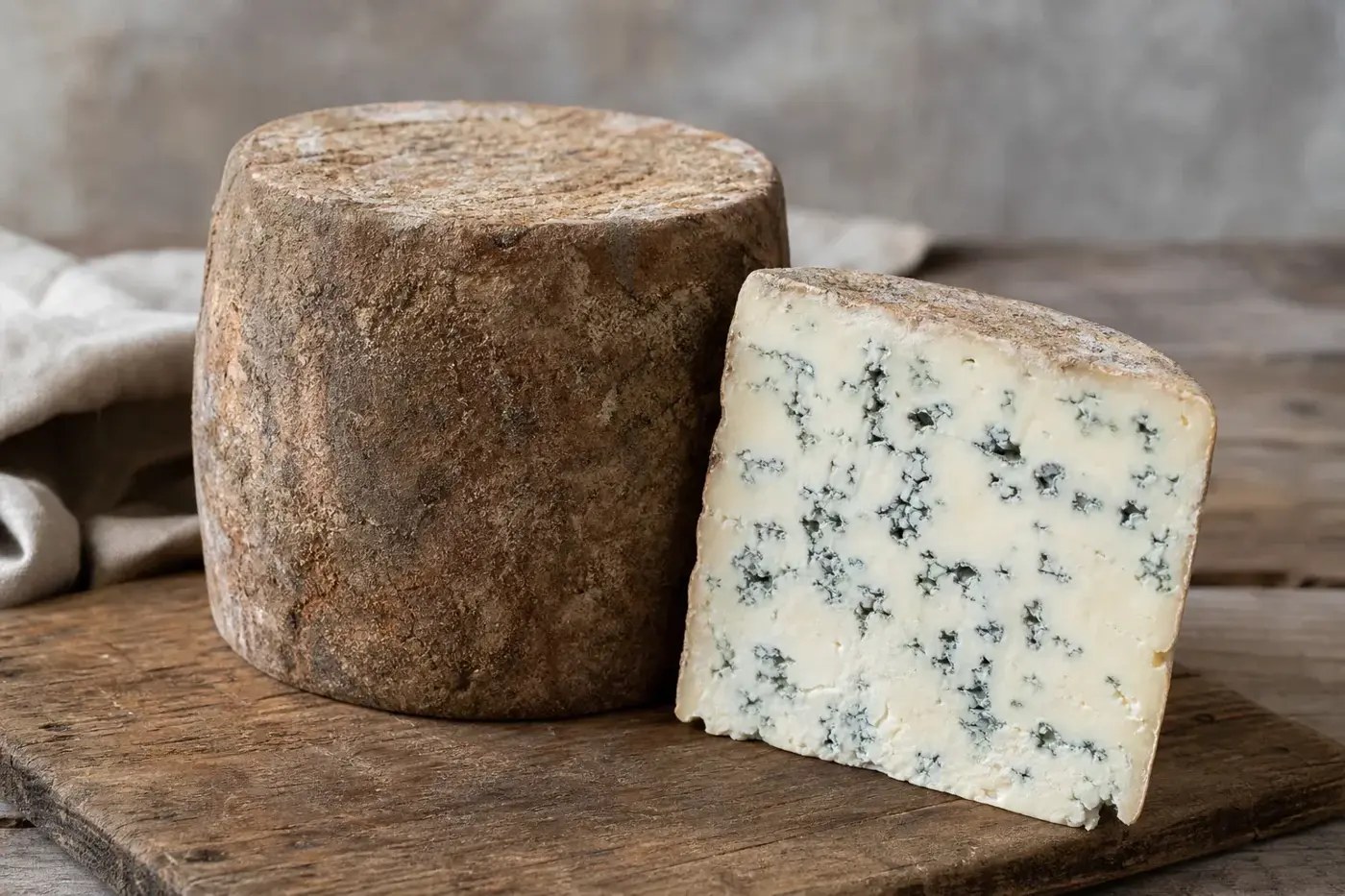
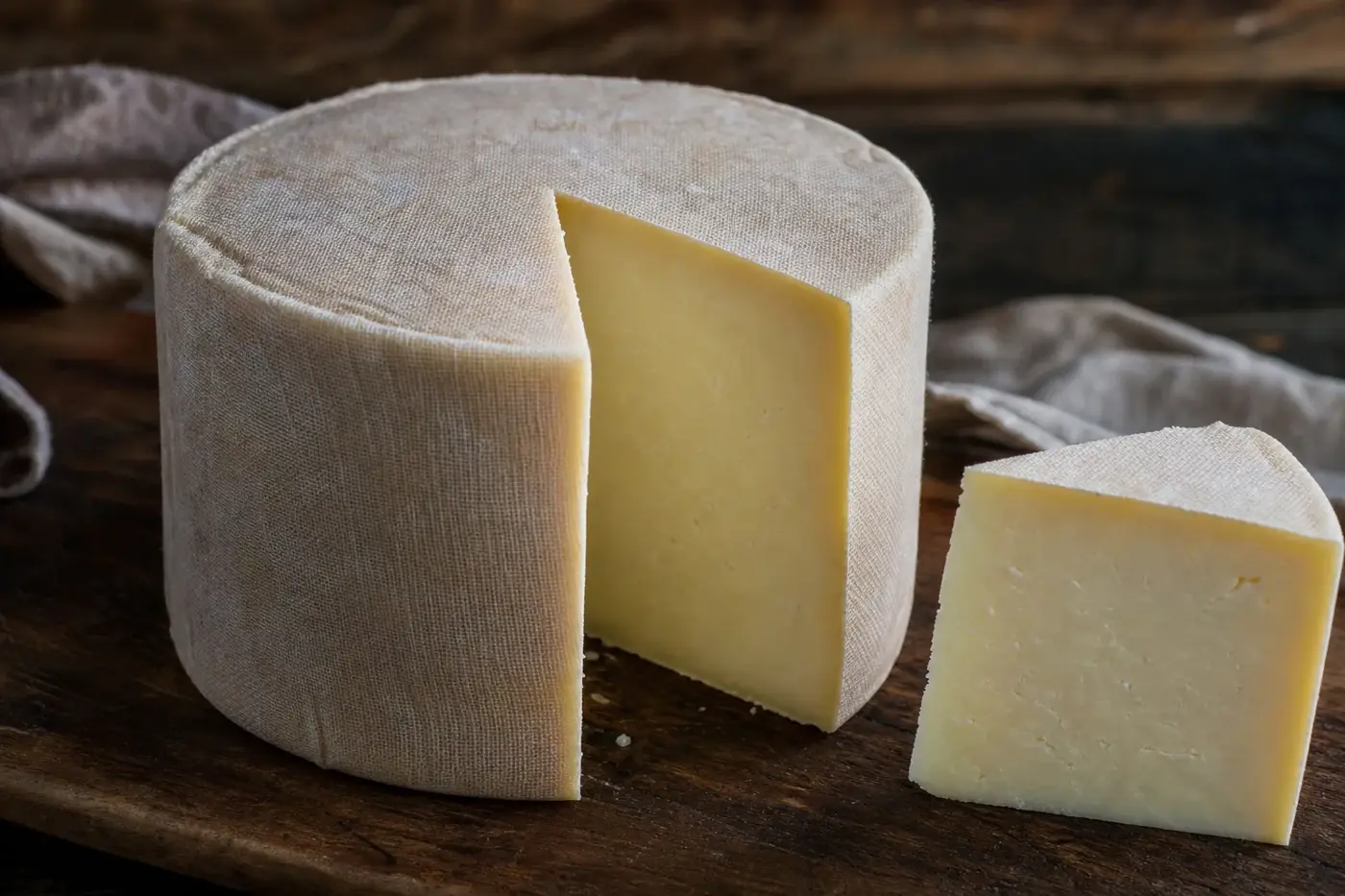
Cut into Buxton Blue and there it is: a sweep of russet crossed with blue veins.
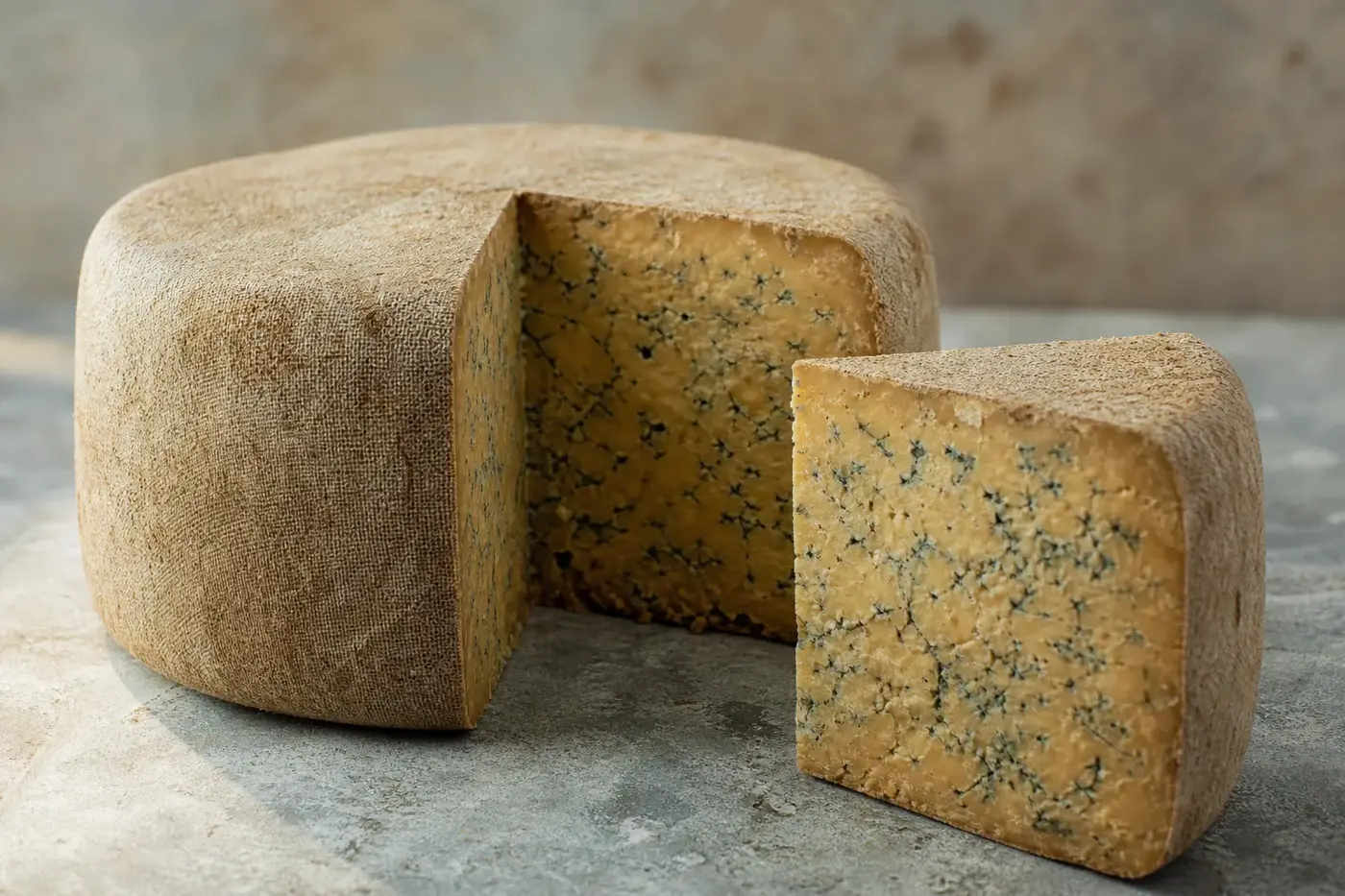
Cut into Buxton Blue and there it is: a sweep of russet crossed with blue veins. This substantial cylinder of pasteurised cows’ milk cheese has a close, smooth body that softens as it matures. You get a mellow blue character, with a protected specification rooting the cheese in Buxton and its surrounding district.[1][2]
| At a glance | What to know |
|---|---|
| Familiar and registered name in Great Britain | Buxton Blue.[1] |
| Registration authority | Department for Environment, Food & Rural Affairs, UK geographical indication register.[1] |
| Great Britain status, November 2026 | Registered PDO.[1] |
| UK scheme registration | 31 December 2020 at 23:00.[1] |
| Original EU registration date | 21 June 1996, as recorded by Defra.[1] |
| Defined production area | Approximately 48 km, specified as a 30-mile radius, around Buxton.[2] |
| Milk treatment | Pasteurised cows’ milk.[2] |
| Colour and cultures | Annatto, starter culture and mould spores listed in the specification.[2] |
| Coagulant | Listed as “coagulant”; type unspecified.[2] |
| Format | Cylinder weighing 7.5 to 8.5 kg.[2] |
| Usual age at dispatch | 4 to 10 weeks; satisfactory cheese may be dispatched outside this range.[2] |
Get to know that russet heart
Buxton Blue’s colour runs right through the cheese. Its specification calls for an evenly russet interior with evenly dispersed blue veins, not pale paste with the occasional coloured patch. In your cut wedge, the two colours make a rather handsome introduction.[2]
The intended flavour is mellow and dairy-led, with a blue-cheese tang. Harshness, bitterness and fruity flavours fall outside the character described in the specification.[2] There is no established specific aroma description here.
Give the texture a moment, too. The specification’s “close textured” body is comparatively compact, but smoothness and gradual softening distinguish it from a persistently dry crumble. Age alone cannot tell you how your piece will eat, so ask the cheesemonger about its condition and the strength of its blue flavour.[2]
To put that texture into context, start with how to tell cheese styles apart. It gives you a useful starting point for exploring the counter.
Take the road beyond Buxton
Buxton lends its name, but the production area reaches beyond the town’s streets. The registered specification draws a circle around Buxton. Where the milk comes from and where the cheese is made are separate parts of that record.[2]
Hartington Creamery sits at the heart of the historical production account. In official documentation accompanying recognition of Buxton Blue, Japan’s agriculture ministry reproduces an account placing production about 24 km from Buxton, expressed as 15 miles.[3]
That account says the creamery opened in the 1870s and began making Stilton in 1886. The dates belong to this account rather than contemporary records. It also describes cheesemaking skills passing between generations of creamery workers, placing Buxton Blue within a continuing tradition of creamery knowledge.[3]
The same geographical account takes you into limestone country, with thin soils, rainfall and grazing. The clearest connection between cheese and place is the combination of milk production, creamery practice and blue-cheesemaking experience within a defined district.[3]
Meet the ingredients behind the colours
Whole milk, whey cream, starter culture, coagulant, mould spores, salt and annatto make up the recipe listed in Buxton Blue’s specification. The milk is pasteurised.[2]
The official Japanese geographical account describes milk drawn predominantly from Derbyshire, with supplies from Shropshire and Cheshire added when needed. It also describes comparison and blending with local milk.[3] For current binding milk-origin requirements, you need the applicable specification rather than this geographical account alone.
Annatto provides the warm background colour; mould provides the contrasting veins. The Specialist Cheesemakers Association’s directory also identifies Buxton Blue as an annatto-coloured cows’ milk blue and associates it with Staffordshire Cheese Company.[4]
Those colours, then, have different beginnings: one in the formulation, the other in blue-mould development. Neither a deeper orange paste nor more conspicuous veins can choose your cheese for you. Ask how it is eating, and read the product information for the particular piece on offer.
If milk treatment leaves you with questions, turn to raw milk, thermised and pasteurised cheese. It explains the distinctions.
Follow the milk to its cloth-covered finish
Starter culture, coagulant and mould spores each play a part in Buxton Blue’s registered formulation. The starter begins the cheesemaking transformation; the coagulant helps form curd, the milk solids separated from liquid whey. The mould spores establish the cheese’s blue character.[2]
Whether Buxton Blue is pierced, and at what stage, remains unspecified here. For comparison, Stilton’s specification describes piercing to admit air to mould inside that cheese, allowing blue veins to develop.[7]
Adding mould and producing visible veins are not the same step. A blue cheese’s appearance depends on both the cultures introduced and the conditions supporting their development inside it. You can follow the broader journey from milk through curd to ripened cheese in how cheese is made.
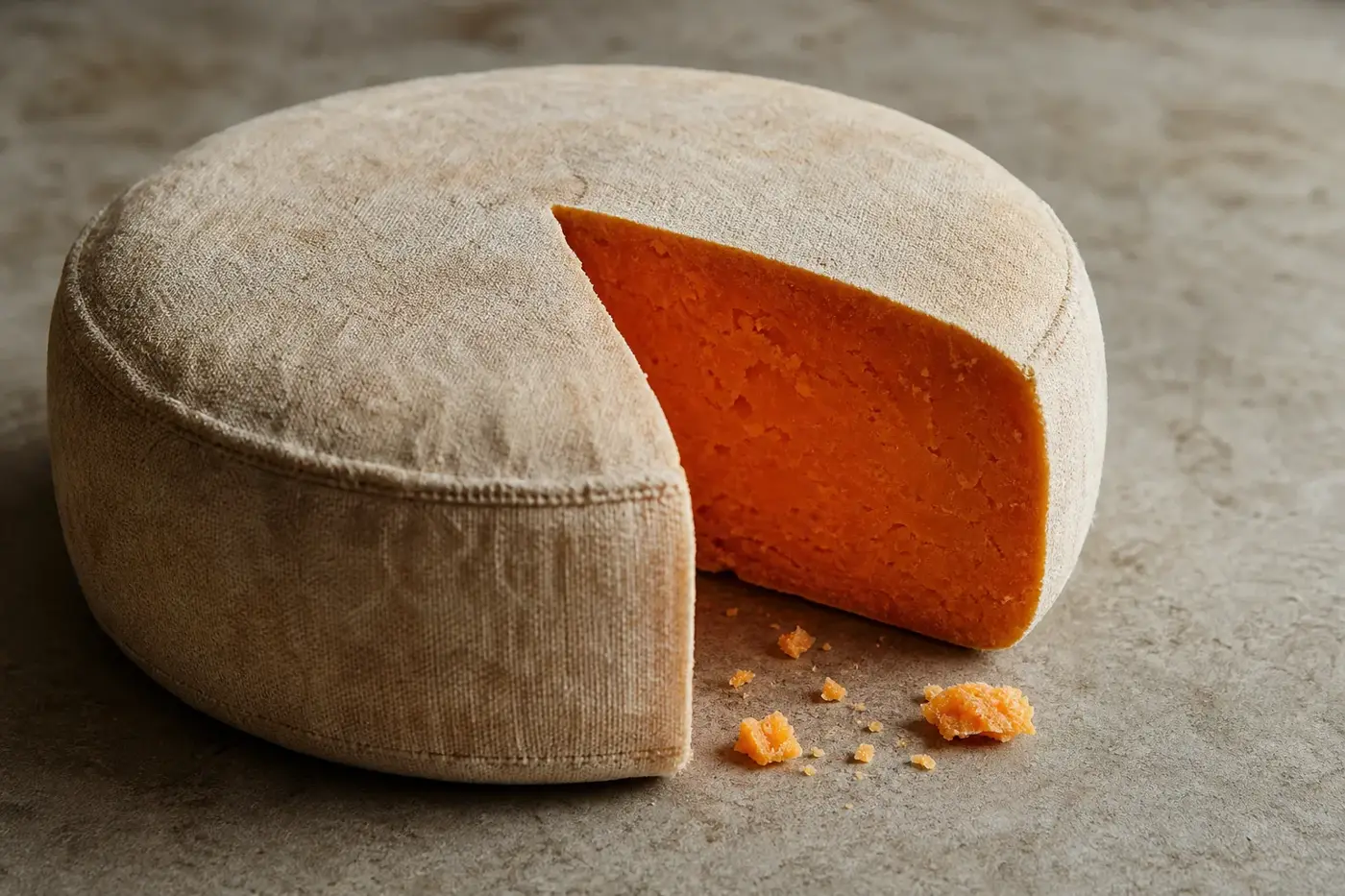
The outside has its own treatment. The official geographical account describes cloth covering during maturation to discourage a coat from developing and leave a clean exterior. That gives you a useful contrast with blues known for substantial natural crusts; the cloth comes off before eating.[3]
At the counter, ask about condition as well as age. Is your batch younger and firmer, or has it softened? The oldest piece does not automatically win a medal: the useful question is which stage suits your plans.
What the protected name tells you
PDO stands for Protected Designation of Origin. You will find Buxton Blue on the Great Britain government register, with its product specification attached. The entry records UK scheme registration separately from the original EU registration date.[1]
Territory matters here. Defra explains that UK geographical indication schemes protect registered names sold in Great Britain: England, Scotland and Wales. EU schemes operate in Northern Ireland and the EU.[5]
A geographical indication is not a privately owned brand. Under Defra’s guidance, use of a registered name requires a producer to follow the specification and meet its verification requirements. The name signals compliance with registered product requirements, not membership of a single commercial range.[5]
For the differences between PDO, PGI and TSG, head to protected names explained. Each set of initials means something different.
Find out what is at the counter today
Current production remains unestablished here as of November 2026. Your best starting point is a specialist cheesemonger, who can help with availability and identify the cheese and maker behind an offer.
Ask three direct questions: is there a current batch, who made it, and when was it produced? For a cut portion, request the original product details alongside the shop’s wrapping label. A listing points you towards a cheese; batch information tells you what the seller actually has.
If you are offered a substitute, ask for its own name and maker. This matters particularly with orange-pasted blues. Similar colours can conceal different recipes and geographical identities.
Make room for Stilton and Shropshire Blue
Put these cheeses side by side and begin with their bodies and exteriors. You will learn more from colour, texture and treatment during maturation than from lining them up in a simple league table of strength.
| Cheese | What to look for | Where the description comes from |
|---|---|---|
| Buxton Blue | Annatto-coloured blue associated with cloth-covered maturation | Official geographical account and industry directory.[3][4] |
| Blue Stilton | Creamy-white interior, blue-green veins and a coat formed during production | Registered Stilton specification.[7] |
| Shropshire Blue | Orange-pasted blue; look at the individual product details | Connage’s published product description.[8] |
Blue Stilton’s specification describes a slightly crumbly texture and a slightly sharp flavour against a milky background. It also distinguishes mature and vintage versions by their changing texture and flavour. “Stilton-like” may get your conversation started, but it cannot describe another cheese precisely.[7]
Connage’s Shropshire Blue listing describes an orange body crossed by blue veins, an orange-brown natural rind and a character milder and delicately sweeter than Stilton. These are that seller’s product notes, not a description of every orange blue. They show why the rind and named product’s identity deserve as much attention as the paste’s colour.[8]
Set a simple plate, then keep it cool
Begin with the cheese itself, plain bread or an unsalted cracker. Taste any accompaniment separately before bringing the two together. You can then decide how much sweetness or acidity you want alongside that blue character.
Try fresh pear or apple, or a small spoonful of fruit preserve, for contrast. These are suggestions, not recorded tasting results for a particular batch. Water makes a useful alcohol-free starting point, keeping your attention on the cheese.
Comparing several blues? Taste each alone before returning to the accompaniments, however impatiently the crackers are waiting. Notice the paste’s resistance, how readily it breaks down and how long the blue character lasts. Ordinary words make perfectly useful tasting notes.
At home, keep the main piece refrigerated and put out only what you intend to serve. The UK Food Standards Agency advises a fridge temperature between 0 and 5 °C. Its published guidance covers England, Wales and Northern Ireland and directs you to follow packaging instructions for dairy products.[9]
Follow your cheese’s own storage instructions alongside current Food Standards Agency guidance for England, Wales and Northern Ireland.[9] Once it is open, use that product’s storage and date instructions. Blue cheeses do not all keep in the same way.
A cheesemonger cutting from a whole cheese should be able to give you those details. For more practical help, see how to store cheese at home.
General information only, not medical advice: follow the official guidance where you live.
Questions people ask
What does Buxton Blue taste like?
Its intended flavour is mellow and dairy led, with the tang of blue cheese. Its smooth, close textured body softens as it matures.
Is Buxton Blue made with pasteurised milk?
Yes, the specification calls for pasteurised cows’ milk. It also lists whey cream, starter culture, coagulant, mould spores, salt and annatto.
Where is Buxton Blue made?
The defined production area is approximately 48 km, or a 30 mile radius, around Buxton. The cheese has a registered Protected Designation of Origin in Great Britain.
Can I still buy Buxton Blue?
Current production was not verified in November 2026. Ask a specialist cheesemonger whether there is a current batch, who made it and when it was produced.
How should I store Buxton Blue?
The UK Food Standards Agency advises a fridge temperature between 0 and 5 °C and says to follow packaging instructions for dairy products. Check its current guidance for England, Wales and Northern Ireland and the storage and date instructions on your cheese.
Sources
- Department for Environment, Food & Rural Affairs. Buxton Blue. UK protected food and drink names register, published 4 January 2021, checked November 2026.
- Department for Environment, Food & Rural Affairs. Product specification: “Buxton Blue”. Undated specification attached to the current register entry, checked November 2026.
- Ministry of Agriculture, Forestry and Fisheries, Japan. Notice of designation, designation number 159: Buxton Blue. Updated 20 December 2024, checked November 2026.
- Specialist Cheesemakers Association. Member directory: Buxton Blue. Undated directory entry, retrieved November 2026.
- Department for Environment, Food & Rural Affairs. Protected geographical food and drink names: UK GI schemes. Updated 8 March 2024, checked November 2026.
- Staffordshire Cheese Company. Our distinct range of cheeses. Undated producer range page, retrieved November 2026. This is the producer’s own product information.
- Department for Environment, Food & Rural Affairs. Product specification: “Stilton Cheese”. Undated specification attached to the Stilton Blue Cheese register entry, checked November 2026.
- Connage Highland Dairy. Shropshire Blue. Undated product listing, checked November 2026. The sensory description is the seller’s own.
- Food Standards Agency. How to chill, freeze and defrost food safely. Published 18 December 2017, current retrieved guidance checked November 2026.
Researched through official specifications, government guidance and published producer and industry records, with serving suggestions identified as editorial judgement.
Last checked: November 2026
Last checked November 2026.
The editors suggest you read next
West Country Farmhouse Cheddar Cheese
Large pieces of curd turn and stack under the cheesemaker’s hands.