Californian Cheese
Cut yourself a wedge of Humboldt Fog.
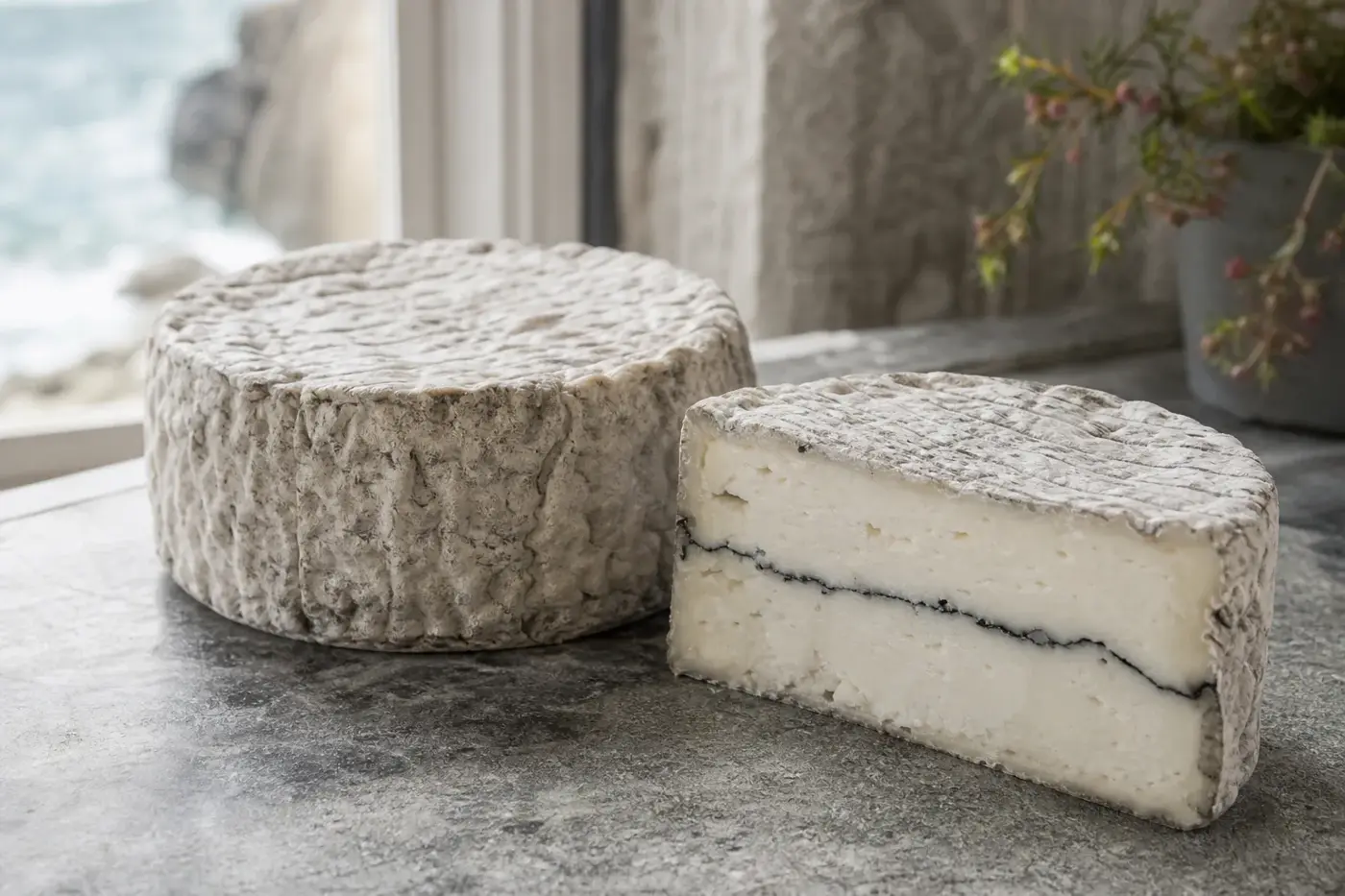
Cut yourself a wedge of Humboldt Fog. Through the goat cheese runs a dark ribbon of vegetable ash, recalling fog along Humboldt’s coastline. Follow that line into California’s cheese story and you reach Monterey’s early dairying, immigrant kitchens and modern experiments, from cool Humboldt, Sonoma and Marin to the much hotter Central Valley and its large manufacturing industry. [1][2][6][20]
| At a glance | What you’ll find |
|---|---|
| Your destination | California, United States. [20] |
| Milk in the mix | Cow, goat and sheep milk. [6][7][9] |
| One federal cheese standard | Monterey cheese and monterey jack cheese, 21 CFR 133.153, United States. [17] |
| Latest annual cheese production and national ranking | No annual total or national ranking given here. |
Take the cheese road from Humboldt to the valley
Start in Humboldt County, then follow dairy country south towards Sonoma and Marin, north of San Francisco. Several familiar specialist cheesemakers work here, though their cheeses and milk supplies differ considerably. Cypress Grove makes Humboldt Fog in Humboldt County; Point Reyes Farmstead Cheese Company makes cheese at Point Reyes and Petaluma. [6][7]
In Sonoma, the long-established Vella business and its Dry Jack tell one part of the story. Bellwether Farms offers another, with a current range spanning cow milk ricotta, Carmody and sheep milk cheeses. Neither hands you a single, definitive Sonoma style. That leaves rather more to explore. [3][4][9]
Head inland and Tulare, Kings, Merced and Stanislaus counties become fundamental to the dairy picture, alongside those better-known coastal destinations. Modesto’s Fiscalini shows how specialist cheesemaking fits into this farming region. The company says it makes cheese exclusively with milk from its own dairy herd. [8][20]
Treat a region as your starting point, not your final answer. A coastal address gives you a location; the milk species identifies an ingredient. A named making site tells you where that milk becomes cheese. Each detail answers a different question.
There is more to the milk than green pasture
A photograph of green pasture makes a persuasive invitation. But you are seeing only part of the feeding year, which can include seasonal grass, conserved forage and cultivated feed. Cool maritime conditions shape coastal dairying, while hotter summers shape farming inland. [20]
For a fuller picture, follow the milk supply. Fiscalini says it grows most of its cows’ feed on its farmland. Point Reyes says Original Blue uses raw milk exclusively from its own Holstein herd, while its Petaluma creamery uses milk from that farm and other California dairy partners. [7][8]
Those arrangements tell you more than a sweeping claim about the taste of coastal grass. Ask whether the milk comes from the cheesemaker’s herd or supplying farms, and whether the producer describes seasonal changes. Then consider milk treatment, cultures, moisture and maturation. Together, they help explain why cheeses from the same broad region can taste so different.
You can explore that first distinction in the guide to milk treatments. The landscape matters, but the story does not stop at milking.
Meet the cheesemakers who came before David Jacks
Monterey Jack had a dairy culture behind it before the businessman whose name became associated with the cheese. A history published by the Monterey County Historical Society in October 2001 traces its background to Franciscan mission dairying and the white country cheeses eaten by Spanish-speaking settlers. David Jacks later produced and marketed cheese through his dairy interests. [2]
That puts Jacks at the heart of its commercial development, marketing and expansion, rather than making him simply its inventor. Give him the whole invention story and you lose the cheesemaking tradition that came first. The historical society’s article is a later account, not a contemporary record of the first cheese being made. [2]
Today, Monterey Jack is also a federally standardised cheese name in the United States. Monterey supplies the historical association; an individual cheese’s label tells you where it was made. Read both when choosing a Californian example. The name alone does not guarantee its birthplace. [17]
Get to know Jack, young and dry
Young Monterey Jack is pale and yielding, ready for slicing and cooking. Vella’s historical account describes its fresh Jack as delicate in flavour. Try a plain version before one with peppers or other additions. Meet the cheese before its more talkative guests arrive. [3]
Dry Jack takes you towards a firmer texture and longer maturation. Vella describes its version as pale yellow, further aged for seven to ten months, with a sweet, nutty flavour. Its edible coating contains cocoa, pepper and canola oil. Those are particulars of Vella’s cheese, not a universal Dry Jack recipe. [4]
The maker recommends grating it over pasta, soup or tacos, or using it in toasted sandwiches, omelettes and soufflés. There is history behind that grating role. Vella connects its Dry Jack production with Italian families seeking a grating cheese: immigrant cooking helping to shape a Californian product. [3][4]
If you are looking for it now, bear the business’s status in mind. As at November 2026, Vella’s website states that cheese production has ceased and its retail shop and mail order are permanently closed. The surviving product pages describe the cheese; the closure notice gives the current position. [5]
Follow the fog through Humboldt’s ash line
Humboldt Fog gives California’s experimental cheesemaking an image you can recognise at a glance. Cypress Grove lists pasteurised cultured goat milk, salt, enzymes and vegetable ash as its ingredients. The producer also documents that distinctive central ash line. [6]
In Cypress Grove’s telling, the idea began with its founder’s inspiration following a visit to France. The imagined cheese had an ash line recalling fog along Humboldt’s coastline. You are looking at a deliberate connection to the place associated with its making, not merely decoration. [6]
Ripening then changes what you taste. Cypress Grove says a cream line develops as Humboldt Fog matures and its flavour intensifies. Its tasting notes describe buttermilk, floral and herbaceous notes, followed by a citrus finish. [6]
Ask your cheesemonger about the wedge in front of you. A firmer centre and a more developed soft layer beneath the rind offer different experiences. When you serve it, cut wedges with some rind, centre and ash line. That gives everyone a share of the whole cheese.
Leave room for blue, fresh and sheep milk cheeses
Point Reyes Original Blue brings blue-green veining to coastal cow milk. The producer describes a rindless cheese with sweet-milk notes and a peppery finish, made with raw milk from its own herd at Point Reyes. Bay Blue and the company’s other pasteurised cheeses are made at its Petaluma creamery, using farm milk and milk from supplying California dairies. [7]
Give fresh cheese a place beside those aged and blue examples. Bellwether Farms describes its basket ricotta as made from whole Jersey cow milk and sold in its draining basket. Its current list also includes Crescenza, Carmody and sheep milk cheeses. [9]
For a revealing selection, put a fresh cheese beside Jack, a blue and a soft-ripened goat cheese. You will learn more from those contrasts than from several similar wedges. Dry Jack, meanwhile, remains a distinctive historical reference point for aged cow milk cheese. [4]
For aged goat and sheep milk cheeses, keep the distinction between a Californian business and Californian production firmly in view. Cypress Grove’s Lamb Chopper makes the point neatly: according to the producer, this sheep milk cheese is made for it in Holland. A California business address does not necessarily tell you where the cheese was made. [10]
The guide to cheese styles helps you compare milk, rind and texture. Those differences give you more to work with than a hunt for one flavour that somehow represents the whole state.
Step into the kitchens behind the cheeses
Italian families seeking a grating cheese helped shape Vella’s Dry Jack production. The company’s account records a particular meeting of cheesemaking and cooking needs. Here, an established food tradition found a Californian expression through locally available milk and methods. [3]
Mexican cheesemaking also belongs within California’s wider dairy culture, alongside the traditions recorded in Monterey’s cheese history. No individual California-made cheese serves as an example of that influence here. Monterey’s history nevertheless shows you why present borders cannot fully explain how food traditions move and develop. [2]
Look for individual cheeses and documented practices rather than assigning an entire national tradition to California. The distinctive local contribution often emerges where familiar methods, available milk and customers’ cooking needs meet. That is a richer story to take with you to the cheese counter.
Make room for specialist wheels and a vast industry
Approximately 91,000 tonnes of cheese were produced in California in February 2025, according to USDA’s report for that month. It is a dated snapshot, but it gives you a sense of the manufacturing industry behind the named farms and specialist wheels. Both belong in California’s cheese story. [1]
At the level of a single cheese, smaller decisions become more revealing. A producer might use milk from its own herd, develop a recognisable ash-lined cheese or maintain an aged grating style. Those choices help explain what reaches your table. Production scale alone says little about its suitability for a sandwich, sauce or tasting board. [4][6][7][8]
At the counter, ask who made it, where it was made, which milk was used and how far it has matured. Those answers do more work than “artisan” can manage on its own. It is an appealing word, but it cannot make your sandwich decisions for you.
Follow the story out to water, feed and fire
A cheese’s relationship with land and water begins well beyond the creamery. Feed production is part of it, as Fiscalini makes explicit when it says it grows most of its herd’s feed on its farmland. To understand a dairy’s resource use, you need to look at the feed system as well as the milking parlour. [8]
Water quality has its own regulatory setting. California’s Central Valley Water Board maintains a programme covering discharges from dairy operations. That is a separate issue from water demand. It does not by itself describe the effects of water availability or land use pressures on Californian dairies. [13]
Wildfire raises several different concerns, too. University of California Agriculture and Natural Resources identifies direct burns and smoke inhalation as livestock hazards and discusses recovery of burned grazing land. Its research programme also describes investigations into wildfire ash, forage and water following the Camp Fire. [11][12]
These sources identify practical hazards and research questions. Read their findings in that context, rather than applying them uniformly to all Californian milk or cheese. The details of the place and the problem matter.
Build a contrasting board, then keep it well
Build your first selection around contrast: young Jack, Dry Jack where obtainable, Humboldt Fog, a blue and a fresh cheese. Ask about making location and milk treatment, then choose a stage of maturity that suits your plans. The guide to reading cheese labels explains which details to look for.
For storage, follow the pack’s instructions and the guidance for where you live. The US FDA advises keeping a refrigerator at 4 °C (40 °F) or below. The FSA’s domestic guidance for England, Wales and Northern Ireland recommends 5 °C or below. [14][15]
If cheese is cut and rewrapped, keep its original storage and date information. For serving in the United States, FDA guidance limits foods requiring refrigeration to two hours at room temperature, or one hour above 32 °C (90 °F). Put out a smaller portion and replenish it from the fridge instead of letting the whole supply warm. [14]
Treat the combinations below as serving suggestions to explore, not established pairing rules. The cheese descriptions come from the cited producers. Let your own tasting guide you.
| Your cheese | Try it with, alcohol-free | What to notice |
|---|---|---|
| Dry Jack | Apple and plain bread | Firm texture and the maker’s sweet, nutty notes. [4] |
| Humboldt Fog | Unsweetened sparkling water and pear | Fruit, citrus notes and the developing paste. [6] |
| Original Blue | Pear and unsalted crackers | Sweet fruit beside the producer’s peppery blue-cheese character. [7] |
| Basket ricotta | Tomato and bread | Fresh cheese against aged and mould-ripened selections. [9] |
Bring California to your UK cheese counter
Start with a specialist cheesemonger or importer. Ask for the named cheese, its origin and making location, and the condition of the particular batch. Confirm current stock directly before building your selection around it. The individual cheese and its condition matter as much as the name.
If your Californian choice is unavailable, choose an alternative by what you need it to do. A mild semi-hard cow milk cheese can stand in for Jack in a sandwich; for grating, ask for a firm aged cheese. A soft goat cheese with a white rind offers an alternative to Humboldt Fog, serving a similar purpose without being the same cheese.
Before buying, consult the relevant official recall notices for the product and batch. In the United States, use the FDA’s notices. UK readers should also consult the FSA’s food alerts. [18][19]
General information only, not medical advice: follow the official guidance where you live.
Questions people ask
Did David Jacks invent Monterey Jack?
Monterey’s cheese history began with Franciscan mission dairying and the white country cheeses eaten by Spanish speaking settlers. David Jacks later produced and marketed cheese through his dairy interests.
What is the line through Humboldt Fog?
The dark line is made from vegetable ash and recalls fog along Humboldt’s coastline. Cypress Grove says the idea came to its founder after a visit to France.
What is the difference between Monterey Jack and Dry Jack?
Young Monterey Jack is pale and yielding, while Dry Jack is firmer and matured for longer. Vella describes its Dry Jack as aged for seven to ten months, with a sweet, nutty flavour.
Is Point Reyes Original Blue made with raw milk?
Yes, Point Reyes says Original Blue is made with raw milk exclusively from its own Holstein herd. The producer describes it as a rindless cheese with sweet milk notes and a peppery finish.
Where can I find Californian cheese in the UK?
The page suggests starting with a specialist cheesemonger or importer and checking current stock directly. Ask about the named cheese, its origin, where it was made and the condition of the particular batch.
Sources
- USDA National Agricultural Statistics Service. Pacific Region Dairy Products, 4 April 2025, February 2025 production table; Dairy Products Annual Summary, release index listing 24 April 2026. Monthly report; annual release index.
- Monterey County Historical Society. News from the Monterey County Historical Society, October 2001, “Land King: The Story of David Jack”, cheese discussion on page 6. Document.
- Vella Cheese Company. The History of Vella Cheese, undated producer account, retrieved November 2026. Source.
- Vella Cheese Company. Vella Dry Monterey Jack Cheeses, undated product descriptions, retrieved November 2026. Source.
- Vella Cheese Company. A message from the Vella family, undated closure statement, retrieved November 2026. Source.
- Cypress Grove. Humboldt Fog and Our Story, undated producer pages, retrieved November 2026. Product; history.
- Point Reyes Farmstead Cheese Company. Cheese Making and Original Blue Cheese, current producer pages retrieved November 2026. Production; product.
- Fiscalini Cheese. The Farmstead, undated producer account, retrieved November 2026. Source.
- Bellwether Farms. Products and homepage basket-ricotta description, retrieved November 2026. Products; homepage.
- Cypress Grove. Lamb Chopper, undated producer description, retrieved November 2026. Source.
- University of California Agriculture and Natural Resources. Livestock and Rangeland Recovery, current extension guidance retrieved November 2026. Source.
- University of California Agriculture and Natural Resources. Research Projects, sections “Fire & Smoke Livestock Impacts Survey” and “Camp Fire Research”, retrieved November 2026. Source.
- Central Valley Regional Water Quality Control Board. Confined Animal Facilities, programme page retrieved November 2026. Source.
- US Food and Drug Administration. Are You Storing Food Safely?, consumer guidance retrieved November 2026. Source.
- Food Standards Agency. How to chill, freeze and defrost food safely, current guidance, England, Northern Ireland and Wales, retrieved November 2026. Source.
- GOV.UK. Bringing food into Great Britain: Meat, dairy, fish and animal products, current traveller guidance retrieved November 2026. Source.
- Electronic Code of Federal Regulations. 21 CFR 133.153, Monterey cheese and monterey jack cheese, current electronic text retrieved November 2026. Source.
- US Food and Drug Administration. Recalls, Market Withdrawals, & Safety Alerts, live index retrieved November 2026. Source.
- Food Standards Agency. Alerts, live index retrieved November 2026. Source.
- California Department of Food and Agriculture. California Agricultural Statistics Review 2023-2024, dairy tables and county statistics. Report.
Researched from government statistics and guidance, a historical society publication, university extension material and attributed producer accounts, with outstanding verification recorded below.
Last checked: November 2026
Last checked November 2026.
The editors suggest you read next
French Cheese: The Complete Guide
Picture Normandy’s pastures, then follow the milk towards the Loire’s goat dairies, the Jura’s shared cheesemaking traditions and the sheep country of the Pyrenees.