Chabichou du Poitou
Look closely at that little barrel bung on the cheese counter.
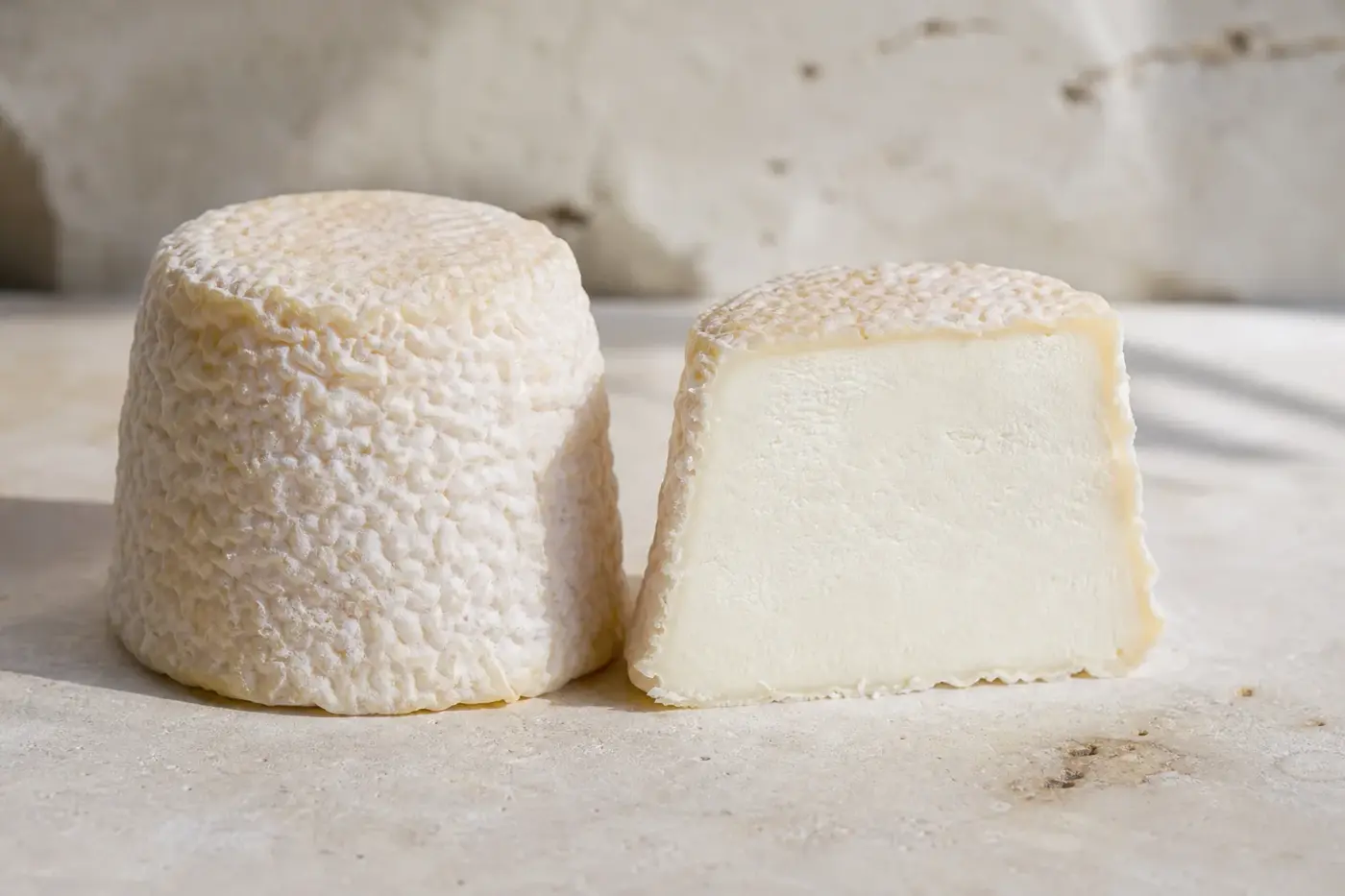
Look closely at that little barrel bung on the cheese counter. Its thin, folded ivory rind hides a white paste that might be supple and mild, or drier, more brittle and decidedly goaty. Age makes quite a difference here. [1][2] The small, tapered shape is as distinctive as the name. [2]
This is a taste of the Poitou countryside in western France, where keeping goats and making cheese have long gone together. Slow lactic curd formation and a thin natural rind help shape the changing paste beneath. [1][2] The name is registered as a PDO in Great Britain. [3]
| What you might want to know | The detail |
|---|---|
| Name to look for | Chabichou du Poitou. [1][3] |
| French designation | Appellation d’origine contrôlée, AOC, recognised in 1990. [2] |
| EU designation | Protected designation of origin, PDO, called AOP in French; original registration dated 21 June 1996. Register ID: Unconfirmed. [2][3] |
| Great Britain designation | Registered PDO; UK scheme registration dated 31 December 2020. Information dated November 2026. [3] |
| Where it must be made | Listed communes in Vienne, Deux-Sèvres and northern Charente, France. [1] |
| Milk | Exclusively raw, whole goat’s milk. [1] |
| Shape and minimum weight | Small truncated cone, called a bonde; at least 140 g at the end of minimum maturation. [1] |
| Minimum maturation | Ten days counted from rennet addition. [1] |
| Usual maturation range | The French agriculture ministry describes two weeks for a young example and up to eight weeks for a very dry one. [2] |
| Pregnancy guidance | United Kingdom: NHS guidance on cheese during pregnancy, November 2026. [7] |
Find Poitou beneath the rind
Chabichou du Poitou belongs to Haut-Poitou, a limestone plateau within historic Poitou, now in Nouvelle-Aquitaine. INAO, France’s official origin and quality institute, describes a landscape reaching towards the Massif central in the east. To the south lies the cereal-growing and wine-growing countryside of Charente. [4]
The protected territory draws a tighter boundary than the historic province. Milk production, cheesemaking and maturation must all happen within the communes listed in the specification. The dairy’s address is only part of the story: where its milk comes from matters just as much. [1]
Even the goats’ menu has rules. Permitted breeds are Alpine, Saanen, Poitevine and their crosses; at least 75% of their annual ration must originate within the designated area. All forage must come from there, too. [1]
At the counter, look for the complete name and its PDO or AOP identification. The original registration expressly excluded protection of “Chabichou” alone, so that shorter word does not establish compliance with the designation. [5] For more on that distinction, explore protected cheese names.
Follow the ivory rind from gentle to goaty
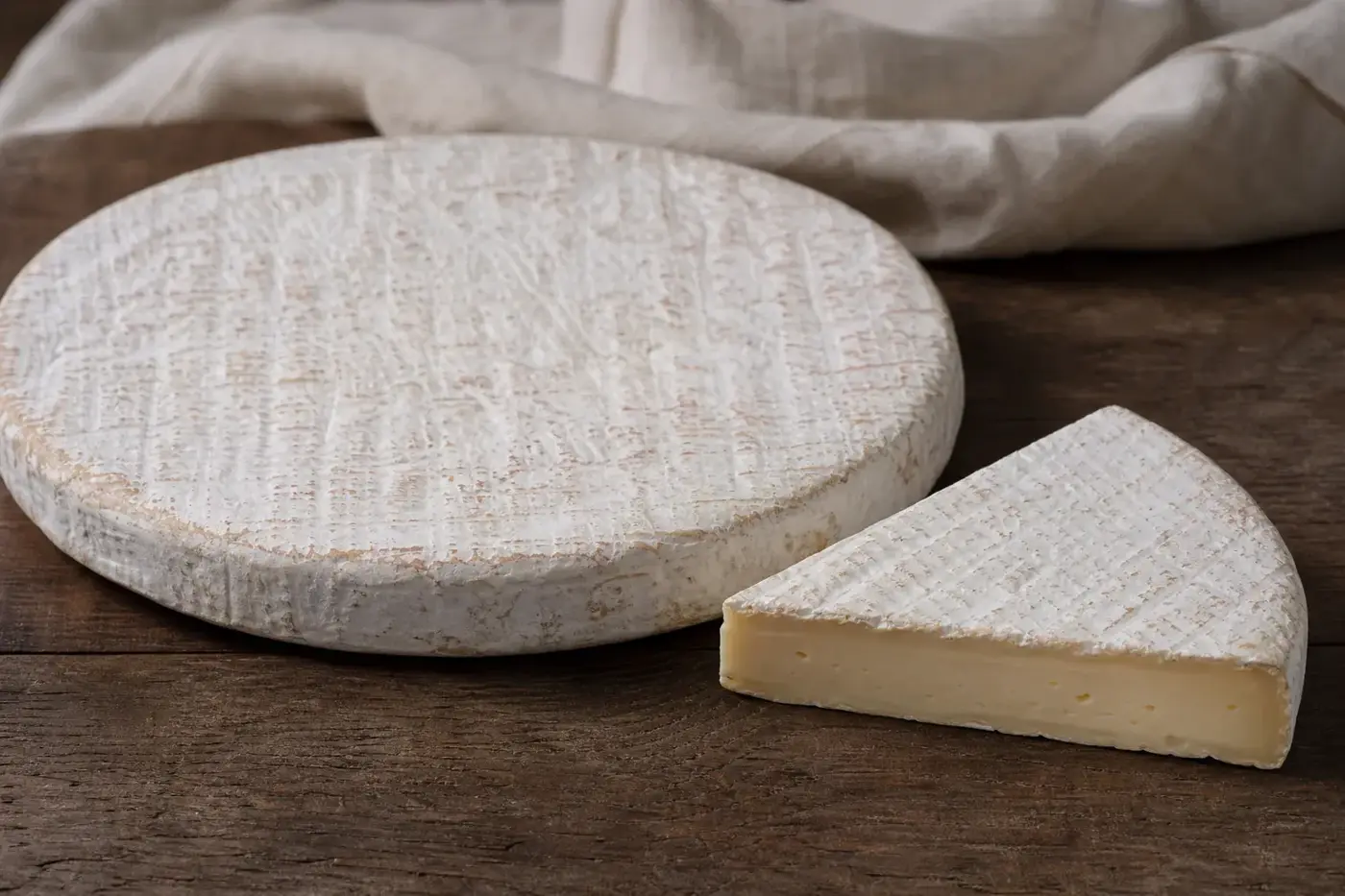
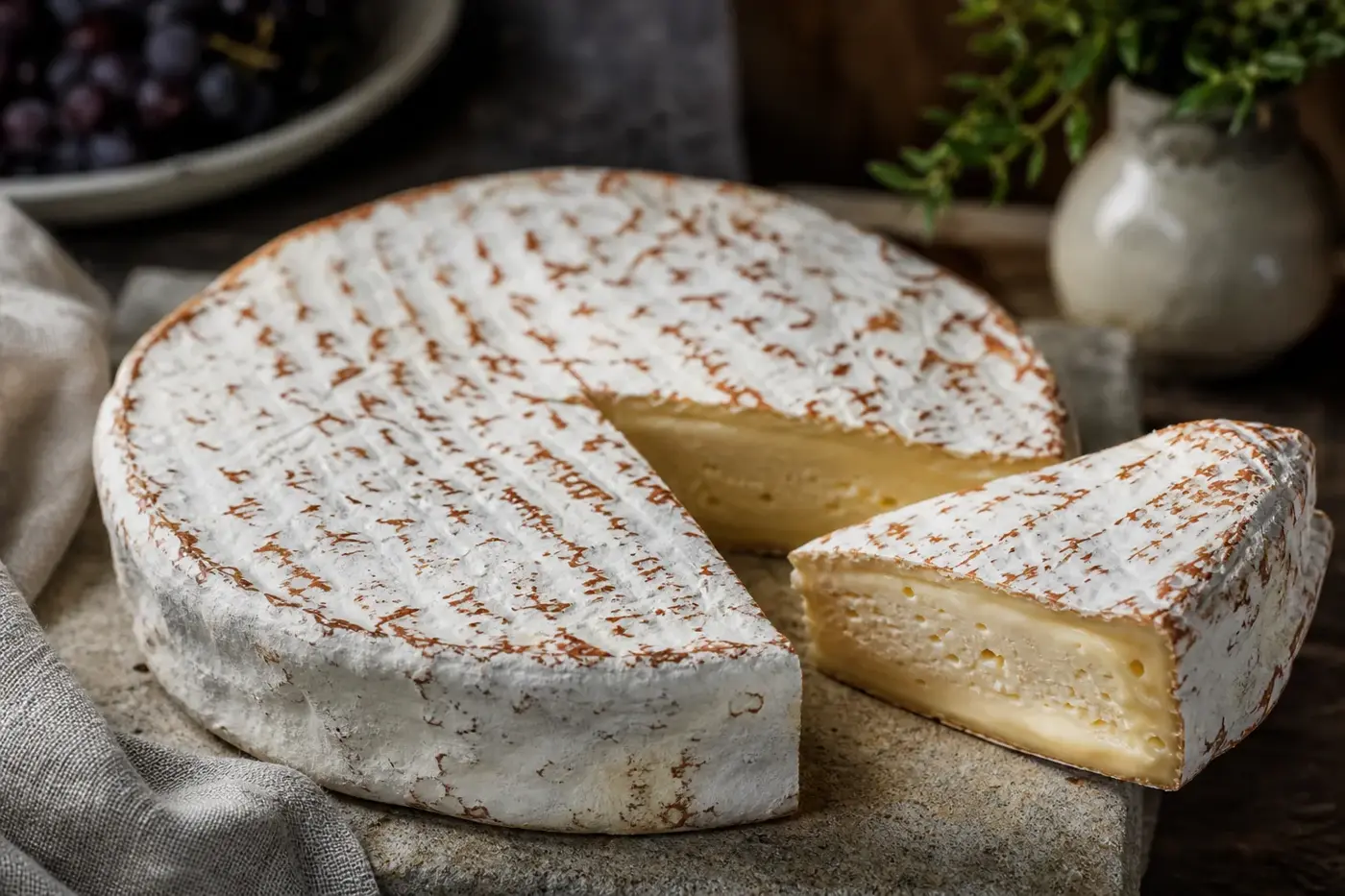
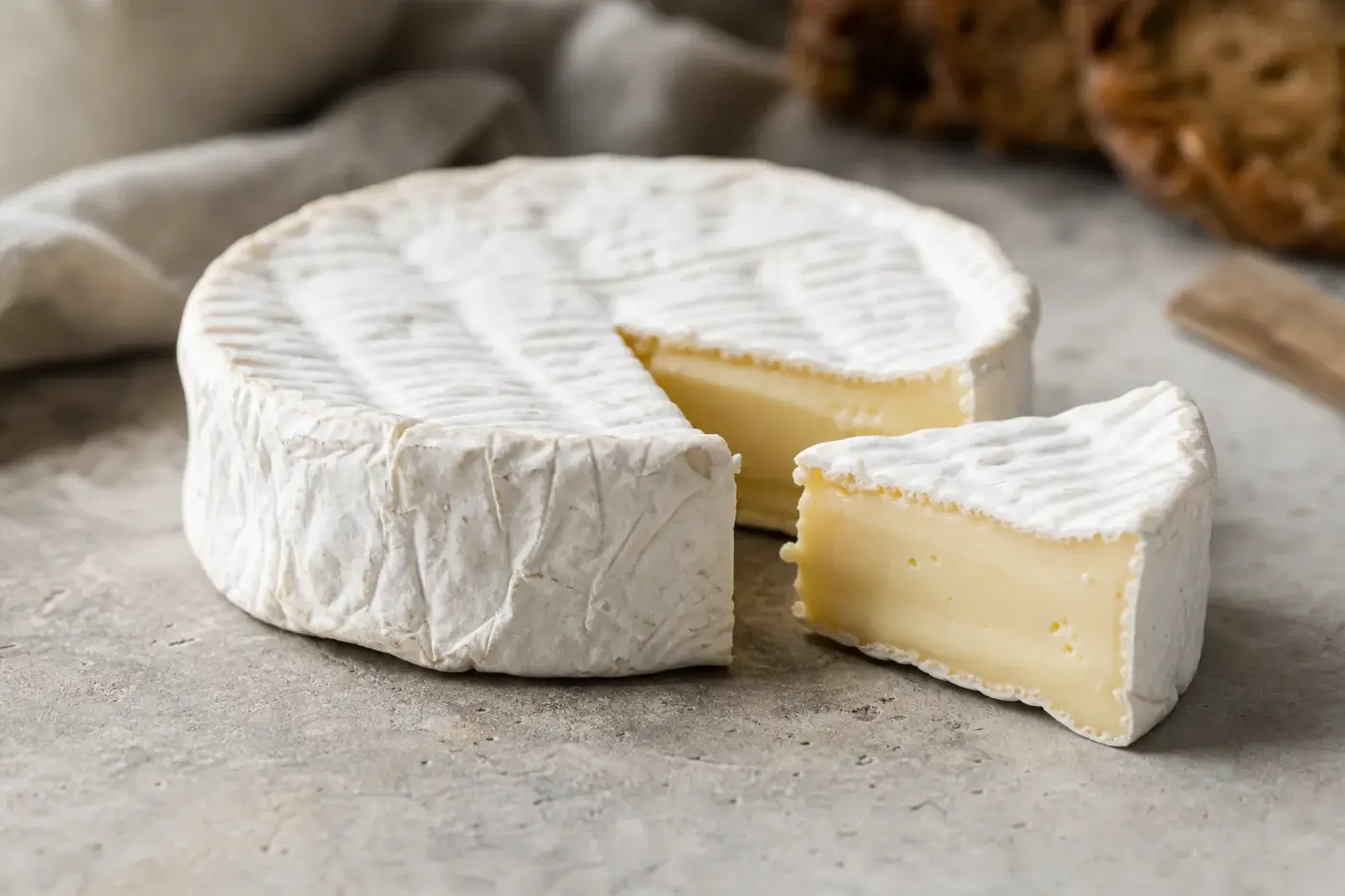
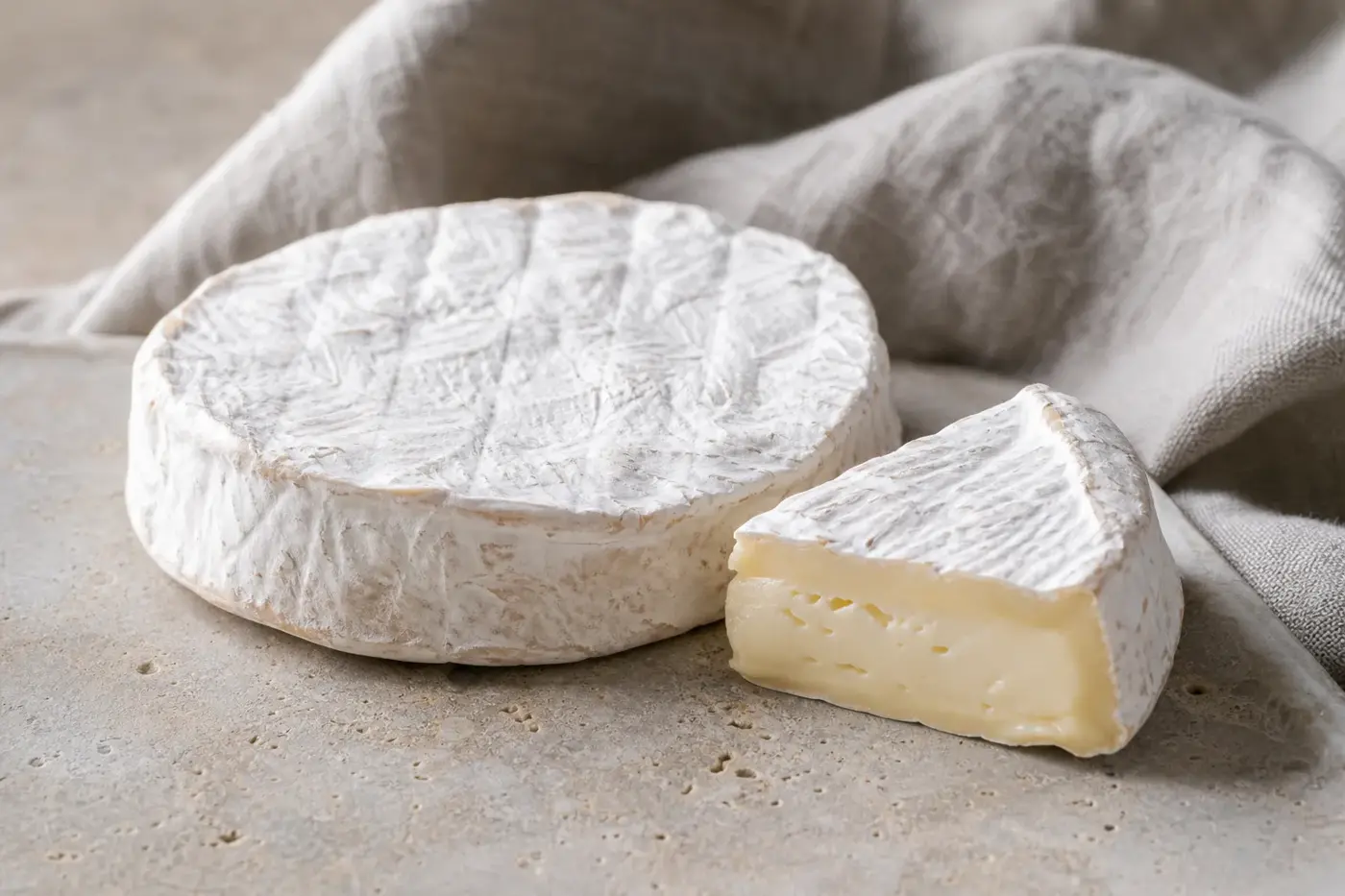
The little barrel-bung shape is wider at one end than the other. Its thin ivory rind has small folds, as the French agriculture ministry describes. You won’t mistake it for a smooth, rindless fresh goat’s cheese. [2]
Beneath that surface, there is more to discover. INAO describes surface moulds, sometimes a little softening beneath the rind, and a fine, smooth paste. Young cheeses taste mild and milky; several weeks of ripening bring a more persistent goat’s milk flavour, sometimes with dried-fruit notes. [4]
The producers’ organisation follows Chabichou through fresh, semi-dry, dry and very dry stages. Its tasting account describes a supple, yielding paste gradually becoming one that breaks more readily in your mouth. The aromas grow stronger as the texture changes. [6]
Choose the stage that appeals to you. There is no medal for buying the oldest cheese on the counter. The published descriptions suggest a younger cheese for a gentle introduction to its mild lactic character. A drier example makes a useful second comparison, with a different feel as well as flavour.
Good things take a little curdling
At least 16 hours of coagulation lie behind Chabichou du Poitou. “Lactic” means acidification plays the central part in setting milk into curd, the solid material from which cheese is formed. A small addition of rennet, the coagulating preparation, helps the milk set too. [1]
The French agriculture ministry describes an unhurried rhythm. The milk sets over roughly a day, then the curd moves carefully into moulds to avoid unnecessary breakage. Turning helps the cheeses drain before they are unmoulded and salted. [2]
The binding specification gives that patient work exact checkpoints. Draining must last at least 18 hours, with at least three turns before unmoulding; salting may use dry salt or brine. The maturation clock starts with rennet addition, not with arrival in the ripening room. [1]
That distinctive shape is simply the part you notice first. Slow curd formation, careful handling, drainage and surface development all work in sequence. The ministry’s account of increasing dryness with age brings you back to the choice at the counter: young and yielding, or much drier. [2]
Meet the goats of legend and the cheese in print
Chabichou’s oldest story begins with goats left behind by Saracens after the eighth-century fighting around Poitiers. The French agriculture ministry explicitly calls it a legend. Enjoy it as regional storytelling, rather than a medieval invention date for the cheese you buy today. [2]
The written history takes you to 1732. The producers’ organisation reports a first mention then, followed by appearances in nineteenth-century dictionaries. That chronology comes from the organisation’s published account of the eighteenth-century text. [8]
INAO places the cheese’s established reputation in the nineteenth century and records French appellation recognition in 1990. [4] European registration followed in 1996. The UK register gives the original EU registration date as 21 June. [3]
Each account tells you something different. The legend belongs to the cheese’s cultural identity, the reported written mentions trace its name, and the designation dates establish the modern protected product. You can enjoy the whole story without asking a legend to do the work of a document.
Ask the cheesemonger for your kind of Chabichou
“How mature is this cheese?” is a useful opening question at the counter. Follow it with “What is its texture like today?” The producers’ progression from fresh to very dry gives you a more precise starting point than simply asking whether it is strong. [6]
For a younger example, ask for the supple texture and milder character described by INAO. If you fancy something more developed, ask about dryness and how persistent its goat’s milk flavour has become. [4] Tell the cheesemonger when you plan to eat it, so you are talking about the particular cheese in front of you.
Before taking it home, read the full name, milk information, date marking and storage instructions. Keep the wrapper or label, especially with a counter purchase: you’ll want that product-specific information later. Official UK labelling guidance explains the importance of accurate product descriptions, allergens and dates. [9]
A cheese label has more to tell you than its name. The guide to reading a cheese label helps you distinguish the cheese’s identity from the producer, distributor and other surrounding information.
Give each wedge its share of rind and centre
Put out only the amount you expect to eat, then return the rest promptly to refrigeration. In England, Wales and Northern Ireland, the Food Standards Agency recommends keeping your domestic fridge at 5 °C (41 °F) or below. [11]
For a straightforward tasting, keep things simple. Give the cheese your attention before inviting the accompaniments in.
- Set out the amount you expect to eat.
- Cut lengthways into wedges, giving each piece both rind and central paste.
- Taste the cheese alone before adding bread or fruit.
- When comparing ages, start with the younger example.
- Return the remaining cheese promptly to refrigeration.
Quarters or sixths make useful portions, depending on the cheese’s size and how many other foods you are serving. These are cutting suggestions, not nutritional recommendations.
Start with plain country bread, then try fresh pear or apple alongside. A little dried fruit can accompany a more mature example. Keep everything separate, so you can adjust the sweetness and crunch in each mouthful. The cheese should still get the leading role, however enthusiastic your bread collection.
For wine, the producers’ organisation suggests local Sauvignon or Chardonnay, including Sauvignon from Haut-Poitou. [10] If drinking, choose a small serving and keep water available. Sparkling water is a straightforward alcohol-free choice that lets you follow the cheese’s changing character; lightly brewed, unsweetened tea is another option.
Alcoholic pairings are for adults of legal drinking age. People who are pregnant, driving, taking medicines that interact with alcohol, or recovering from alcohol dependence should not drink. Consult the NHS or the relevant national health authority for current advice; Cheese and wine pairing covers broader principles, including alcohol free choices.
Keep your Chabichou chilled and follow its dates
Follow your cheese’s own storage instructions and keep it refrigerated. The FSA guidance cited here applies to England, Wales and Northern Ireland and recommends a domestic fridge between 0 and 5 °C (32 to 41 °F). Keep dairy products chilled, and separate ready-to-eat food from raw food. [11]
Once food is opened, the NHS advises following the packaging and using it within two days unless the packaging says otherwise. [12] Keeping those original instructions helps you make the right decision. The appropriate shelf life depends on your Chabichou du Poitou’s particular age, maker and format.
In the United Kingdom, do not eat cheese after its use by date. The NHS advises eating, cooking or freezing food by that date and following its storage instructions. [12] Intended maturation does not extend the date printed on the cheese you have bought.
A natural rind needs a more considered judgement than treating every surface mould as spoilage. Ask the seller what your chosen cheese’s rind should look like. If an unfamiliar change leaves you uncertain, leave it uneaten while checking, and discard it if you cannot establish that it is suitable to eat.
For everyday handling principles, see storing cheese at home. For the separate question of unintended mould, turn to mould on cheese.
This page summarises published guidance from the official sources it cites. It is not medical advice. Guidance differs between countries and changes over time, so check the current source for where you live, and ask your doctor, midwife, pharmacist or dietitian about your own circumstances.
Know the guidance for pregnancy and greater infection risk
United Kingdom, NHS guidance, November 2026: during pregnancy, the NHS advises against eating mould ripened soft goat’s cheese with a white coating unless it is thoroughly cooked until steaming hot. Consult the NHS guidance for its advice on other cheeses and milk products. [7]
Pregnant people, newborn babies, people with weakened immunity and older people are at greater risk of serious listeriosis, according to the NHS. Its advice includes keeping chilled ready-to-eat food cold, observing dates and separating raw from ready-to-eat foods. [12] If you are older or have weakened immunity, discuss the guidance relevant to your circumstances with your healthcare professional.
France, ministry guidance, November 2026: French authorities recommend that pregnant people, immunocompromised people and young children, particularly those under five, avoid raw milk and raw-milk cheeses. The ministry identifies an exception for cooked pressed cheeses. Chabichou du Poitou is a soft cheese. [13][1]
Check the linked national guidance for where you live, and ask your doctor, midwife, pharmacist or dietitian about your circumstances. The guide to Listeria and cheese safety explains the infection and why official advice distinguishes between cheese types.
Questions people ask
What milk is Chabichou du Poitou made from?
It is made exclusively from raw, whole goat’s milk. The milk must come from the designated area in Vienne, Deux Sèvres and northern Charente in France.
What does Chabichou du Poitou taste like?
Young examples have a mild, milky character and a supple texture. As the cheese matures, its goat’s milk flavour becomes more persistent, and it may develop dried fruit notes.
How long is Chabichou du Poitou matured?
The minimum is ten days, counted from the addition of rennet. The French agriculture ministry describes two weeks for a young cheese and up to eight weeks for a very dry one.
Can I eat Chabichou du Poitou during pregnancy?
In the United Kingdom, the NHS advises against eating mould ripened soft goat’s cheese with a white coating during pregnancy unless it is thoroughly cooked until steaming hot. Consult the NHS guidance for advice on other cheeses and milk products.
How should I store Chabichou du Poitou?
Follow the cheese’s storage instructions and keep it refrigerated. In England, Wales and Northern Ireland, the Food Standards Agency recommends a domestic fridge temperature between 0 and 5 °C.
Sources
- INAO and French Ministry of Agriculture. Cahier des charges de l’appellation d’origine « Chabichou du Poitou », approved by the order of 7 November 2018, amended 24 December 2019; Bulletin officiel 2020-03, 16 January 2020. Product definition, production area and manufacturing requirements.
- French Ministry of Agriculture. Le Chabichou du Poitou AOP : un pur produit du Poitou, 16 March 2026. Official overview of appearance, manufacture, maturation and the origin legend.
- Department for Environment, Food and Rural Affairs. Chabichou du Poitou, protected food and drink names register, published 4 January 2021; live entry checked November 2026.
- INAO. Chabichou du Poitou, undated product account, checked November 2026. Regional setting, sensory description and appellation history.
- European Commission. Commission Regulation (EC) No 1107/96, consolidated version dated 20 November 2008, Annex, France, cheese entries and associated footnote. Historical registration text retrieved from legislation.gov.uk.
- ODG du Chabichou du Poitou et du Mothais sur feuille. Goût, undated, checked November 2026. Producers’ organisation’s published tasting descriptions; an interested industry source.
- NHS. Foods to avoid in pregnancy, live guidance checked November 2026, section “Cheese, milk and other dairy”.
- ODG du Chabichou du Poitou et du Mothais sur feuille. Le Chabichou du Poitou, undated, checked November 2026. Organisation’s account of written mentions and historical recognition.
- UK Government. Understanding food labelling, live guidance checked November 2026. Product descriptions, allergens and dates.
- ODG du Chabichou du Poitou et du Mothais sur feuille. La gastronomie, undated, checked November 2026. Organisation’s serving and wine suggestions; an interested industry source.
- Food Standards Agency. How to chill, freeze and defrost food safely, published 18 December 2017, live version checked November 2026. Applies to England, Northern Ireland and Wales.
- NHS. Listeriosis, last reviewed 10 November 2023, live version checked November 2026. Higher-risk groups, refrigeration, opened food and date instructions.
- French Ministry of Agriculture. Consommation de fromages à base de lait cru : rappel des précautions à prendre, 18 February 2025, checked November 2026.
Researched from the French specification, official designation records, national safety guidance and attributed accounts from the producers’ organisation; serving suggestions are identified as editorial recommendations.
Last checked: November 2026
Last checked November 2026.
The editors suggest you read next