Cheese and Non Alcoholic Drink Pairings
Densely fudgy cheese, a lemony tang, a rind beginning to develop.
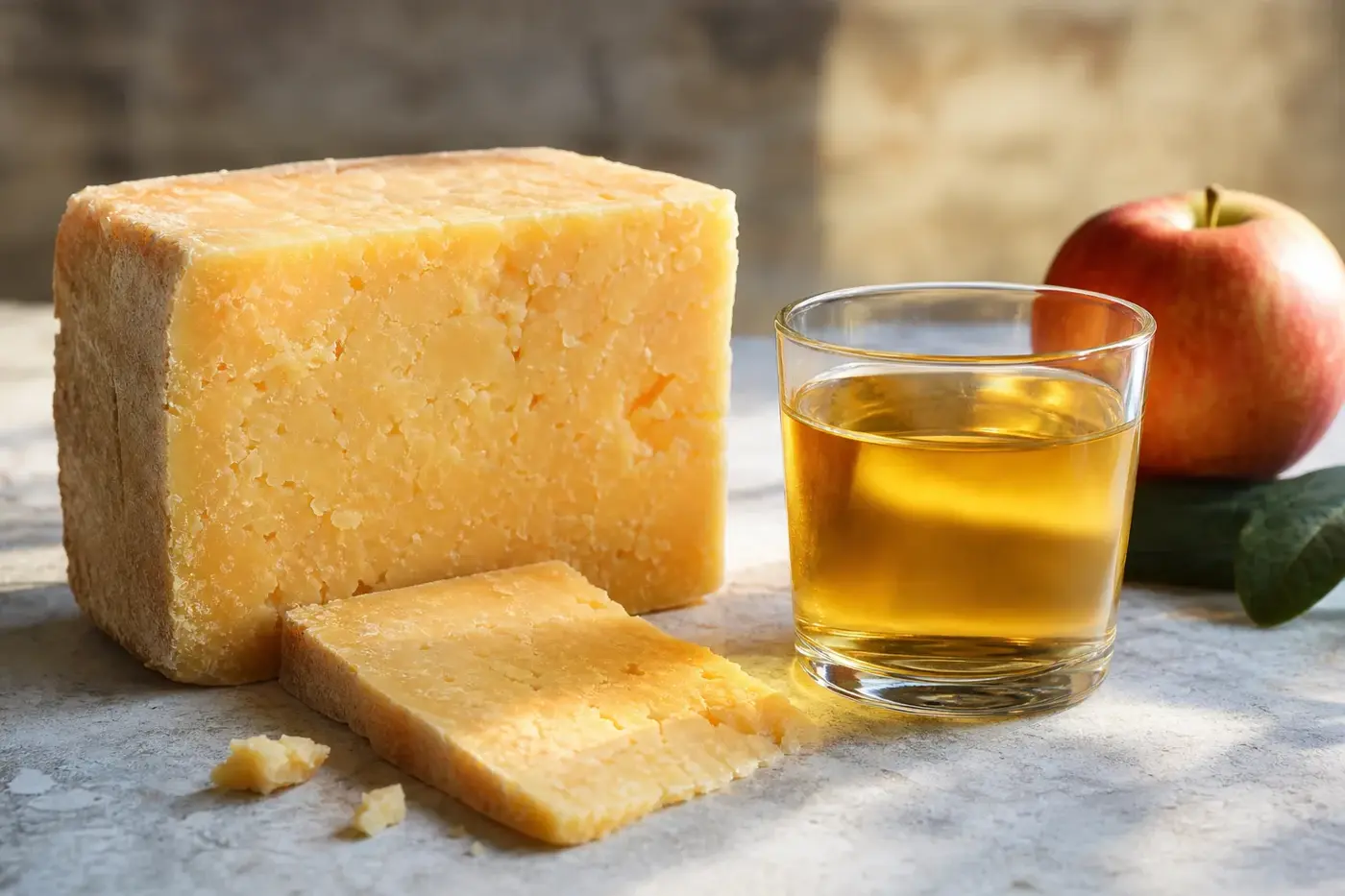
Densely fudgy cheese, a lemony tang, a rind beginning to develop. Neal's Yard Dairy's description of a matured goat cheese almost puts a piece on your tongue before you have poured a drink. [3]
Now picture crisp apple juice beside mature Cheddar, or a softly sweet citrus drink beside fresh goat cheese. The pleasure is in balancing intensity, refreshment and contrast, not matching impressive names. Taste each separately, then together, and adjust whichever takes over. Neither needs to win the conversation.
Let the first bite lead you
Some cheeses linger long after you swallow. Others make a quieter impression. That is intensity: how much attention each mouthful asks of you.
Taste a little cheese first. Notice its salt, acidity, aroma and length of finish, then sip your drink. Can you still recognise the cheese, or has it become just a texture beneath lemon, sugar or herbs?
For a gentle cheese, start with a diluted fruit drink or restrained botanical flavour. A cheese with a persistent finish might welcome a fuller juice or savoury vegetable drink. Let the cheese in front of you set the pace, rather than making assumptions about its broad style.
Keep your first attempt simple. Leave strongly flavoured crackers, chutney and garnishes aside while you find your bearings. The guide to cheese styles helps you choose contrasting textures for a board. For now, give the two main ingredients room and see whether you can still taste both clearly.
Find your balance with acidity and bubbles
A clear tart edge can make another bite of rich, soft cheese feel inviting. Keep that acidity adjustable, though. A drink that tastes pleasantly brisk alone may turn too sharp beside cheese, so dilute a small sample before changing the whole jug.
Bubbles bring the prickling bite of dissolved carbon dioxide. In controlled experiments with taste solutions, carbonation increased perceived sourness and saltiness; its effect on bitterness depended on concentration. Try still and sparkling drinks beside a sharply acidic or salty cheese, and notice how the balance shifts. [1]
Think of refreshment as a change in sensation, not bubbles scrubbing away fat. Those experiments measured perception in liquid mixtures, so applying them to cheese pairings is a practical inference. If you can, compare the identical drink still and sparkling. Choose whichever gives you the more comfortable finish. [1]
Offer salty cheese a little sweetness
Sweetness can soften your impression of salt, sourness and bitterness. In two controlled experiments involving 35 and 28 participants, sucrose suppressed other tastes in solutions containing salt, citric acid and quinine. That supports trying sweet drinks with salty cheese, although cheese adds texture and aroma that make the pairing more complex than those solutions. [2]
With blue cheese, look for contrast rather than camouflage. Start with the juice as supplied, then compare a little diluted with water. You want to recognise both fruit and cheese, without sticky sweetness taking over the finish.
Five pairings worth getting the glasses out for
Treat these combinations as a tasting plan, then fine tune them with the notes below. They are desk researched editorial suggestions, bringing adjustable serving choices together with sweetness and carbonation principles from the cited experiments. [1,2]
| Cheese | Drink | What to look for | If it needs a little help |
|---|---|---|---|
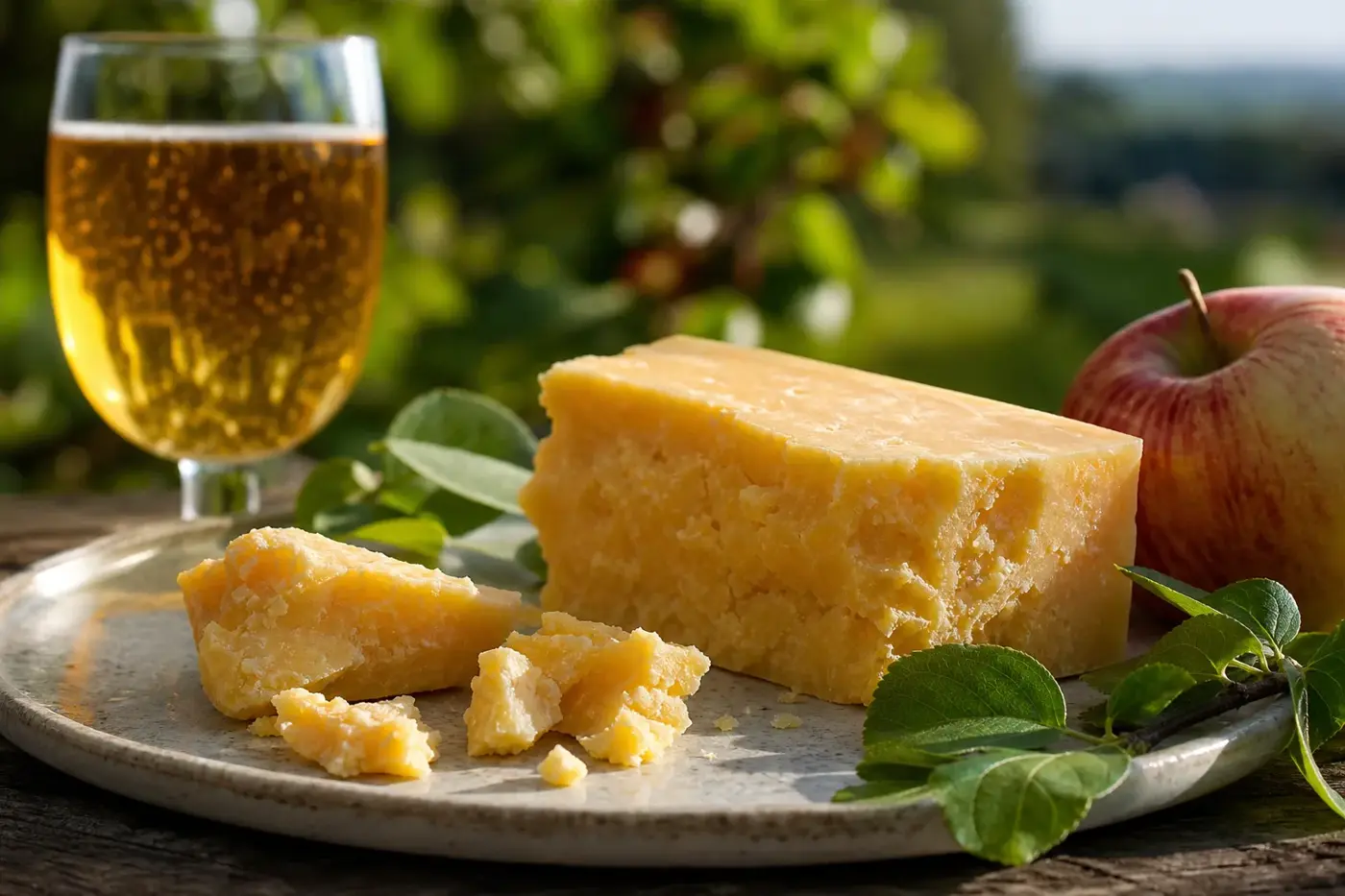
| Mature Cheddar | Crisp apple juice | Fruit sweetness meeting savoury bite. [2] | Dilute if sweetness takes over |
| Fresh goat cheese | Lightly sweetened citrus drink | Sweetness and sourness in balance. [2] | Try water before adding more citrus |
| Blue cheese | Pear juice | Fruit sweetness contrasting with salt. [2] | Try still water alongside |
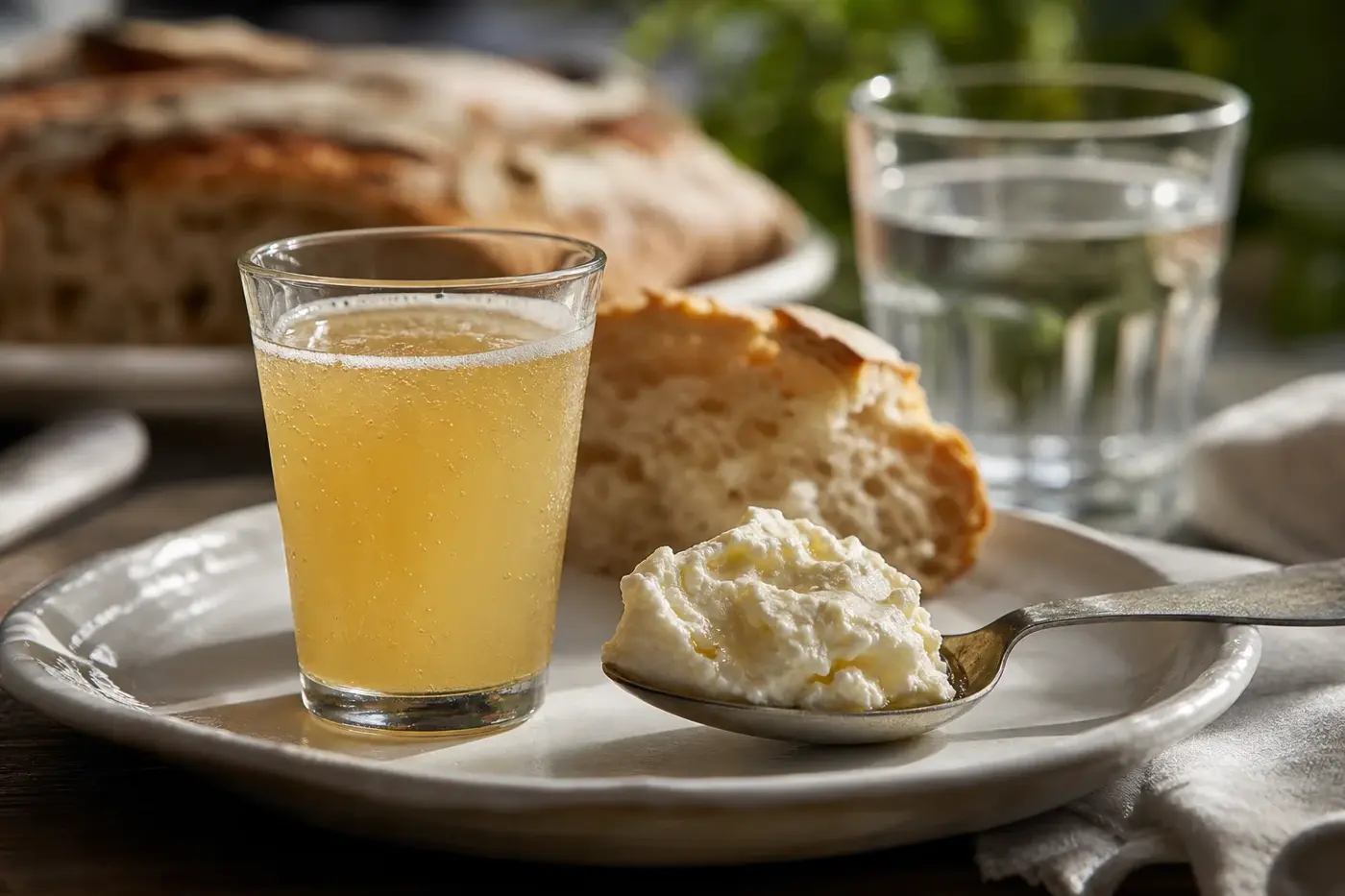
| Soft white cheese | Sparkling botanical drink | Notice the floral aroma and bubbles. [1] | Keep the flavouring gentle |
| Firm cheese | Tomato or vegetable juice | Try savoury rather than sweet | Start without extra seasoning |
Give mature Cheddar a crisp apple companion
Choose a juice that tastes distinctly of apple, with enough tartness for your palate. Try it beside your chosen mature Cheddar. Can you still taste the apple clearly, and does the cheese keep its savoury finish? Most importantly, do you want another bite?
If sweetness overwhelms the cheese, compare the same juice diluted with still water. If a strongly flavoured cheese overwhelms the apple, return to undiluted juice before reaching for another ingredient. Keep the cheese constant throughout. That way, you can tell which adjustment helped.
Take the gentle approach to citrus and goat cheese
Begin with plain, unripened goat cheese and a lightly sweetened lemon or lime drink. Sip the drink alone before adding more citrus. If the combination makes you pucker, try water first. If it is still aggressively sour, try a little more sweetness, drawing on the taste suppression principle. [2]
Your choice of cheese matters here. Fresh, rindless goat cheese and a ripened log give the drink different starting points. That densely fudgy, lemony matured example described above has a developing rind. Do not treat it as interchangeable with the fresh cheese in this pairing.
Let pear sweetness meet the blue
Taste your blue cheese before deciding how much sweetness it needs. Then take a small sip of pear juice, looking for a pleasing sweet and salty contrast. Neal's Yard Dairy's notes for one blue range from apple to brothy savouriness. It is a reminder of how much flavour a single style can hold. [4]
Leave room for soft white cheese among the botanicals
Pour a lightly flavoured elderflower or other botanical soft drink beside a soft white cheese. Look for an aroma you can still distinguish after the cheese. Begin with the centre: a soft paste can accompany quite assertive flavours, including the cabbagey, vegetal character described in one affineur's notes. [5]
If floral aroma crowds out the cheese, try a weaker drink. Dilute a suitable cordial according to its label, then adjust your own glass. Resist adding several herbs at once. A simple pairing makes it easier to tell whether the aroma or the bubbles are helping.
Take firm cheese along the savoury route
Try plain tomato juice or a lightly seasoned vegetable drink beside a firm cheese. It gives you a savoury alternative to fruit juice. Taste before adding salt, hot sauce or celery seasoning, then make one adjustment at a time. You should still be able to taste the cheese clearly.
Give water a seat at the tasting
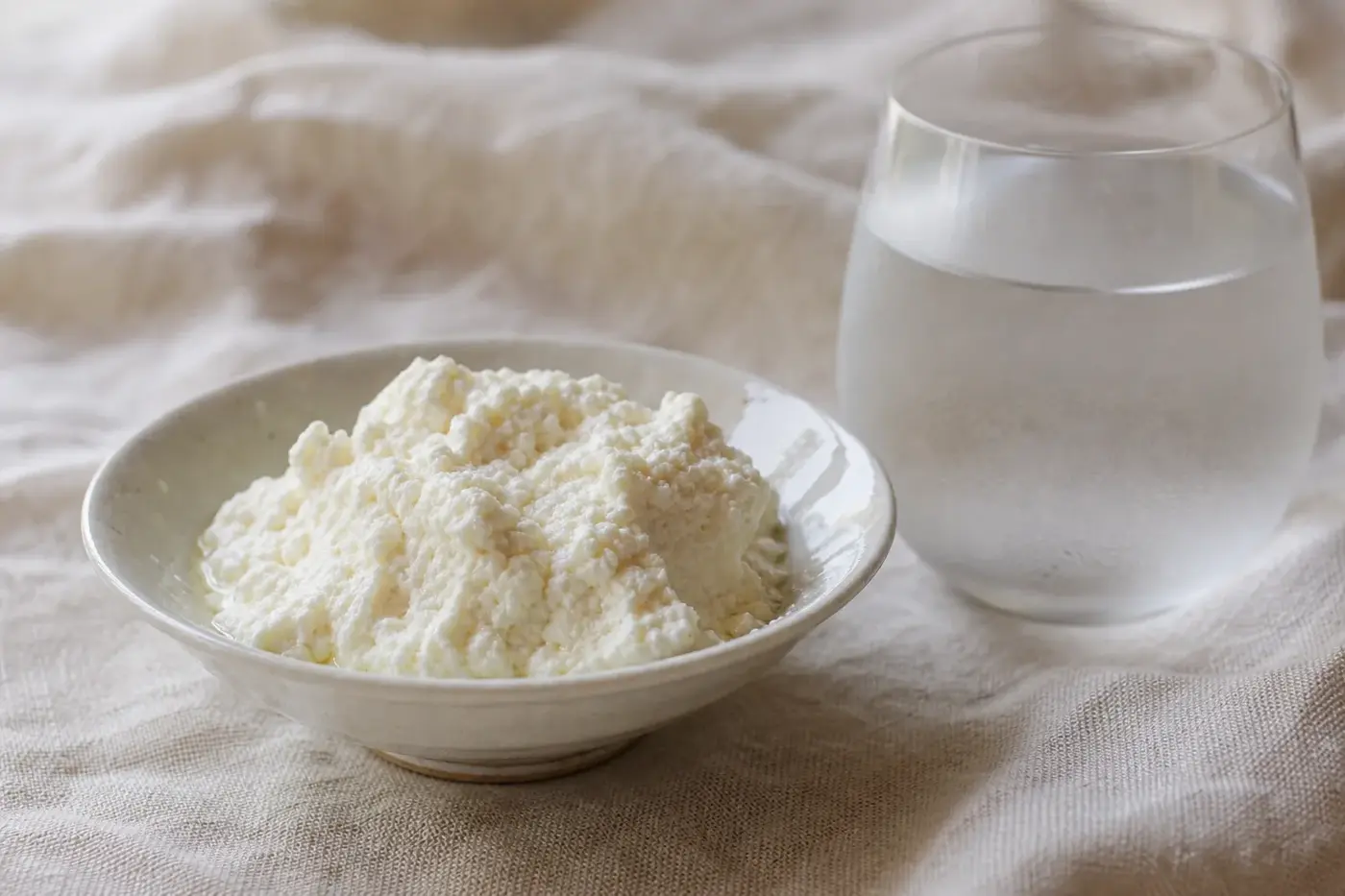
Still water gives you a useful baseline. Taste the cheese, sip water, then return to the cheese before trying your flavoured drink. Both the taste mixture and carbonation experiments used water rinses between stimuli. At home, that approach gives you a straightforward comparison with a less flavoured alternative. [1,2]
Sparkling water is less of a wallflower: its prickling sensation makes it an active participant, not a neutral backdrop. Put both waters beside the same cheese and choose your preferred palate cleanser. Leave lemon slices, mint and flavoured ice out of the baseline glass. You want to compare water, not accidentally invent another pairing. [1]
Pour a little, discover plenty
For a home tasting, start with a suggested 30 to 50 ml of each drink, enough for several small sips. Choose matching, clean, unscented glasses with room to smell the contents. These are tasting arrangements, not dietary portions. Refill only the combinations you want to explore.
Follow the makers' serving instructions. To compare flavour, try a small chilled sample and another allowed to become less cold, noting which you prefer. Keep temperature consistent between competing drinks. Decide on ice afterwards, because it changes temperature and introduces dilution.
Keep cheese refrigerated according to its label, taking out only what you intend to taste. The Food Standards Agency's November 2026 guidance for England, Wales and Northern Ireland recommends a fridge between 0 and 5 °C (32 to 41 °F). Keep chilled food out for the shortest possible time, with a maximum of four hours. After four hours, throw the food away. [6]
Follow storage instructions on cheese and drink packs, including instructions for after opening. Start with whichever cheese tastes mildest to you, then move towards the most persistent. Save blue cheese and strongly seasoned drinks for later if they dominate. For fuller handling guidance, see storing cheese at home. [6]
Look beyond the words on the bottle
When choosing fermented or alcohol removed drinks, look for the stated alcohol by volume, abbreviated ABV. If avoiding traces matters to you, ask the producer for its current specification rather than relying on the description on the front label. Have ordinary water and a clearly identified soft drink available as alternatives.
England's published Department of Health and Social Care guidance, as at November 2026, distinguishes voluntary descriptions for alcohol substitute drinks. Alcohol free means no more than 0.05% ABV after alcohol extraction; de-alcoholised means no more than 0.5% ABV after extraction; low alcohol means no more than 1.2% ABV. The same voluntary guidance recommends against using non-alcoholic alongside a name associated with an alcoholic drink, except for wine intended for communion or sacramental use. [7]
An alcohol removed drink can therefore retain some alcohol. Some fermented drinks contain alcohol too, so look at the actual product and batch information. Definitions and labelling requirements differ by market; consult local official guidance if you live elsewhere. Keep the ingredient list handy when guests need to check what is in a drink. [7]
Find the pairing you will want again
Try one cheese with two drinks, rather than changing everything between bites. Note the drink, dilution, serving temperature and the flavour that remains after swallowing. Repeat your most promising match on another occasion. A useful pairing is one you can adjust and enjoy again.
For brewed drinks, turn to the separate tea and coffee pairing pages for deeper guidance. Take the same approach with you: taste the drink and cheese separately, compare them together, and change one variable at a time.
General information only, not medical advice: follow the official guidance where you live.
Questions people ask
What drinks pair well with cheese?
Try crisp apple juice with mature Cheddar, a lightly sweetened citrus drink with fresh goat cheese, or pear juice with blue cheese. For soft white cheese, try a restrained sparkling botanical drink, or serve tomato or vegetable juice with firm cheese.
Do bubbles change how cheese tastes?
In experiments with taste solutions, carbonation increased perceived sourness and saltiness, while its effect on bitterness depended on concentration. The page suggests comparing the same drink still and sparkling beside cheese, while noting that applying the experiments to cheese pairings is an inference.
How should I set up a cheese and drink tasting?
Start with 30 to 50 ml of each drink in clean, unscented glasses. Taste the cheese and drink separately, then together, and change one variable at a time. Still water provides a useful baseline between flavoured drinks.
How long can cheese be left out during a tasting?
The Food Standards Agency advises keeping chilled food out for the shortest possible time, up to a maximum of four hours, and throwing it away after four hours. Its guidance for England, Wales and Northern Ireland also recommends a fridge temperature between 0 and 5 °C. Check the Food Standards Agency guidance and the storage instructions on the cheese.
Can an alcohol removed drink still contain alcohol?
Yes, an alcohol removed drink can retain some alcohol, and some fermented drinks also contain alcohol. In England, voluntary guidance describes alcohol free drinks as containing no more than 0.05% ABV after alcohol extraction, and low alcohol drinks as containing no more than 1.2% ABV. If avoiding traces matters, ask the producer for its current specification.
Sources
-
University of California institutional repository, Interactions between CO2 Oral Pungency and Taste, original research published in Perception, volume 16, 1987, pages 629 to 640. Full research paper. Controlled sensory experiments supporting the discussion of carbonation and taste perception.
-
Yale University research, Taste Mixture Interactions: Suppression, Additivity, and the Predominance of Sweetness, original research, 2010, full text deposited in PubMed Central. Full research paper. Two sensory experiments examining sweetness, saltiness, sourness and bitterness in aqueous mixtures.
-
Neal's Yard Dairy, Ragstone, undated product and maturation account, retrieved November 2026. Affineur's product account. Commercial source used only for its attributed description of a matured goat cheese.
-
Neal's Yard Dairy, Stichelton, undated product and maturation account, retrieved November 2026. Affineur's product account. Commercial source used for its attributed flavour notes and account of batch and seasonal variation.
-
Neal's Yard Dairy, Tunworth, undated product account, retrieved November 2026. Affineur's product account. Commercial source used for its attributed description of soft paste and vegetal flavours.
-
Food Standards Agency, How to chill, freeze and defrost food safely, published 18 December 2017, live guidance retrieved November 2026. Applies to England, Wales and Northern Ireland. Official chilling guidance.
-
Department of Health and Social Care, Low Alcohol Descriptors Guidance, published 13 December 2018, published guidance for England retrieved November 2026. Official guidance document. The document identifies its descriptors as voluntary guidance for alcohol substitute drinks.
This piece combines desk research from original sensory studies, official guidance and attributed affineur accounts with clearly identified editorial tasting suggestions.
Last checked: November 2026
Last checked November 2026.
The editors suggest you read next