Cheese in the United States
At Hampton in Maryland, a natural spring chilled milk cooling in stoneware jars.
At Hampton in Maryland, a natural spring chilled milk cooling in stoneware jars. Enslaved women tended the dairy. Step into that surviving building and you enter an American cheese story stretching from plantation tables to Wisconsin curds, Vermont clothbound cheddar and California’s Monterey Jack. [1,2,3,4,7,14]
Follow the milk and you encounter European colonisation, enslaved labour, immigration and industrial production. You also meet fresh Mexican-style cheeses and contemporary artisan makers. If your picture of American cheese stops at the sandwich slice, there is plenty left to taste. [1,2,3,4,7,14]
Step inside the colonial dairy
Dairy cattle arrived with European colonists, along with a daily question: how do you turn perishable milk into food that lasts? A Hudson River Valley Heritage exhibition records British-bred Milking Devon cattle and butter made for eating and trading. Milking, separating cream, churning and preventing spoilage gave each day its rhythm. [1]
The exhibition also introduces you to a distinct Esopus food tradition. Esopus cooks processed hickory nuts into a milk-like liquid and pounded nuts into paste for stews. These practices belong to a particular people and place, not one supposedly shared Indigenous tradition across a continent of nations. That attribution matters: these foodways deserve their own place in the story, not a passing mention in someone else’s. [1]
Meet the women behind Hampton’s dairy
Built between 1780 and 1800, Hampton’s surviving dairy brings you close to the daily work of preservation. The National Park Service documents enslaved women working as dairymaids, cooling milk in stoneware jars with the natural spring. The building helped keep milk usable; the work depended on the people inside it. [2]
Those enslaved workers belong at the centre of this history. Household dairying supplied plantation tables and commercial sales, demanding skilled attention day after day. At Hampton, the surviving evidence concerns milk and butter, part of the agricultural system from which American cheese culture developed. The dairy makes that history tangible. [2]
Follow the curd from farmhouse to factory
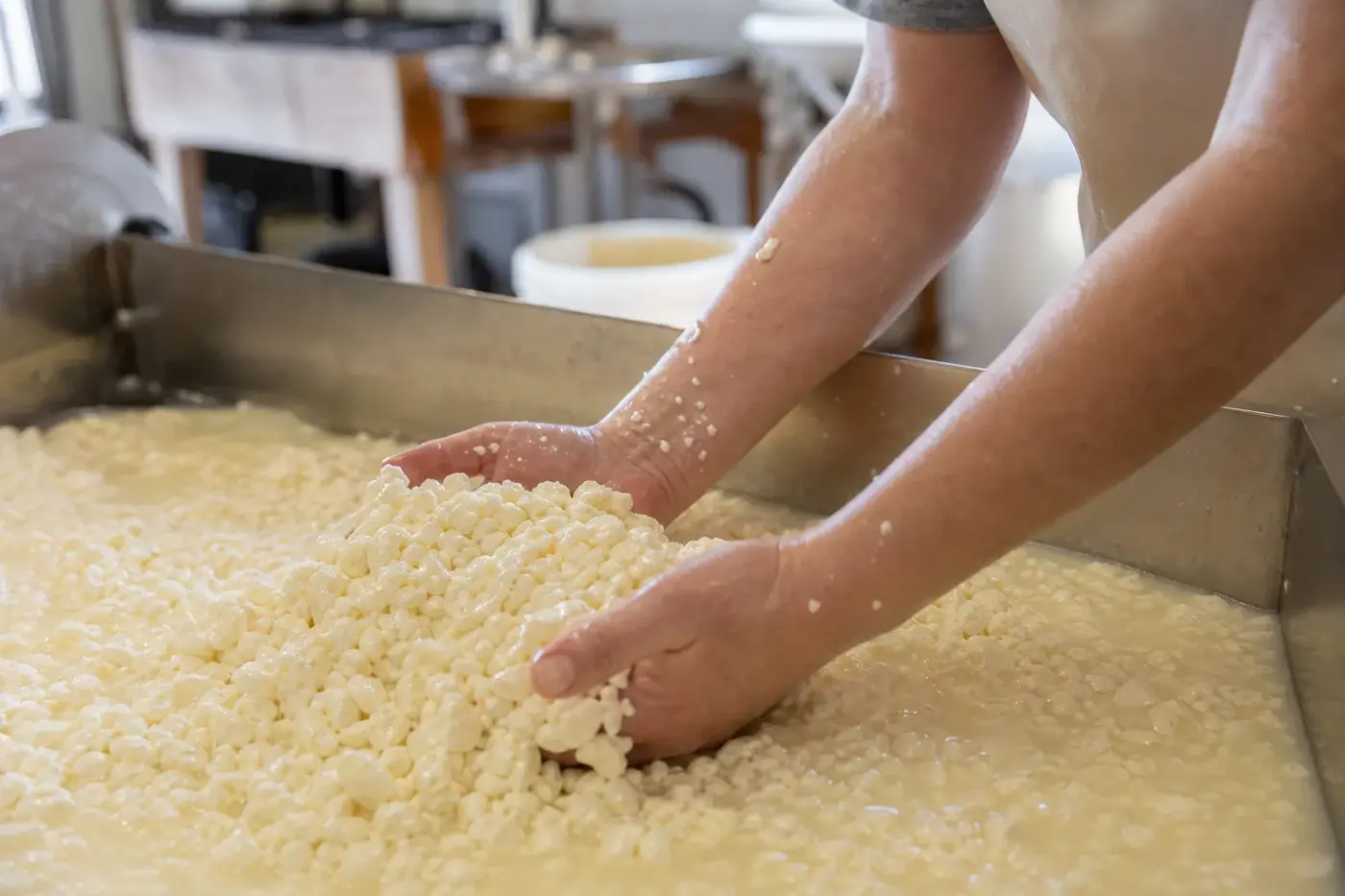
A factory could gather milk from neighbouring farms. It still needed someone who knew how to handle the curd. Research published in Gastronomica in 2010 traces cheesemaking’s move from farm kitchens into factories during the second half of the nineteenth century, including hand skills that survived in small Wisconsin factories. The workplace changed, but judgement learned through experience still counted. [4]
Immigration carried those skills into new regional farming communities. Monterey County’s agricultural history records Portuguese and Swiss dairymen leasing land and establishing dairies in the Salinas Valley. It places Monterey Jack’s development within an earlier Spanish and Mexican dairy tradition, before wider commercial production followed. [3]
Refrigerated storage and transport brought more distant customers within reach. Cooling became a chain linking milk collection, manufacture, storage and the shop counter. You have already seen its smaller counterpart in Hampton’s spring-cooled jars: the problem was familiar, even as factories gathered more milk and industrial refrigeration took their products further. [2,4]
Make room for mozzarella
If cheddar dominates your picture of American cheese, move it along a little. USDA’s Dairy Products 2025 Summary, published in April 2026, reports that Italian varieties accounted for 42.8% of production. Mozzarella represented 79.1% of that category, while Wisconsin led the cheese-producing states with 24.6% of the national total excluding cottage cheese. [5]
A supermarket bag of grated mozzarella and a clothbound wheel have different jobs to do. Large commercial production and small-scale making nevertheless connect dairy farming with the way people eat. To understand either, begin with milk becoming curd: how cheese is made walks you through the basics. [5,7]
Taste your way through three regions
Wisconsin cheddar: give two ages a place on your plate
Put young, mild cheddar beside a sharper aged example and give each your attention. Dairy Farmers of Wisconsin describes this range and recommends younger cheeses for slicing and sandwiches. Ask the cheese counter for two ages from one maker: their development tells you more than orange or white colour alone. [6]
Vermont clothbound: discover what the bandage brings
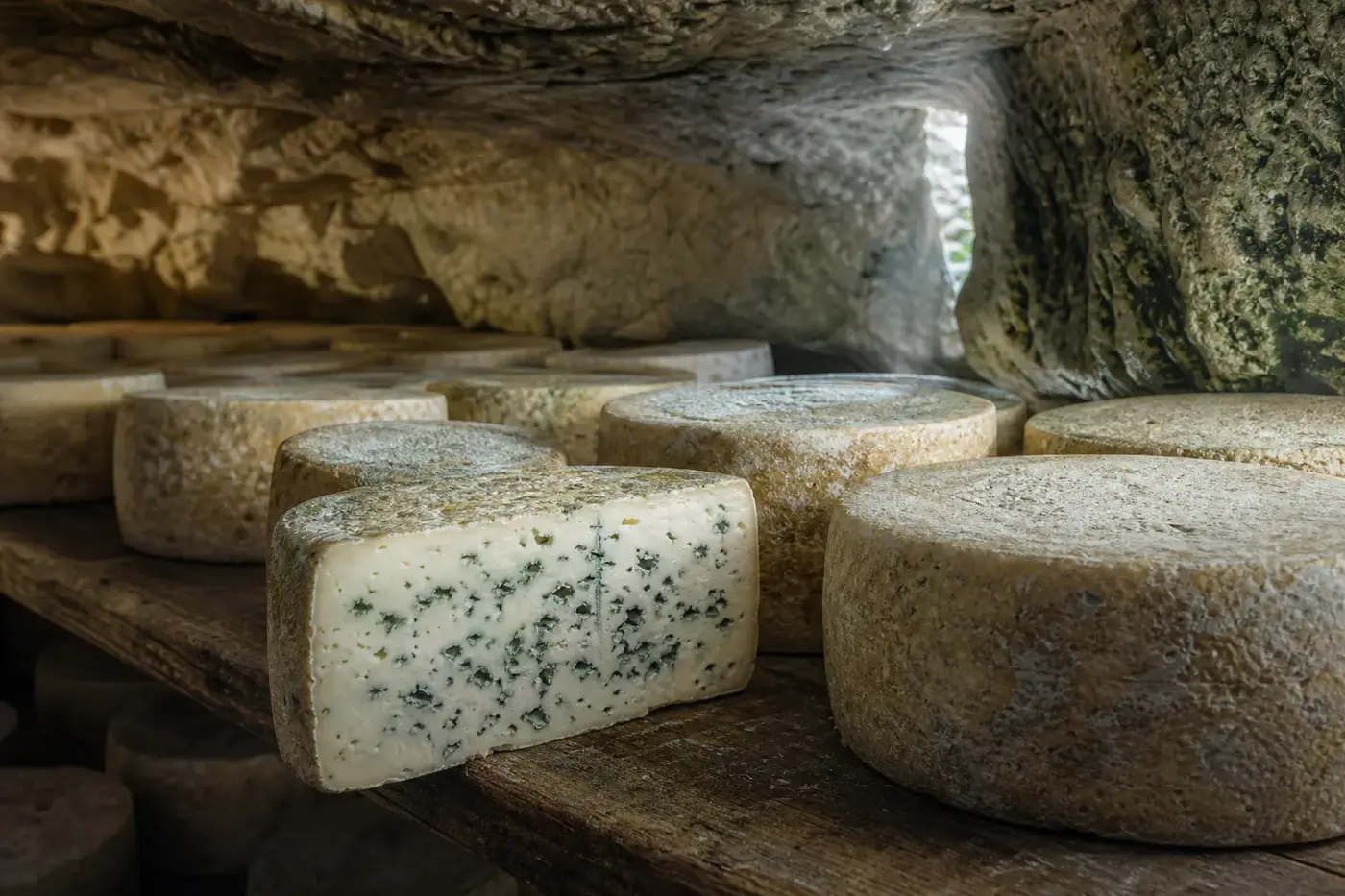
Clothbound cheddar matures with a bandaged, natural rind. Vermont maturer Jasper Hill describes its Cabot Clothbound as crumbly, with a savoury tang and caramel sweetness. Look for those qualities as you taste, but keep the attribution in mind: these are the maturer’s notes for Cabot Clothbound, not a promise about every Vermont cheddar. [7]
California Monterey Jack: pick your melt or your grater
Young Monterey Jack is mild and suited to melting; Dry Jack is firmer and intended for grating, according to California’s dairy industry. Monterey County’s history connects the cheese with local queso del país and later commercial dairying. As for the name, you will find disagreement rather than one neatly wrapped invention story. [3,8]
Get to know Mexican American cheese textures
Queso fresco brings something different to your plate from an aged wheel or a melting cheese. The California Milk Advisory Board describes it as soft, moist and crumbly, with a mild, slightly salty flavour. It softens rather than flowing into a melted layer, making it a topping or filling for dishes where you want distinct pieces of cheese. [8]
Before you substitute, decide what you need the cheese to do. A crumbling cheese finishes a dish differently from one that melts: the board lists uses with fruit and cooked foods, and describes Oaxaca as a braided cheese suitable for melting. Mexican American cheese traditions offer these different textures and culinary roles, not one interchangeable category of white cheese. [8]
Queso fresco also needs particular care in handling. Pasteurised milk alone does not remove the possibility of contamination during production. If you are at higher risk of listeriosis, follow the US advice below. [15,16]
Find out what process cheese means
“Pasteurized process cheese” has a precise meaning in US federal law. Under 21 CFR 133.169, permitted cheeses are mixed and heated with an emulsifying agent into a homogeneous mass. Notice that official American spelling when you read a label: you are looking at a defined food, not a loose description. [9]
The everyday appeal is consistency. A blended cheese mixture can give you a uniform slice and a smooth melted layer, familiar in sandwiches and burgers. “American cheese” in ordinary conversation can also mean cheese made in America, so the precise legal product name tells you much more about what is inside the pack. [9,12]
Meet the maker, then ask about the maturer
The modern artisan movement did not have to recover every skill from scratch. The 2010 Gastronomica research traces its growth from the back-to-the-land movement of the late twentieth century. Older regional factories had kept hand skills that newer makers valued, bringing renewed interest in farm-based production together with a surviving cheesemaking trade. [4]
At the counter, ask who made your cheese and who matured it. An affineur specialises in managing ripening, so the name on the sign may belong to the maturer rather than the dairy. Origin, method and maturation give you useful points of comparison; the size of the operation alone tells you less about quality. [4,7]
Follow the melt and listen for the squeak
In a grilled cheese sandwich, melted cheese shares centre stage with bread. In macaroni and cheese, its flavour travels through pasta and sauce. Taste a young cheddar beside a sharper aged one before choosing, then decide which character you want in your dish. [6]
Fresh Wisconsin curds offer something else: a springy texture that squeaks against your teeth. For once, your cheese gets a word in. Dairy Farmers of Wisconsin describes them as mild and cheddar-like; you can eat them plain or seasoned, and fried curds are another familiar form. Ask when the batch was made before you choose. [14]
Set the table with bread, fruit, beer and cider
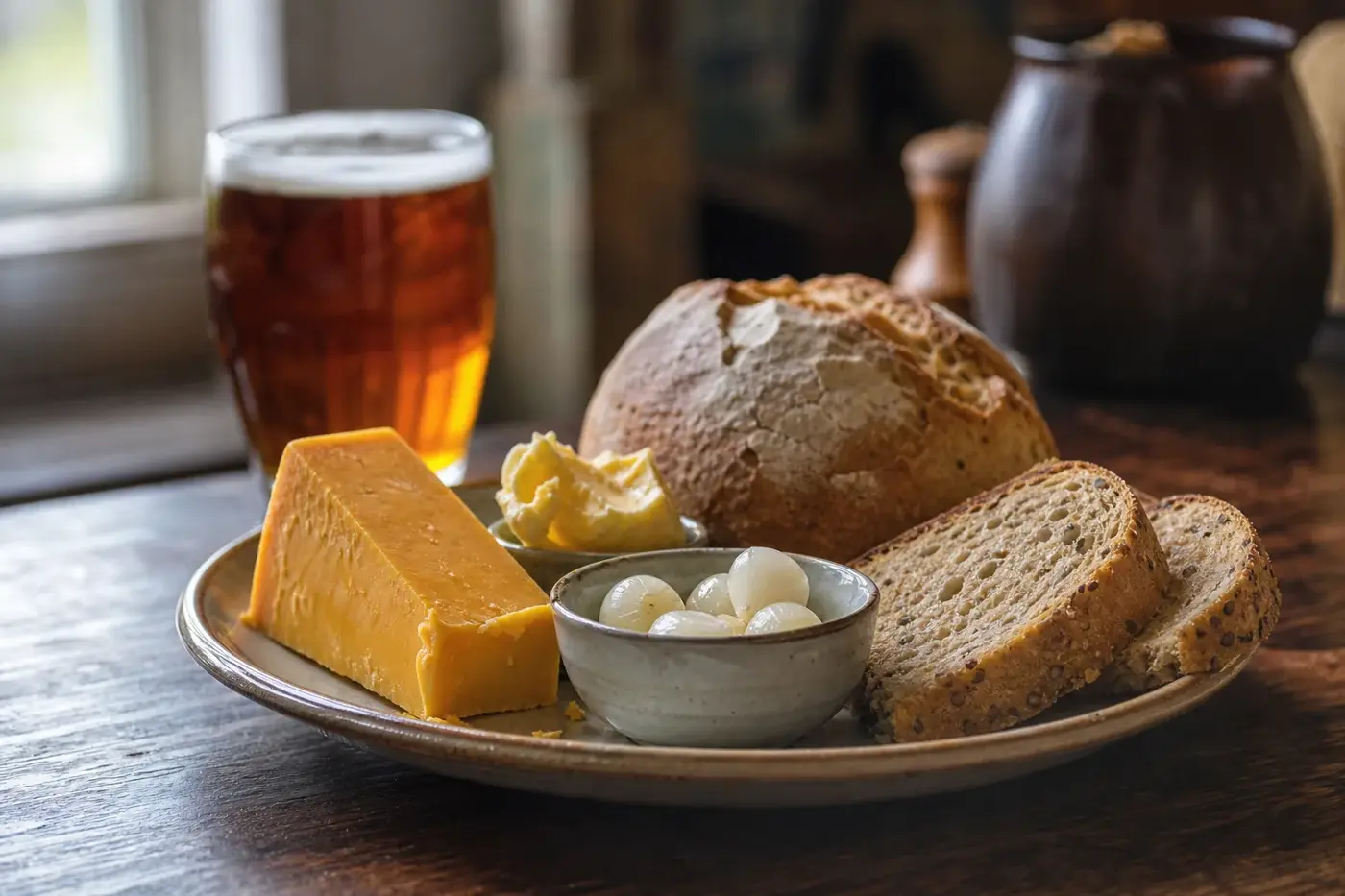
Start with each cheese on its own, then try plain bread alongside it. Add fruit or a drink and notice what changes. The suggestions below combine published industry pairings with optional alcohol-free comparisons chosen for the same fruit flavours. [6,7]
| Your cheese | Try it with | Pour alongside | What to look for |
|---|---|---|---|
| Young cheddar | Plain bread and crisp apple | Pilsner for adults, or apple juice | Wisconsin’s industry body suggests apples and pilsner; crisp fruit gives you contrast. [6] |
| Aged cheddar | Bread and apricot preserve | Cider for adults, or sparkling apple juice | The industry body pairs sharpness with fruit sweetness; the alcohol-free option is an editorial suggestion. [6] |
| Cabot Clothbound | Bread and apple jelly | Off-dry cider for adults, or apple juice | Jasper Hill recommends apple jelly and cider with its savoury-sweet clothbound cheese. [7] |
Alcoholic pairings are for adults of legal drinking age who choose to drink; keep your servings small. Bread, fruit and alcohol-free drinks offer a full tasting route of their own. Try the cheeses without accompaniments first, then repeat with one addition at a time.
Look beyond the European name
A European cheese name does not necessarily mean the cheese was made in Europe. US federal standards include cheddar, Gouda and parmesan, among many others. Before you assume an origin, look beyond the style name. [12,13]
In a specific trademark case, the Fourth Circuit’s decision of 3 March 2023 upheld the refusal to register GRUYERE as a certification mark because the term was generic for cheese in the United States. That ruling concerns the term, not every associated mark or logo. It is a useful reminder that names and origins are not always the same thing. [12,13]
Check the country of manufacture and the maker’s details. The guide to reading a cheese label helps you distinguish the product name from the business details printed alongside it.
This page summarises published guidance from the official sources it cites. It is not medical advice. Guidance differs between countries and changes over time, so check the current source for where you live, and ask your doctor, midwife, pharmacist or dietitian about your own circumstances.
Understand the raw milk rules and safety advice
For cheddar and Monterey Jack made from unpasteurised milk, 21 CFR 133.113 and 133.153 require curing for at least 60 days at a temperature of at least 1.7 °C (35 °F). That temperature is a minimum, not a target maximum. These requirements sit within those particular federal standards, so consult the rules for other cheeses separately. [10,11]
The US CDC advice for November 2026 directs pregnant people, adults aged 65 or older and people with weakened immune systems to avoid unheated queso fresco-type cheeses made from either pasteurised or raw milk. It also directs those groups to avoid any cheese made from raw milk. Alternatives include those cheeses heated to 74 °C (165 °F) or until steaming hot; ageing for the required period does not establish that a cheese is free of pathogens. [15,16]
If you are choosing cheese for someone in those groups, read the current CDC guidance and ask your healthcare professional about personal circumstances. For the underlying distinctions, explore raw and pasteurised milk and Listeria and cheese safety. [15,16]
Give one cheese region time to reveal itself
Choose a manageable area and give its cheeses your attention. You will have more room to explore than if you try to cross several cheese regions in one trip. In California, the Cheese Trail offers a map of cheesemakers and a directory of shops and farmers’ markets. Find possibilities there, then confirm arrangements directly with each business. [17]
In Wisconsin, you could begin with a route connecting a cheese counter and a curd producer. In Vermont, look for opportunities to compare cheddar maturation styles. For either plan, consult official websites for booking, public access, accessibility and whether you can actually observe production. A shop visit and a dairy tour are different experiences.
At a farmers’ market or cheese shop, ask where the cheese was made, whose milk it uses and how it was matured. Find out its transport and refrigeration needs before buying. If you are travelling internationally, consult current official rules for your exact origin, destination and transit countries before planning to take cheese home.
Questions people ask
What is the difference between Monterey Jack and Dry Jack?
Young Monterey Jack is mild and suited to melting. Dry Jack is firmer and intended for grating.
Does queso fresco melt?
Queso fresco softens rather than flowing into a melted layer. It is soft, moist and crumbly, with a mild, slightly salty flavour.
Why do Wisconsin cheese curds squeak?
Fresh Wisconsin curds have a springy texture that squeaks against the teeth. They are mild and cheddar like, and are eaten plain, seasoned or fried.
What is pasteurised process cheese?
It is a food defined in US federal law. Permitted cheeses are mixed and heated with an emulsifying agent into a homogeneous mass.
What does the CDC advise about queso fresco during pregnancy?
The US CDC advises pregnant people, adults aged 65 or older and people with weakened immune systems to avoid unheated queso fresco type cheeses made from either pasteurised or raw milk, and any cheese made from raw milk. Its alternatives include those cheeses heated to 74 °C or until steaming hot. See the current CDC guidance at https://www.cdc.gov/listeria/prevention/ and ask your healthcare professional about your circumstances.
Sources
-
Hudson River Valley Heritage, “Butter and Milk”, Flavors of Change, undated online exhibition. Colonial cattle, dairy work and the specifically attributed Esopus example.
-
US National Park Service, “The Dairy”, Hampton National Historic Site, updated 24 May 2021. Dairy construction, spring cooling and enslaved dairy labour.
-
Monterey County, Agricultural Resources Evaluation Handbook, Monterey County, California, September 2011, dairy-industry discussion, printed pages 76 to 77.
-
MIT Anthropology, archived Gastronomica research article on American cheese cultures, autumn 2010, pages 35 to 47. Historical discussion, field observations and interviews concerning artisan production and regional factories.
-
US Department of Agriculture, National Agricultural Statistics Service, Dairy Products 2025 Summary, 24 April 2026, summary on printed page 4.
-
Dairy Farmers of Wisconsin, “Cheddar”, undated industry guide, retrieved November 2026. Descriptions and pairing recommendations are the industry body’s.
-
Jasper Hill Farm, “Cabot Clothbound”, undated product account, retrieved November 2026. Commercial source for its own cheese description and pairing suggestions.
-
California Milk Advisory Board, “Cheese Types”, undated industry guide, retrieved November 2026. Style descriptions and culinary uses are attributed to the board.
-
US Food and Drug Administration, eCFR, 21 CFR 133.169, “Pasteurized process cheese”, current online text retrieved November 2026.
-
US Food and Drug Administration, eCFR, 21 CFR 133.113, “Cheddar cheese”, current online text retrieved November 2026.
-
US Food and Drug Administration, eCFR, 21 CFR 133.153, “Monterey cheese and monterey jack cheese”, current online text retrieved November 2026.
-
US Food and Drug Administration, eCFR, 21 CFR Part 133, “Cheeses and Related Cheese Products”, current online text retrieved November 2026.
-
US Court of Appeals for the Fourth Circuit, published opinion, No. 22-1041, decided 3 March 2023. GRUYERE certification-mark proceedings and genericness.
-
Dairy Farmers of Wisconsin, “Cheese Curds”, undated industry guide, retrieved November 2026, description and FAQ.
-
US Centers for Disease Control and Prevention, “Preventing Listeria Infection”, 31 January 2025, current page retrieved November 2026. Higher-risk groups and food-choice table.
-
US Centers for Disease Control and Prevention, “How Listeria Spread: Soft Cheeses and Raw Milk”, 16 January 2025, current page retrieved November 2026. Dairy contamination and heating advice.
-
Cheese Trail, official website and California trail-map introduction, retrieved November 2026. Planning resource for cheesemakers, shops and farmers’ markets.
-
US Food and Drug Administration, “Recalls, Market Withdrawals, & Safety Alerts”, live index retrieved November 2026. Editorial recall-check source.
-
US Centers for Disease Control and Prevention, “Listeria Outbreaks”, live index retrieved November 2026. Editorial outbreak-check source.
Researched through museum interpretation, agricultural history, published field research, USDA statistics, federal legal sources, CDC guidance and attributed industry accounts.
Last checked: November 2026
Last checked November 2026.
The editors suggest you read next
Cheese Around the World: How Different Countries Eat It
Curds dry in the Mongolian sun, on their way to becoming aaruul, a portable food suited to nomadic life.