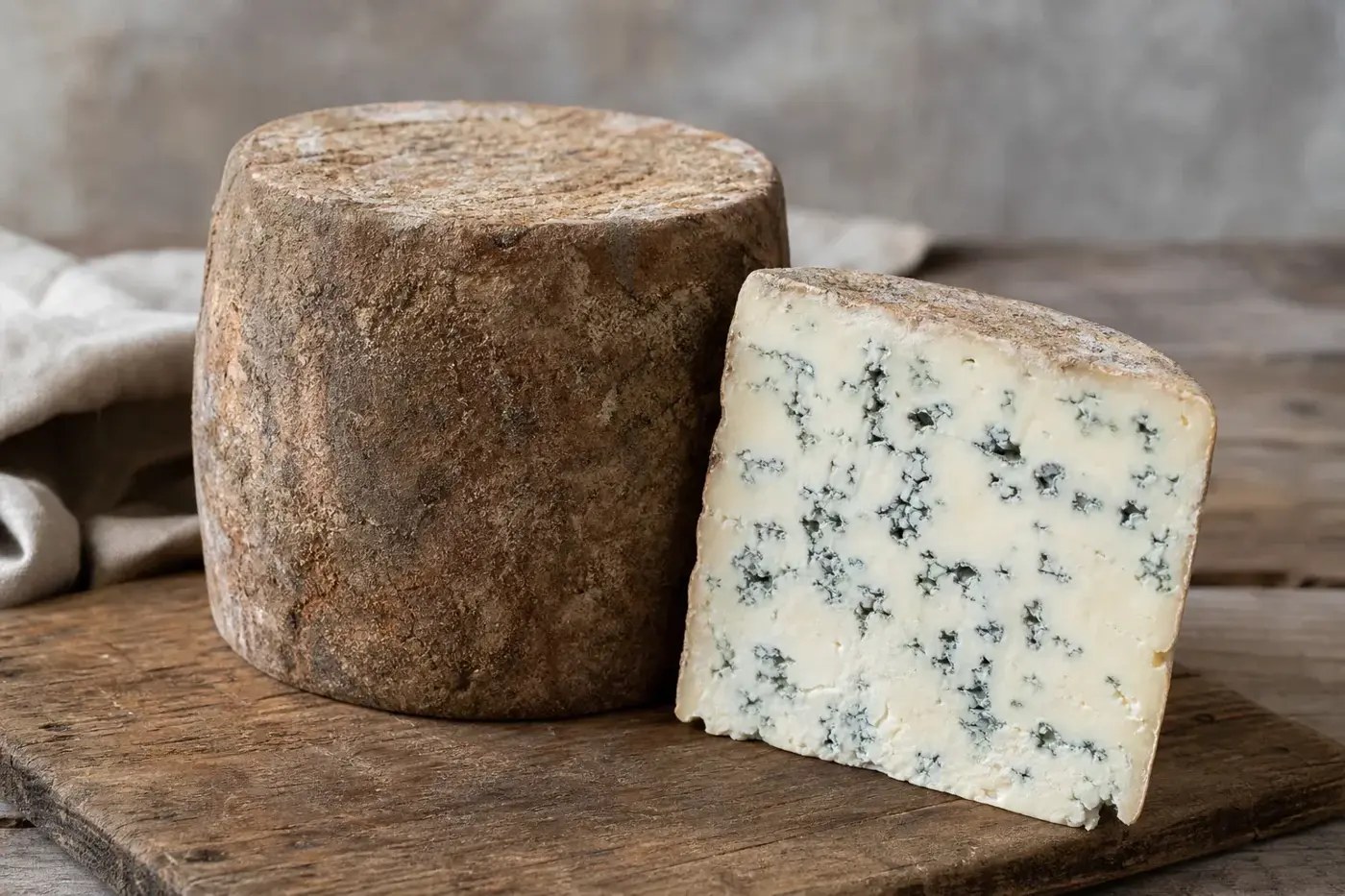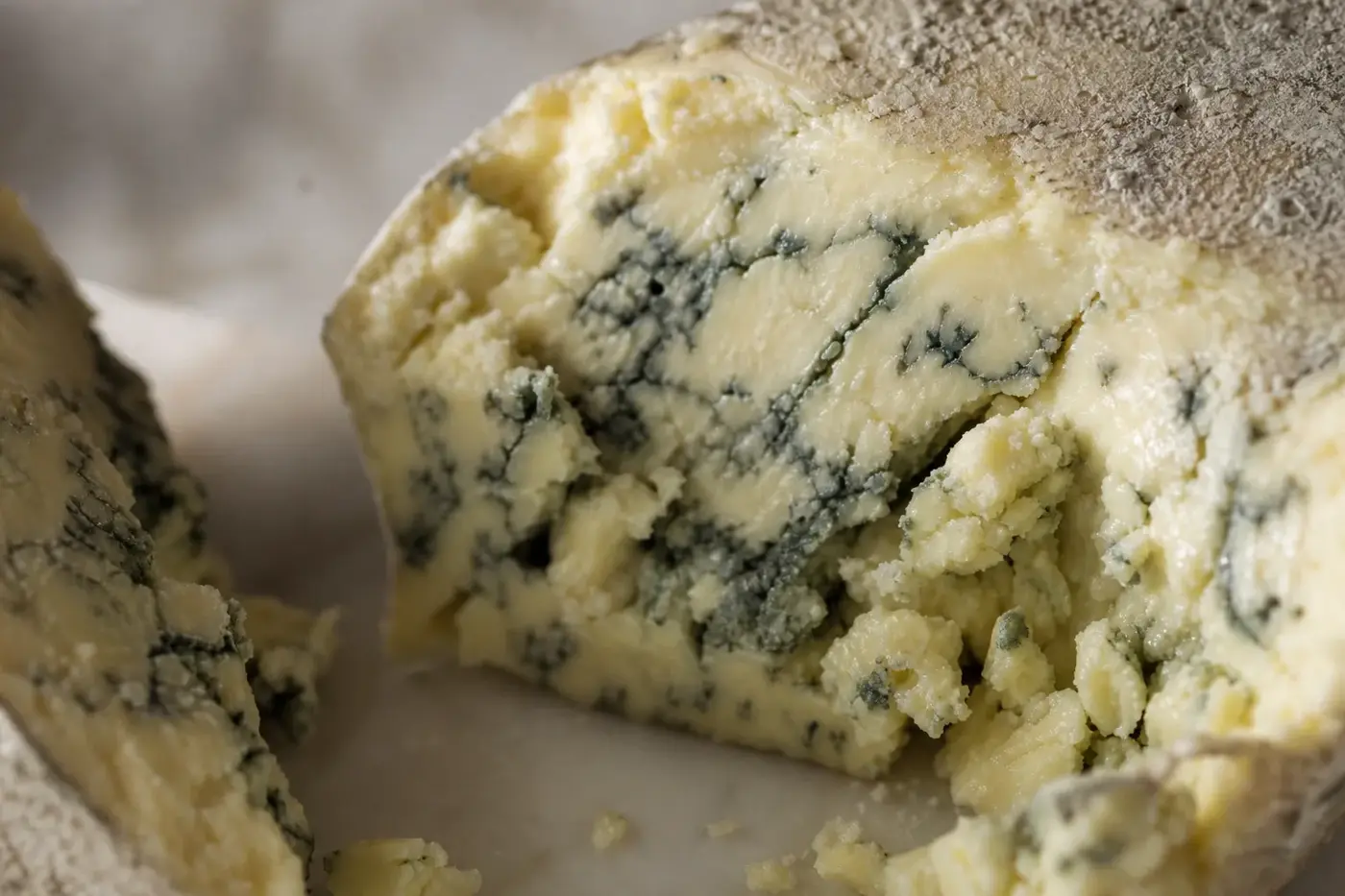
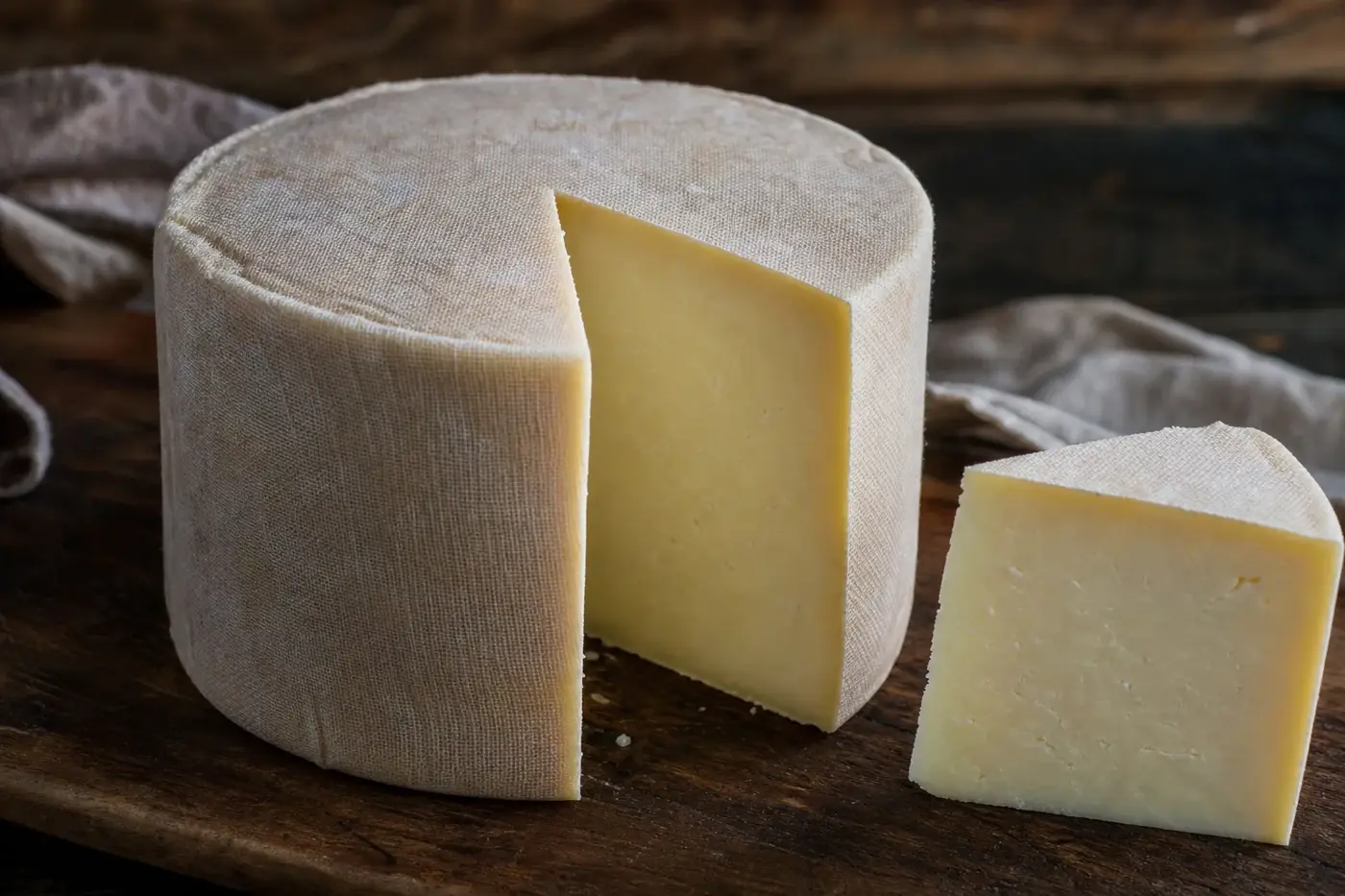
You set out to cut a neat slice of Devon Blue. It has other plans, crumbling richly and butterily beneath the knife, just as its maker, Ticklemore Cheese Dairy, describes. Made near Totnes in Devon, England, this unpressed cow’s milk blue begins with local milk. Give it bread, something fresh and a little room on your plate, rather than a crowd of strong accompaniments. [1][2][6]
Get acquainted with Devon Blue
| What to know | The detail |
|---|---|
| Name | Devon Blue. [2] |
| Who makes it | Ticklemore Cheese Ltd, trading as Ticklemore Cheese Dairy. [1] |
| Where it calls home | Ashprington, near Totnes, Devon, England. [1] |
| Cheese style | Blue-veined, unpressed cow’s milk cheese. [2][6] |
| Where the milk comes from | Local farmers’ co-operative; predominantly Friesian Holstein cows. [2] |
| Milk treatment | Pasteurised, according to selecting cheesemongers. [5][6] |
| Coagulant | Vegetarian; precise type unconfirmed. [5] |
| Blue culture | Penicillium roqueforti, listed by Neal’s Yard Dairy. [5] |
| Age at the counter | Four to six months at Neal’s Yard Dairy. [5] |
| When it is made | Year round, according to the maker. [2] |
Before the blue, there was sheep’s milk yoghurt
Devon Blue’s story starts with something rather different in the dairy. At a smallholding at Beenleigh near Totnes in about 1979, Ticklemore’s founding cheesemakers were making sheep’s milk yoghurt and soft sheep’s milk cheese. The blues that now define the dairy came later. [3]
In 1986, the founders opened a shop in Ticklemore Street in Totnes. Cheesemaking took place in a small side room, an awkward fit for production. A purpose-built dairy followed on land near the Sharpham Estate. Subsequently refitted, that building remains the dairy, according to the business. [3]
Devon Blue arrived in the late 1980s to solve a practical problem. Seasonal sheep’s milk left gaps in production, so a cow’s milk cheese helped keep cheesemaking going throughout the year. The maker says it was originally called Beeson Blue, after the farm supplying the milk. [2][3]
That year-round rhythm became part of Devon Blue’s identity. Today, the dairy gives its address as Sharpham Barton Lane in Ashprington. Its history records the business passing to its established cheesemaking team in October 2023, with work continuing in the same dairy. [1][3]
There is one distinction to tuck away if you explore the area’s cheeses. Ticklemore Cheese Dairy is a separate business from the nearby maker of Sharpham Ticklemore Goat. [4]
Local milk, without a herd of its own
The milk does not have far to travel. Ticklemore says every supplying farm lies within about 16 kilometres (10 miles) of the dairy, with milk arriving through a farmers’ co-operative. The cows are predominantly Friesian Holsteins. Rather than keeping its own herd, the cheesemaker buys their milk. [2]
For its selection, Neal’s Yard Dairy lists pasteurised cow’s milk, salt, cheese cultures, vegetarian coagulant and Penicillium roqueforti. The Courtyard Dairy also describes the cheese it sells as pasteurised and vegetarian. [5][6]
“Vegetarian coagulant” tells you about the ingredient that sets the curd, but does not specify its manufacturing type. If that is the sort of detail you like to linger over, explore rennet and its different sources and milk treatments explained. [5][6]
A little air, then a patient wait
Devon Blue is unpressed, according to The Courtyard Dairy. Its curd, the solid part formed when milk sets, becomes a cheese whose blue development is encouraged by piercing. Those small openings have a job to do. [6]
They let air reach the interior. The Courtyard Dairy records the piercing, while Neal’s Yard Dairy names the blue mould in its ingredients: Penicillium roqueforti. [5][6]
Next comes a covering of foil to restrict rind development, The Courtyard Dairy reports. When you are ready to serve your cheese, remove that foil. [6]
How much time has your piece had to mature? Neal’s Yard Dairy gives an average age of four to six months; The Courtyard Dairy describes selling its selection at four months. These are ages at the counter. Ask about the particular batch if you would like something gentler or more developed. [5][6]
Follow the veins to your first bite
Before you choose its companions, look at the cut face. Neal’s Yard Dairy’s photographs show delicate blue veining, with captions describing a crumbly, buttery texture. Its tasting notes add sweetness, savoury depth compared with soy sauce, and a dense, fudgy body. [5]
The maker also emphasises richness, buttery flavour and a particularly crumbly texture. Look for that contrast as you taste: pieces that break readily on the plate but feel substantial in your mouth. Crumbly need not mean light. [2][5]
The Courtyard Dairy describes its four-month selection as flinty, mineral and gently blue. Older batches, it says, become creamier and stronger. Ask about maturity rather than judging everything by how much blue you can see. [6]
For your first taste, take a small piece of paste, then one containing a blue vein. Smell each before tasting, noticing the aroma’s strength, the paste’s sweetness and how long the savoury finish lasts. Let the cheese introduce itself before the word “blue” does all the talking.
Devon Blue steps into the awards spotlight
Devon Blue from Ticklemore Cheese Ltd won silver in the British and Irish Cheese Awards’ official results dated 20 March 2026. Its entry was in class G53, Blue Cow (over 12 weeks). That gives you both the cheese’s name and the category in which it was judged. [8]
Food Drink Devon’s published 2026 results also list Devon Blue alongside Harbourne Blue under Ticklemore Cheese in the producer Gold Award section. Together, the records give specific recognition to the maker’s work. [9]
Make room for a simple plate
Start with plain bread or an unsweetened cracker, then put fresh pear or apple alongside. They leave room for the sweetness and savoury depth described by the maker and selecting cheesemongers. Taste the cheese alone first, then add something. Keep the accompaniment if it makes the next mouthful more interesting. [2][5]
Planning an after-meal cheese plate? The Courtyard Dairy suggests 100 g of cheese in total per person. Divide that equally between three cheeses and you have roughly 30 to 35 g of Devon Blue each. Adjust for appetite and whatever else the meal holds. [6]
Bring out only the portion you intend to serve. In England, Northern Ireland and Wales, follow the Food Standards Agency’s chilling and serving guidance for November 2026, alongside the instructions on the pack. [7]
For an alcohol-free pairing, still or sparkling water keeps the cheese at the centre. Unsweetened apple juice, diluted to taste, is another option alongside the fruit. These suggestions follow the published flavour descriptions. Try them with your piece and see which you prefer. [2][5]
Let the crumbly texture work in your favour. Offer a small wedge and let diners break off pieces: the pursuit of a perfect slice can take the evening off. For a salad, scatter it sparingly so each bite still has some leaf or fruit. Start with less, taste, then add more if needed.
Keep the next helping in good shape
Return the remaining cheese to the fridge promptly. Keep its label, especially if a cheesemonger has cut and wrapped your piece, and follow the storage instructions and any use-by date. The FSA’s guidance for England, Northern Ireland and Wales specifically includes dairy products among foods that should be refrigerated. [7]
Keep the wrapper with the cheese so you have its product information to hand. If you need advice on rewrapping a freshly cut portion, ask the seller who prepared it. For broader handling advice, turn to storing cheese at home.
Get to know Ticklemore’s other blues
For a revealing comparison, bring in the dairy’s other two blues. Beenleigh Blue uses sheep’s milk; Harbourne Blue uses goat’s milk. They share a home, but those different milk sources give each its own identity. [10][11]
Ticklemore describes Beenleigh as earthy with a lingering sweetness. Harbourne is gently blue, sometimes with fruity or coconut notes. Taste all three together for their differences, rather than treating them as replacements for one another. Each has something of its own to offer. [10][11]
Cut similar-sized pieces and note the milk beside each cheese. Compare textures before bringing in bread or fruit, then record the differences in your own words. The pleasure lies in finding the balance you enjoy. There is no need to turn your plate into a podium.
Want to take your tasting further? Start with milk, rind, texture and method to explore the broader differences between a blue, a washed-rind cheese and a pressed cheese. Those distinctions give you a more useful tasting vocabulary than strength alone.
Find your next stop at the cheese counter
- How Cheese Is Made: From Milk to Cheese: follow the changes that take milk all the way to finished cheese.
- How to Store Cheese at Home: make official handling guidance part of your household routine.
- How to Tell Cheese Styles Apart: Milk, Rind, Texture and Method: get to know the features that distinguish different styles.
General information only, not medical advice: follow the official guidance where you live.
Questions people ask
Where is Devon Blue made?
Ticklemore Cheese Dairy makes Devon Blue in Ashprington, near Totnes in Devon. Its milk comes from a local farmers’ co-operative, with every supplying farm within about 16 kilometres of the dairy.
What does Devon Blue taste like?
The maker describes it as rich, buttery and particularly crumbly. Neal’s Yard Dairy notes sweetness and a savoury depth compared with soy sauce.
Is Devon Blue pasteurised and vegetarian?
Neal’s Yard Dairy and The Courtyard Dairy identify the Devon Blue they sell as pasteurised and vegetarian. Neal’s Yard Dairy lists a vegetarian coagulant, but its precise type is not verified.
How long is Devon Blue matured?
Neal’s Yard Dairy gives an average age of four to six months. The Courtyard Dairy sells its selection at four months and says older batches become creamier and stronger.
What goes well with Devon Blue?
The page suggests plain bread or an unsweetened cracker, with fresh pear or apple on the side. Still or sparkling water and unsweetened apple juice are suggested as alcohol free drinks to try.
Sources
- Ticklemore Cheese Dairy, Ticklemore Cheese Dairy, undated current homepage, accessed November 2026. Maker, trading identity, location, range and separation from Sharpham Dairy.
- Ticklemore Cheese Dairy, Devon Blue, undated current product page, accessed November 2026. Milk sourcing, production season, maker’s tasting description and late-1980s introduction.
- Ticklemore Cheese Dairy, Our Origins, undated company history, accessed November 2026. Dairy origins, shop, premises, original cheese name and subsequent development.
- Ticklemore Cheese Dairy, About us, Present, undated current company account, accessed November 2026. October 2023 business sale and continuity of cheesemaking experience.
- Neal’s Yard Dairy, Devon Blue, undated current selection page, accessed November 2026. Declared ingredients, selling age, tasting description and photograph captions. This cheesemonger sells the cheese it describes.
- The Courtyard Dairy, Devon Blue, undated current selection page, accessed November 2026. Unpressed style, piercing, foil wrapping, selected maturity, flavour development and cheeseboard quantity guide. This cheesemonger sells the cheese it describes.
- Food Standards Agency, How to chill, freeze and defrost food safely, published 18 December 2017, current retrieved version accessed November 2026. Applies to England, Northern Ireland and Wales.
- British and Irish Cheese Awards, British and Irish Cheese Awards, Non Retailers results, show dated 20 March 2026, class G53.
- Food Drink Devon, Awards Results 2026, 2026 results, accessed November 2026. Producer Gold Award listing.
- Ticklemore Cheese Dairy, Beenleigh Blue, undated current product page, accessed November 2026. Milk species and maker’s tasting description.
- Ticklemore Cheese Dairy, Harbourne Blue, current product page containing a March 2026 supply update, accessed November 2026. Milk species and maker’s tasting description.
Researched from the maker’s published accounts, selecting cheesemongers’ product information, official award results and Food Standards Agency guidance; serving suggestions are editorial recommendations.
Last checked: November 2026
Last checked November 2026.
The editors suggest you read next
West Country Farmhouse Cheddar Cheese
Large pieces of curd turn and stack under the cheesemaker’s hands.