Heckfield
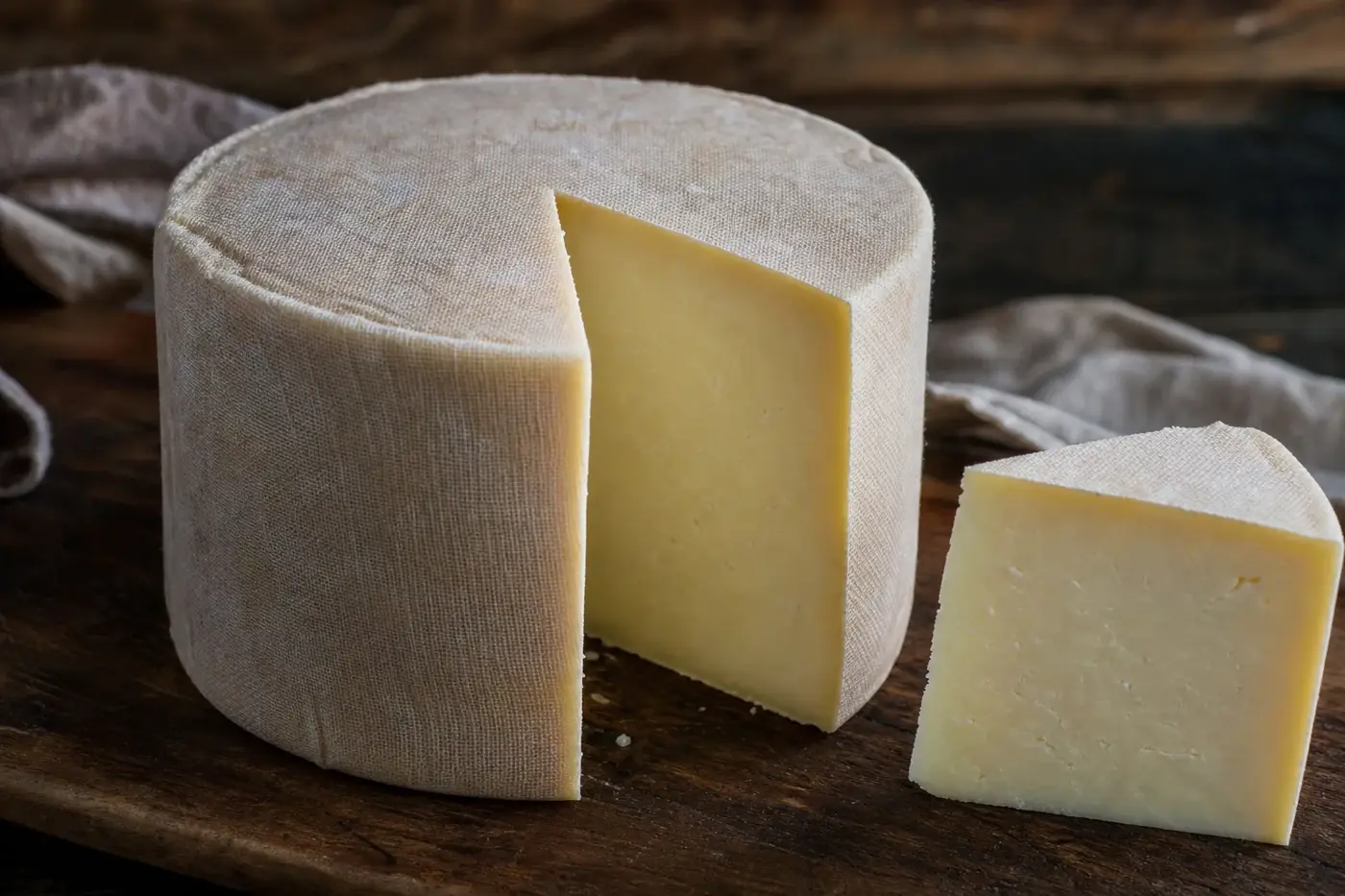
Cut through Heckfield’s ochre exterior and there is gold beneath your knife.
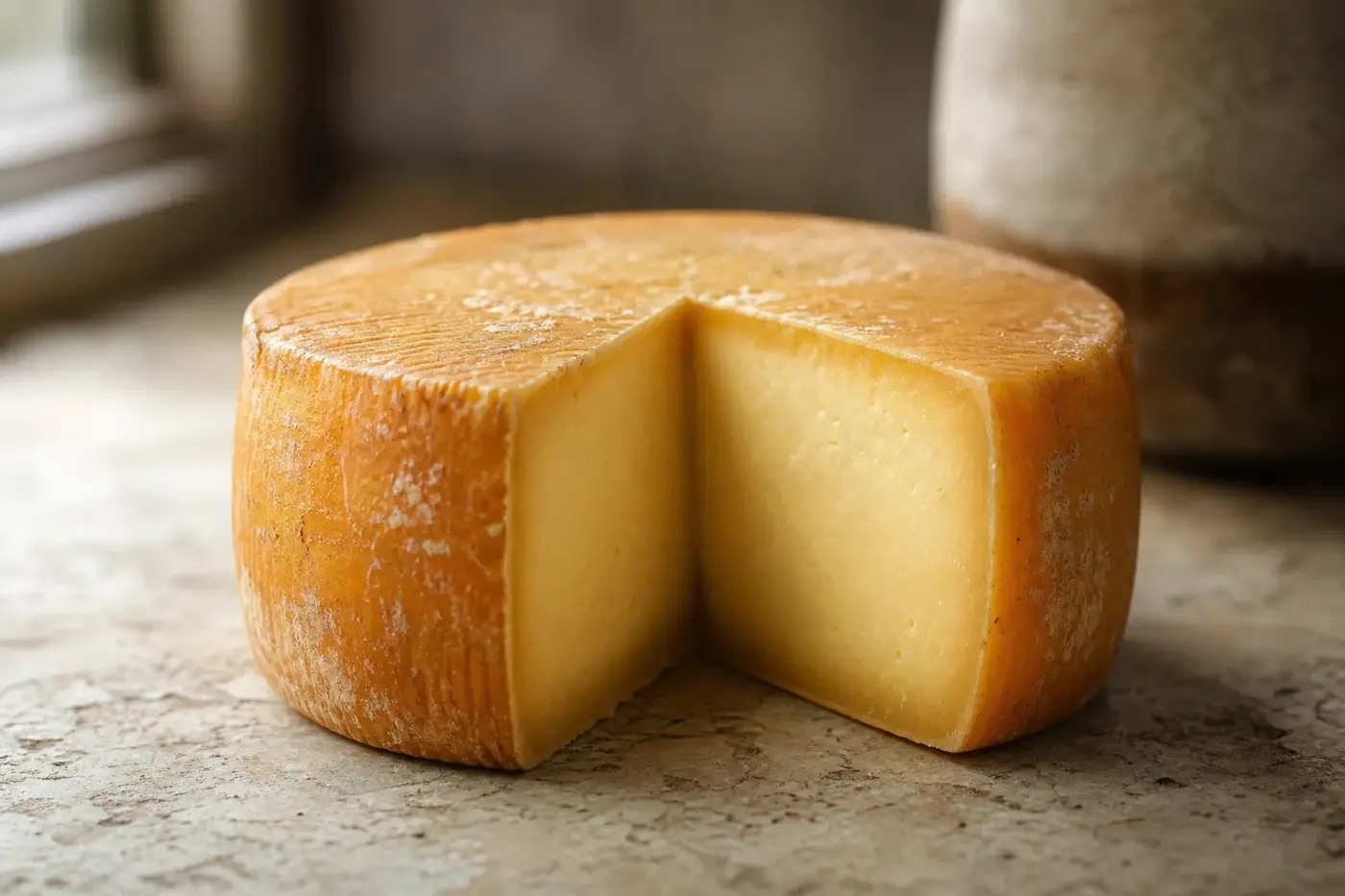
Cut through Heckfield’s ochre exterior and there is gold beneath your knife. That rich colour begins with the Guernsey cows at Heckfield Home Farm in Hampshire: Village Maid attributes it to carotene in their milk. At its dairy in Riseley, Berkshire, the maker turns that milk into a matured, semi-hard cheese with the texture of firm butter and a savouriness it compares with mature Cheddar. [1, 2, 4]
| At a glance | What to know |
|---|---|
| Name | Heckfield. [1] |
| Maker and home | Village Maid Cheese, Riseley, Berkshire, England. [2, 3] |
| Milk | Pasteurised cow’s milk from the Guernsey herd at Heckfield Home Farm. [1, 4] |
| Style | Matured, semi-hard. [1] |
| Rennet | Vegetarian rennet, according to the maker. [1] |
| Shape and size | Round wheel; nominal whole-cheese weight of 2 kg, though handmade weights vary. [1, 8] |
| Time to mature | Published ages differ: the maker’s product page gives 12 months; its history gives 8 to 10 months. [1, 2] |
| Rind treatment | Details unknown. |
Follow the gold to that buttery texture
Heckfield’s colour gives you a clue to its beginnings. Village Maid connects that golden paste directly to carotene in Guernsey milk. Take a slice and pay as much attention to its feel as its mature, savoury flavour: the maker describes a texture like firm butter. [1]
In Village Maid’s published photograph, the round cheese has a warm ochre exterior, fine surface markings and scattered pale patches. Treat it as a portrait of one cheese, rather than a dress code for every wheel. [8]
On your cheeseboard, give Heckfield the firm, savoury role. Try it alone before reaching for fruit or pickles. That first plain bite lets you explore the yielding texture and mature flavour without anything else competing for your attention.
From Hampshire pasture to Berkshire dairy
Heckfield brings two places together. Village Maid’s dairy stands on Basingstoke Road in Riseley, Berkshire; Heckfield Place and its Home Farm lie across the county boundary in Hampshire. The estate confirms that its dairy supplies milk for cheesemaking at Village Maid. [2, 3, 5]
The cheesemaker’s story begins in smaller surroundings: a garden outbuilding in Spencers Wood in 1986. Village Maid moved to Riseley in 1991. Experimental dairy work and microbiology came before the business, and both are part of its roots. [2, 3]
Heckfield joined the story in 2019. According to Village Maid’s history, Heckfield Park Farm approached the dairy, milk travelled the short distance to Village Maid, and finished cheese returned to Heckfield Place. The new cheese took the farm’s name. [2]
You can follow a clear trail from farm to finished wheel. A named herd and farm supply the milk; a separate, established dairy makes the cheese.
Meet the Guernseys behind your slice
Heckfield Home Farm describes a single Guernsey herd on a closed farm, milked in a herringbone parlour. It supplies milk weekly to Village Maid and names Heckfield among the cheeses made with it. [4]
For the finished cheese, Village Maid specifies pasteurised milk. The maker also declares Heckfield vegetarian and names vegetarian rennet as the coagulant that sets the milk. Those statements apply to the cheese itself. [1]
The farm’s organic certification details, and whether they apply to Heckfield cheese, remain open questions. Milk treatment and organic certification are separate matters. Knowing one does not tell you the other.
For help untangling the treatment terms, try raw, thermised and pasteurised cheese. Then look at the wording on the cheese you buy.
Ask the age of the cheese in front of you
There are two published ages to bear in mind. Village Maid gives 12 months on its product page and 8 to 10 months in its history. Ask the seller how old your particular cheese is, rather than assuming either period applies to every piece currently available. [1, 2]
For the current usual age, making method and maturation method, ask the dairy. Those details remain open questions. When you are choosing, the age of the piece in front of you is the most useful starting point.
Curious about what happens between milk and finished cheese? Follow how cheese is made for the broader journey.
Let the savouriness linger
Umami, or savouriness, is central to Village Maid’s flavour description. Its comparison with mature Cheddar gives you a familiar reference point. The texture, described as butter-like, is a separate part of the pleasure. [1]
Cheesemonger Rennet & Rind adds another perspective. Its tasting notes describe neat slices that break into gentle crumbs under pressure, then become smoother as you eat. The flavour is full and savoury, with a slight tang and a buttery finish. [9]
Try a plain piece before adding bread or chutney. Notice how readily it breaks, how quickly it softens in your mouth and how long the savouriness stays. Give texture and flavour a little attention of their own, and you can explore those descriptions for yourself.
How do the flavour and aroma change at different stages of maturity? That remains an open question, and a useful one to ask when you choose your piece.
Serve it chilled, without the ceremony
Village Maid’s serving recommendation is worth noticing: Heckfield straight from the fridge. The aim is to preserve that firm, butter-like texture. Rather than automatically leaving it at room temperature for a long time, follow the maker’s lead. [1]
Keep the serving simple. Cut what you intend to offer, try the cheese plain first, and keep the remainder cold:
- Cut only the portion intended for the table.
- From a wheel, cut wedges from the centre towards the outside. Cut an existing wedge across into manageable slices.
- Offer a plain piece first, followed by bread and an accompaniment.
- Keep the rest refrigerated, together with its label and storage instructions.
If you want to compare a chilled slice with one that has warmed slightly, use small portions. Food Standards Agency guidance for England, Northern Ireland and Wales advises keeping chilled food out for the shortest possible time, with a maximum of four hours during preparation. [10]
That limit concerns preparation, not a general invitation to leave the board out. Consult the current FSA guidance separately for serving and displaying chilled food.
Give bread, fruit and pickles a little room
Village Maid recommends crusty bread, pickled onions and ploughman’s chutney. That gives you a straightforward starting point: plain bread, sharp pickles and a sweet condiment. Keep them separate enough to taste the cheese on its own terms. [1]
The ideas below draw on the maker’s savoury description and Rennet & Rind’s slight tang. Beyond Village Maid’s own recommendations, these are editorial pairing suggestions. Choose one or two accompaniments; there is no prize for the most crowded cheeseboard. [1, 9]
| Alongside your cheese | How to try it | What it brings |
|---|---|---|
| Crusty bread | Serve plain, with chutney separately | The maker’s recommendation; keeps the cheese central. [1] |
| Apple or firm pear | Offer fresh slices beside a plain piece | A fresh, juicy contrast to the firm texture. |
| Pickled onions | Take small bites between pieces of cheese | The maker’s sharp accompaniment. [1] |
| Still water or unsweetened tea | Sip between bites | Alcohol-free choices for a simple tasting. |
| Alcohol-free dry cider | Compare a sip with cheese alone | An editorial extension of the apple pairing. |
For a drink without alcohol, you have several simple options: still water, unsweetened tea or alcohol-free cider. Try a sip between bites, then return to the cheese. See which combination you prefer without letting the drink lead the tasting.
Keep strongly flavoured chutney at the side and start with a little. Add more to suit yourself, but leave some mouthfuls plain. You want room to enjoy the cheese as well as its accompaniments.
If you fancy exploring further, see cheese and wine pairing. There are more ways there to think about matching cheese and drinks.
Take Heckfield from the board to the burger
Village Maid suggests Heckfield on a burger or in Welsh rarebit in place of Cheddar. Both give the cheese a prominent role. If you are curious about cooking with it, those are useful places to begin. [1]
Start with a familiar dish whose other ingredients you know well. A cheese toastie lets you compare Heckfield with your usual cheese while keeping the bread, filling and cooking method consistent. Treat that as an editorial suggestion rather than a recipe tested by the site.
For a burger, slice your cheese for the topping. If you are adapting an established rarebit recipe, grate a portion for the mixture. Taste the completed mixture before adjusting the seasoning, and follow the recipe’s cooking instructions.
Want to concentrate on the cheese as the main flavour? An alcohol-free rarebit recipe is a convenient choice.
Keep your cheese cold and its label close
Keep your piece’s storage instructions and dates with it. If you move the cheese into another container, transfer the label too. Its identity, dates and handling instructions then stay together.
The Food Standards Agency advises a home fridge temperature of 5 °C or below. Use a thermometer to check the temperature, and follow the storage and date information on the packaging. [10]
Once you have cut your serving, return the unused portion promptly to the fridge. For a cheeseboard, replenish a small serving as needed rather than putting the whole piece out at once. That also helps you serve Heckfield chilled, just as Village Maid recommends.
For wrapping, refrigerator organisation and care of the cut face, head to how to store cheese at home. Keep your piece’s own instructions alongside that broader advice.
Keep exploring: styles and vegetarian rennet
- How to Tell Cheese Styles Apart: Milk, Rind, Texture and Method: find where Heckfield’s semi-hard style fits.
- Rennet Explained: Animal, Microbial and Fermentation Produced: get to grips with the maker’s vegetarian rennet declaration.
General information only, not medical advice: follow the official guidance where you live.
Questions people ask
Where is Heckfield cheese made?
Village Maid makes Heckfield at its dairy in Riseley, Berkshire. The milk comes from the Guernsey herd at Heckfield Home Farm in Hampshire.
What does Heckfield taste like?
Village Maid compares its savouriness with mature Cheddar. Rennet & Rind describes a full, savoury flavour with a slight tang and a buttery finish.
Is Heckfield vegetarian?
Village Maid says Heckfield is vegetarian and uses vegetarian rennet. The cheese is made from pasteurised cow’s milk.
How long is Heckfield matured?
Village Maid’s product page gives 12 months, while its history gives 8 to 10 months. The current usual age has not been verified, so ask the seller about the particular cheese.
What goes well with Heckfield?
Village Maid recommends crusty bread, pickled onions and ploughman’s chutney. It also suggests using Heckfield on a burger or in Welsh rarebit instead of Cheddar.
Sources
- Village Maid Cheese. Heckfield. Undated live product description, retrieved November 2026. Product page.
- Village Maid Cheese. Our Story. Undated company history, retrieved November 2026. Maker’s history.
- Village Maid Cheese. Contact. Undated address page, retrieved November 2026. Dairy address.
- Heckfield Home Farm. Dairy. Undated farm account, retrieved November 2026. Milk producer’s account.
- Heckfield Place. Home Farm. Undated estate account, retrieved November 2026. Farm and estate location.
- L’Affinage du Fromage. Village Maid Cheese, part 2 ‘The Visit’. Displays 8 February without a publication year; retrieved November 2026. First-hand account by a cheese retailer with a commercial relationship to the producer. Dairy visit account.
- The Cheese Lady. Behind the Cheese: My Visit to Village Maid Cheese. 16 September 2026. First-hand account by a retailer stocking Village Maid cheeses. Maturation observations.
- Village Maid Cheese. Heckfield wheel photograph, linked from Our Story. Undated image, retrieved November 2026. Maker’s reference photograph.
- Rennet & Rind. Heckfield. Undated retailer product description, retrieved November 2026. Commercial tasting notes, attributed in the text. Retailer’s tasting description.
- Food Standards Agency. How to chill, freeze and defrost food safely. Published 18 December 2017; live guidance retrieved November 2026. Applies to England, Northern Ireland and Wales. Official storage guidance.
Researched through the maker’s and milk producer’s published accounts, attributed first-hand dairy visits, a retailer’s tasting description and official household storage guidance.
Last checked: November 2026
Last checked November 2026.
The editors suggest you read next
West Country Farmhouse Cheddar Cheese
Large pieces of curd turn and stack under the cheesemaker’s hands.