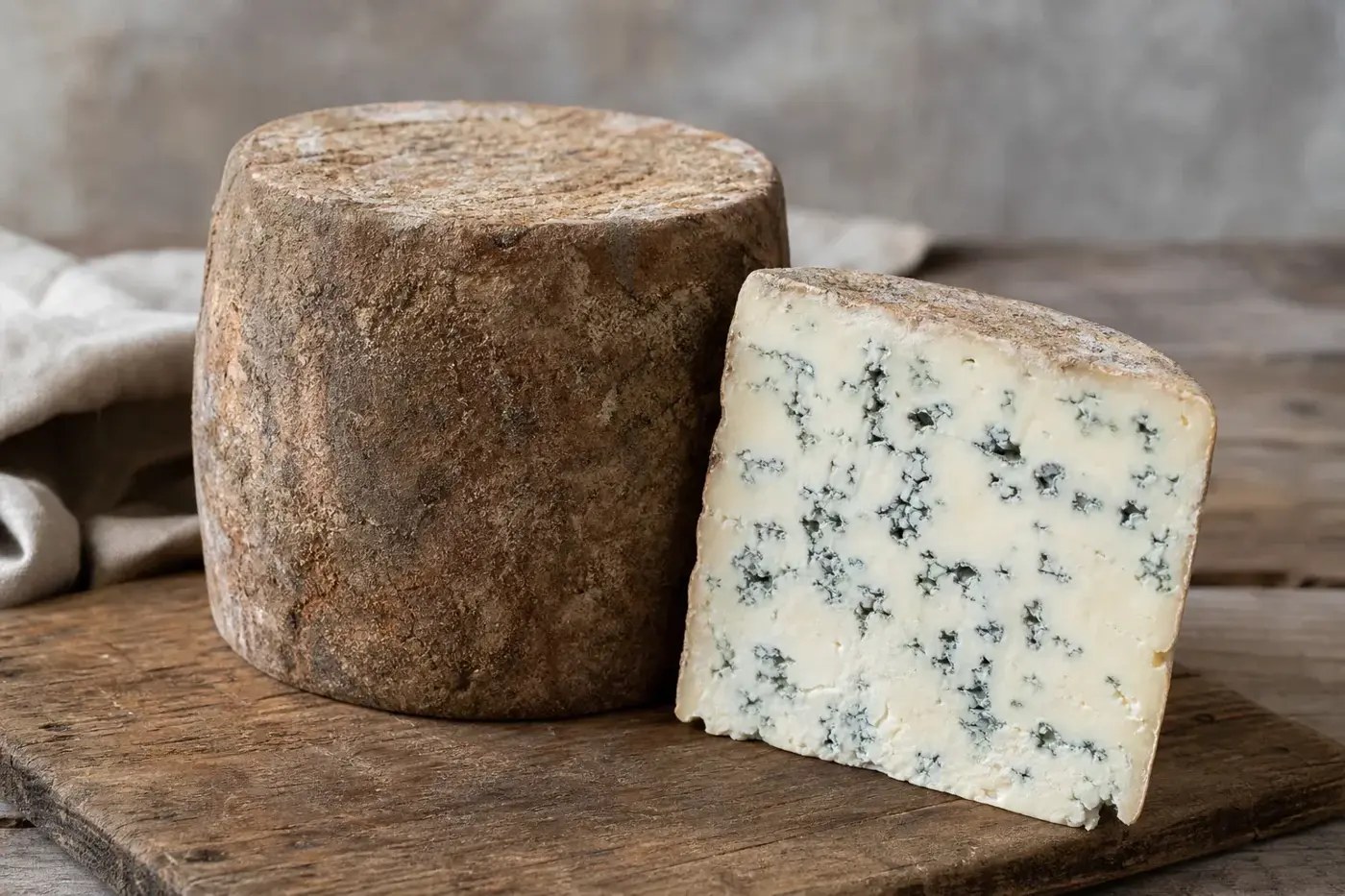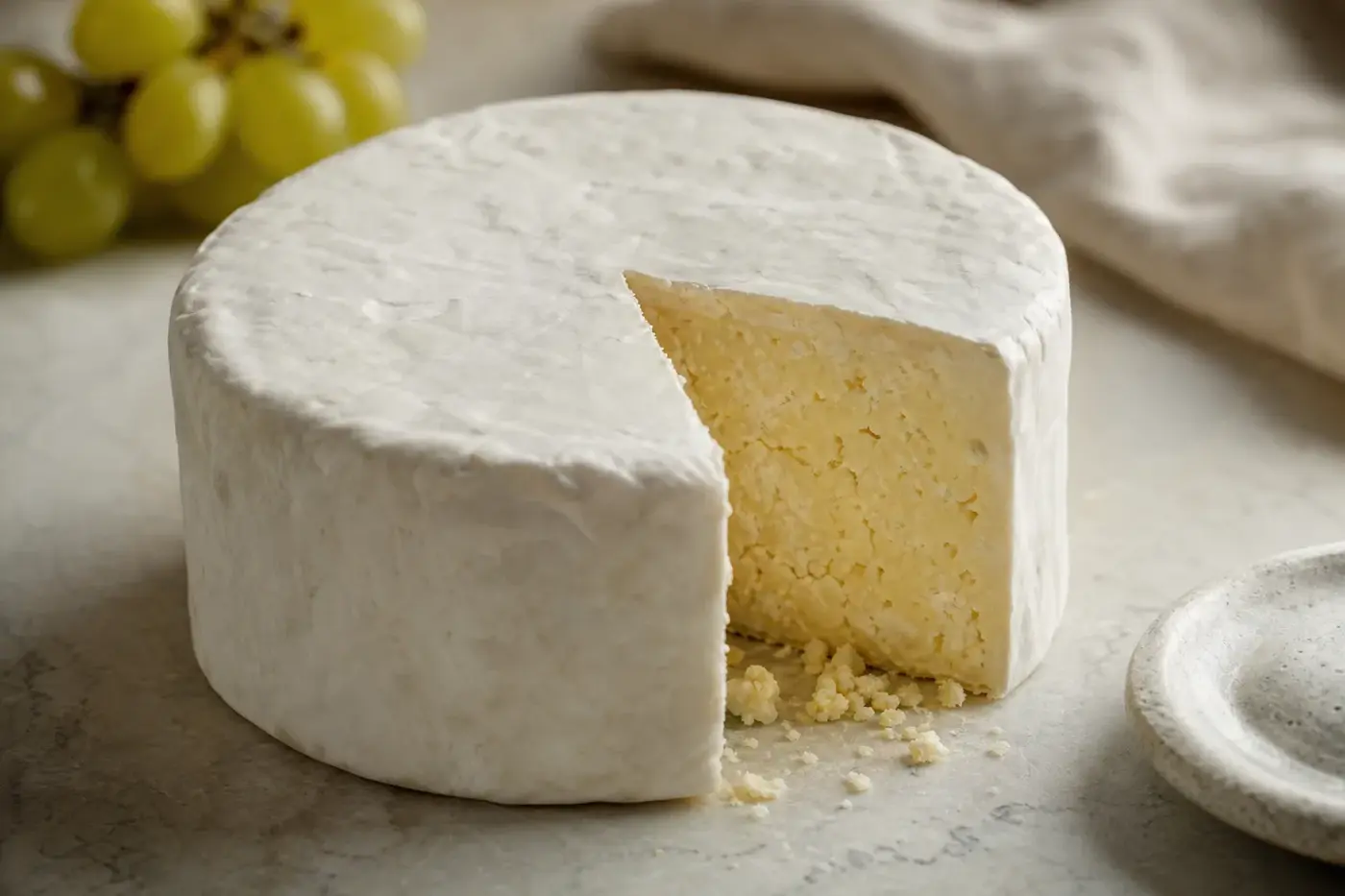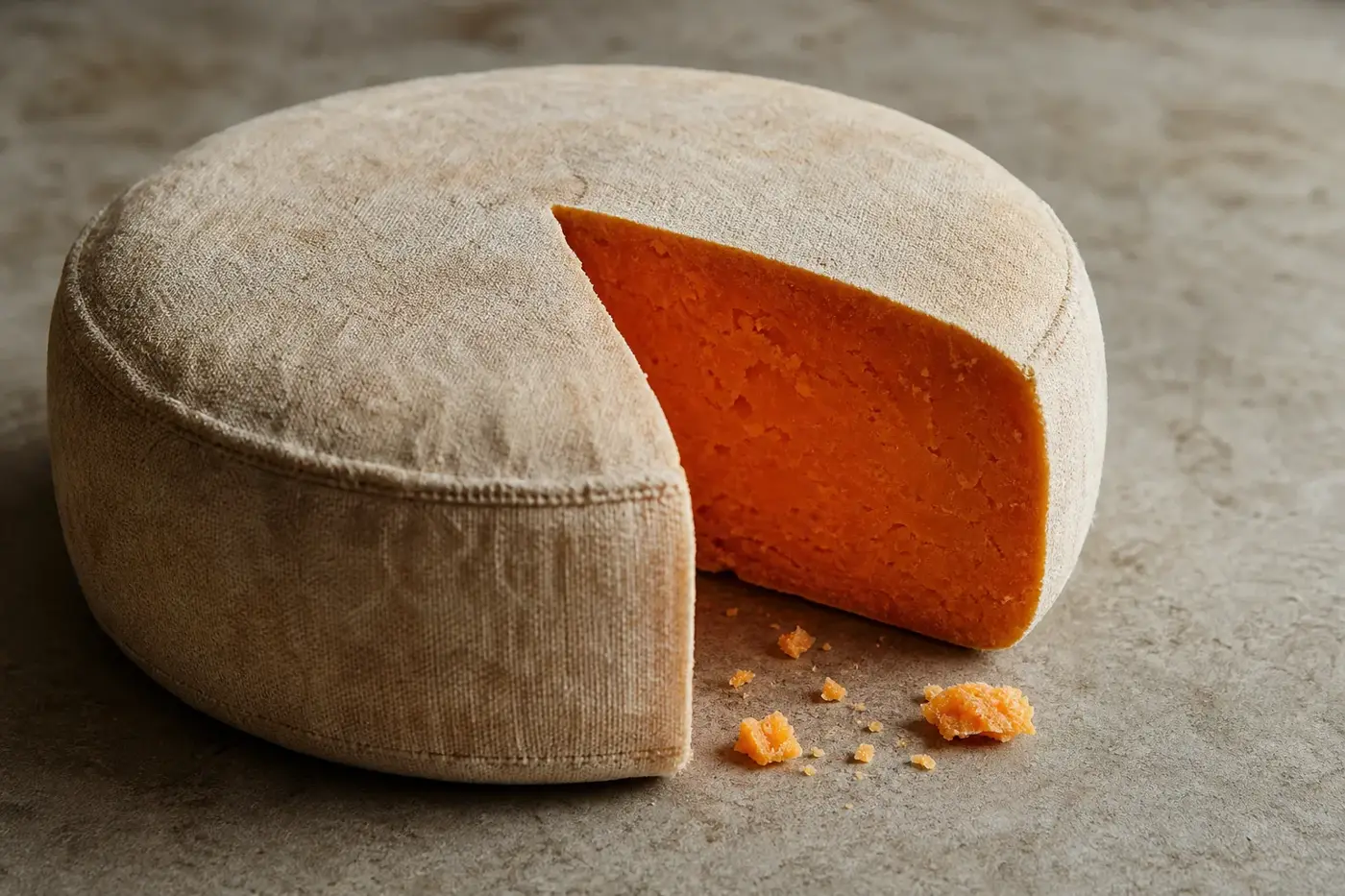
A bite of rind, then a little of the centre. Suddenly, you have two sides of a Berkshire cheese story: Soundwave IPA on the surface, washed curd beneath. Made by Village Maid Cheese in Riseley, this semi-soft cow’s milk cheese brings a soft, buttery bite with tangy, bittersweet and malty notes. [1,2]
| At a glance | Your cheese notes, November 2026 |
|---|---|
| Name | Maida Vale. [1] |
| Maker and home | Village Maid Cheese, Riseley, Berkshire, England. [2,3] |
| Milk | Guernsey cow’s milk. [2] |
| Milk treatment and rennet | Pasteurised milk; vegetarian rennet. [1] |
| Milk supplier | Heckfield Park Farm. [1] |
| Listed size | 180 g; handmade weights vary. [1] |
| Rind wash | Soundwave IPA from Siren Craft Brew. [1,4] |
| Shape and colours | Details unavailable |
| Maturation and washing frequency | Details unavailable |
| Registered name, register ID and protection status | Details unavailable |
From a Berkshire garden to your cheeseboard
Picture a garden outbuilding in Spencers Wood near Reading. That is where Village Maid began in May 1986, according to the dairy’s history. In 1991, it moved to Riseley, where its published address remains on Basingstoke Road. [2,3]
Maida Vale arrived in 2017, alongside a portfolio that includes the sheep’s milk cheeses Spenwood and Wigmore and the cow’s milk cheese Waterloo. The dairy’s history records earlier work on semi-soft, washed-curd cheeses. You are tasting an established cheesemaking approach here, rather than a sudden change of direction. [2]
Meet the milk behind that buttery bite
Maida Vale starts with pasteurised milk and vegetarian rennet, the ingredient that helps milk set into curd. The current product page names Heckfield Park Farm as the milk supplier. Village Maid dates the beginning of that relationship to 2019. [1,2]
Milk treatment and rennet do different jobs, although you will often find them sharing a line on a cheese label. If you would like to get to know those ingredients and processes better, explore milk treatments and rennet explained.
Two washes, two parts of the story
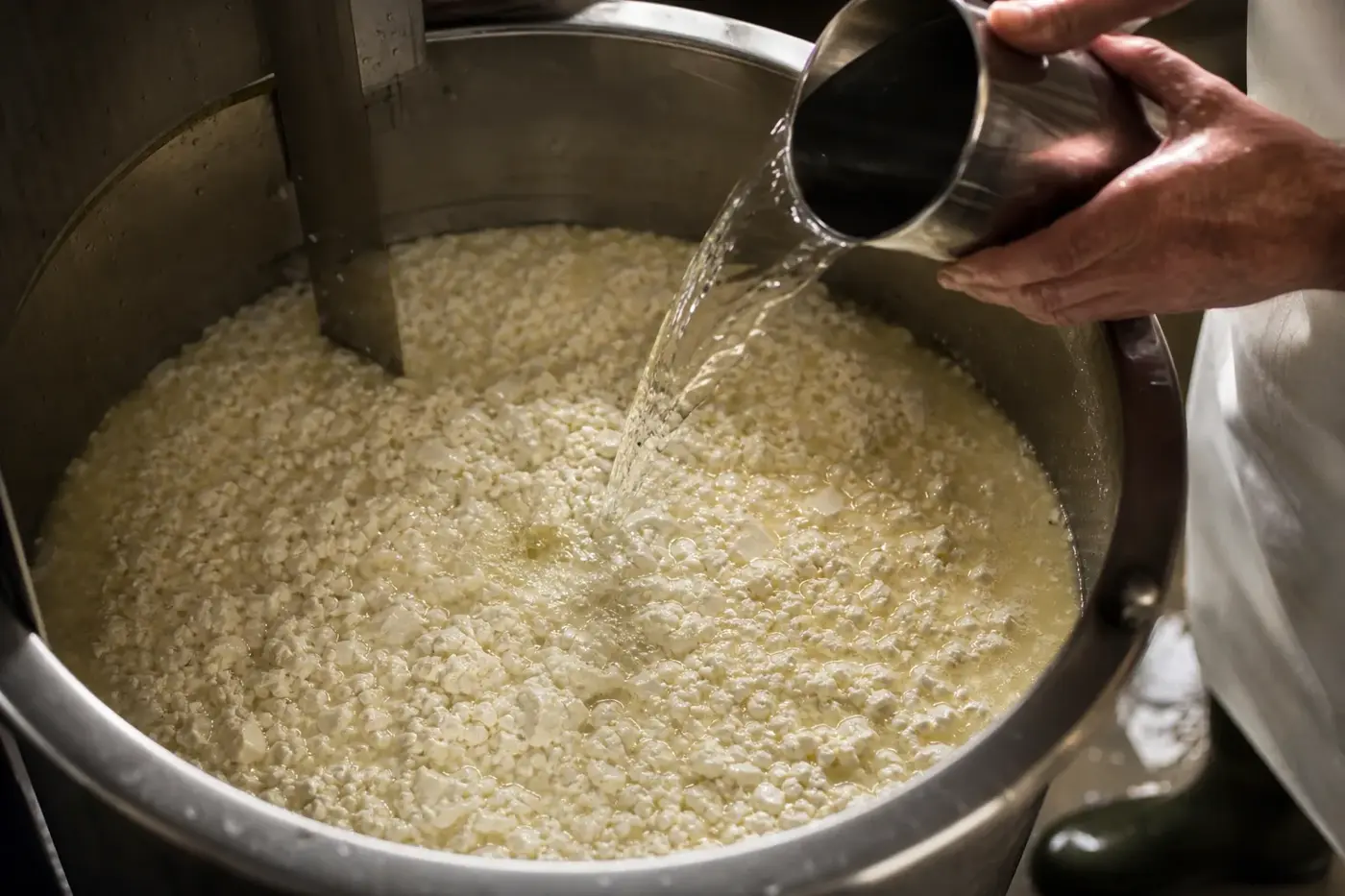
First comes the curd wash. Village Maid removes some whey, the liquid released from the curd, and replaces it with water. The maker links this process to lower acidity, slower breakdown and a firmer, fudgy bite. [1]
Then comes the separate rind wash, supplied by Soundwave IPA. Details of the washing schedule, maturation period and changes during ageing are unavailable. At the counter, that gives you a useful question to ask: what is this particular cheese like today? [1]
Ask how yielding the centre is, and when the cheesemonger suggests serving it. “Semi-soft” opens the conversation, but it cannot tell you everything. Those answers will help you choose a cheese for the meal you have in mind.
Follow Soundwave from rind to glass
Siren describes Soundwave as its flagship IPA, with American hops, fruit and a resinous finish. Its published recipe lists Citra, Simcoe, Chinook and Columbus hops. These are the brewer’s descriptions of the beer, giving you somewhere to begin when choosing what to pour alongside Maida Vale. [4]
Before you reach for a drink, mustard or chutney, try the rind and centre separately. Does the rind suggest malt, bitterness or a savoury edge? Does a bite from the centre change the picture?
Give that first plain mouthful a moment. It offers a clear point of comparison for everything that follows. The chutney can bear not being the centre of attention for once.
Get to know the tang, malt and buttery middle
Village Maid describes tanginess, bittersweet and malty notes, and a soft, buttery texture. Its explanation of the washed curd also points towards a fudgier bite. Treat those descriptions as things to look for, not a vocabulary test you have to pass. [1]
Start with a sniff, then give aroma, flavour and texture their own space in your notes. Is the bite supple or firm? Notice where the tanginess appears and what stays with you after swallowing.
Ordinary words make perfectly good cheese words. A precise description of one mouthful tells you more than a strength score for the whole cheese. You do not need to sound like a tasting panel to notice something worth remembering.
Record the date, where you bought it and the serving conditions, too. Those details give your next tasting something concrete to return to. You might compare texture, aroma or simply the impression the rind leaves behind.
A few awards along the Berkshire road
According to Village Maid, Maida Vale received two-star Great Taste awards in 2018, 2019, 2022 and 2023. The Artisan Cheese Awards organiser also lists it as a silver medallist in its 2026 Cow class, class 6. [2,5]
Those dates give you reference points for following the cheese’s development. For this week’s cheeseboard, though, begin with the cheesemonger’s assessment of the cheese available. Then let your preference for a firmer or more yielding centre guide you.
Give Maida Vale room on the board
Start with a small board, plain bread or crackers, and one fresh accompaniment such as apple or pear. Taste the cheese alone, then add the fruit and see whether you enjoy the contrast. A heavily seasoned cracker adds another flavour to every bite, making that comparison harder.
The maker’s nominal 180 g cheese gives you quarters of about 45 g or sixths of about 30 g. These are cutting options, not instructions for your appetite. Adjust the pieces to suit the meal and the other cheeses on your board, remembering that handmade weights vary. [1]
Keep Maida Vale chilled until shortly before eating. Let only the portion you are serving lose its refrigerator chill. For a clear display limit, the method below uses US CDC advice, as of November 2026: refrigerate perishable food within two hours, or one hour above 32.2 °C (90 °F). [7]
- Read the pack’s storage instructions and date before opening. Keep the unserved portion refrigerated. [6]
- Put your serving portion on a clean plate. Cut pieces that let each person compare the exterior with the centre.
- Notice the texture in the centre and nearer the surface. Record your impressions before adding an accompaniment.
- Return perishable food to refrigeration within the CDC limits above. Above 32.2 °C (90 °F), use the shorter one-hour limit. [7]
Settling in for a longer meal? Bring out a little at a time and leave the rest chilled. That avoids repeatedly carrying the whole cheese between table and fridge.
Find a good companion for your cheese
Keep sweet or sharp condiments on the side. A small dab of apple chutney or mustard changes one bite without covering the whole cheese. Bread and fresh fruit make a simpler plate, giving you room to discover whether you favour the centre, the rind or both together.
Soundwave is the most direct IPA pairing to explore, connecting the beer in your glass with the rind wash. Try a small serving beside a plain bite of cheese. Consider how its fruit and resinous hop character sit together, using Siren’s published beer description as your starting point. [4]
For an alcohol-free option, try sparkling water or an unsweetened apple drink. Water gives you the clearest comparison between bites; apple carries a fruit accompaniment into the glass. If you choose alcohol-free beer, read its own label for the alcohol declaration and select a product that meets your requirements.
Alcoholic pairings are for adults of legal drinking age.
When comparing pairings, change only the drink, keeping the cheese and accompaniment the same. Take a plain bite, a small sip, then return to the cheese. Whether you prefer IPA, apple or water, look for a partner that leaves Maida Vale’s character easy to recognise.
Keep it chilled, with the label close by
Follow the pack’s instructions for refrigeration and use after opening. In England, Wales and Northern Ireland, the Food Standards Agency advises keeping a domestic fridge between 0 and 5 °C. Its recommendations, as of November 2026, also include following packaging instructions and keeping dairy products refrigerated. [6]
In the United States, CDC advises a refrigerator temperature of 4.4 °C (40 °F) or below. Use a fridge thermometer: a numbered control dial cannot tell you the food’s temperature. Keep the cheese protected from raw meat and its juices; the FSA recommends sealed packaging or containers for raw meat, on the bottom shelf. [6,7]
For the rind, start with the condition described by the maker or the cheesemonger who supplied your cheese. If it changes unexpectedly, keep the wrapper and batch details and contact the supplier about that cheese. A photograph of both the exterior and cut face can help you explain your question clearly.
Unexpected mould calls for different consideration from an intended ripening surface. The FSA guidance cited here is written for businesses, rather than offering advice specific to Maida Vale. Consult current guidance from the food safety authority where you live, and follow any recall notice. [8]
Treat storage temperature, time outside the fridge and pack instructions as one practical task. Before putting the cheese away, make sure its handling has stayed within the applicable guidance, and keep the label with what remains. If the cheese is recalled, follow the recall notice; CDC advises throwing recalled food away. [6,7]
Let your cheese curiosity wander
- How Cheese Is Made: From Milk to Cheese: follow the wider journey from milk to finished cheese.
- How to Store Cheese at Home: find practical guidance for protecting your cheese after opening.
- Mould on Cheese: When to Cut and When to Bin: distinguish intended ripening from unwanted growth.
General information only, not medical advice: follow the official guidance where you live.
Questions people ask
What milk is Maida Vale made from, and is it vegetarian?
Maida Vale is made from pasteurised Guernsey cow’s milk. It uses vegetarian rennet.
What does Maida Vale taste like?
Village Maid describes it as soft and buttery, with tangy, bittersweet and malty notes. The maker also links its washed curd to a firmer, fudgy bite.
Why is Maida Vale washed twice?
During cheesemaking, some whey is removed from the curd and replaced with water. Soundwave IPA is used separately to wash the rind.
What can I serve with Maida Vale?
The page suggests plain bread or crackers with apple or pear. It also suggests Soundwave IPA, sparkling water or an unsweetened apple drink.
How should I store Maida Vale?
The Food Standards Agency advises keeping a domestic fridge between 0 and 5 °C in England, Wales and Northern Ireland. It also advises following packaging instructions and keeping dairy products refrigerated; consult its current guidance.
Sources
- Village Maid Cheese, Maida Vale, current undated product page, accessed November 2026. Verified source.
- Village Maid Cheese, Our Story, current undated company account, accessed November 2026. Verified source.
- Village Maid Cheese, Contact, current undated contact page, accessed November 2026. Verified source.
- Siren Craft Brew, Soundwave, current undated product description and brewsheet, accessed November 2026. Verified source.
- Artisan Cheese Awards, Results 2026, 2026 results table, accessed November 2026. Verified source.
- Food Standards Agency, How to chill, freeze and defrost food safely, published 18 December 2017, current online version accessed November 2026. Applies to England, Northern Ireland and Wales. Verified source.
- US Centers for Disease Control and Prevention, Preventing Food Poisoning, 24 November 2025, accessed November 2026. Verified source.
- Food Standards Agency, Cheese recovery guidance, first published 2007, current online version accessed November 2026. Guidance for businesses and local authorities. Verified source.
This piece was researched from the maker’s published accounts, the brewer’s product information, the award organiser’s results and official food-handling guidance; serving combinations are editorial suggestions.
Last checked: November 2026
Last checked November 2026.
The editors suggest you read next
West Country Farmhouse Cheddar Cheese
Large pieces of curd turn and stack under the cheesemaker’s hands.