Merry Wyfe
Apples from the farm, cider on the rind, then another wash every other day for four weeks.
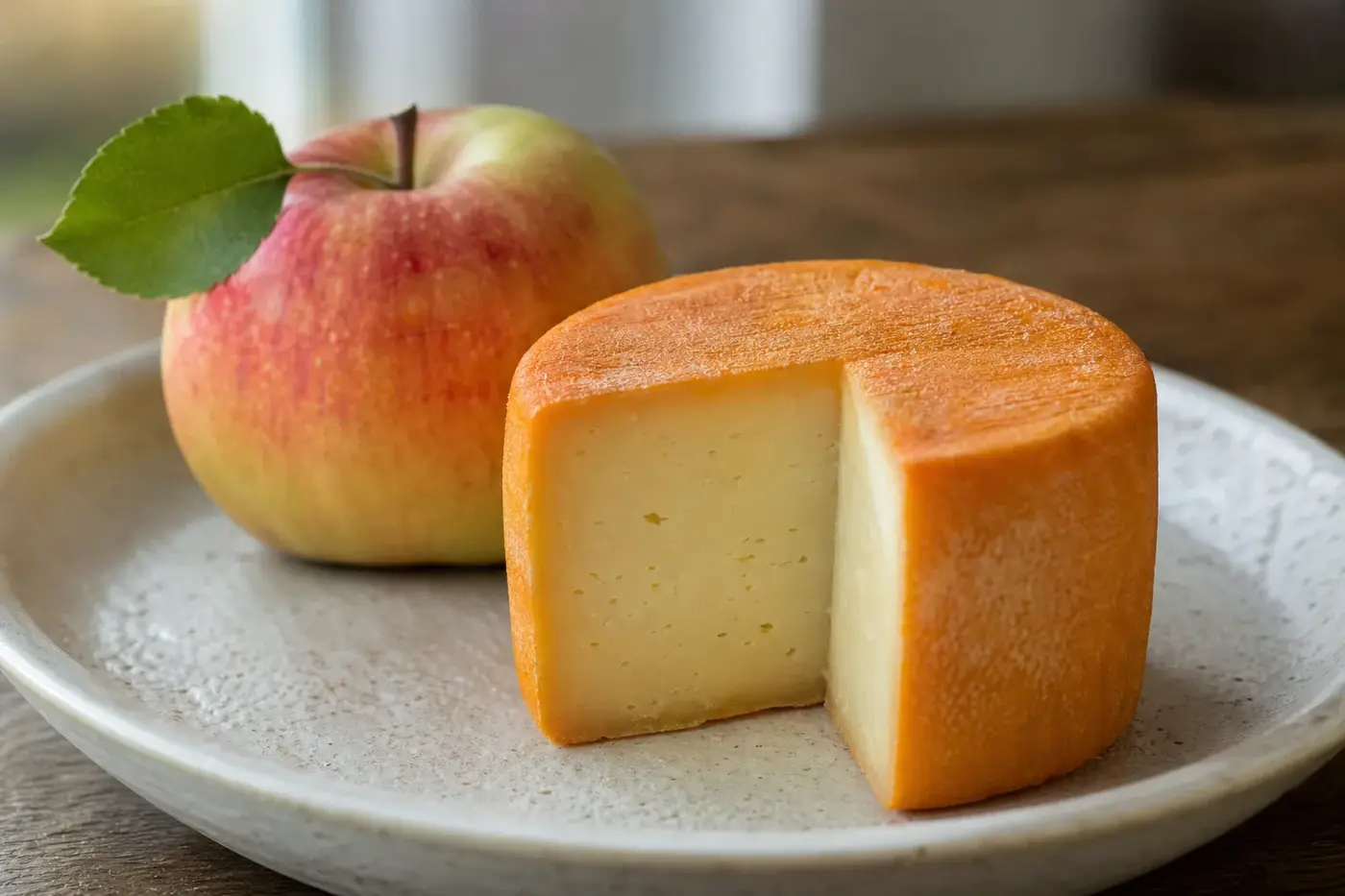
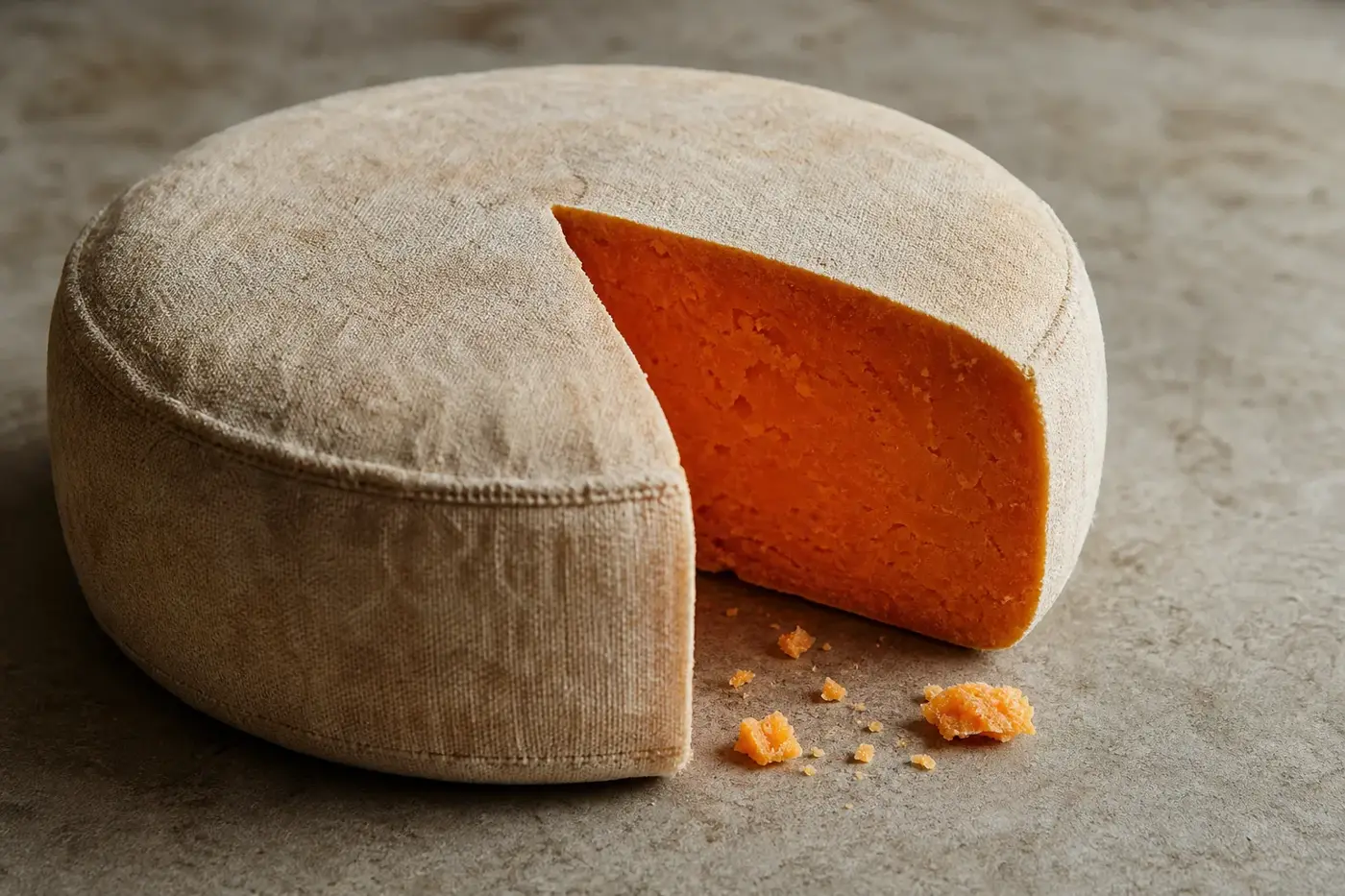
Apples from the farm, cider on the rind, then another wash every other day for four weeks. Merry Wyfe has quite the bathing routine. The result is an orange rind its maker calls pungent and edible, wrapped around a semihard cow’s milk cheese.[1]
Beneath that rind are pressed Wyfe of Bath curds. Bath Soft Cheese Co. makes Merry Wyfe at Park Farm, Kelston, near Bath in Somerset, England.[1] It is a cheese whose story takes you from the dairy to the orchard, with plenty to discover on the way.
Your quick introduction to Merry Wyfe
| What you might want to know | The detail |
|---|---|
| Maker and home | Bath Soft Cheese Co., Park Farm, Kelston, near Bath, Somerset, England.[1] |
| Milk | Pasteurised cow’s milk, from the dairy’s own cows according to the maker.[1][3] |
| Cheese style | Pressed and cider-washed, related to the maker’s semi-hard Wyfe of Bath.[1][5] |
| Maturation treatment described | A cider wash every other day for four weeks.[1] |
| Protection status | EU, Great Britain, Northern Ireland, Switzerland and United States: Not established |
| Rind | Orange and edible, according to the maker.[1] |
| Suitable for vegetarians? | Declared vegetarian by the maker.[4] |
| Whole cheese format described | A mini round, 250 to 400 g.[1] |
Follow the cider to that orange rind
Merry Wyfe starts with the same curds as Wyfe of Bath. After pressing, their paths part: repeated cider washing gives Merry Wyfe’s surface its character. Those cider baths also explain the “Merry”, according to the maker.[1]
Give that orange rind a little attention when you cut your first piece. Take a bite with surface and interior together, then change the proportions. A little more rind, a little more centre: you can learn plenty from those small adjustments.
For your first taste, resist the urge to assemble a grand cheeseboard. Put a little cheese on a plain plate and try it before bread, fruit or a drink. Once you have that first impression, you can judge what each companion brings.
New to washed rinds? how to tell cheese styles apart guides you through the broader differences in texture, surface treatment and cheesemaking method.
At Park Farm, the orchard joins the dairy
The cider here is not simply something to pour beside your cheese. Bath Soft Cheese Co. says it makes the washing cider on the farm, using apples harvested there.[1] Orchard and dairy meet in a practical ritual, repeated throughout Merry Wyfe’s rind treatment.
You will find Park Farm in Kelston, just outside Bath. The maker’s history describes an earlier mixed farm with dairy cattle, pigs, chickens and cereal crops, alongside cheesemaking in the farmhouse kitchen.[6] Today’s dairy belongs to that longer farming story.
Keep the milk and apples in mind as you taste, without turning your plate into a flavour treasure hunt. Try the cheese, then an accompaniment, and notice what comes forward: rind, interior or both. Finding the balance you enjoy matters more than collecting every flavour word in a description.
Meet the literary relative
The maker credits Canterbury Tales with inspiring the name Wyfe of Bath. Merry Wyfe carries that name further through the dairy’s range.[5] With shared curds as well as related names, the two invite a side-by-side taste.
Ordinary Wyfe of Bath is described by its maker as firm and yielding, with a golden interior. It generally matures for four to six months.[5] Merry Wyfe’s documented treatment is different: four weeks of cider washing.[1] Keep those two maturation patterns distinct.
If you can get both, make your comparison small and deliberate. Take similar bites and notice the surface aroma, the resistance as you chew and the finish. Jot down your impressions before reading the maker’s tasting notes, so someone else’s words do not get there first.
The comparisons and drink suggestions here are editorial recommendations. They are not the results of independent testing by fromage.co.uk.
From the farm’s milk to vegetarian curds
Merry Wyfe uses pasteurised cow’s milk.[1] The dairy says that milk comes from its own cows. It describes pasteurising the milk by holding it at 63 °C for 30 minutes.[3]
That is one step in a longer transformation. Culturing, setting, draining and maturation also shape the cheese that reaches your plate. In the dairy’s production account, starter bacteria turn milk sugar into lactic acid, then rennet sets the milk into curd: the solid material that becomes cheese.[3]
For the shared Wyfe of Bath curds, the dairy names microbial rennet, a non-animal coagulant. Its FAQ also specifically lists Merry Wyfe among its vegetarian cheeses.[3][4] You can explore animal, microbial and fermentation-produced coagulants in Rennet explained.
When you choose your cheese, read its current wrapper alongside the maker’s information. Keep that wrapper after opening, too. The product name, date and handling instructions should stay with the cheese until the last piece is gone.
Four weeks of care for the outside
Pressed curds and regular cider baths sit at the heart of Merry Wyfe’s production account. The maker specifies farm-made cider, applied every other day for four weeks.[1] That tells you about the surface treatment, rather than giving a total maturation period.
For the earlier stages, the maker’s general production guide fills in the picture. Cutting curd releases whey, the liquid separated during cheesemaking. For Wyfe of Bath, the dairy describes replacing some whey with hot water, then salting the cheese through brining.[3]
Once those shared curds have been pressed, Merry Wyfe takes its own route. The maker links cider washing to its orange rind. It describes a textured surface with a little stickiness underneath.[1][2] That distinctive outside receives sustained attention.
Think of these as two parts of the making. Curd preparation creates the cheese that can be cut and pressed; rind treatment tends its exterior during maturation. For the wider journey, including draining, salting and ripening, see how cheese is made.
Get acquainted with the springy centre
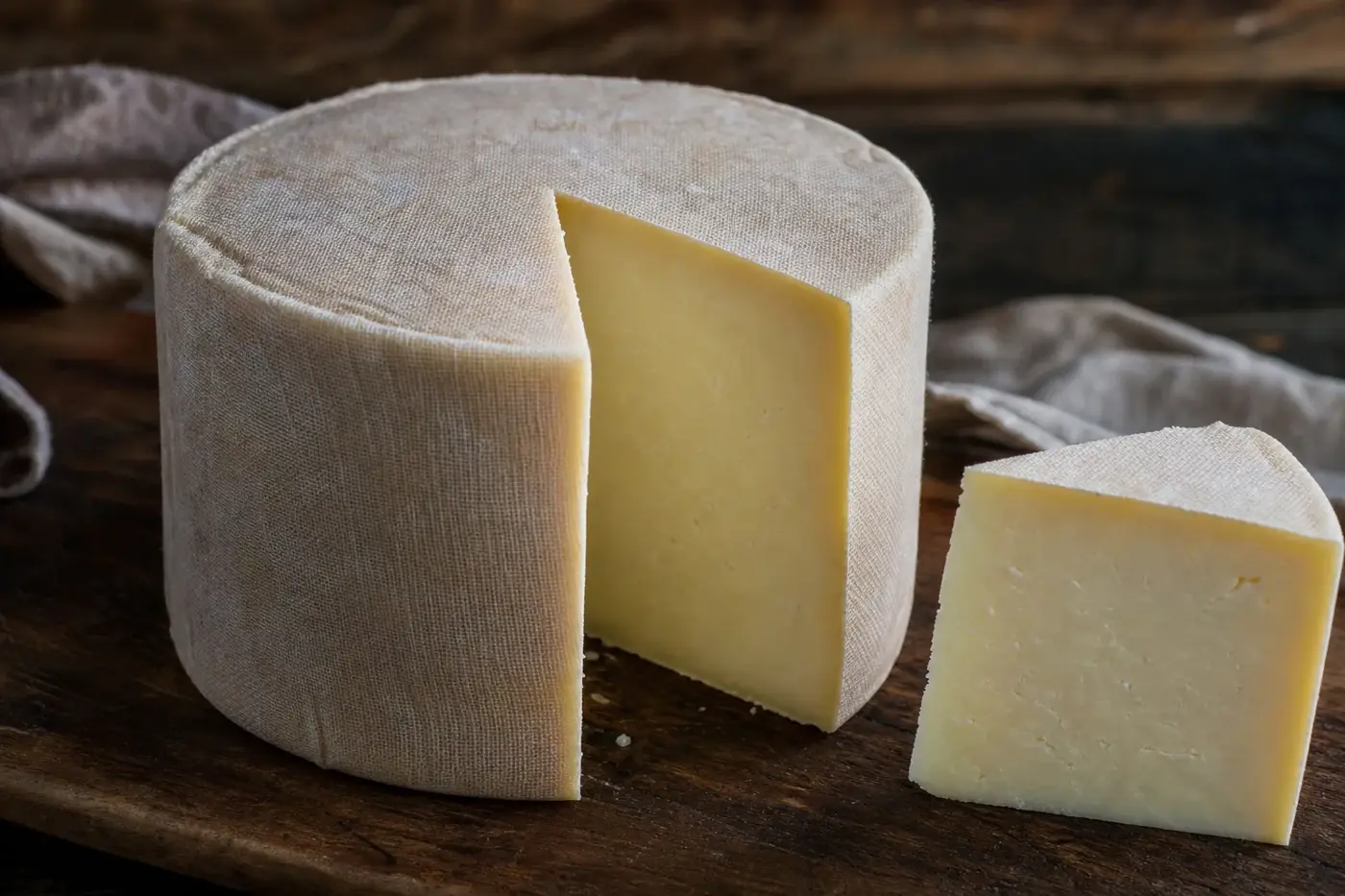
Plump, with a textured rind and a smooth interior: that is the maker’s portrait of Merry Wyfe. Beneath the rind, the paste, or body of the cheese, is described as firm but springy, with a buttery quality. The account also mentions a fine crystalline texture at the surface.[2]
Then comes the aroma. The maker calls the rind pungent, while the overall tasting notes describe gentle farmyard character, earthiness, savouriness and restrained fruit notes associated with cider.[1][2] Those descriptions concern the whole cheese, rather than assigning particular flavours to rind or centre.[2]
Let those words give you a starting point, not instructions for what you must taste. Begin with a small piece from the centre, then try a bite with rind. Notice where the aroma is strongest, how the texture changes as you chew and what lingers afterwards.
Perhaps you prefer both parts together; perhaps a different proportion suits each mouthful. Either observation is useful. Write your own words first, then see which of the maker’s descriptions fit your piece. Your tasting notes need not audition for a poetry prize.
Start with a simple plate
The maker suggests serving Merry Wyfe at room temperature, with apples, pears or cider as possible companions.[2] Bring out just the portion you expect to eat. Leave the rest refrigerated.
For handling in England, Wales and Northern Ireland, the Food Standards Agency advises keeping chilled food out of refrigeration for the shortest possible preparation time, with a maximum of four hours. Its household guidance, as recorded here in November 2026, recommends a fridge temperature between 0 and 5 °C (32 to 41 °F).[7]
Build your plate, one taste at a time
- Begin with cheese alone. Cut a small piece with both rind and interior.
- Add plain bread or crackers. A quiet first accompaniment makes any change easier to notice.
- Try apple or pear next. Both come from the maker’s serving suggestions.[2]
- Compare before combining. Taste each accompaniment separately before building a larger mouthful.
Start with a modest cutting and replenish when needed. If Merry Wyfe shares a board with other cheeses, leave enough room for guests to cut a piece with some rind. A little space makes it easier for everyone to get the bite they want.
Choose a drink, then taste again
A dry or medium dry Somerset apple cider is a suggested starting point, served in a small amount to adults of legal drinking age. If you are pregnant, driving, taking medicines that interact with alcohol, or recovering from alcohol dependence, you should not drink.
For an alcohol-free choice, offer apple juice, an explicitly alcohol-free apple drink or plain water. Keep water available whatever else you serve. Taste the cheese before your drink, then return to it and notice whether the balance between rind and interior changes.
Enjoy the rind and hang on to the wrapper
Merry Wyfe’s orange rind is edible, according to the maker.[1] Try a little with the interior to discover what it contributes. From there, adjust the proportions to suit your own taste.
After serving, follow the storage instructions and date on your particular wrapper. The dairy’s FAQ says its cheeses carry use-by dates. The FSA advises refrigerating dairy products and following the packaging’s storage and date instructions.[4][7]
Keep the label with the remaining cheese, ready to read before your next serving. For help with the wider household routine, from wrapping to organising different cheeses, see how to store cheese at home.
Finally, the maker’s vegetarian declaration is specifically for Merry Wyfe. Other cheeses in the range use different rennets, so consider each separately when putting together a vegetarian board.[4] Let the individual product name and current wrapper guide you, rather than assuming every cheese from one dairy is made alike.
General information only, not medical advice: follow the official guidance where you live.
Questions people ask
Can you eat the rind of Merry Wyfe?
Yes. The maker describes the orange rind as edible and pungent.
Is Merry Wyfe suitable for vegetarians?
The maker declares Merry Wyfe vegetarian. The shared Wyfe of Bath curds are made with microbial rennet, a non-animal coagulant.
Is Merry Wyfe made with pasteurised milk?
Yes, it is made with pasteurised cow’s milk. The dairy says the milk comes from its own cows.
How should Merry Wyfe be stored?
The Food Standards Agency advises refrigerating dairy products and following the storage and date instructions on the packaging. Its household guidance recommends a fridge temperature between 0 and 5 °C.
What goes well with Merry Wyfe?
The maker recommends serving it at room temperature, with apples, pears or cider as possible accompaniments. The page also suggests trying it with plain bread or crackers.
Sources
[1] Bath Soft Cheese Co. Merry Wyfe, product listing, undated, current page retrieved November 2026. Product relationship, pressing, washing schedule, cider source, edible rind, pasteurisation and mini-round weight.
Read at parkfarm.co.uk
[2] Bath Soft Cheese Co. Merry Wyfe, cheese profile, undated, current page retrieved November 2026. Maker’s appearance and tasting descriptions, washing treatment and serving suggestions. Commercial producer source.
Read at parkfarm.co.uk
[3] Bath Soft Cheese Co. The Art of Making Cheese, undated, current page retrieved November 2026. Own-herd milk, pasteurisation, starter cultures, coagulation and documented Wyfe of Bath curd handling.
Read at parkfarm.co.uk
[4] Bath Soft Cheese Co. FAQ’s, undated, current page retrieved November 2026. Vegetarian declarations and use-by information.
Read at parkfarm.co.uk
[5] Bath Soft Cheese Co. Wyfe of Bath, undated, current page retrieved November 2026. Name inspiration, texture, appearance and stated maturation.
Read at parkfarm.co.uk
[6] Bath Soft Cheese Co. Our History, undated, current page retrieved November 2026. Maker’s account of the earlier mixed farm and farmhouse cheesemaking.
Read at parkfarm.co.uk
[7] Food Standards Agency. How to chill, freeze and defrost food safely, published 18 December 2017, current page retrieved November 2026. Household guidance applying to England, Northern Ireland and Wales.
Read at gov.uk
This desk-researched article brings together the maker’s production and sensory accounts with jurisdiction-specific FSA handling guidance; serving comparisons are identified as editorial suggestions.
Last checked: November 2026
Last checked November 2026.
The editors suggest you read next
West Country Farmhouse Cheddar Cheese
Large pieces of curd turn and stack under the cheesemaker’s hands.