Morangie Brie
Your knife slips through a white rind, into a centre that turns silky at full ripeness.
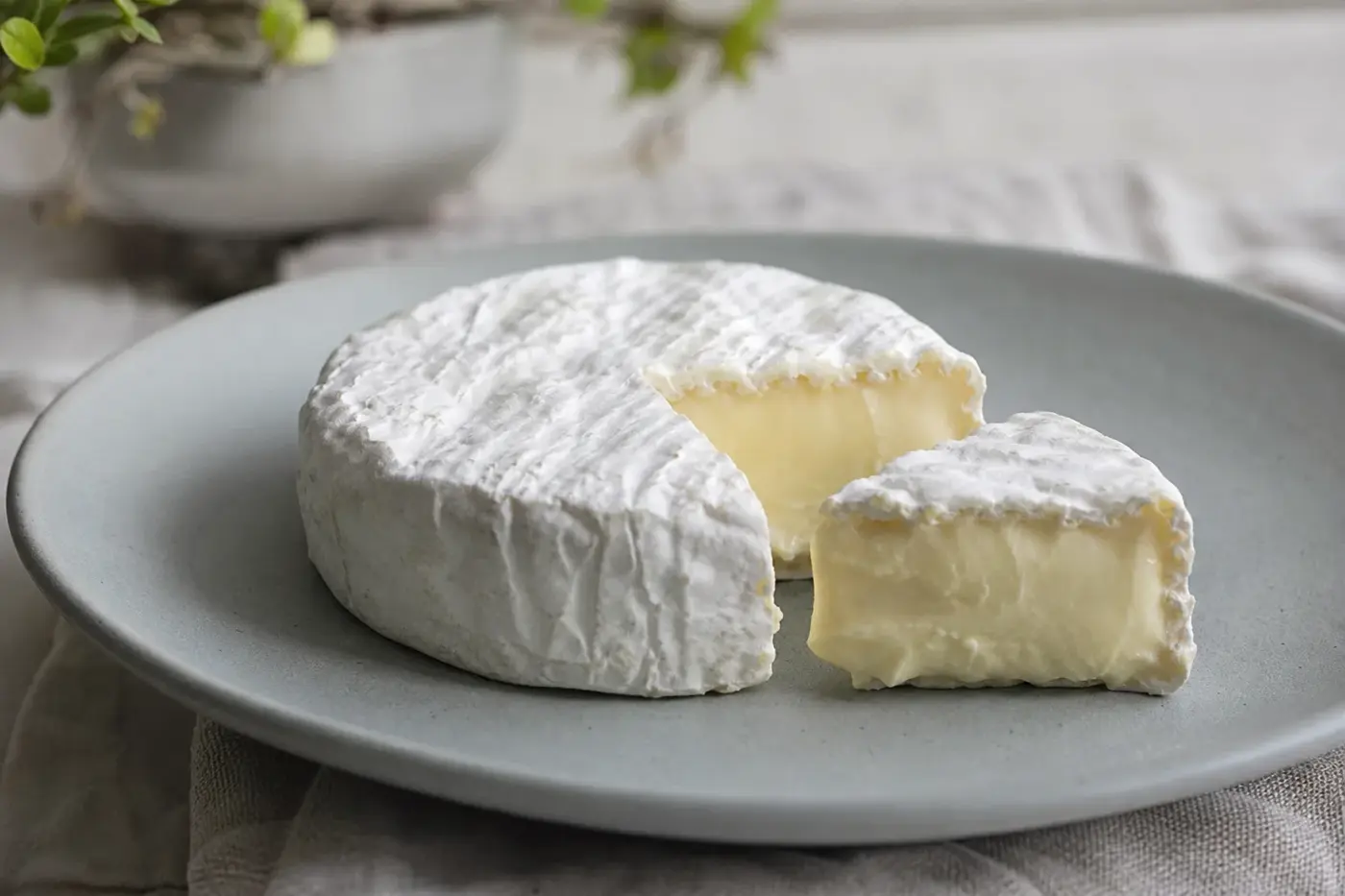
Your knife slips through a white rind, into a centre that turns silky at full ripeness. This small round comes from Tain in the Scottish Highlands, where Highland Fine Cheeses gives a French cheese style a Scottish home. Morangie Brie is a soft cow’s milk cheese with mushroom and grassy notes, as its maker describes them.[1][2][6]
| Meet Morangie | What you need to know |
|---|---|
| Name | Morangie Brie.[1] |
| Maker | Highland Fine Cheeses.[2] |
| Home | Blarliath Farm, Tain, Scotland.[2] |
| Milk | Pasteurised cow’s milk.[4] |
| Size | 250 g round.[1] |
| Rind | White and edible.[1] |
| Rennet type | Ask the maker |
| Named cultures | Ask the maker |
| Development before wrapping | Around eight days.[1] |
| Full maturation period | Ask the maker |
Take the rind and centre together
Morangie Brie comes as a 250 g round with an edible white rind and a soft interior, known as the paste. At full ripeness, Highland Fine Cheeses describes that paste as silky.[1] Your first wedge is a chance to explore the contrast between the outside and the centre.
Cut a piece that includes both, taste a little on its own, then add bread. Give the chutney a moment off duty: the cheese deserves the first word. Notice how the rind feels and how readily the centre yields, as well as what you taste. When you fancy exploring further, the broader brie guide takes you beyond this Highland example.
Follow Morangie home to the Dornoch Firth
You will find Highland Fine Cheeses at the dairy at Blarliath Farm, on Shore Road in Tain, Ross and Cromarty, in north-east Scotland. The company places the original smallholding beside the Dornoch Firth, west of the town.[2] This is Morangie’s particular patch of Scotland: a working dairy with an address, not just a Highland name.
The story begins with a small dairy making Crowdie. Later came an emphasis on mould-ripened cheeses, including Brie, blue and washed-rind styles.[3] Morangie belongs to that wider cheesemaking practice, among cheeses with different appearances and ripening paths. Brie gives you the style; the dairy’s history brings its work into focus.
Thinking of calling in? The maker’s FAQ says the site houses its factory and office, with no physical shop.[4] Look at its stockist information before you plan a cheese-buying stop.
Begin with the milk from the Black Isle
Highland Fine Cheeses uses pasteurised cow’s milk across its cheese range.[4] Its company history names Rootfield Farm on the Black Isle as the source of most of the dairy’s milk.[3] That account describes the business as a whole, so turn to the label for the particular cheese in front of you.
Cultures start acidification, developing acidity in the milk. Rennet then helps the milk set into curd, the solid part that separates from liquid whey.[1] If you want to know Morangie’s named cultures or rennet type, ask the maker directly.
Choosing for a vegetarian table? Consult the current pack or ask the maker before serving. For a closer look at the differences between coagulants, turn to rennet explained.
Give those first eight days their due
Morangie’s soft texture starts with moisture, and relatively large pieces of curd help retain it. The maker describes cutting the set curd, then draining and moulding it. Acidification and drainage continue in the moulds, followed by salting and the development of yeasts and moulds before wrapping.[1]
Highland Fine Cheeses allows around eight days for that development before the individual cheeses can be wrapped.[1] You are looking at one stage in production, not the full maturation period. It does not tell you the exact point when a cheese will be enjoyable to eat, either.
Long before your knife reaches the round, its texture is taking shape. The handling of the curd influences moisture and the final texture, alongside changes during ripening.[1][5] The maker describes that sequence without giving individual vat settings or handling techniques. You can follow the wider journey in how cheese is made.
Let mushroom and grass lead your tasting
Highland Fine Cheeses describes mushroom and grassy undertones in a rich, ripe paste.[6] Treat those words as an invitation, not a tasting exam. Smell the cut cheese and taste the centre. Then try a small mouthful with some rind and notice what changes.
That white bloom has a job to do in ripening; it is not simply a coat. Research on Camembert-type cheese helps explain the process. A 2014 study followed fungal gene activity in an industrial Canadian cheese at seven sampling points during ripening. It examined how Penicillium camemberti and Geotrichum candidum contributed to the breakdown of the cheese matrix and the development of sensory properties.[5]
In that style, surface fungi contribute enzymes that break down proteins and fats, helping texture and flavour develop.[5] If you make tasting notes, separate firmness from spreadability, then consider the balance between rind and centre. You will get a more useful picture than you would from the single word “soft”.
For Morangie, the maker describes a silky paste at full ripeness.[1] Ask the maker about its particular progression of aroma and flavour during ripening. On your plate, choose the texture that suits the occasion: a neater wedge for bread, or a softer portion to spread. “Silky” becomes much more useful when you connect it to how the cheese behaves.
Before the board, read the chilling guidance
For current Scottish advice on keeping food chilled and serving it, consult Food Standards Scotland’s chilling guidance.[8] Keep that guidance to hand as you plan your board.
Give Morangie company without a crowd
Thin water crackers or slices of baguette are the maker’s recommendations for soft cheeses. Its board guide also suggests apples, grapes and figs.[7] You might start simply with plain bread and crisp apple. Keep preserves to one side, so you can adjust each mouthful rather than commit the whole portion.
For a drink without alcohol, try sparkling water or an unsweetened apple drink. Think about contrast rather than an exact flavour match. Plain water is particularly useful if you are comparing Morangie with another cheese, helping you keep your attention on the differences between them.
Save the rest with care
Keep Morangie in its original wrapping, as Highland Fine Cheeses recommends for its soft cheeses, and rewrap what remains after cutting.[7] Food Standards Scotland advises a fridge temperature between 0 °C and 5 °C (32 °F to 41 °F), checked with a thermometer. It also advises returning food to the fridge promptly.[8]
Follow the storage instructions and date on your own pack. For a larger board, put out a smaller portion first and leave the rest refrigerated, rather than repeatedly taking the whole cheese out and putting it back. For the wider routine, from wrapping to refrigeration, see how to store cheese at home.
Invite Tunworth and Baron Bigod to the table
Put Tunworth beside Morangie and you have an inviting comparison within British white-rinded soft cheese. Hampshire Cheese Company describes Tunworth as Camembert-style, made by hand from pasteurised whole cow’s milk. Like Morangie, it comes in a stated 250 g format. Its maker highlights a thin, wrinkled rind, an earthy mushroom aroma and a sweet, nutty finish.[9]
Baron Bigod gives you a different production story to explore. Fen Farm Dairy describes hand-ladling curd in layers into hoop-shaped moulds, turning the cheeses during drainage, then salting and developing their white mould before wrapping.[10] You can set those specific stages beside Highland Fine Cheeses’ shorter Morangie account, following each from moulding through drainage to rind development.
For your side-by-side tasting, begin with the rind, move on to the resistance of the paste, then consider the finish. Record what each cheese contributes rather than hunting for a winner; nobody needs a podium beside the bread. Morangie’s mushroom and grassy description, Tunworth’s wrinkled rind and Baron Bigod’s documented handling give you three distinct starting points.[6][9][10]
Keep the bread and accompaniments the same, and taste each cheese under the same conditions. Then put the contrasts into plain words. How much comes from the rind, how does the centre feel, and which flavour stays with you after swallowing?
General information only, not medical advice: follow the official guidance where you live.
Questions people ask
What does Morangie Brie taste like?
Highland Fine Cheeses describes mushroom and grassy undertones in its rich, ripe paste. At full ripeness, the paste is silky.
Can you eat the rind of Morangie Brie?
Yes, its white rind is edible. Try a wedge that includes both the rind and the soft centre.
Is Morangie Brie suitable for vegetarians?
The type of rennet used in Morangie Brie has not been verified. Check the current pack or ask the maker directly.
What goes well with Morangie Brie?
The maker recommends thin water crackers or slices of baguette for soft cheeses. Its board guide also suggests apples, grapes and figs.
How should Morangie Brie be stored?
Highland Fine Cheeses recommends keeping its soft cheeses in their original wrapping and rewrapping the remainder after cutting. Food Standards Scotland advises keeping the fridge between 0 °C and 5 °C and returning food to it promptly; see its chilling guidance.
Sources
- Highland Fine Cheeses, Morangie Brie, undated product page and production account, retrieved November 2026. Product description and making information.
- Highland Fine Cheeses, Scottish Cheese from the Highlands, undated homepage, retrieved November 2026. Dairy location and introduction.
- Highland Fine Cheeses, About Us, undated company account, retrieved November 2026. Company history and milk supply.
- Highland Fine Cheeses, FAQ’s, undated, retrieved November 2026. Milk treatment and premises information.
- BMC Genomics, Metatranscriptome analysis of fungal strains Penicillium camemberti and Geotrichum candidum reveal cheese matrix breakdown and potential development of sensory properties of ripened Camembert-type cheese, volume 15, article 235, 26 March 2014. DOI: 10.1186/1471-2164-15-235. Research abstract and publication record.
- Highland Fine Cheeses, 7 Perfect Pairing Wines for Our Highland Fine Cheeses!, undated article, retrieved November 2026. Morangie tasting description and Chardonnay recommendation. The recommendations were developed with wine merchant Corney & Barrow; both businesses have a commercial interest in their respective products.
- Highland Fine Cheeses, The Ultimate Guide to Creating the Perfect Cheese Board, 27 February 2025. Wrapping, serving and accompaniment suggestions. This is the maker’s own promotional guidance.
- Food Standards Scotland, Chilling food, undated consumer guidance, retrieved November 2026. Scottish refrigeration and display advice.
- Hampshire Cheese Company, Tunworth Cheese, undated product description, retrieved November 2026. Milk, format, rind and attributed tasting description.
- Fen Farm Dairy, Baron Bigod, undated product and production account, retrieved November 2026. Documented making sequence.
Researched through the makers’ published product and production accounts, a peer-reviewed ripening study and Food Standards Scotland’s consumer guidance, with serving suggestions identified as editorial opinion.
Last checked: November 2026
Last checked November 2026.
The editors suggest you read next
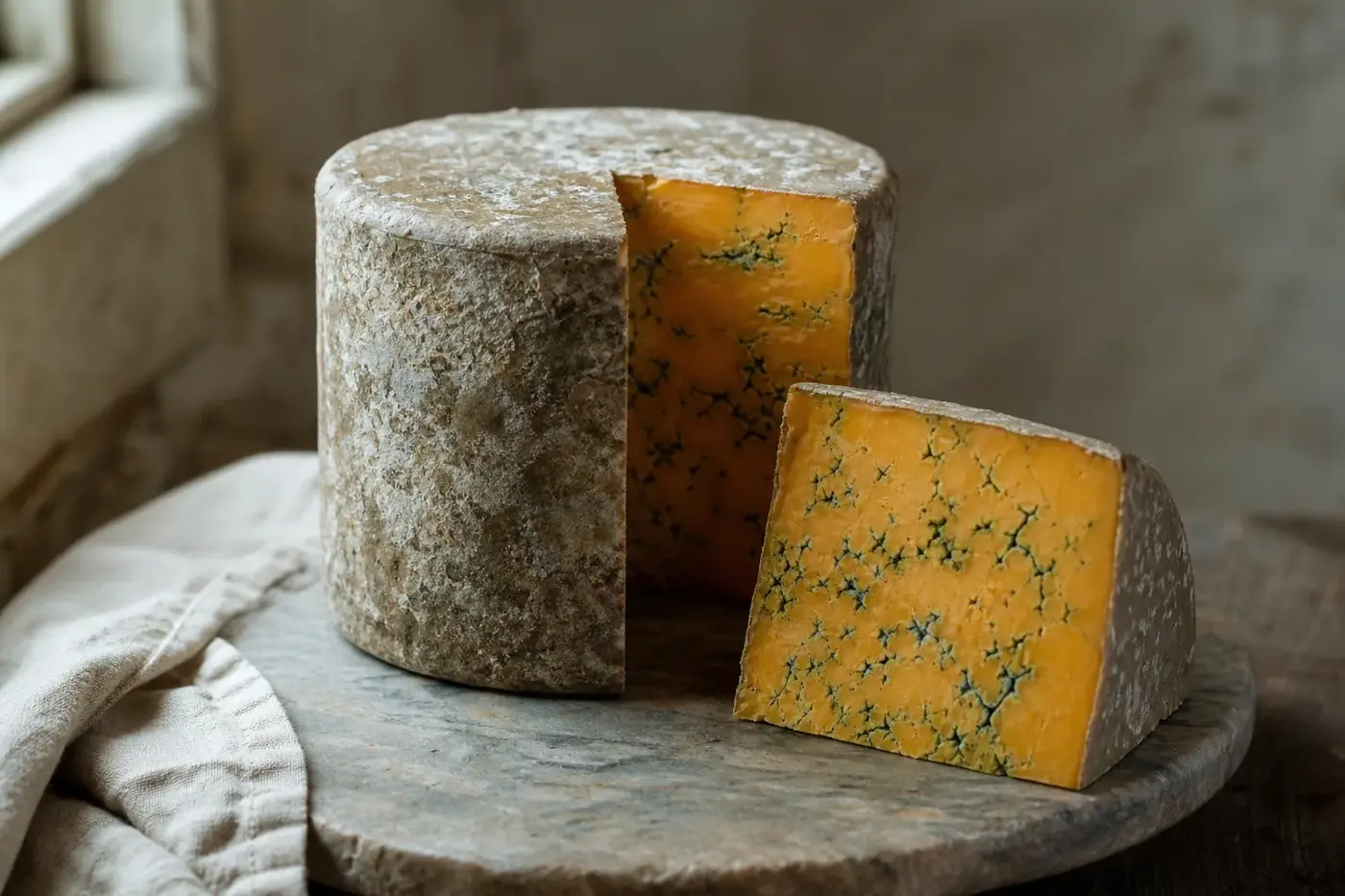
Shropshire Blue
Cut into Shropshire Blue and you get quite a colour scheme: orange crossed by blue-green veins.