Mozzarella di Gioia del Colle
Your knife meets a little spring, then slips through.
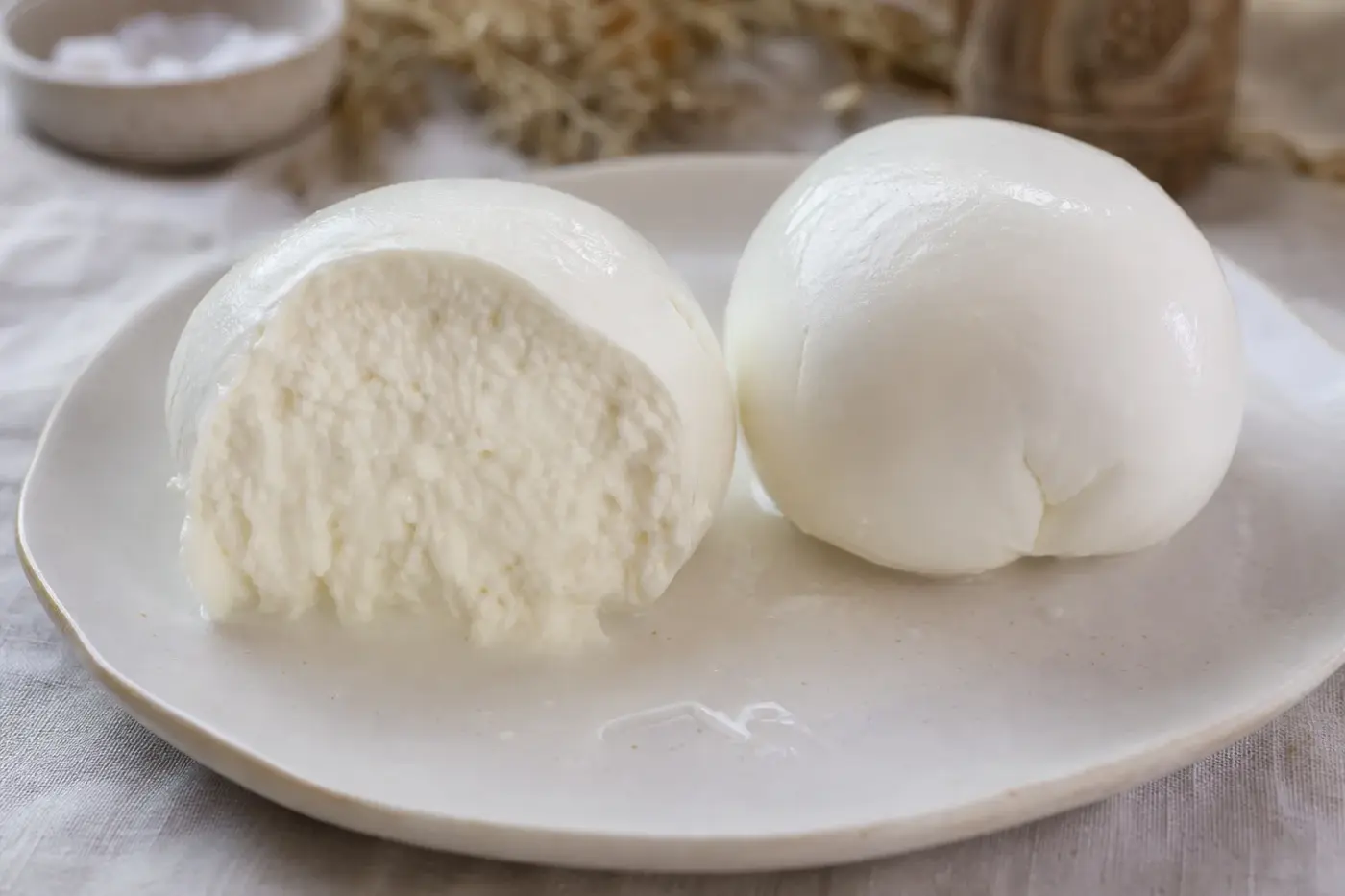
Your knife meets a little spring, then slips through. A bead of white whey escapes. Around Gioia del Colle, cheesemakers create that texture by stretching naturally acidified curd in hot water. The delicate milky tang of this fresh cow’s milk cheese begins with a local whey starter, a fermented liquid carried forward from earlier cheesemaking. [1,2]
That culture and the local milk supply give this Italian protected designation of origin (PDO) its identity. You might come for the glossy white cheese. The story starts a little earlier, in the milk and the whey. [1,2]
| Your quick guide | The details |
|---|---|
| Registered name | Mozzarella di Gioia del Colle. [1] |
| Authority and identifier | European Commission; PDO-IT-02384. [1] |
| EU status | Registered PDO; registration act: Regulation (EU) 2020/2018. [1,3] |
| Great Britain status | Registered PDO; scheme entry 31 December 2020 at 23:00. [5] |
| Where it is made | Defined parts of Puglia and Basilicata, Italy. [3] |
| Milk and treatment | Whole cow’s milk; raw, thermised or pasteurised. [2,4] |
| Starter and coagulant | Local whey starter; calf rennet. [2] |
| Shapes and weights | Rounded, knotted or braided; 50 to 1,000 g. [3] |
| Rind | None developed; fresh stretched-curd cheese. [1,2] |
| Ageing | Fresh; no maturation period specified. [2] |
| Fat | 15 to 21% in the whole cheese. [2,3] |
| Allergen | Milk. [2] |
| Status checked | November 2026. [1,3,5] |
Look for all five words
All five words earn their place on the label. The full name is protected in the EU, but the registration regulation expressly allows “Mozzarella” alone to remain in use under the applicable EU rules. A packet labelled simply mozzarella therefore does not identify this PDO. Gioia del Colle is not there to make the lettering look handsome. [1]
Think of the full name as your connection to a particular farming area and a particular way of making fresh cheese. At the counter, ask which dairy made it and how the pack should be stored. Two small questions make that protected identity useful when you shop.
Want to untangle a name tied to a place from the name of a cheese style? Start with protected names explained.
Take a trip across the Murge plateau
The EU PDO boundaries stretch across the Murge plateau in southern Italy. Milk production, collection, cheesemaking and packaging must all happen inside them. Even the final packing stays close to home: it must take place at the dairy that makes the cheese. These are EU specification requirements. [3]
| Specification detail | Status |
|---|---|
In Bari province, the area includes Acquaviva delle Fonti, Alberobello, Altamura, Casamassima, Cassano delle Murge, Castellana Grotte, Conversano, Gioia del Colle, Gravina in Puglia, Locorotondo, Monopoli, Noci, Putignano, Sammichele di Bari, Santeramo in Colle and Turi. In Taranto province, it takes in Castellaneta, Crispiano, Laterza, Martina Franca, Massafra and Mottola. [3]
Across in Basilicata, only part of Matera municipality qualifies. It is the portion adjoining Altamura, Santeramo in Colle and Laterza, bounded by the SS 99 and SS 7 roads. Your cheese comes from a territory larger than Gioia del Colle itself, but much smaller than the two regions it crosses. Neither Puglia nor Basilicata is included in full. [3]
Local roots, with an audience in Rome and Naples
By 1922, mozzarella from Gioia was reaching markets in Rome and Naples, as well as towns across Puglia, according to an account cited in the specification. The same document describes farms and dairies working closely together, sometimes on shared premises. The cheese had deep local roots, but its audience already reached beyond home. [2]
Today, following the production rules takes you back from the dairy to the cattle. Permitted breeds include Bruna, Frisona, Pezzata Rossa and Jersey, and their crosses. The cattle must graze for at least 150 days annually. [4]
Grass or mixed-meadow hay must supply at least 60% of total dietary dry matter. At least 60% of feed must also originate within the designated area. These are separate requirements: one governs what the cows eat, the other where their feed comes from. The link to this landscape begins well before milk reaches the vat. [4]
Yesterday’s whey, the next cheese
At the heart of the process is siero-innesto, a whey starter from earlier cheesemaking in the same dairy, or another approved dairy within the area. Whey is the liquid that separates from curd, the coagulated milk solids. Its naturally present microorganisms are cultivated under controlled conditions, ready for the next production. [2,4]
Milk arrives at the dairy without prior heat treatment. During manufacture, it may then be thermised or pasteurised, and processing must happen within 48 hours of the last milking. To find out which treatment your cheese received, look at its pack. [2,3]
The milk is warmed to 34 to 36 °C, then set with calf rennet, the enzyme preparation that makes it coagulate. Other coagulants are prohibited, as is direct acidification with organic acids. If you would like to know more about that ingredient, try rennet explained. [2]
Next, the maker cuts the curd into small, hazelnut-sized pieces. It matures beneath whey for at least two hours from starter addition, with acidification continuing in the same dairy until it approaches a stretching pH of 5.1 to 5.4. Measurements matter, and so does the maker’s judgement. The curd has to be ready to stretch. [2]
After a brief draining, the curd is broken into smaller pieces and stretched in salted water at a minimum of 85 °C. The maker shapes the cheese, then firms it in cold water. Keep one distinction in mind: 85 °C is the requirement for the stretching water, not the temperature throughout the cheese. [2]
There is more here than “mild”
Take a bite and look for delicately soured milk, the official description’s starting point. A fermented or sour-whey finish follows, while the milky aroma may carry buttery notes. Those fermentation notes are described as more pronounced when the cheese is freshly made. “Mild” is doing rather little work for such a busy mouthful. [1,3]
The surface is glossy, smooth or slightly fibrous, with no developed rind. Inside, you find white paste, sometimes with a seasonal straw-coloured tinge. It springs rather than crumbles and releases a little white whey when cut. That moisture is part of its character. [1,2]
You can choose rounded, knotted and braided forms, weighing 50 to 1,000 g. Pull a knot or braid apart and you can see the stretched structure particularly clearly. Let your table guide the choice: perhaps a whole rounded cheese to share, or smaller pieces for individual plates. [3]
Get to know the mozzarella family
Mozzarella is the broader name, and the Gioia del Colle registration expressly leaves that word available for other cheeses in the EU. You may also see fior di latte, the familiar Italian term for cow’s milk mozzarella. On its own, that term does not establish that a cheese meets the Gioia del Colle specification. [1,6]
Mozzarella di Bufala Campana begins with buffalo milk, rather than the cow’s milk required here. The two full names identify distinct cheeses. That distinction helps when you are choosing one, describing a dish or setting up a comparison. [2,6]
For a tasting side by side, try both cheeses plain first. Notice their elasticity, the liquid they release, and the balance between milk flavour and acidity. Let your mouth lead rather than expecting milk species alone to explain the whole experience. The mozzarella guide introduces you to more of the family.
Give the label a moment of your attention
On an EU-market pack, look for the complete registered name, the cheese’s own graphic logo and the European PDO symbol. You should also find di latte vaccino, meaning made from cow’s milk. Packaging happens at the producing dairy, while traceability rules require records of production inputs, outputs and quantities. Producers and processors must appear in control-system lists. [2,4]
Read the pack in this order: identity, milk treatment, date, then storage and opening instructions. Choose one whose stated use fits your plans. A large braid can be persuasive, but your shopping basket is not obliged to applaud.
Keep the label until you have finished the cheese. Its instructions and batch information will then stay to hand. For help with the surrounding information, turn to the cheese label guide.
Keep it chilled and let the date guide you
For England, Wales and Northern Ireland, the Food Standards Agency recommends a fridge between 0 and 5 °C and refrigerated storage for dairy products. Follow your cheese’s own instructions, including any shorter limit after opening. Use-by dates concern safety; best-before dates concern quality. They serve different purposes. [7,8]
For the November 2026 guidance, the FSA’s advice is clear: once its use-by date has passed, cheese that has remained chilled must not be eaten, cooked or frozen. This applies even if it looks and smells fine. Keep chilled food out of refrigeration for the shortest possible preparation time. For a fuller routine, see storing cheese at home. [7,8]
First a plain bite, then dinner
Start with the cheese itself, with good bread and olive oil alongside. Give that first mouthful your attention before adding other flavours. Cut through a rounded piece to reveal the paste, or gently open a knot along its folds. Taste before reaching for salt, lemon or a strongly flavoured dressing.
For your second plate, try tomatoes and basil, or roasted peppers once cooled. Keep the accompaniments separate at first, then bring them together. You can judge how much dressing the cheese needs without losing its character beneath seasoning. A braid makes a centrepiece for sharing, with portions cut as needed.
When you cook, allow for the whey the cheese releases. Drain it before adding it to a dish where extra liquid would be unwelcome. For pizza, tear or slice it, then let the surface liquid drain in the fridge while you prepare the other ingredients. Space the pieces apart rather than covering the dough with one continuous wet layer, a practical response to the specification’s description of the moist paste. [2]
Small pieces can finish tomato pasta, leaving the cheese distinct, or go sparingly into baked aubergines. With saucy dishes, consider the combined moisture of vegetables, sauce and cheese before adding more of any one ingredient. For your first encounter with this PDO, save some uncooked. Tasting it both ways helps you notice its fresh acidity and stretched texture.
General information only, not medical advice: follow the official guidance where you live.
Questions people ask
How can I recognise Mozzarella di Gioia del Colle?
Look for the complete registered name rather than mozzarella alone. On an EU market pack, also look for the cheese’s graphic logo, the European PDO symbol and the words di latte vaccino.
Is Mozzarella di Gioia del Colle made from pasteurised milk?
It can be made from raw, thermised or pasteurised whole cow’s milk. Check the pack to establish which treatment was used.
What rennet is used in Mozzarella di Gioia del Colle?
The cheese is made with calf rennet. Other coagulants and direct acidification with organic acids are prohibited.
How should I store Mozzarella di Gioia del Colle?
For England, Wales and Northern Ireland, the Food Standards Agency recommends a fridge between 0 and 5 °C and refrigerated storage for dairy products. Follow the pack instructions, including any shorter limit after opening, and consult the agency’s food storage guidance.
How is it different from Mozzarella di Bufala Campana?
Mozzarella di Gioia del Colle is made from cow’s milk. Mozzarella di Bufala Campana starts with buffalo milk, and the full names identify distinct cheeses.
Sources
-
European Commission. Commission Implementing Regulation (EU) 2020/2018 of 9 December 2020 entering a name in the register of protected designations of origin and protected geographical indications (Mozzarella di Gioia del Colle (PDO)). Official Journal L 415, 10 December 2020, including the annexed single document. Official text.
-
Ministero dell’agricoltura, della sovranità alimentare e delle foreste (MASAF). Disciplinare Mozzarella di Gioia del Colle. Consolidated specification linked from the Commission’s 2025 amendment publication; ministry file dated 2024. Articles 2 to 6 and 8. Ministry specification.
-
European Commission. Publication of the communication of an approved standard amendment to a product specification of a geographical indication in accordance with Article 5(4) of Commission Delegated Regulation (EU) 2025/27. C/2025/2612, 5 May 2025; Mozzarella di Gioia del Colle, PDO-IT-02384-AM01. Amendment communication and single document.
-
MASAF, Gazzetta Ufficiale della Repubblica Italiana. Modifica ordinaria al disciplinare di produzione della denominazione di origine protetta «Mozzarella di Gioia del Colle». Notice 24A05620, Serie Generale No. 252, 26 October 2024, with consolidated specification. Official issue.
-
Department for Environment, Food & Rural Affairs. Mozzarella di Gioia del Colle. Great Britain protected food names register entry, published 4 January 2021, updated 11 February 2021. Register entry.
-
Consorzio di Tutela Mozzarella di Bufala Campana DOP, host. Storie di mozzarelle. Research monograph, undated retrieved PDF; historical discussion of cow’s milk fior di latte and buffalo milk mozzarella, including Figure 4. The hosting consortium represents producers of Mozzarella di Bufala Campana. Hosted monograph.
-
Food Standards Agency. How to chill, freeze and defrost food safely. Published 18 December 2017; live guidance checked November 2026. Applies to England, Northern Ireland and Wales. Official guidance and document.
-
Food Standards Agency, GOV.UK. Understanding food labelling: Best before and use-by dates. Live guidance checked November 2026. Official date guidance.
This desk-researched article brings together the registration legislation, published specification, amendment records and official consumer guidance; serving suggestions are editorial recommendations rather than a recorded tasting or tested recipe.
Last checked: November 2026
Last checked November 2026.
The editors suggest you read next
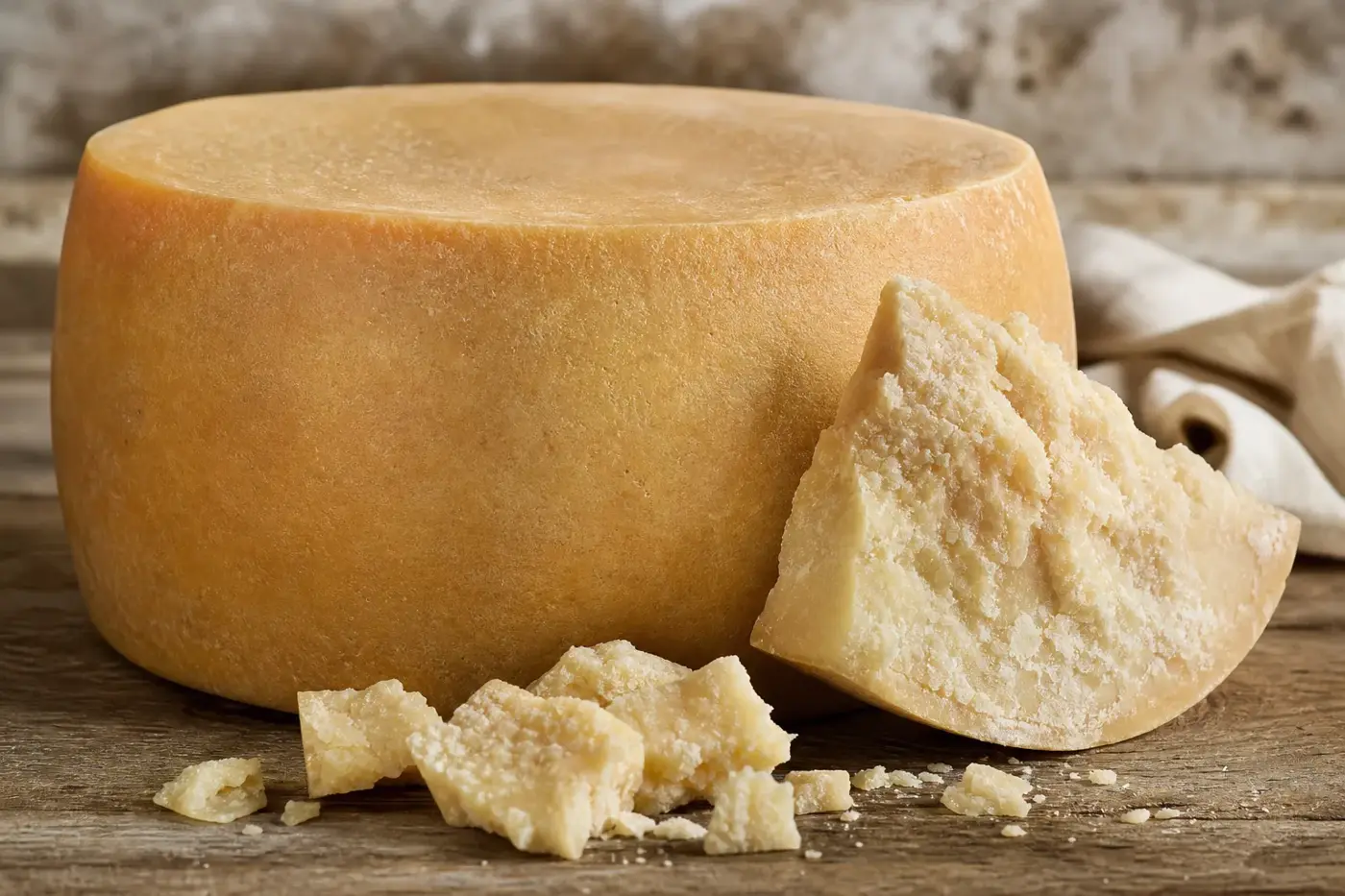
Parmigiano Reggiano
Break into a wheel of Parmigiano Reggiano and flakes fall away, revealing a finely granular cheese, pale straw to straw in colour.