Quartirolo Lombardo
Picture the end of September in Lombardy: cattle coming down from the mountain pastures, with a last flush of fresh grass waiting below.
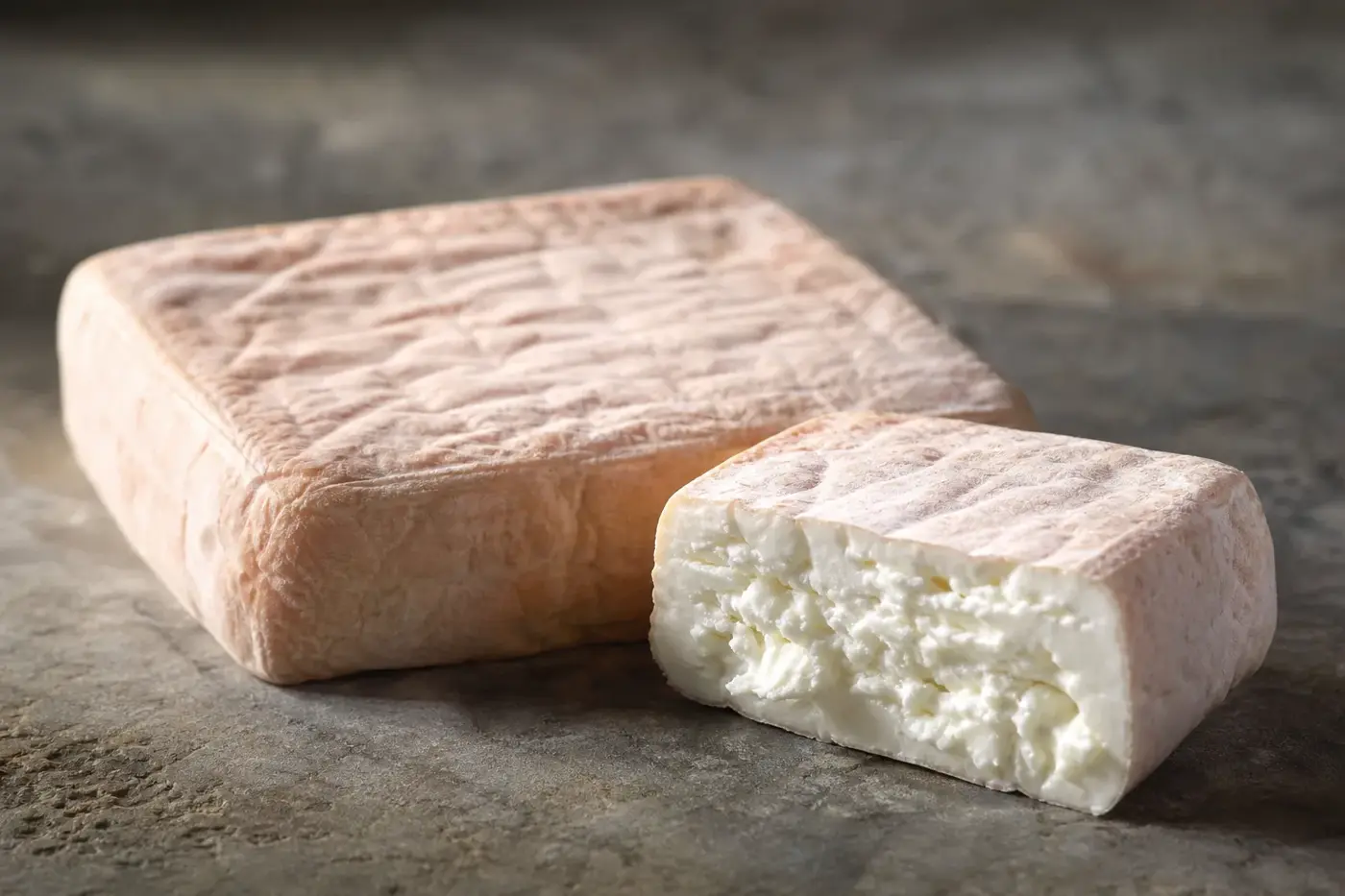
Picture the end of September in Lombardy: cattle coming down from the mountain pastures, with a last flush of fresh grass waiting below. That fourth growth gives Quartirolo Lombardo its name, according to the producers’ consortium. In this square cow’s milk cheese, you can taste another change of season: a young, crumbly paste with a slightly acidulous tang becomes softer and more aromatic as it ripens. It also carries a protected designation of origin in Great Britain. [1,2,3]
Your quick guide to the square
| What to look for | The details |
|---|---|
| Familiar and registered name | Quartirolo Lombardo [1,2] |
| Registration authority | European Union; European Commission [1] |
| Protection | EU: current status unconfirmed; Great Britain: registered PDO, effective 31 December 2020, review dated November 2026 [2]; Northern Ireland, Switzerland and the United States: unconfirmed |
| Registration instrument | Commission Regulation (EC) No 1107/96 [1] |
| Milk | Cow’s milk, raw or pasteurised; whole, or whole combined with partially skimmed milk [1,4] |
| Coagulant | Calf rennet [1] |
| Minimum ripening by law | 2 days under the PDO specification [1] |
| Ripening categories | Fresco: 2 to 30 days; maturo or stagionato: over 30 days [1] |
| A whole cheese | Square; sides 18 to 22 cm; height 4 to 8 cm; weight 1.5 to 3.5 kg [1] |
| When it is made | Year-round, according to the consortium [3] |
Follow the cattle to the fourth grass
Erba quartirola is the grass that grows after the third hay cut. In the consortium’s account, cattle descend from the mountains towards the end of September. They reach the lower pastures just as this final fresh growth becomes available. [3]
Summer grazing above, autumn forage below, then milk turned into cheese: you can follow a whole farming rhythm through the name. It ties Quartirolo Lombardo to the closing season, when those lower pastures offered one last helping of fresh grass. [3]
Today, its production boundary takes you across ten provinces: Bergamo, Brescia, Como, Cremona, Lecco, Lodi, Milano, Monza e della Brianza, Pavia and Varese. Both milk production and cheesemaking must happen within this area. The cows supplying the milk must live there, too. [1]
The consortium says production now continues throughout the year. The permitted ration includes cereals, dry and green forage, silage and allowed supplements. Autumn pasture remains part of the cheese’s traditional identity, but the present specification allows a broader farming system: not every cheese requires fourth-growth grazing. [1,3]
From the milking pail to that familiar square
Every Quartirolo Lombardo begins with at least two milkings. Milk from the first is used whole; the second and subsequent milkings may provide whole or partially skimmed milk. Both raw and pasteurised milk are permitted, so your particular cheese’s label is the place to look if you want to choose between them. [1,4]
Calf rennet separates the milk into curd, the soft solid mass, and liquid whey. A dairy may use a milk starter from its own previous production or selected cultures. For a closer look at milk treatments, turn to raw milk, thermised and pasteurised cheese. [1]
| Stage | What happens in the dairy |
|---|---|
| Setting | Calf rennet coagulates the milk at 35 to 44 °C, within 25 minutes. [1,4] |
| Cutting | Two cuts, with a rest between them, bring the curd down to roughly hazelnut-sized pieces. [1,5] |
| Moulding | Curd and whey go into moulds; repeated turning and warm draining establish the square shape. [5] |
| Salting | Salt goes on dry, or the cheese takes a brine bath. [1,5] |
| Ripening | Cheeses are turned and sponged with water and salt. [1,4] |
That warm draining stage has a name worth knowing: stufatura. Under the specification, it lasts 4 to 24 hours, with conditions adjusted to the curd’s acidification and moisture loss. Ripening follows at 2 to 8 °C and 80 to 95% relative humidity. These are controlled dairy conditions, not instructions for your fridge; household guidance comes below. [1,4]
Are you after a crumble or a softer bite?
Put a knife to Quartirolo Lombardo and its age begins to show. The specification describes the young paste as slightly lumpy and friable, with occasional small separations. As it ripens, the paste becomes more compact, soft and melting, while the aroma grows more pronounced. [1,4]
| What you will notice | Fresco | Maturo or stagionato |
|---|---|---|
| Age under the PDO specification | 2 to 30 days | More than 30 days |
| Rind | Thin, soft, pinkish white | Grey-green to reddish with maturity |
| Paste colour | White to pale straw | May deepen |
| Texture | Slightly lumpy and crumbly | Increasingly compact, soft and melting |
| Flavour and aroma | Slightly acidulous and aromatic | More aromatic and intense |
Both categories are described in the Quartirolo Lombardo PDO specification. You are choosing between stages in the same cheese’s development. [1]
Start with the texture you fancy: distinct pieces that break apart, or a softer bite with a more developed aroma. Then ask your cheesemonger for the cheese’s age, not just its category. Fresco and maturo give you the broad picture; the age helps bring your particular portion into focus. [1]
At the counter, read the name and ask its age
Look for the full name, Quartirolo Lombardo, and the cheese’s logo. The specification requires both on packaging for whole cheeses and portions. Fresco is optional for cheese aged 2 to 30 days; beyond 30 days, maturo or stagionato accompanies the name. [1]
A whole cheese also carries an impressed origin mark on one flat face, including the dairy’s identification number. Your small cut portion may not carry that impression, so ask to see the original wrapper or the whole cheese’s identification. The mark belongs on the cheese; the packaging information must accompany the portion. [1]
PDO means protected designation of origin; DOP is the Italian abbreviation. It connects a defined place with a prescribed way of making the cheese. Great Britain’s register lists Quartirolo Lombardo as registered, with protection under its scheme effective from 31 December 2020, separately from the original EU registration. For the differences between schemes, see PDO, PGI and TSG. [1,2]
Now picture your meal. Fresco suits a salad where you want distinct pieces; a mature portion suits a board exploring texture and ripening. Ask about milk treatment, age, the maker’s rind advice and storage instructions. For more useful counter questions, turn to reading a cheese label.
Make room for its Lombard neighbour, Taleggio
Square shapes and Lombard origins connect Quartirolo Lombardo and Taleggio, but each has its own PDO registration in Great Britain. That journey from friable youth to softer, more aromatic maturity describes Quartirolo Lombardo, rather than Taleggio. Sharing a silhouette does not make them interchangeable. [1,8]
For a side-by-side tasting, begin with the young Quartirolo. Notice how each portion breaks, yields and lingers after swallowing, and taste the rind separately from the centre. Let the portions on your board guide the comparison, giving each cheese room to show its character. Read Taleggio for a closer look at that regional neighbour.
Give the cheese a moment before the chutney
Start with plain bread, a little fresh fruit and enough room to taste before reaching for chutney. Try a piece alone, then return to it with bread. This gives the young cheese’s tang, or the mature cheese’s more developed aromatic character, your full attention before the accompaniments arrive. [1]
The square shape makes manageable slices or blocks easy; not every cheese needs to audition as a wedge. If you serve both ages, put them beside one another and keep their labels. Note texture, acidity and aroma as you taste. Those details tell you more for your next purchase than simply recording which one you preferred.
Take your square from barley salad to vegetable tart
The consortium’s barley salad brings diced Quartirolo Lombardo together with courgettes, cherry tomatoes, olive oil and thyme. It gives you a starting point for a substantial salad, with grain and vegetables around the cheese and the dice still distinct and recognisable. The recipe comes from the consortium, which represents producers and promotes the cheese. [6]
Its courgette tarte tatin offers a warm alternative. For a vegetable tart, consider mature cheese for the softer, more yielding paste described in the specification. Decide whether you want separate pieces of cheese or cheese blended through a filling. Then choose the age to suit the job. [1,7]
Keep the cheese at the centre rather than crowding it with competing ingredients. Begin with a restrained salad dressing or a modest number of ingredients in your tart. Taste your chosen portion before settling the accompaniments, then adjust them to suit it. The cheese has already done the ageing; your lunch need not become a major project.
Pour something simple and keep tasting
Try sparkling water with young Quartirolo Lombardo, or unsweetened, lightly brewed black tea with the mature cheese. These are serving suggestions, not recorded tasting pairings. Each gives you a simple accompaniment while you explore what changes between the two ages.
Into the fridge, with the label close by
For households in England, Wales and Northern Ireland, the Food Standards Agency advises a fridge temperature of 0 to 5 °C (32 to 41 °F). Follow your particular cheese’s storage instructions and date, including any directions for after opening. Keep the wrapper or label with a cut portion, so those instructions stay to hand. [9]
Before leaving chilled cheese out of the fridge, households in England, Wales and Northern Ireland should consult the FSA’s current advice and follow the cheese’s storage instructions. [9] For the wider household routine, including keeping the relevant information with each cheese, see how to store cheese at home.
Wondering about the rind? Ask about your piece
Start with the maker’s or supplier’s instructions. Quartirolo Lombardo’s specification describes a thin, soft rind whose colour changes with maturity, and prohibits rind treatments beyond the prescribed maturation care. The seller’s technical sheet for Antica Fattoria mature Quartirolo Lombardo explicitly describes that product’s rind as edible. [1,10]
When you buy a cut piece, ask whether its rind is intended to be eaten, alongside your questions about storage. Keep the answer with the label. That small habit is particularly useful when several cheeses share a board and each set of instructions needs to stay with the right portion.
Follow your cheese curiosity a little further
- How to Tell Cheese Styles Apart: Milk, Rind, Texture and Method: a useful framework for comparing the cheeses on your board.
- Rennet Explained: Animal, Microbial and Fermentation Produced: explore the differences between coagulants, including the calf rennet specified here.
General information only, not medical advice: follow the official guidance where you live.
Questions people ask
Where is Quartirolo Lombardo made?
Milk production and cheesemaking must take place within ten specified provinces in Lombardy. The cows supplying the milk must also be kept within this area.
What does Quartirolo Lombardo taste like?
Young Quartirolo Lombardo is slightly acidulous and aromatic, with a crumbly texture. As it ripens, it becomes softer and more melting, with a more intense aroma.
Is Quartirolo Lombardo made with raw or pasteurised milk?
The specification permits both raw and pasteurised cow’s milk. Check the label of the particular cheese when choosing between them.
Does Quartirolo Lombardo contain animal rennet?
The specification calls for calf rennet. It is used to separate the milk into curd and whey.
How should I store Quartirolo Lombardo?
For households in England, Wales and Northern Ireland, the Food Standards Agency advises a fridge temperature of 0 to 5 °C. Follow the cheese’s storage instructions and date, and consult the FSA’s current advice before leaving chilled cheese out of the fridge.
Sources
- Ministero dell’agricoltura, della sovranità alimentare e delle foreste. Disciplinare di produzione della denominazione di origine protetta «Quartirolo Lombardo», specification corresponding to the 2017 revision, Articles 1 to 8. Official specification PDF.
- Department for Environment, Food & Rural Affairs. Quartirolo Lombardo, Great Britain protected food name register entry, published 4 January 2021; live record checked November 2026. Register entry.
- Consorzio Tutela Quartirolo Lombardo. La storia, undated account, checked November 2026. The consortium’s account is the source for the pasture tradition and explanation of the name. History.
- Consorzio Tutela Quartirolo Lombardo. Cartella stampa, revision January 2025, sections on the product, production area and manufacturing. Press information PDF.
- Consorzio Tutela Quartirolo Lombardo. Come si produce, undated manufacturing account, checked November 2026. Production account.
- Consorzio Tutela Quartirolo Lombardo. Insalata d’orzo con Quartirolo Lombardo e zucchine in fiore, undated recipe, checked November 2026. Recipe.
- Consorzio Tutela Quartirolo Lombardo. Tarte tatin con zucchine e Quartirolo Lombardo, undated recipe page, checked November 2026. Recipe page.
- Department for Environment, Food & Rural Affairs. Taleggio, Great Britain protected food name register entry, published 4 January 2021; live record checked November 2026. Register entry.
- Food Standards Agency. How to chill, freeze and defrost food safely, published 18 December 2017, current page checked November 2026. Applies to England, Northern Ireland and Wales. Official household guidance.
- Azienda Spini Uova. Scheda tecnica Quartirolo Lombardo stagionato D.O.P., Antica Fattoria, article 90441, undated technical sheet, checked November 2026. Product-specific supplier declaration. Technical sheet PDF.
Researched through the ministry-hosted specification, Great Britain’s official register, consortium publications, official household guidance and a product-specific supplier document; serving and drink suggestions are editorial judgements.
Last checked: November 2026
Last checked November 2026.
The editors suggest you read next
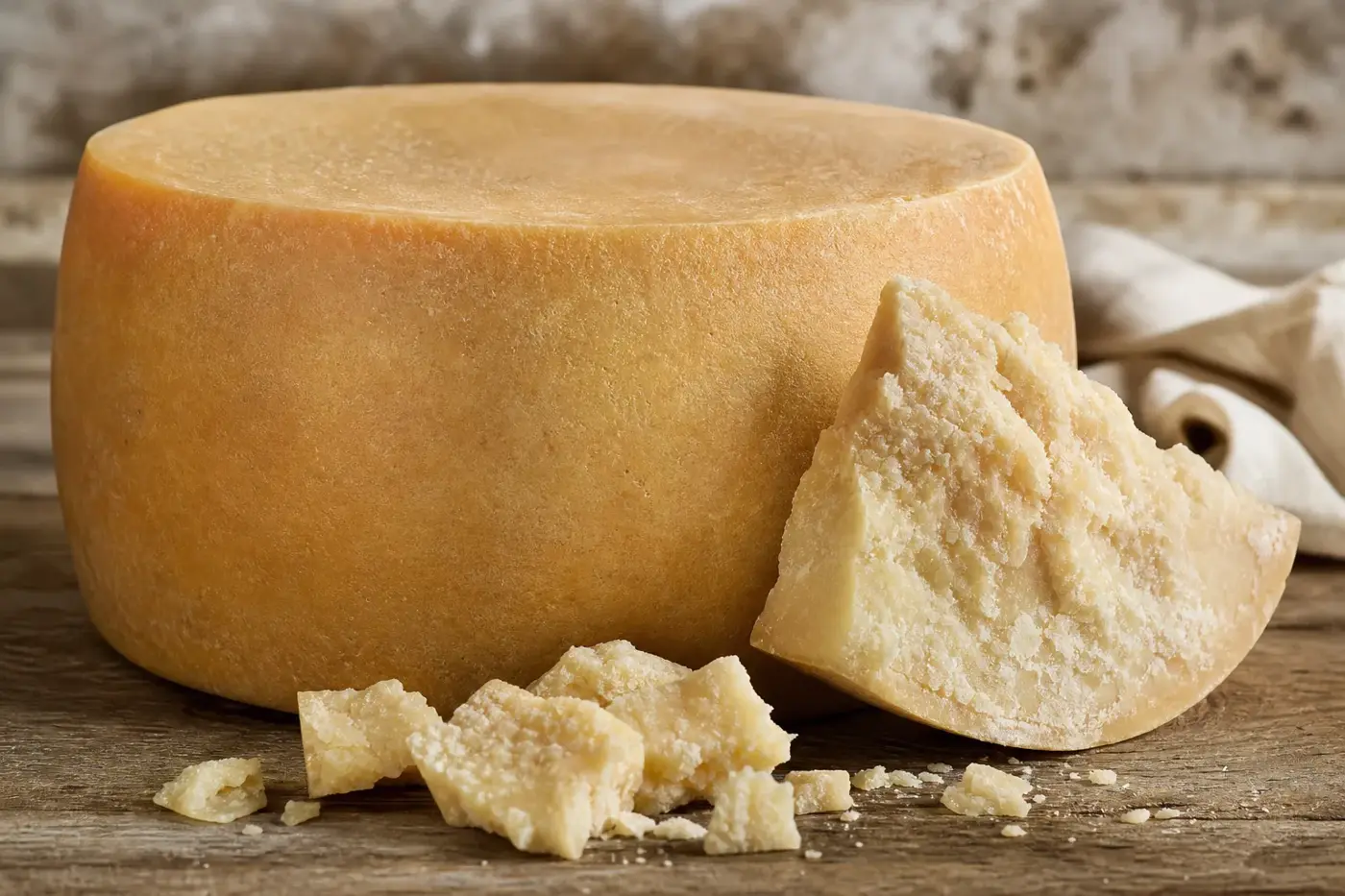
Parmigiano Reggiano
Break into a wheel of Parmigiano Reggiano and flakes fall away, revealing a finely granular cheese, pale straw to straw in colour.