Queso Nata de Cantabria
Your knife slips through a soft, bone-coloured rind into a pale interior, solid yet creamy.
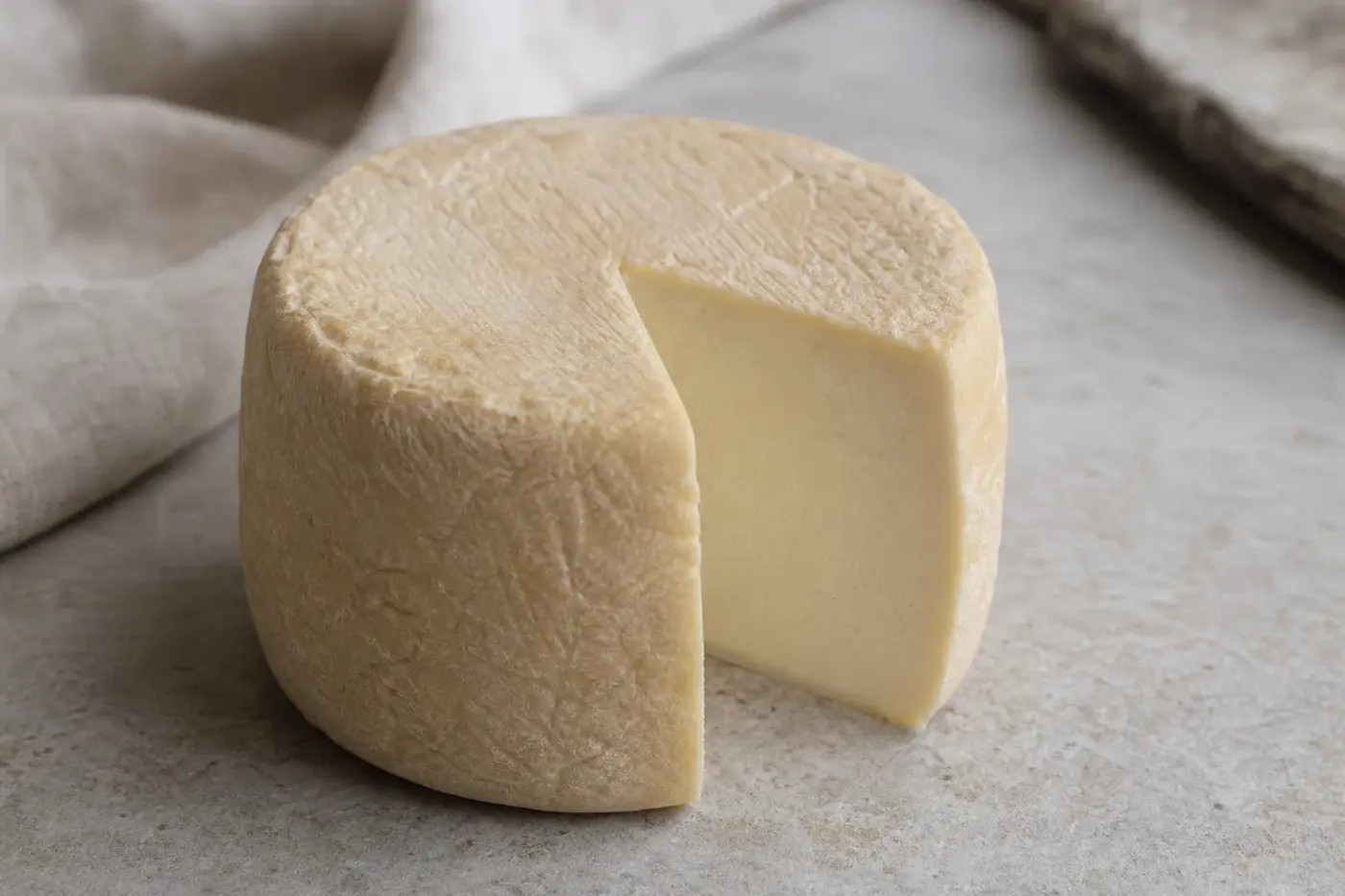
Your knife slips through a soft, bone-coloured rind into a pale interior, solid yet creamy. Queso Nata de Cantabria brings the mild flavour of cow’s milk cheese and a little of northern Spain’s green dairy country to your plate. Its story begins with a nineteenth-century development of pressed-paste Pasiego cheese; today, its protected name ties local milk to a defined corner of Cantabria. Bring bread, fruit and an appetite. It is not a demanding guest.[1][2]
Get acquainted before your first slice
- Name to look for: Queso Nata de Cantabria.[2][3]
- Cheese style: Pressed, ripened cow’s milk cheese.[1]
- Spanish designation: DOP, denominación de origen protegida.[2]
- Great Britain: Registered PDO, registration effective 31 December 2020 at 23:00.[3]
- EU register identifier: Not established here.
- Home territory: Cantabria, excluding the Urdón and Cervera river basins.[1][2]
- Milk: Whole milk from Friesian cows; pasteurised production described in the specification.[1]
- What sets the milk: Animal rennet or other coagulating enzymes authorised by the Consejo Regulador.[1]
- Minimum maturation: Seven days after salting finishes.[1]
- Typical maturation: Not established here.
- Shapes and sizes: Cylinders or rectangular blocks, 400 g to 2.8 kg.[1][2]
- Fat: At least 45% fat in dry matter.[1]
- Status as of: November 2026.[2][3]
Follow your cheese into green Cantabria
Picture moist valleys, mountain country and abundant vegetation. This is the landscape in the official origin account: Atlantic dairy country, with Friesian cattle at the heart of farming. The local tradition of pressed-curd cheese was here long before the modern protected name.[1][2]
The European Commission’s published origin summary traces Queso Nata de Cantabria to a nineteenth-century development of pressed-paste Pasiego cheese. In your slice is a history of dairy farming, established local cheesemaking and the adoption of pressing. This cheese has roots, not just a brand name.[2]
The boundary matters as much as the scenery. Both milk production and cheesemaking must happen in Cantabria, excluding the catchments of the Urdón and Cervera rivers. A Cantabrian address alone cannot tell you what the full protected name and certification do: the countryside provides the setting, while the specification sets the requirements.[1][2]
How a familiar cheese got its full name
You will find Queso Nata de Cantabria listed as a DOP by Spain’s agriculture ministry. In English, that is protected designation of origin, or PDO. It brings defined geographical and production rules, with controls covering the milk, manufacture and finished cheese.[1][2]
Even the name has a little history. In 1996, the cheese entered the EU register as Queso de Cantabria. Spain’s 2007 order changed the Spanish designation to Queso Nata de Cantabria, explaining that this better reflected how consumers already understood the cheese.[4]
Great Britain has a separate entry for Queso Nata de Cantabria, recorded as registered PDO with effect from 31 December 2020 at 23:00.[3] Wondering where a geographical name ends and a cheese style begins? You can untangle the distinction in protected names explained.
Whole milk, small curds and a careful press
The work begins with whole milk from Friesian cattle on registered farms within the production area. The specification describes pasteurised milk being used. When you choose your piece, follow those details rather than assuming green farming country automatically means raw milk.[1]
First, coagulation turns liquid milk into a gel. Cutting it produces curds, the soft mass that separates from liquid whey. The historical specification permits animal rennet, an enzyme preparation used to set milk, or other coagulating enzymes authorised by the Consejo Regulador.[1] If that matters to your choice, ask which one the maker uses.
Next comes a precise sequence: coagulation at 30 °C for 40 minutes, cutting into grains about 5 mm across, then warming those grains to 34 °C. The curd goes into moulds for pressing, which lasts no more than 24 hours. A brine bath follows, also lasting no more than 24 hours.[1]
Ripening begins after salting, with turning and cleaning during maturation. Each stage contributes to the cheese you eventually slice. For a closer look at cutting, draining and pressing, follow how cheese is made.[1]
Take a good look at that first slice
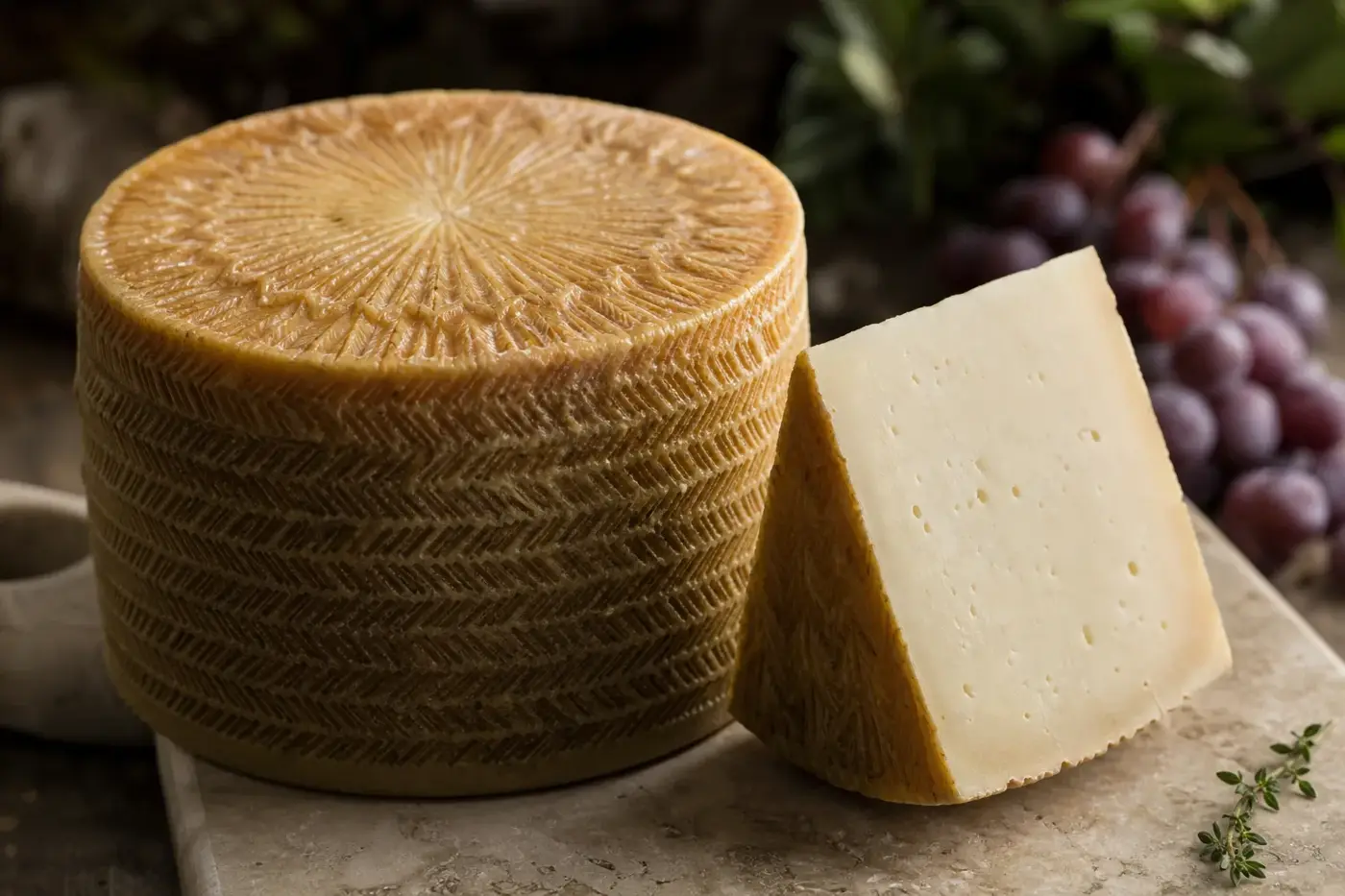
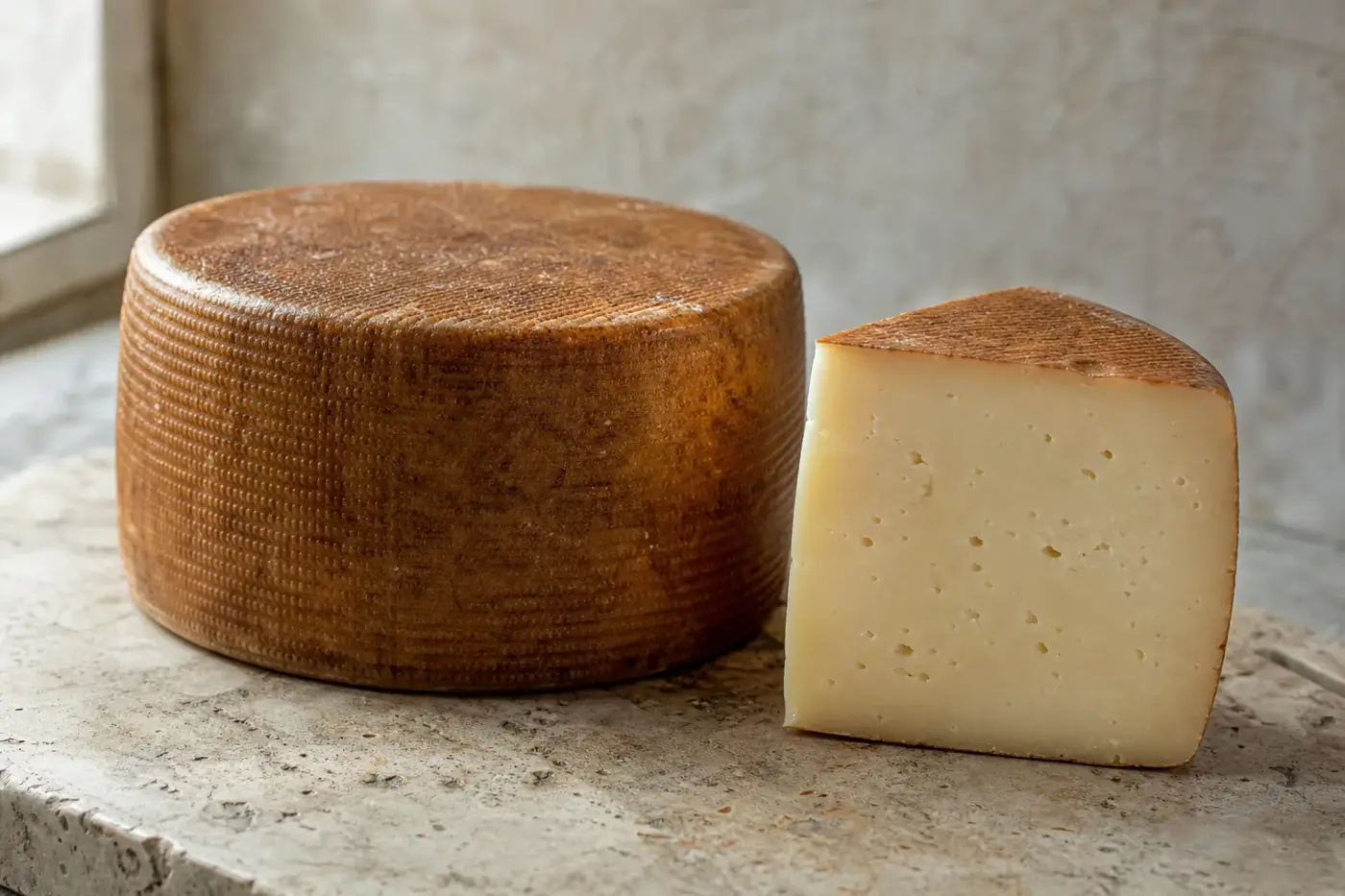
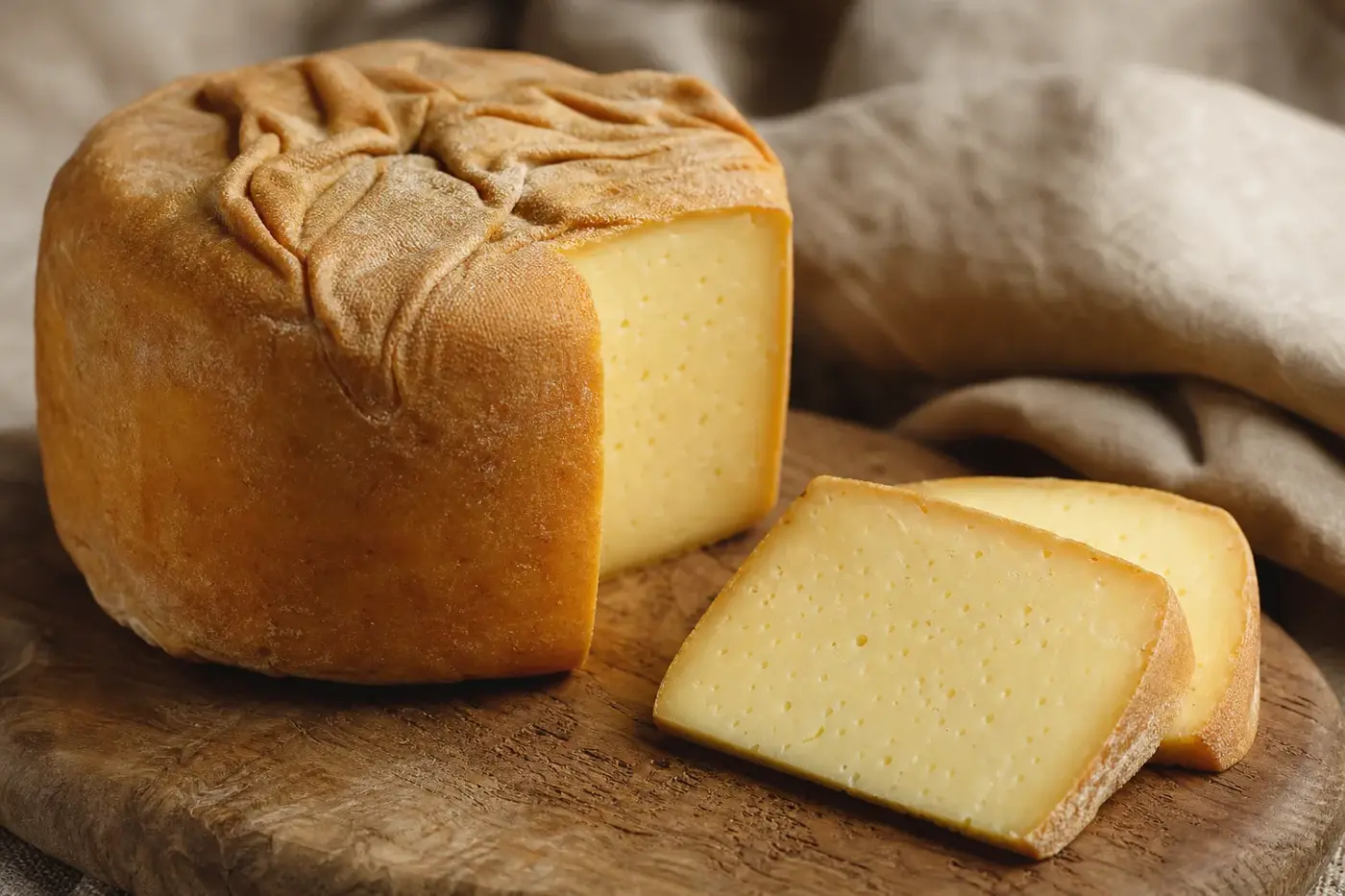
You might find this cheese as a cylinder or a rectangular block, both with smooth, flat faces. Permitted weights range from 400 g to 2.8 kg. There is room for small whole cheeses and larger ones destined for the cutting counter.[2]
The historical specification describes a soft, bone-coloured rind and a similarly pale interior. The paste is usually without eyes, those openings you see in some cheeses, and its stated texture is solid and creamy.[1] Buying a cut portion? Ask to see the whole cheese or its original label alongside the exposed face.
This is a cheese to slice, not scoop. Start with a modest piece and notice whether it holds a clean edge, yields under gentle pressure and feels smooth as you eat. Those little observations help you find what you enjoyed when you next visit the counter.
What does the nata in the name promise?
Nata means cream in Spanish, but the name needs a little unpacking. The production specification starts with whole milk; the name does not indicate added cream. The official explanation concerns established consumer usage and perception, not a new cream-enrichment step.[1][4]
“Solid” and “creamy” are the historical specification’s words for the texture.[1] Ask your cheesemonger about the flavour and aroma of the particular cheese in front of you. Then give it a mouthful to itself, before bread or fruit joins the conversation.
Let that first taste guide you. If the cheese seems especially gentle, keep its company simple with bread and fruit; for a sharper contrast, try a little tart apple. Too many strongly flavoured extras can turn your cheese into a supporting act on its own plate.
Seven days, then a question for your cheesemonger
The minimum maturation is seven days, counted from the end of salting. That clock begins after the brine stage, not when the milk first arrives at the dairy.[1]
The official product summary covers tender to semi-cured cheese.[2] Ask how long your particular cheese has matured, and how its flavour and texture compare with a younger one. You will learn more from that answer than from the minimum age alone.
At the counter, ask to see the label
Look for the full name Queso Nata de Cantabria and the numbered certification back label issued by the Consejo Regulador. Published labelling requirements make the name compulsory and require authorised labels. The numbered back label provides the designation’s identification.[2][4]
Buying from a cutting counter? Ask to see that identification on the original cheese. If you enjoy your purchase, note the maker’s name and ask about maturation and the coagulant: certified cheeses need not all use the same permitted option.
Keep the retailer’s storage instructions with your cheese. When the rest of the packaging needs a little decoding, turn to how to read a cheese label.
Bring bread, fruit and something warm
Begin with plain bread, then put pear or apple beside your second piece. Bread keeps the cheese at the centre of the mouthful; fruit offers a fresh contrast. Serve them separately so you can choose your own balance of sweetness and acidity.
For an uncomplicated meal, tuck slices into a warm bread roll or add small pieces to cooked potatoes. These are serving ideas suited to the cheese’s mild character, not traditional recipes. Keep chilli, smoked ingredients and assertive sauces optional, especially when you are getting to know a new maker’s cheese.
Start with water so you can taste the cheese clearly. Afterwards, choose an alcohol-free drink you enjoy. Give it a place at the table without letting it become the loudest flavour there.
Keep your cheese cool and well wrapped
In UK homes, the Food Standards Agency advises a fridge temperature of 5 °C or below. Follow the pack’s storage instructions and keep chilled food out of refrigeration for the shortest time possible.[7] Protect cut cheese with food-safe wrapping and place it in a covered container.[8]
For US households, the FDA advises refrigeration at 4.4 °C (40 °F) or below, with covered containers or sealed storage bags. Its consumer guidance says to refrigerate perishable food within two hours. When the temperature is above 32.2 °C (90 °F), that becomes one hour.[8]
When you serve, consult current Food Standards Agency advice in the UK or FDA advice in the US about keeping chilled food out of refrigeration.[7][8] For more help with wrapping and refrigeration, see how to store cheese at home.
Make room for its cheeseboard neighbours
Put these cheeses side by side and their shapes give you an immediate clue. Galicia’s regional authority describes Queso Tetilla as conical, with a soft, creamy paste. Arzúa-Ulloa is lenticular, like a flattened lens, with a thin, elastic rind; both belong to Galicia’s cow’s milk cheese traditions.[5][6]
Queso Nata de Cantabria stands apart with its cylinder or block shape, Friesian milk requirement and Cantabrian production area.[1][2] If you fancy a similarly gentle alternative for bread and fruit, consider young Tetilla or young Arzúa-Ulloa. Before swapping either into your cooking, check the texture of the individual cheese.[5][6]
General information only, not medical advice: follow the official guidance where you live.
Questions people ask
What does Queso Nata de Cantabria taste and look like?
It is a mild cheese with a solid, creamy paste. It has a soft, bone coloured rind and a pale interior that is usually without eyes.
Is Queso Nata de Cantabria made with pasteurised milk?
The specification describes using pasteurised whole milk from Friesian cows. The cows must be kept on registered farms within the production area.
Is Queso Nata de Cantabria vegetarian?
The specification permits animal rennet or other coagulating enzymes authorised by the Consejo Regulador. Ask the maker which coagulant is used in a particular cheese.
How long is Queso Nata de Cantabria matured?
The minimum maturation is seven days, counted from the end of salting. The official product summary covers tender to semi cured cheese.
How should Queso Nata de Cantabria be stored?
The Food Standards Agency advises a fridge temperature of 5 °C or below in UK homes. Follow the pack’s storage instructions and consult current Food Standards Agency guidance.
Sources
-
Ministerio de Agricultura, Pesca y Alimentación, hosted by Cantabria’s Oficina de Calidad Alimentaria. Denominación de Origen “Queso de Cantabria”: expediente de solicitud de registro, undated historical specification, sections B to F and H. The document retains the earlier registered name. Official specification PDF.
-
European Commission and Spain’s Ministerio de Agricultura, Pesca y Alimentación. Commission publication Solicitud de modificación: “Queso Nata de Cantabria”, Official Journal C 288, 25 November 2006, updated summary, sections 4.1 to 4.8; read alongside the ministry’s current DOP listing, which identifies its specification as effective from 18 September 2007. Official Journal document; ministry listing.
-
Department for Environment, Food & Rural Affairs. Queso Nata de Cantabria, Great Britain protected food names register, published 4 January 2021, live entry checked November 2026. Register entry.
-
Ministerio de Agricultura, Pesca y Alimentación. Orden APA/398/2007, de 13 de febrero, por la que se ratifica la modificación del Reglamento de la Denominación de Origen Protegida «Queso de Cantabria», published in BOE on 26 February 2007. Preamble and annex explain and enact the Spanish name change. Official text, BOE-A-2007-4049.
-
Axencia Galega da Calidade Alimentaria, Xunta de Galicia. DOP Queso Tetilla, undated live product account, checked November 2026, raw materials and product characteristics. Official regional account.
-
Axencia Galega da Calidade Alimentaria, Xunta de Galicia. DOP Arzúa-Ulloa, undated live product account, checked November 2026, production area and product characteristics. Official regional account.
-
Food Standards Agency. Storing chilled foods at incorrect temperatures, research report, 2023, summary of household chilling guidance. Official report page.
-
US Food and Drug Administration. Refrigerator Thermometers: Cold Facts about Food Safety, live consumer guidance checked November 2026, “Refrigerator strategies”, “Quick chill” and “Safe food handling”. Official guidance.
This piece was researched from official designation documents, national register information, regional food authority accounts and national consumer food safety guidance, with serving suggestions identified as editorial recommendations.
Last checked: November 2026
Last checked November 2026.
The editors suggest you read next