Rachel
Your knife passes through Rachel’s mottled, brine-washed rind and finds something gentler beneath.
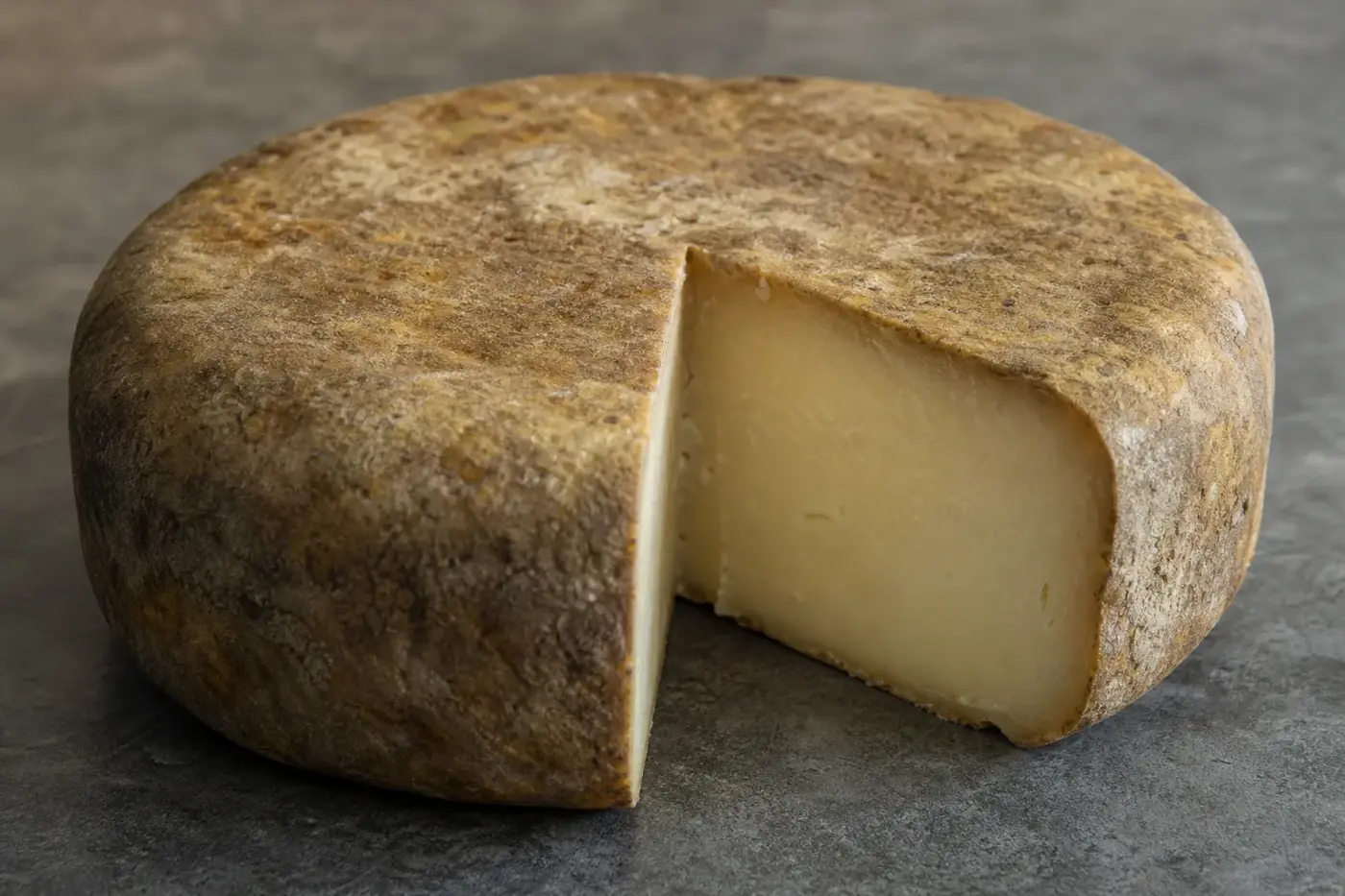
Your knife passes through Rachel’s mottled, brine-washed rind and finds something gentler beneath. This Somerset goat’s milk cheese is firm but yielding, with a texture White Lake Cheese compares to young Gouda. The maker describes a mild, sweet flavour: a semi-hard cheese whose character comes from goat’s milk and the ripening of its surface.[1]
| Your quick introduction | What to know |
|---|---|
| Name | Rachel.[1] |
| Maker | White Lake Cheese.[1] |
| Home address | Bagborough Farm, Pylle, near Shepton Mallet, Somerset, England.[2][3] |
| Milk and its treatment | Goat’s milk; thermised, described by the maker as unpasteurised.[1] |
| What sets the milk | Vegetarian rennet, according to the maker.[1] |
| Style and rind | Semi-hard; brine-washed.[1] |
| Usual ageing | Around three months, according to affineur Rennet & Rind.[5] |
Get past the rind’s first impression
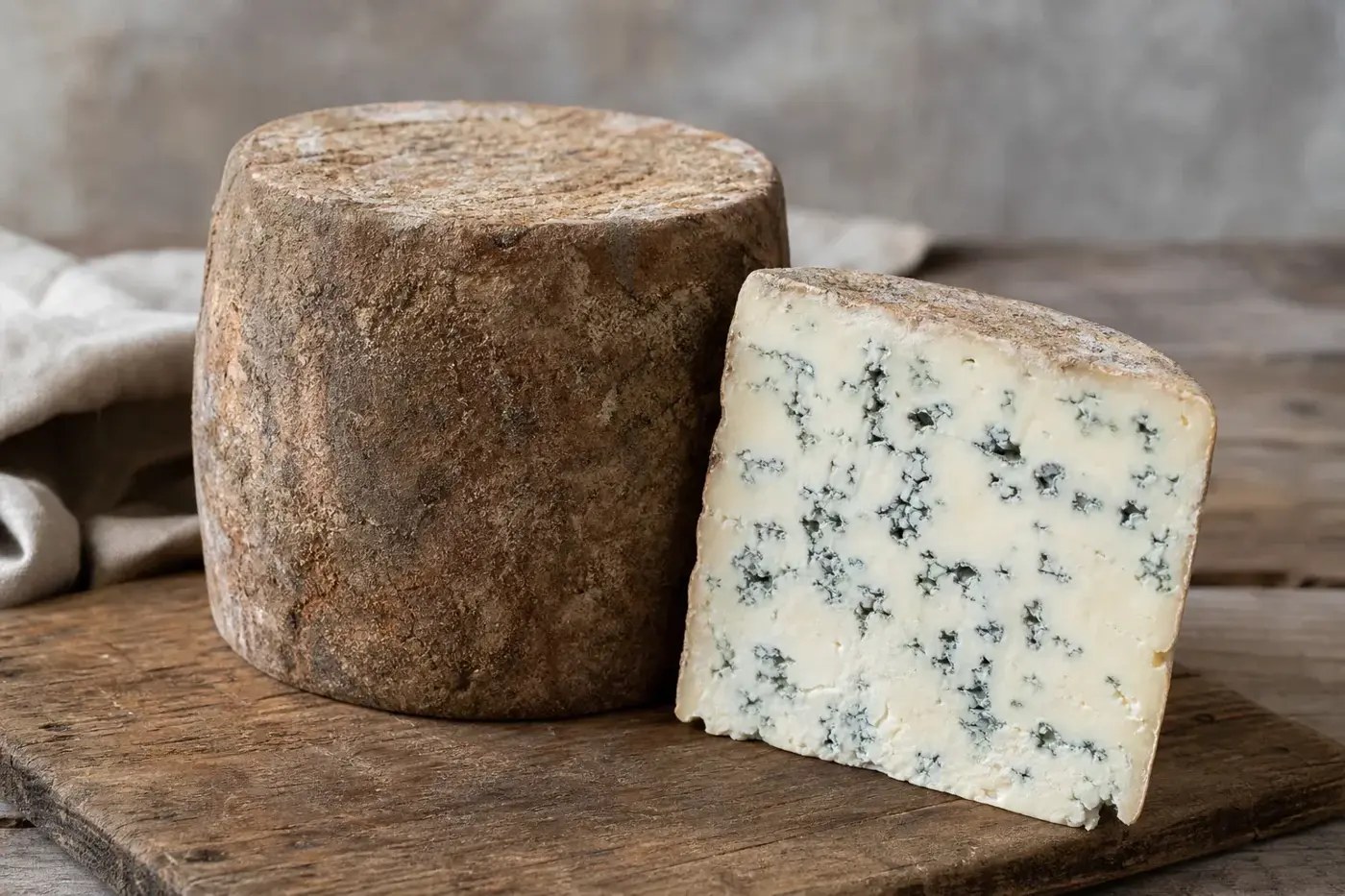
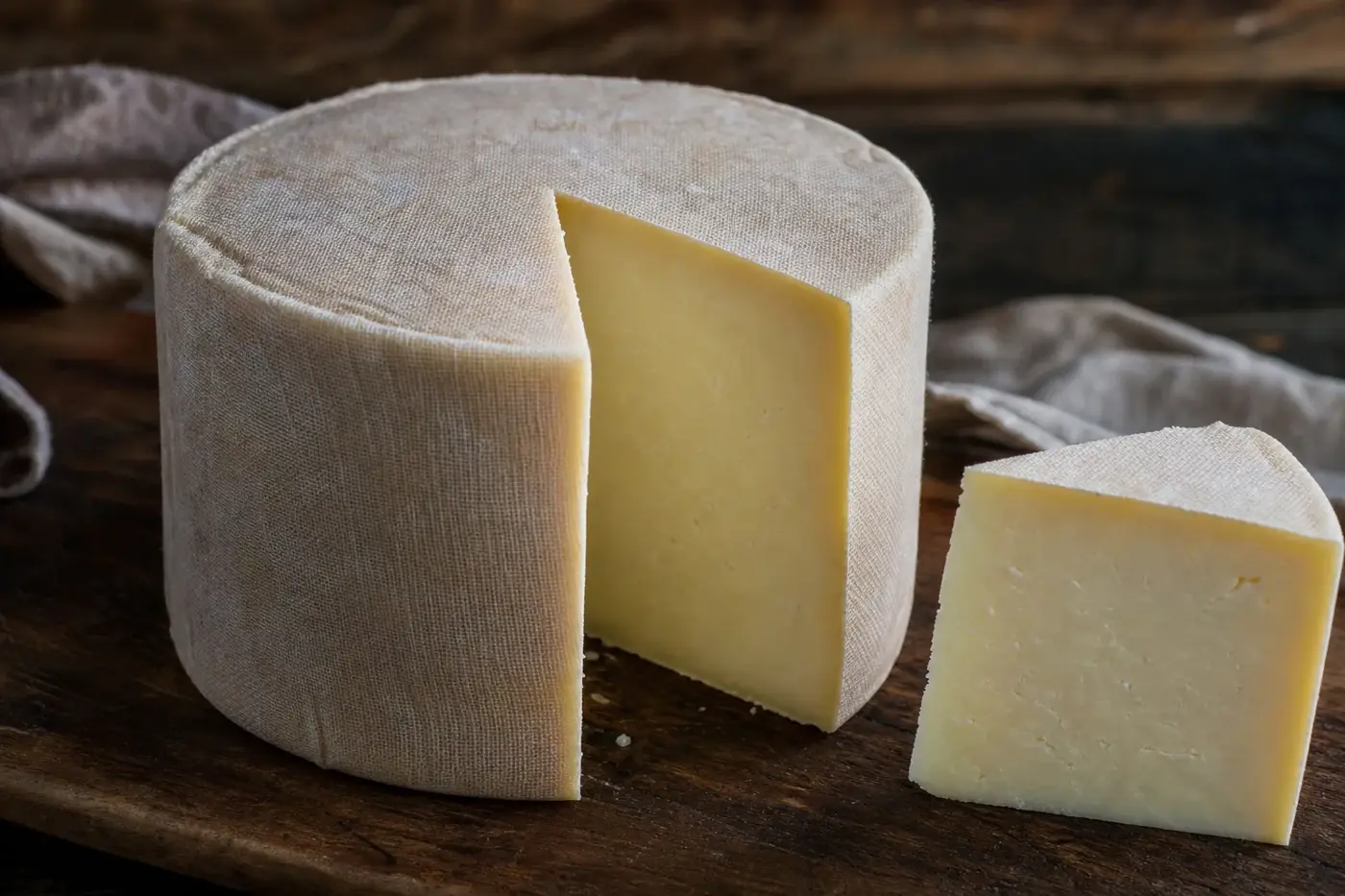
In White Lake’s photographs, Rachel is a low, rounded wheel with an uneven, mottled exterior. Pale and yellow patches interrupt a brownish background, giving you an individual-looking rind rather than a uniform coating. The maker describes its possible colour as fawn to dark brown.[1][8]
The outside and inside have different stories to tell. Look first at the rind, then at the cut face, called the paste in cheesemaking. Taken separately, they make the contrast clear: a distinctive surface surrounding a comparatively restrained cheese.
White Lake’s young Gouda comparison gives you a useful starting point for texture. Think slicing, not spreading. Rennet & Rind, which matures Rachel itself, describes a pliant cheese with some chew.[1][4] Cut a manageable slice and give it your attention before the bread and chutney start lobbying for a place.
Texture deserves as much attention as flavour. Milk, texture and rind all help you identify a cheese, and Rachel makes most sense when you consider the three together. For a wider view, explore how to tell cheese styles apart.
Follow the lane to Rachel’s Somerset home
Rachel comes from Bagborough Farm, not simply “somewhere in Somerset”. White Lake describes its production base as near Glastonbury and gives its address as Pylle, Shepton Mallet. Its account of the facility describes a place arranged for small-batch cheesemaking, with room for experimentation and development.[2][3]
That address gives the county name a little more substance. Somerset puts Rachel on the map; Bagborough Farm tells you where it is made. Both belong on a cheeseboard card, but the farm brings the cheese’s origins into sharper focus.
White Lake’s history begins in 2004, on a family farm with cheesemaking roots stretching back to the 1930s. Today, the dairy’s range uses goat’s, sheep’s and cow’s milk.[2] Rachel belongs to that wider exploration of different milks and cheeses, rather than standing in for everything White Lake makes.
If you are finding your way around British cheese, this is a useful place to begin. You have a named cheese, a particular Somerset maker, and clear details about how its milk and rind are treated. Those particulars tell you more than an assumed national flavour ever could.
Read the small print on the milk
Look closely at Rachel’s milk description and one word deserves your attention: thermised. Its product information reads “Unpasteurised: Yes (Thermised)”.[1] White Lake describes thermisation as a heat treatment distinct from pasteurisation.[6]
Keep both parts together when you read about Rachel. “Unpasteurised” is the maker’s broader category, while “thermised” gives you the more precise treatment. For more on that distinction, turn to raw milk, thermised and pasteurised cheese.
White Lake’s current account includes milk from its own French Alpine goats among the dairy’s supplies.[2] That gives you an own-herd connection to the cheese’s maker. The account does not, however, assign every milk source to individual batches of Rachel.
The maker also declares vegetarian rennet.[1] Rennet is the coagulant that sets milk into curd, making it an important detail when you read the ingredients. Vegetarian rennets can come from different sources; rennet explained helps you untangle those differences rather than treating the term as a single ingredient.
Salt water and the patient work of ageing
Rachel’s brine wash is one of the details that makes it Rachel. Alongside the milk treatment, coagulant and subsequent care, it gives you a clear outline of production. You do not need a generic cheesemaking recipe to fill in the gaps.
| Along the way | What you can learn |
|---|---|
| Preparing the milk | Thermised goat’s milk.[1] |
| Setting the milk | Vegetarian rennet.[1] |
| Developing the rind | Brine-washed.[1] |
| Usual maturation | Around three months, according to Rennet & Rind.[5] |
Brine is salt water, applied to the outside of the formed cheese. White Lake’s terminology guide connects this kind of washed-rind care with distinctive surface colour and a deeper flavour.[6] For Rachel, the specified wash is brine.
Ageing involves rather more than putting a wheel away and waiting. Rennet & Rind, an affineur, or specialist cheese maturer, describes brushing Rachel once or twice a week and washing it weekly. The business says this care is intended to preserve a delicate, sweet character.[4]
Those intervals give you a glimpse of the work behind the waiting. A wheel is inspected and handled, not simply left in storage until a date arrives. The brushing and washing schedule belongs to Rennet & Rind’s practice; White Lake’s own schedule is a separate production detail.
Curious about the stages before that? Follow the wider journey, from setting the milk to draining and shaping the curd, in how cheese is made.
Meet Rachael Reserva, with an extra “a”
One extra “a” takes you to a different cheese. White Lake also makes Rachael Reserva, whose product page describes a longer-aged version of Rachel, matured in an Alpine style for 12 months.[7] Even a familiar name deserves a second glance at the cheese counter.
Read the full name when you choose a piece or compare a cheesemonger’s label with information elsewhere. An age or tasting note for Reserva belongs to Reserva. Keeping the names separate stops that longer maturation, and its accompanying description, from wandering into Rachel’s story.
Let the first mouthful speak
Sweet milk and mildness lead White Lake’s description of Rachel. Rennet & Rind adds mineral character and nutty sweetness to its account of the cheese it matures.[1][4] Let those words accompany your first taste, rather than dictate what you must find on the plate.
Begin with a small slice of paste, all by itself. Feel the resistance as you bite, then notice how quickly the cheese softens. Does sweetness arrive first, or salt, or something else? Your own observations matter more than fitting a mouthful into somebody else’s vocabulary.
Before you eat, smell the cut face and the rind separately. Are their aromas alike or clearly different, and which is more pronounced? This lets you explore the relationship between surface and interior directly. A brown, washed rind deserves attention, but does not automatically tell you how intense the cheese will be.
If you make tasting notes, give aroma, flavour and texture their own space. “Mineral” records a different impression from “chewy”; “sweet” does a different job from “supple”. A few precise words under each heading will help you compare pieces and remember what caught your attention.
The friend whose name stayed
Rachel is named after a friend of the farm owner. White Lake says the connection came from the cheese’s sweetness and slight nuttiness.[1] It is a personal detail that gives you a memorable way into the cheese’s identity.
When you put it on a board, introduce name and maker together: Rachel, White Lake Cheese, Somerset. Let your guests discover the texture and flavour before you tell the longer story. The name gives them something to remember; the first mouthful gives it meaning.
Make a little room on the plate
Start with a modest slice on a plain plate. Put bread or an unflavoured cracker alongside, not underneath. Your first bite can then introduce the cheese without another texture competing for attention.
Allow one or two small slices per person to begin, then offer more according to appetite and the rest of the meal. Cut what you intend to serve rather than putting out the whole remaining piece. That keeps the tasting straightforward and leaves the rest ready to store.
For current guidance on chilling and serving food in England, Wales and Northern Ireland, consult the Food Standards Agency.[9]
Find Rachel some good company
White Lake recommends honey, figs, stone fruit, caramelised onion chutney and pickled beetroot with its goat’s cheeses generally.[10] For Rachel, start with one accompaniment. Put a small spoonful beside the cheese so you can adjust the balance, rather than covering every slice with a thick layer.
Fresh fig or a little honey gives you a useful starting point. If you fancy something savoury, try onion chutney or beetroot, each on its own. Return to a plain bite between combinations, and keep the pairing that lets Rachel’s own character remain clear.
For an alcohol-free drink, consider still water, sparkling water or a lightly brewed, unsweetened tea. Water is particularly useful for your first tasting. It makes comparing the plain cheese with accompanied bites straightforward.
If you would like to explore further, you will find more ideas in cheese and wine pairing.
Keep a little Rachel for later
White Lake advises keeping its cheeses in their original packaging, or using foil once only part remains.[1] Follow the storage instructions and date supplied with your actual piece.
Next time, take out a fresh portion and leave the remainder refrigerated. For practical help with wrapping, fridge placement and protecting the cut face, turn to how to store cheese at home.
General information only, not medical advice: follow the official guidance where you live.
Questions people ask
Where is Rachel cheese made?
Rachel is made by White Lake Cheese at Bagborough Farm in Pylle, near Shepton Mallet, Somerset. White Lake describes the site as being near Glastonbury.
Is Rachel cheese pasteurised?
Rachel is made from thermised goat’s milk, which White Lake describes as unpasteurised. The maker describes thermisation as a heat treatment distinct from pasteurisation.
Is Rachel cheese suitable for vegetarians?
White Lake says Rachel is made with vegetarian rennet. Rennet is the coagulant that sets milk into curd.
What does Rachel cheese taste like?
White Lake describes Rachel as mild and sweet, with a texture comparable to young Gouda. Rennet & Rind also notes mineral character and nutty sweetness in the Rachel it matures.
How long is Rachel cheese aged?
Rennet & Rind gives a typical maturation time of around three months. White Lake’s own ageing period for Rachel has not been verified.
Sources
[1] White Lake Cheese, Rachel, undated product page, current version retrieved November 2026. Product information, description, naming account and packaging guidance. Product page.
[2] White Lake Cheese, Introduction to Your Cheese, undated company account, current version retrieved November 2026. Business history, milk sources and production setting. Company account.
[3] White Lake Cheese, Contact Us, undated contact page, current version retrieved November 2026. Bagborough Farm address. Contact page.
[4] Rennet & Rind, Rachel, Firm Goat Milk British Artisan Cheese, undated product and affinage account, current version retrieved November 2026. Its own maturation practice and sensory descriptions. Affineur’s account.
[5] Rennet & Rind, Rachel Reserva, Aged Raw Goat’s Cheese, undated product page, current version retrieved November 2026. FAQ comparison stating that standard Rachel is aged for around three months. Product comparison.
[6] White Lake Cheese, Cheese Terminology Explained!, undated explanatory article, current version retrieved November 2026. Thermisation and washed-rind descriptions. Terminology article.
[7] White Lake Cheese, Rachael Reserva, undated product page, current version retrieved November 2026. Relationship to Rachel and 12-month maturation. Product page.
[8] White Lake Cheese, Rachel, whole-cheese product photographs, undated, retrieved November 2026 through the product gallery. Used as visual evidence of shape and rind appearance; reproduction permission has not been established.
[9] Food Standards Agency, How to chill, freeze and defrost food safely, published 18 December 2017, current version retrieved November 2026. Applies to England, Northern Ireland and Wales. Official guidance.
[10] White Lake Cheese, Perfect Pairings, undated maker’s recommendations, current version retrieved November 2026. Accompaniments suggested for its goat’s cheeses generally. Maker’s recommendations.
Researched from the maker’s current publications, an affineur’s documented practice and official food-handling guidance; serving combinations identified as editorial suggestions were not independently tested.
Last checked: November 2026
Last checked November 2026.
The editors suggest you read next
West Country Farmhouse Cheddar Cheese
Large pieces of curd turn and stack under the cheesemaker’s hands.